

Jeju Island 3-Day Tour 2026: Saryeoni, Horseback Riding, Udo
Day 3 of our Jeju adventure unfolded with lush forests, thrilling horseback rides, and the serene beauty of Udo Island. Relive the journey!
Day 3...
Writing this travelogue (!)
makes me feel like I'm back there again,
experiencing it all once more,
and I absolutely love it!
Breakfast - Jeju Souvenir Direct Sales Store - Saryeoni Forest Path - Horseback Riding Experience - Kids & Hon Performance - Seongeup Folk Village - Lunch - Udo Island Tour - Dinner
Thinking I arrived too early yesterday,
I woke up at 6 AM today,
but went for breakfast
at 6:30 AM.
But...
the line stretched all the way to the emergency exit!
That day, I brought my phone and took pictures of breakfast.


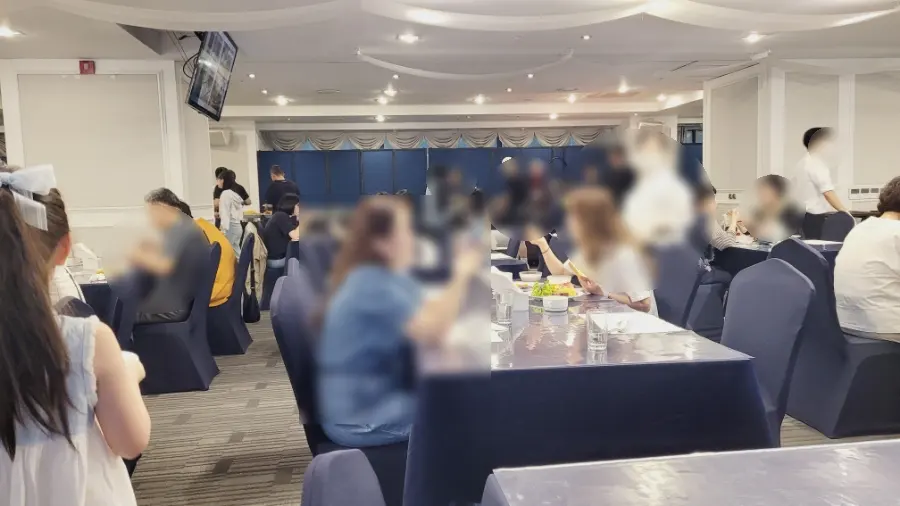
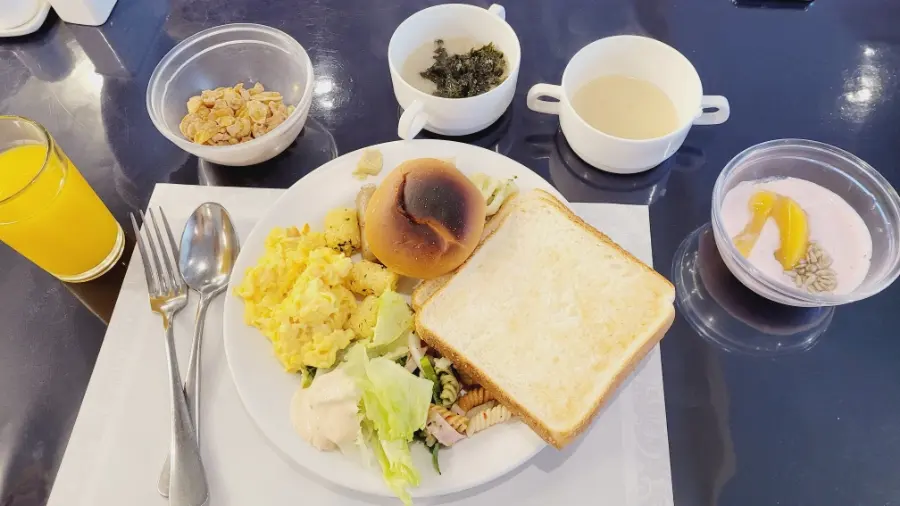
Today's breakfast menu was simple but satisfying, lol!
Scrambled eggs, bread with jam and butter, sausages,
various salads, yogurt, soup, porridge, and more.
I loaded up on all my favorites!
The soups, porridges, and various Korean dishes change slightly every day.
And since we were departing first from our hotel today,
we were told to come out even earlier.
So, after breakfast, I packed my bag and headed out right away.
Jeju Souvenir Direct Sales Store
Our first stop was the souvenir center.
When we got on the bus, they gave each team
printed copies of the photos taken yesterday.
I was so grateful,
and also really proud of how well the photos turned out!
On the way to the souvenir center,
our guide started explaining again.
He said that this souvenir shop helps with their performance targets,
so he'd appreciate it if we could buy something,
and that the photos were a 'bribe' to encourage us.
He has such an easygoing personality,
and hearing him speak so honestly really made me feel
like I had to buy something!
He's a veteran for a reason.....
His persuasion skills are truly top-notch!
He mentioned there are specific items that are especially good to buy here,
things you might not necessarily find elsewhere.
He also said we'd be visiting an agricultural and fisheries product store later,
so if we wanted to buy chocolates, we should get them there.
He promised to tell us what else to buy.
1. Horse Leather
Our guide said he even carries a horse leather backpack himself, which he recently replaced,
and that horse leather products are excellent because they're truly light and durable.
He encouraged us to feel them,
so the people at the front touched and lifted them, lol.
He specifically mentioned that backpacks are comfortable to carry, freeing up your hands,
and he even showed us his horse leather belt.
He said the designs are sleek and make great gifts for men.
(He also brought up Kang Ho-dong, saying that products featuring horses bring a 'seung-seung-jang-gu' energy, symbolizing continuous success and good fortune,
and represent a continuously flowing luck.
He strongly advised buying horse-related products.
(My husband also hangs a horse-shaped keychain – which I won by answering a question –
on his laptop bag~
It's subtly cute, lol!))
2. Amethyst
Amethyst is one of the five major gemstones,
and he advised us never to waste money buying it overseas,
as it's better to buy it in Jeju Island.
He said it blocks electromagnetic waves,
emits far-infrared rays which are good for people with weak hearts,
and helps keep the body warm.
He added that germanium doesn't have the same effect.
He also mentioned something about raising your body temperature by 1 degree Celsius to boost immunity?
(There's a book about it.)
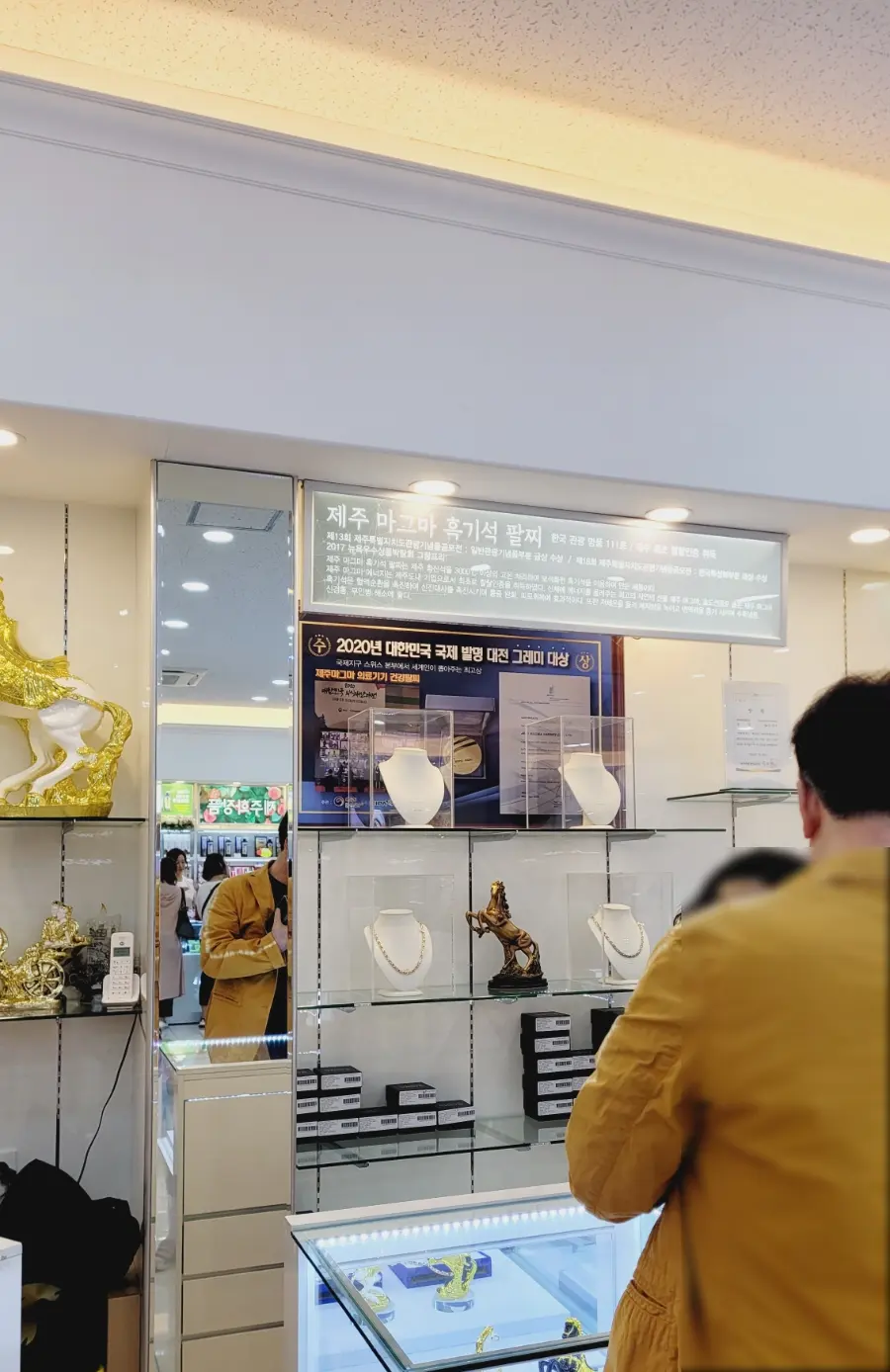
3. Camellia Oil, Gamtae Shampoo, Magma Heukgiseok
He recommended Camellia oil because it smells great and is good for the skin,
and it's also available in cosmetic products, so we should buy it.
Gamtae shampoo is also supposedly good.
He said it's good for hair loss.
He explained you wouldn't notice the effects after just one or two uses,
but if you use it for over 6 months, your hair will become thicker
and your scalp healthier.
As for Magma Heukgiseok,
he said it's good to buy things like horse keychains made from it to bring good luck.
(Honestly, I wasn't that interested in this one,
or my concentration slipped,
because I stopped writing about it mid-sentence ;;;
I can't remember.....ㅠㅠㅠㅠ)
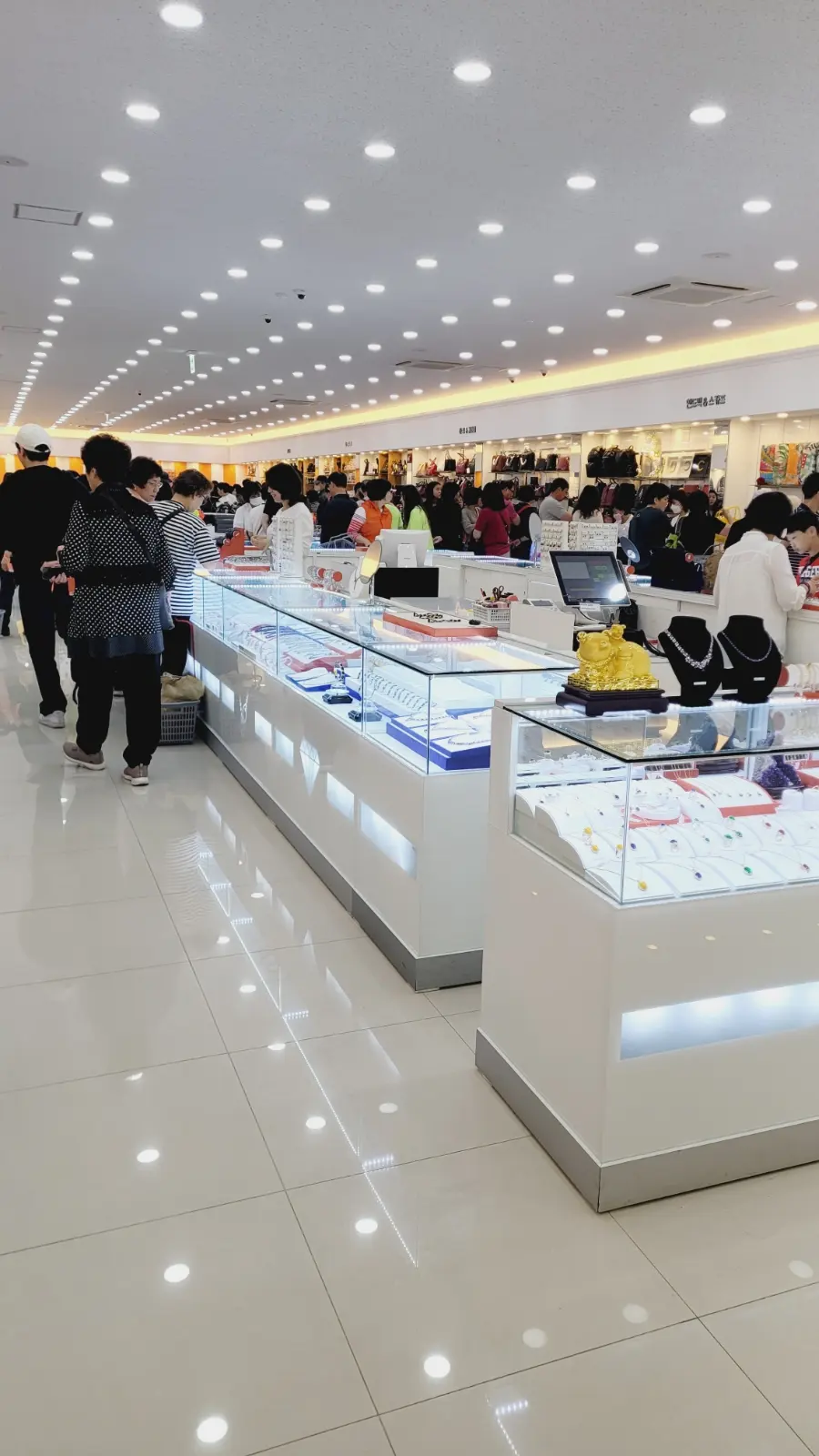
Anyway,
we also bought Gamtae shampoo.
It was ~$27 for one bottle, I think...
We bought it because it was the same price as online.
I was originally planning to buy seaweed shampoo because I heard it was good,
and seaweed shampoo was also in the ~$22 range.
We also bought a few other products related to camellia and hydrangeas.
The kids bought keychains and such.
Spending money is definitely the most fun!
I haven't tried the Ecklonia Cava shampoo yet.
But for some reason, my husband and I are both looking forward to it.
Saryeoni Forest Path
Next, we headed to Saryeoni Forest Path.
Fortunately, even though it was reportedly pouring in the central regions,
it didn't rain here that day.
In fact, it seemed like the weather was clearing up after the rain.
Saryeoni refers to cedar trees, which are apparently common in Japan.
They were originally planted as windbreaks, but I heard there's a lot of pollen in spring.
Some people apparently struggle with allergies due to the high pollen count.
Since it's such a famous spot, we went,
and because cedar trees grow tall and straight,
the forest felt incredibly refreshing and beautiful when we entered.
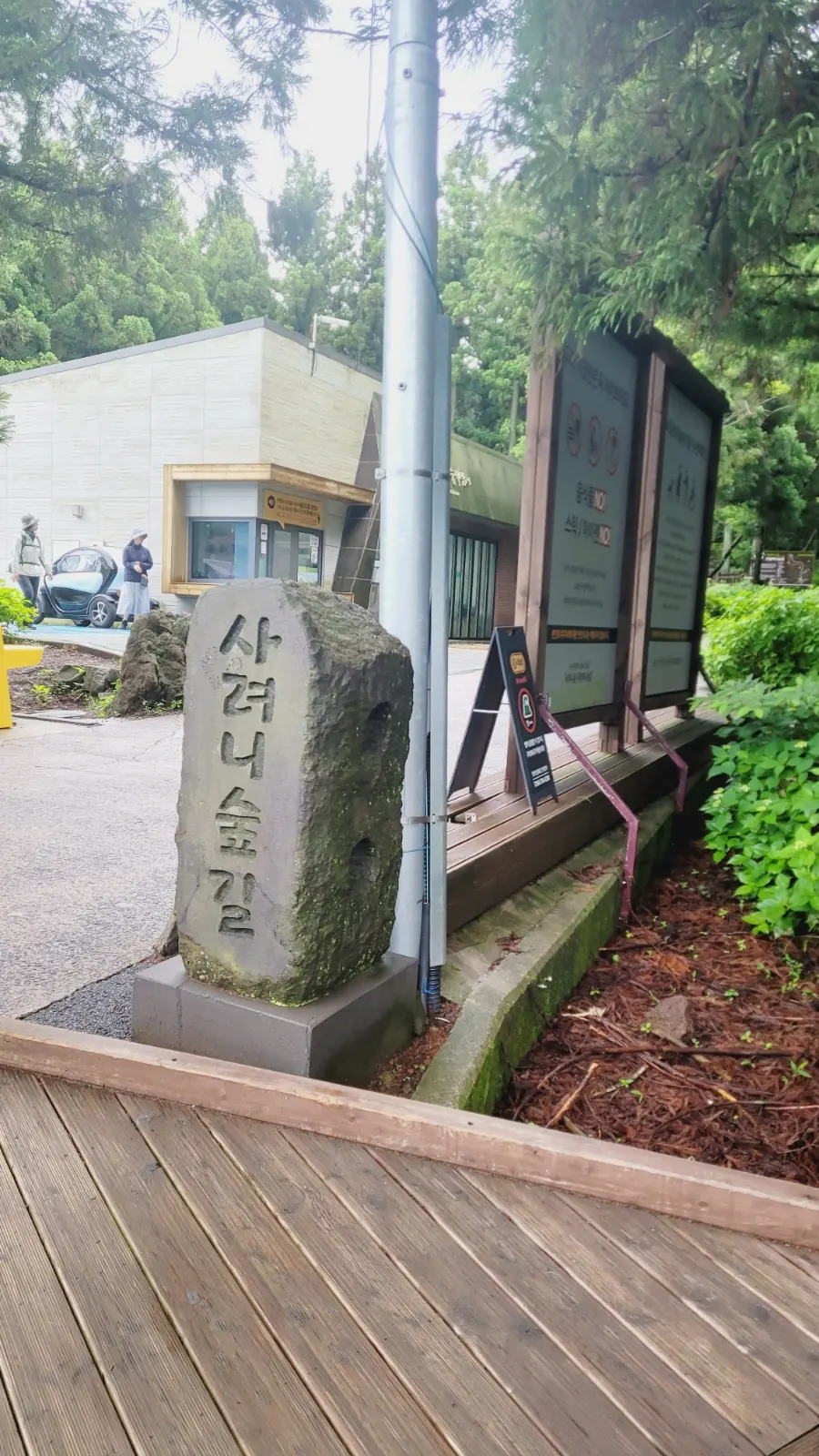
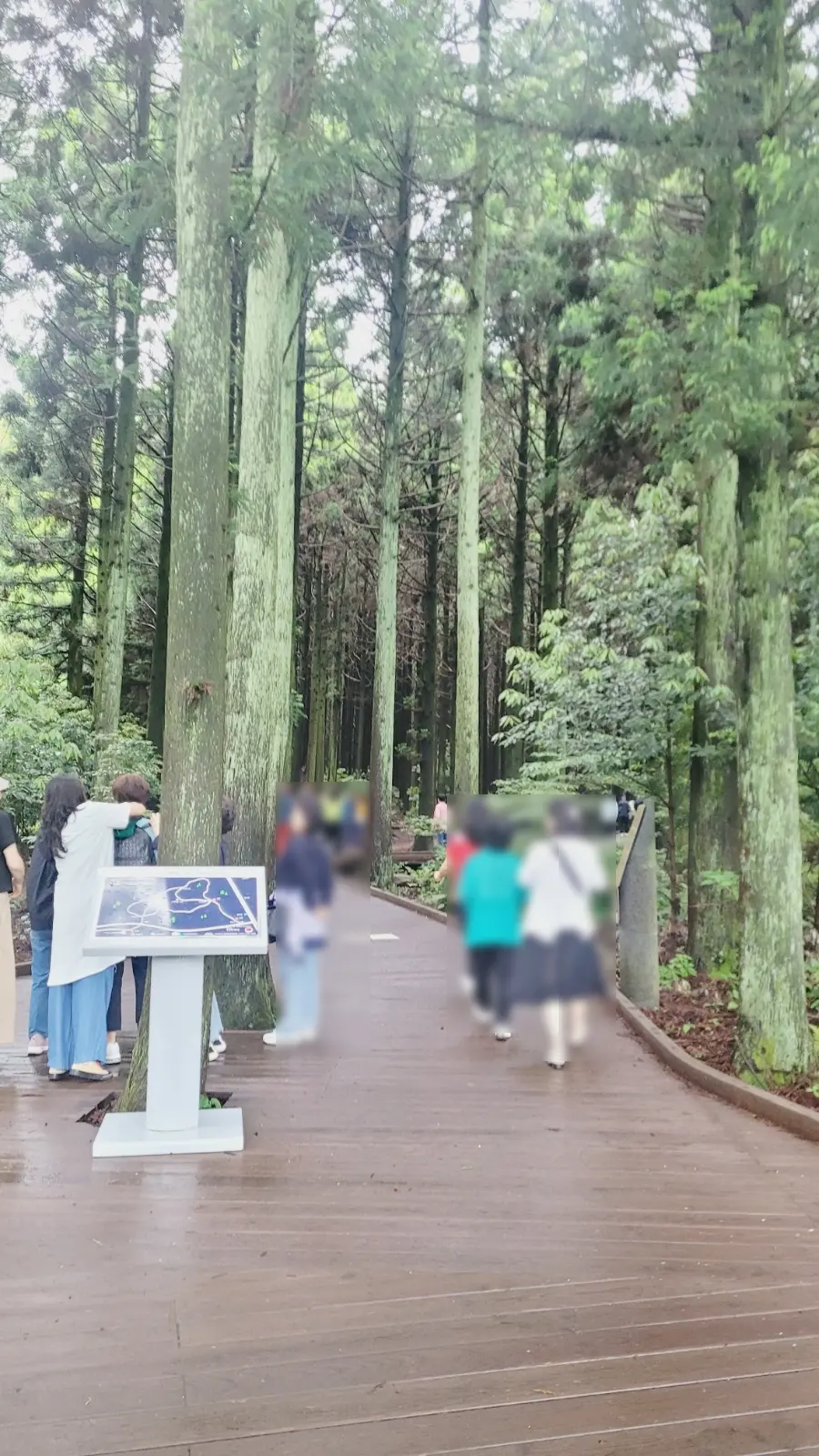
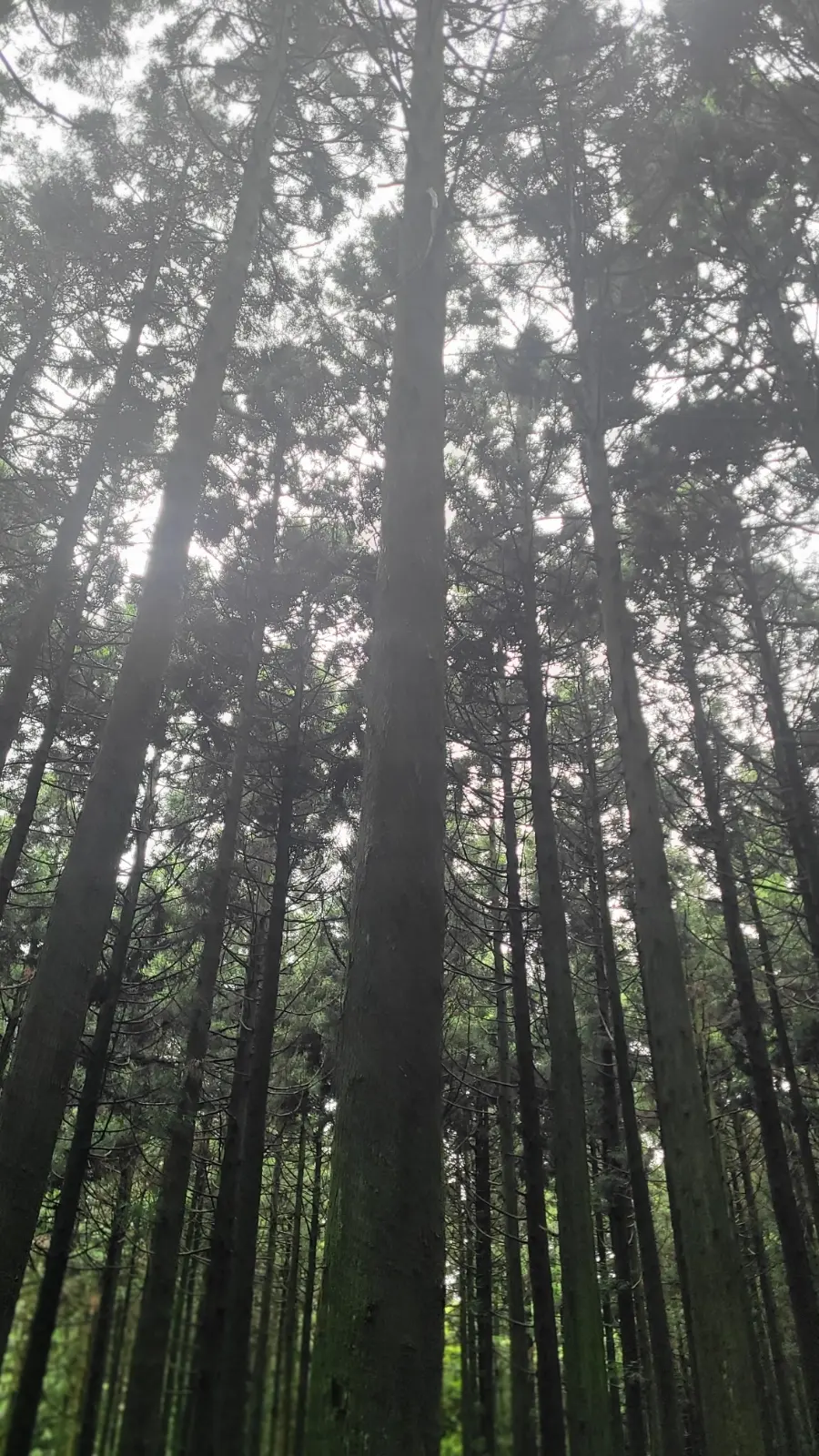
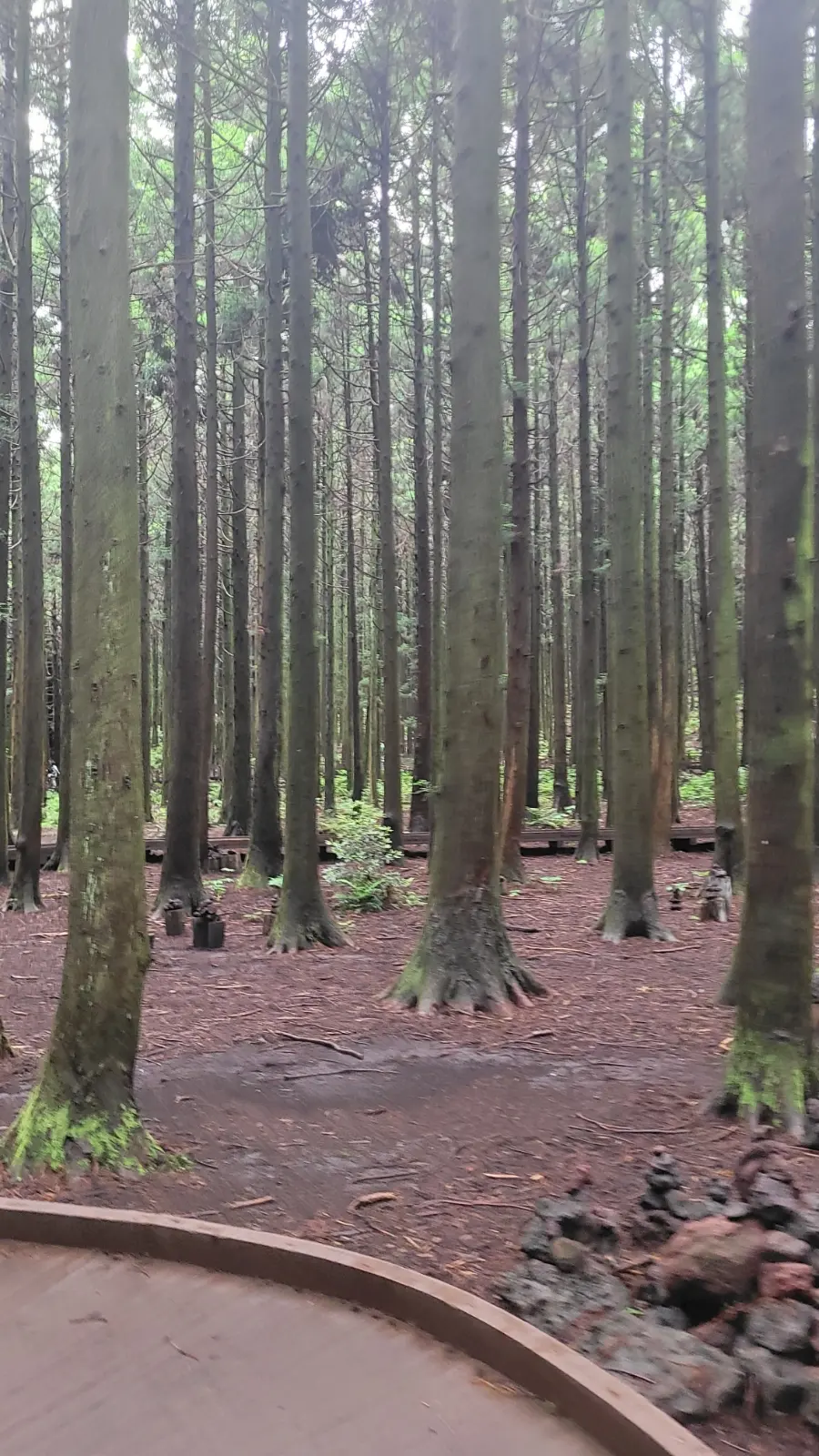
We walked around for about 30-40 minutes,
took some photos, and then left.
(I kept looking around to make sure I didn't lose our group lol)
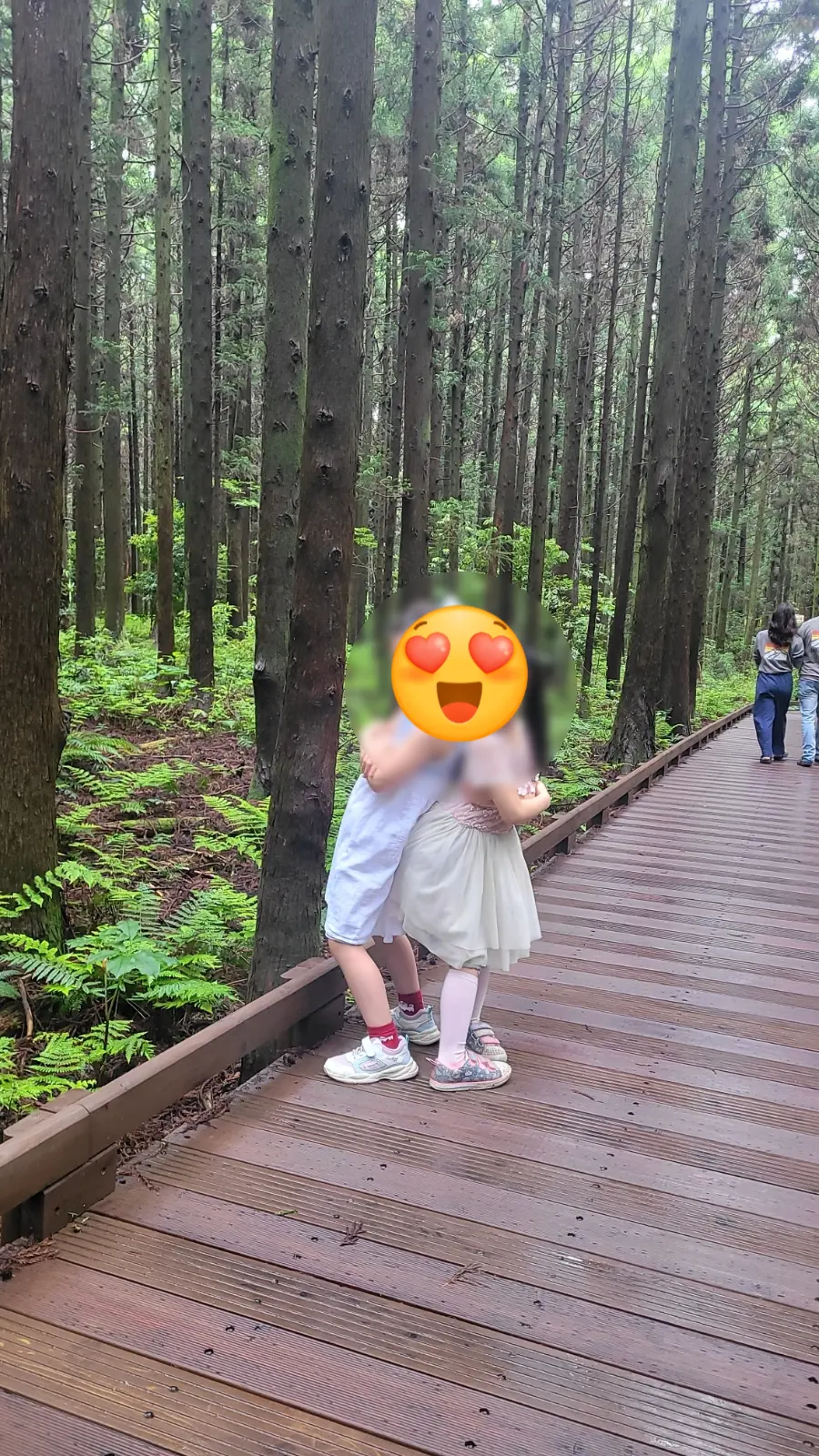
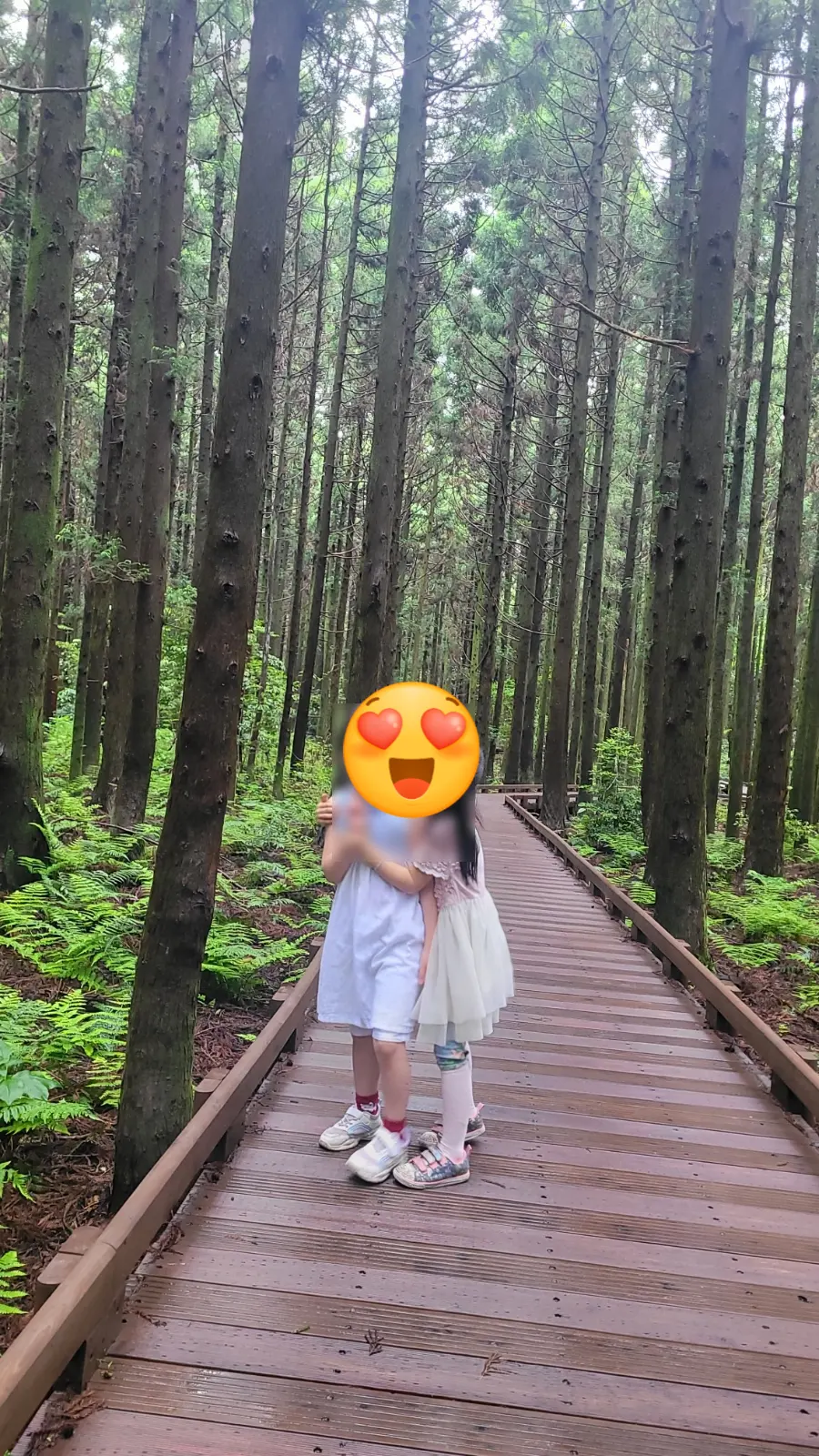
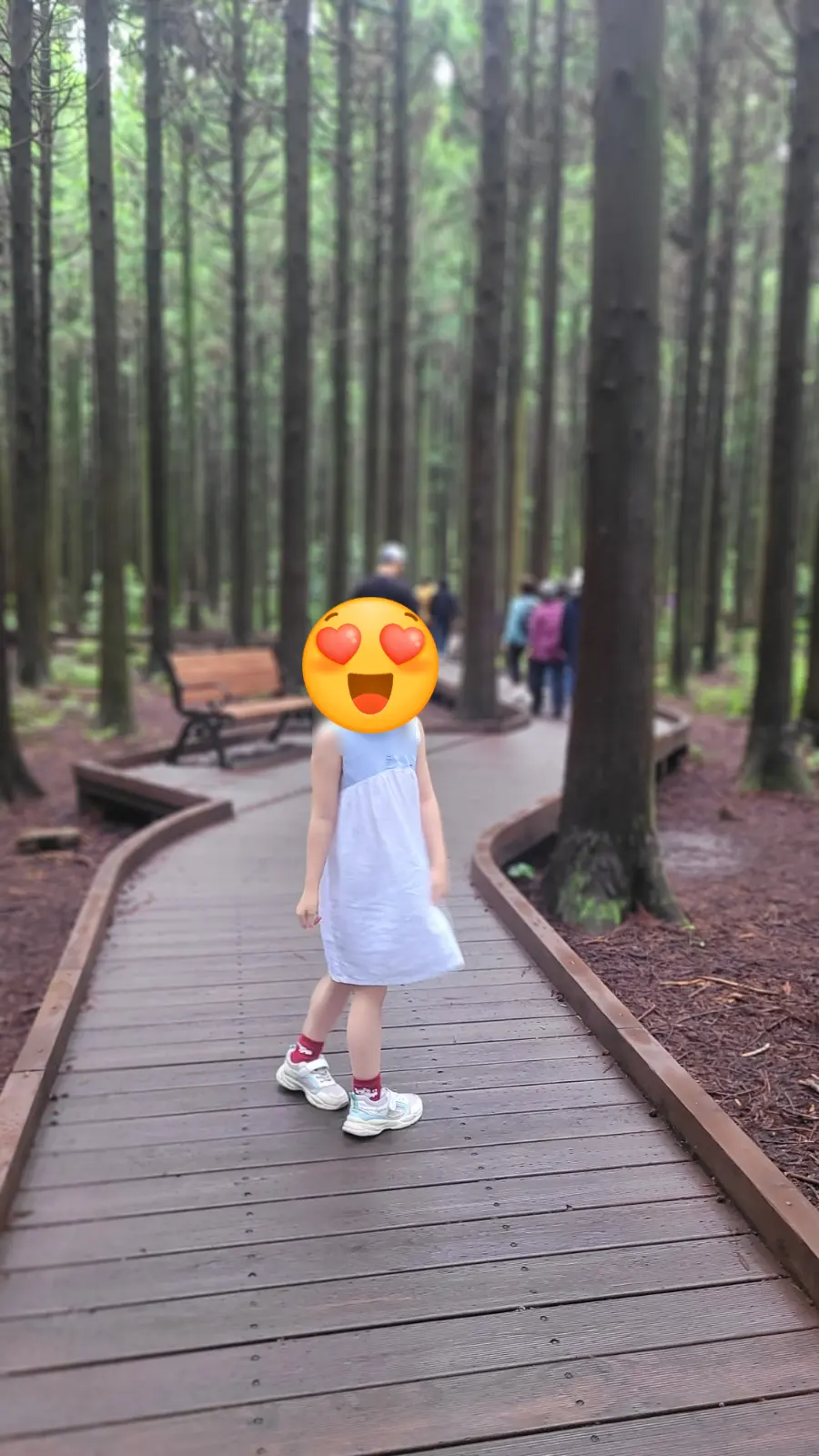
Of course, the photos turned out amazing.
We captured many 'life-shot' photos of the kids too.
Horseback Riding Experience
And then we immediately headed for the horseback riding experience.
Everyone was already lined up, waiting.
It seemed our bus was a bit late;
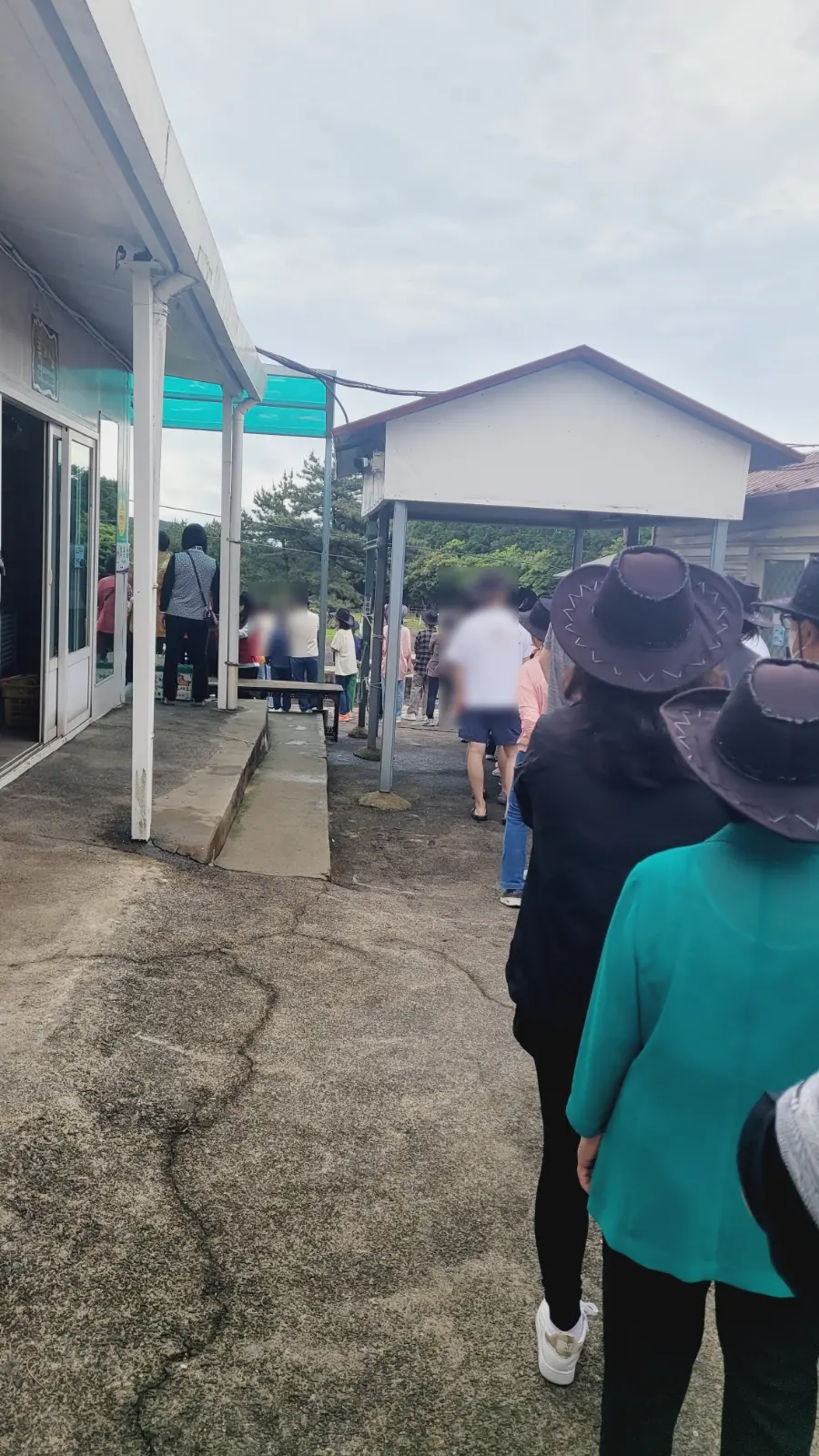
They had us put on helmets and place our belongings in separate baskets,
then we lined up.
If you didn't want to ride a horse, you didn't have to.
A photographer took pictures of each family,
and they printed and framed them on the spot,
selling them for ~$26.
So expensive;;;;
(If it weren't so pricey, I would have bought it as a souvenir....)
Since we could just take photos of them riding from a distance
(for the blog),
we lined up separately in pairs.
To take pictures of each other....
Later, they asked why our family rode separately ㅠㅠ
Sorry;;
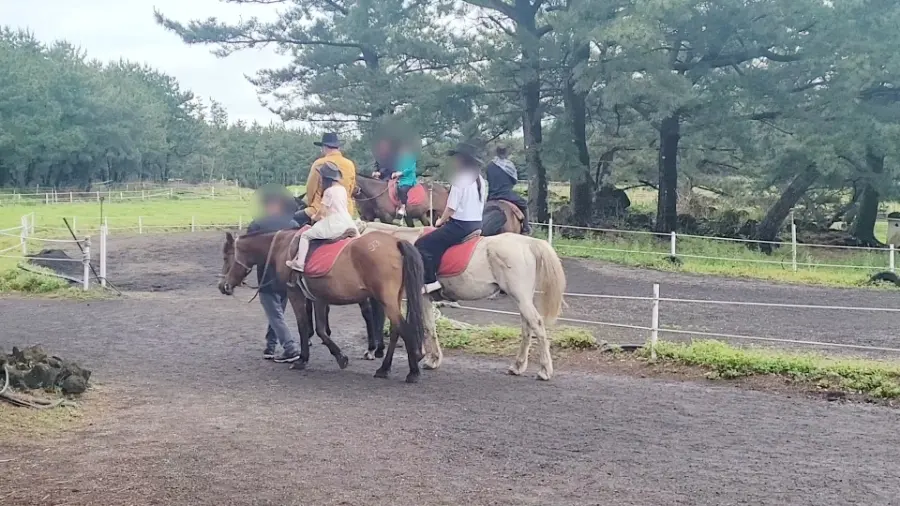
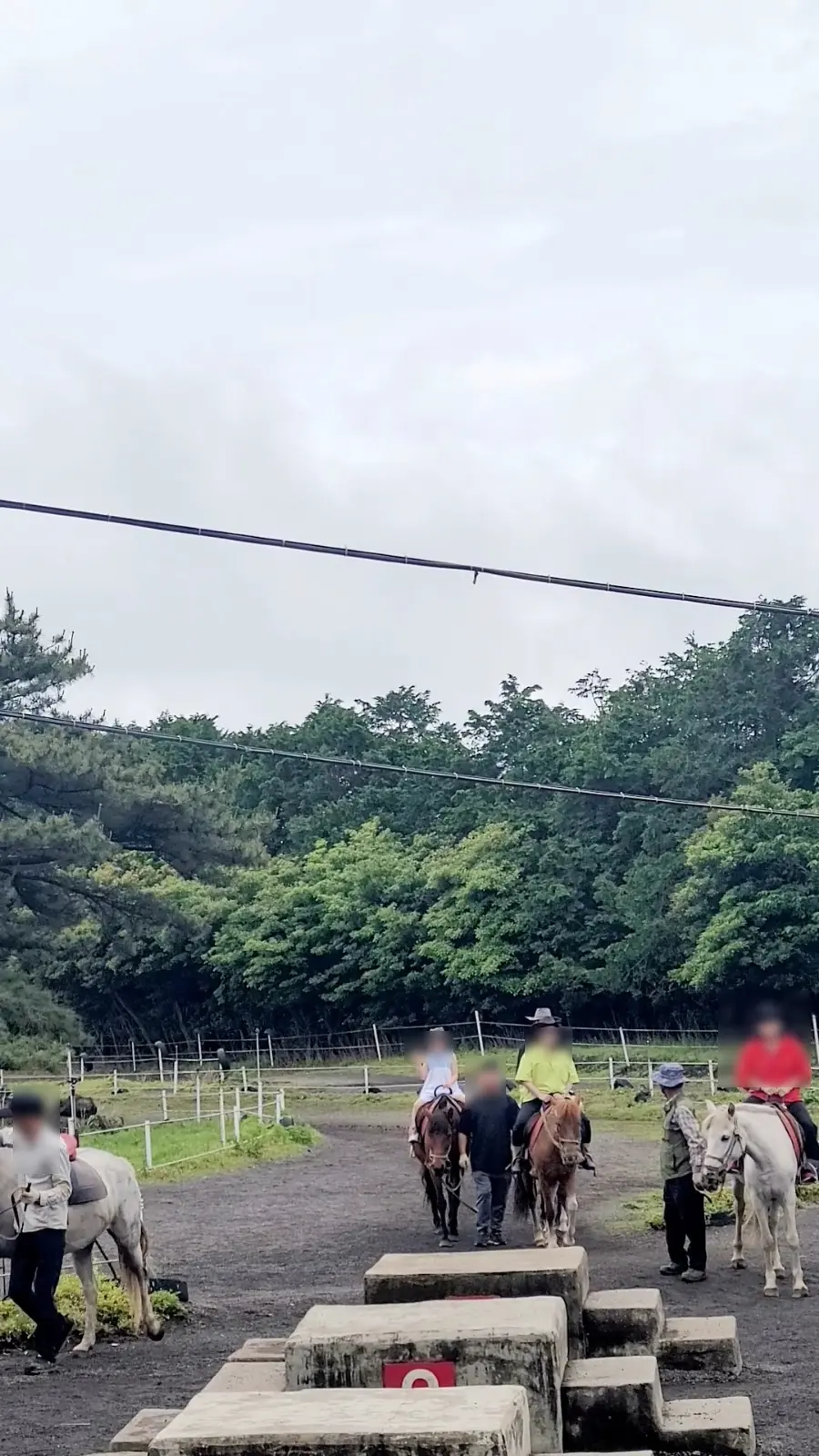
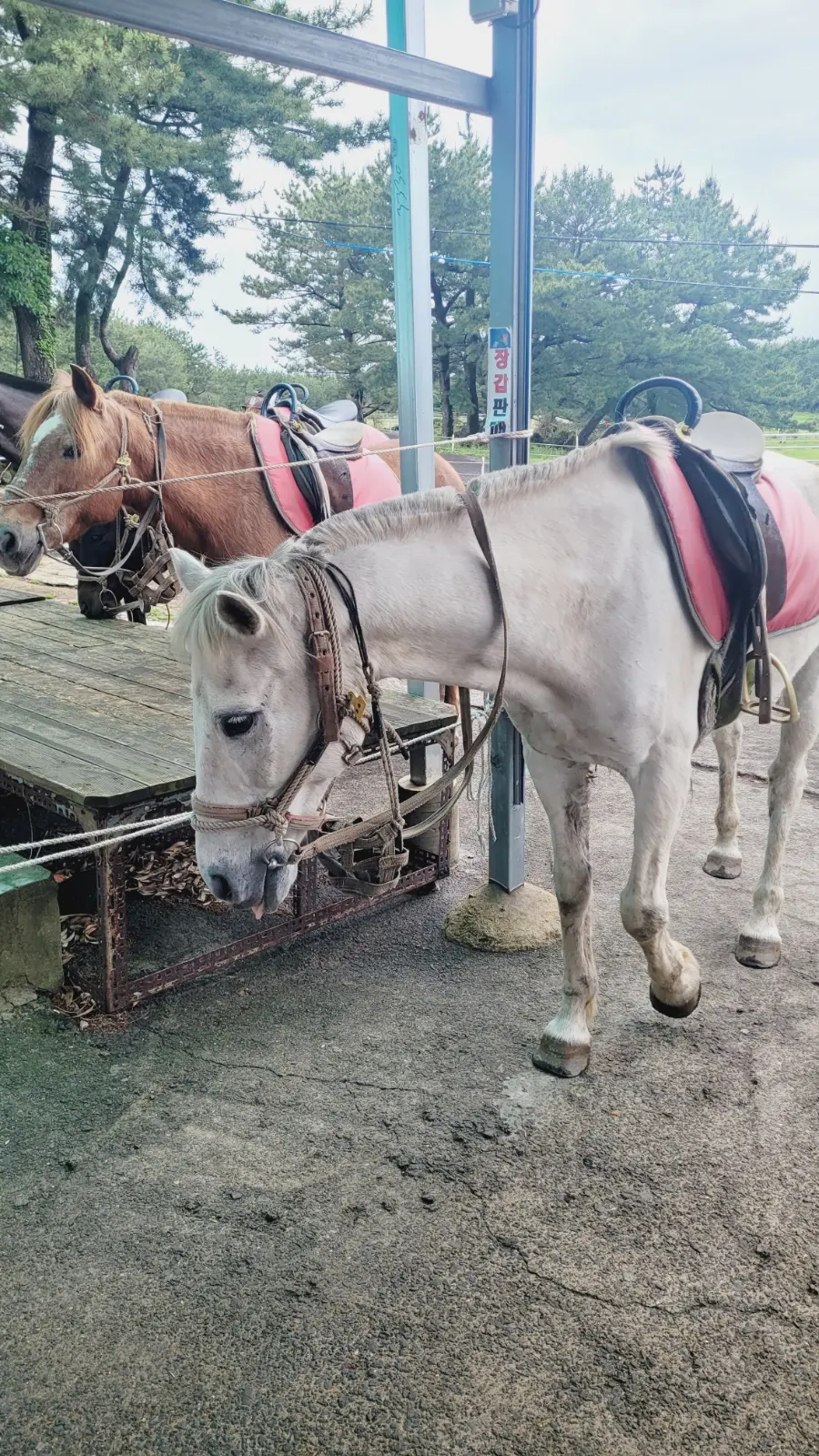
The horseback riding experience involved someone holding the horse's reins and leading it around a circuit,
so it was a very brief ride (about 10 minutes?) before getting off.
(Sorry, horses ㅠㅠ)
The people leading the horses looked tired,
and the horses probably were too.....
They were also selling carrot feed, 2 for ~$1,
and I considered letting the kids try it,
but we had to get on the bus, so we just left.
Arirang Hon Performance
After getting on the bus,
we went to see the Arirang Hon performance.
Many international performance teams come to perform circus acts,
and they said Korean performances are also becoming more active,
and that it would be fun.
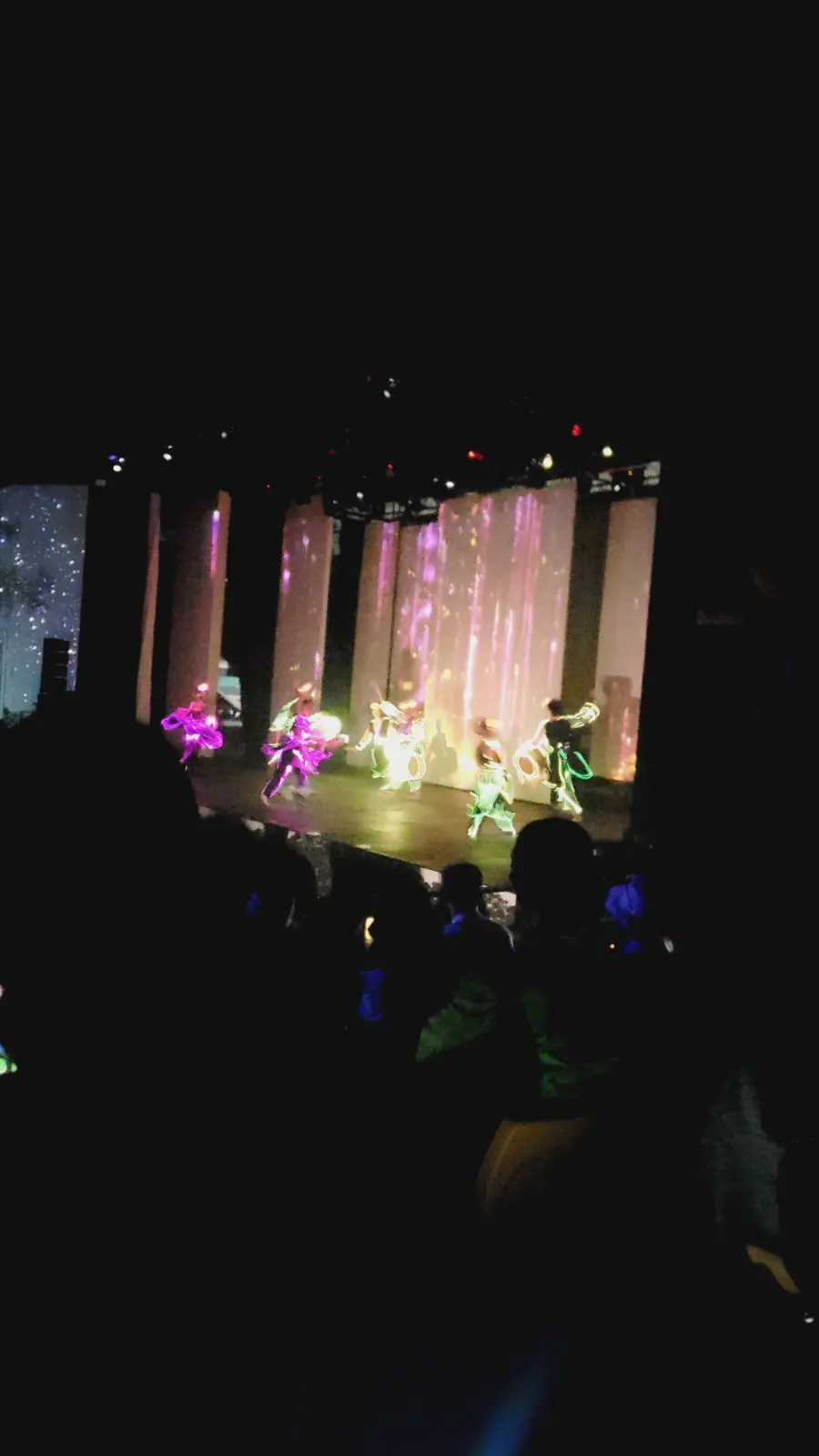
Since they said it was a Taekwondo performance,
(I had seen similar performances a few times in our apartment complex),
I honestly didn't have high expectations;;
But it turned out to be really enjoyable, much more than I expected!
I also felt a sense of pride,
seeing our young people working so hard.
It made me hope for their success.
The Taekwondo performance (including Poomsae demonstrations, breaking techniques, etc.),
also featured some short skits,
and even dancers!
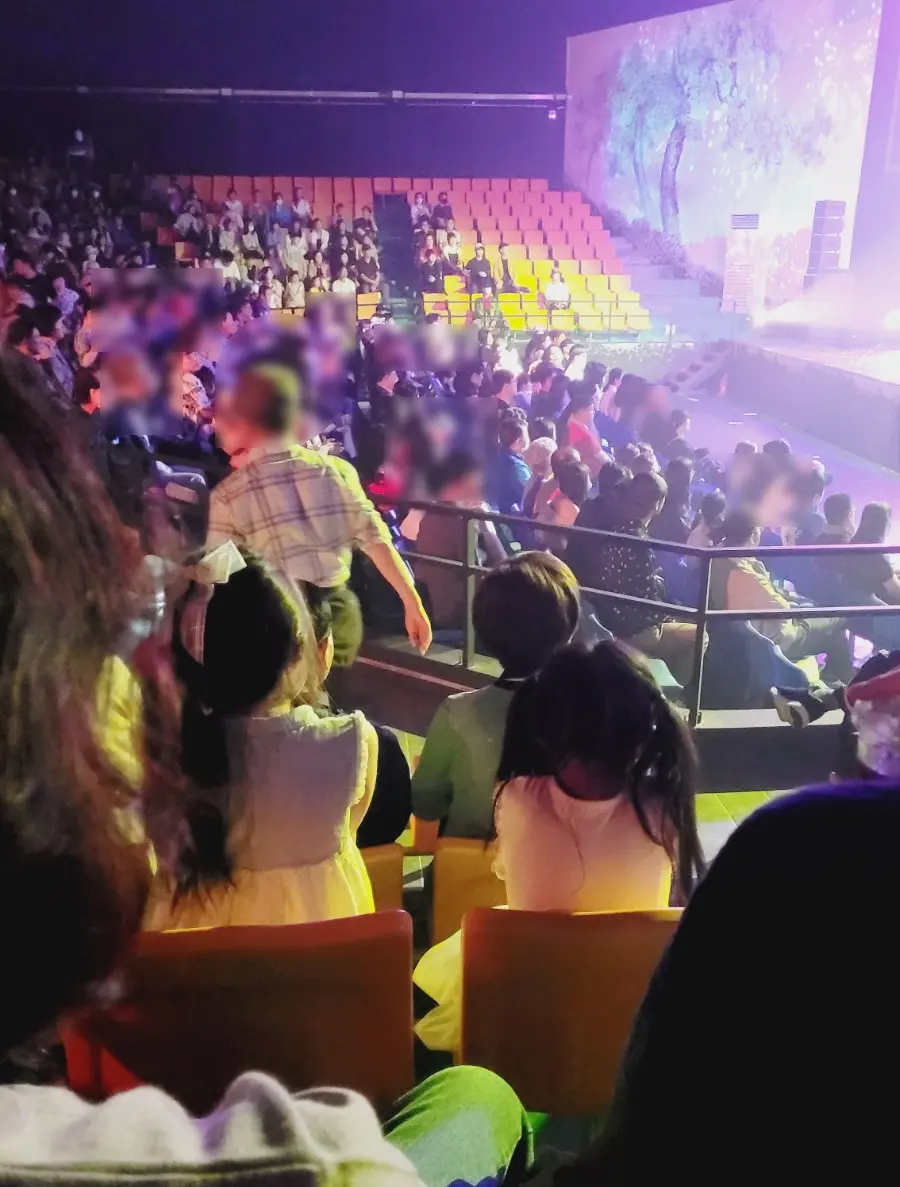
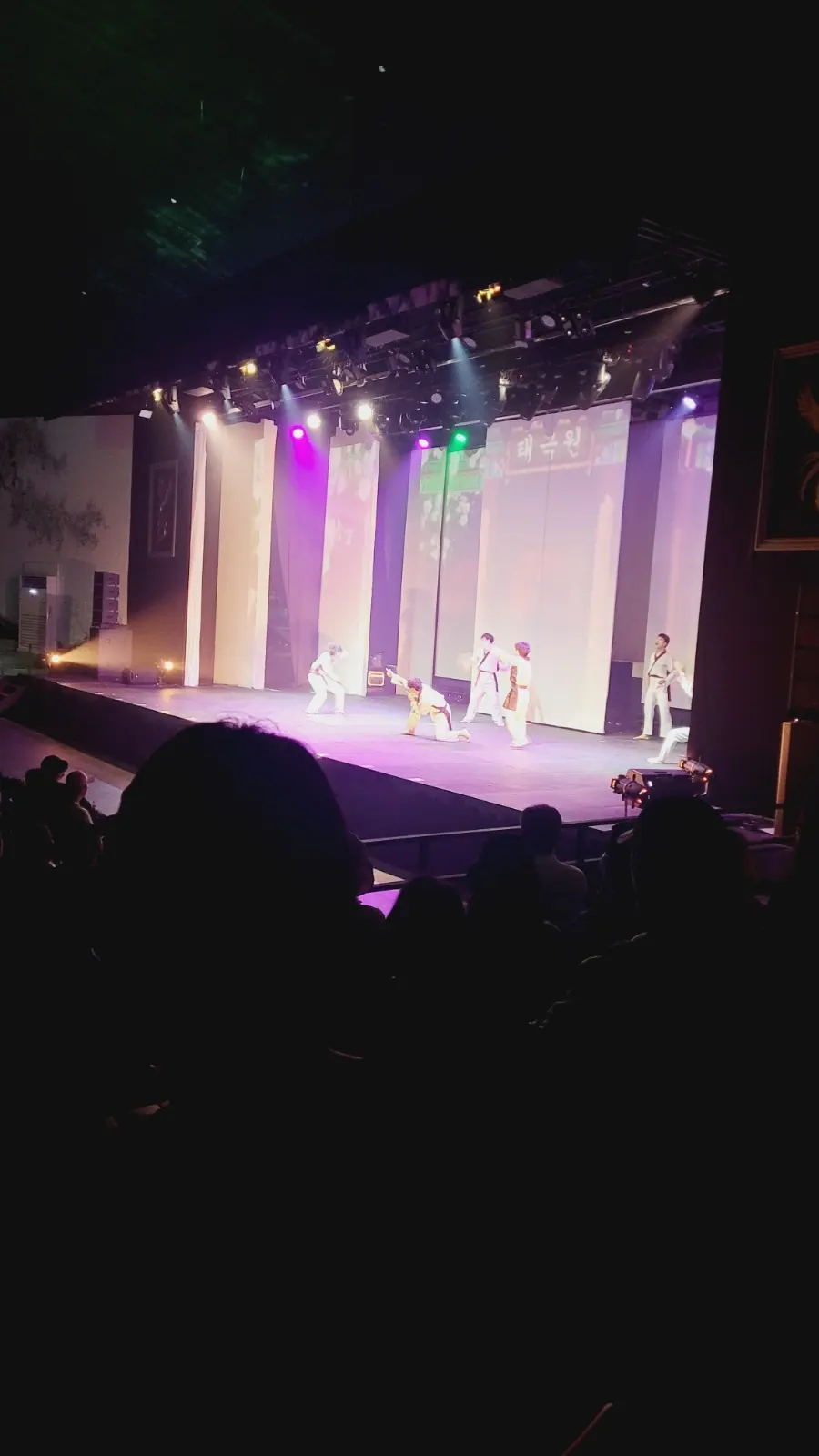
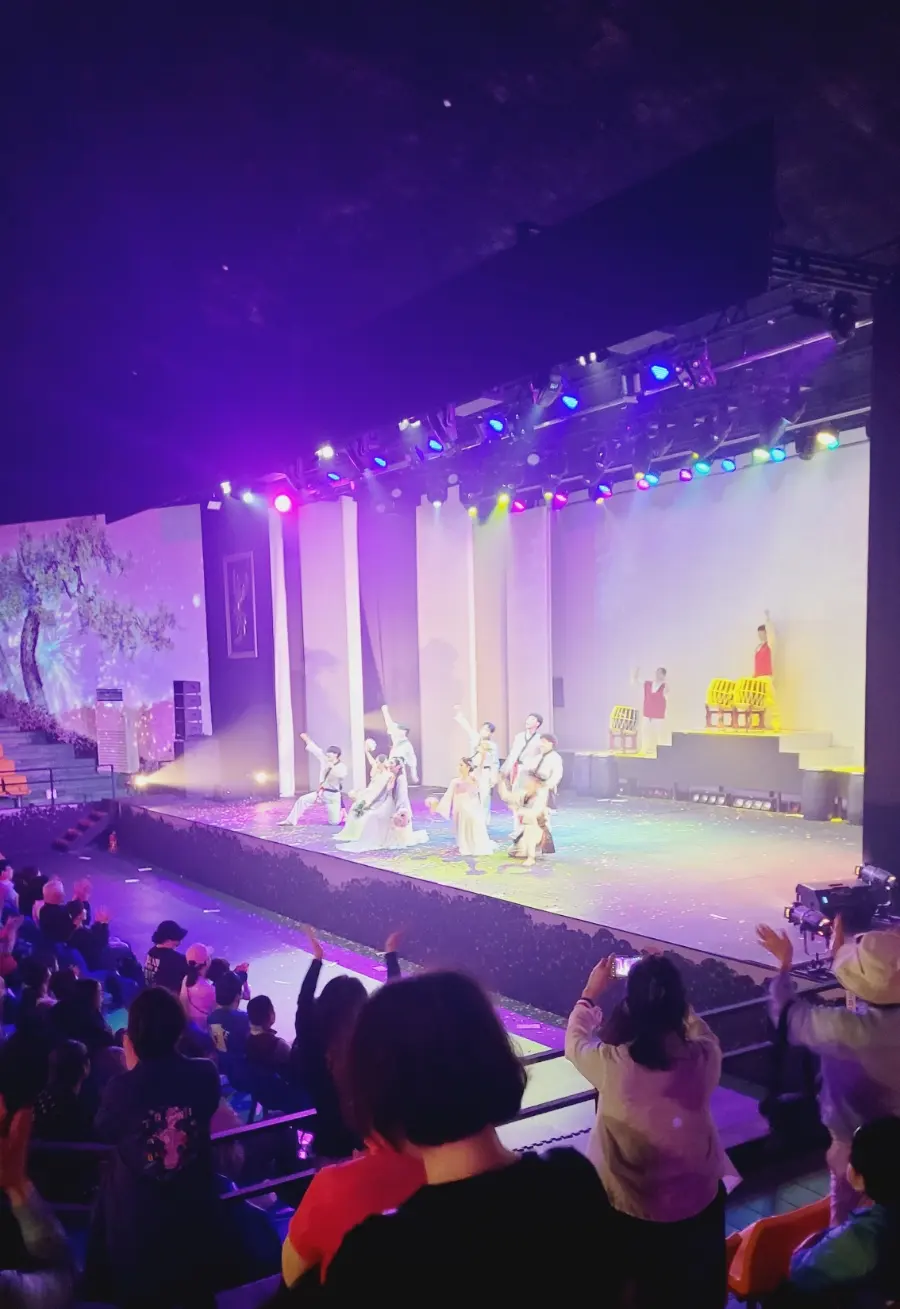
It was actually much more substantial and well-produced than I expected.
It was far better than the circus!
(After watching a circus,
even though it's amazing to see young kids perform,
I've sometimes felt a little uneasy afterwards.)
Seongeup Folk Village
Seongeup Folk Village is a place where Jeju's traditional thatched-roof houses and culture are beautifully preserved.
Since real Jeju residents still live here,
each household takes turns promoting their local specialties.
Our guide mentioned that this place isn't related to their performance metrics,
so we could just buy something if we needed it.
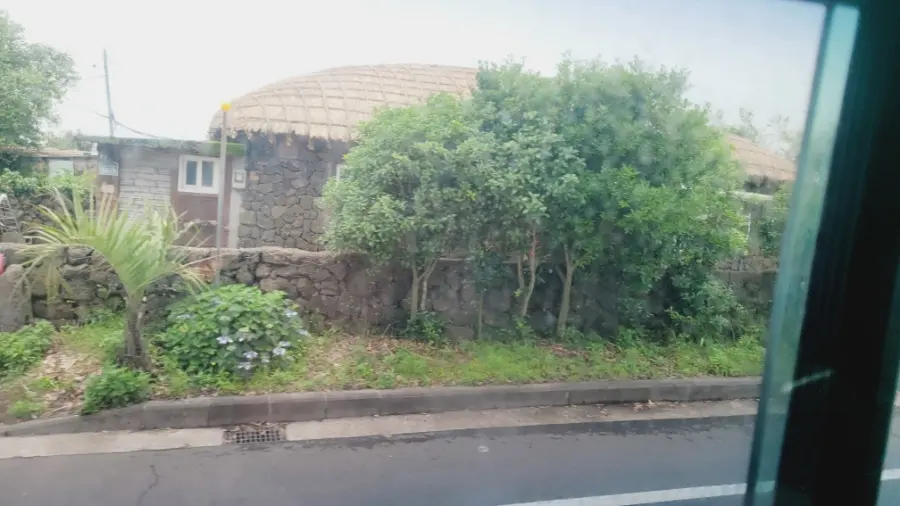
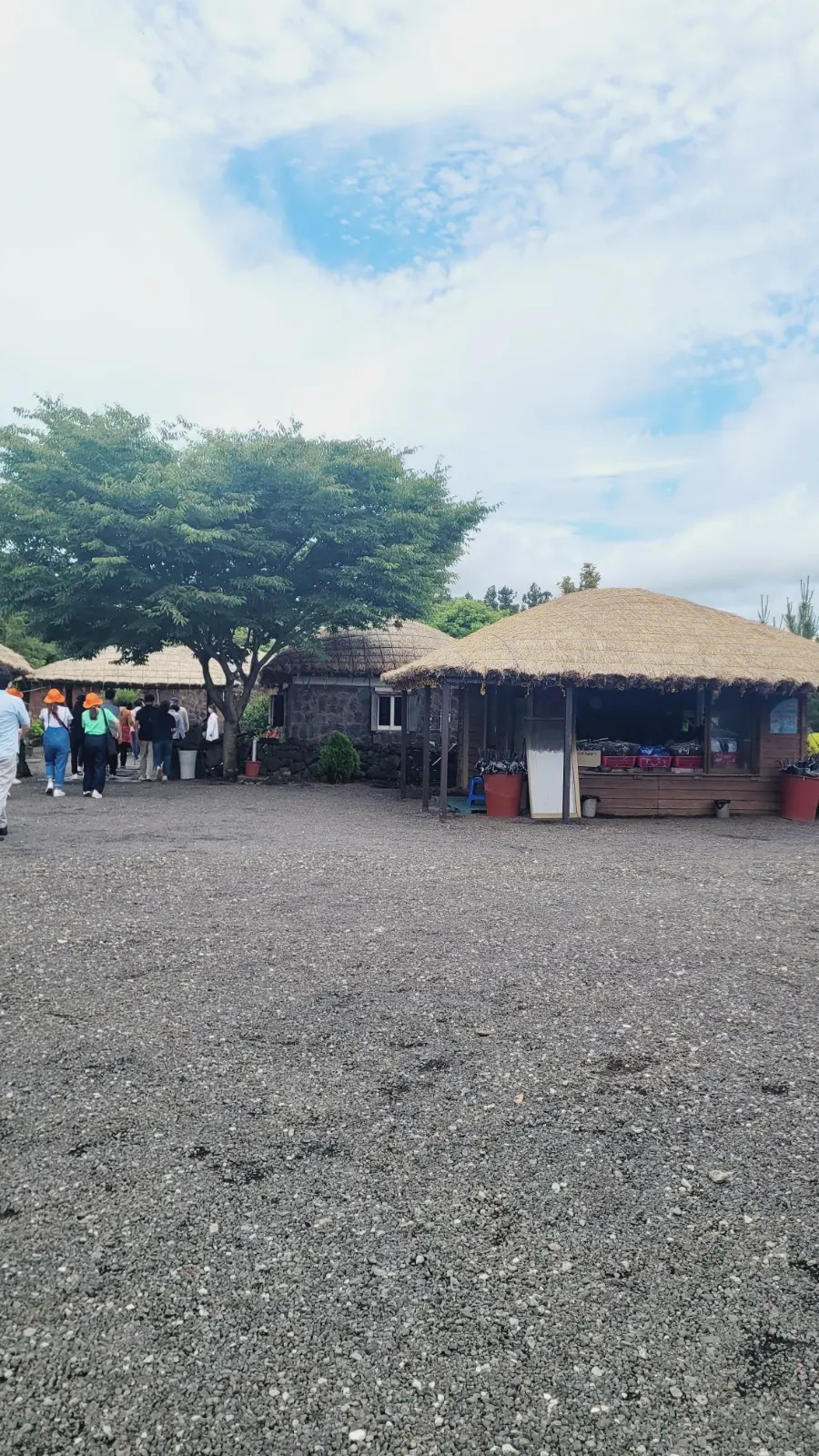
We couldn't actually see inside the thatched-roof houses,
only catch a glimpse of their exteriors. T_T
Yes.... this was also a shopping spot.
This time, they said it was for the benefit of Jeju residents.
A Jeju resident, who was on promotion duty, came out and looked after our group.
As we followed them,
they briefly shared stories about Haenyeo culture (remarkably, there's still a Haenyeo over 90 years old living in this village!),
the poignant lives of Jeju women due to the Jeju 4.3 Incident, and more.
They even told us about Ieodo Sana (although our guide had already explained it).
The Haenyeo's lives were so arduous that
they imagined an ideal island and sang songs about it.
They said 30,000 men died during the 4.3 Incident.
(I just jotted that down, not sure if the exact number is correct...)
They would perform ancestral rites at 50-70 different places.
Because men had to hide and live in mountains or caves,
men were a rarity, and women had to manage life and fend for themselves.
The person explaining even mentioned having three mothers-in-law.
However, they don't have the ancestral ritual table (Jegi) or Kimjang (kimchi-making) culture.
Because their cabbage is watery, they mostly make fresh kimchi (Geotjeori), and they don't have a strong side dish culture either....
Jeju Island, being a volcanic island, lacked water, so they had to fetch spring water (Yongcheonsu, now Samdasu).
After diving (muljil), carrying heavy jars of spring water was incredibly arduous,
and asking a man to carry it was practically asking for a divorce.
Since men were scarce, women had to take on all responsibilities.
Haenyeo often couldn't properly recover after childbirth.
They would eat horse placenta and horse bone broth (malgol).
It was said to prevent bone chills and raise body temperature.
Many people still raise horses today (for pony and Jeju horse fattening).
They said one horse starts from ~$22,288....
There are many 'horse millionaires' here, and some even own horses worth ~$1,337,300!
Horse millionaires, indeed!
Jeju, being a volcanic island, lacked water, so farming wasn't very productive.
Since there wasn't enough rice straw, they used silver grass to thatch their roofs.
They said many grubs (Gumbengi) appeared in the roofs, so they had to replace them every year.
Because these grubs weren't from the soil (they're longhorn beetle larvae, Jangsuhaneulso), they were clean,
and people would consume them as medicine.
Then,
they introduced us to horse bone pills (Malpyeohwan), grub pills (Gumbengihwan), and Omija products.
Malgol (horse bone extract) was a product mixed with placenta,
and they said it's only available in May and June, so they gave us a generous sample to taste.
They recommended trying horse meat, saying it's best eaten raw as sashimi.
It's supposedly excellent for gout.
Omija (schisandra berry) is also said to be very effective.
However, cultured wild ginseng roots (Sansambaehyanggeun) can only be sold in Seogwipo; selling them here is illegal, they said.
They claimed these products are great for varicose veins,
vascular diseases, and boosting immunity.
Listening to it all, I really wanted to buy some for my parents.
Here again, with the Malgol pills, Omija drink, and Gumbengi pills,
tasting and sampling them,
and listening to the stories,
my ears were practically flapping with interest! ~~
But the price was ~$297 ㅠ
They originally proposed selling it to the government for ~$669,
but they reduced it to ~$297.
The Gumbengi pills were also ~$297.......
We didn't buy them because we didn't have the money, haha.
Once you hear the price, it's easy to change your mind, LOL.
Many other people with more disposable income bought quite a lot.
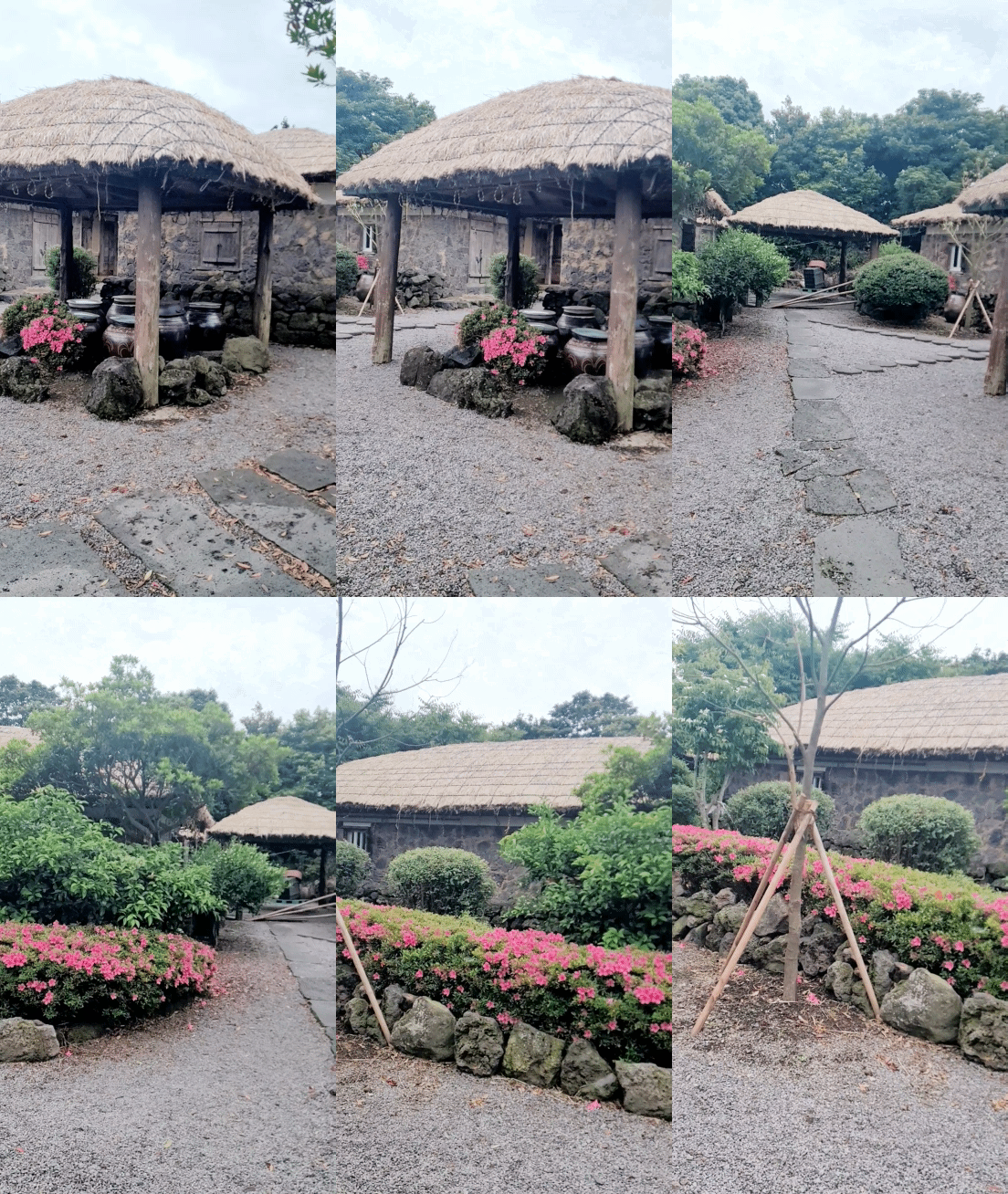
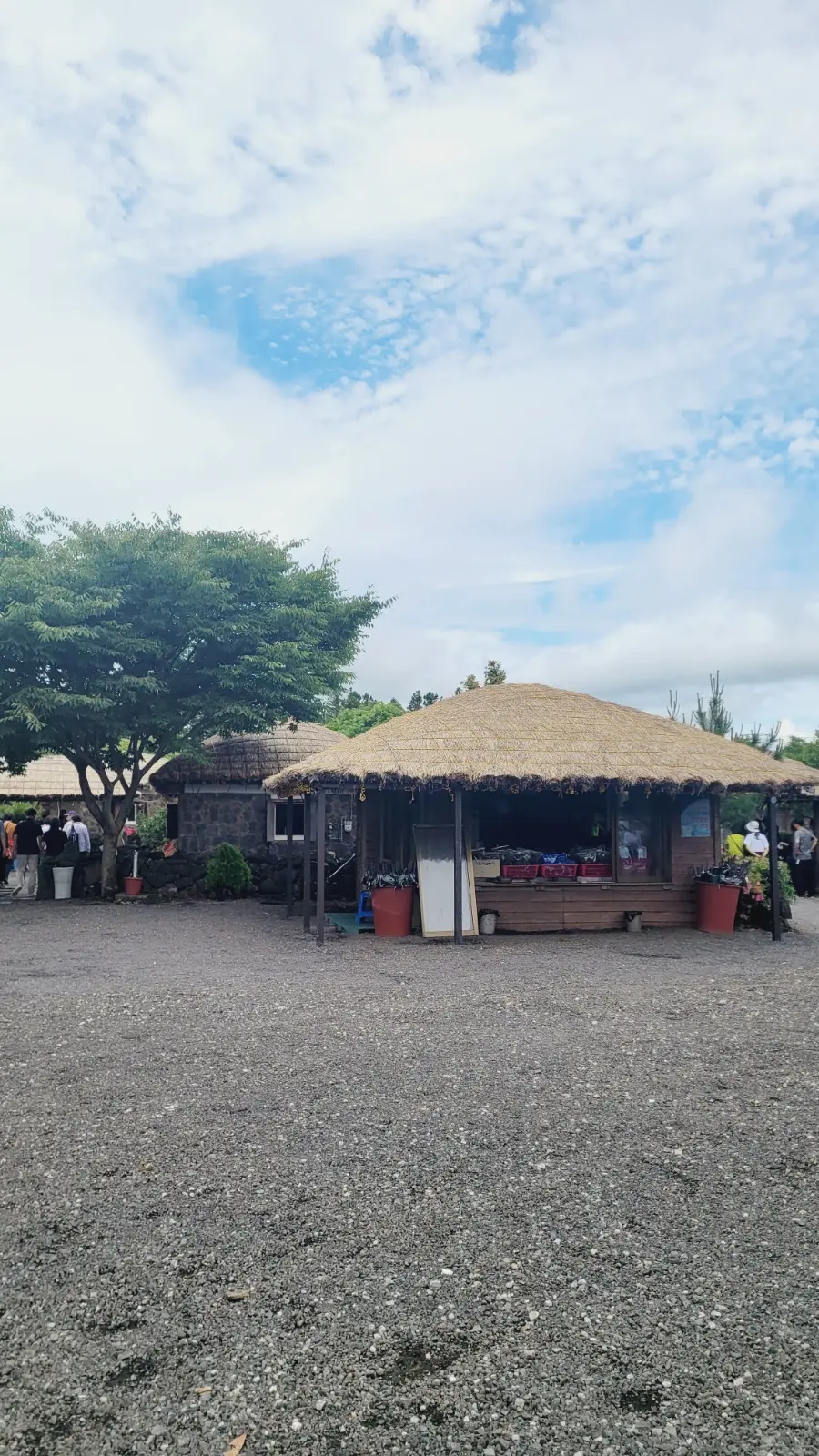
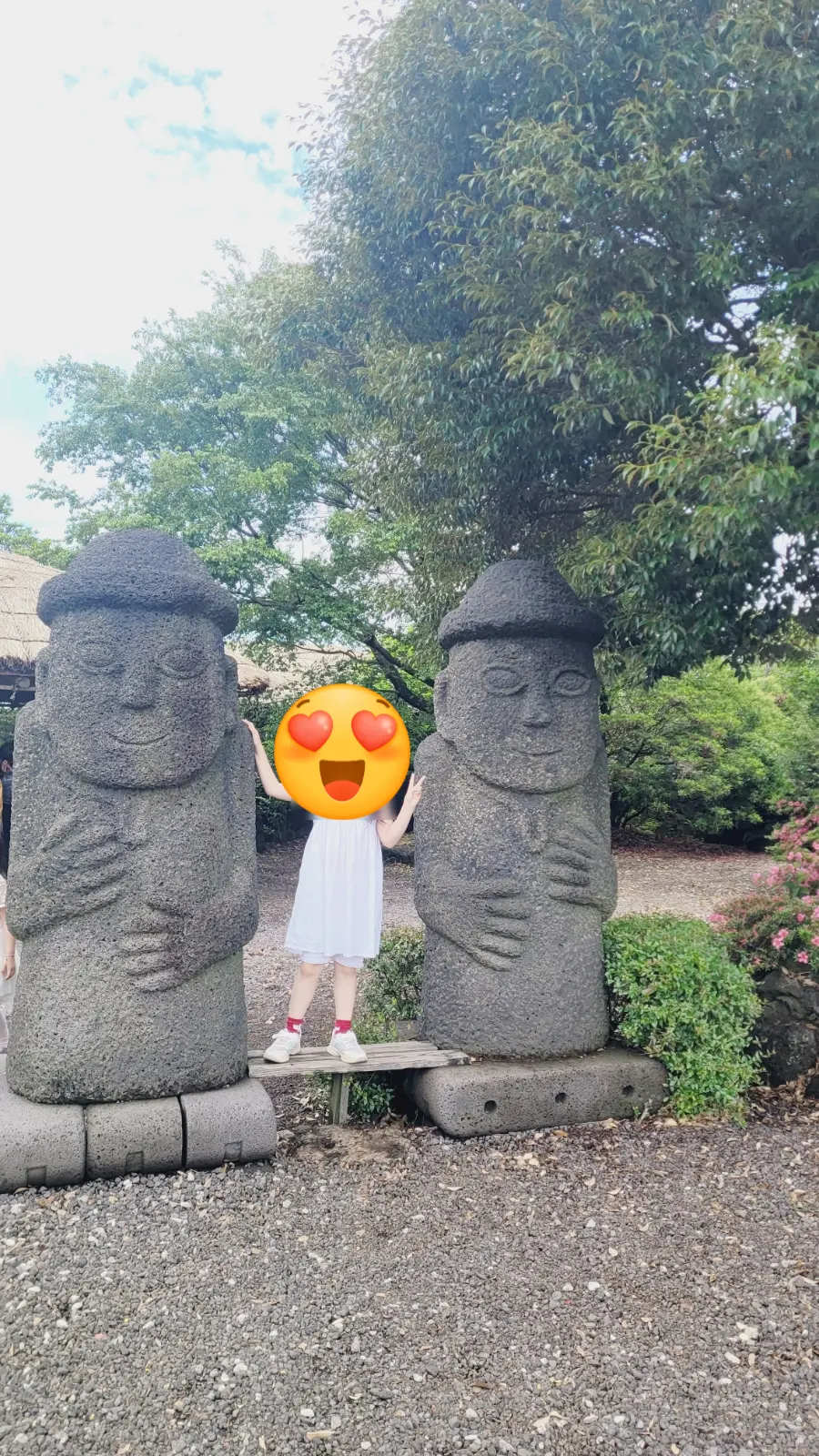
They said that the position of the Dol Hareubang's hands indicates whether it's a civil official (Mun-gwan) or a military official (Mu-gwan).
So, while we were listening to product explanations at Seongeup Folk Village,
we didn't really get to explore the village itself at all;;;;
It felt like we just scratched the surface.
And just like that, it was lunchtime!
Yay~~
I love mealtime!!!
Lunch
Native Pork Bulgogi & Millet Makgeolli
When we first went in, I think it might have been a side entrance,
because I didn't spot the signboard.
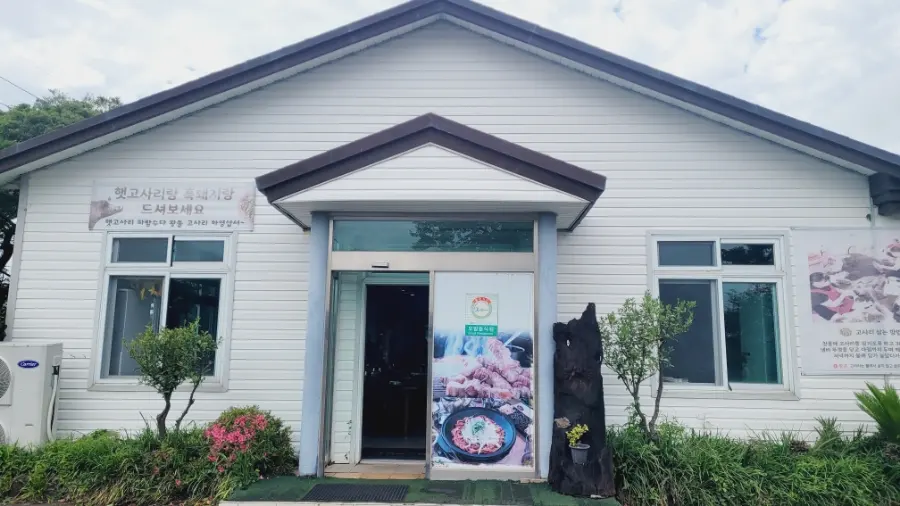
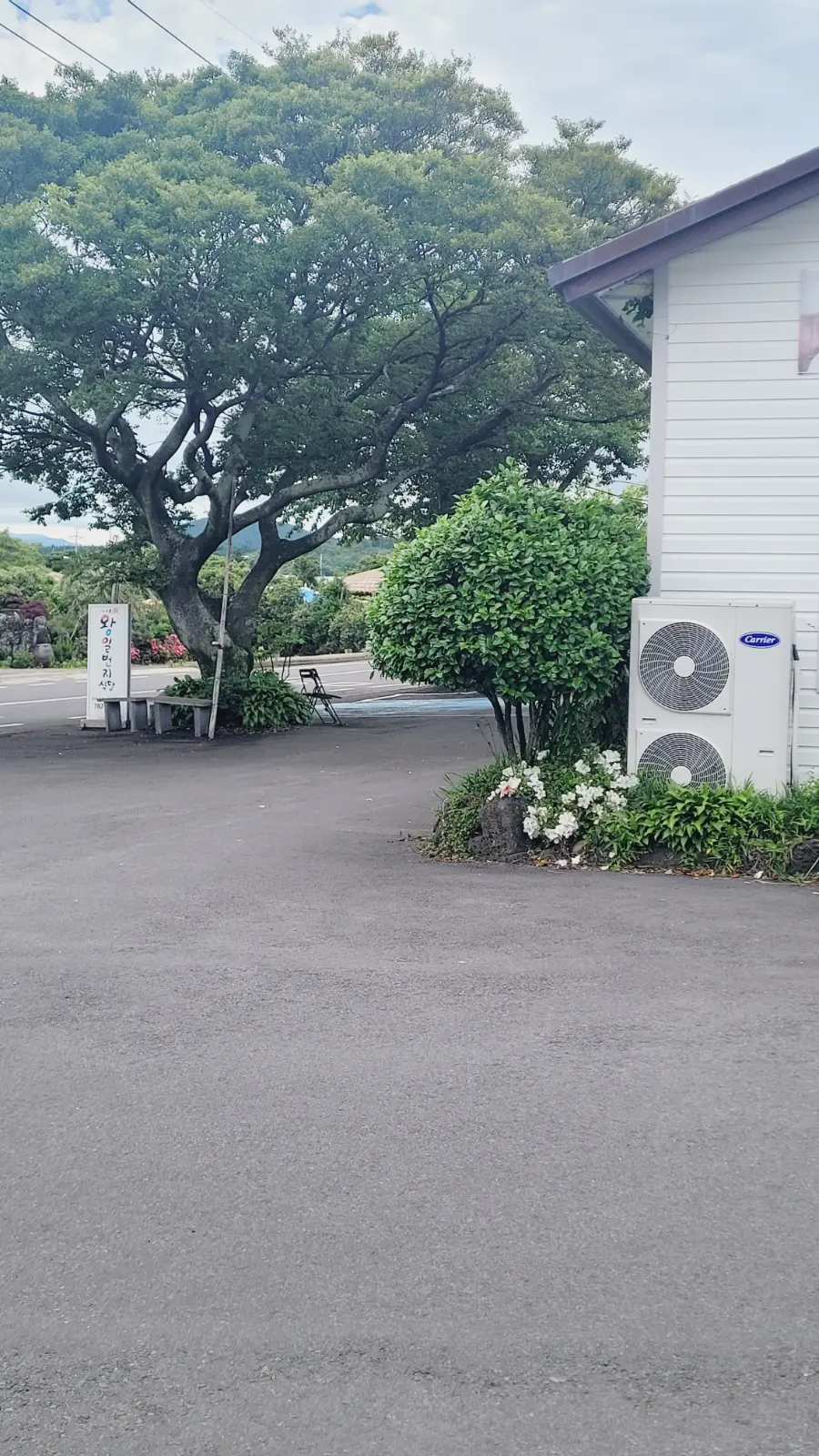

Turns out, when we came out later, we saw it was called Wangilbeonji Restaurant!
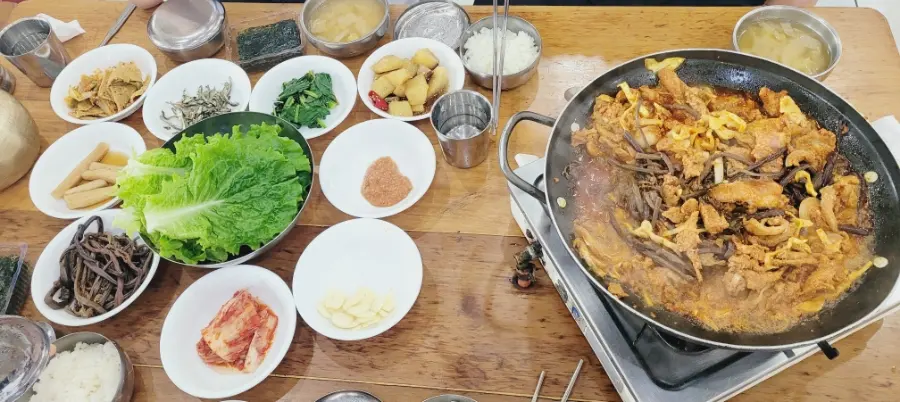
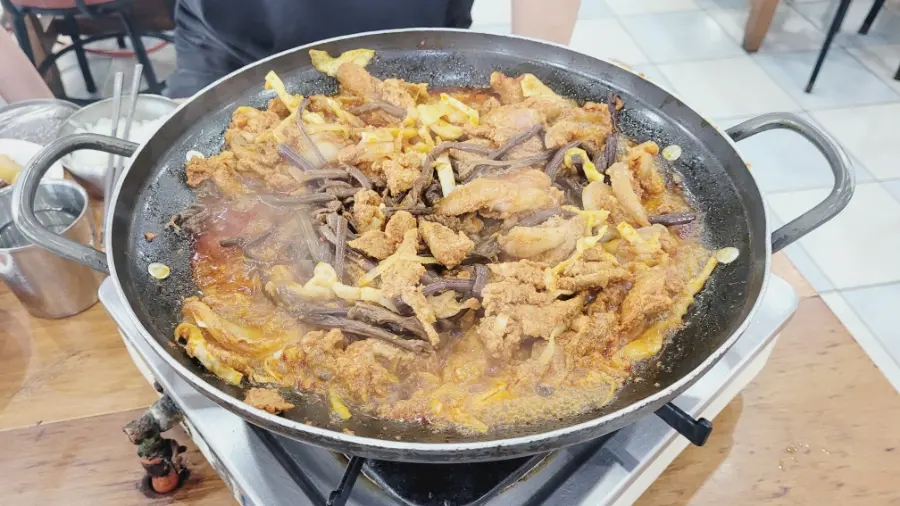
This was a delicious pork bulgogi set meal featuring gosari (bracken fern).
The gosari was incredibly tender and so flavorful.
Millet makgeolli was served as well,
but that was all for my husband! 😉
Overall, the banchan (side dishes) were really tasty,
and our thoughtful guide even brought out fried eggs and gim (seaweed) for the kids,
just in case there weren't enough child-friendly banchan options.
(So touched!)
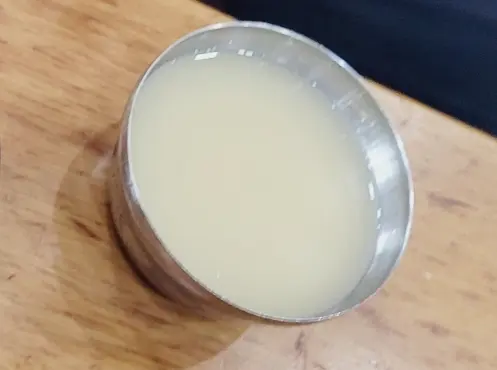
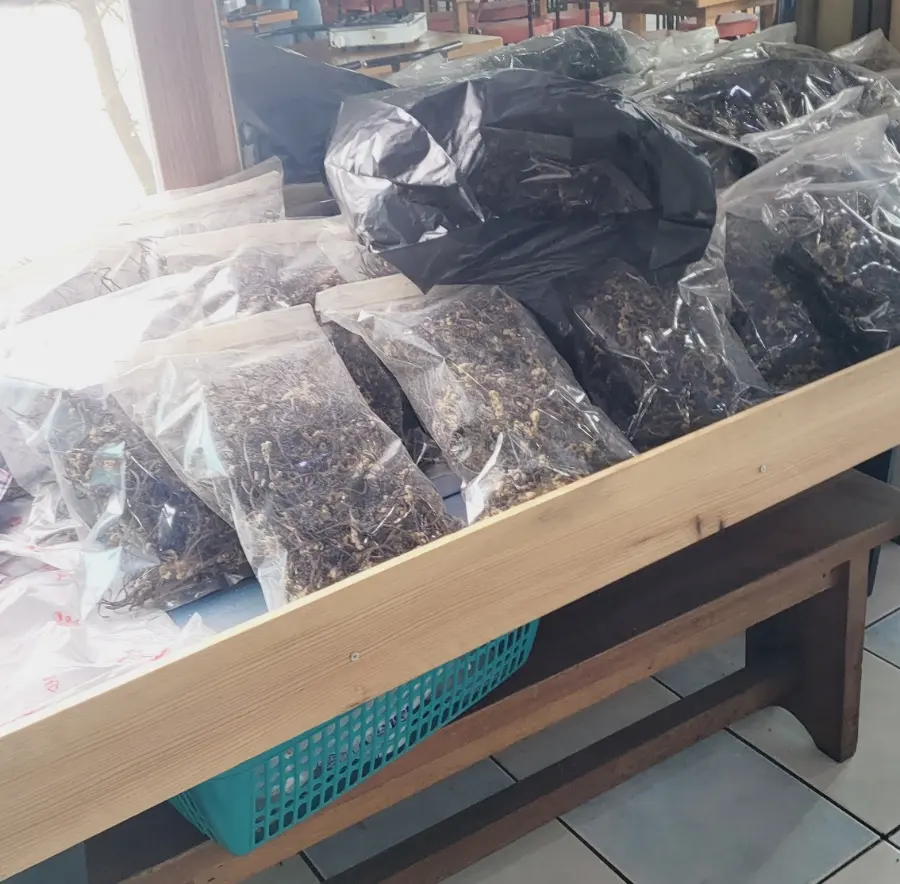
After our meal, a few folks even bought some fresh gosari directly from here!
(Me? I passed, as I wouldn't know what to do with it in the kitchen!)
Back on the bus we went,
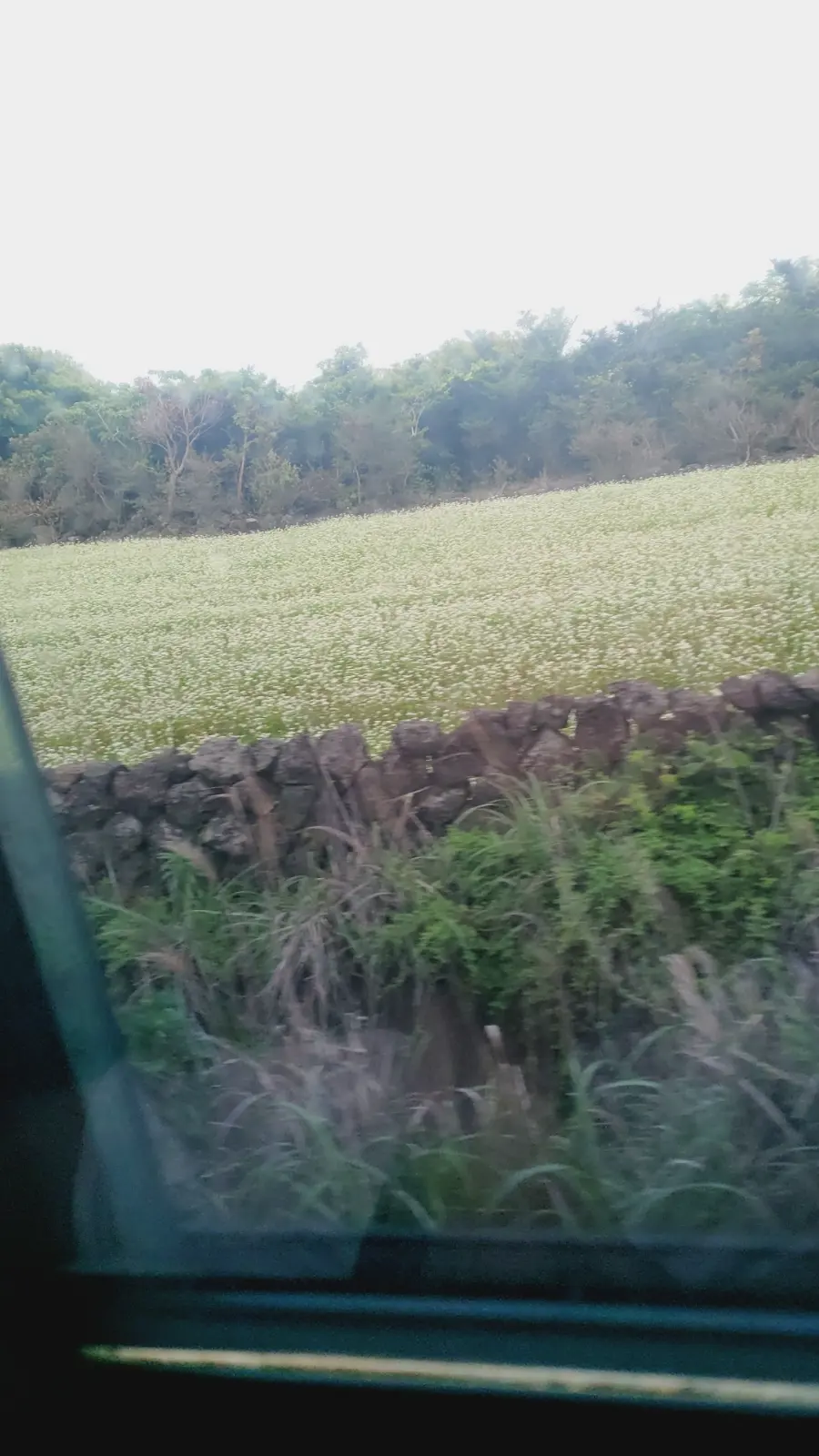
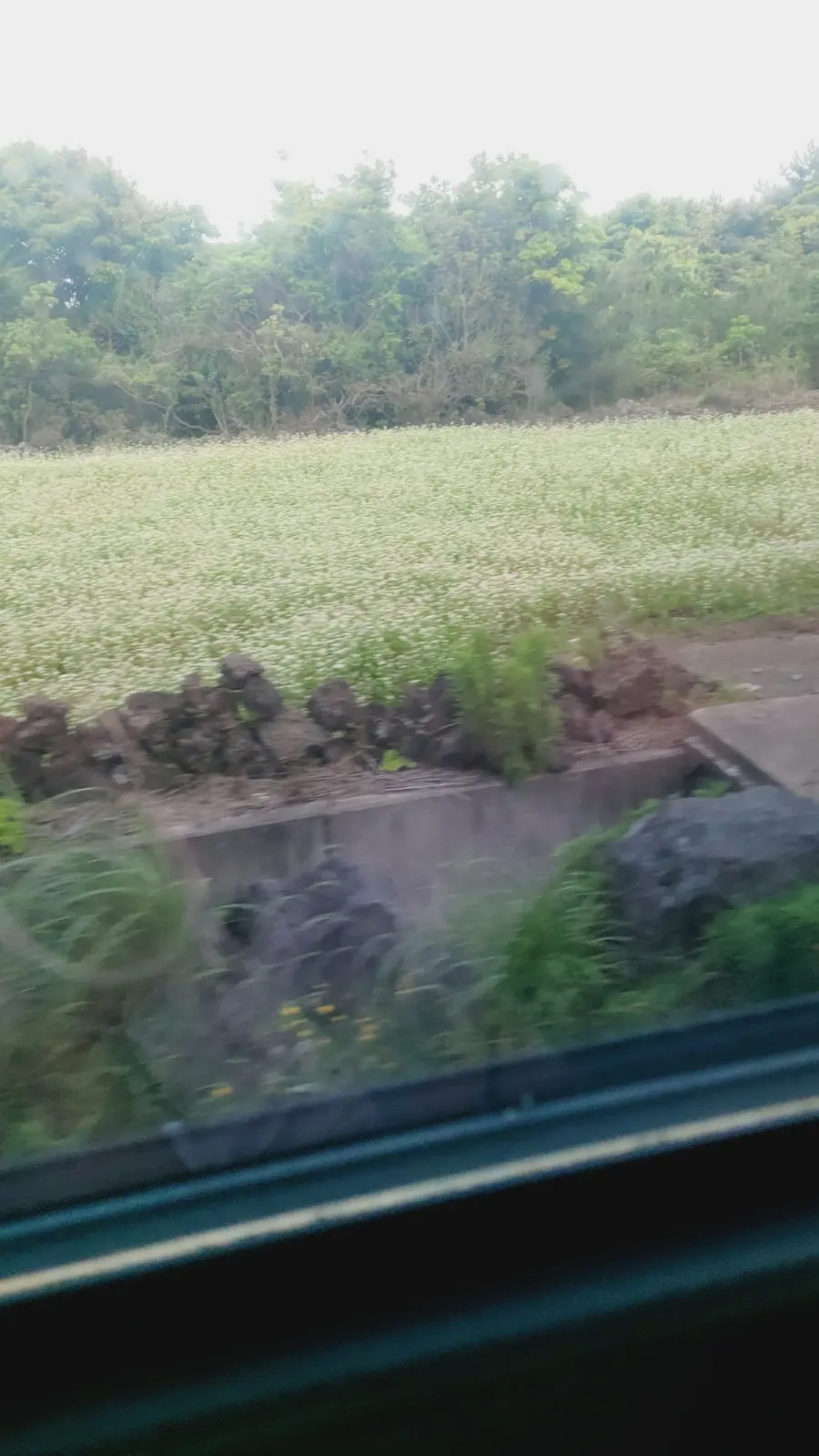
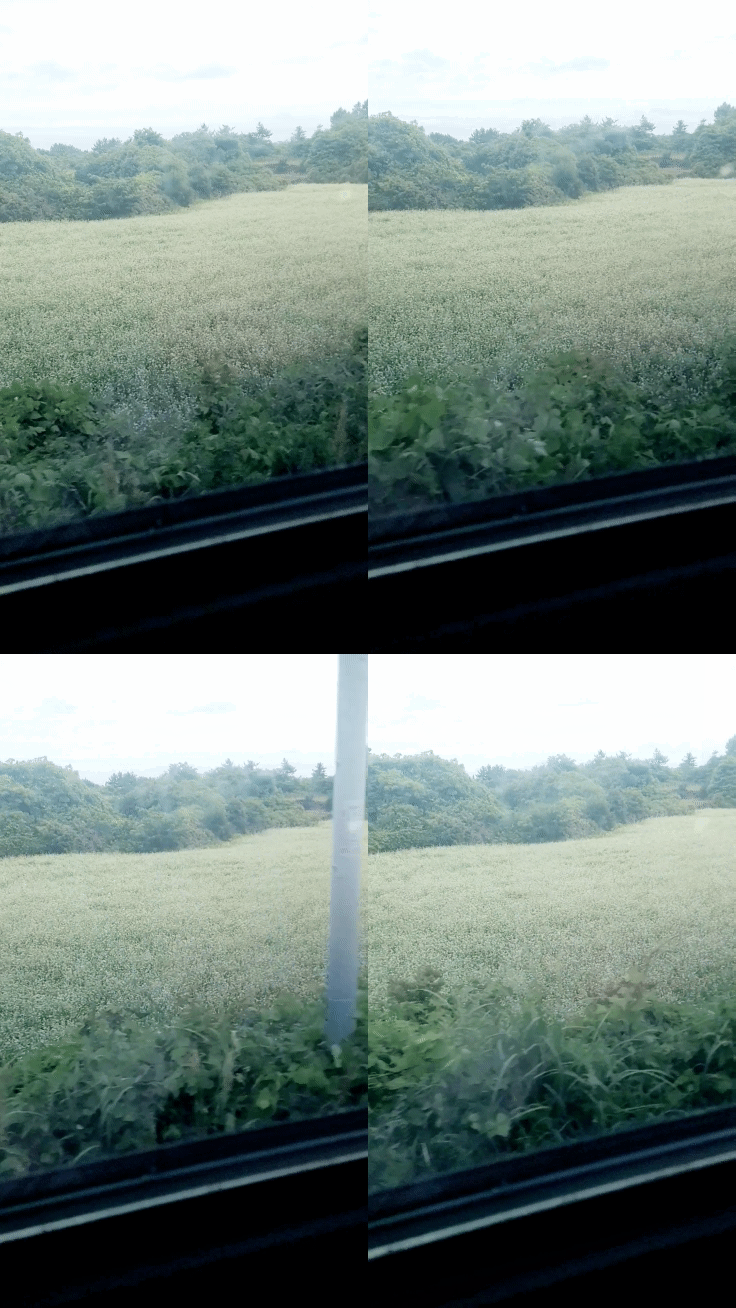
and soon we spotted a beautiful buckwheat field!
(Our guide pointed it out to us, urging us to look out the window!)
He described it as a 'white buckwheat field, as if sprinkled with salt' – and it truly was a breathtaking sight.
Udo Island
Finally, it was time for our Udo Island adventure!
While it was a bit cloudier and windier than earlier,
the weather was absolutely perfect for exploring.
Time to hop on the passenger ferry – let's go!
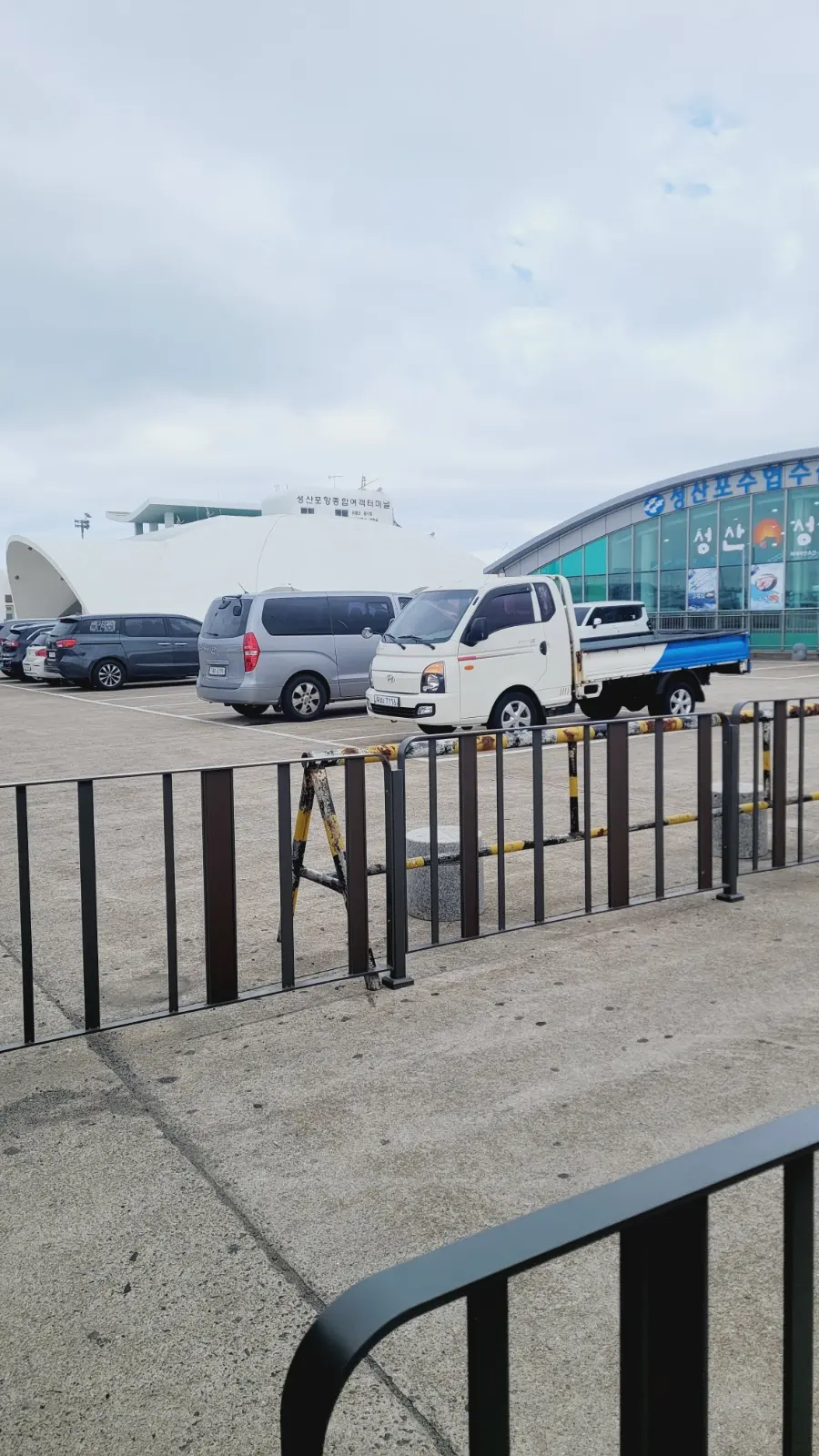
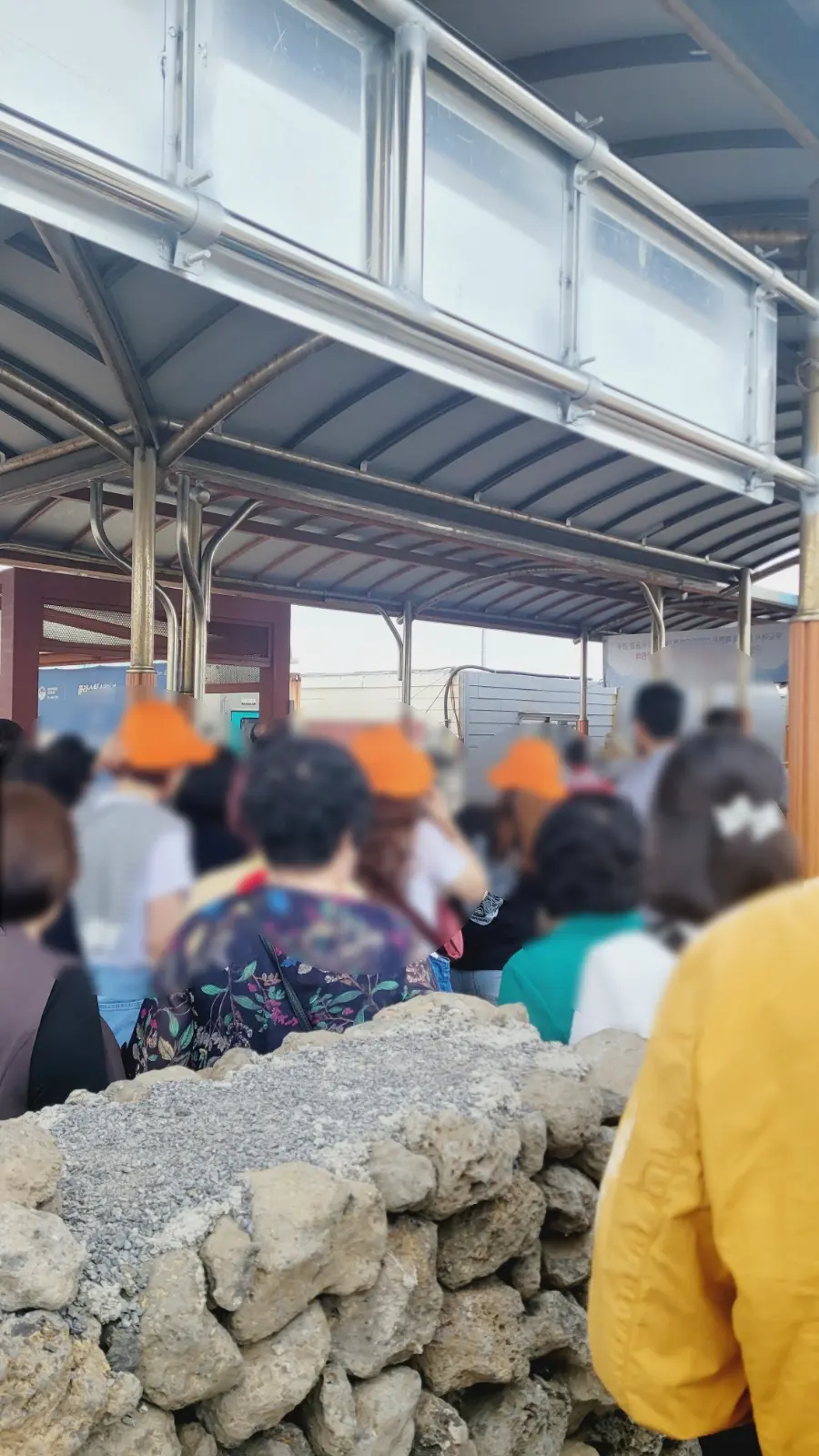
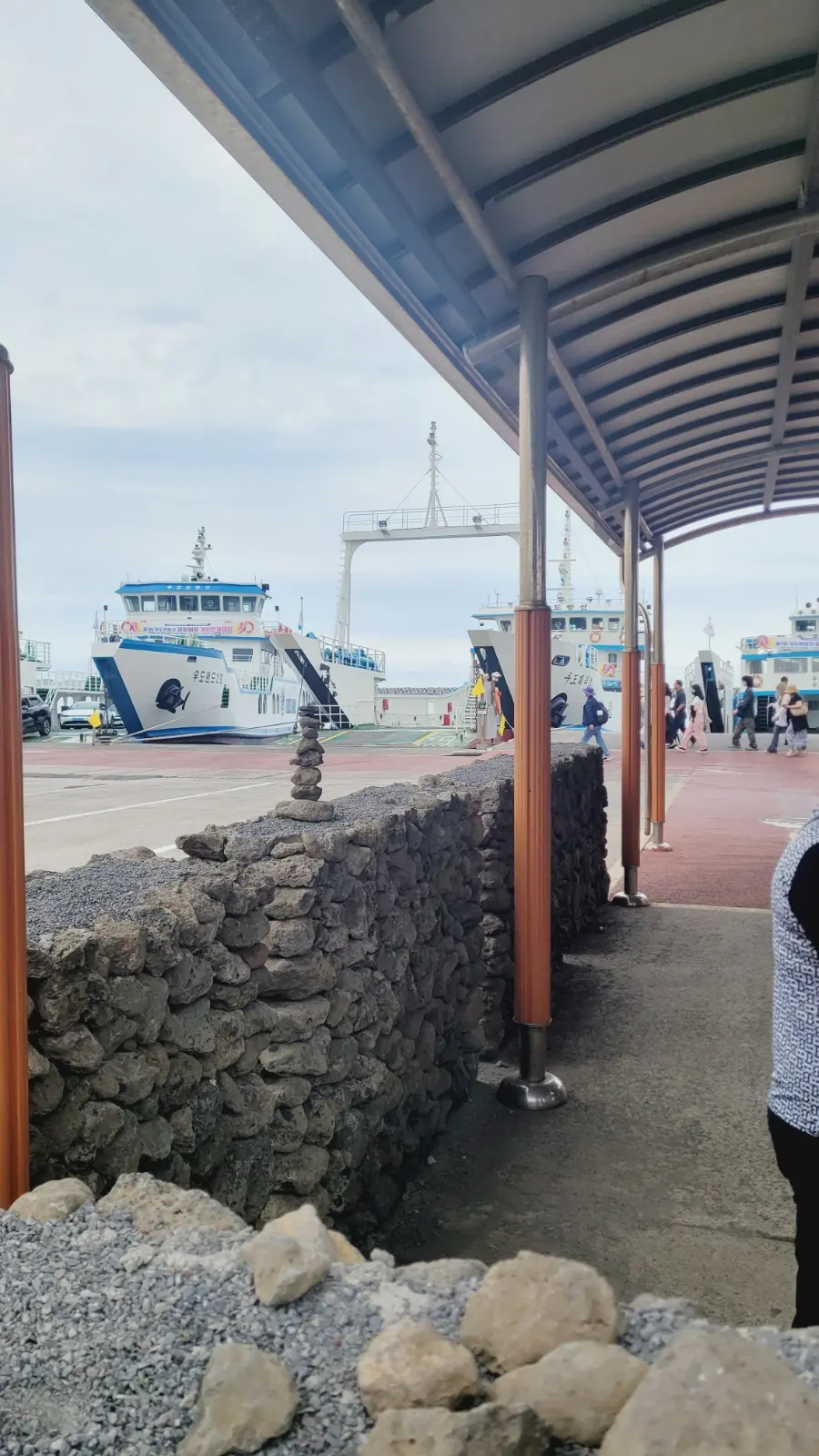
The line was quite long,
but once we were on board, the wait felt like nothing!
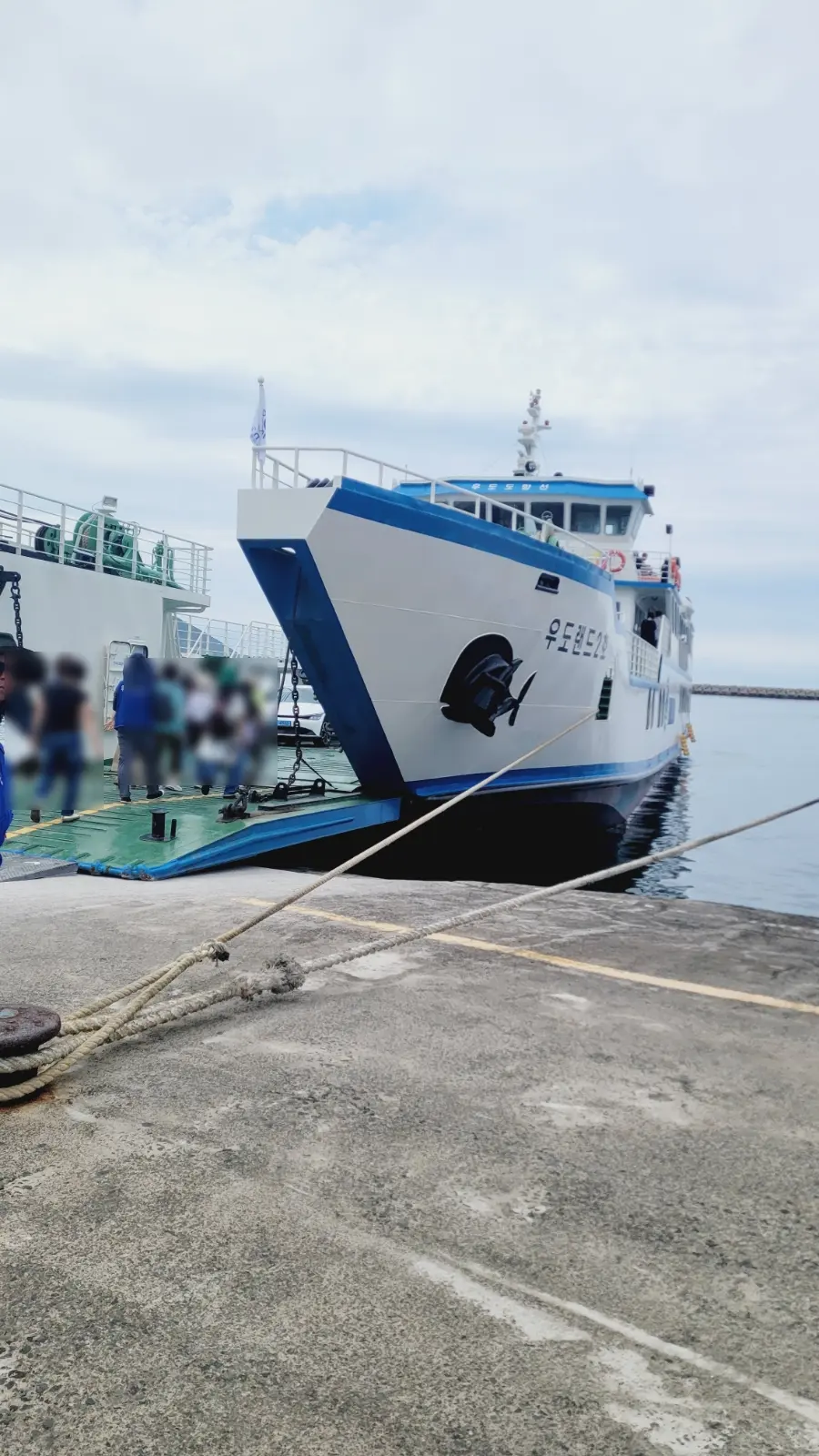
The ferry heading to Udo Island was incredibly spacious, designed to carry cars.
And since it sailed quite slowly,
the kids kept saying how much more fun yesterday's cruise ship was, haha! (Oh, kids! 😉)
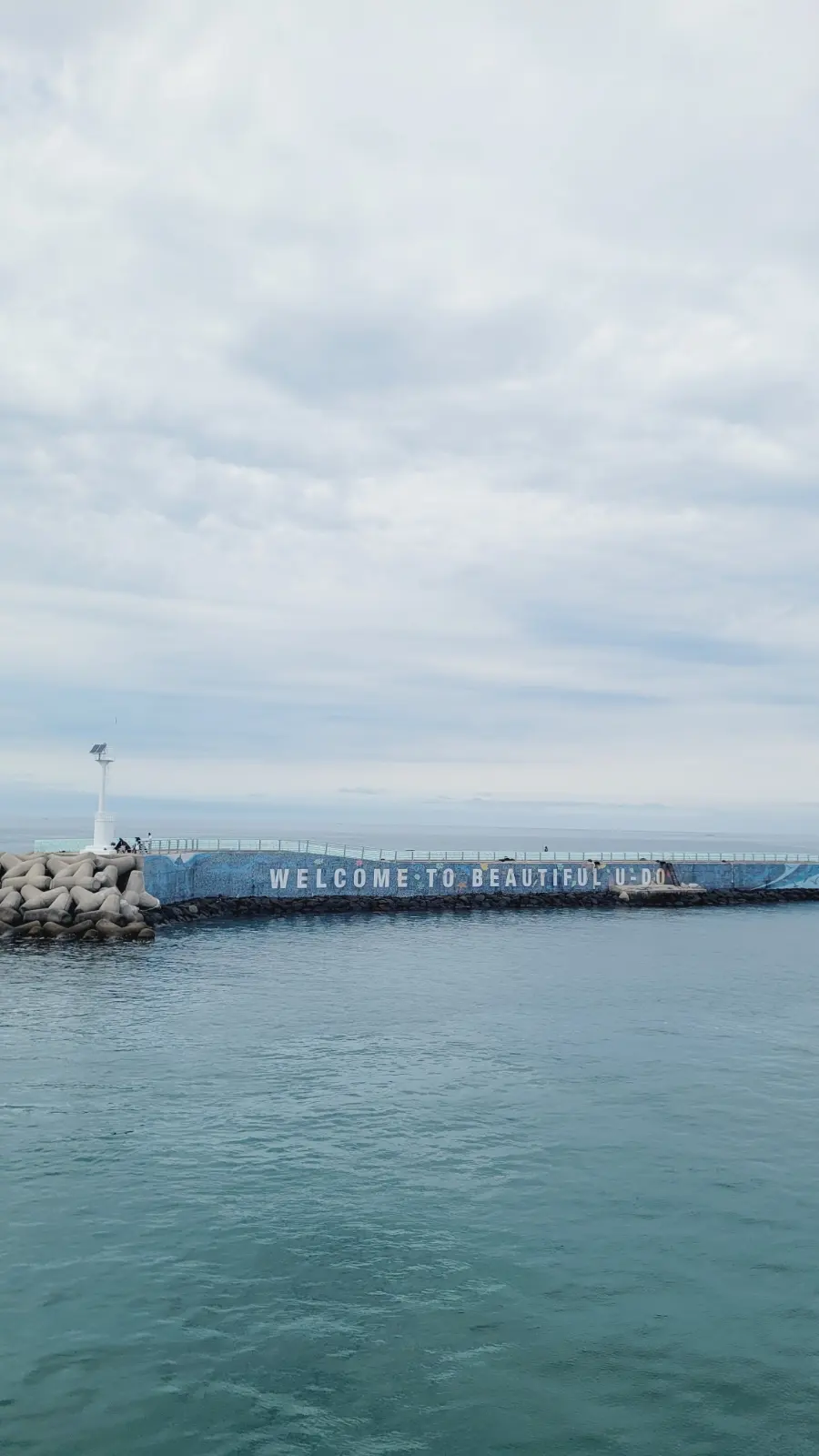
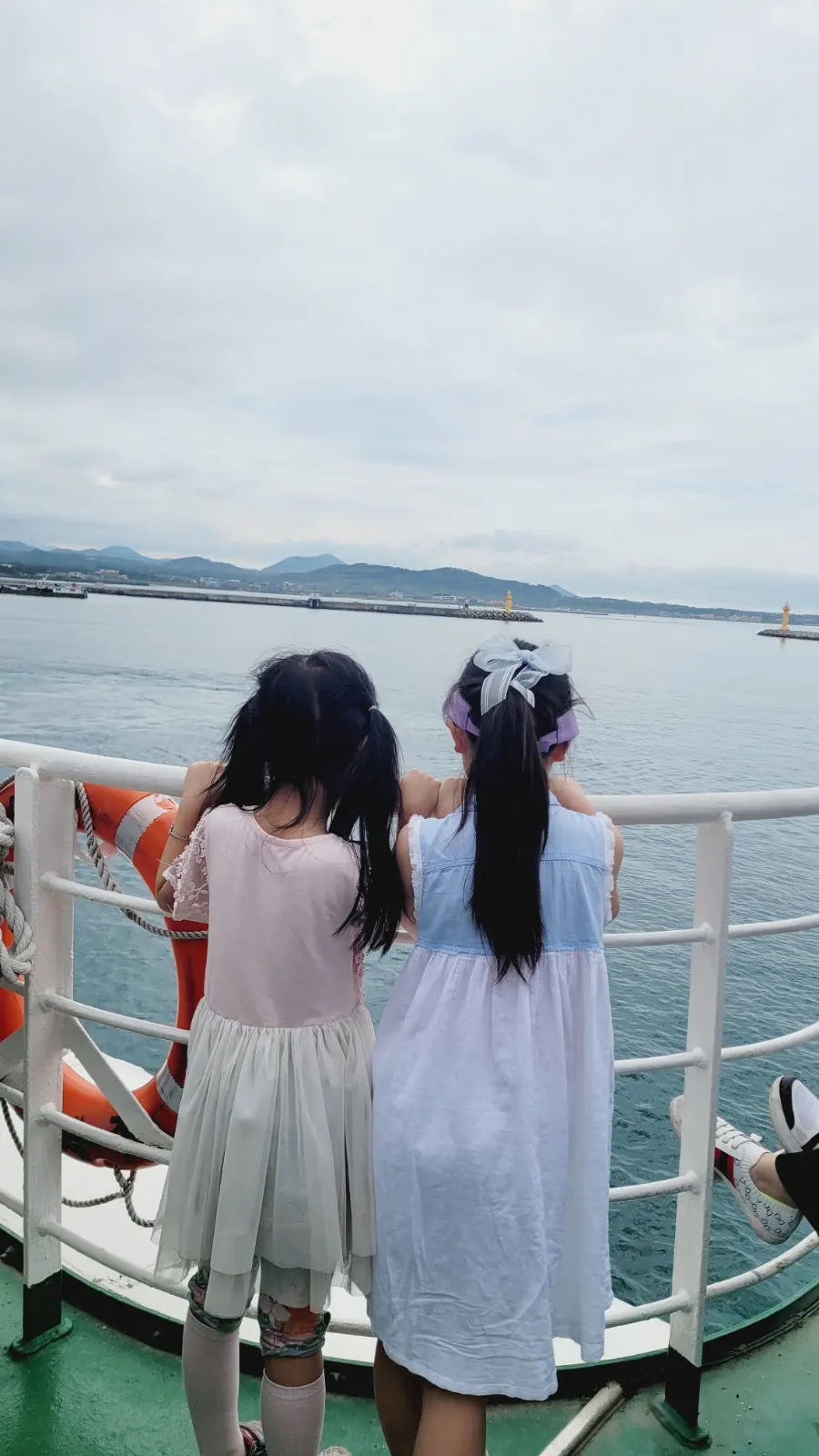
Before we knew it, we had arrived at Udo Island!
Upon arrival, we transferred to a different bus.
From now on, this bus would be our trusty chariot for exploring Udo.
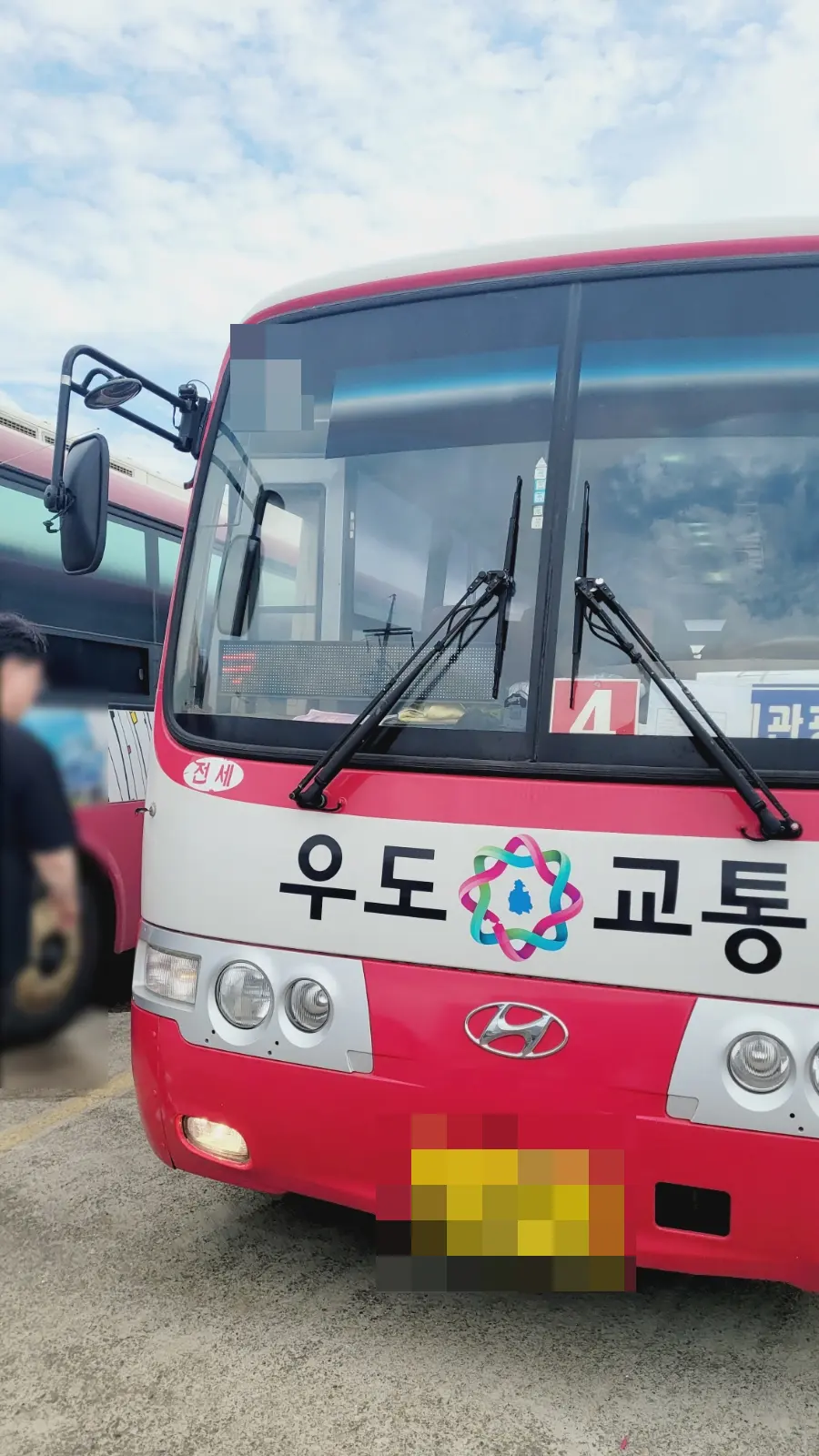
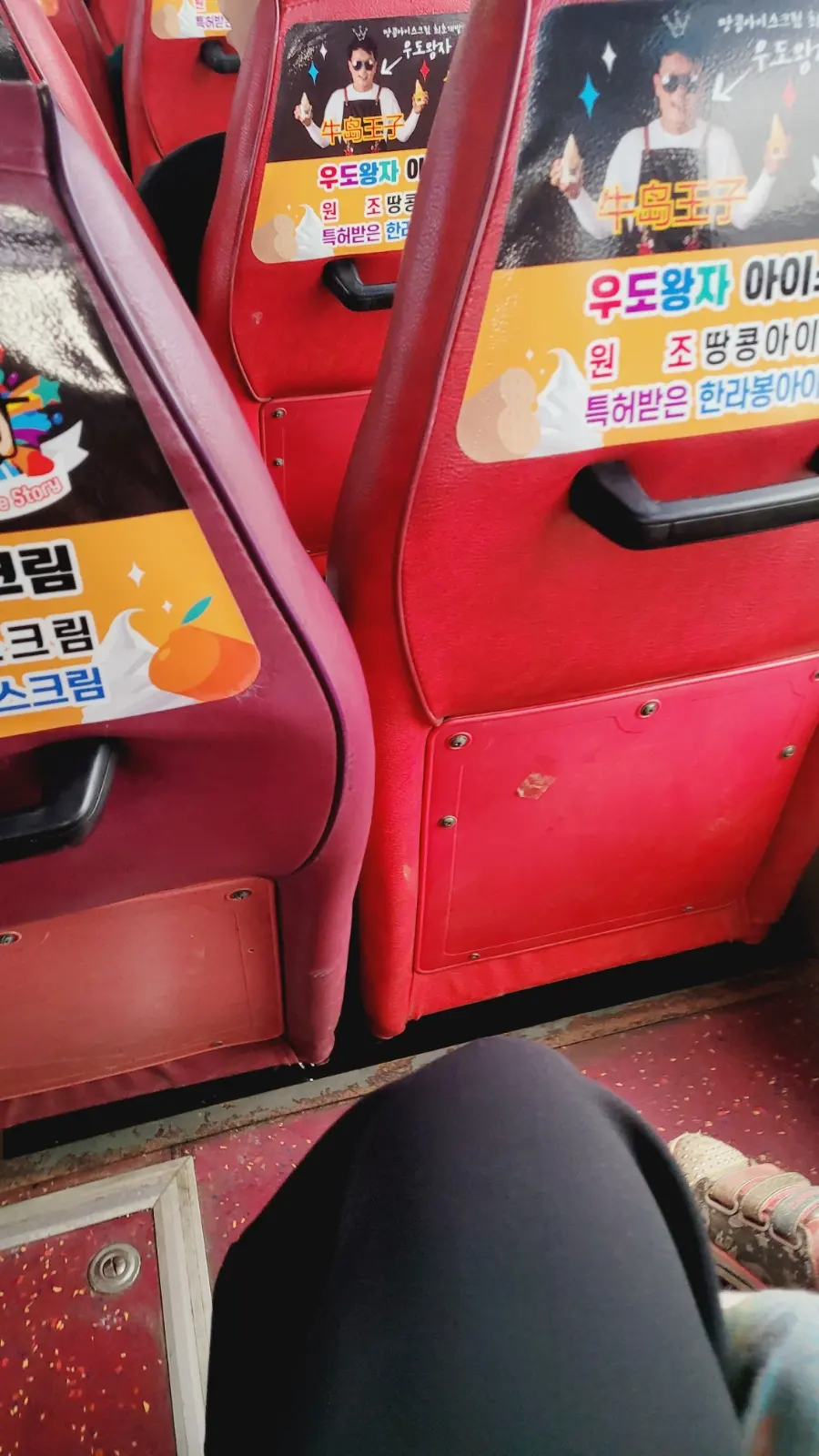
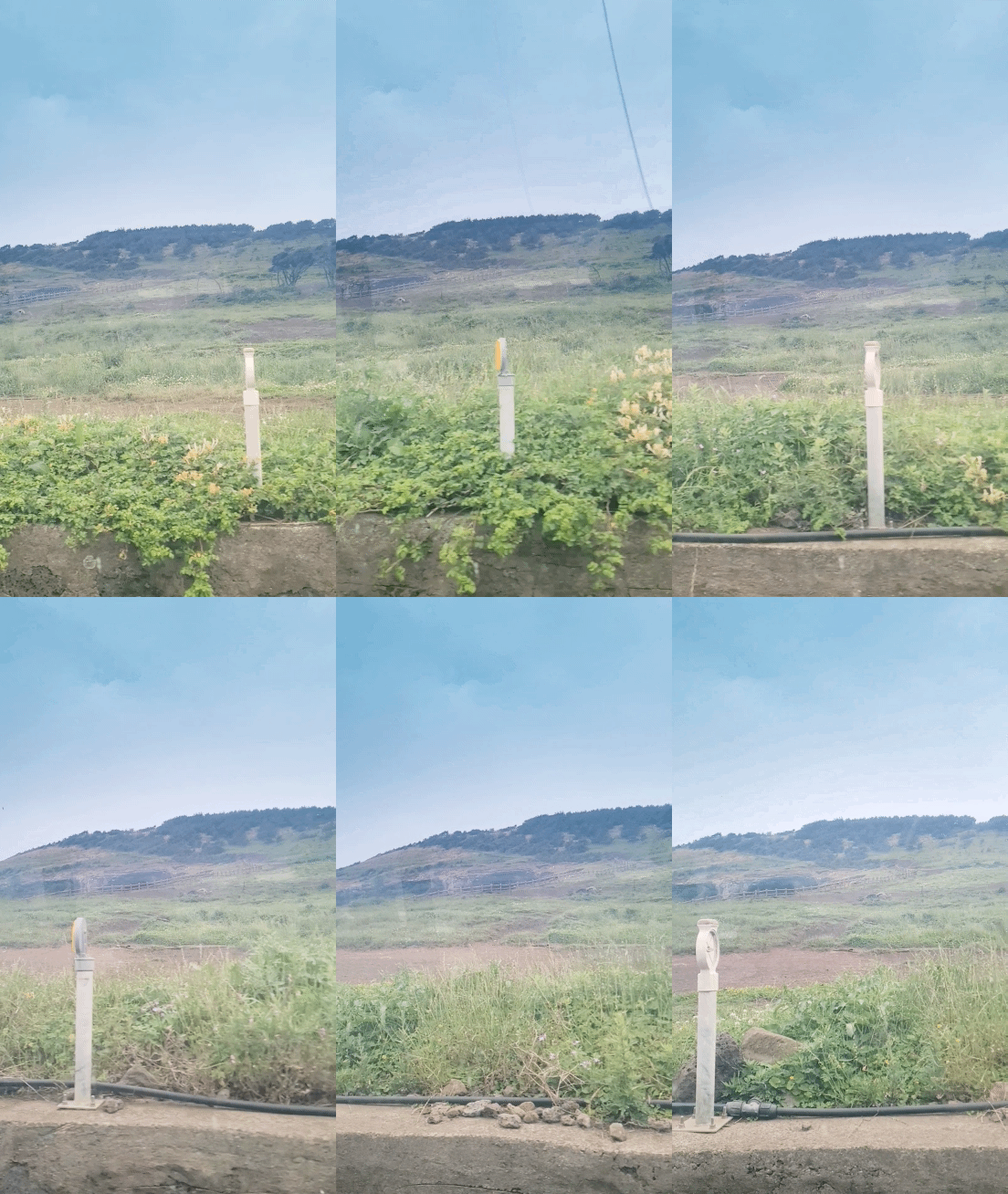
Udo is the largest of the islands,
and they say it's called Udo because its shape resembles a cow – how charming is that?
I also heard that a lot of peanuts grow here
(but the driver's voice was low, so I couldn't hear well;;)
and saw the picturesque stone walls piled up.
There were even horses here too!
And then we immediately went to indulge in some peanut ice cream!
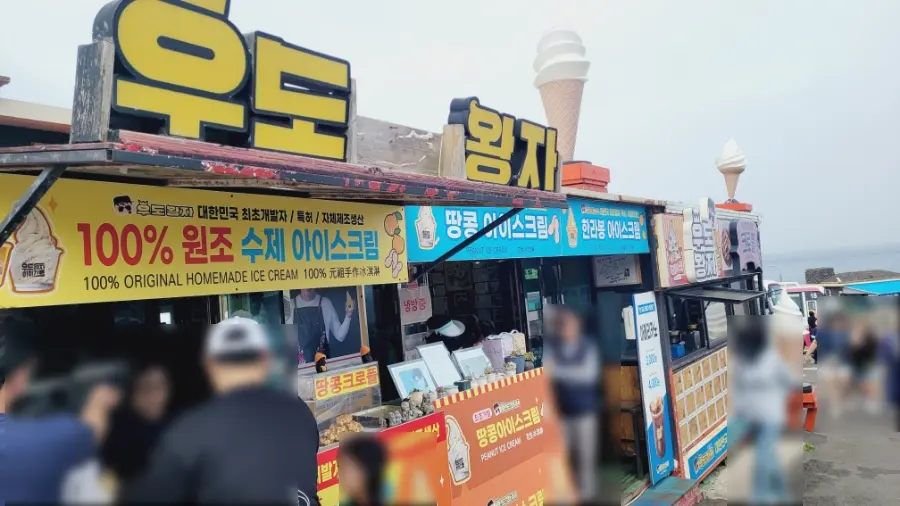
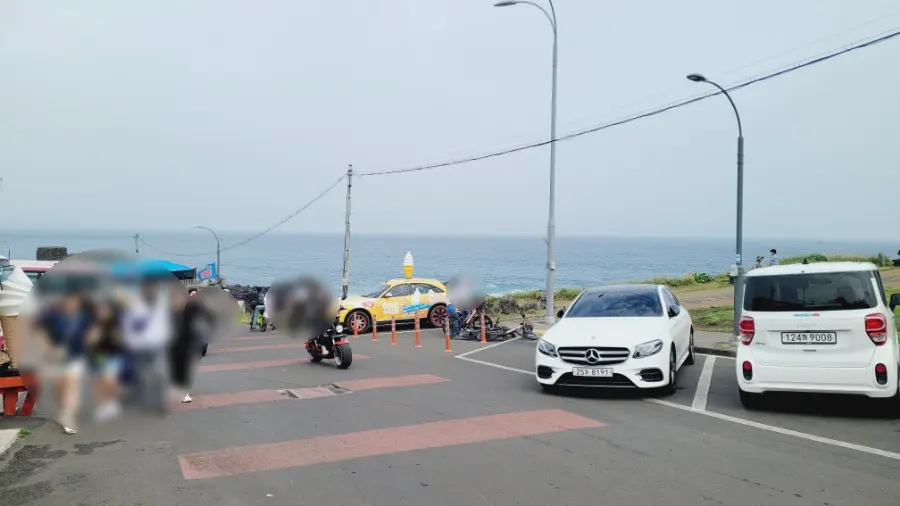
Our guide, a true veteran, told us that the peanut ice cream here was the absolute best,
and led us straight to this spot.
And since our guide is a pro, we trusted them completely!
However,
at this place,
they actually charged extra VAT for card payments;;;;
(Do places like this still exist these days? ;;;)
Luckily, our amazing guide lent us some money, so we were able to pay in cash.
The kids and I were incredibly excited,
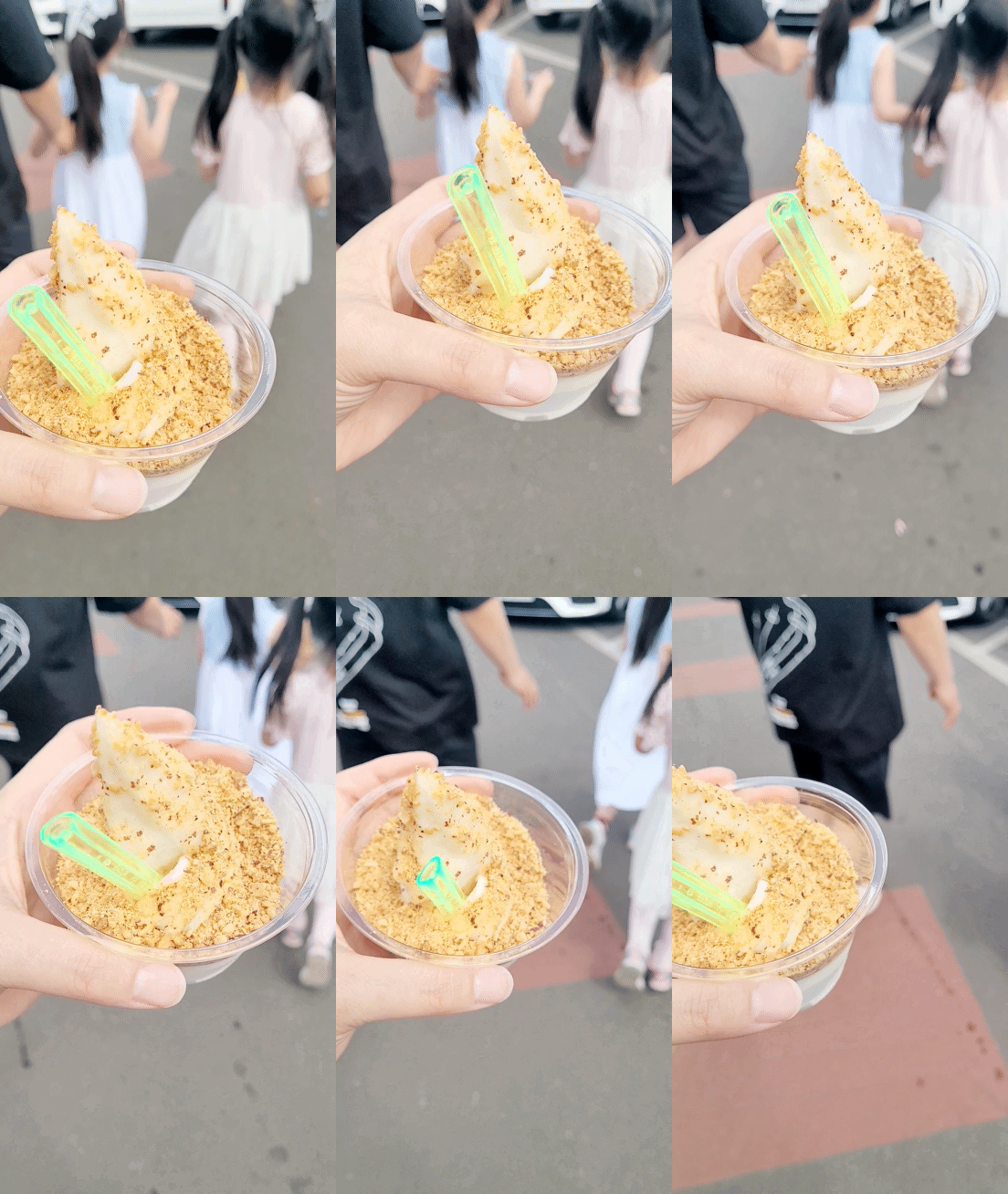
I was busy taking photos while savoring my ice cream,
and although the kids left some of the peanuts,
it was truly amazing that my second child, who usually shies away from peanuts, actually devoured them!
Next, we embarked on a walk up Udobong Peak.
I pulled out my trusty selfie stick and went wild, taking tons of photos!
The pictures turned out absolutely fantastic.
I captured so many great shots here too.
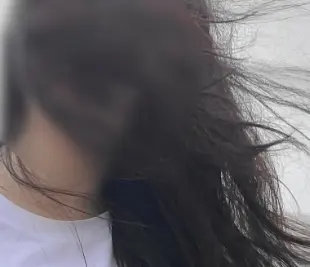
The wind was blowing so hard, it completely covered my face – offering a bit of anonymity!
Thanks, wind! Haha!
At Geommeolle Beach,
the sea fog was incredibly thick,
and they said there was a cave shaped like a human face;;;;
but I couldn't find it.....
After taking countless photos with the kids,
we made a quick stop at a souvenir shop and then hopped back on the bus.
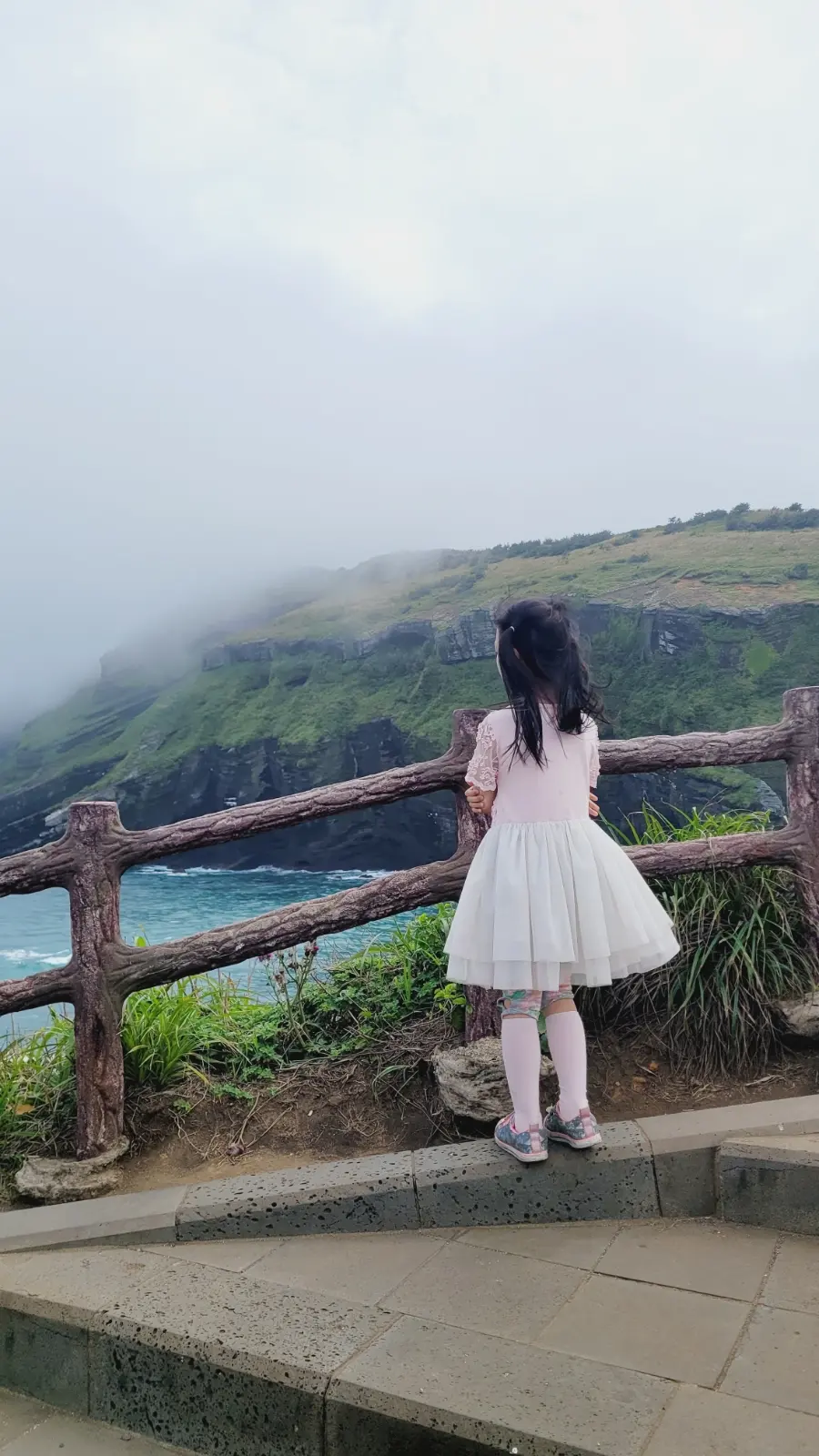
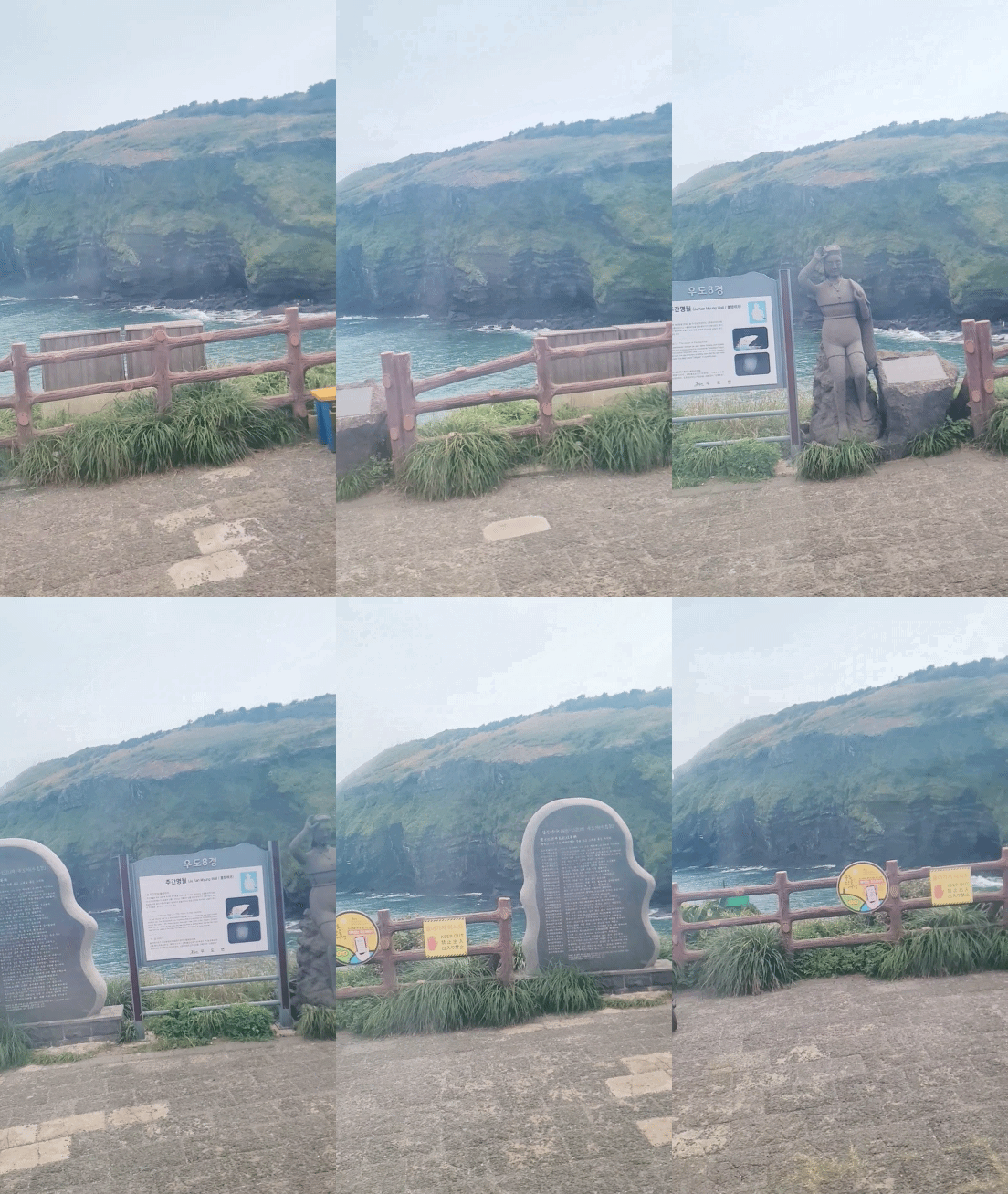
The wind was blowing so strongly,
I even got a "ghost hair" photo myself!
I took off my hat so it wouldn't fly away,
and my hair instantly transformed into a wild broom...
Back on the bus, off we go!
Coral Beach
We arrived at a truly special beach on Udo with a name that’s a bit of a tongue-twister!
(I had actually written "Hongjodangwathis-and-thatbeach" in my notepad, haha!)
It was Hongjodangoe Haebin! Hahaha!
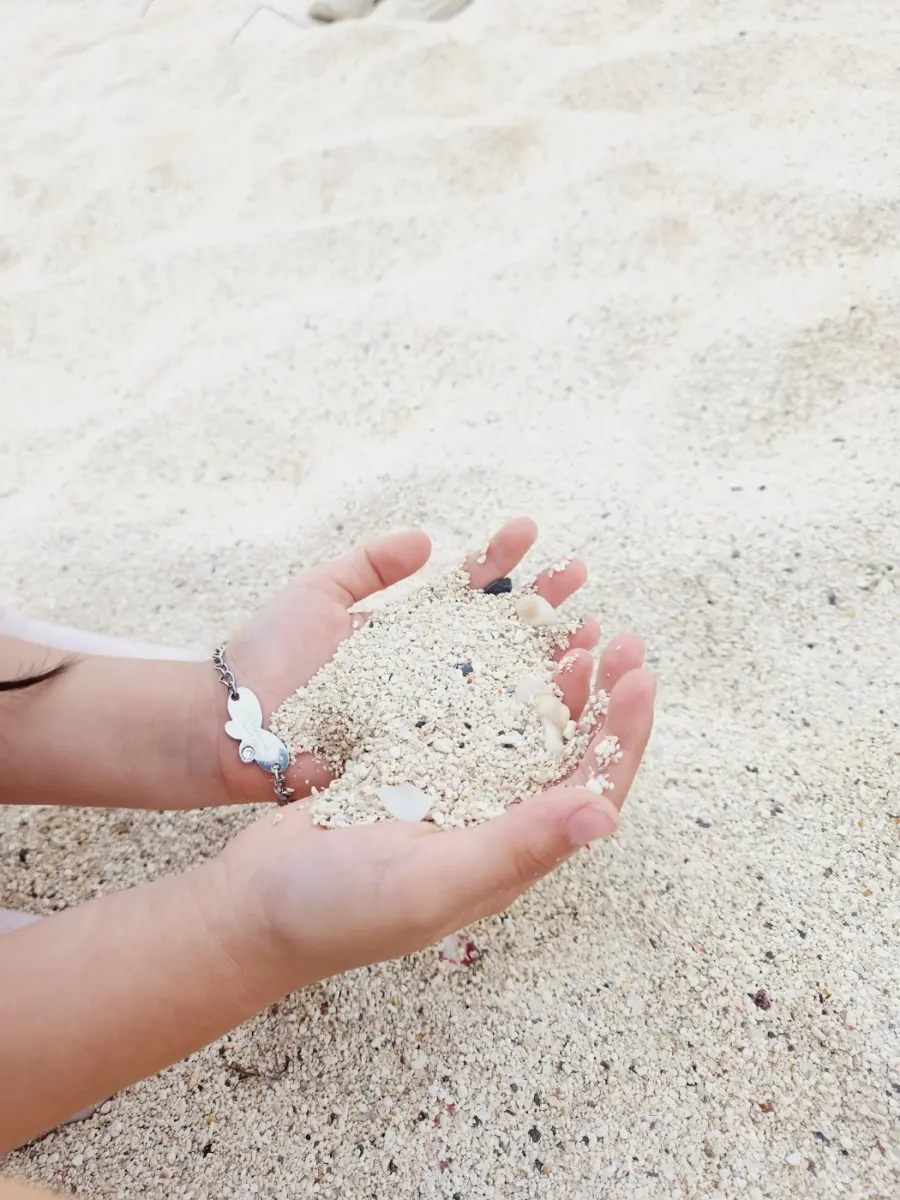
This beach is one of the 8 Scenic Wonders of Udo, formed by red algal fragments (like red algae or coral) washed ashore by the waves and accumulated.
This Hongjodangoe Haebin is also known as Seobinbaeksa,
which refers to a beach landscape with white sand.
I remember hearing there are only three such beaches in the entire world, but I couldn't recall, so I looked it up.
That's why it's strictly prohibited to take any fragments away.
They even tell you to shake them all out if they get into your shoes, haha!
My eldest daughter got such a fright, she was vigorously shaking her shoes out, haha!
A beach where red algal fragments are washed ashore by waves and accumulate is called a Hongjodangoe Haebin (Red Algae Fragment Beach).
The sediments forming Udo Beach are almost 100% composed solely of these red algal fragments, giving it extremely high academic value.
In Korea, sediments composed solely of red algal fragments are found uniquely on Udo Island, Jeju,
and it is a very rare phenomenon worldwide. Furthermore, a beach sediment composed solely of such red algal fragments around a volcanic island like Jeju is considered unique globally.
[Naver Encyclopedia]
There was seaweed like 'miyeok' (a type of brown seaweed) washed up on the beach,
so we took photos and played around higher up on the shore.
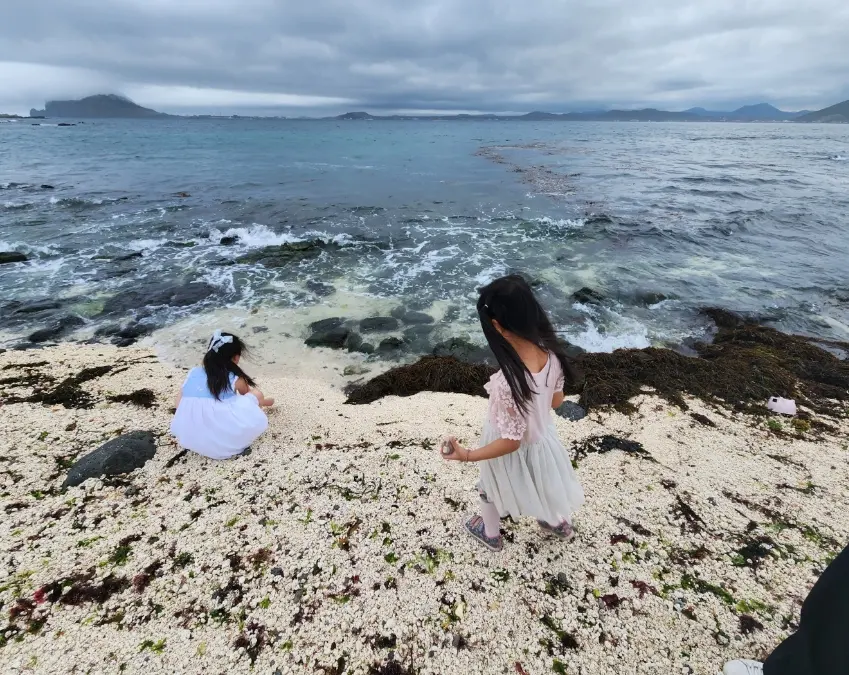
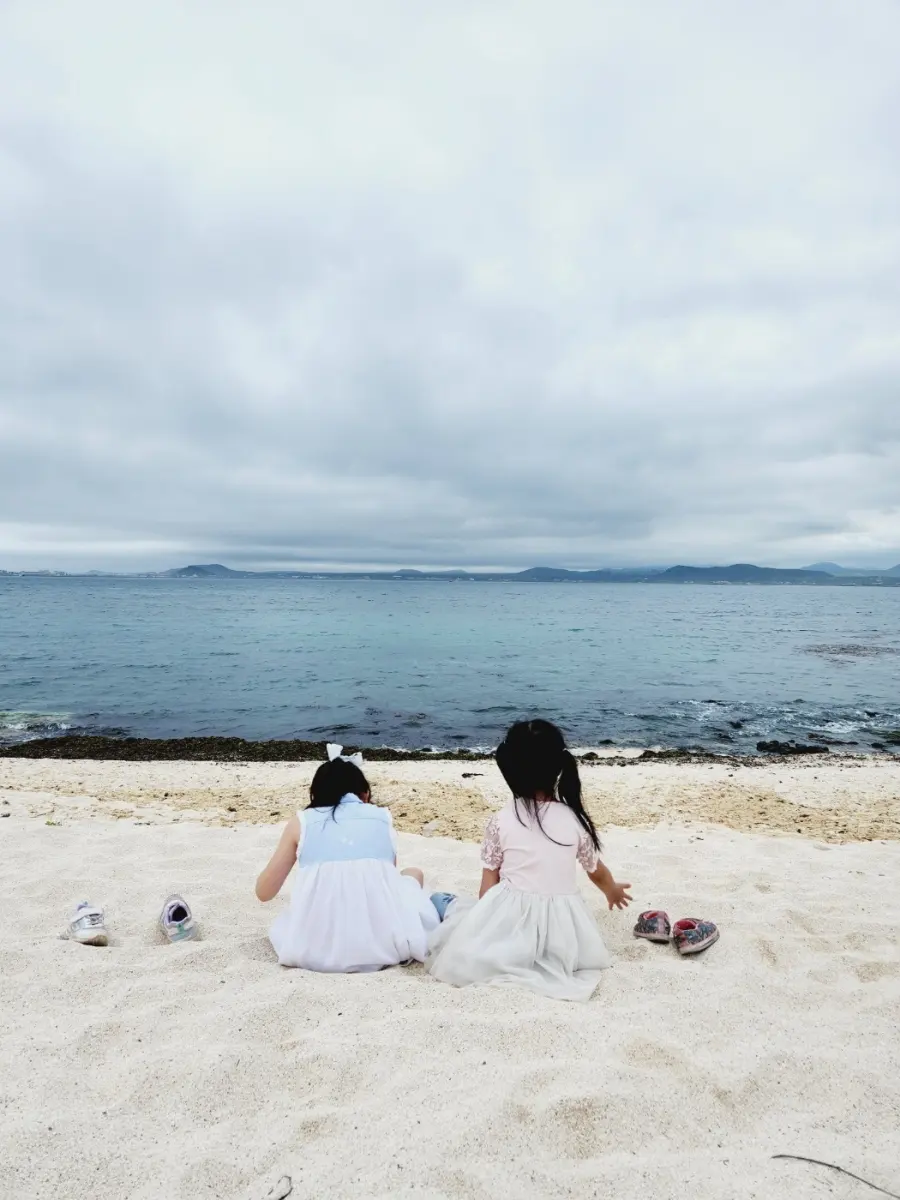
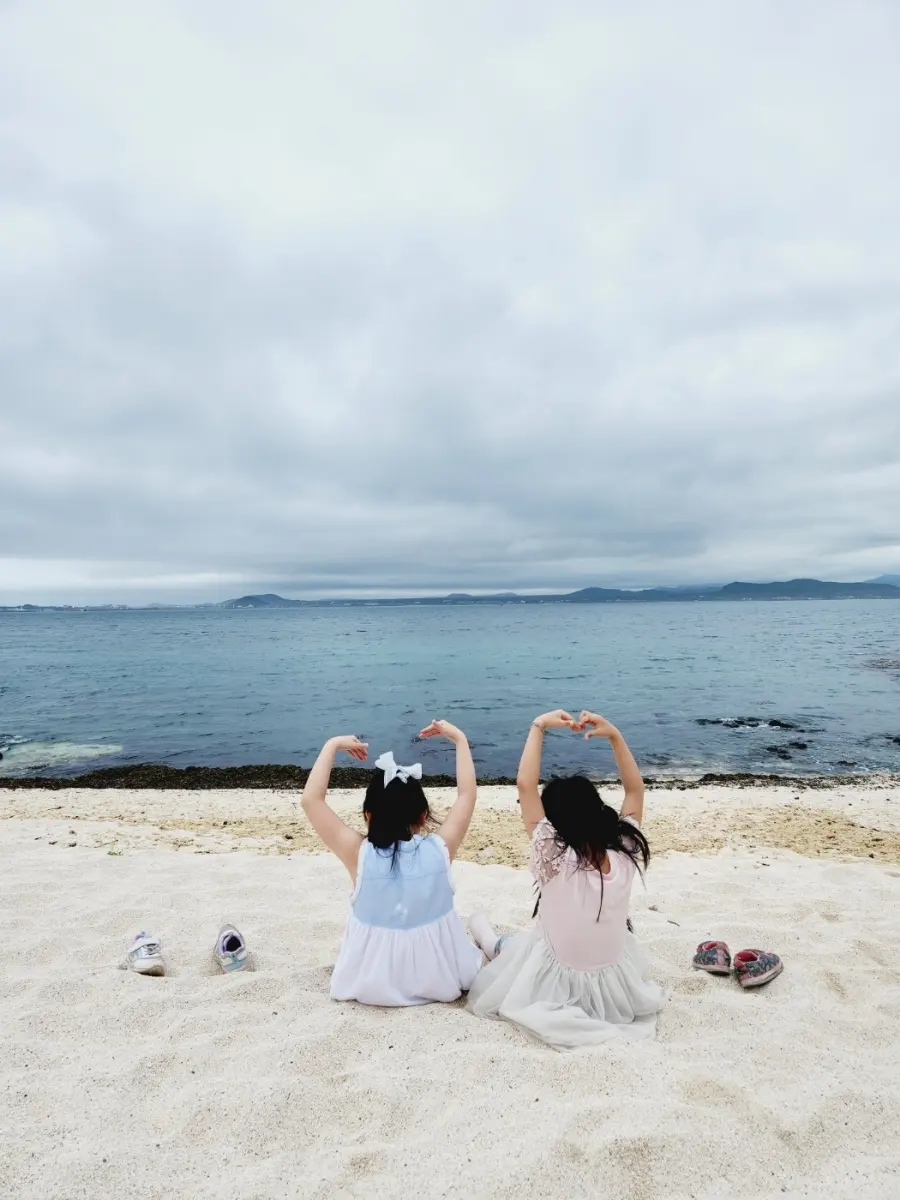
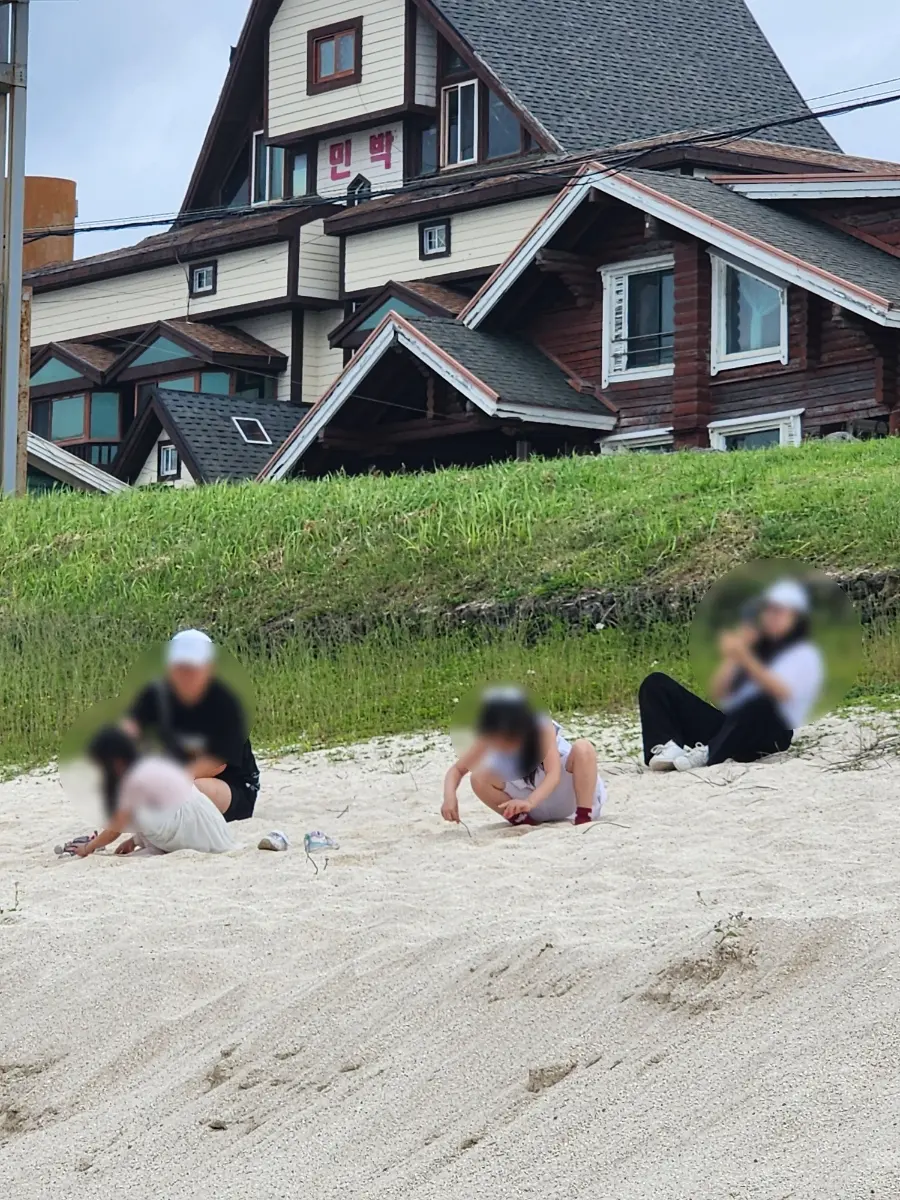
We spent a delightful amount of time here, playing and capturing endless memories.
The kids always look absolutely great in photos~
My pose when taking photos of the kids, haha!
(Our guide took this one for us!)
Now, heading off to dinner,
they must have been utterly exhausted, because they totally conked out on the bus....
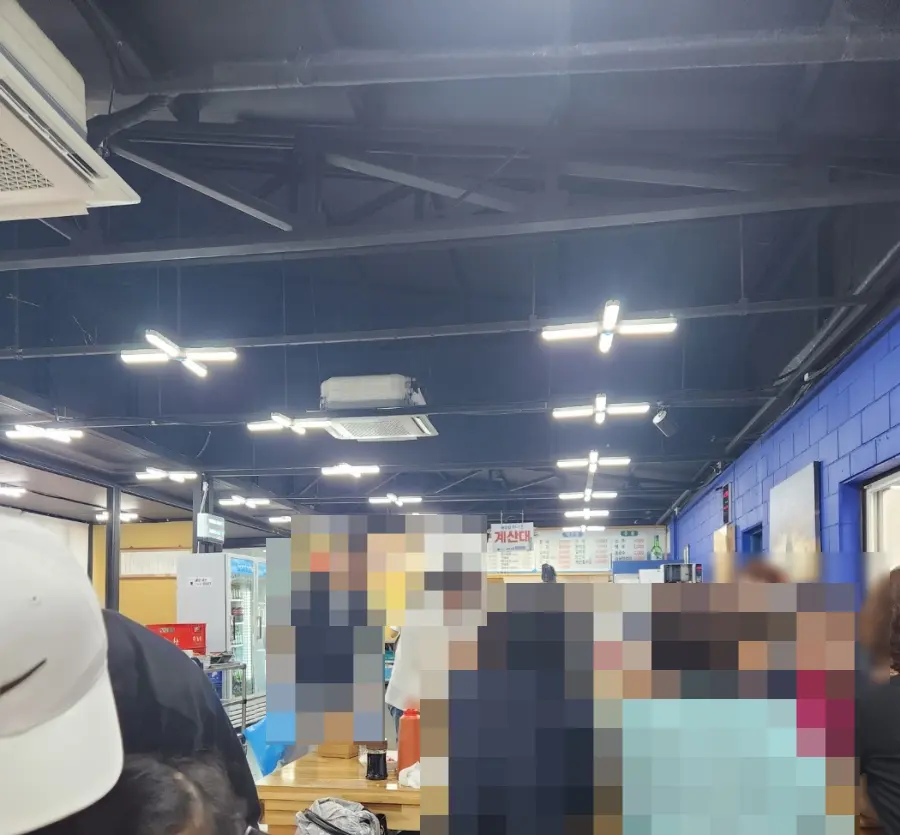
Dinner: Abalone Porridge
Abalone porridge is usually provided as a standard meal,
For the raw fish plates, you simply pick up whatever you fancy,
and they say they even bring card readers right to your table for easy payment!
Our guide highly recommended the mackerel sashimi,
telling us to grab that first! (~$22)
Most plates were in the ~$15 to ~$22 range.
Since we're not big seafood connoisseurs,
my husband just brought back some soju and live octopus!
Our youngest was still lost in dreamland,
and our eldest only managed a few bites of live octopus, totally refusing the abalone porridge ㅠㅠ
So, my husband and I ended up having two bowls each!
That abalone porridge was seriously amazing.
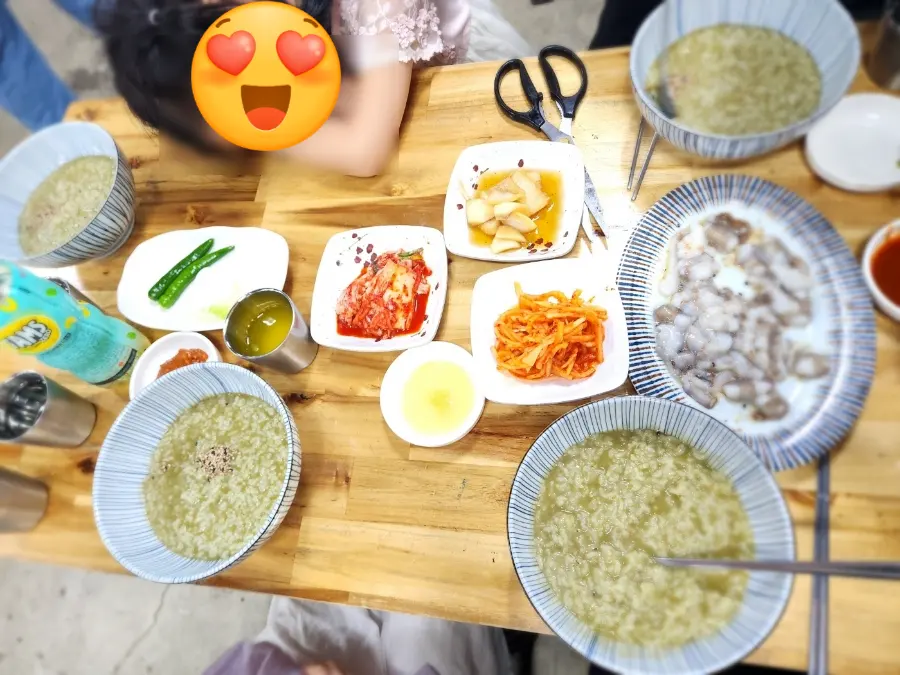
And with that, it was time to head back to the hotel!
(The kids, on the other hand, went back to the hotel and grabbed some
cup noodles and triangular gimbap from the convenience store!)
All in all, another day well and truly seized!
Find out more about Jeju rental cars
Frequently Asked Questions
What were the specific items recommended by the guide at the Jeju souvenir direct sales store on Day 3, and what was the price of the sea algae shampoo?
The guide recommended horse leather products, amethyst, camellia oil, sea algae shampoo, and magma black stone. The sea algae shampoo was mentioned to be ~$25 per bottle, which was the same as the online price.
How long did it take to explore Saryeoni Forest Path during the Day 3 itinerary, and what are its main features?
We spent approximately 30-40 minutes exploring Saryeoni Forest Path. It's composed of cedar trees, making it a refreshing place that's great for photos. In spring, there's a lot of pollen, which can cause allergies.
What was the cost for family photo printing during the horseback riding experience on Day 3, and how was the experience conducted?
During the horseback riding experience, a photographer took photos of each family, and the cost for printing and framing them was ~$24. The experience involved a person holding the horse's reins and walking it around a track, taking about 10 minutes.
What was the price of the horse bone extract pills (Malgolhwan) and grub pills (Gumbenghwan) among the health products introduced directly by Jeju locals at Seongeup Folk Village?
At Seongeup Folk Village, horse bone extract pills (Malgolhwan) and grub pills (Gumbenghwan) were introduced, each costing ~$276. It was mentioned that Malgol is a special product available only in May and June.
What should I be aware of when paying at the peanut ice cream shop recommended by the guide in Udo?
At the peanut ice cream shop recommended by the guide, an additional VAT was charged for card payments. It was advisable to pay with cash, and if cash was not available, the guide could assist with a cash payment.
Share this article
Related Travel Stories
Aewol The Sunset Resort Jeju Review 2026: Private Pool & Spa
Looking for the ultimate private pool villa in Jeju? Read our review of Aewol The Sunset Resort, featuring a private rooftop pool and floating breakfast.
Cheongju Airport Dining Guide 2026: Best Spots to Eat
Planning a trip through Cheongju Airport? Here is your complete 2026 guide to the best restaurants, local snack spots, and cafes before your flight.
Conan Beach Jeju: A Hidden Gem for Snorkeling in 2026
Find your perfect escape at Jeju's Conan Beach, a serene spot in Gujwa-eup famous for its crystal-clear emerald waters and fantastic snorkeling opportunities. Don't miss the stunning sunsets!
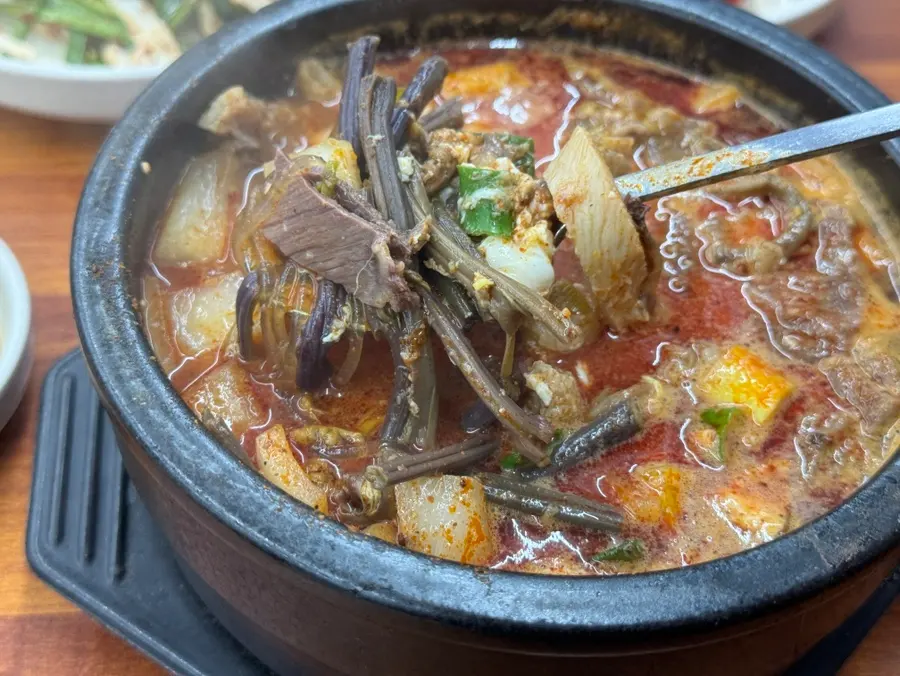
Sunpoong Haejangguk Hamdeok: Jeju's Unique Gosari Yuknae-tang
Craving authentic Jeju flavors? Sunpoong Haejangguk in Hamdeok is a hidden gem, famous for its unique Gosari Yuknae-tang. A must-visit for local foodies!
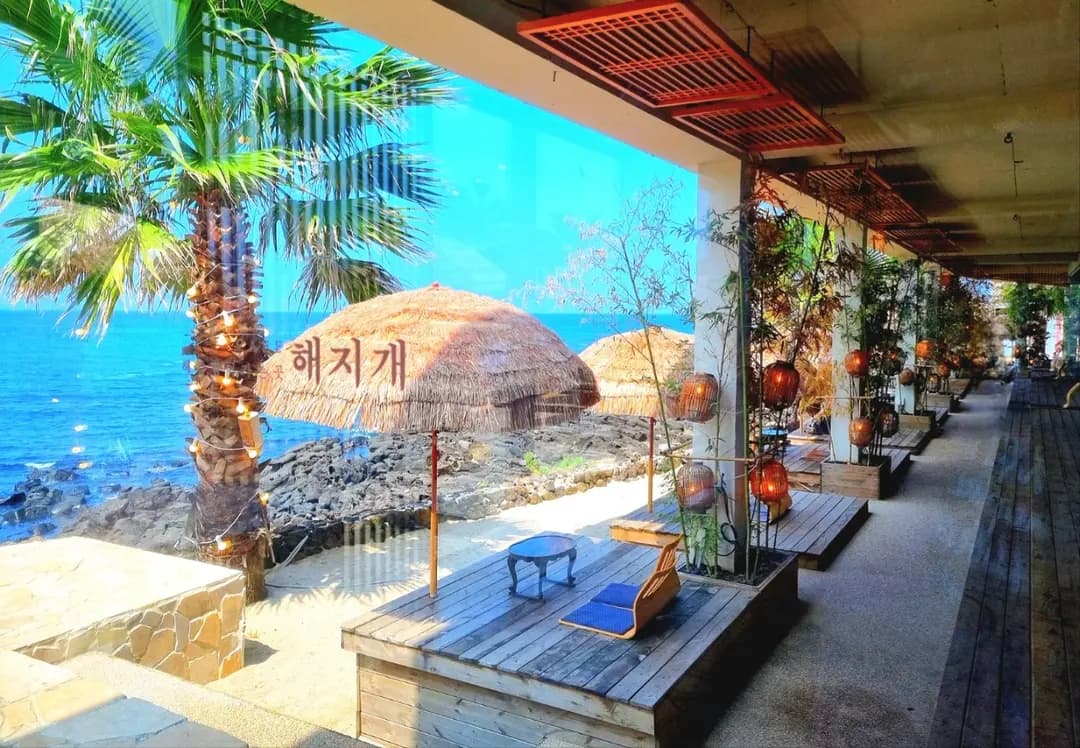
Haejigae Cafe Jeju Review 2026: Best Hanok Ocean Views
Discover Haejigae Cafe in Aewol, Jeju Island. This stunning oceanfront Hanok cafe serves local Hallabong pastries alongside breathtaking sunset views.

Changkkom Rock Jeju Guide: Best Coastal Photo Spot
Explore Changkkom Rock in Jocheon, Jeju Island. Learn about this unique 'window rock', its K-drama connection, and how to capture the perfect coastal photo.