

Prague Castle: St. Vitus, St. George's, Golden Lane Tour
Experience Prague Castle's Main Circuit: St. Vitus Cathedral's interior, St. George's Basilica, and Golden Lane (Kafka's house at No. 22). Your 2026 guide to these iconic sights!

Hey there, Global Explorers!
In my previous Prague Castle review, I covered the entrance tickets, St. Vitus Cathedral's rose window, and the Old Royal Palace. Today, I'm excited to continue with the rest of the itinerary explored using the same Main Circuit ticket.
I've captured the actual walking route, from the chapels and stained glass inside St. Vitus Cathedral to St. George's Basilica, Golden Lane (including Franz Kafka's house at No. 22), and the path down to Malostranská Station after our visit.
📍 St. Vitus Cathedral
III. nádvoří 48/2, 119 01 Praha 1-Hradčany, Czech Republic
📍 St. George's Basilica
119 08 Prague, Czech Republic
📍 Golden Lane
Pražský hrad Hrad III, nádvoří, 119 00 Praha 1-Hradčany, Czech Republic
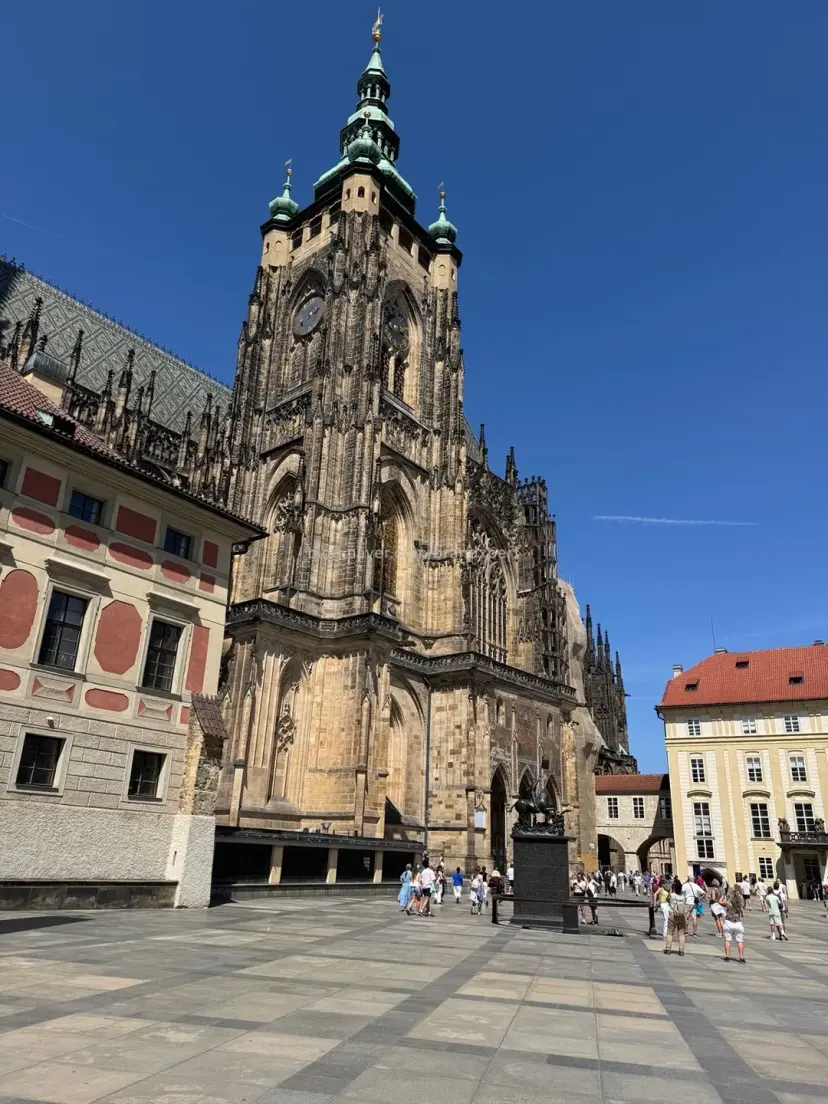
1. Inside St. Vitus Cathedral: Chapels and Stained Glass
As you wander along the nave inside St. Vitus Cathedral, you'll encounter a captivating succession of chapels, intricate stained-glass windows, and monumental tomb sculptures of kings, saints, and nobles.
The striking structure in the photo is the tomb sculpture of Count Leopold Schlik. Located opposite St. Wenceslas Chapel, it was designed in 1723 by Joseph Emanuel Fischer von Erlach, with sculptors like Matthias Bernard Braun contributing to its creation. The blend of black and red marble, golden coats of arms, and multiple carved figures layered within a single structure made it stand out even from a distance.

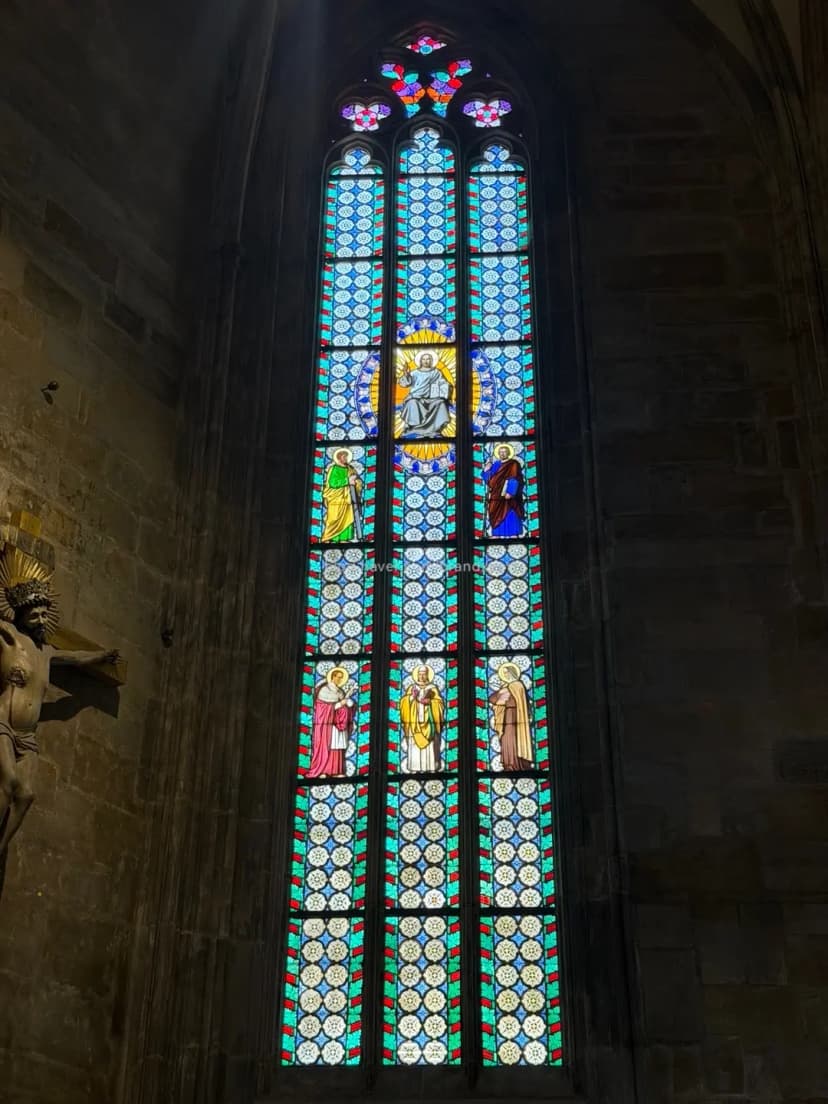
Each window along the nave varied in size and composition. The window pictured above features Christ at its center, flanked by several saints arranged vertically, with repeating blue and red borders that create a distinct atmosphere from the famous rose window.
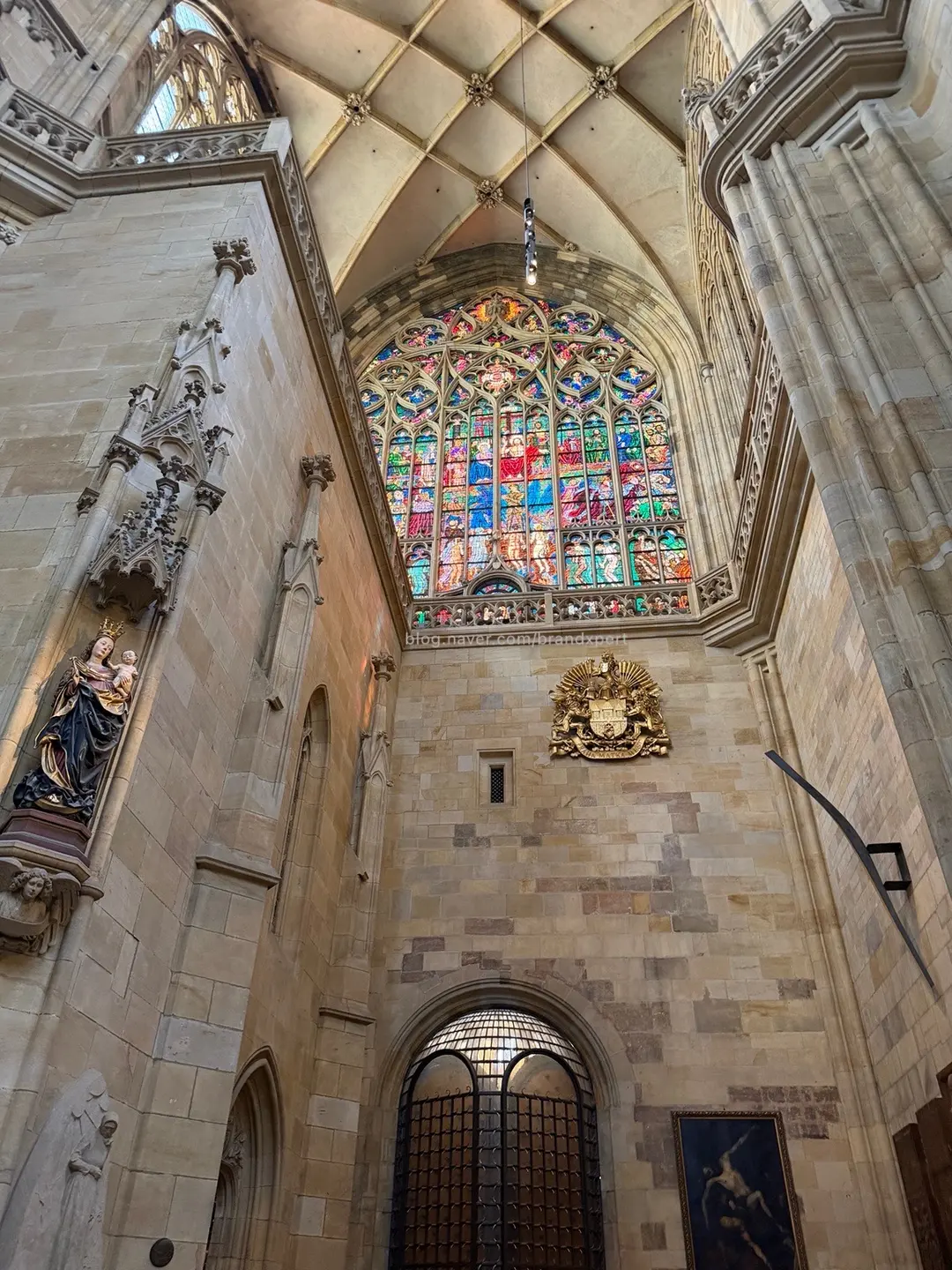
Among them, the most monumental is the Last Judgment stained-glass window, designed by Czech artist Max Švabinský. This is the largest stained-glass window in St. Vitus Cathedral, a masterpiece intricately crafted from countless figures and scenes using a vibrant palette of colored glass. Looking up from below, you truly grasp the immense scale of the window and the cathedral's soaring interior.
The St. Sigismund Chapel was a space where the deep blue, star-studded ceiling, frescoes, and stained glass all harmonized within a single view. St. Sigismund's relics are also preserved within the cathedral, so it's worthwhile to note the chapel's name alongside admiring its windows and altar.
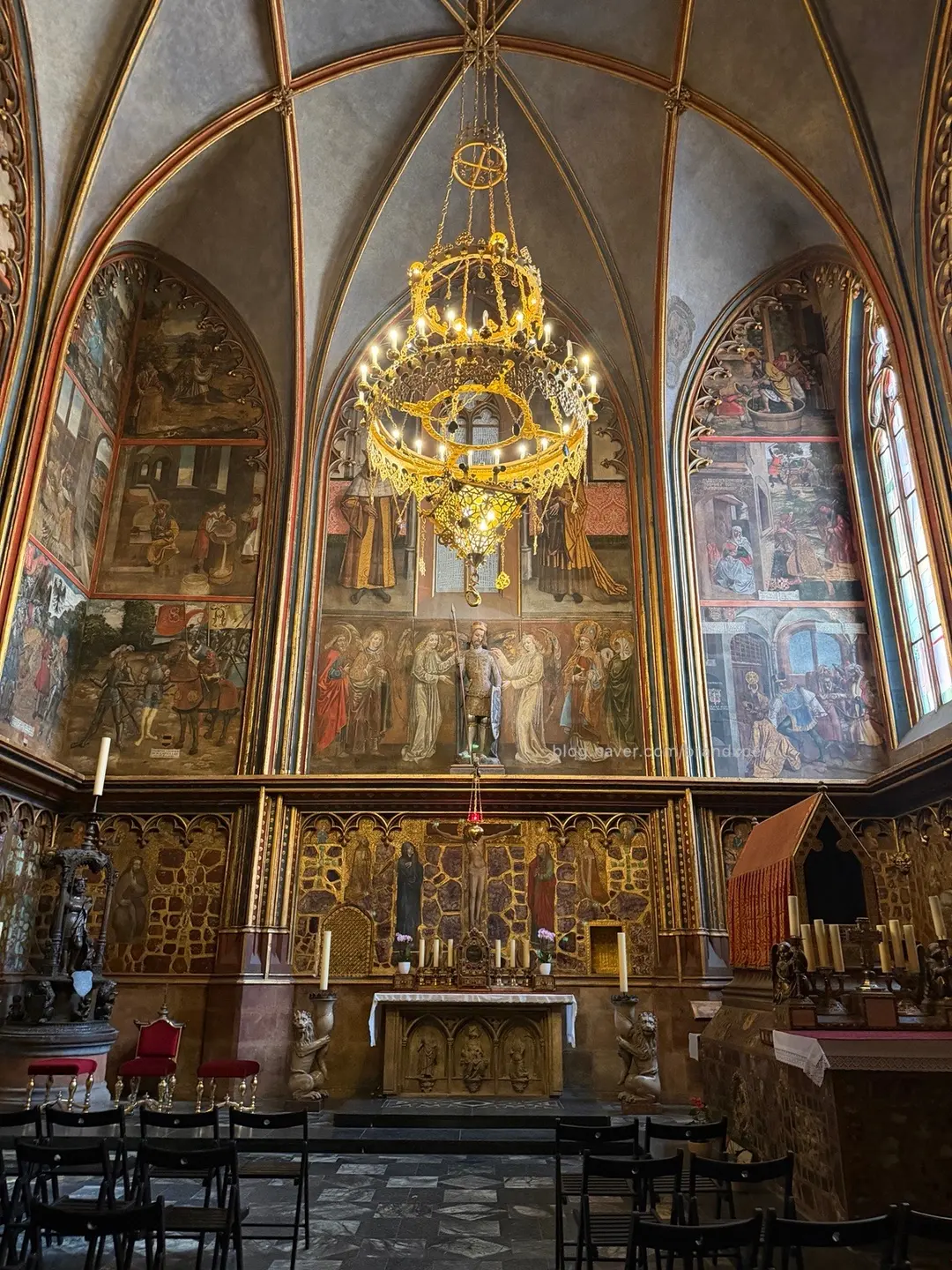
One of the most significant spaces inside St. Vitus Cathedral is the St. Wenceslas Chapel. This is where the tomb of St. Wenceslas, the patron saint of Bohemia, is located. The lower walls are adorned with precious stones, while above, 14th-century Passion Cycle frescoes and early 16th-century murals depicting St. Wenceslas's life unfold.
Behind the southwestern door of the chapel lies the Crown Chamber, where the Bohemian Crown Jewels are kept. With a standard Main Circuit ticket, you won't enter the chapel but will view its interior from the entrance, allowing you to take in the golden lighting, frescoes, and jeweled decorations all in one frame.
2. St. George's Basilica
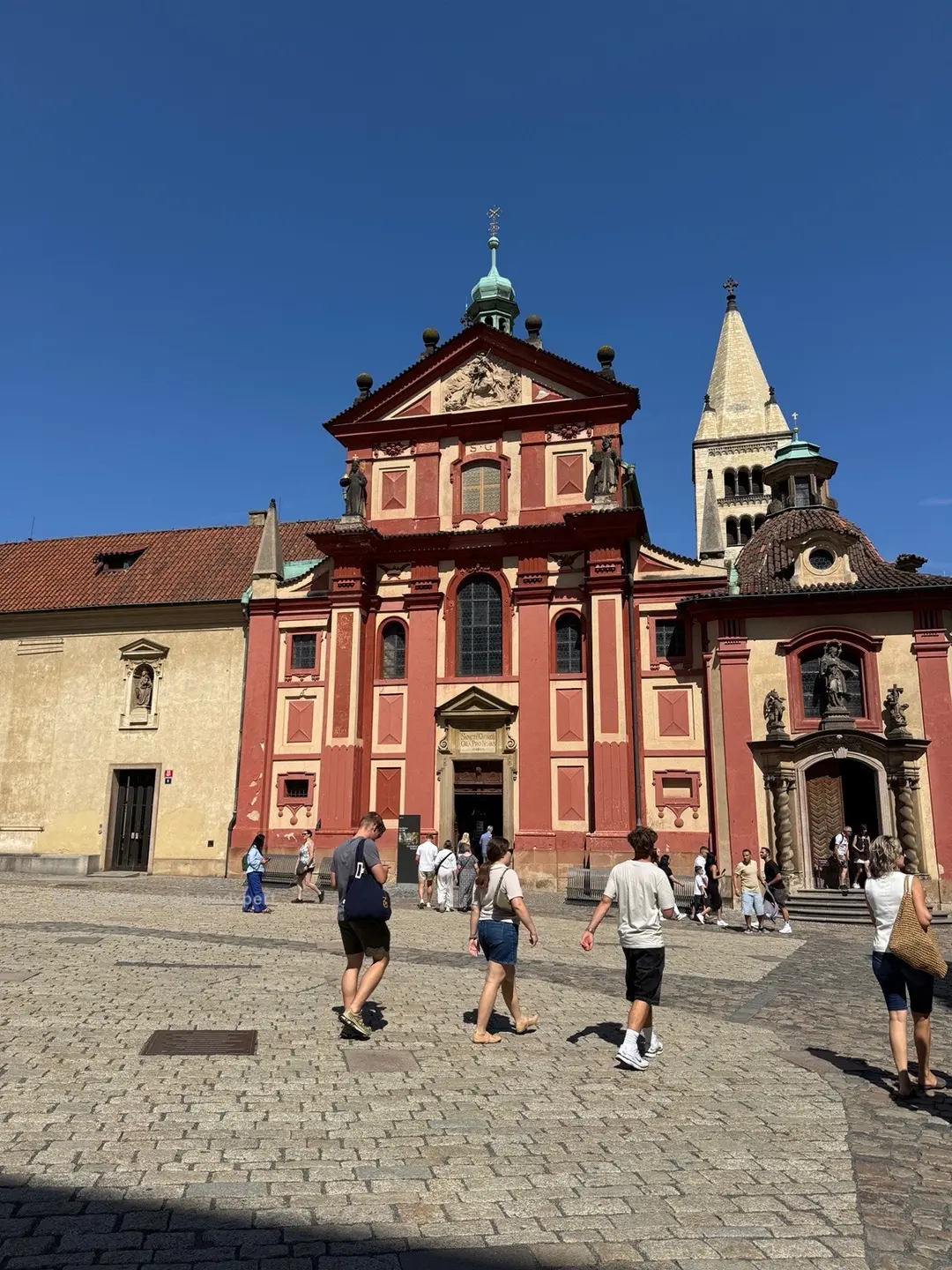
After exploring St. Vitus Cathedral and the Old Royal Palace, head east to encounter the striking red facade of St. George's Basilica. While often referred to as St. George's Church in English, its official and architecturally accurate name is St. George's Basilica, reflecting its status.
This site marks Prague Castle's second church, established around 920 by Prince Vratislav I. The current Romanesque interior is a reconstruction following a fire in 1142, while the distinctive red exterior facade was added during the early Baroque period. Having just witnessed the elaborate, soaring Gothic style of St. Vitus Cathedral, the serene interior of St. George's Basilica, with its thick walls and rounded arches, offered a striking contrast.
The main nave houses the tombs of early Bohemian rulers from the Přemyslid dynasty. Among them is the tomb of Vratislav I, St. Wenceslas's father, making this a space where you can explore the early history of Prague Castle.
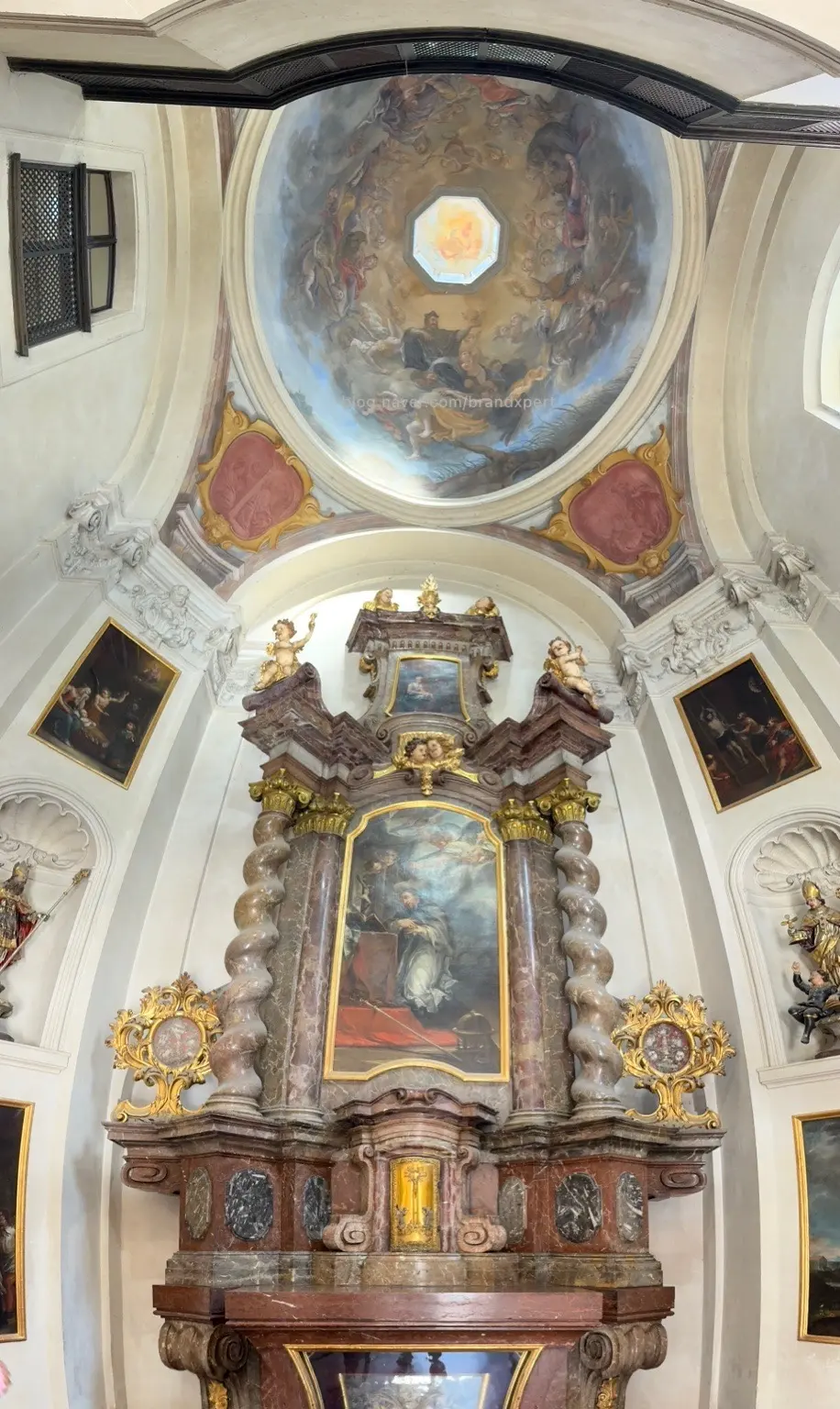
On one side of the interior, the Chapel of St. John of Nepomuk stands out with its Baroque decorations, a stark departure from the Romanesque main nave. This chapel was an 18th-century addition by architect F. M. Kaňka, featuring a frescoed dome, twisted columns, and a gold-adorned altar that immediately draws the eye.
3. Golden Lane No. 22: Franz Kafka's House
The final stretch of the Prague Castle Main Circuit takes you through Golden Lane and past Daliborka Tower. Golden Lane was established in the late 15th century after the new northern castle wall was built, and these tiny houses reportedly once housed castle guards, their families, and goldsmiths.
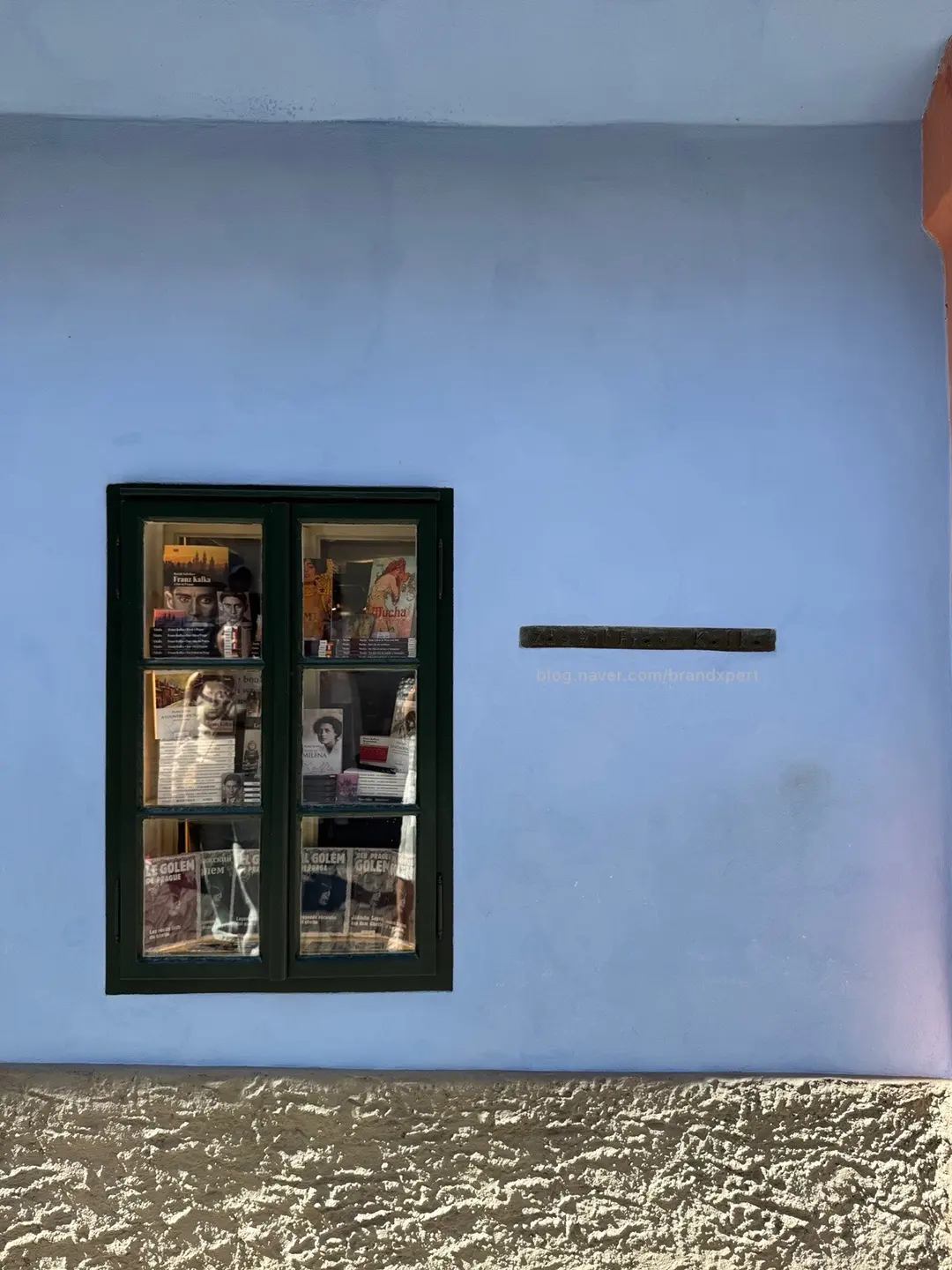
Among the colorful, low-slung houses lining this picturesque alley, the most famous is the iconic blue house at number 22. Prague Castle's official records confirm that Franz Kafka resided in this very house during World War I. When I visited, the window displayed books featuring Kafka's likeness and other Prague-related literature, while a small plaque on the wall proudly announced 'Franz Kafka'.
4. From Prague Castle to Malostranská Station
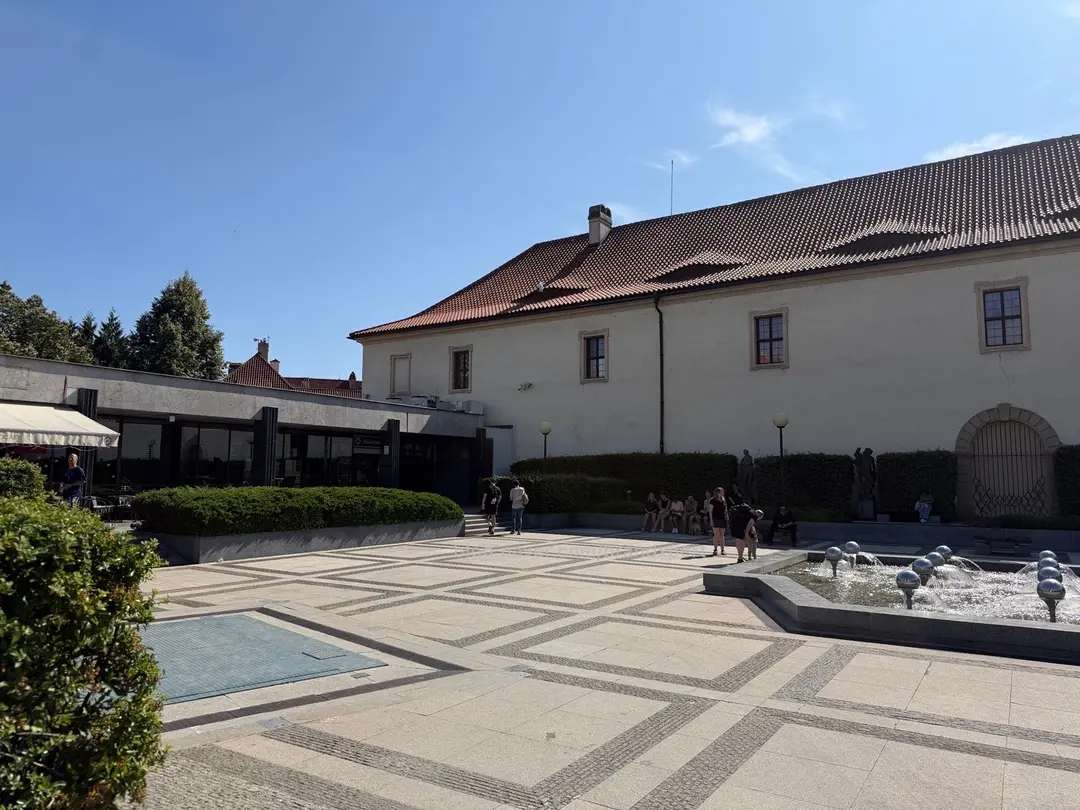
After your tour of Prague Castle, the path leading down to the closest metro station, Malostranská, takes you through a lovely small garden. The spot pictured here isn't the courtyard of the Provost's House or St. George's Convent within the castle, but rather the charming garden adjacent to Malostranská Station, situated in front of the Wallenstein Riding School.
According to the Prague Tourist Board, this garden connects to the station lobby and features fountains, ornate metal railings, and replicas of Baroque sculptures by Bernard Braun and Antonín Braun. As you can see in the photo, the fountain and metal sculptures are clearly visible amidst the greenery.
The Gothic grandeur of St. Vitus Cathedral and its opulent chapels, the Romanesque simplicity of St. George's Basilica, and the tiny residential charm of Golden Lane offered distinctly different atmospheres, all within the same Prague Castle complex.
If you've purchased a Main Circuit ticket, don't just stop at the cathedral and Old Royal Palace; make sure to continue your journey through St. George's Basilica and Golden Lane. If your route takes you towards Malostranská Station after your visit, you'll also get to enjoy the beautiful garden right outside the station.
Referring to my previous posts on Prague Castle ticket information and the Old Royal Palace review will help you plan your entire Main Circuit itinerary.
Which part of Prague Castle's Main Circuit sparks your curiosity more: the opulent interior of St. Vitus Cathedral or the charming, tiny houses of Golden Lane?
Frequently Asked Questions
What is the largest stained glass window in St. Vitus Cathedral, and who designed it?
The largest stained glass window in St. Vitus Cathedral is 'The Last Judgment,' designed by the Czech painter Max Švabinský. This work intricately composes numerous figures and scenes using various colored glass, allowing visitors to appreciate both the window's immense size and the cathedral's internal height when viewed from below.
What is the significance of St. Wenceslas Chapel within St. Vitus Cathedral, and what are its main features?
St. Wenceslas Chapel is home to the tomb of St. Wenceslas, the patron saint of the Czech Republic, making it one of the most important spaces within the cathedral. The lower part of the chapel walls is adorned with precious stones, and it features a series of Passion frescoes from the 14th century, followed by murals depicting the life of St. Wenceslas from the early 16th century.
Why is House No. 22 on Golden Lane particularly famous, and what historical figure is associated with it?
House No. 22 on Golden Lane is a blue-walled house, noted in official Prague Castle documents as a place where Franz Kafka resided during World War I. During my visit, Kafka's books and other Prague-related literature were displayed on the windowsill, and a small 'Franz Kafka' plaque was affixed to the wall.
Share this article
Featured in Collections
Discover more travel stories curated around the same theme.

Related Travel Stories

Strahov Monastery Prague 2026: Library Tickets & Castle Walk
Uncover the magic of Strahov Monastery in Prague! This guide covers library tickets, operating hours, and how to combine your visit with a scenic walk to Prague Castle for 2026.
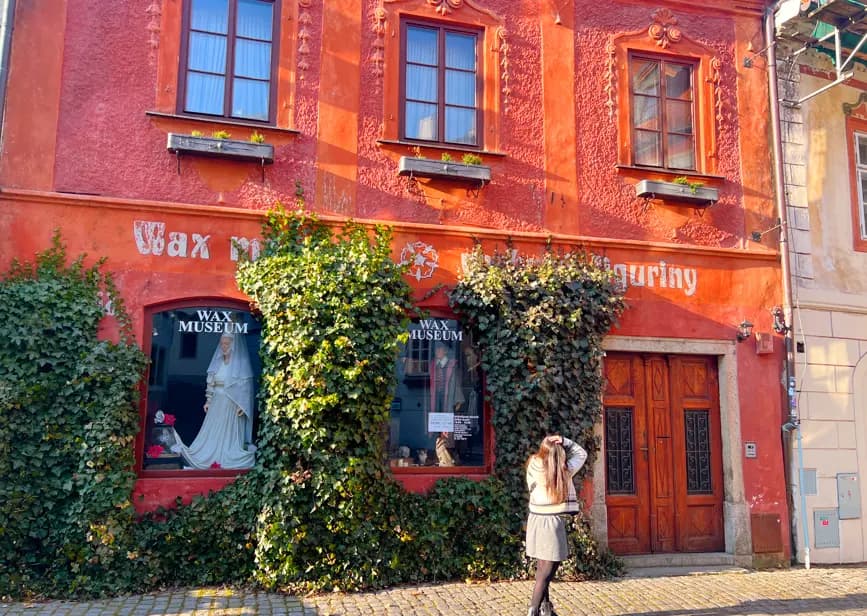
Prague Day Trips: Dresden vs. Cesky Krumlov Comparison 2026
Deciding between a day trip to Dresden or Cesky Krumlov from Prague? Discover the pros, cons, and unique charms of each destination to pick your perfect escape.
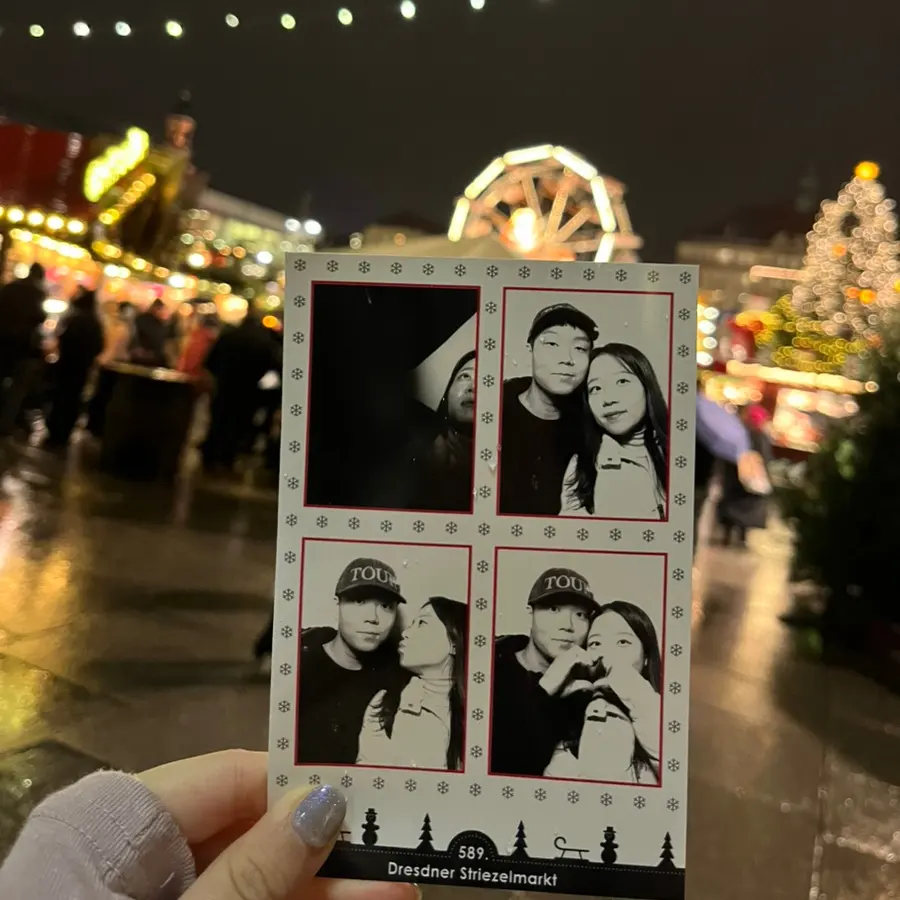
Prague to Dresden Day Trip: Tour vs. Independent
Planning a Prague to Dresden day trip? Discover the pros and cons of guided tours versus independent travel with my detailed review and tips for 2026.

Prague Astronomical Clock 2026: Show Times & Tower Views
Experience the iconic Prague Astronomical Clock's hourly show and ascend the Old Town Hall Tower for stunning city views. Get essential tips for your 2026 visit!
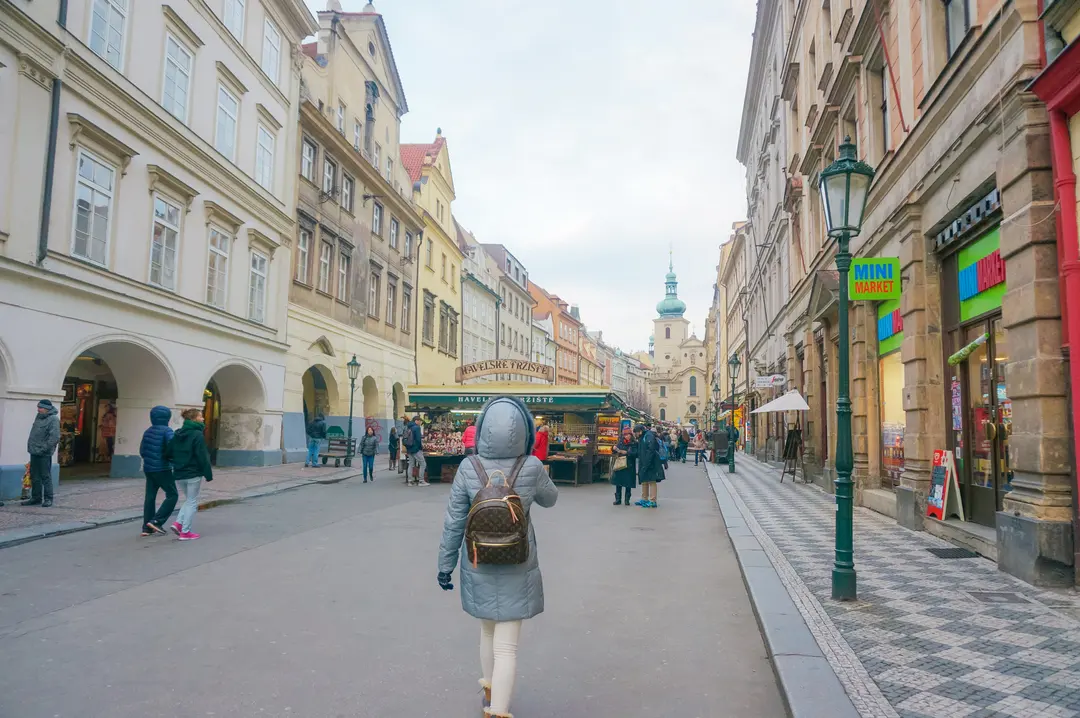
Prague Weather in November & December 2026: Packing & Travel Tips
Heading to Prague this November or December? Get ready for crisp, cool weather and fewer crowds! We'll cover what to pack and must-see spots.
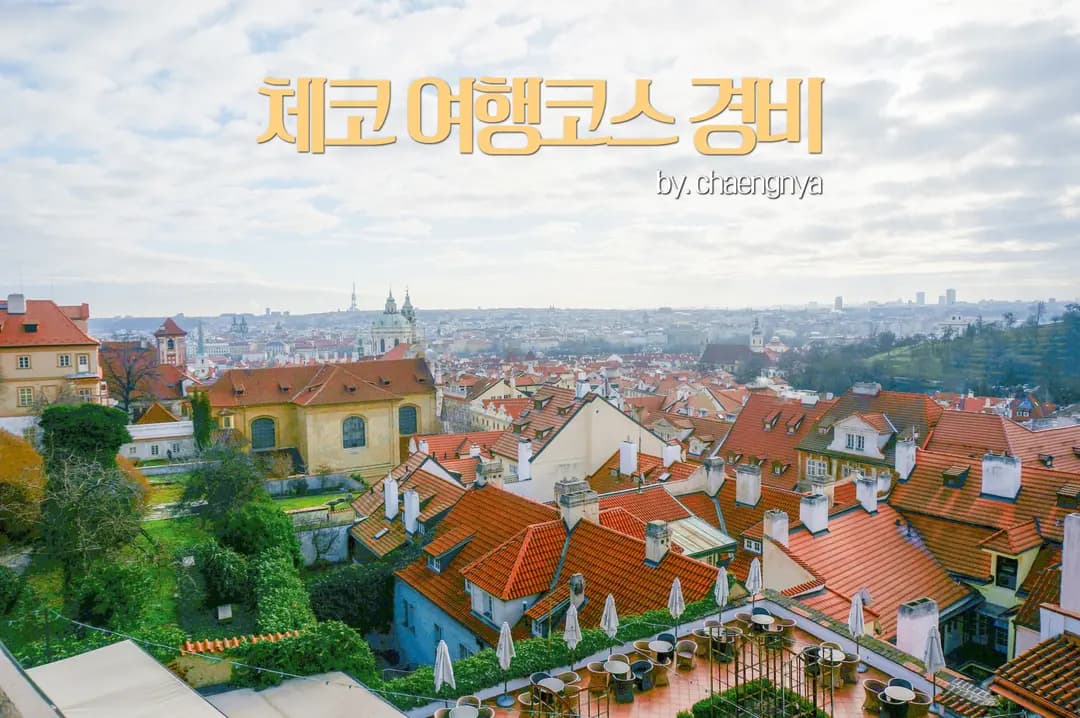
Prague & Cesky Krumlov Itinerary: Czech Travel Costs 2026
Explore the magic of Prague and the charm of Cesky Krumlov! Get our recommended 3-day itinerary and a realistic budget for your 2026 Czech adventure.