

Chiang Rai Day Trip (2026): White, Blue, & Goddess Temples
Discover Chiang Rai's mesmerizing White, Blue, and Goddess Temples on an unforgettable day trip from Chiang Mai. Immerse yourself in unique art, history, and stunning architecture.
Quick answer
- Chiang Rai is renowned for its unique and intricate temples, including the White, Blue, and Goddess Temples.
- A day tour from Chiang Mai is highly recommended for convenience due to the 3-hour drive each way.
- Popular tours typically visit the White Temple (Wat Rong Khun), Blue Temple (Wat Rong Suea Ten), and Goddess Temple (Wat Huay Pla Kang).
- The White Temple entrance fee is 200 Thai Baht, often included in day tour packages.
- The Goddess Temple features a giant Guanyin statue with an elevator to a 25th-floor viewpoint, reflecting Chinese Buddhist influences.
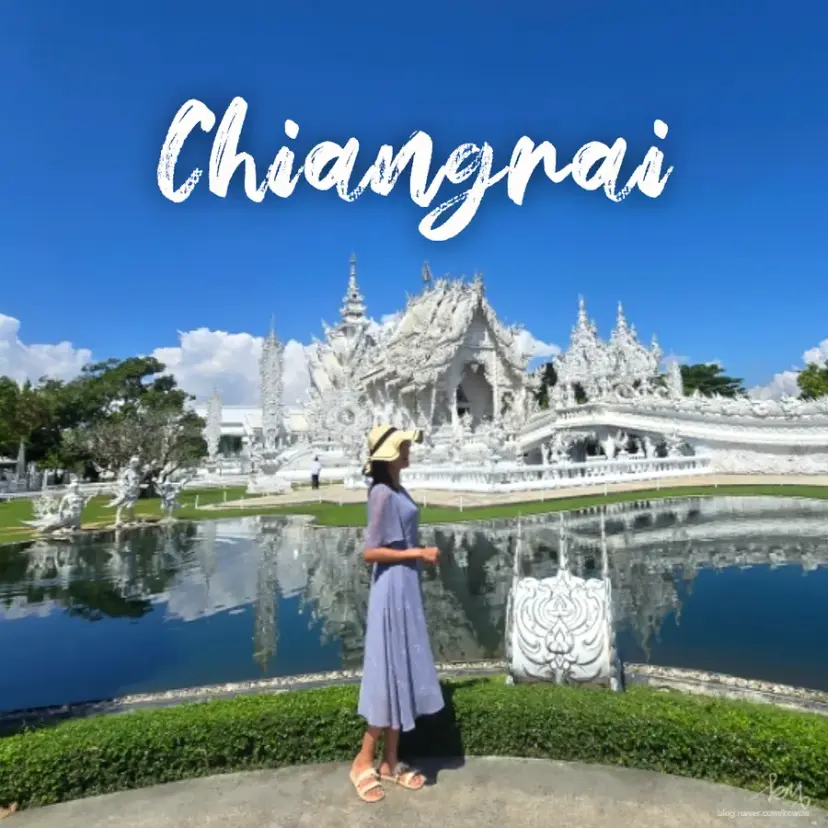
A Review of Our Chiang Rai Day Tour Itinerary
Words & Photos by @Chaeng
While exploring Chiang Mai, there's one nearby excursion you simply *must* experience!
It's a day tour to Chiang Rai!♥️
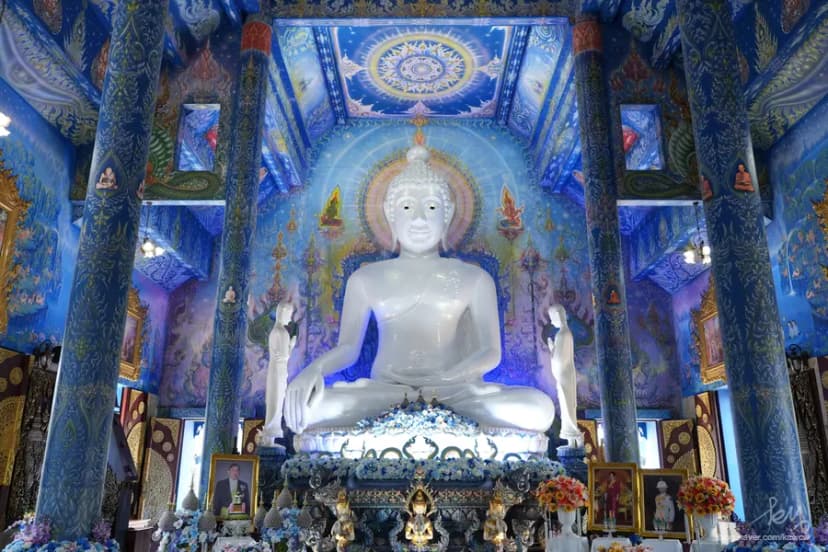
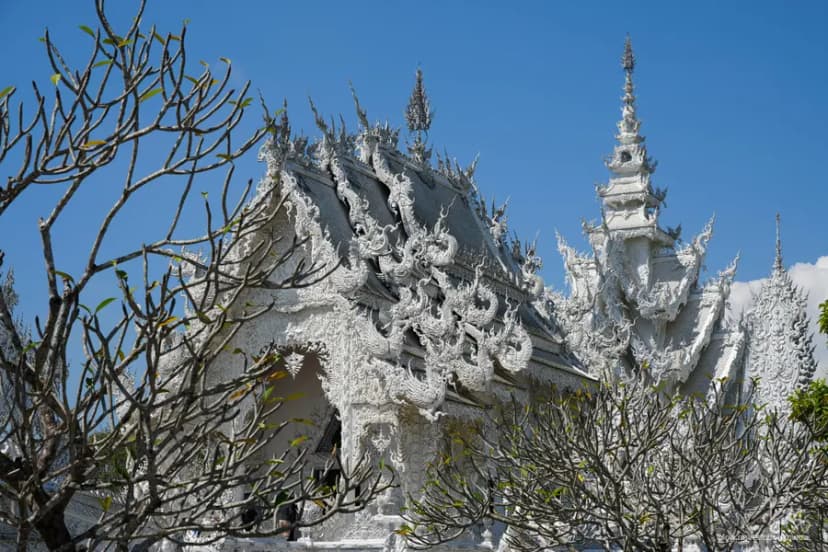
Chiang Rai boasts a distinct charm all its own, different from Chiang Mai, with incredibly unique architecture that's truly a sight to behold.
From the intricate beauty of the White Temple and the Blue Temple to the Goddess Temple, home to a massive Guanyin statue and delightful sculptures, Chiang Rai offers such a diverse array of attractions that it truly made for an unforgettable and joyful trip!
However, because the journey from Chiang Mai to Chiang Rai is a three-hour drive *each way*, navigating it solely by public transport can be quite challenging. That's why I highly recommend joining a dedicated Chiang Rai day tour!
1. Your Chiang Rai Itinerary Options
The most iconic Chiang Rai travel route typically includes the White Temple, the Blue Temple, and the Goddess of Mercy Temple.
However, there are also diverse tour options that add incredible sites like the Golden Triangle (where three countries meet), a visit to the Karen Tribe (a village of the long-necked people), the Black Temple, and the Mae Kachan Hot Spring.
For my trip, I booked a tour that focused on the stunning White Temple, Blue Temple, and Goddess of Mercy Temple before heading back to Chiang Mai!
▼▼▼
<Tour Inclusions> Round-trip transportation from the meeting point to Chiang Rai Expert commentary and photography assistance from a Korean-speaking guide White Temple admission fee (200 THB) Refreshments and water provided throughout the tour |

This wasn't just a simple temple viewing; our guide enriched the experience with detailed explanations of Chiang Rai's unique regional characteristics and the profound meanings embedded within its architecture. Plus, they helped us capture some truly beautiful photos, making it an incredibly memorable tour!
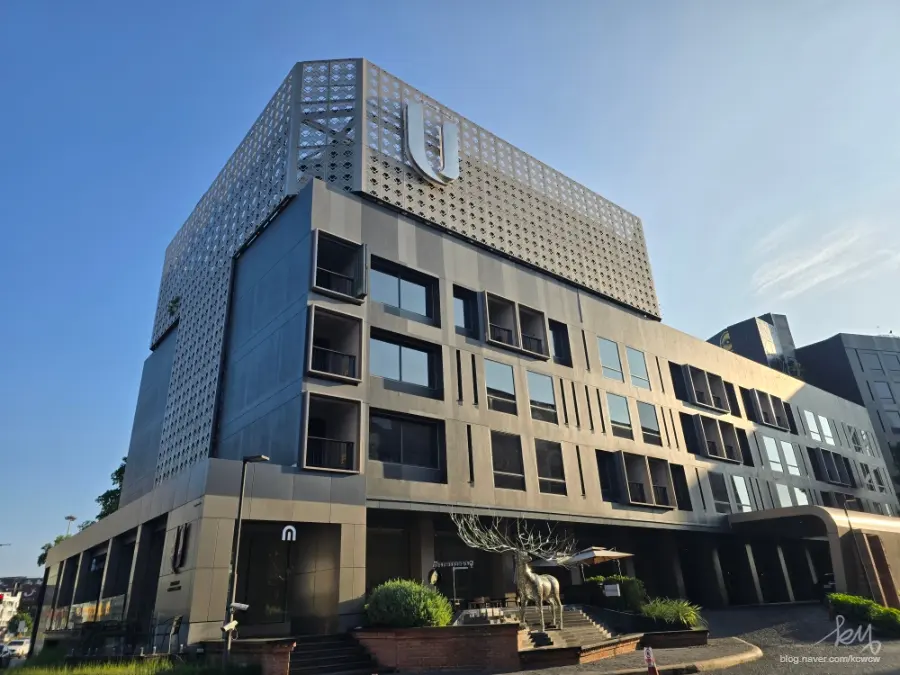
The Chiang Rai tour I booked was a join-in tour, meaning you can book as a solo traveler, with departures guaranteed for groups of four or more.
Our meeting points were conveniently set for 7:00 AM in front of the Night Bazaar and 7:30 AM in front of U Nimman, allowing for direct departures from Nimman Haemin accommodations. We arrived back at U Nimman around 5 PM, concluding our enriching tour.
As this is a day trip departing from and returning to Chiang Mai, there's no need to arrange separate accommodation in Chiang Rai, and you can experience its highlights all in one day! It's perfectly suited for travelers with a shorter Chiang Mai itinerary 😊
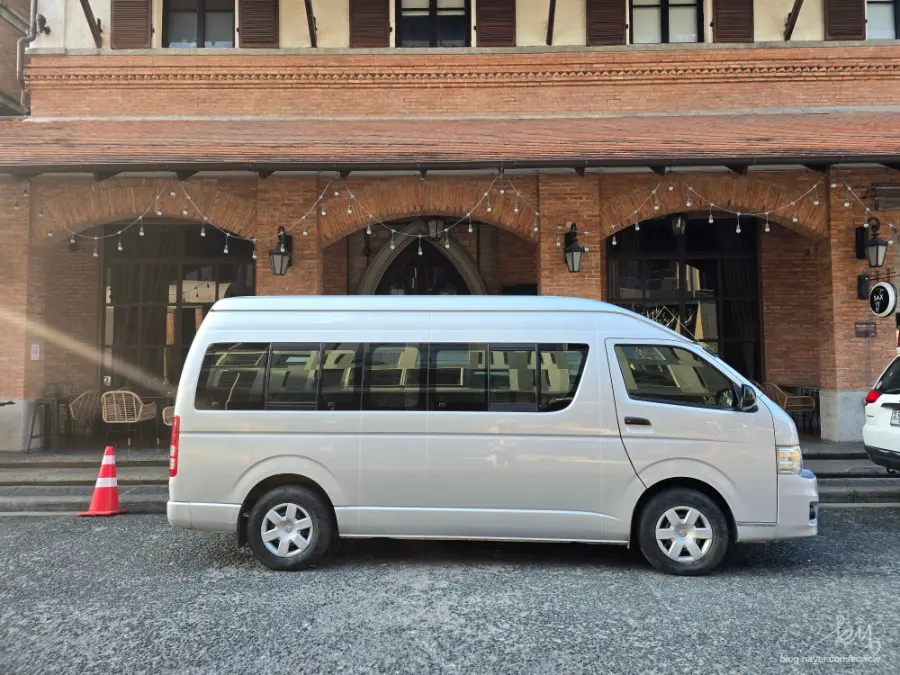
We traveled comfortably in a mini-van, and even during the long journey, the seats were so plush that I managed to get some wonderful sleep without any neck discomfort 😴
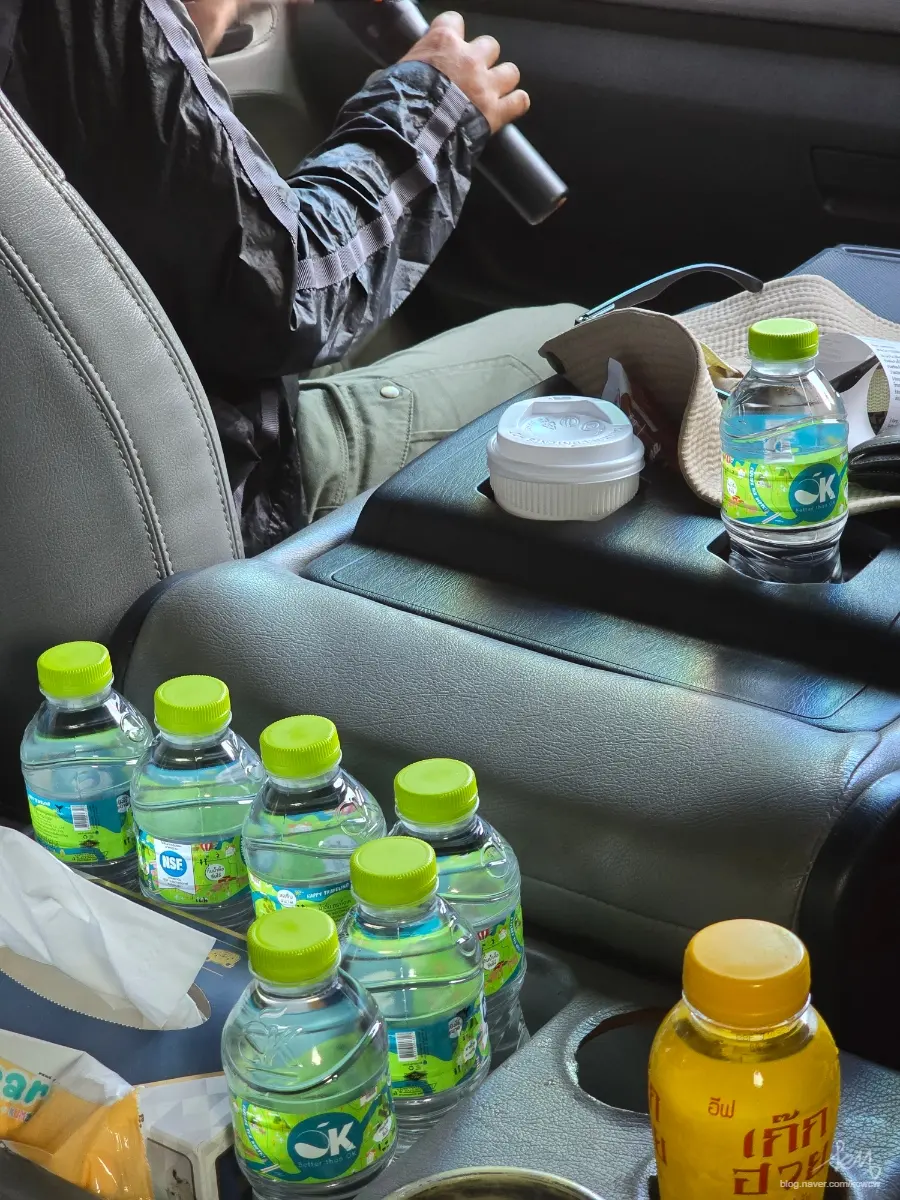
Bottled water was readily available in the car, so you could quench your thirst whenever you wished! Our guide also provided fascinating insights into the history and culture of both Chiang Mai and Chiang Rai along the way, which was incredibly helpful and enriching.
While many travelers are more familiar with Chiang Mai, it might surprise you to learn that Chiang Rai was actually the city established first!
Chiang Rai was named after the first king who established the Lanna Kingdom. Interestingly, Chiang Mai, which literally means 'new city,' was founded approximately 34 years *after* Chiang Rai!
3. The White Temple (Wat Rong Khun)
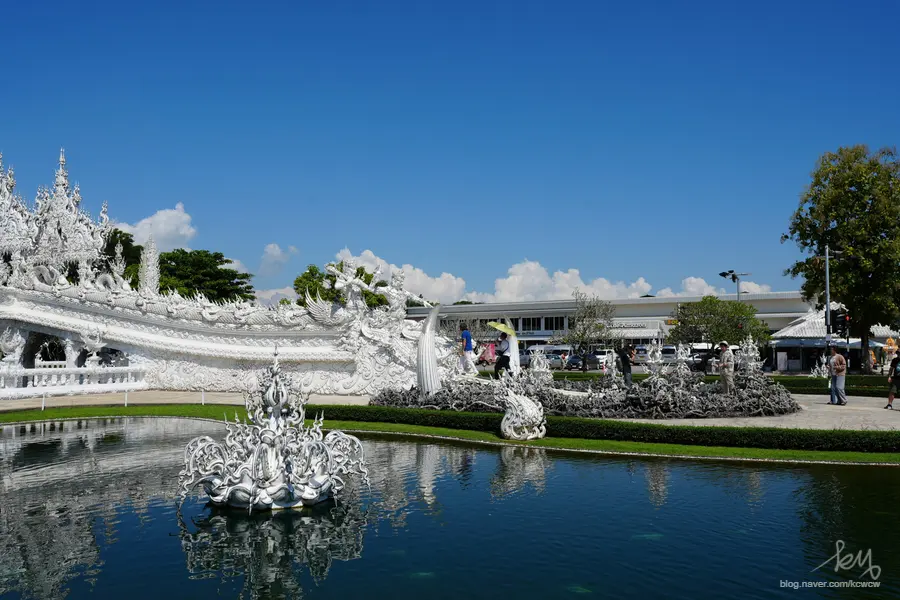
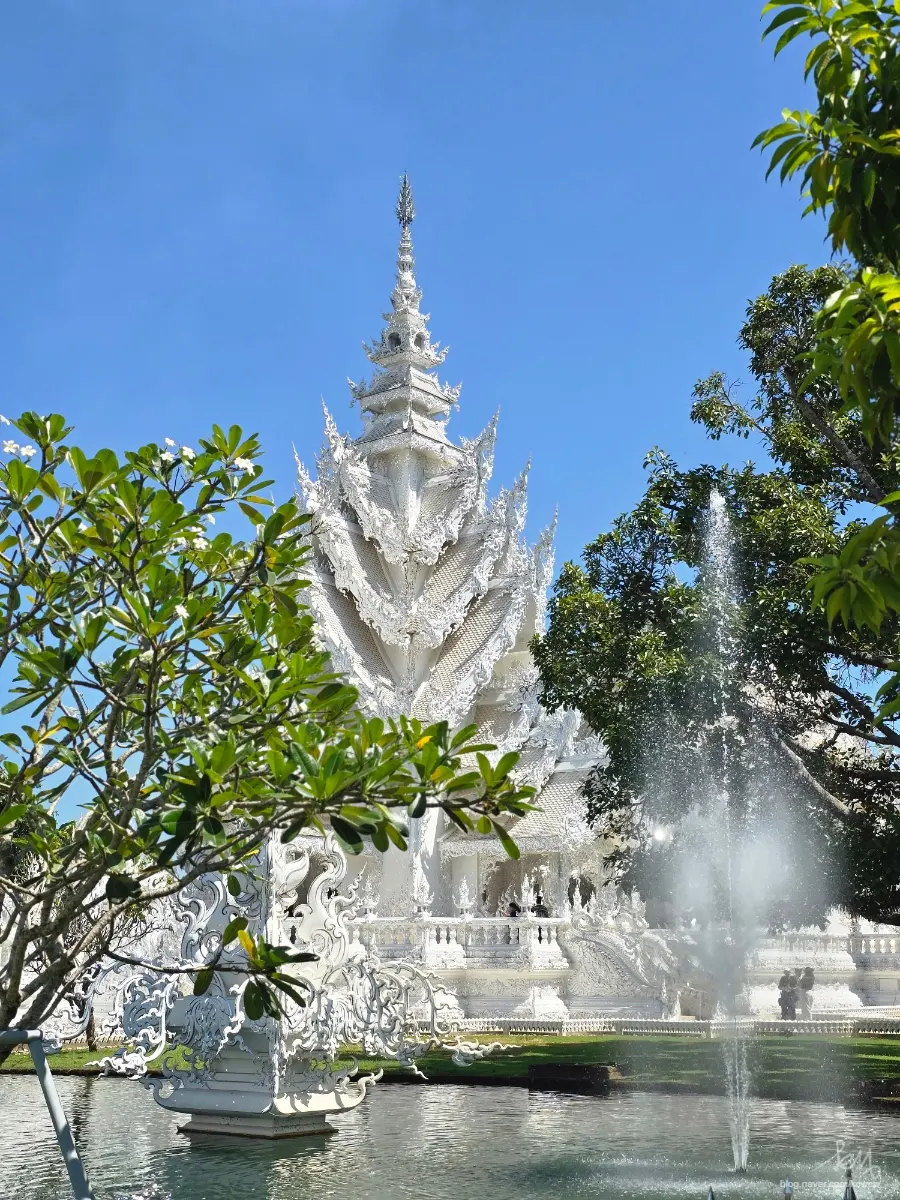
The White Temple was, without a doubt, the most anticipated highlight of our Chiang Rai tour! After another two-hour drive from the hot springs, the moment the White Temple emerged into view from a distance, its shimmering, ethereal beauty was simply breathtaking.
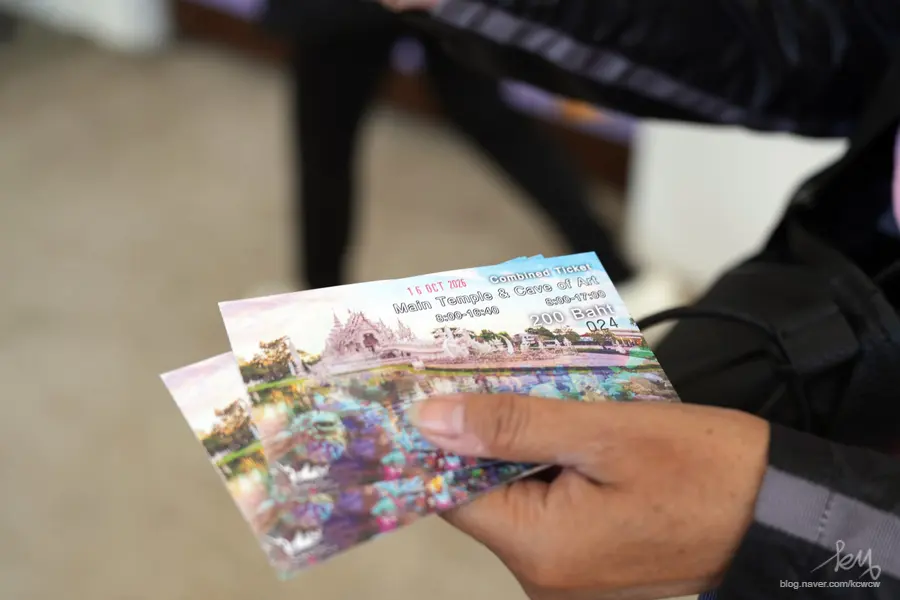
The admission fee for the White Temple is 200 THB, but thankfully, it was already included in our tour cost! Remember to hold onto the ticket your guide provides, as it's typically used twice: once for entry into the main temple grounds and again for the cave entrance.
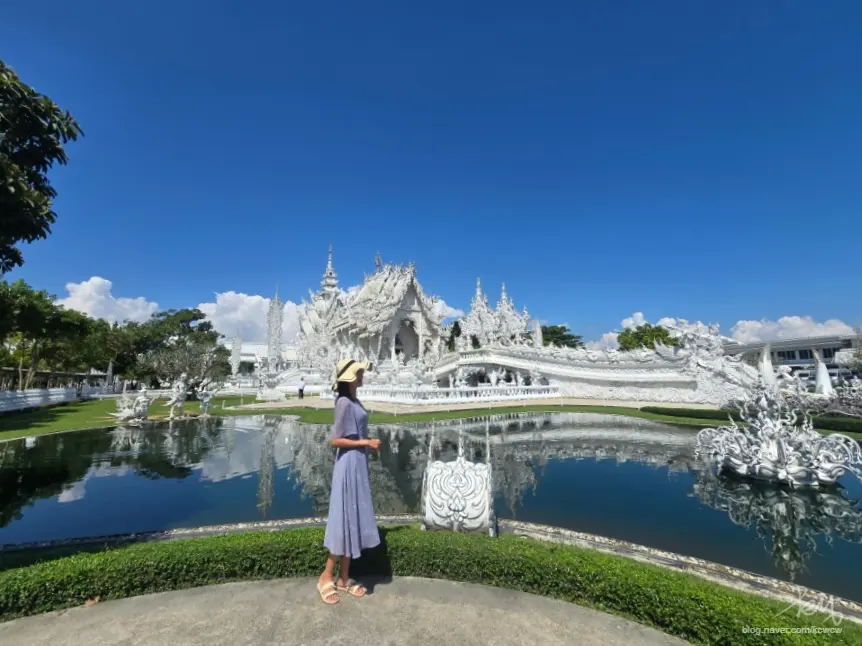
While most temples in Thailand are typically golden,
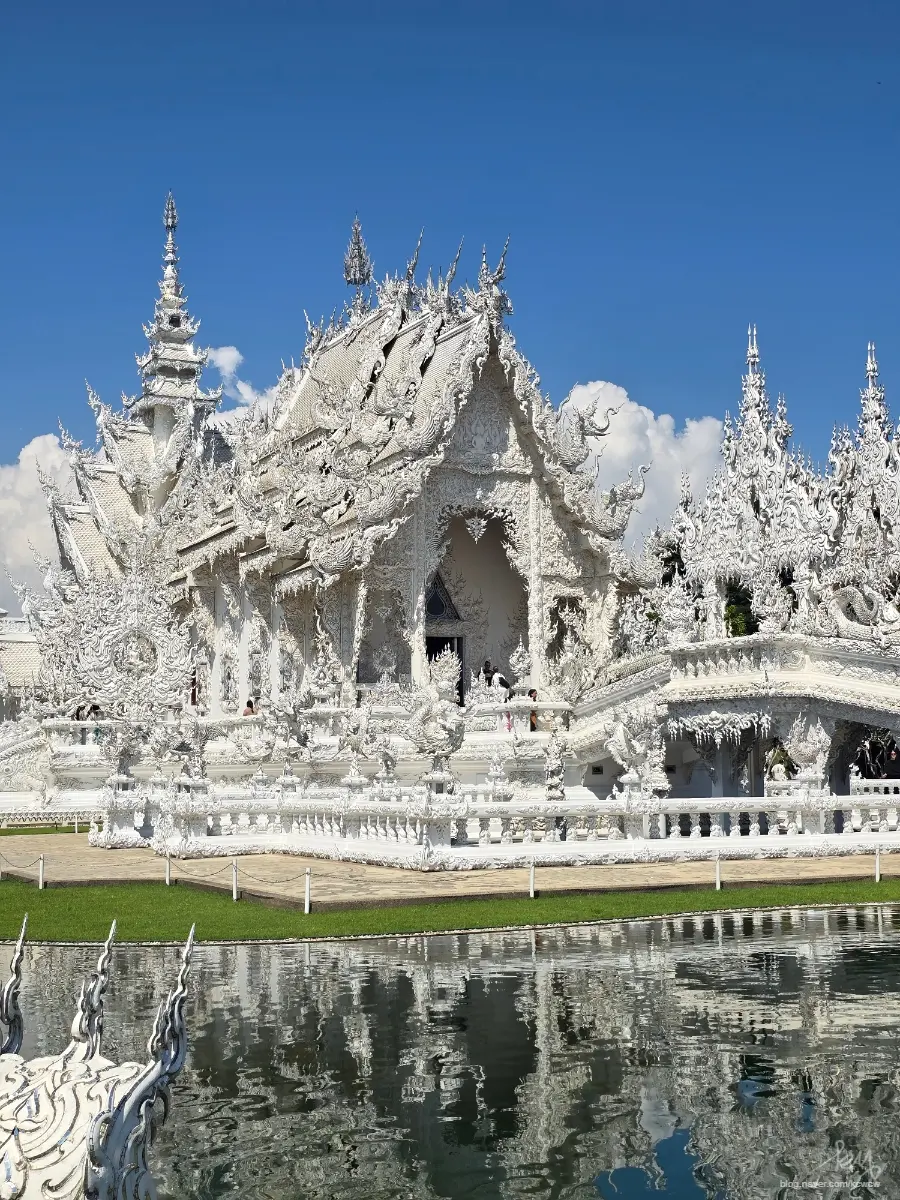
the White Temple is, well, entirely white!
The White Temple, also known as Wat Rong Khun, was conceived by renowned Thai artist Chalermchai Kositpipat.
Construction began in 1997 and is still a work in progress to this day.
It's a modern Buddhist art masterpiece,
expressing Buddhist teachings through its architecture and sculptures.
This beautiful structure is both artistically and spiritually valuable and incredibly meaningful.
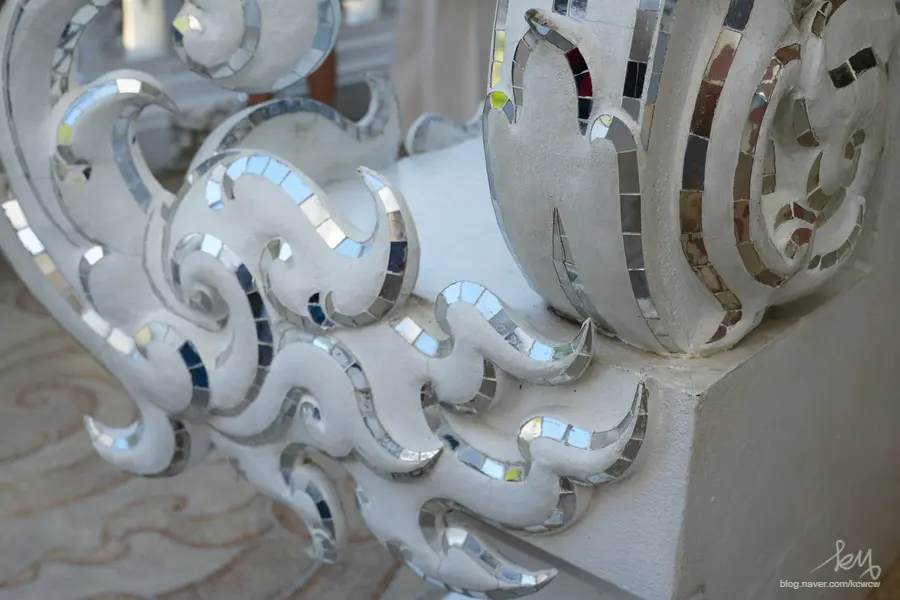
When you gaze at the White Temple from afar, it absolutely glistens,
and the secret to this sparkling effect is mirrors!
These mirror decorations symbolize the Buddha's wisdom illuminating the world and the universe.
And in the White Temple, the color white
represents the Buddha's purity and spiritual clarity.
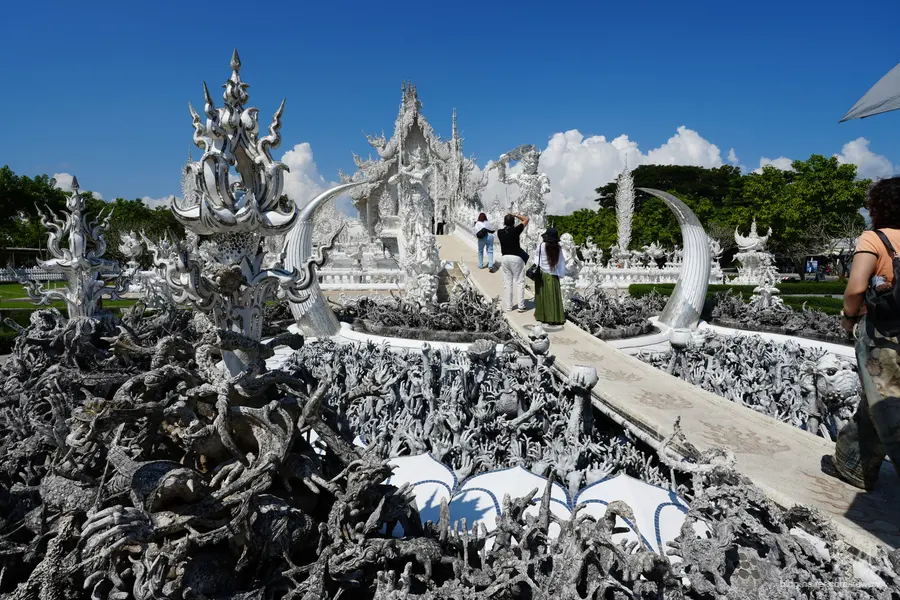
At the temple's entrance, you'll encounter countless hands reaching out,
and you cross a bridge to enter the main temple grounds.
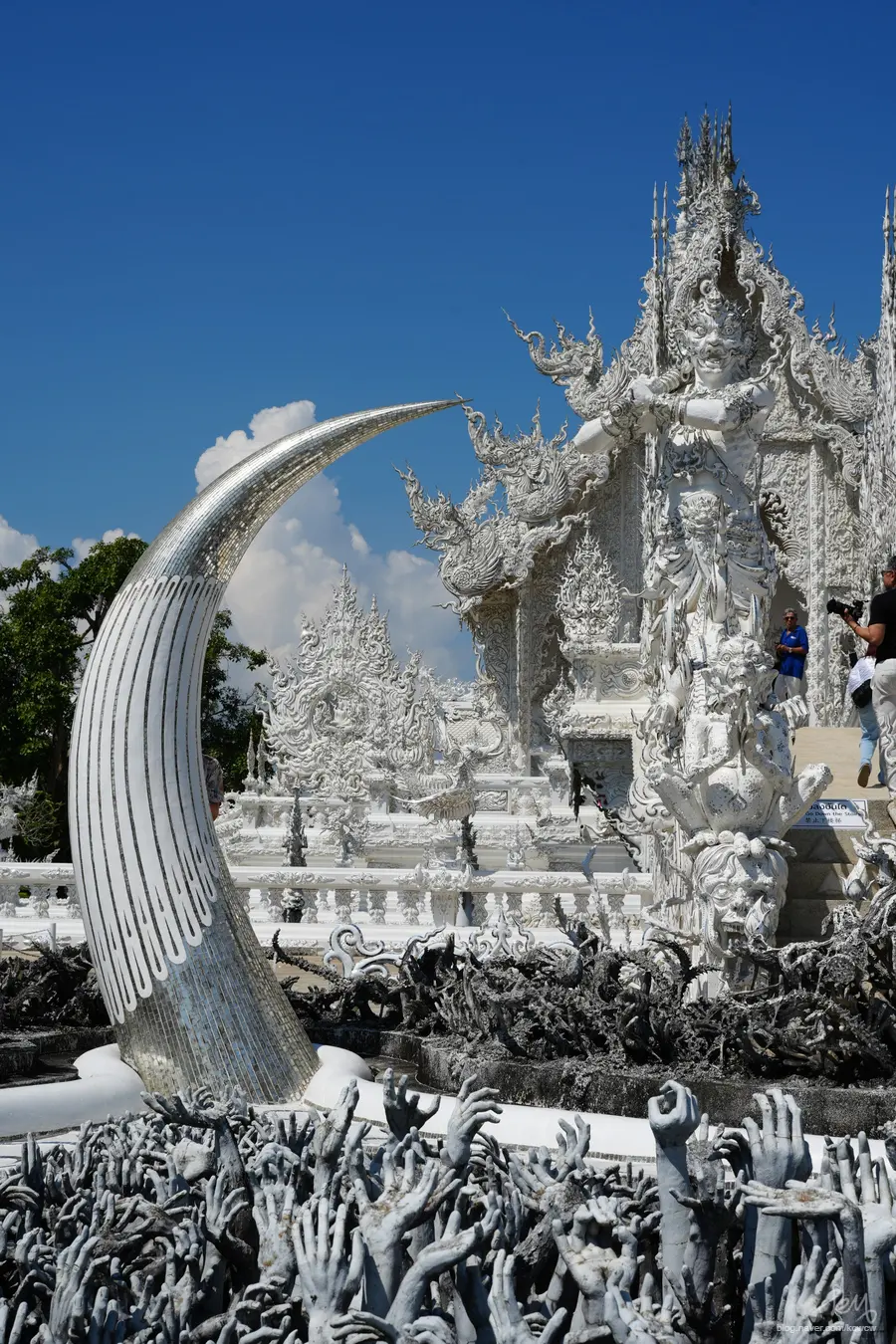
This design symbolizes the journey of crossing a bridge from hell
to heaven,
representing the Buddhist teaching of escaping worldly desires like human greed, attachment, and suffering,
to ultimately reach enlightenment.
It might feel a little spooky at first glance,
but after hearing our guide explain its profound meaning,
it became an incredibly significant work of art!
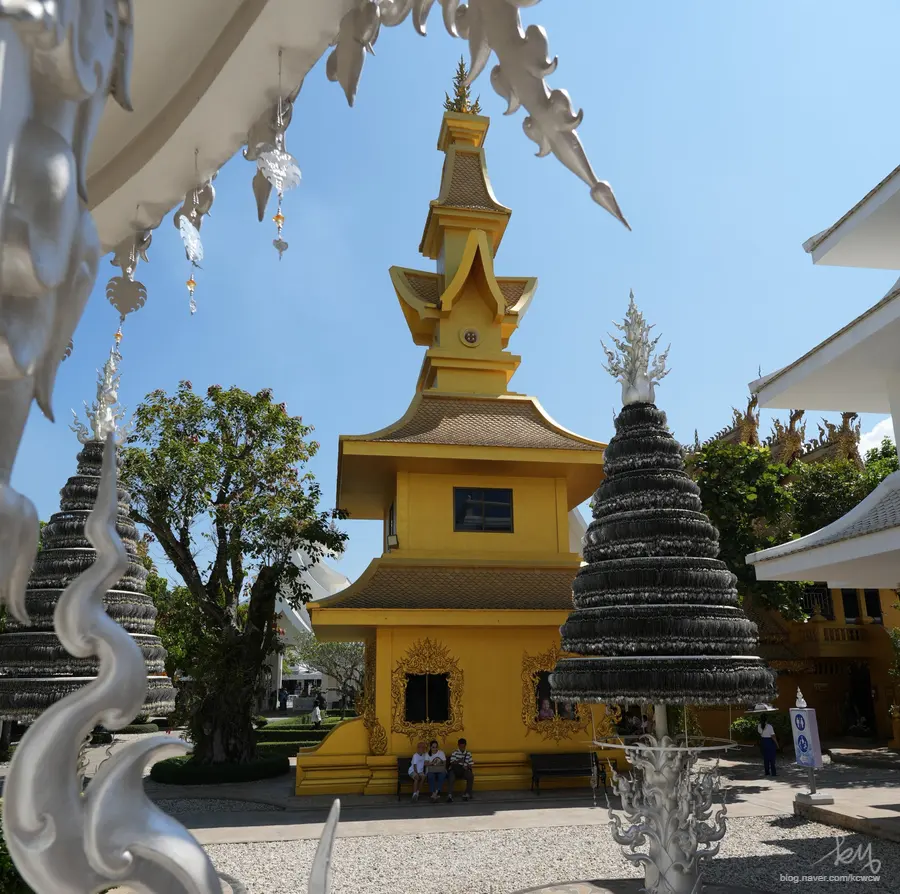
Interestingly, there's also a golden building within the White Temple complex.
This golden structure is actually the restroom, and the color gold symbolizes material desires
and worldly values.
The restroom, a place where you empty your body,
carries the meaning of letting go of greed.
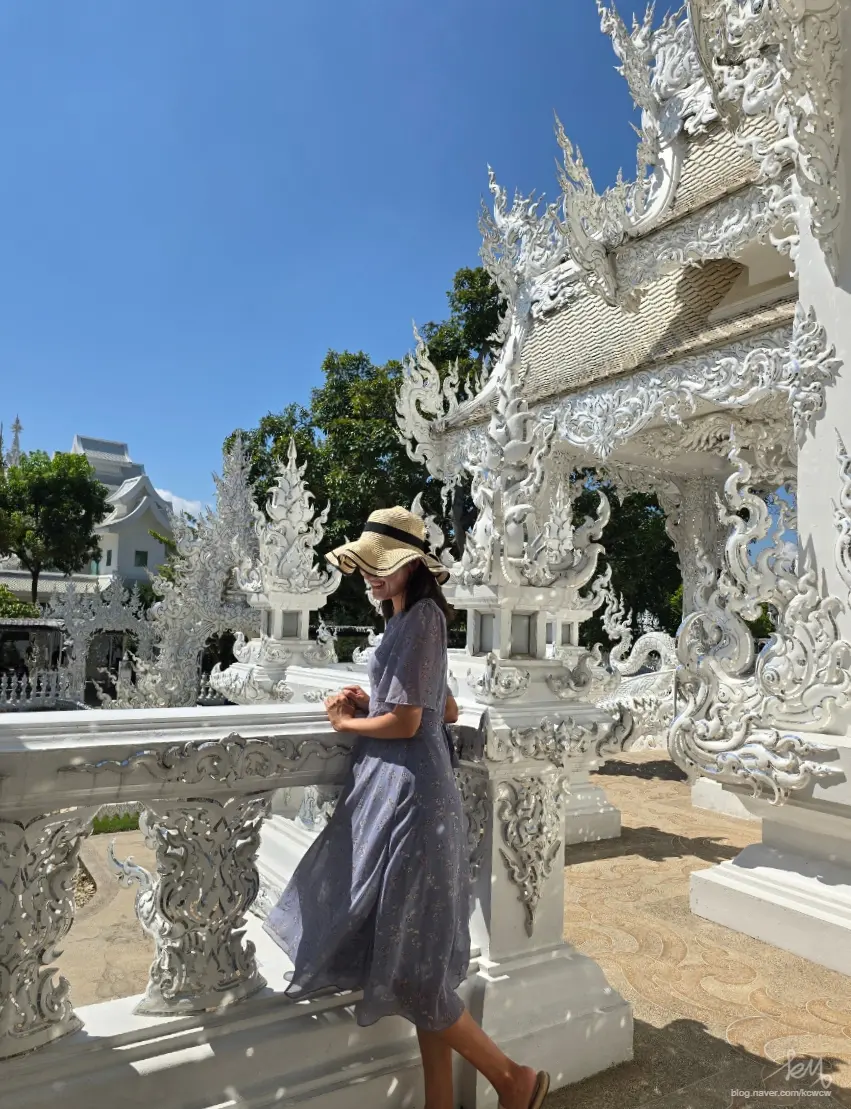
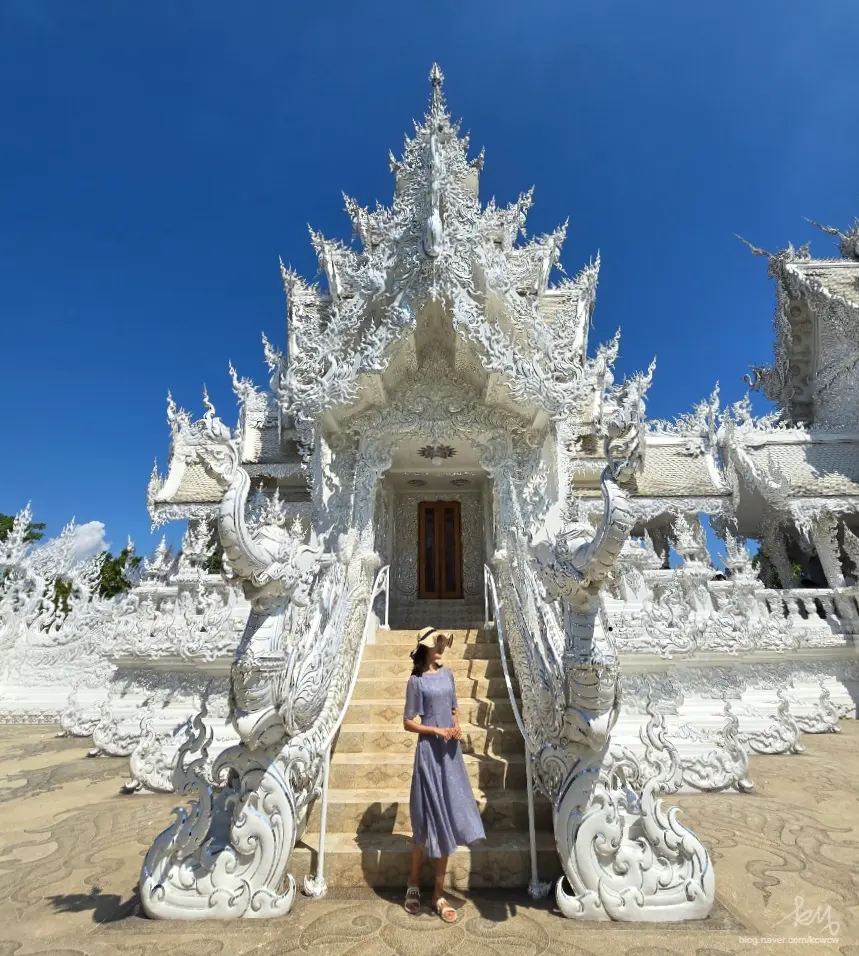
Even if you're not Buddhist, the White Temple in Chiang Rai
is an absolute must-visit during your Chiang Mai trip.
The sheer beauty and intricate detail of the architecture itself are magnificent,
and the teachings conveyed through the structure are incredibly profound.
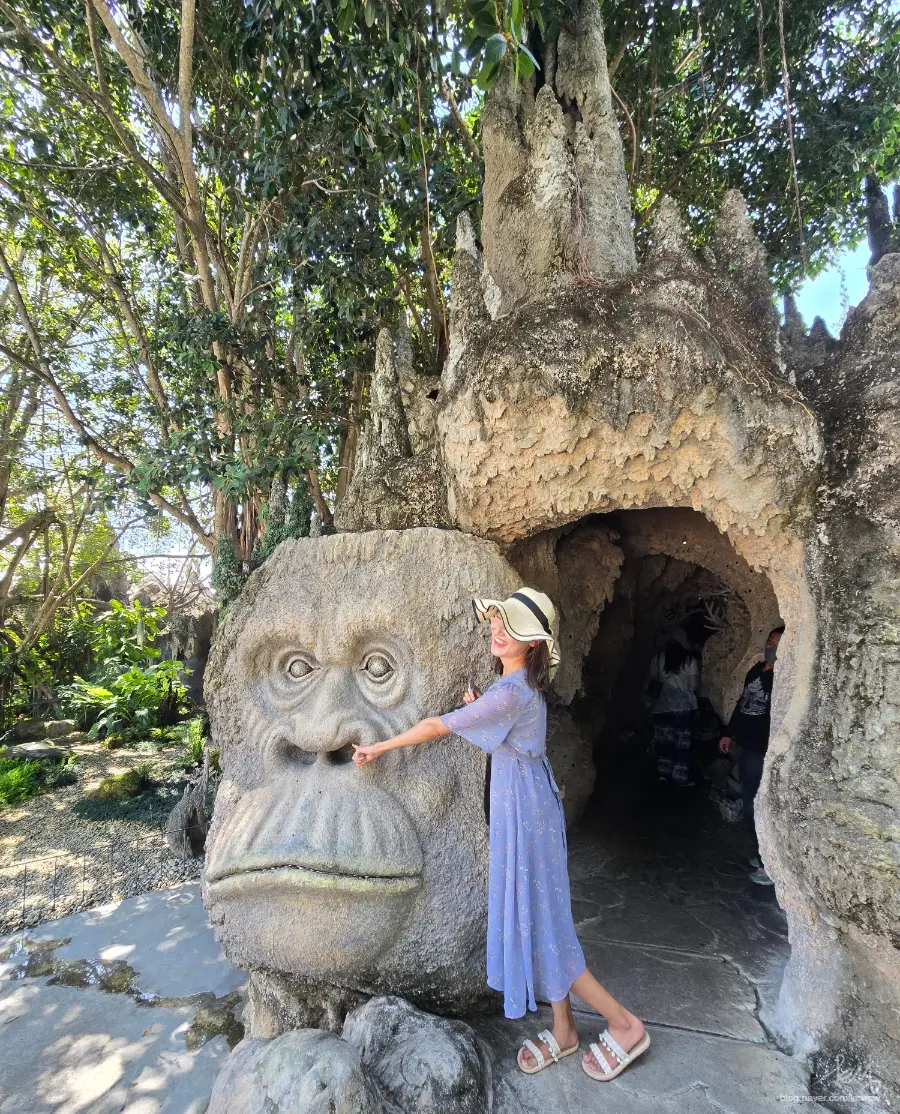
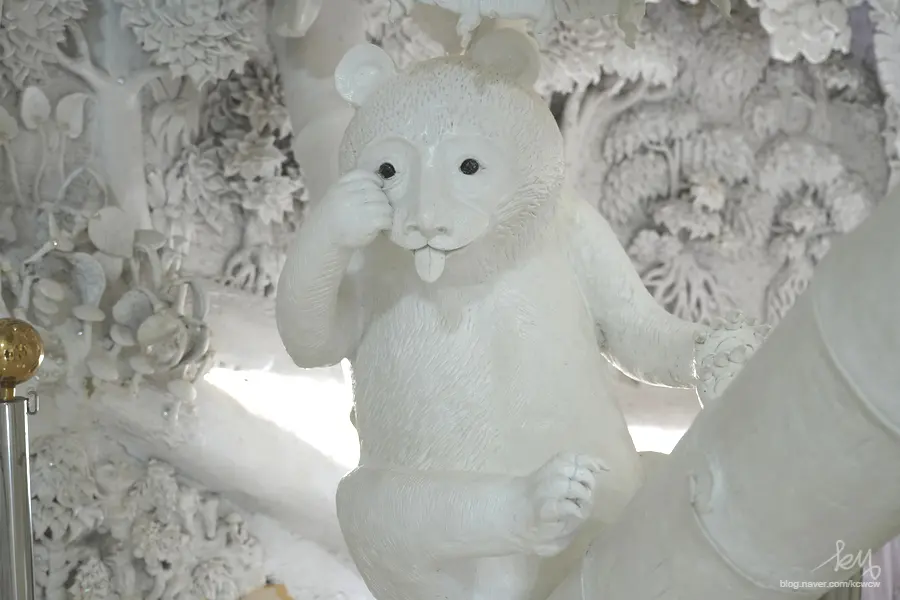
There's also a cave, guarded by a monkey at its entrance, and I playfully put a finger into its nostril before going in....
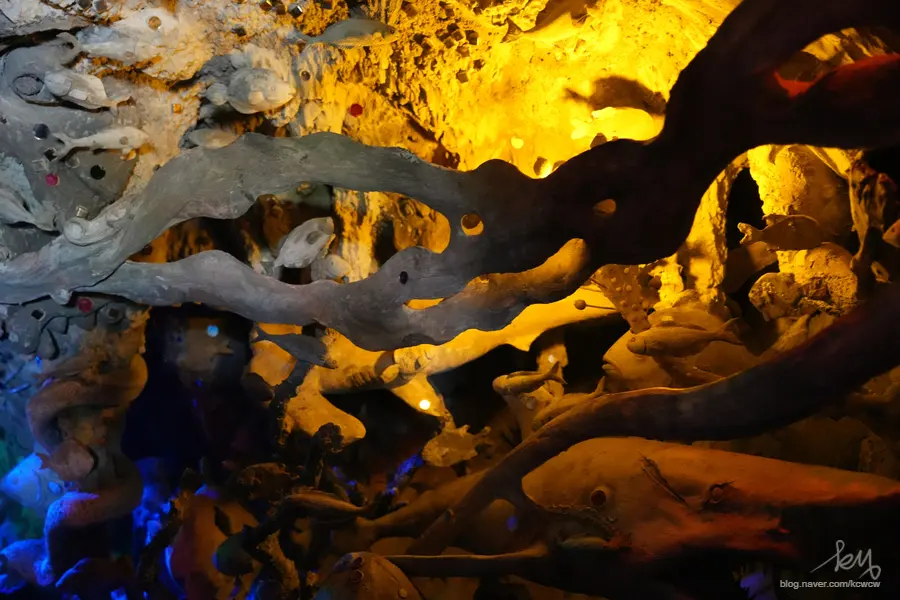
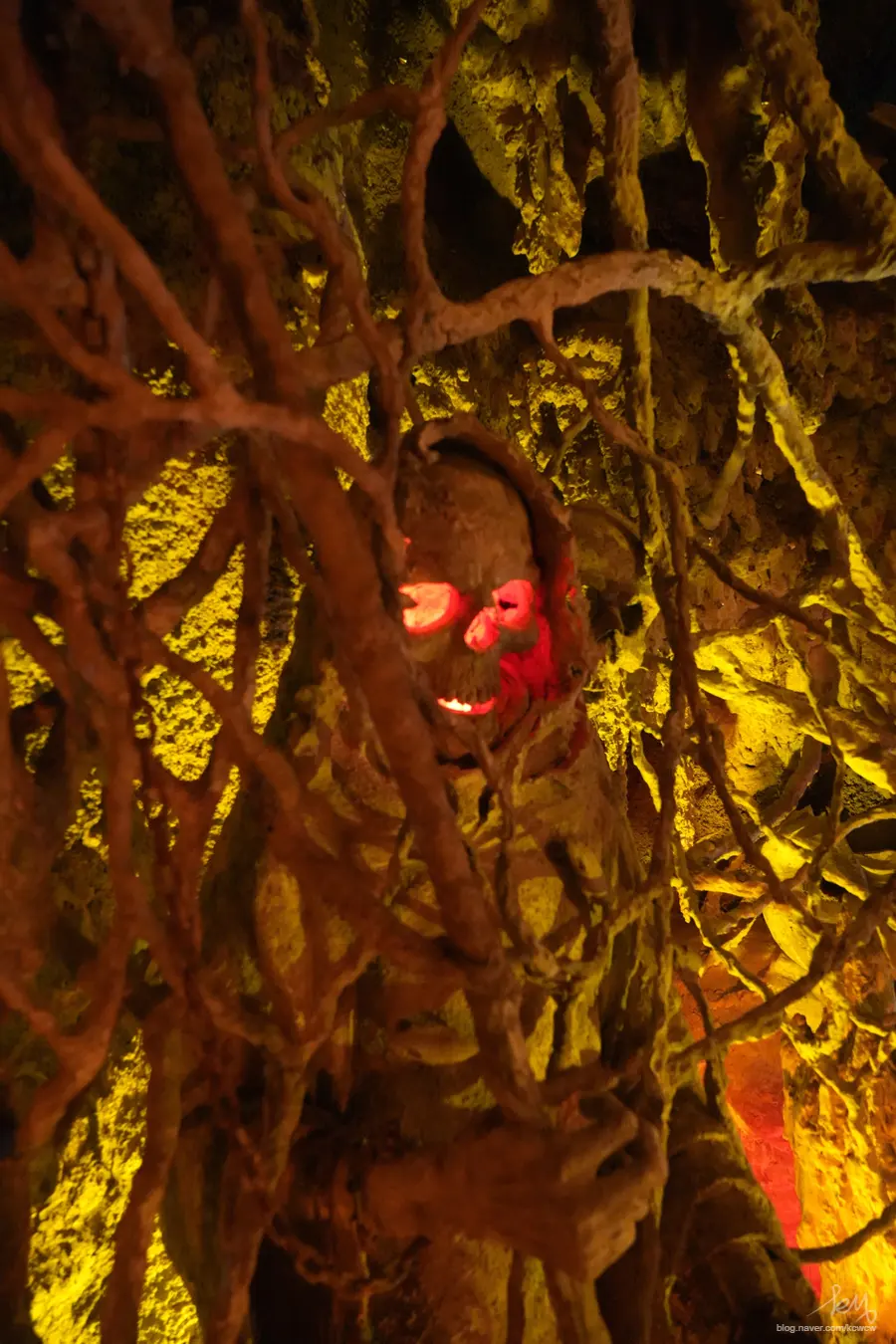
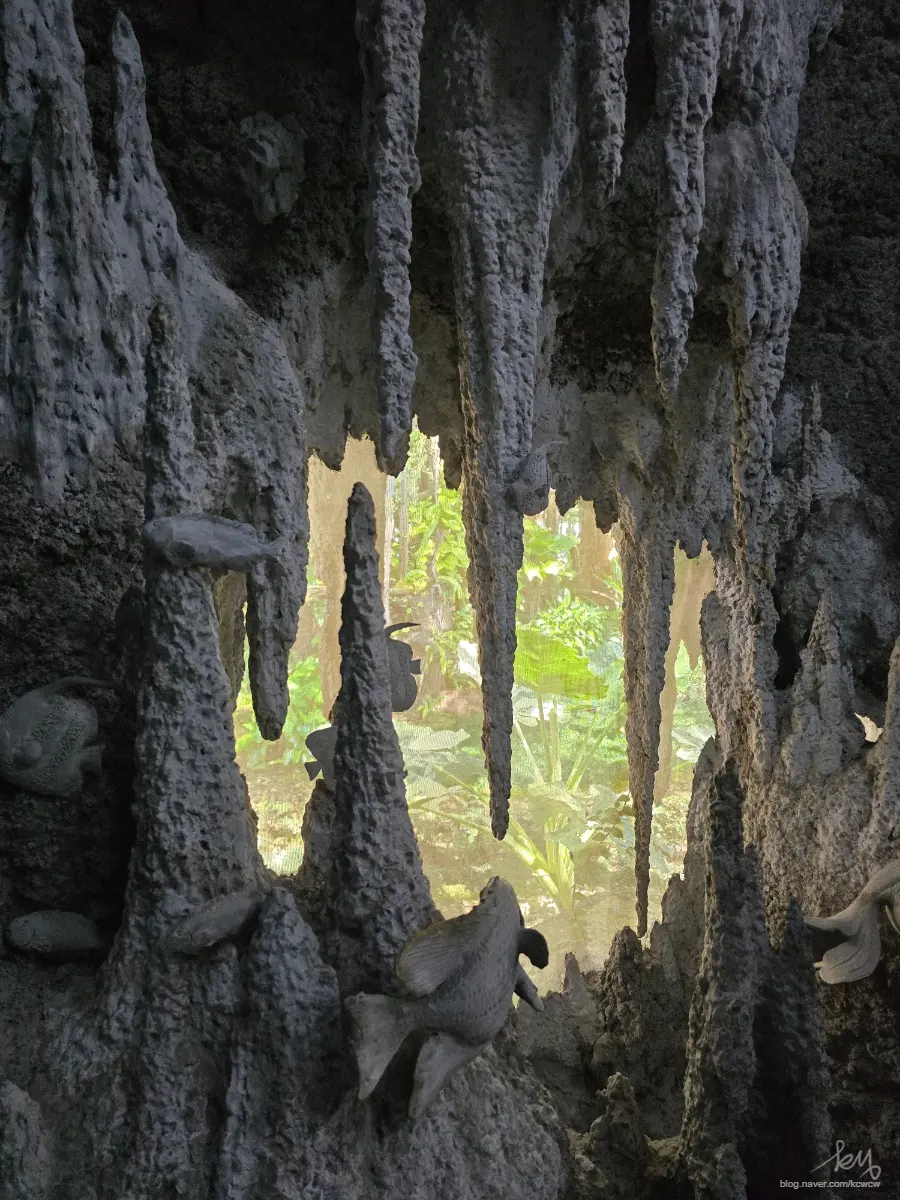
It felt like exploring an underwater cave,
with everything from marine creatures to grim reaper statues lurking in the darkness.
It was a bit spooky, yet it powerfully warned against human desires
and expressed the journey from suffering to Nirvana.
Full of intricate artworks, it was a truly memorable space.
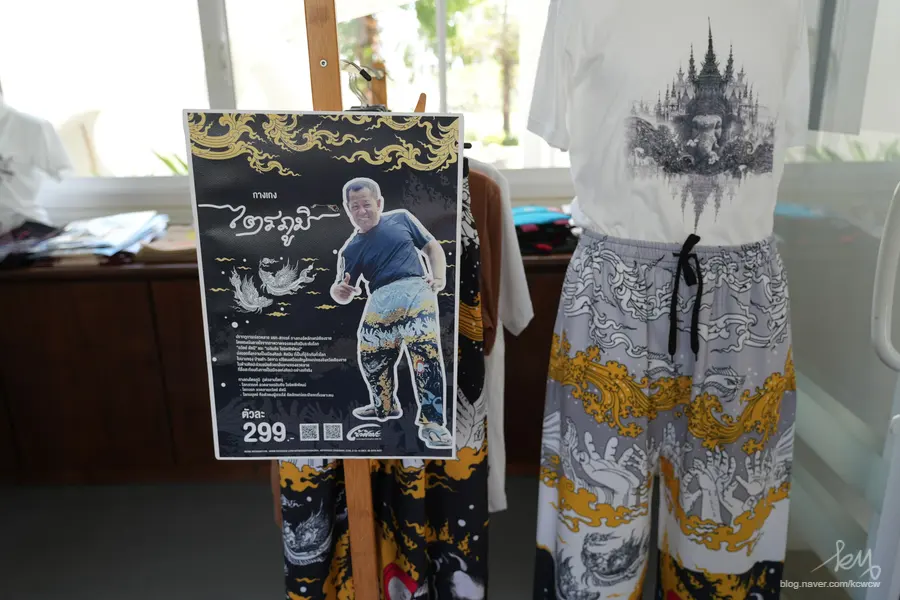
The pants sold at the souvenir shop
perfectly encapsulate the themes of the White Temple.
The quality was good, and at ~$9, they were definitely worth buying!
I think they'd make a much more memorable souvenir than typical elephant pants.
4. Lunch
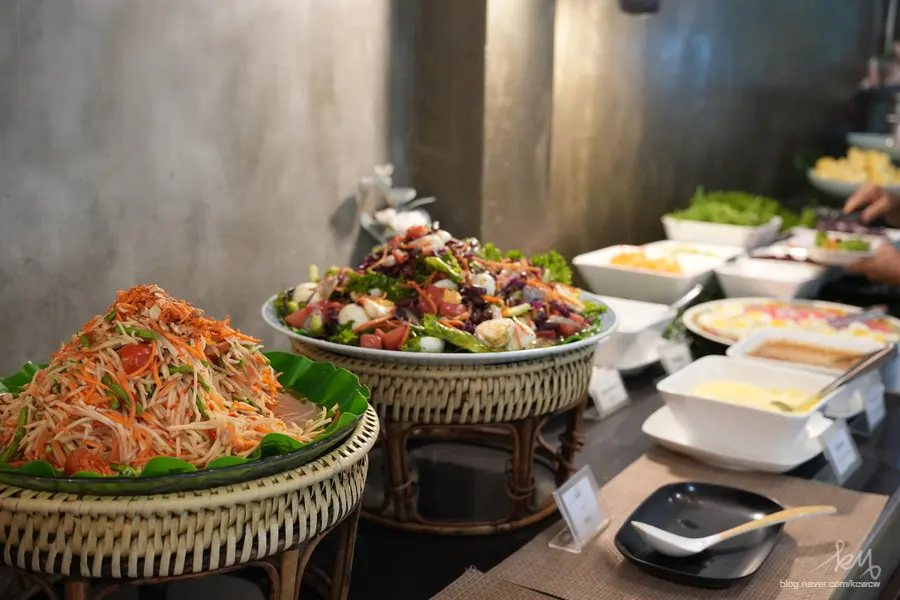
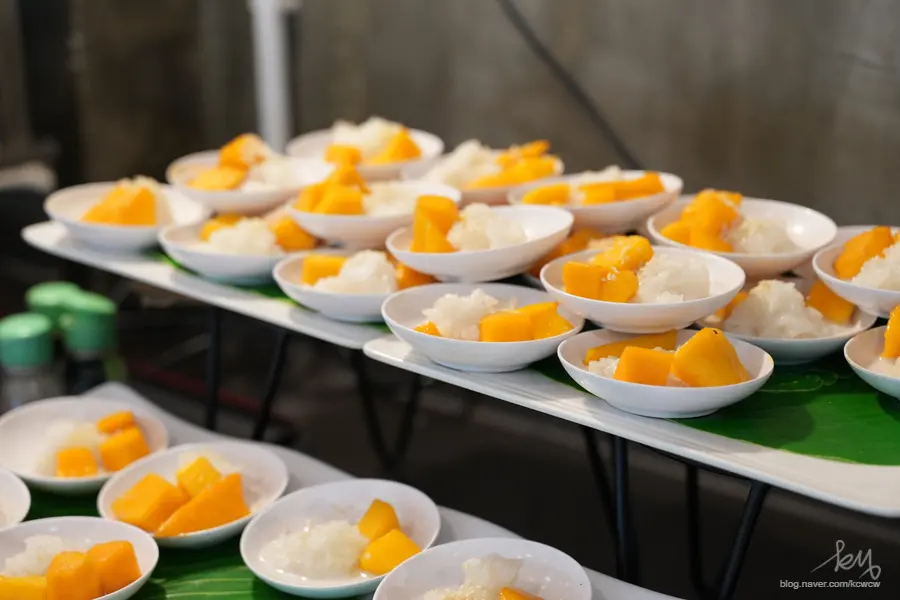
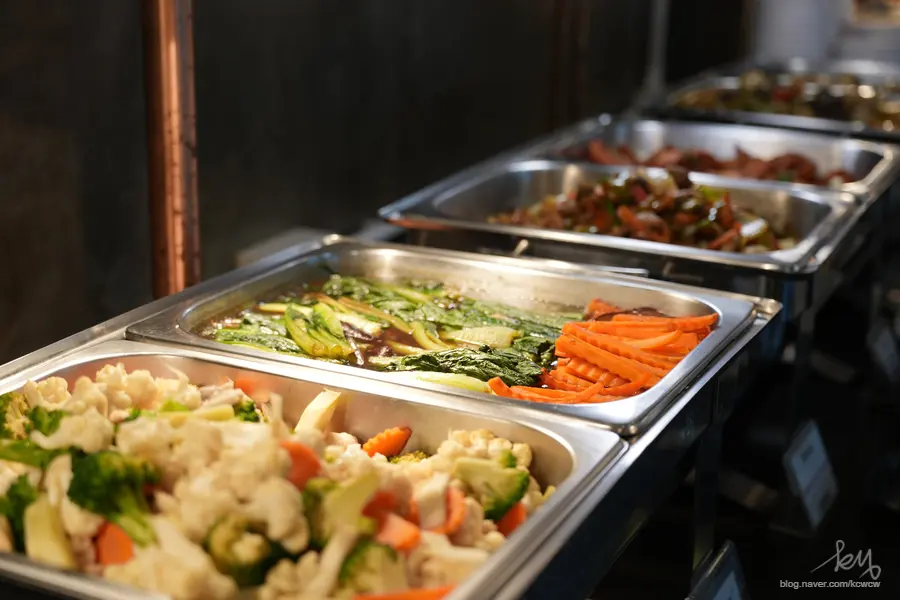
For lunch, right in front of the White Temple,
we visited a buffet serving Thai dishes.
We each paid 150 baht to enter.
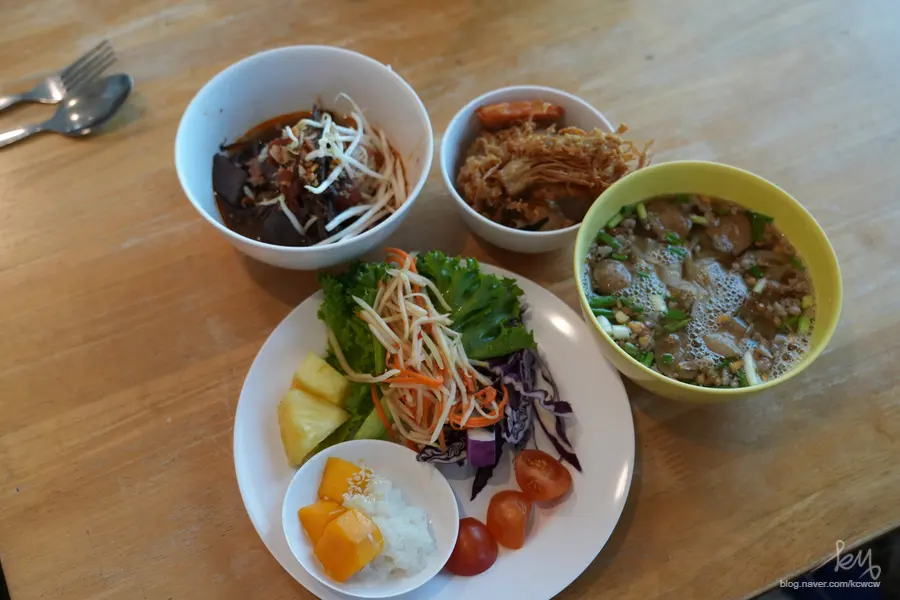
From Som Tum, rice noodles, and mango sticky rice,
to salads, grilled vegetables, fruits, chicken, fried foods, and curry,
we could freely choose and enjoy a variety of dishes.
The variety of dishes and their taste were pretty standard!
Considering the price point of about ~$4, it was decent.
If you prefer to dine separately,
it's perfectly fine to eat somewhere else within the allotted time.
5. Blue Temple Wat Rong Suea Ten
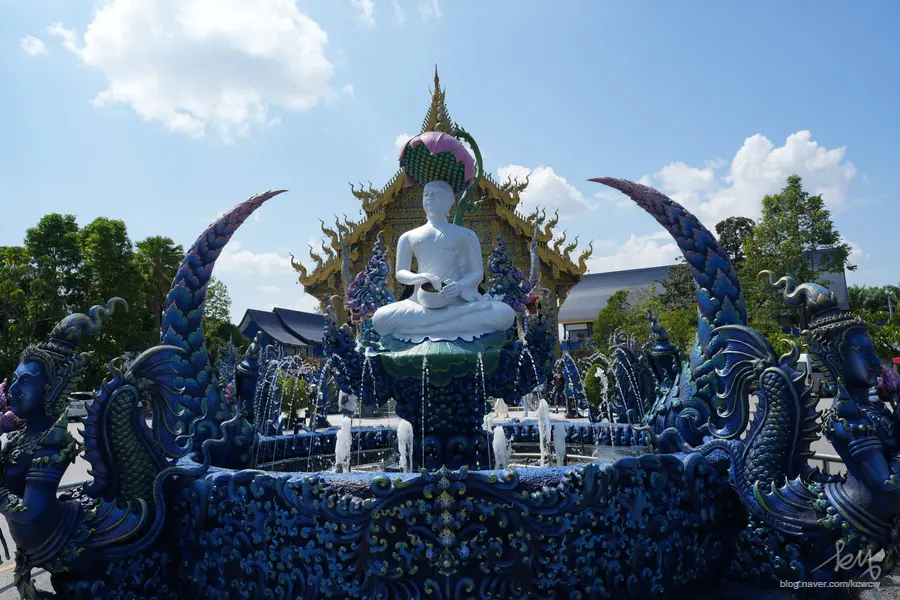
The Blue Temple, a stunning blend of deep blue and golden decorations,
was a striking blue architectural marvel right from the entrance.
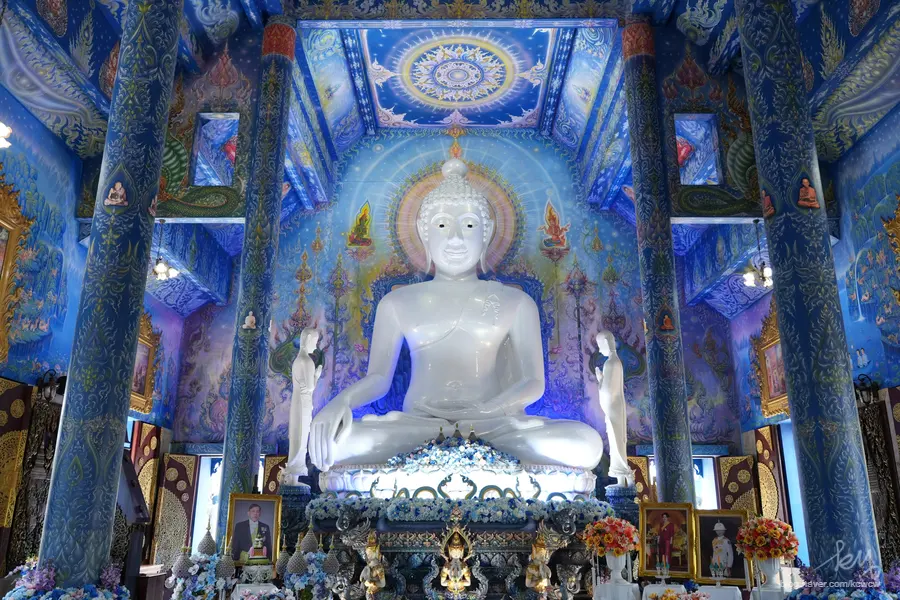
Inside the main hall at the front, there's a white Buddha statue,
and if you go to the building behind it, you can see a pagoda.
When entering the temple,
you should wear long clothing that covers your shoulders and legs,
and remove your hat and shoes.
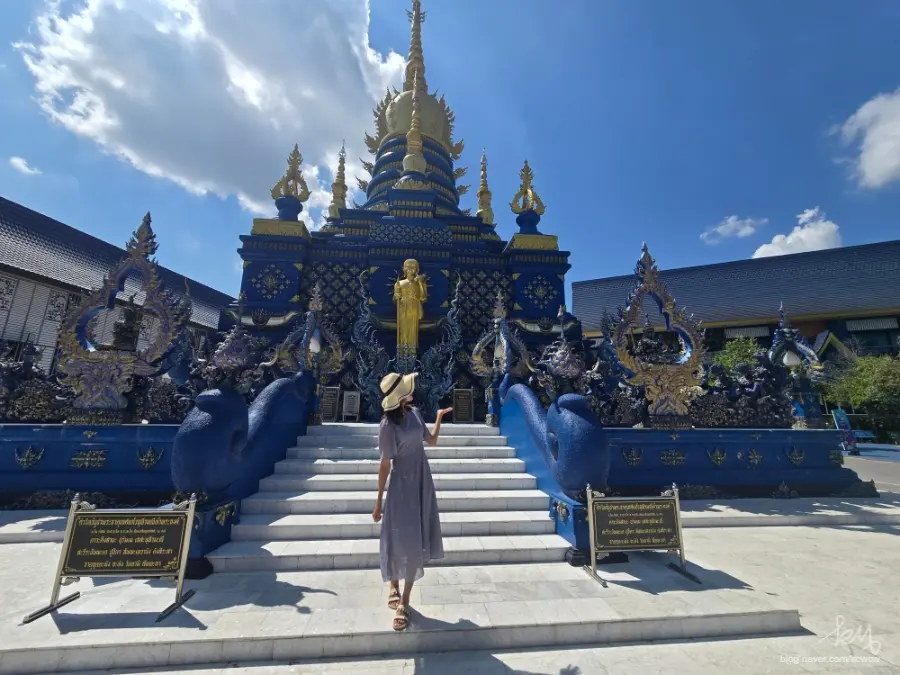
The blue hues of the Blue Temple symbolize wisdom, tranquility,
and spiritual depth.
Although it's relatively smaller in scale compared to the White Temple,
the unique ambiance created by its blue architecture and white Buddha statue
made it a place definitely worth visiting.
6. Goddess Temple Wat Huay Pla Kang
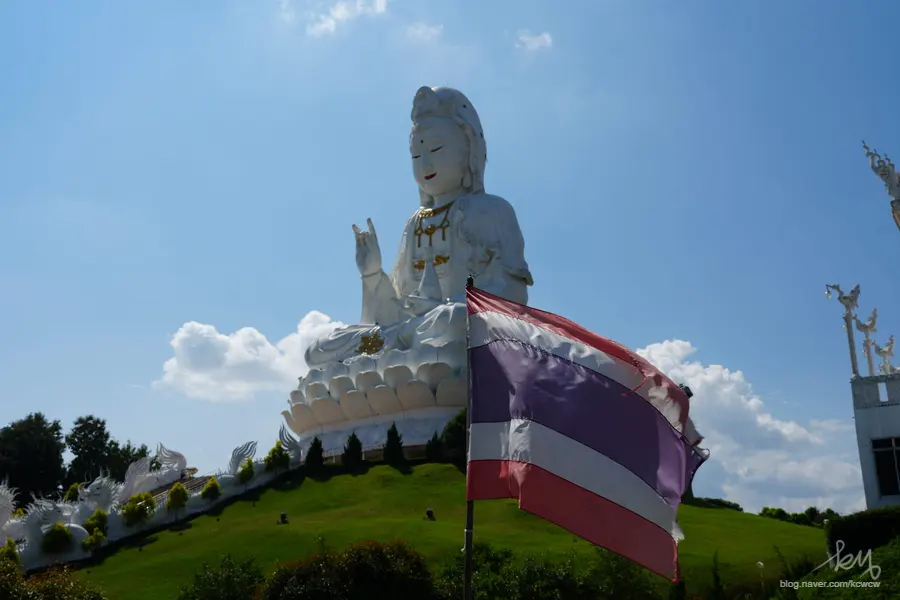
The Goddess Temple, home to a gigantic white statue of Guan Yin Bodhisattva,
features a massive sculpture visible from afar,
perched atop a hill.
You can take an elevator inside this Guan Yin Bodhisattva statue
all the way up to a 25-story high observation deck!
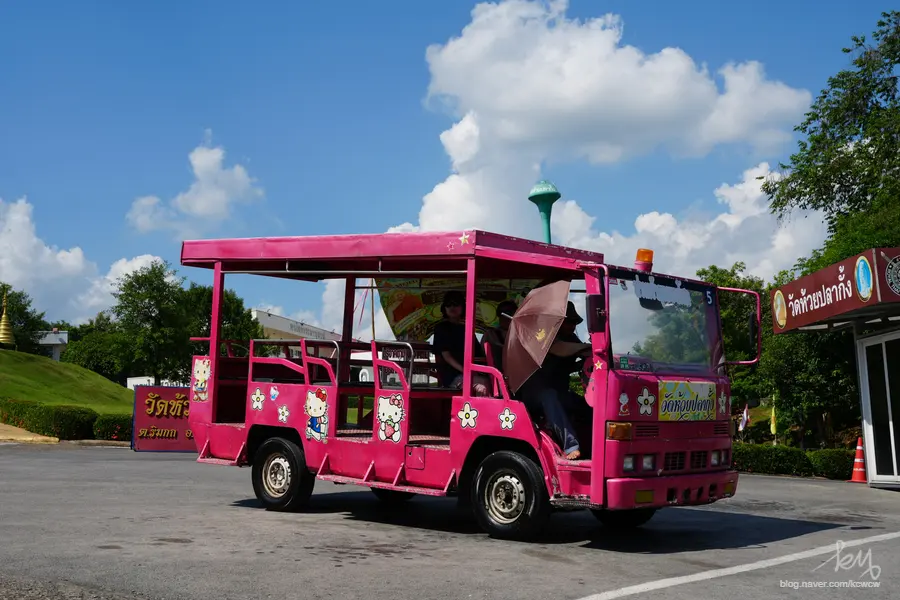
A tuk-tuk takes you from the parking lot up to the hill.
The tuk-tuk ride is free, but using the elevator
costs 80 baht per person starting from October 2026.
Isn't the Hello Kitty tuk-tuk absolutely adorable 🌸
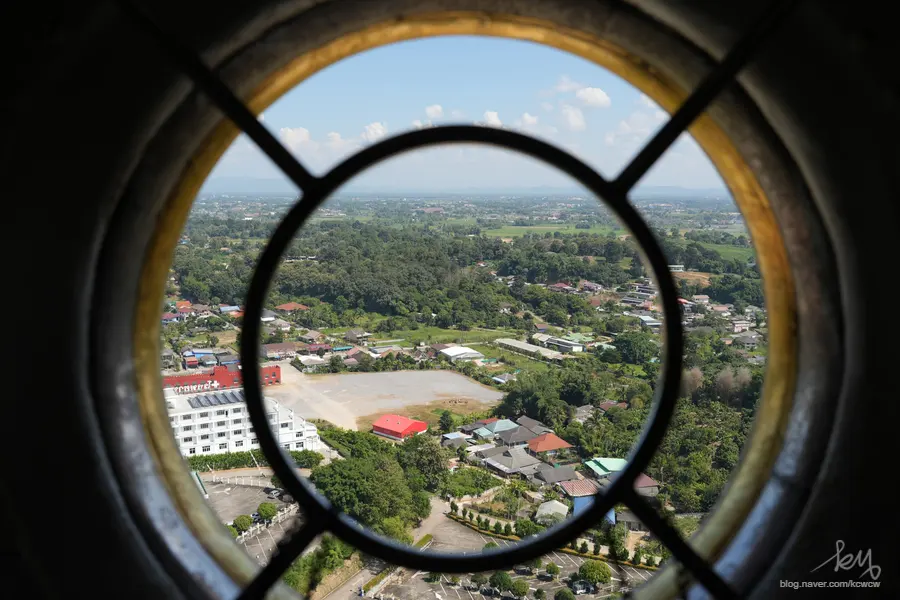
As you ride the elevator up, you'll see the view below,
but what's truly more important than the view are the sculptures inside!
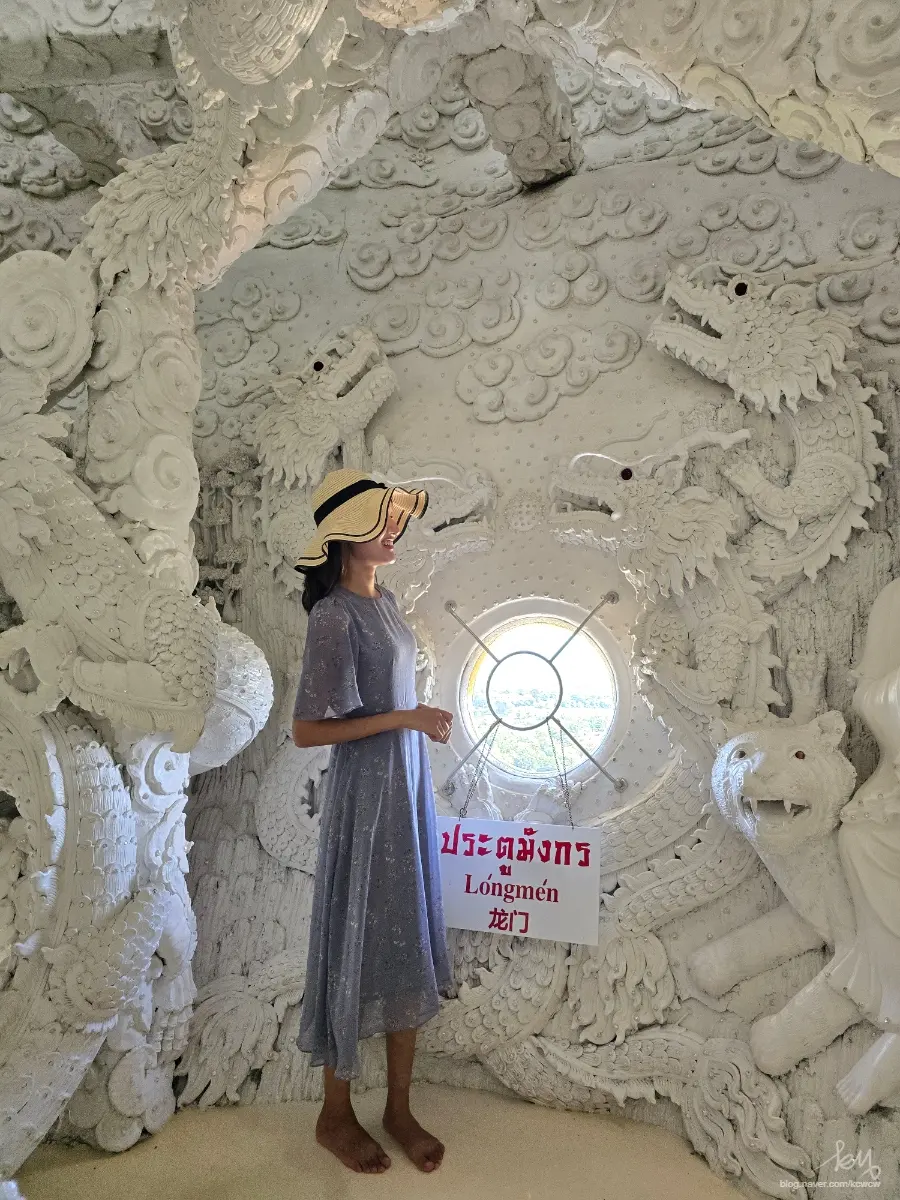
When you observe the intricately carved white sculptures inside,
you'll notice a unique characteristic:
you'll find various animals like dragons and the twelve Chinese zodiac signs,
which are not typically seen in Thai temples.
This is because Taiwanese individuals were involved in the temple's restoration,
leading to a strong influence of Chinese Buddhist characteristics.
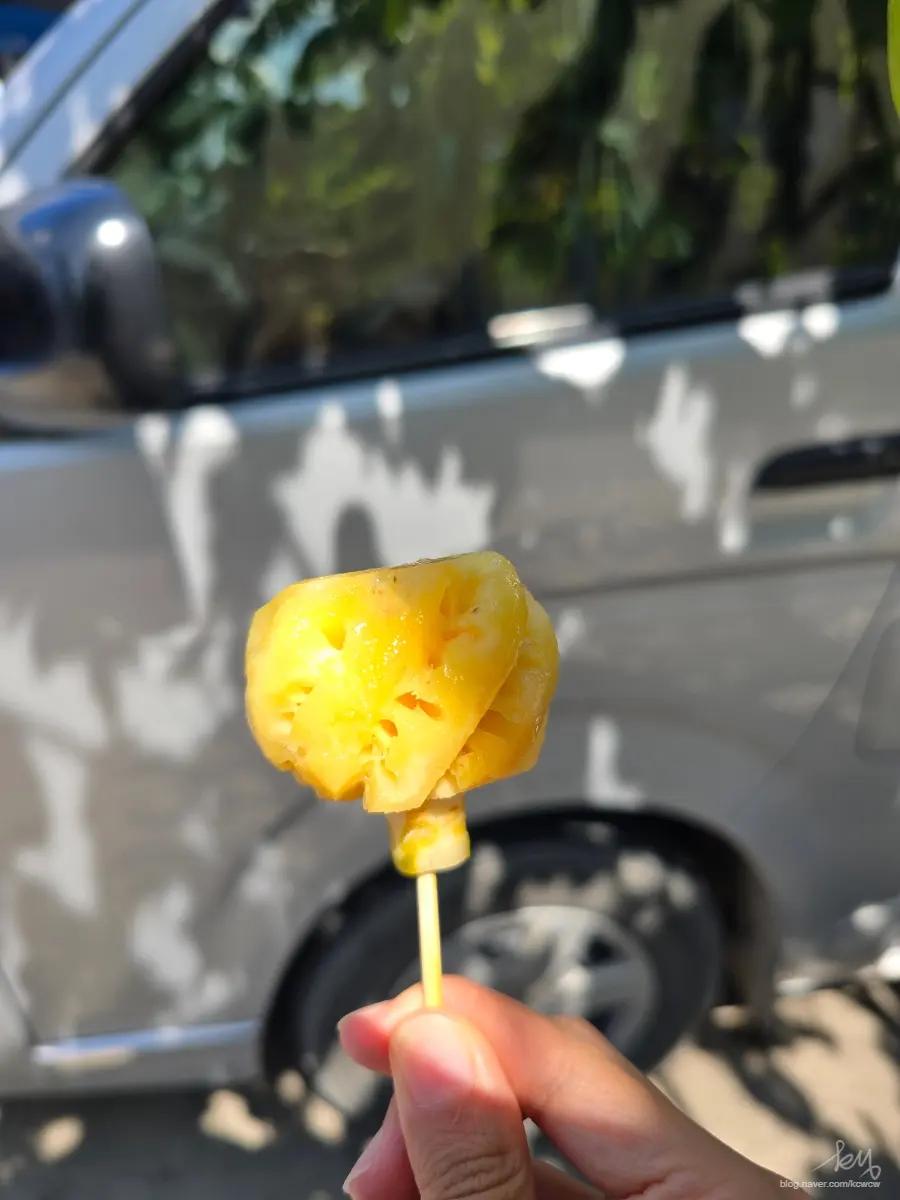
After finishing our visit to the Goddess of Mercy Temple,
our guide bought us some baby pineapples,
and they were incredibly sweet and delicious!
We drove for three hours back to Chiang Mai,
making a stop at a rest area along the way.
When you need to use the restroom at a tourist spot,
many places charge 5 baht, so
it's a good idea to go immediately if you see a free one!
(Rest stop restrooms: remember to bring your own toilet paper ✨️)
If you're looking to visit a nearby attraction for a day during your Chiang Mai trip,
I highly recommend the Chiang Rai day tour!!
Chiang Rai has a completely different charm than Chiang Mai,
allowing you to experience two distinct atmospheres in one trip.
It's also perfectly doable as a day trip,
so I definitely recommend it to anyone looking for a tour from Chiang Mai!
Especially if you're traveling solo like me,
a join-in tour is a great, budget-friendly option,
It was great that the guide took so many pictures for us 😊
It can be tiring to visit many different places in just one day,
but for a Chiang Rai tour itinerary where you can visit only the essential spots,
the tour below was absolutely perfect ♥️
▼▼▼
📍 Chiang Rai
Chiang Rai, Mueang Chiang Rai District, Chiang Rai Province, Thailand
Frequently Asked Questions
What is the travel time and recommended method for getting from Chiang Mai to Chiang Rai?
It takes about 3 hours one-way by car from Chiang Mai to Chiang Rai. Since it's difficult to visit by public transportation, we recommend taking a Chiang Rai day tour.
Which temples were visited on the Chiang Rai day tour introduced in the article?
The Chiang Rai day tour booked by the author in the article visited Wat Rong Khun (White Temple), Wat Rong Suea Ten (Blue Temple), and Wat Huay Pla Kang (Goddess of Mercy Temple). This tour departs from Chiang Mai and returns around 5 PM on the same day.
What was included in the Chiang Rai day tour the author participated in, and how much was the entrance fee for the White Temple?
The tour included round-trip transportation from the meeting point to Chiang Rai, Korean-speaking guide commentary and photo taking, White Temple entrance fee (200 Baht), snacks, and water. The 200 Baht White Temple entrance fee was included in the tour cost and was not paid separately.
What is the elevator fee for the Guanyin Bodhisattva statue at Chiang Rai Goddess Temple (Wat Huay Pla Kang) and the characteristics of the internal sculptures?
As of October 2026, the elevator inside the Guanyin Bodhisattva statue at the Goddess Temple costs 80 Baht per person. Inside, there are various animal sculptures, such as dragons and the twelve zodiac animals, which are rarely seen in Thai temples. This is because Taiwanese individuals were involved in the temple's restoration, reflecting characteristics of Chinese Buddhism.
What do the white color, mirror decorations, and golden restroom at Chiang Rai's White Temple each symbolize?
In the White Temple, white symbolizes the purity and pristine nature of Buddha, while the mirror decorations signify that Buddha's wisdom illuminates the world and the universe. The golden restroom symbolizes material desires and worldly values, implying letting go of greed by emptying what is within the body.
Share this article
Related Travel Stories

Pang Dee Dee Chiang Mai: An Elephant Cafe Near the City in 2026
Discover Pang Dee Dee, Chiang Mai's newest elephant cafe just a 20-minute drive from the city. Enjoy clean facilities, feed elephants, and capture incredible photos.
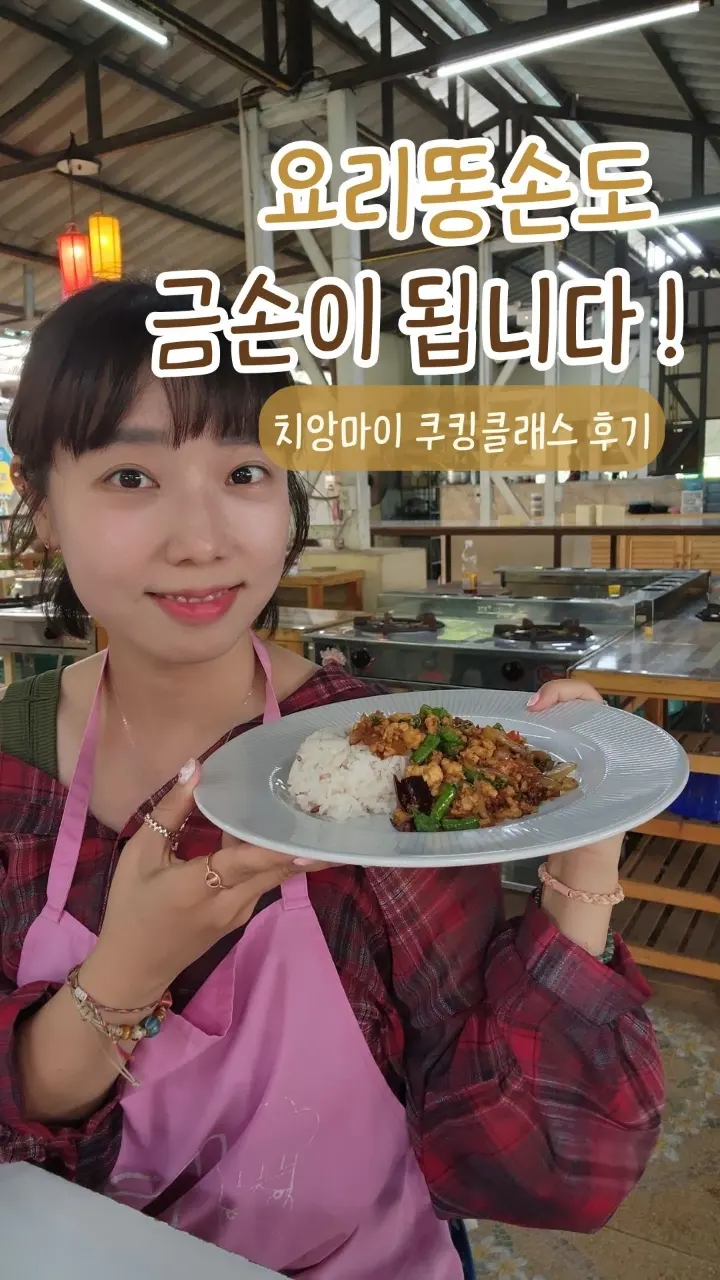
Chiang Mai Cooking Class Review: Mama Noi Thai Cuisine
Dreaming of authentic Thai cuisine? Our Mama Noi Chiang Mai cooking class review covers everything from market visits to delicious dishes. A must-do experience!
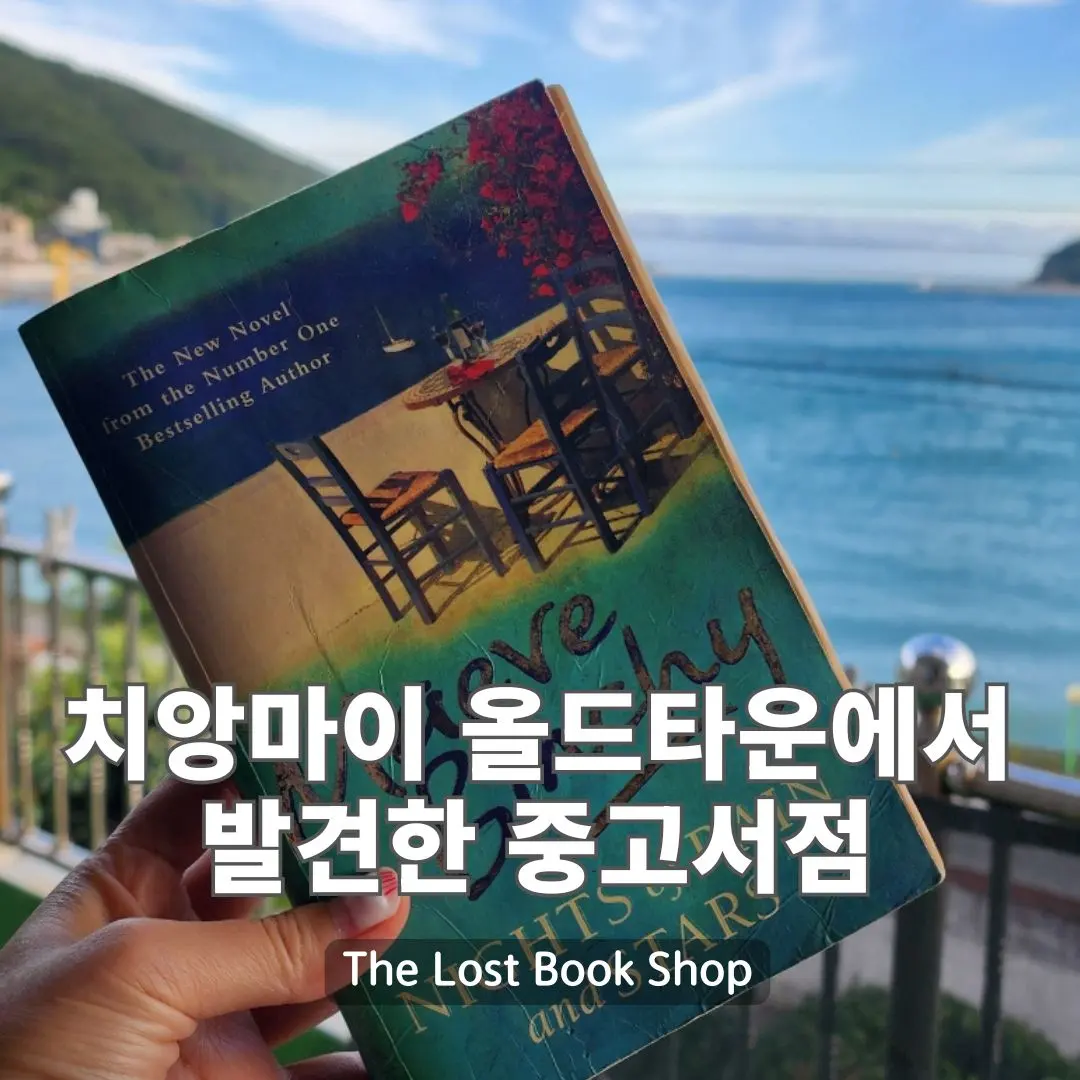
The Lost Book Shop Chiang Mai: Old Town's Hidden Gem
Uncover a literary treasure in Chiang Mai's Old Town! The Lost Book Shop offers a charming escape and unique, affordable souvenirs for every wanderer.

Horizon Village & Resort Chiang Mai Review 2026: Private Pool Paradise
Discover Horizon Village & Resort Chiang Mai in 2026! This massive, nature-friendly retreat offers serene relaxation and a private pool experience, perfect for your next getaway.
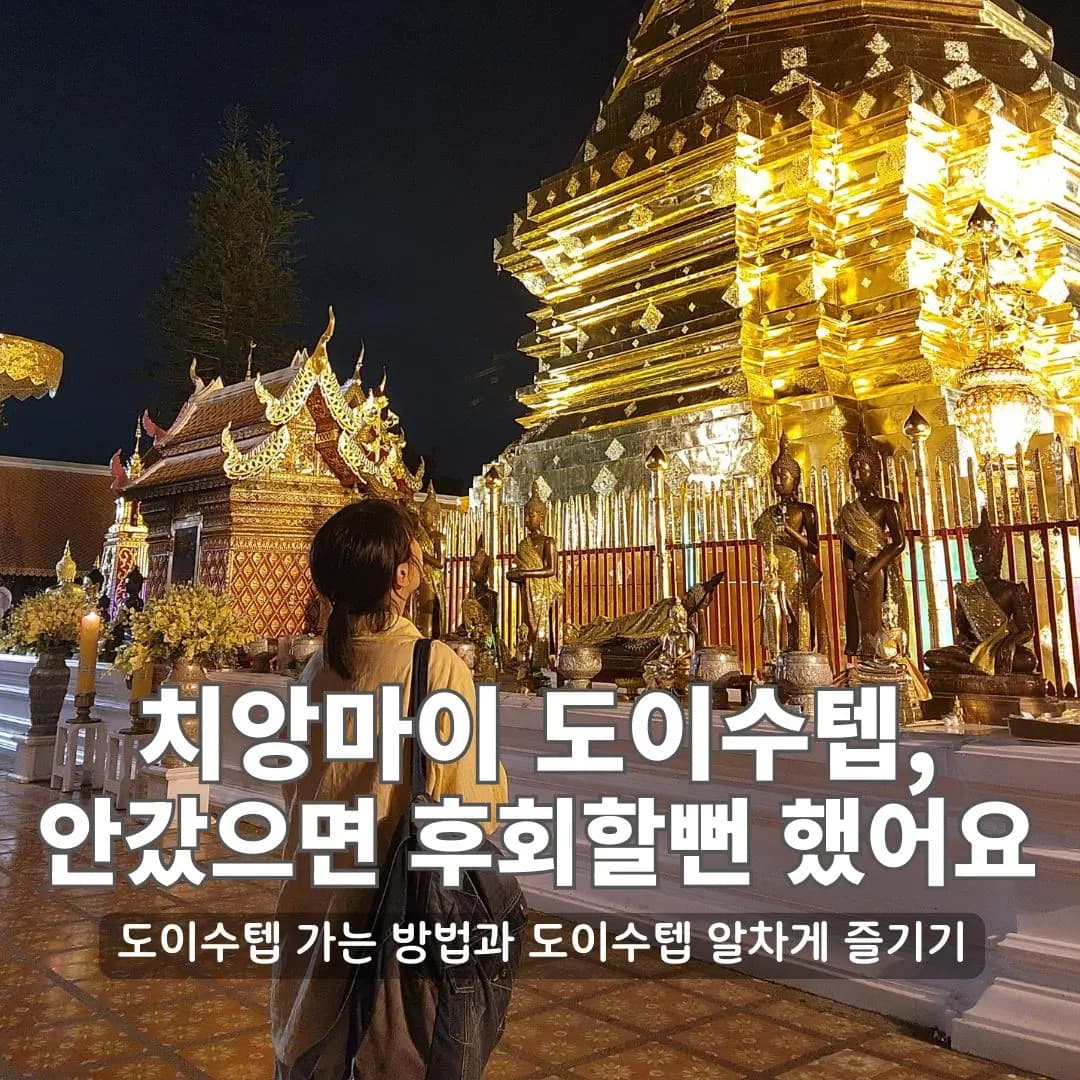
Doi Suthep Chiang Mai Guide 2026: Sunset Views & How to Get There
Planning a trip to Chiang Mai? Don't miss Doi Suthep! This guide reveals the best ways to reach the golden temple and why sunset is the absolute must-see time.
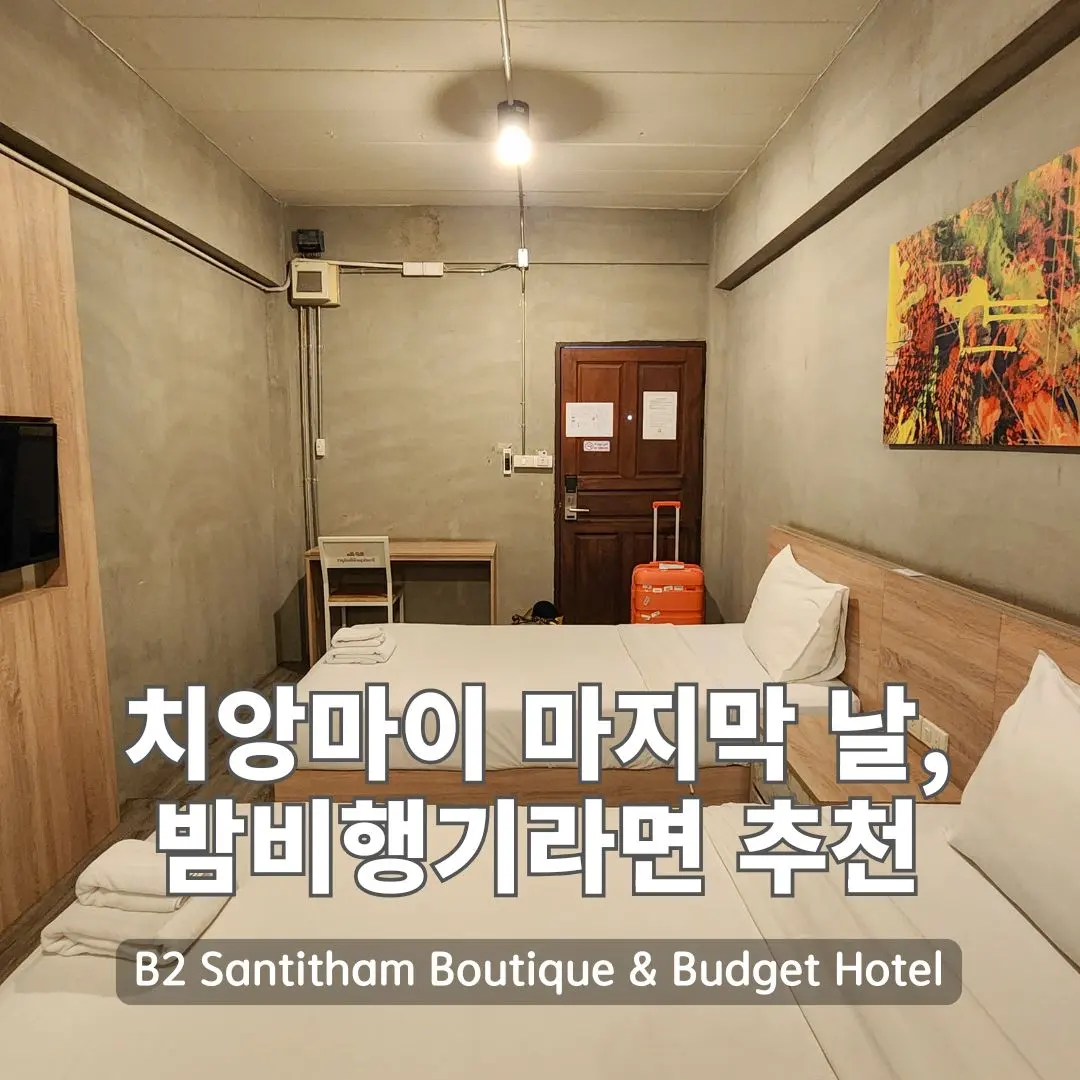
B2 Santitham Chiang Mai Review 2026: Budget Hotel for Late Flights
Leaving Chiang Mai with a late flight? Discover B2 Santitham, a super affordable hotel perfect for a quick refresh, luggage organization, and a private shower before heading to the airport.