

Chengdu Wuhou Shrine Tickets & Hours 2026: Photo Spots & History
Dive into the heart of Chengdu's history at Wuhou Shrine! Discover Three Kingdoms legends, serene gardens, and the iconic Red Wall Bamboo Path for unforgettable photos.
Exploring Chengdu's Wuhou Shrine
A Must-Visit in Chengdu · Tickets · Three Kingdoms Landmark
©eodigayeong
If you're planning a trip to Chengdu and searching for must-see attractions,
you're probably wondering where to go after the iconic Panda Base.
Especially if you're a fan of the Three Kingdoms era or historical sites,
Wuhou Shrine should definitely be on your itinerary!
It's conveniently located right next to Jinli Ancient Street, making it easy to plan your route,
and with plenty of picturesque photo zones, it's the perfect place to capture some unforgettable shots.
01. Wuhou Shrine Chengdu: Essential Information
📍 Wuhou Shrine (武侯祠)
📍 Chengdu Wu Hou Shrine
231-2 Wuhou Ci Da Jie, Gaosheng Bridge, Wuhou Qu, Chengdu Shi, Si Chuan Sheng, China, Postal Code: 610093
⏰ Operating Hours
Daily 09:00 AM - 06:00 PM
(Last entry at 05:00 PM)
During the Lunar New Year holiday period,
there are sometimes special night openings (09:00 PM - 10:00 PM),
so it's always a good idea to check their official channels before your visit.
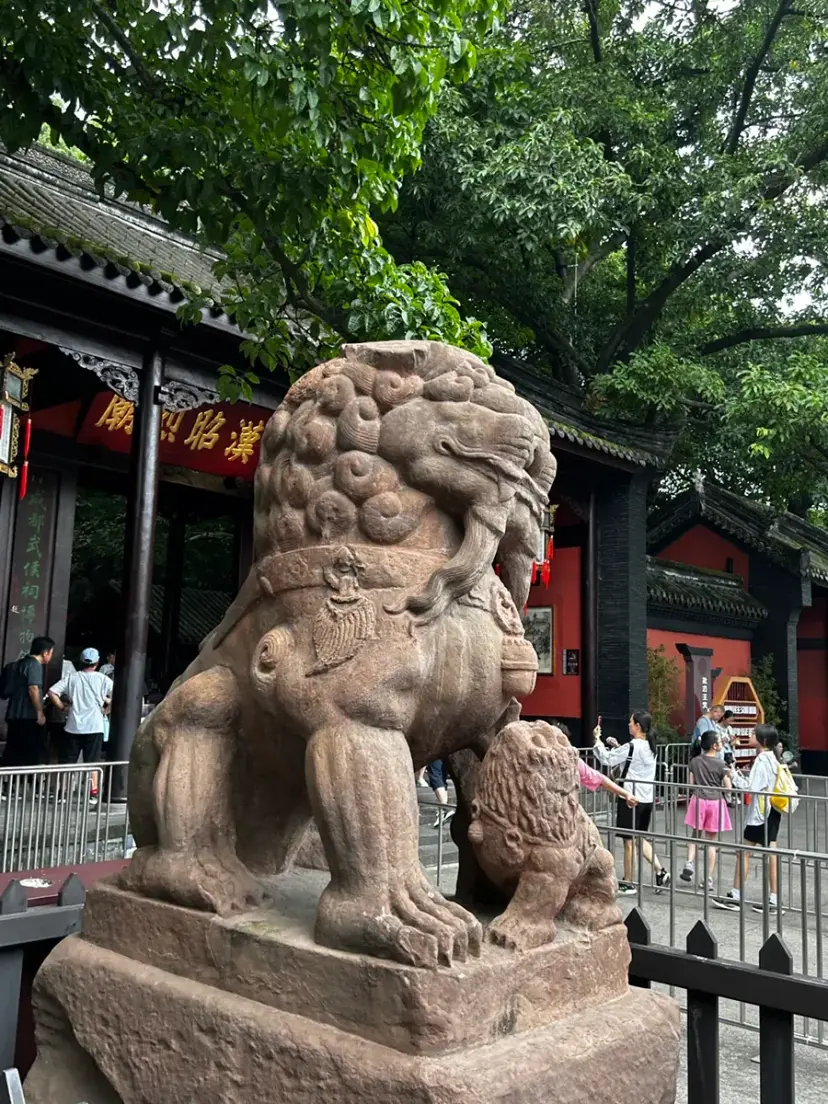
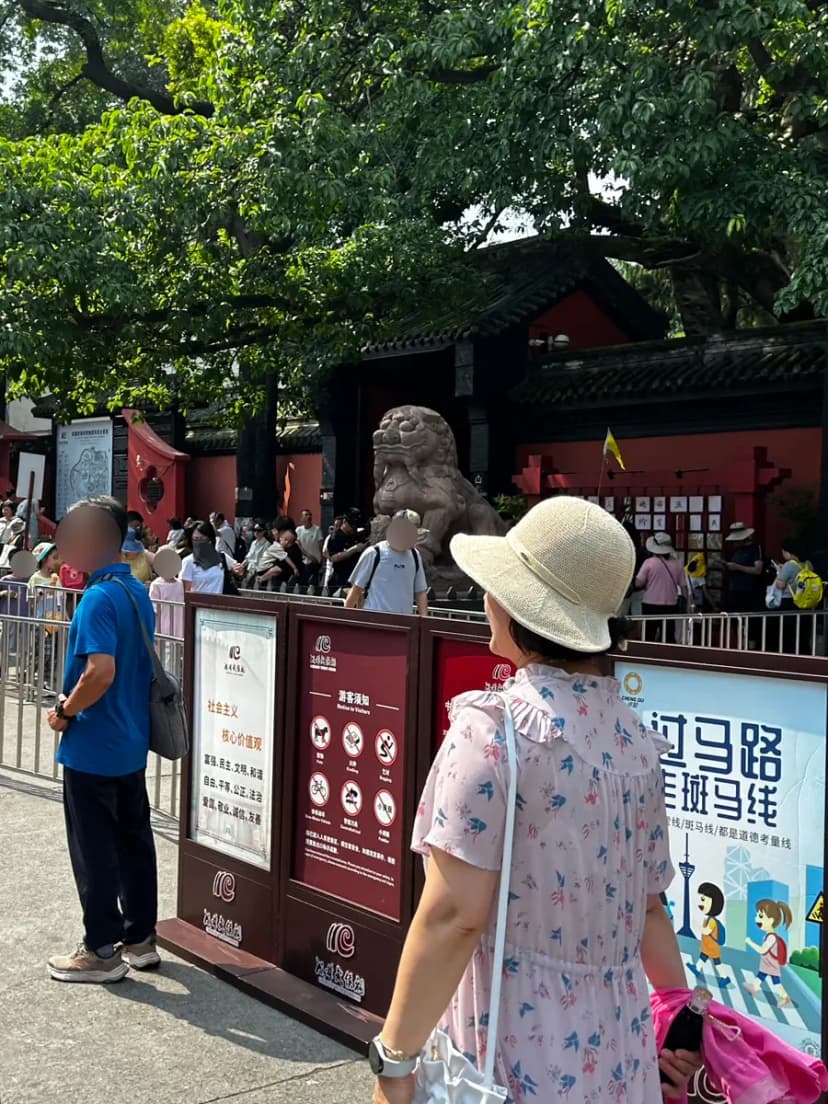
While you can purchase tickets on-site at the ticket booth,
as a popular attraction, the lines can get quite long on weekends and holidays.
Booking in advance allows for direct entry,
so if you have your travel dates set,
it's best to check for ticket availability for your preferred date first.
▼▼▼
🔗 Check Wuhou Shrine Ticket Availability
![무후사(우허우츠) 티켓 할인, 운영 시간, 후기 [2026] | Trip.com](/_next/image?url=https%3A%2F%2Frmrjnibxulbdixuqguwc.supabase.co%2Fstorage%2Fv1%2Fobject%2Fpublic%2Fpost-content%2Fimported-naver%2Fimage-1786696835410-1786696835410-32cd1881.jpg&w=828&q=75) Wuhou Shrine (Wuhouci) Ticket Discounts, Operating Hours, Reviews [2026] | Trip.com
Wuhou Shrine (Wuhouci) Ticket Discounts, Operating Hours, Reviews [2026] | Trip.com02. Must-See Highlights Inside Wuhou Shrine
Wuhou Shrine isn't just a temple;
it feels like walking through the very pages of the Three Kingdoms story.
📍 What does Wuhou Shrine (武侯祠) mean?
Wuhou (武侯) is an abbreviation of Zhuge Liang's posthumous title, Chungmuhou (忠武侯).
Combined with Ci (祠), meaning shrine or temple, Wuhou Shrine (武侯祠) literally means the Shrine dedicated to Chungmuhou (Zhuge Liang).
There are nine temples in China dedicated to Zhuge Liang, but the Wuhou Shrine in Chengdu is the most renowned. Originally established in the late Western Jin Dynasty, it has faced destruction, relocation, and reconstruction many times over its thousand-plus years. During the Tang Dynasty, it was grandly rebuilt, and in the early Ming Dynasty, it was integrated with the Han Zhaolie Temple (漢昭烈廟), which was built to honor Liu Bei. This brought the emperor and his minister together under one roof, and the complex was further expanded in 1672.
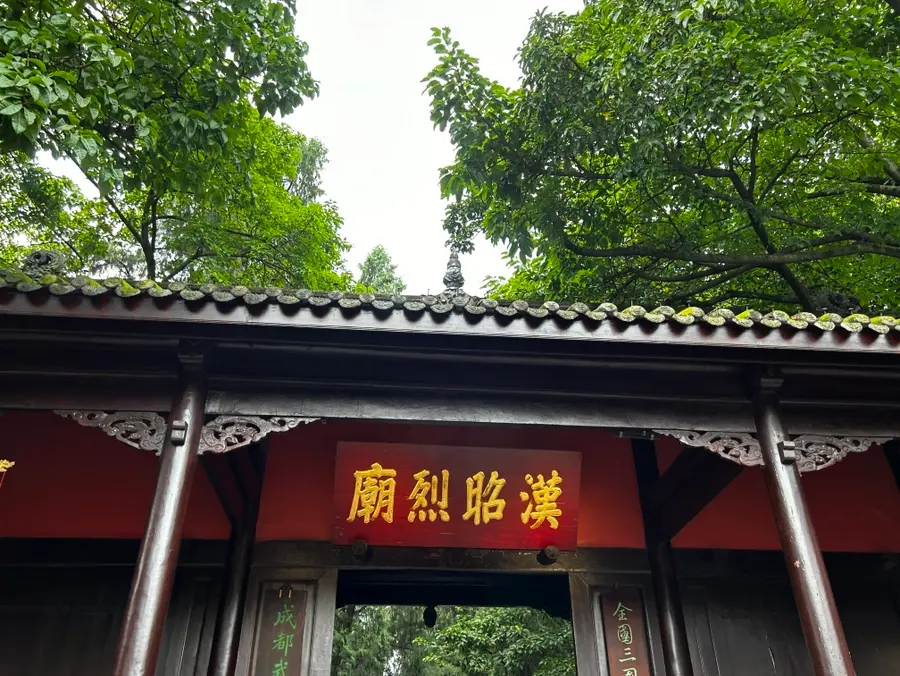
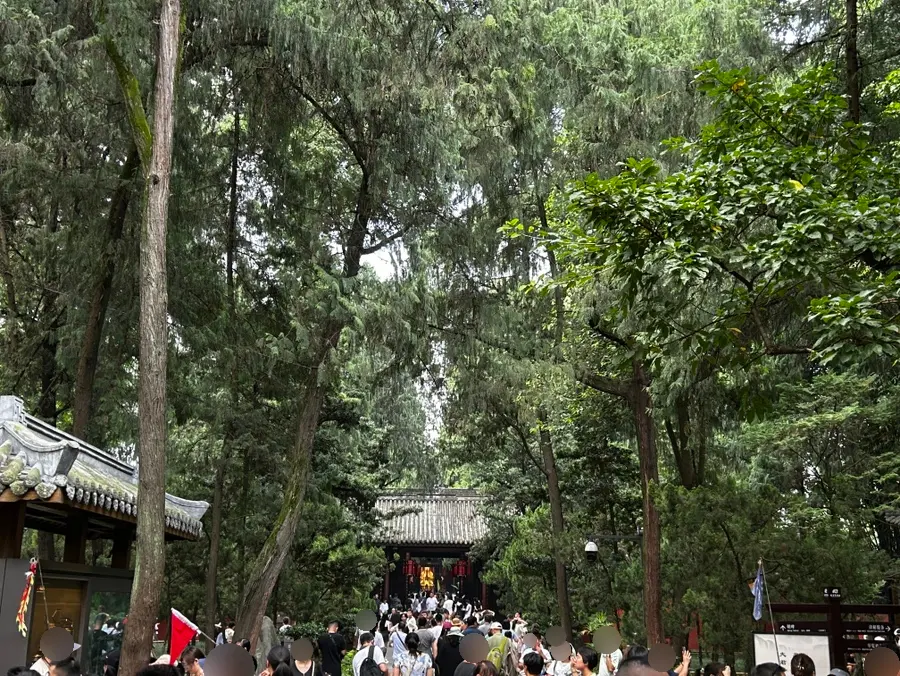
The Wuhou Shrine complex spans approximately 37,000 square meters,
featuring a precise layout with densely packed halls and
lush green pine trees, creating a majestic atmosphere.
The layout proceeds from the Main Gate, to the Second Gate, then Liu Bei Hall (劉備殿), the Grand Hall, and finally Zhuge Liang Hall (諸葛亮殿).
Among these, Liu Bei Hall is said to be the tallest and most imposing.
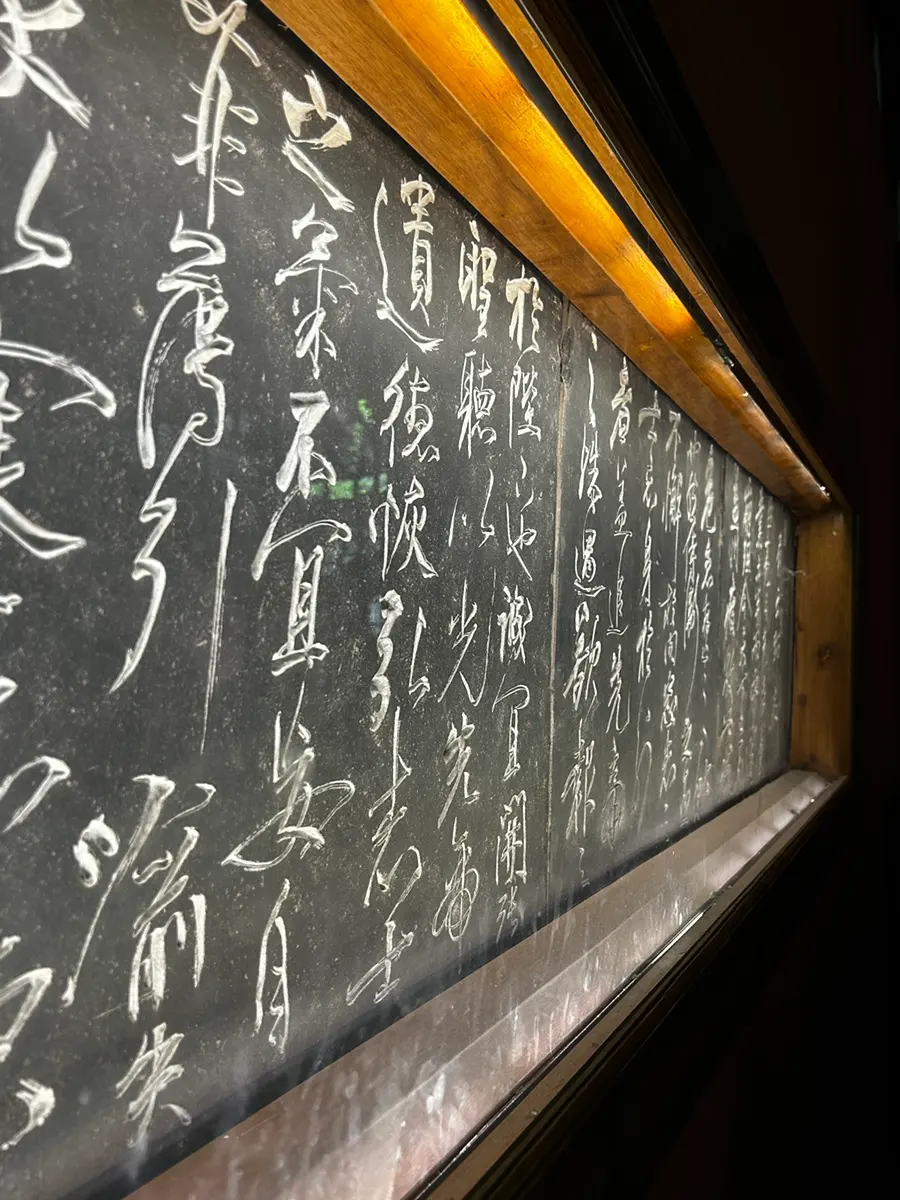
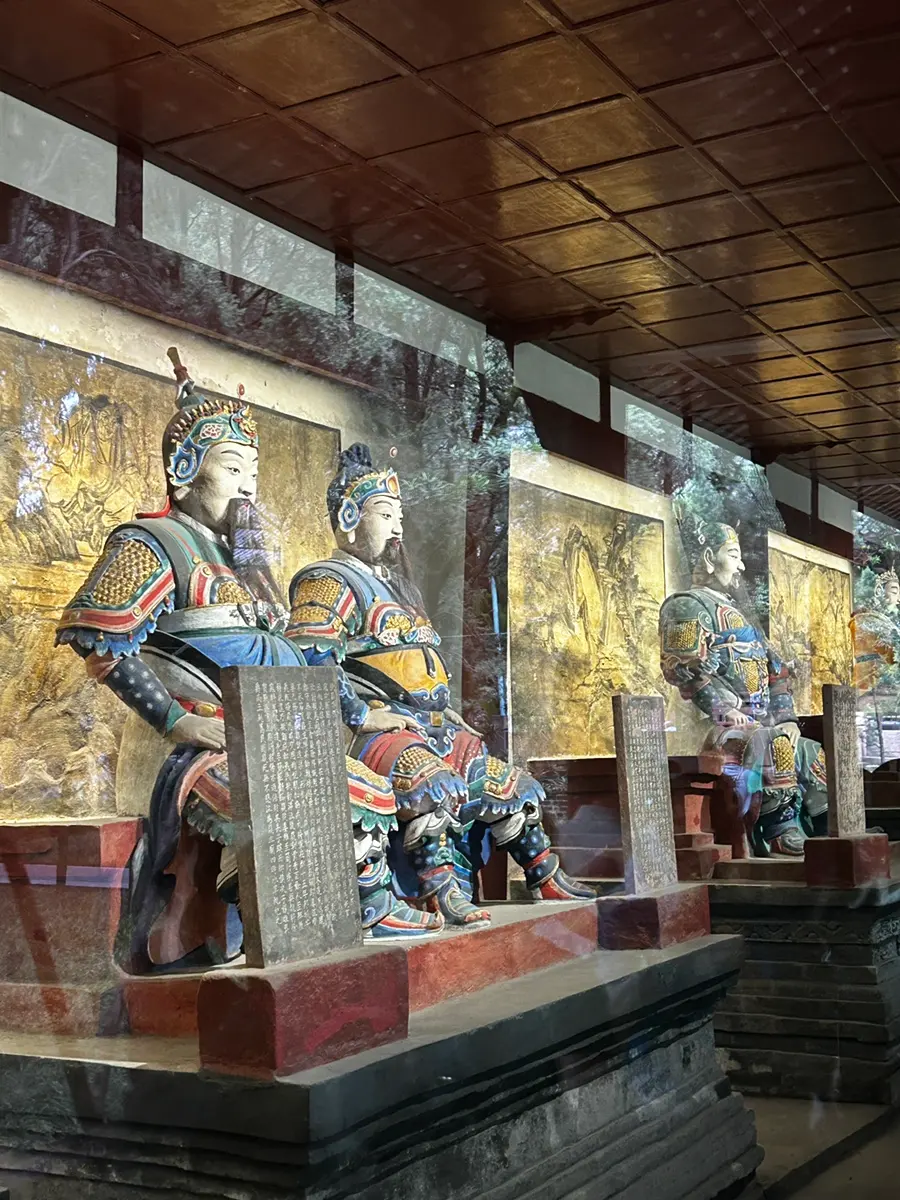
On the walls next to the halls, the famous "Chu Shi Biao" (出師表) is engraved,
and even if you don't understand all the characters, standing before it evokes a sense of solemnity.
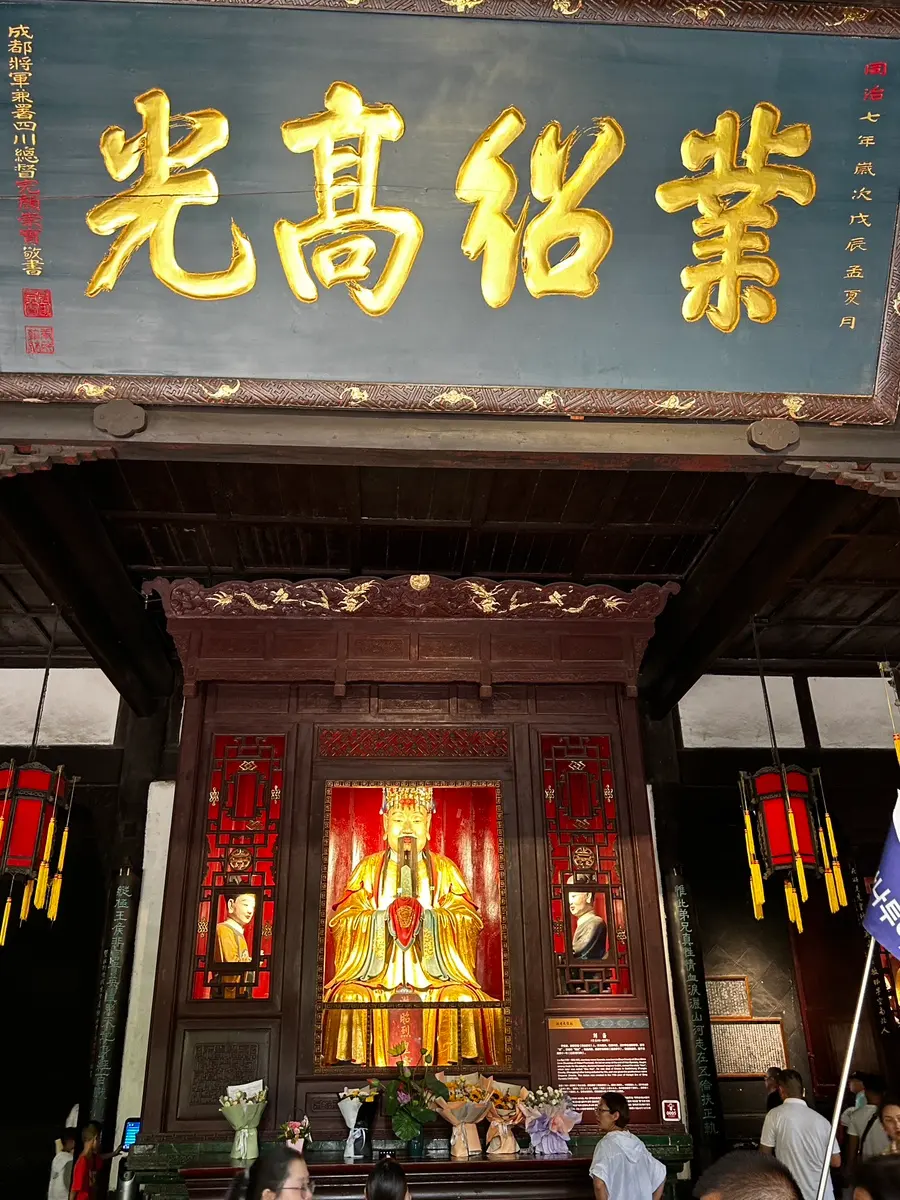
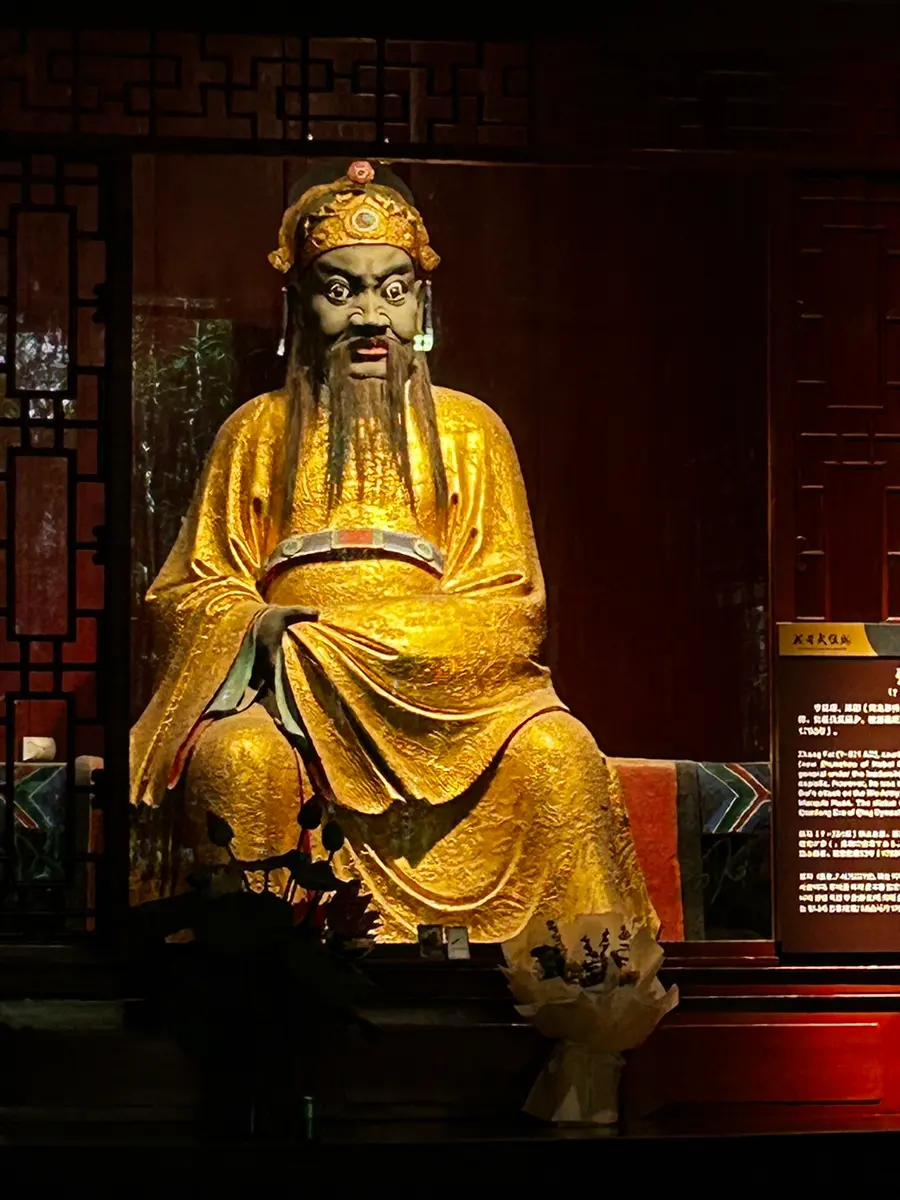
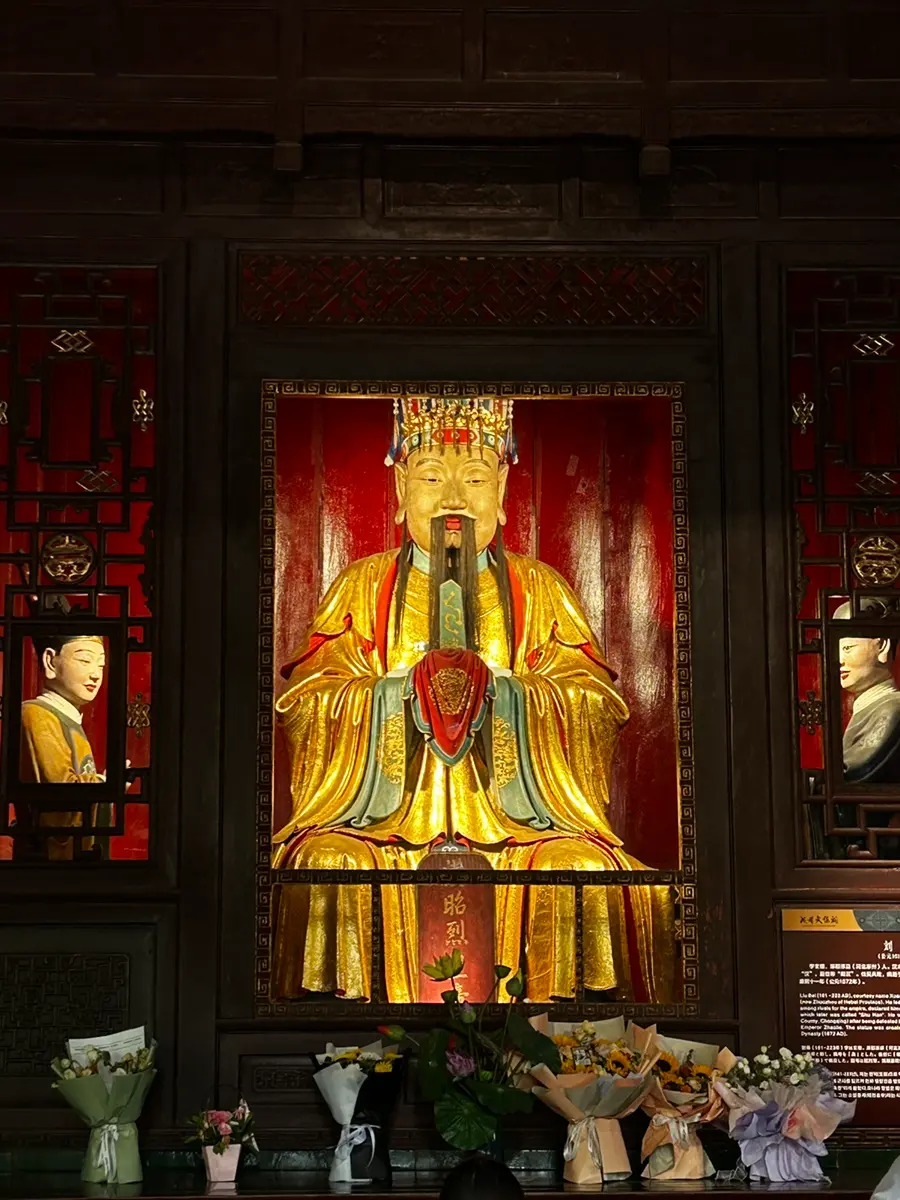
Above the seated statue of Liu Bei in Wuhou Shrine hangs a plaque inscribed with
業紹高光 (Yie Shao Gao Guang), which means "Liu Bei inherited the great legacy of Emperor Gaozu Liu Bang and Emperor Guangwu Liu Xiu."
This signifies that Shu Han carried on the orthodox lineage of the Han Dynasty.
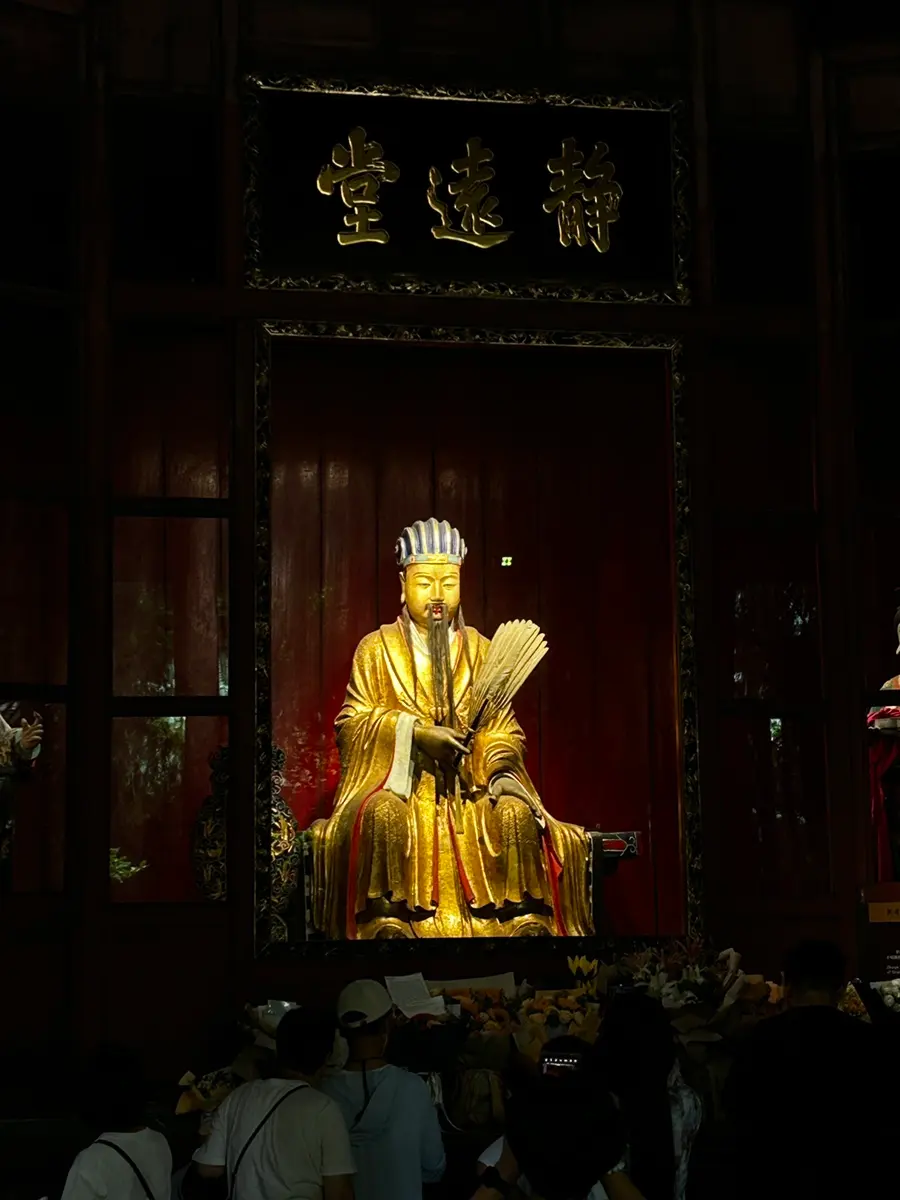
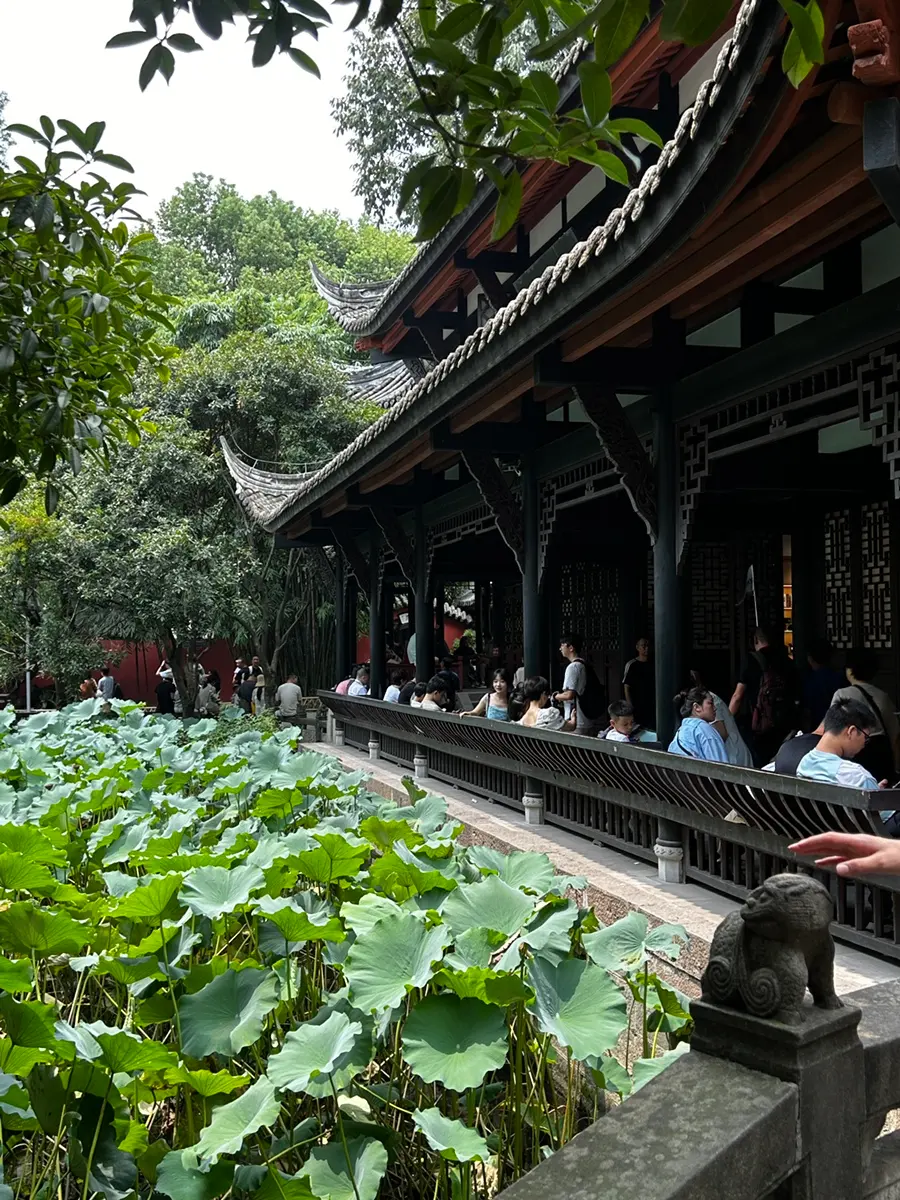
The official name of the hall dedicated to Zhuge Liang is Jing Yuan Tang (靜遠堂). Its name is derived from Zhuge Liang's "Letter to His Son," stating, "One cannot clarify their aspirations without simplicity, nor achieve far-reaching goals without tranquility."
The statue holding a feather fan is Zhuge Liang himself, flanked by statues of his son, Zhuge Zhan, and grandson, Zhuge Shang.
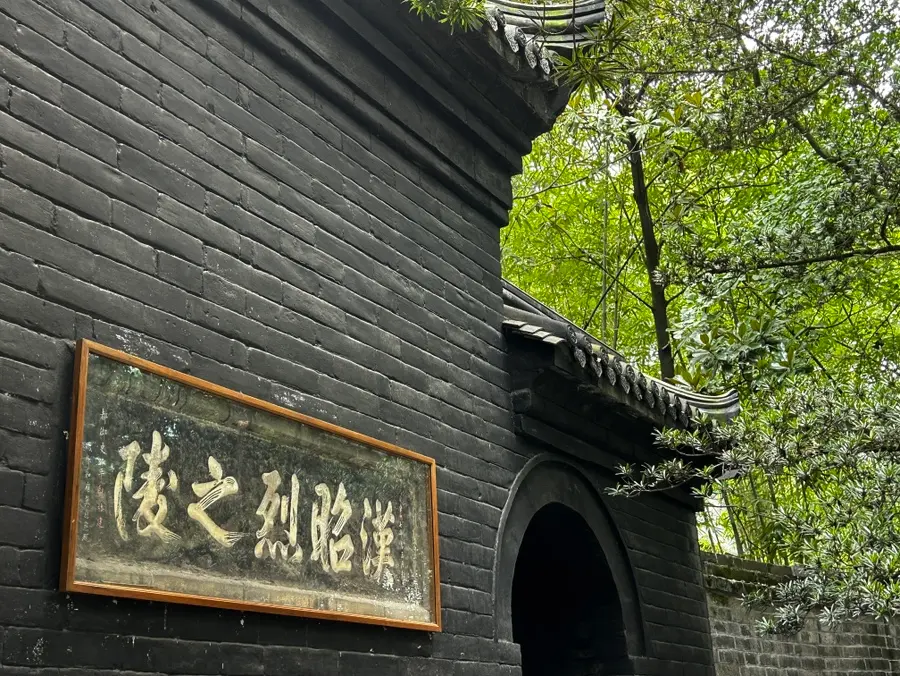
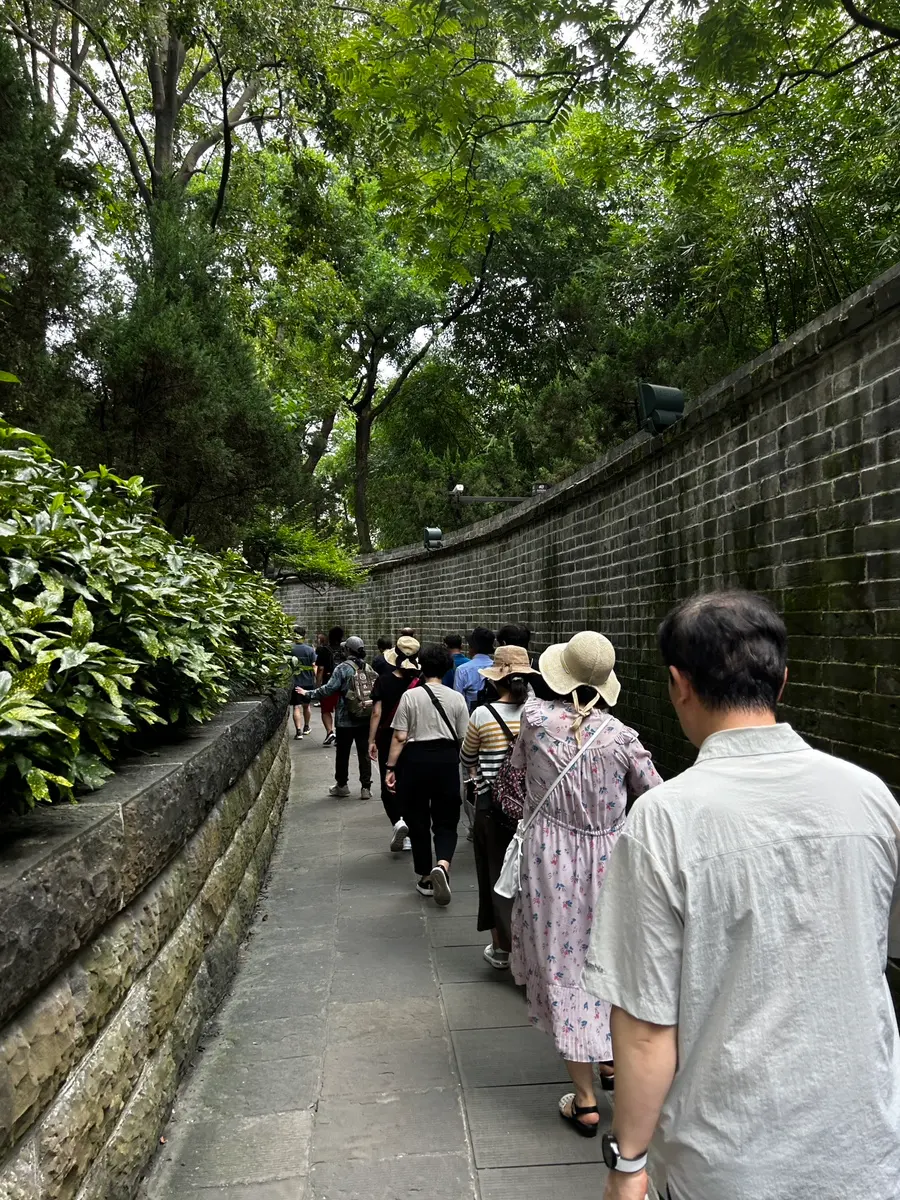
Han Zhaolie Ling (漢昭烈陵) is the entrance to Liu Bei's tomb, Huiling. It's characterized by its black brick walls and the bamboo groves visible behind them. This area directly connects to the famous Red Wall Bamboo Path photo zone.
03. The Unmissable Hongjangjuklim Photo Zone
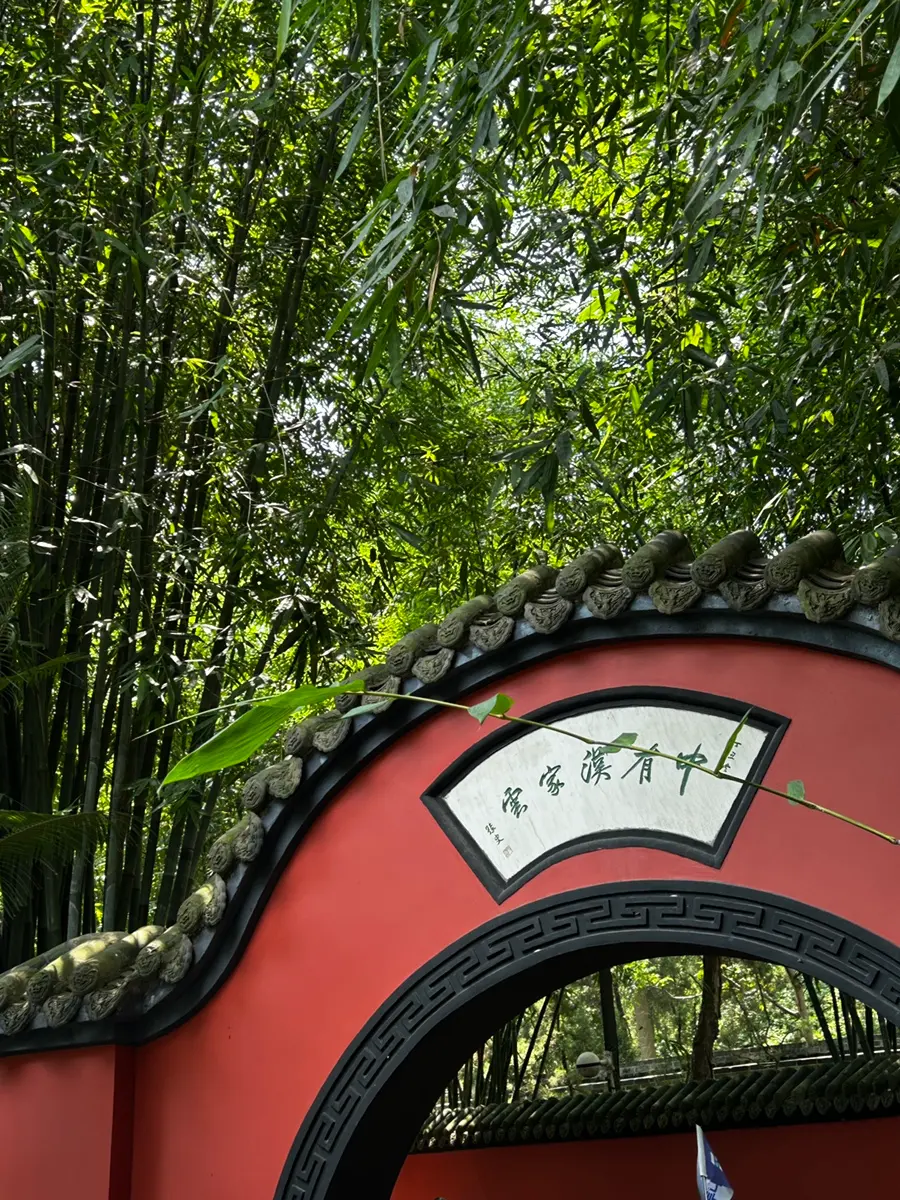
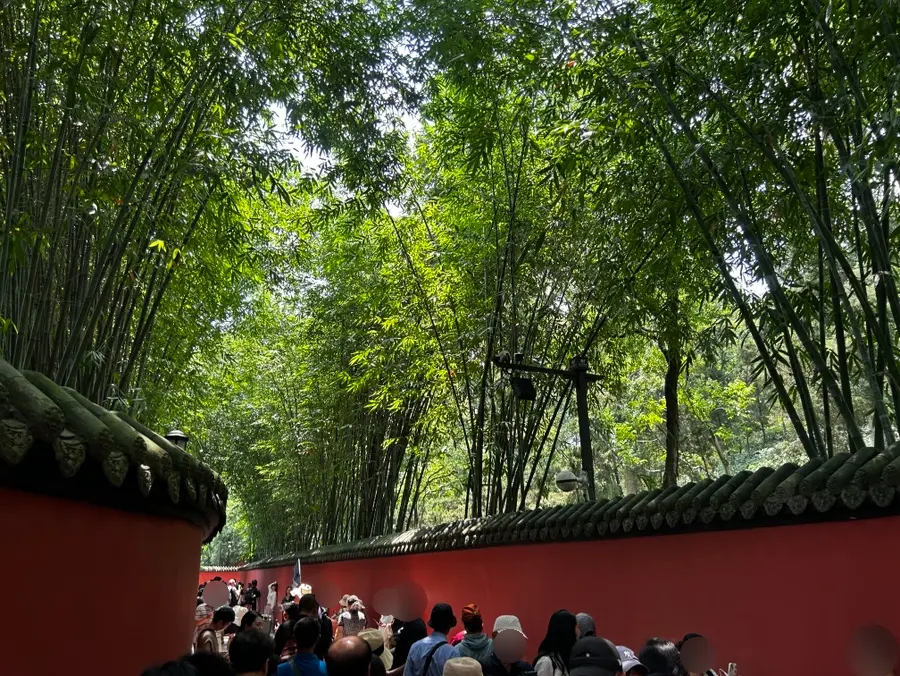
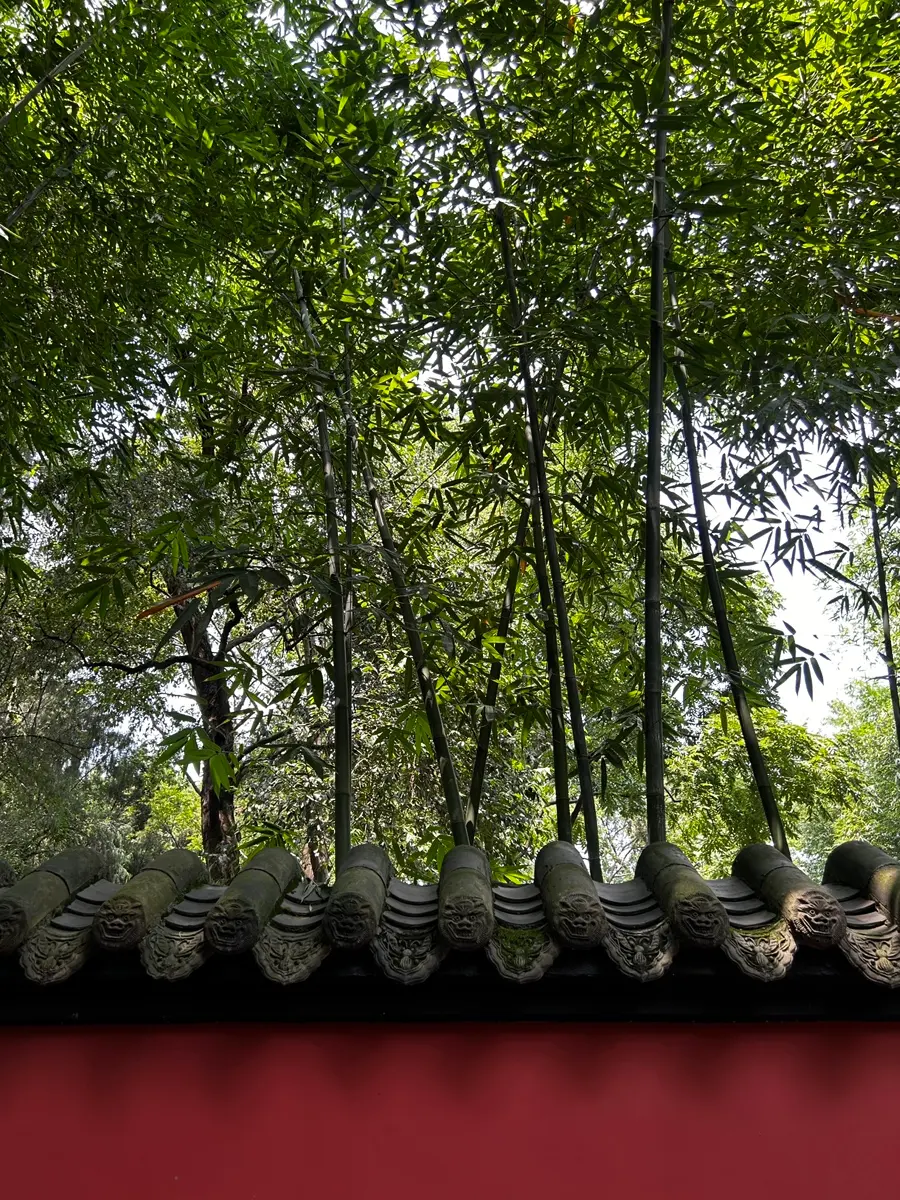
The most famous photo spot in Wuhou Shrine is the Hongjangjuklim (Red Wall and Bamboo Path), located between Huiling and the Sanyi Temple.
It's a narrow path where a vibrant red wall runs alongside towering bamboo, and the way the sunlight filters through the bamboo to cast beautiful shadows on the wall is truly breathtaking.

If you visit on a weekday before 09:00 AM or after 05:00 PM,
you'll likely find fewer crowds, allowing you to take photos at your leisure.
I visited during midday and found it quite crowded,
making it challenging to capture shots without other people in them.
(The outer walls of Wuhou Shrine are also red, so if the main path is too busy,
you can still get great photos there!)
From here, you can easily transition to the adjacent Jinli Street
for more exploration and enjoyment!
📌 Wuhou Shrine Chengdu Travel Planning Checklist |
✔ Check location and transportation (Metro Line 3, Wuhouci Station) ✔ Confirm operating hours (09:00 AM - 06:00 PM, last entry 05:00 PM) ✔ Entrance fee applies. Advance booking recommended. ✔ Plan your viewing route: (Han Zhaolie Temple → Zhuge Liang Hall → Sanyi Temple → Huiling → Hongjangjuklim) ✔ Choose your visit time (Weekdays, early morning, or late afternoon recommended) ✔ Plan to visit Jinli Street as a connecting itinerary after your tour |
If you have any questions, please leave a comment below!
▼▼▼
🔗 Check Wuhou Shrine Ticket Availability
![무후사(우허우츠) 티켓 할인, 운영 시간, 후기 [2026] | Trip.com](https://rmrjnibxulbdixuqguwc.supabase.co/storage/v1/object/public/post-content/imported-naver/image-1786696835410-1786696835410-32cd1881.jpg) Wuhou Shrine (Wuhouci) Ticket Discounts, Operating Hours, Reviews [2026] | Trip.com
Wuhou Shrine (Wuhouci) Ticket Discounts, Operating Hours, Reviews [2026] | Trip.comFrequently Asked Questions
What are the regular operating hours for Chengdu Wuhou Temple and any special hours during the Lunar New Year holiday?
Chengdu Wuhou Temple is open daily from 9 AM to 6 PM, with the last admission at 5 PM. During the Lunar New Year holiday, it sometimes offers extended evening hours from 9 PM to 10 PM. It's advisable to check their official channels before your visit.
Can I purchase tickets for Chengdu Wuhou Temple on-site, or is it better to book in advance?
Tickets for Wuhou Temple can be purchased at the on-site ticket booth. However, as it is a popular tourist attraction, queues can be long on weekends and holidays. Therefore, if your visit date is set, it is recommended to book in advance for direct entry.
What is the meaning of 'Wuhou Temple (武侯祠)' and who is enshrined there?
'Wuhou (武侯)' is an abbreviation of 'Zhongwu Hou (忠武侯)', the posthumous title of Zhuge Liang. 'Ci (祠)' means a memorial temple or shrine. Therefore, Wuhou Temple literally means the temple dedicated to Zhongwu Hou (Zhuge Liang).
When is the best time to visit the 'Red Wall Bamboo Forest' photo zone within Wuhou Temple to take photos leisurely with fewer people?
To take photos leisurely at the Red Wall Bamboo Forest photo zone with fewer people, it's best to visit on weekdays before 9 AM or after 5 PM. During peak daytime hours, it can be crowded, making it difficult to take photos without people in them.
Share this article
Related Travel Stories

Jiuzhaigou Valley Tickets & Travel Guide 2026: Plan Your Trip
Planning a trip to China's stunning Jiuzhaigou Valley? Discover essential tips for booking tickets, navigating the park, and making the most of your 2026 adventure.

Ascott Tianfu Chengdu Review 2026: Location, Rooms & Amenities
Planning a trip to Jiuzhaigou? Ascott Tianfu Chengdu offers spacious, modern rooms with full kitchens, plus a prime location near transit and shopping. Find out why it's perfect for your 2026 stopover!

Shanghai Jing'an Temple Guide 2026: Opening Hours, Tickets & Nearby Gems
Don't make the same mistake I did! Discover Jing'an Temple's must-see Buddha, updated 2026 hours, and tips for exploring its vibrant surroundings.
Xi'an City Wall Ticket Prices 2026: South Gate & Booking Tips
Ready to walk through history? Discover Xi'an's magnificent City Wall, including entry details, how to get tickets, and essential tips for visiting the grandeur of the South Gate. Plan your 2026 adventure!

Harbin Beer Museum 2026 Guide: History, Tasting & Tips
Uncover the secrets of China's first brewery at the Harbin Beer Museum. Get ready for fresh beer tastings, captivating history, and amazing photo ops on your 2026 Harbin adventure!
Yuanjiacun Xi'an: Discover an Authentic Chinese Village 2026
Escape the city and uncover Yuanjiacun, Xi'an's best-kept secret. This authentic village offers a unique glimpse into traditional Chinese life, food, and crafts.