

Nikko Toshogu Shrine 2026: UNESCO World Heritage Day Trip from Tokyo
Discover Nikko Toshogu Shrine, a stunning UNESCO World Heritage site and an ideal day trip from Tokyo. Learn how to get there and what to explore.
Your Nikko Journey from Tokyo
UNESCO World Heritage Site
Toshogu Shrine
Words & Photos © Sunny
Hello, fellow explorers! I'm Sunny, your expert guide and traveler for journeys to the east, west, south, and north of Tokyo.
Today, I'll introduce you to Nikko's Toshogu Shrine, nestled in a charming small city in Tochigi Prefecture near Tokyo.
|
Toshogu Shrine stands as the most renowned shrine on Mount Nikko, holding a central position among the 'Two Shrines and One Temple' (二社一寺) that form the UNESCO World Heritage Site.
Numerous bus tours depart from central Tokyo, and it's also perfect for a day trip using public transportation, making it a highly recommended destination, especially with the beautiful weather we're having now.
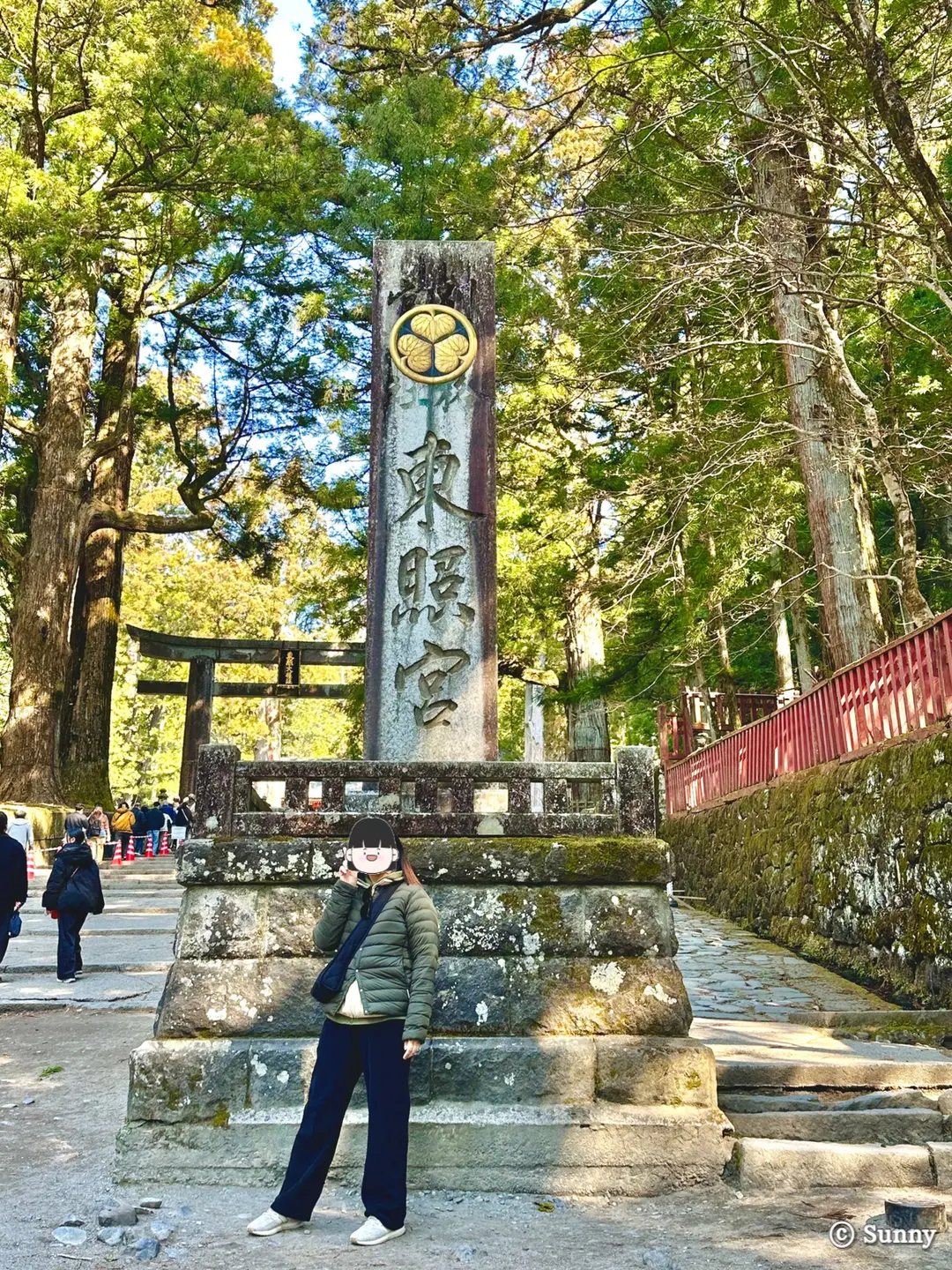
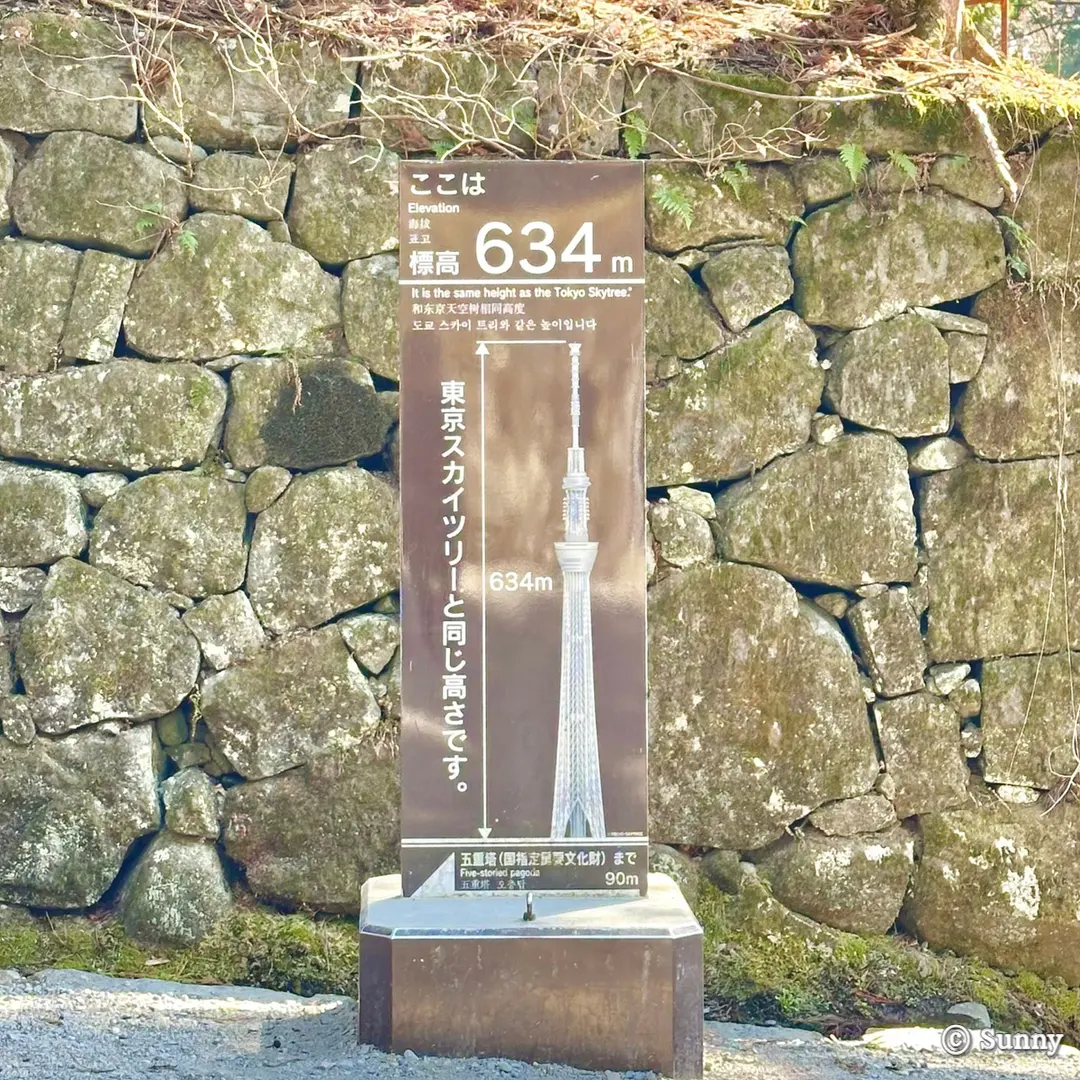
Nikko is located north of Tokyo, and as a shrine built atop Mount Nikko, its elevation is quite high, offering a cooler climate compared to central Tokyo, which is a definite plus.
If you opt for public transportation, you can alight at Nikko Station or Tobu Nikko Station, and then take a bus to reach the shrine.
If you visit by car, it's about a 2-hour drive from Tokyo, and with ample paid parking available around the shrine, you can explore the area with greater ease.
Secure your Nikko Toshogu entrance tickets in advance and enjoy seamless, skip-the-line entry!
Nikko Toshogu Shrine |
Nikko Toshogu 日光東照宮 |
Address | Japan 〒321-1431 Tochigi, Nikko, Sannai 2301 |
Opening Hours | [April ~ October] 9:00 AM ~ 5:00 PM [November ~ March] 9:00 AM ~ 4:00 PM |
Admission Fee | Adults (High School age and above): 1,600 JPY Children (Elementary & Junior High School): 550 JPY ※ Separate admission fee for the Treasure Museum and Art Museum |
Parking Information | Dedicated paid parking available (500 JPY per day) |
Website |
How to Purchase Toshogu Shrine Tickets
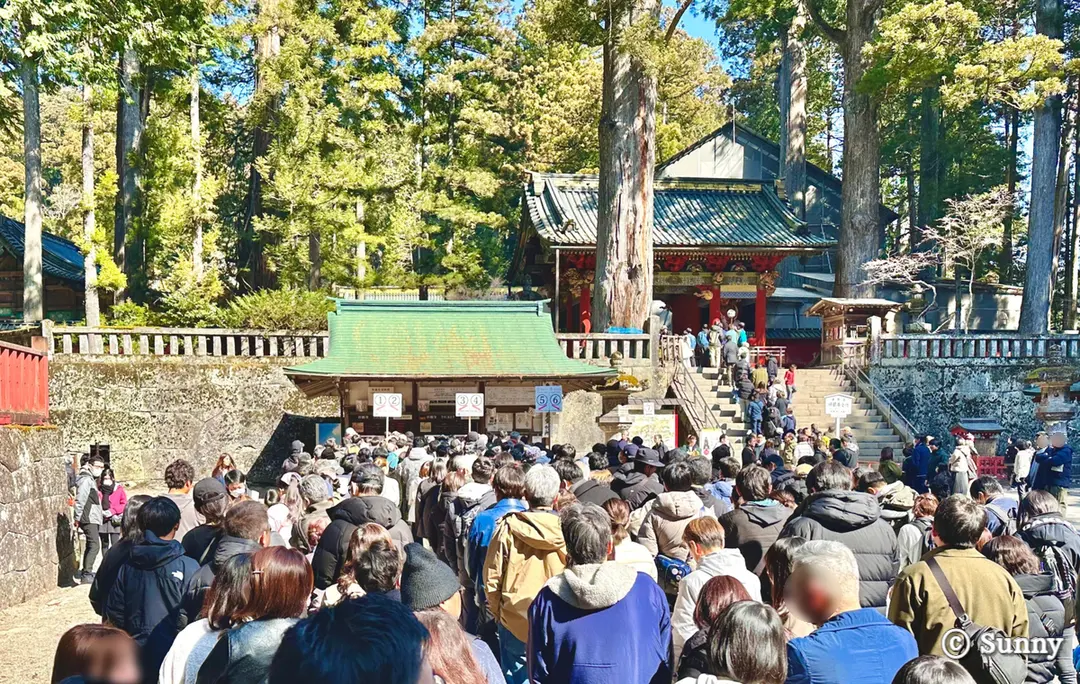
At Nikko Toshogu Shrine, once you pass through the central torii gate, you can purchase tickets at the ticket booth. Even though I arrived almost right at opening time, I was quite surprised by how long the queue was in front of the ticket office!
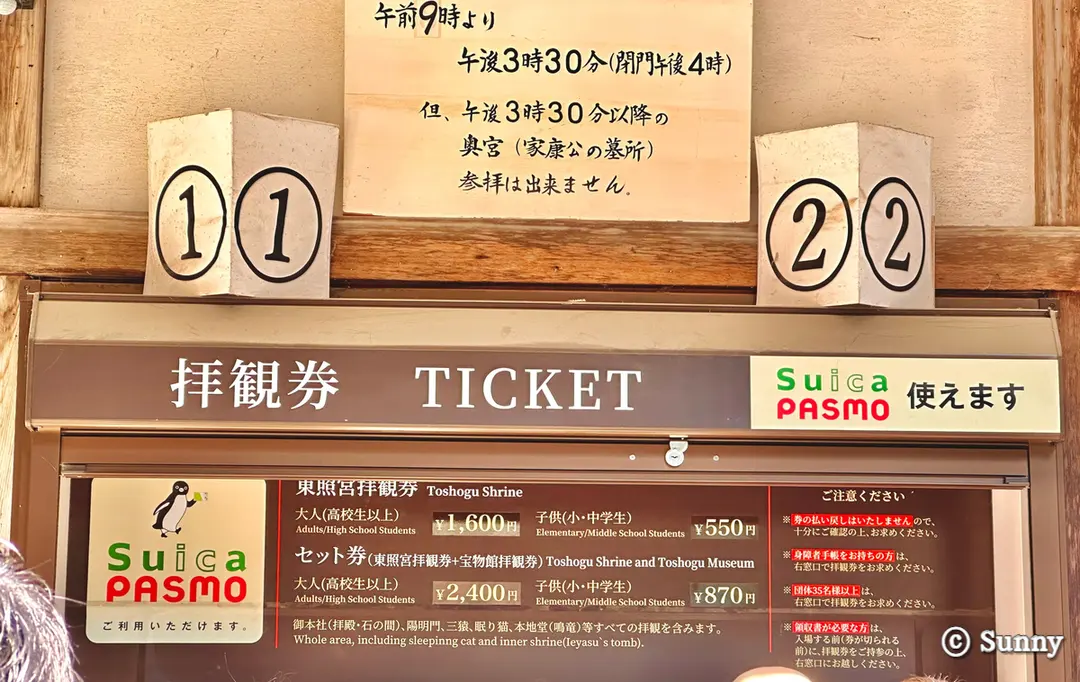
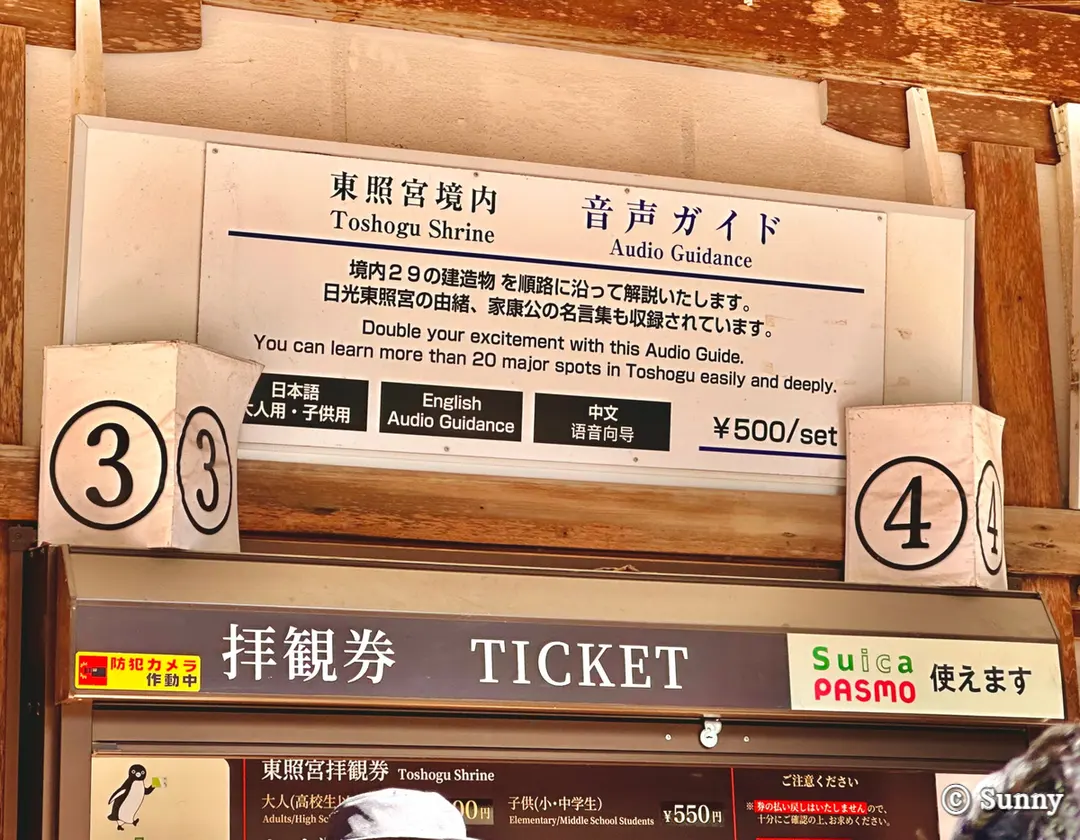
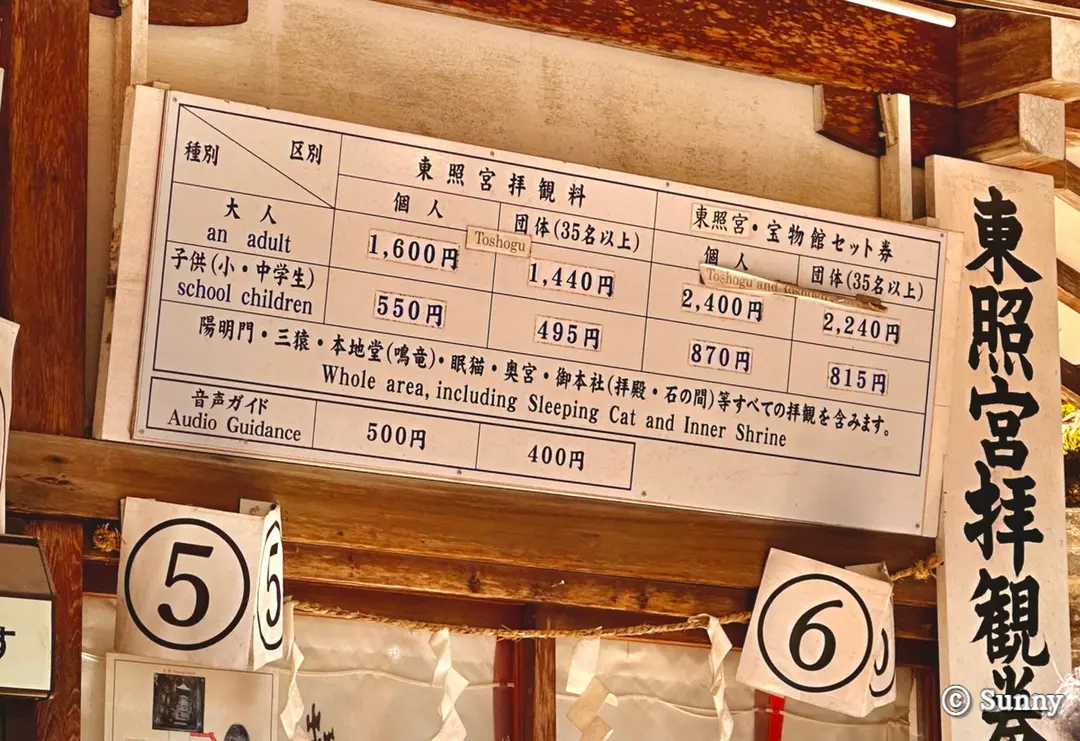
You can purchase tickets by lining up in one of six queues. Queues 1-4 were for kiosks where you could purchase with cash or a transportation card, while queues 5-6 were manned counters for cash purchases only.
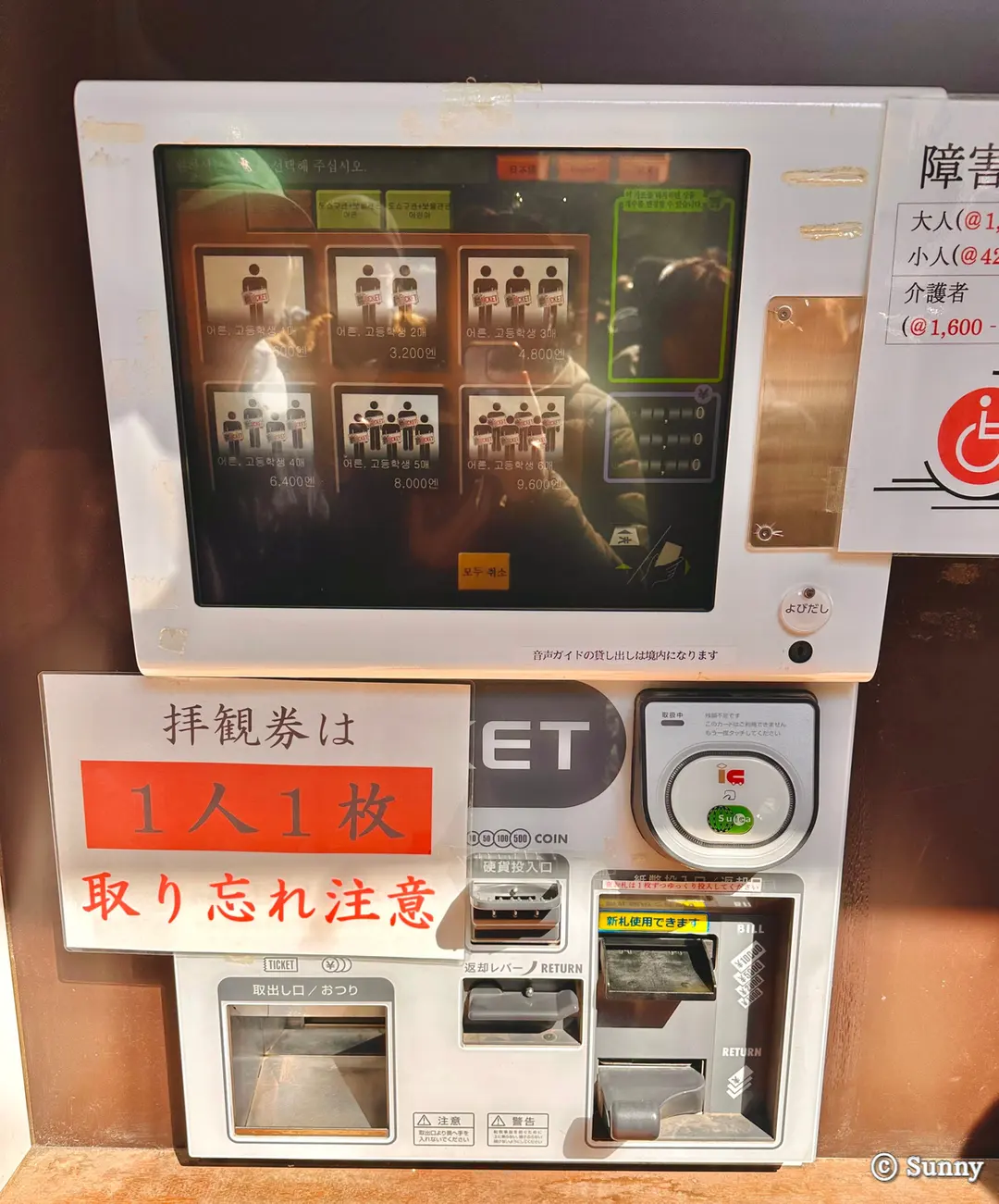
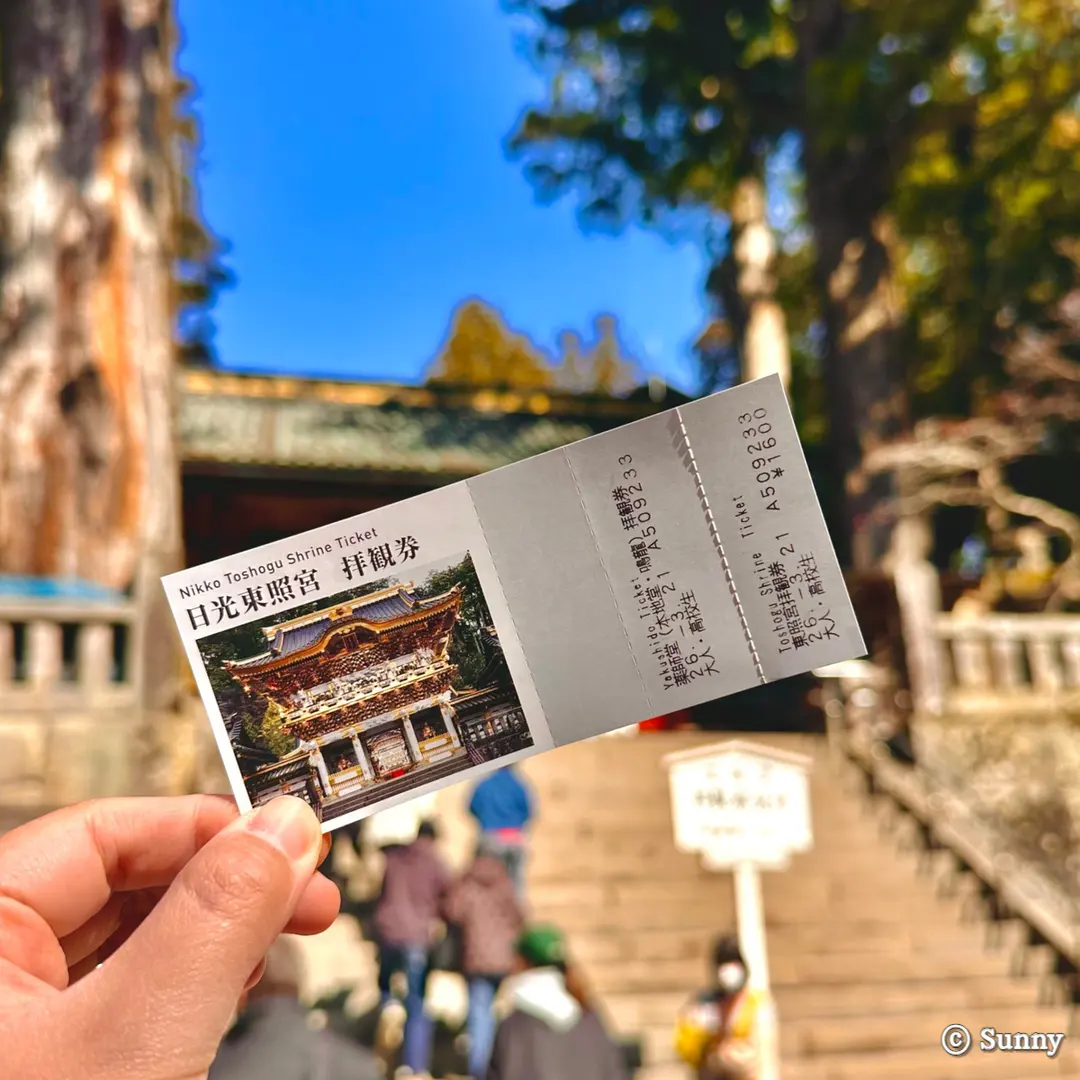
Please note that credit cards are not accepted for payment, so I recommend preparing cash in advance or ensuring your transportation card is topped up.
Secure your Nikko Toshogu entrance tickets in advance and enjoy seamless, skip-the-line entry!
After waiting in a long line to buy the admission ticket,
I noticed window number 7 next to window number 6,
which was the place to exchange tickets purchased online.
With a system that allows instant confirmation,
if I had known beforehand, I wouldn't have had to wait in line,
and would have simply paid by card via an app and entered.
Toshogu Shrine Entrance
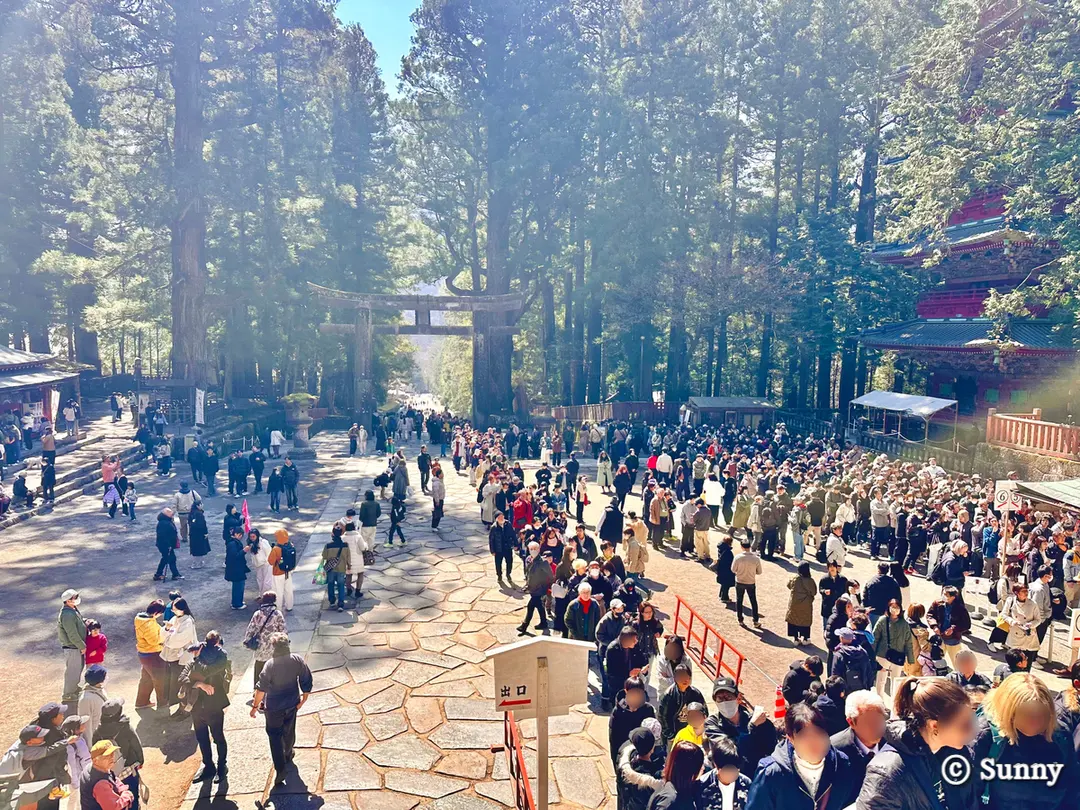
Passing through the stone torii gate that signals the beginning of Toshogu Shrine,
you'll find the ticket booth where you buy admission tickets,
and a long line stretching to the entrance of Toshogu Shrine itself.
Around 9 AM, opening time, the line was a bit shorter,
but past 10:30 AM, the crowd started growing significantly.
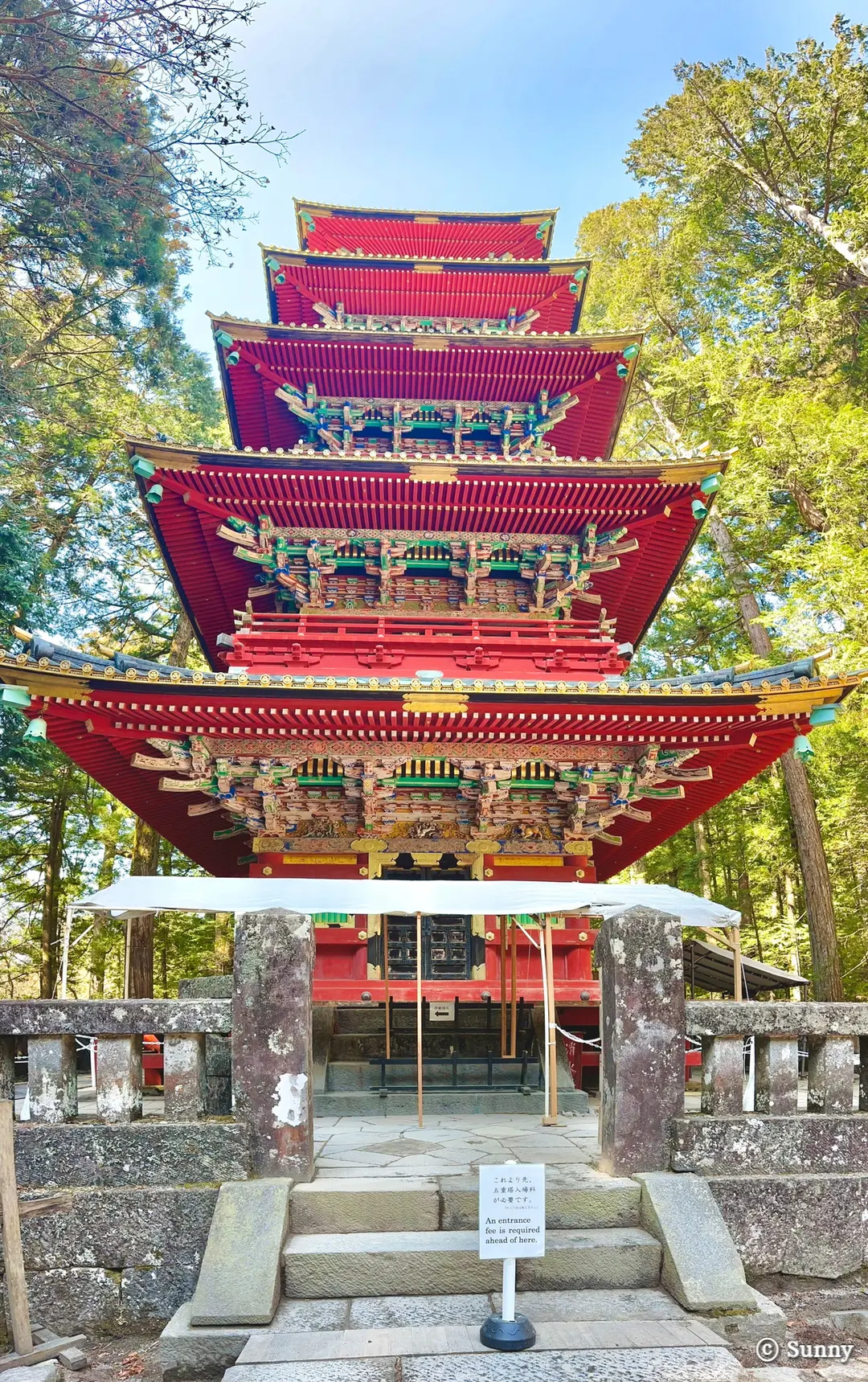
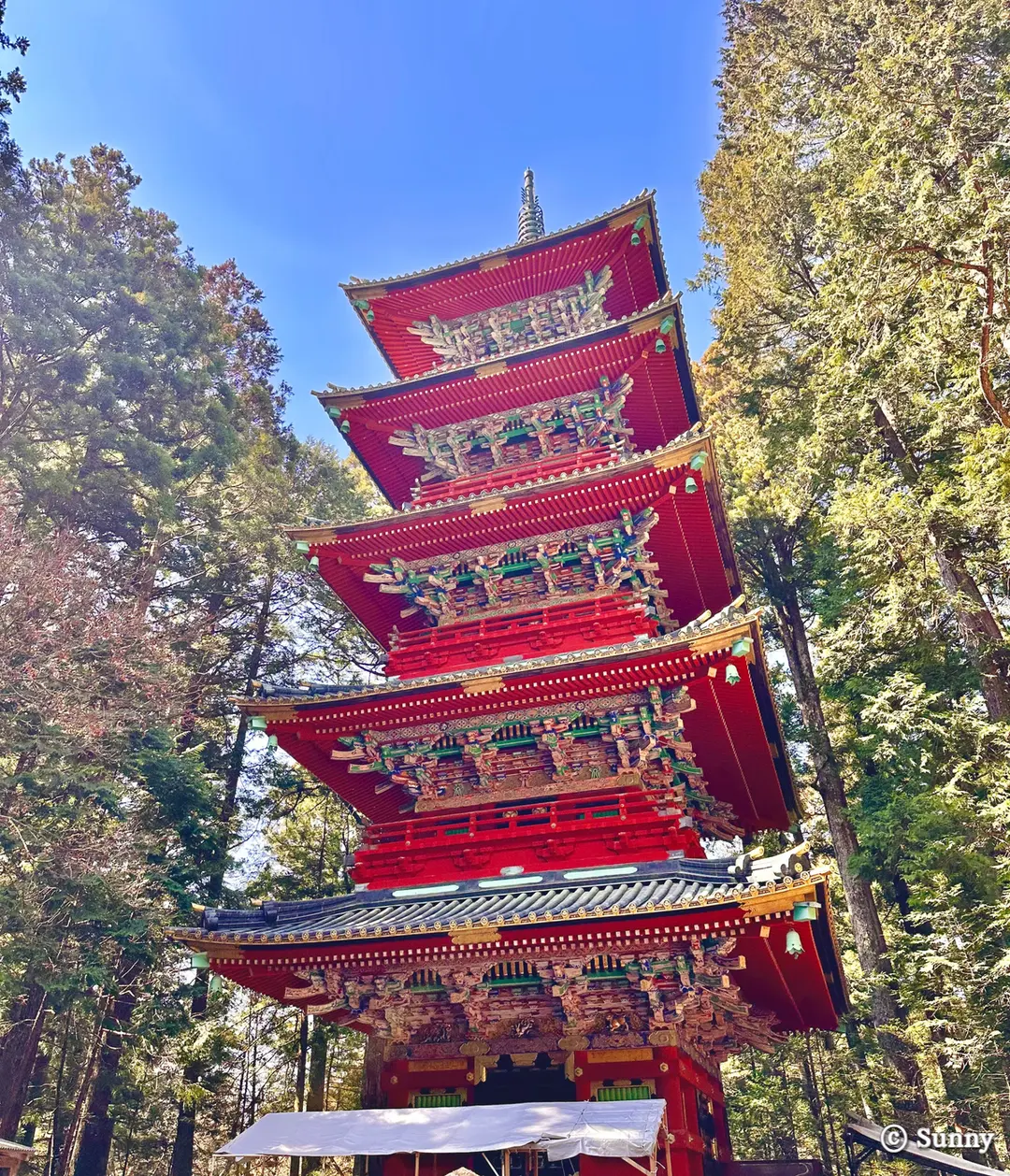
Next to the ticket booth line, the Five-Story Pagoda (Gojunoto) stands tall.
This five-story pagoda, adorned with vibrant colors and intricate carvings,
symbolizes the five elements of earth, water, fire, wind, and void,
and is an architectural masterpiece showcasing the harmony between Buddhism and Shintoism.
It might be obscured by the crowds at the ticket counter, so
I recommend making sure to take a thorough look around and not miss it!
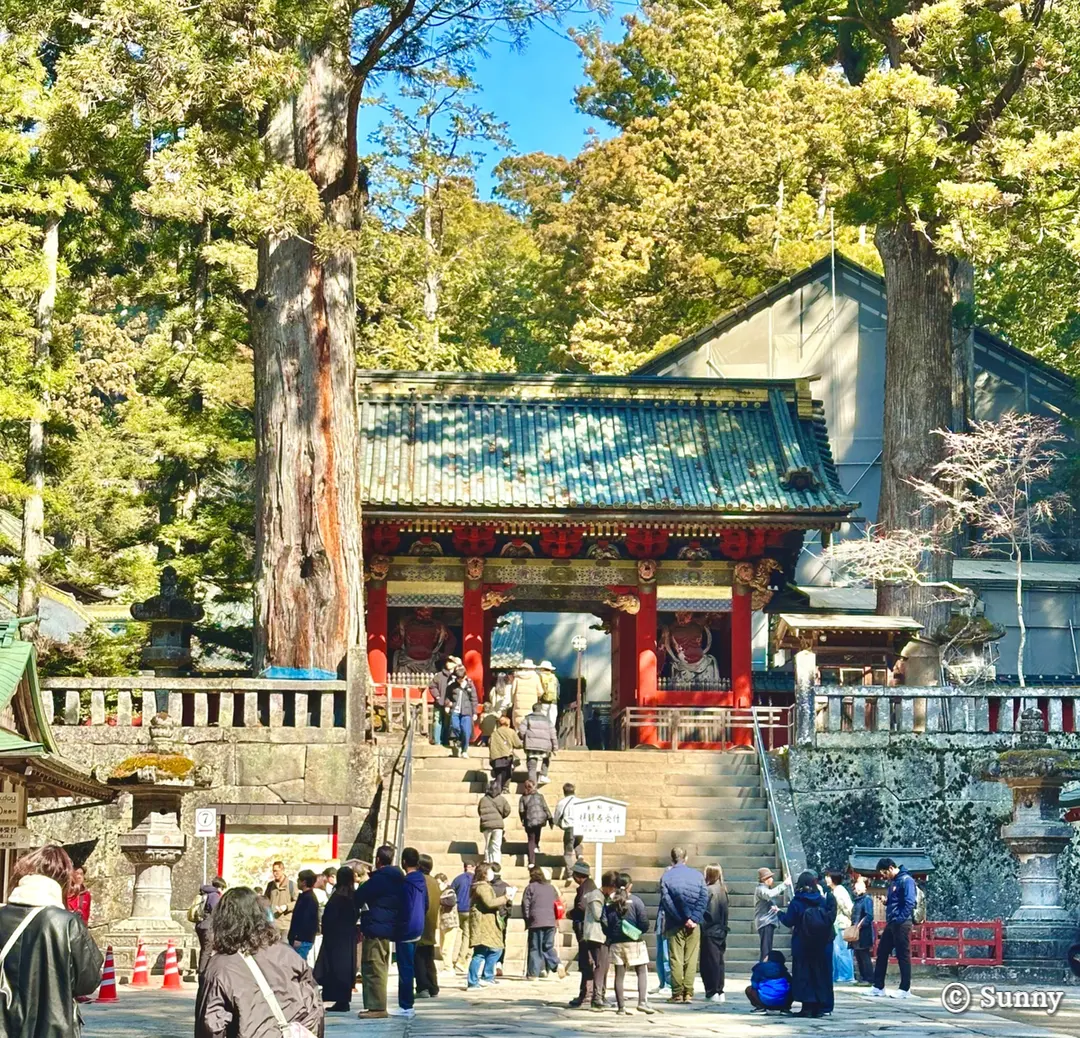
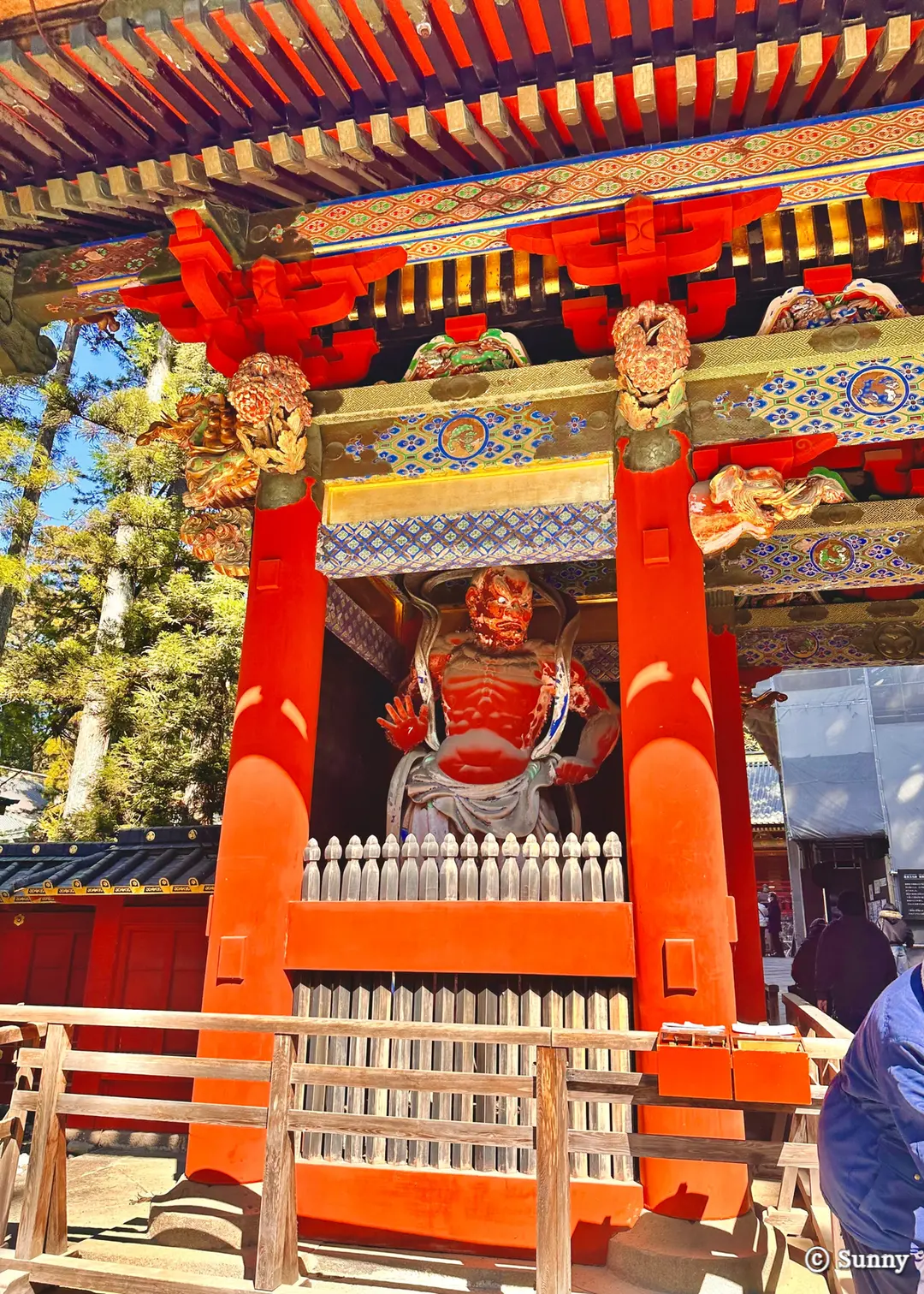
After purchasing the admission ticket, you officially enter Toshogu Shrine, through
Omotemon Gate, which is the first gate of Toshogu Shrine.
On both sides of the gate, Niō statues with fierce expressions
guard the sacred precincts of the shrine.
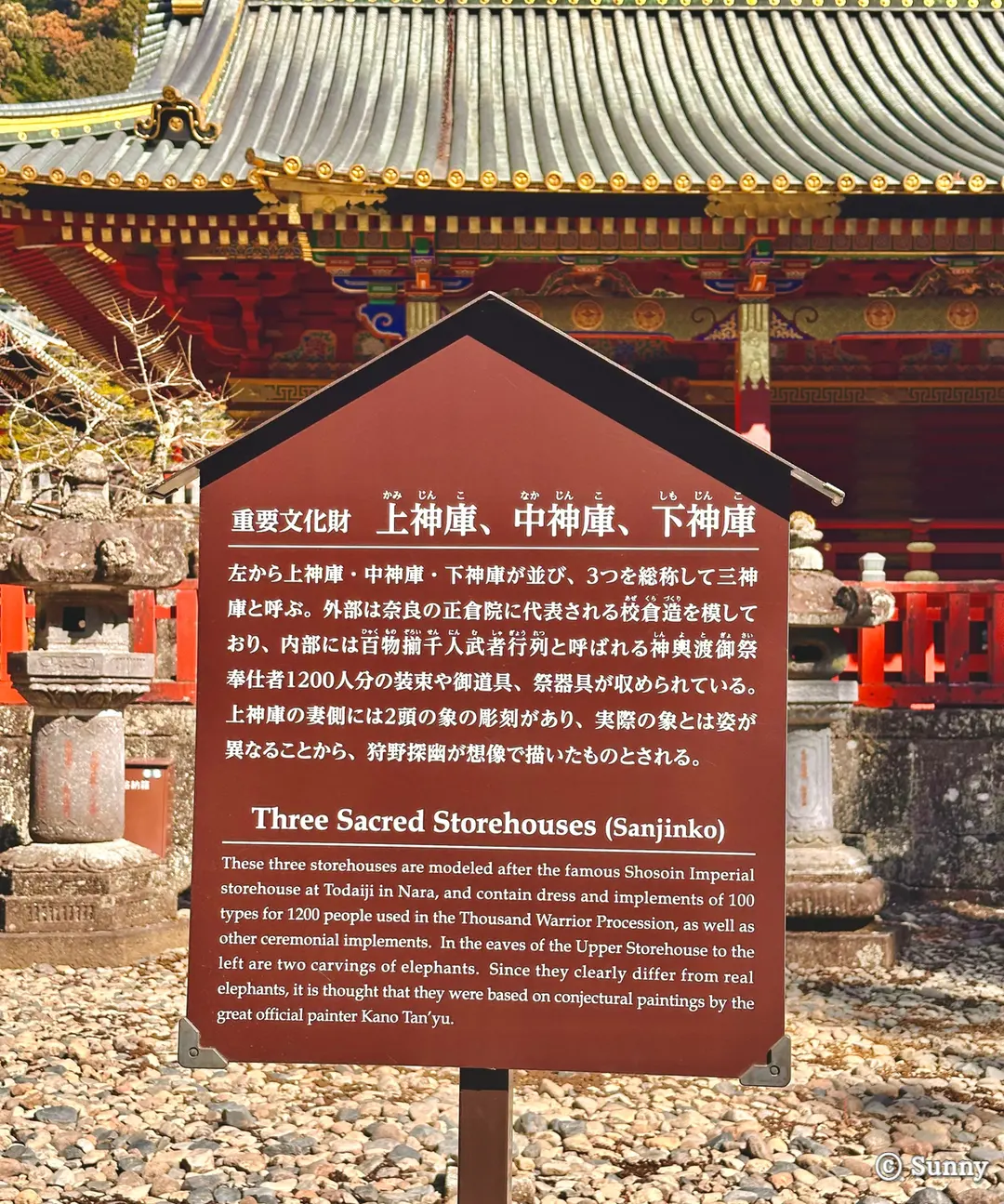
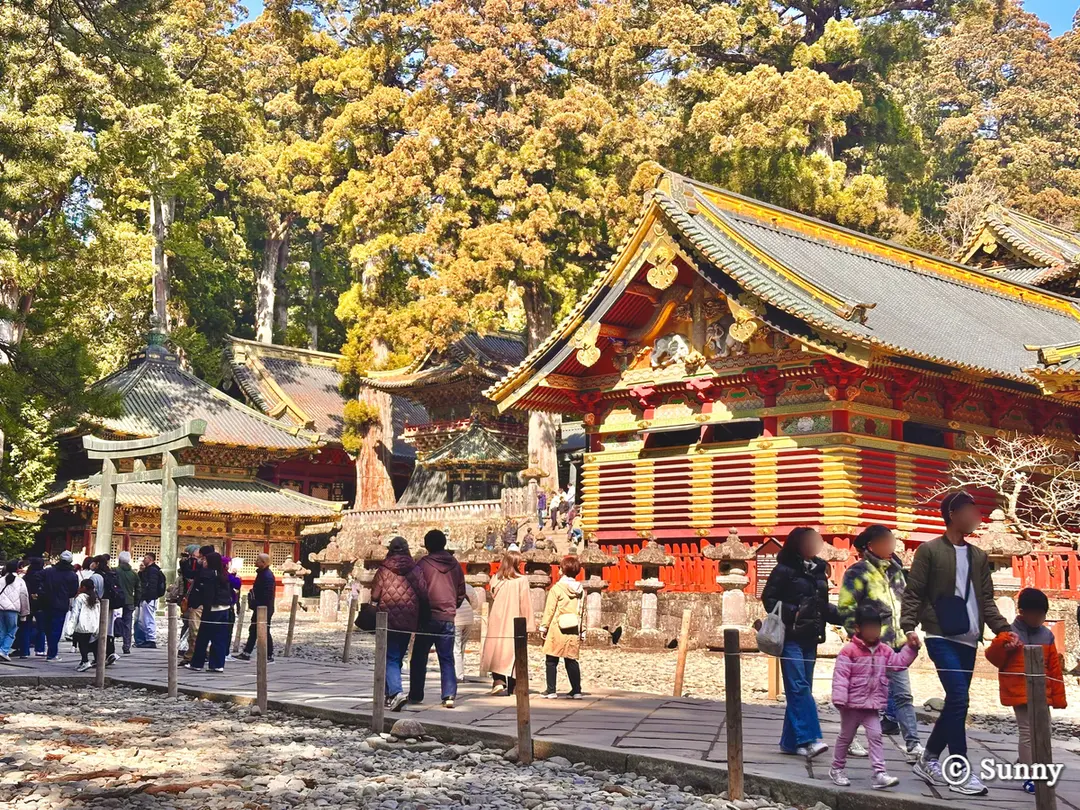
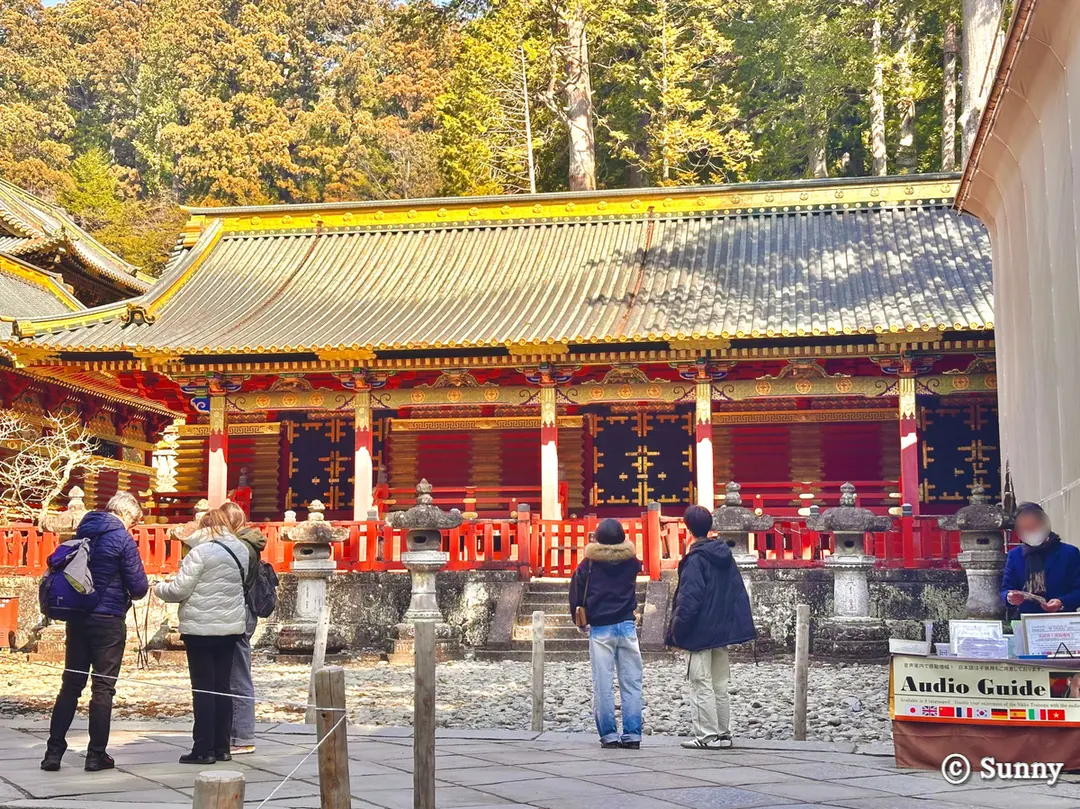
Passing through Omotemon Gate and stepping inside,
the first building you'll see is the Sanjinko,
which are three storehouses for festival tools,
and are particularly famous for their carvings of imaginary elephants.
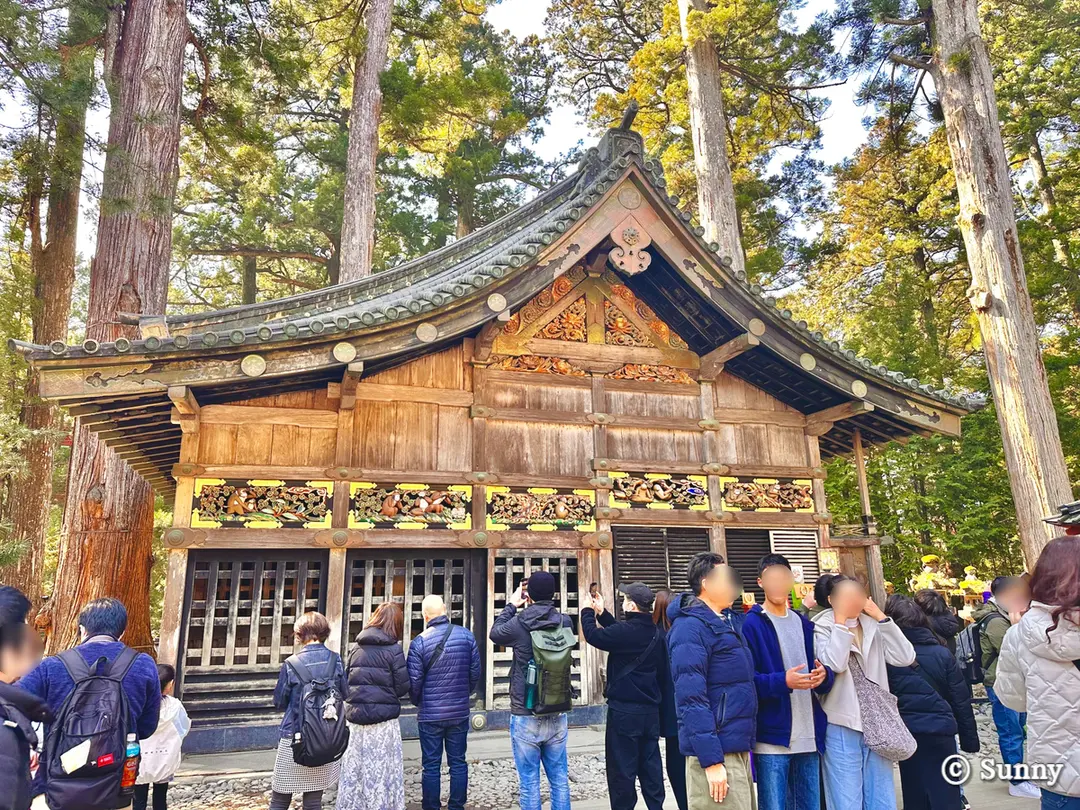
Opposite the Sanjinko, stood the Shinkyusha (Sacred Stable) building, famous for its monkey carvings.
Everyone paused in front of the monkey carvings to
take photos, which made me look even more closely.
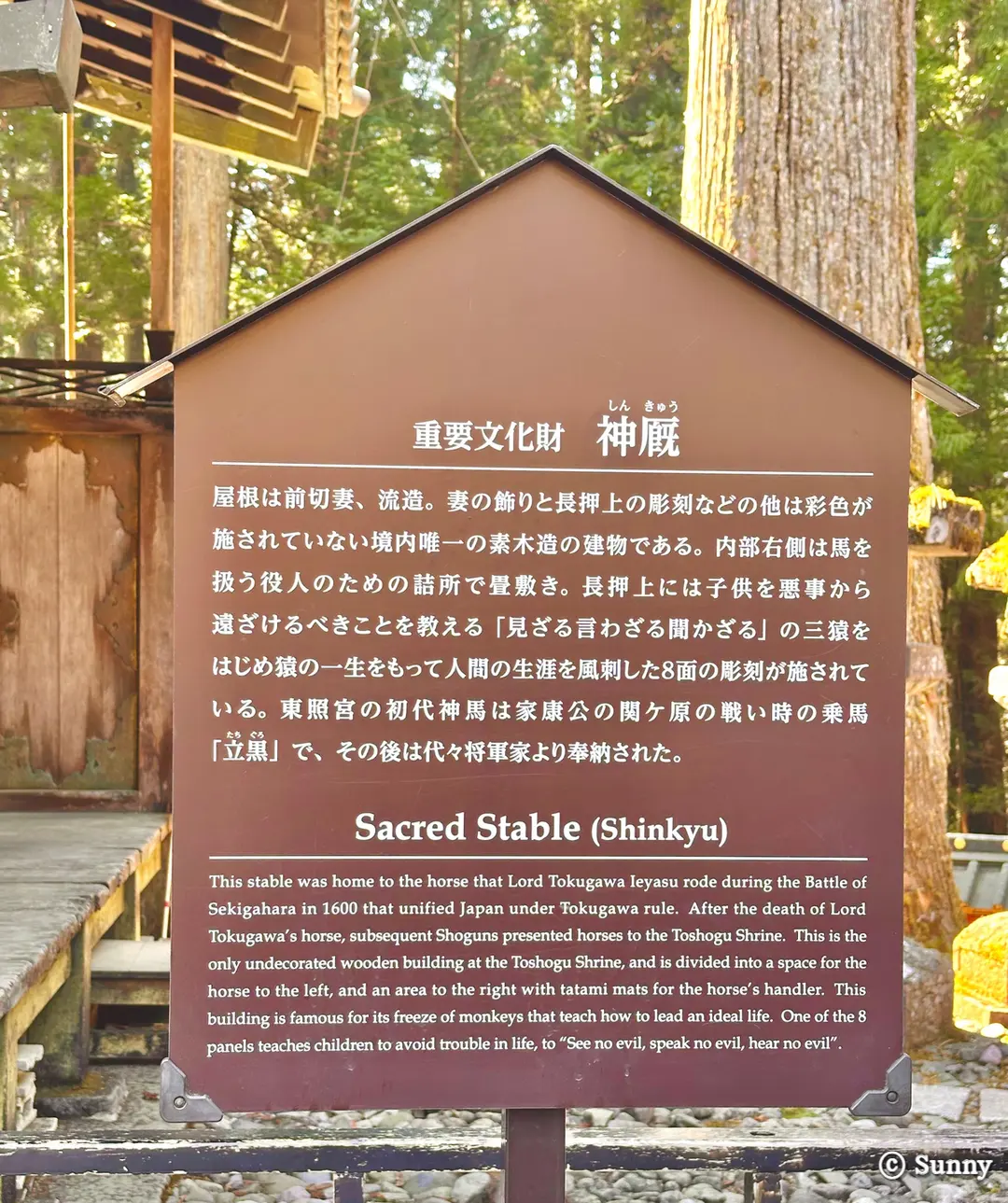
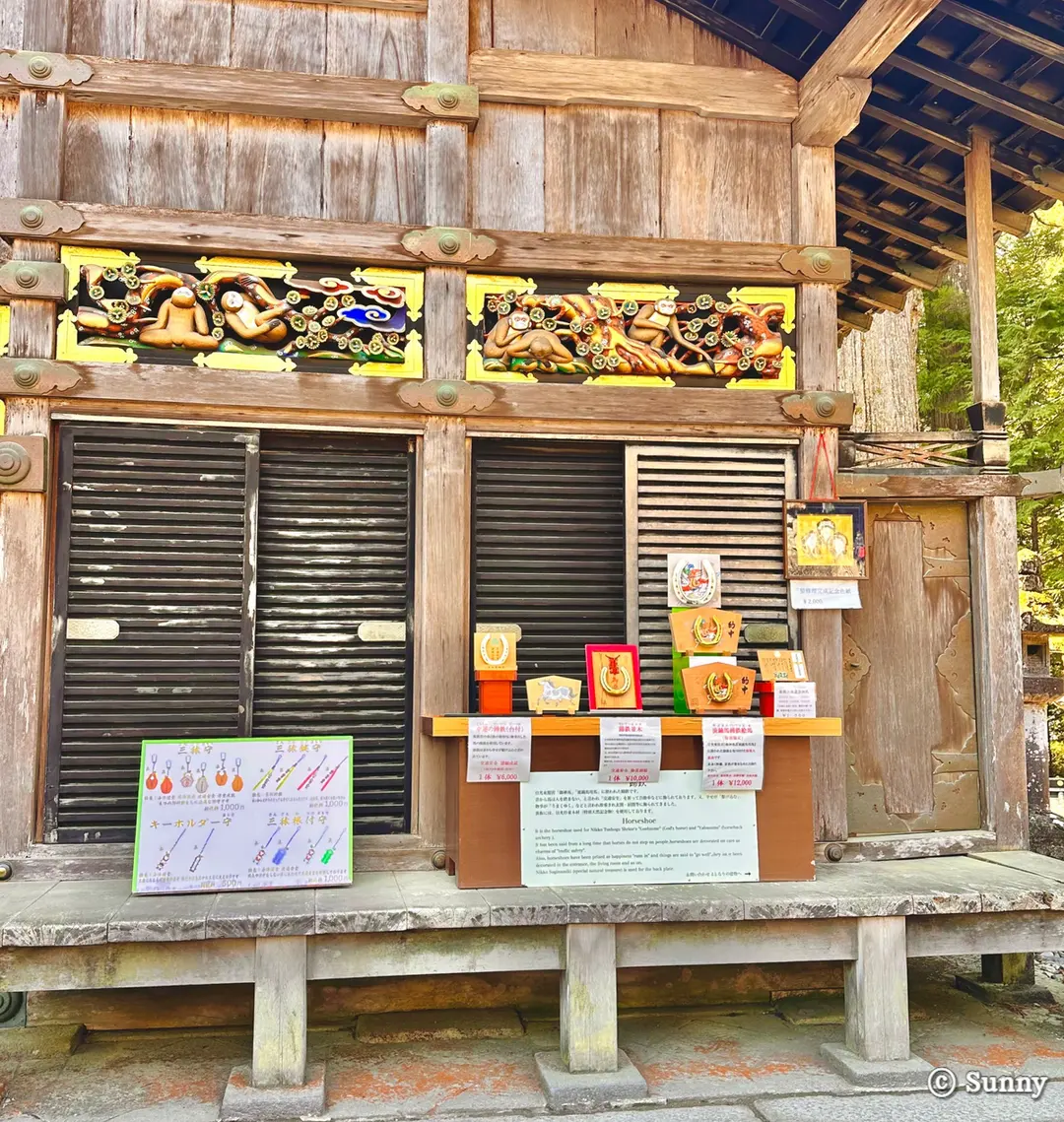
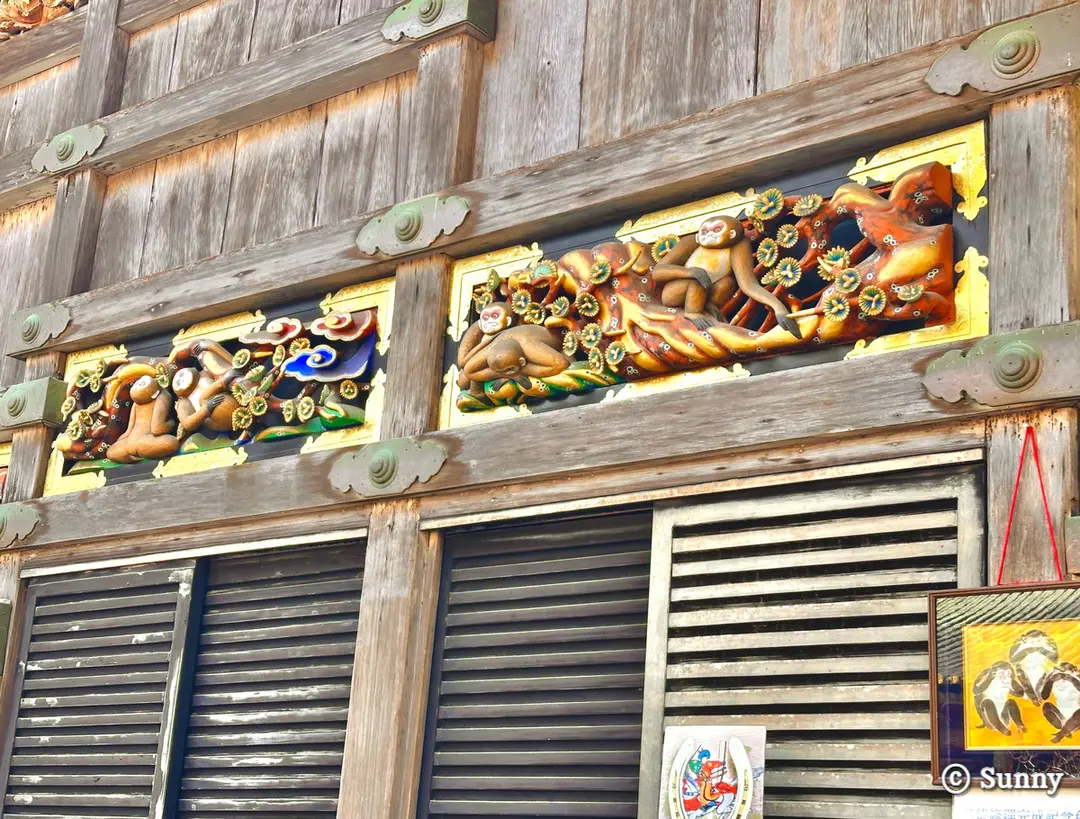
On the walls of the building, you can see various different monkey carvings,
which are said to depict the eight stages of human life.
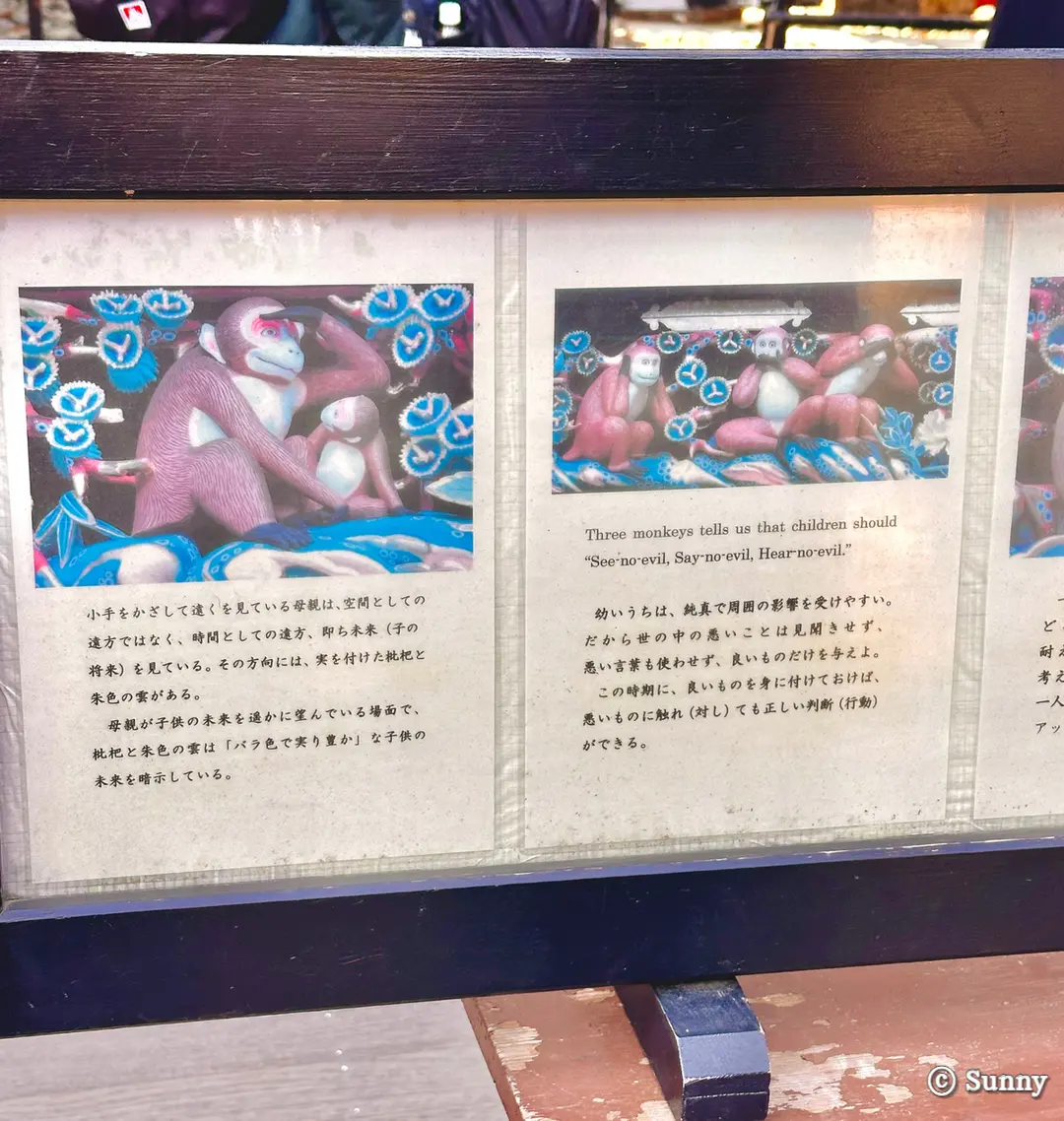
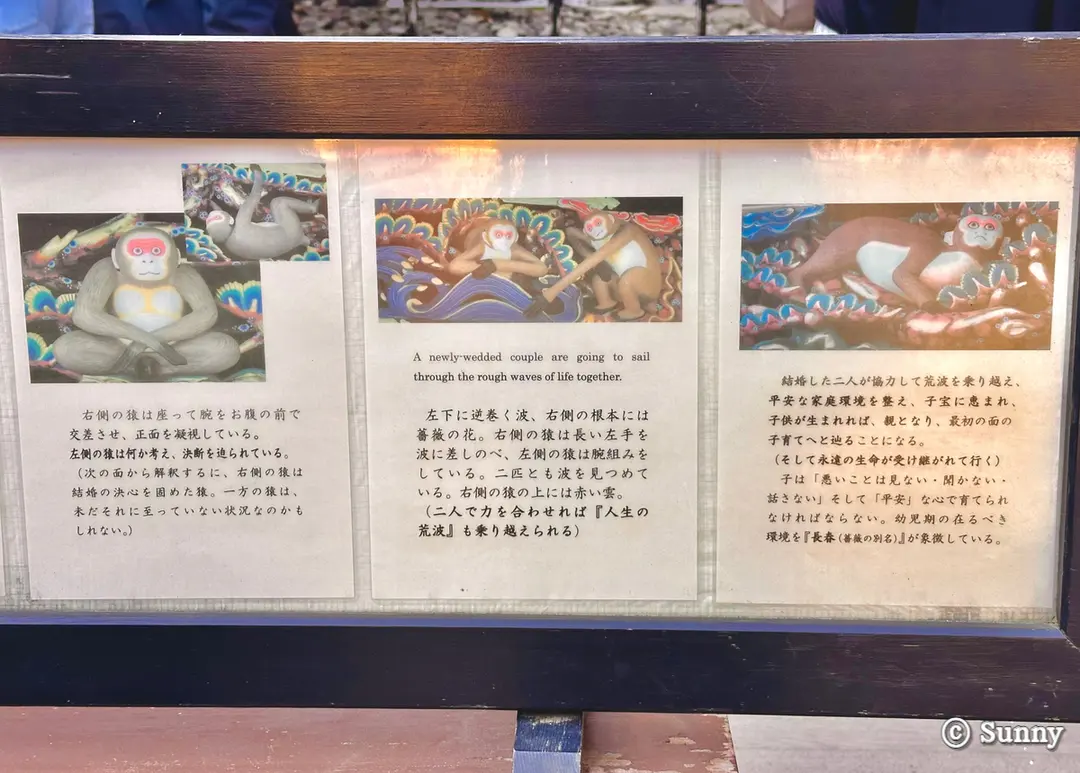
Among them, the most famous is
the carving depicting the three monkeys.
The teaching, 'See no evil, hear no evil, speak no evil,'
from Confucius is a familiar one, even to Koreans.
During the Edo period, artisans took this solemn Confucian lesson and,
using a clever Japanese pun,
transformed it into the adorable sculptures of the three monkeys.
Did you know the famous monkeys that we all use as smartphone emojis (🙈🙉🙊) around the world
actually originated right here at Toshogu Shrine?
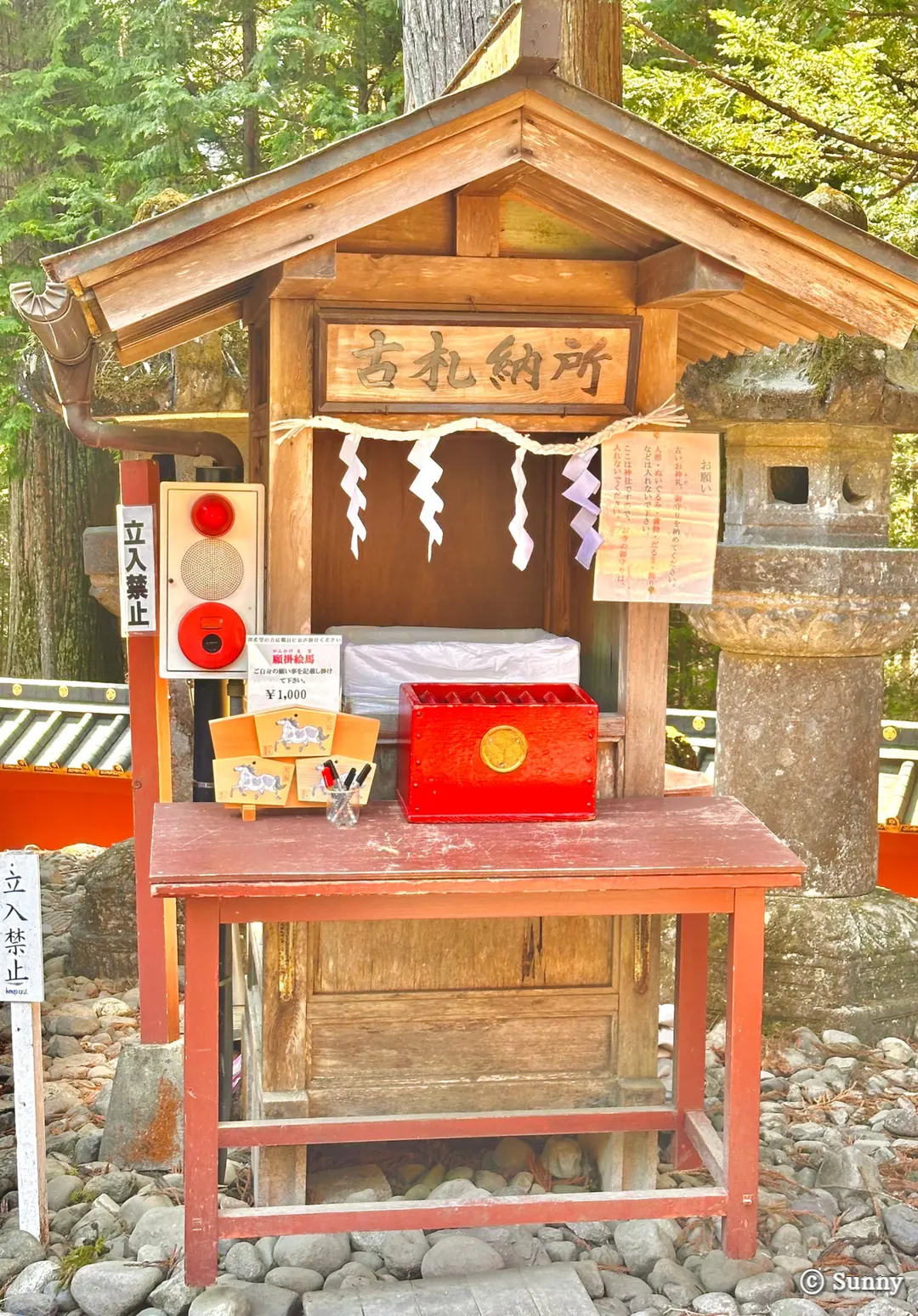
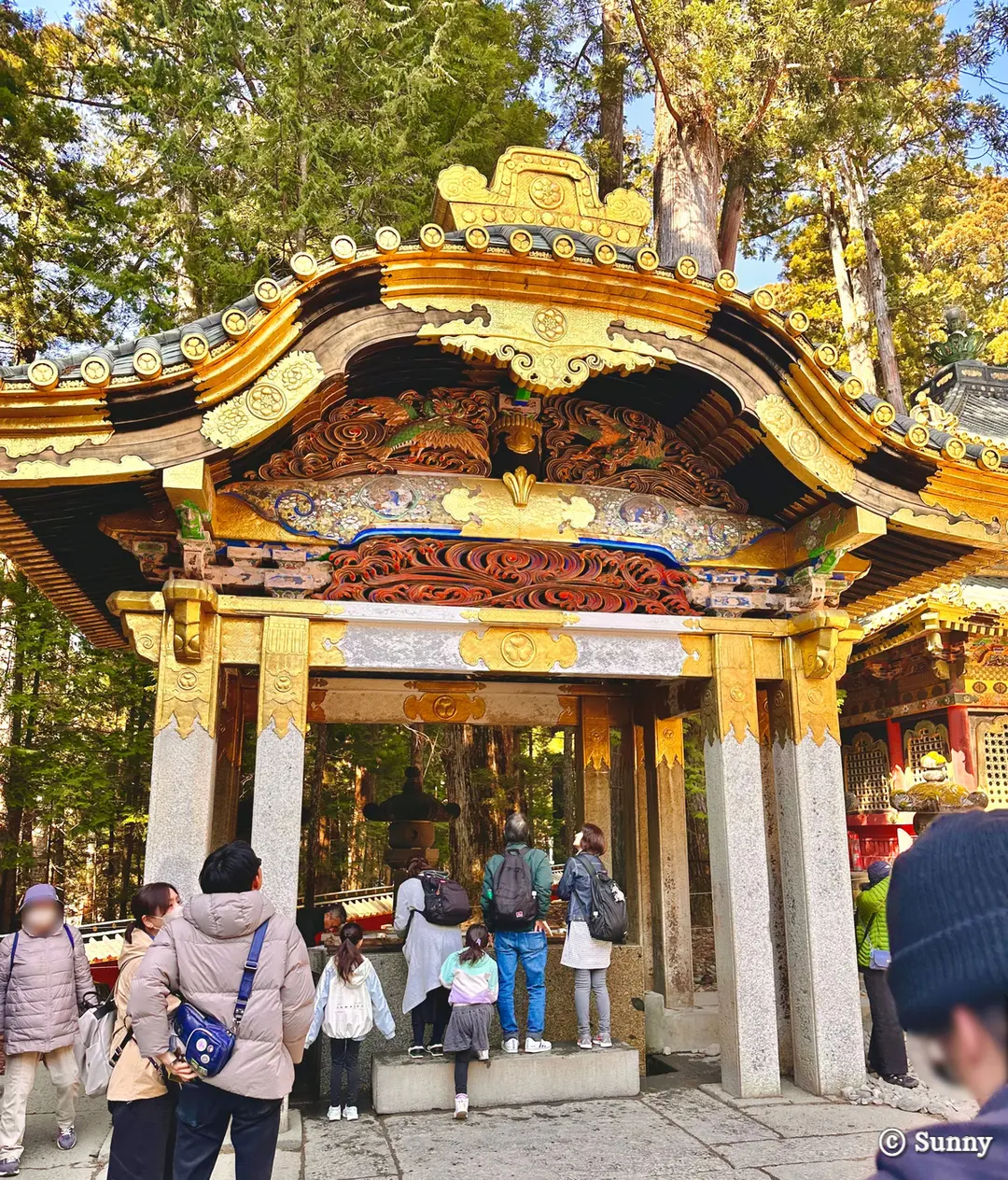
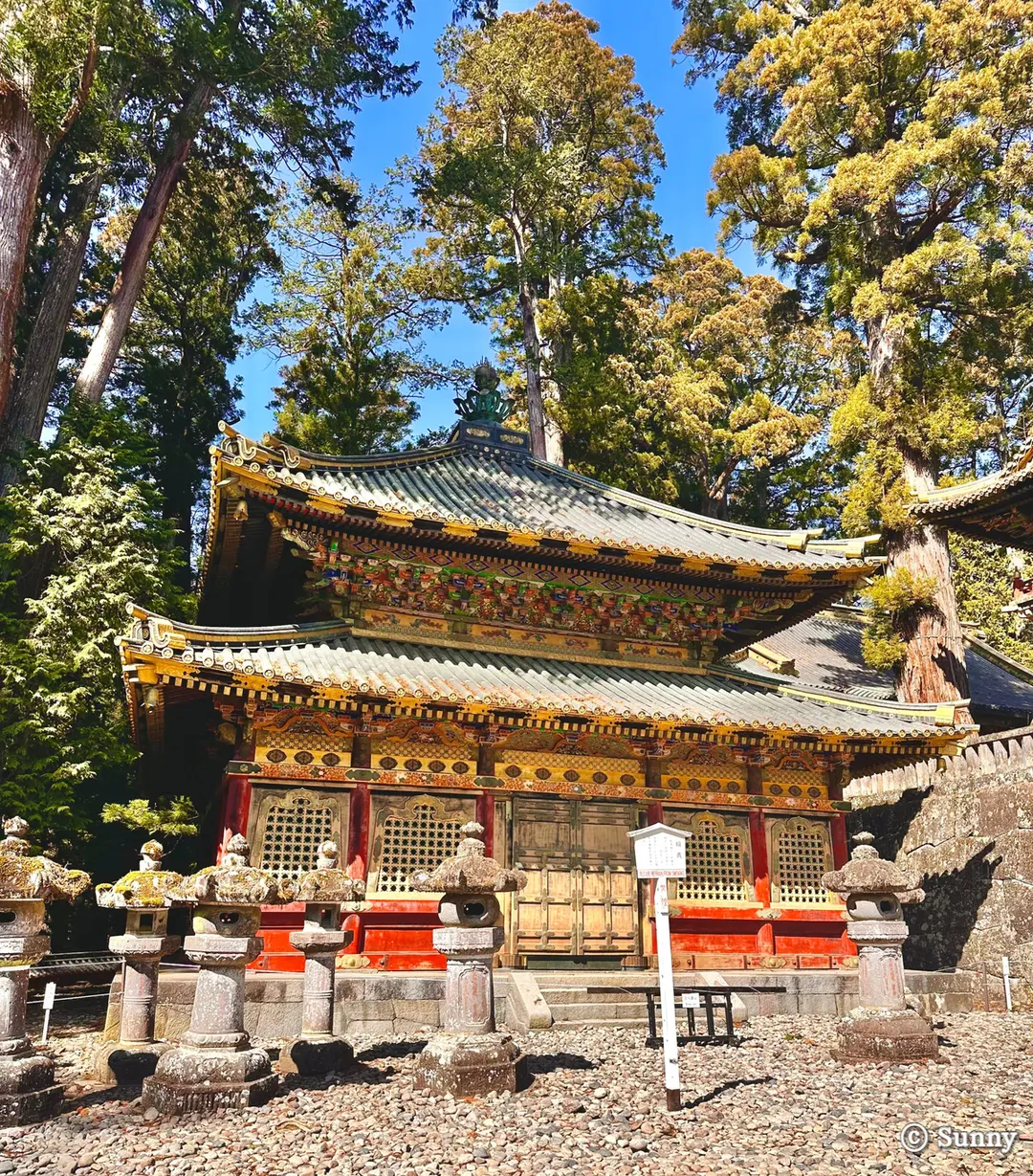
After passing the Sacred Stable and the Three Storehouses, you'll arrive at the Omizuya,
where visitors wash their hands and mouth before entering the shrine.
Even this ablution fountain at Toshogu Shrine was incredibly ornate and majestic – truly impressive!
Toshogu Main Hall
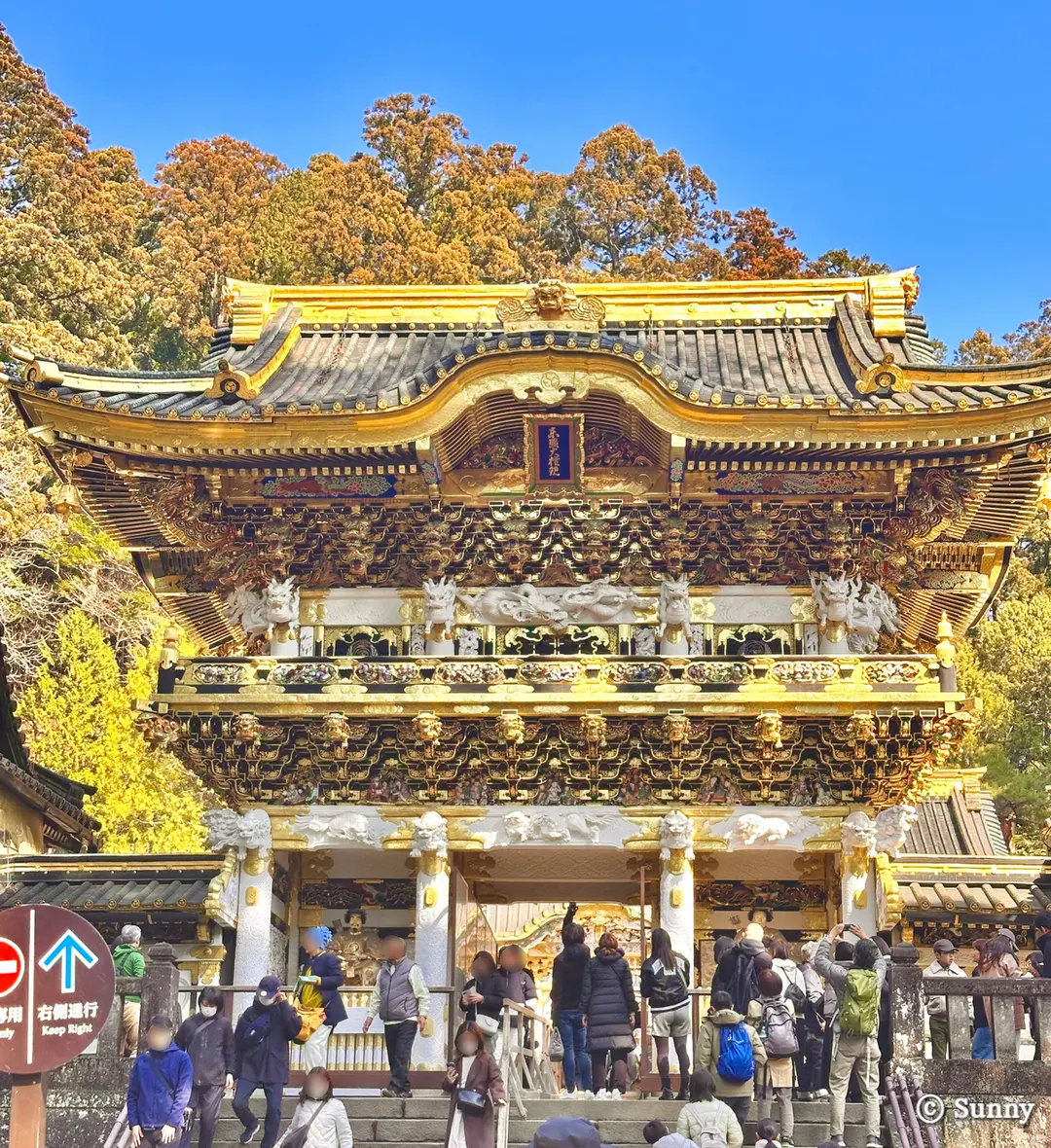
Past the Omizuya, climb a few steps and you'll be greeted by the stunning
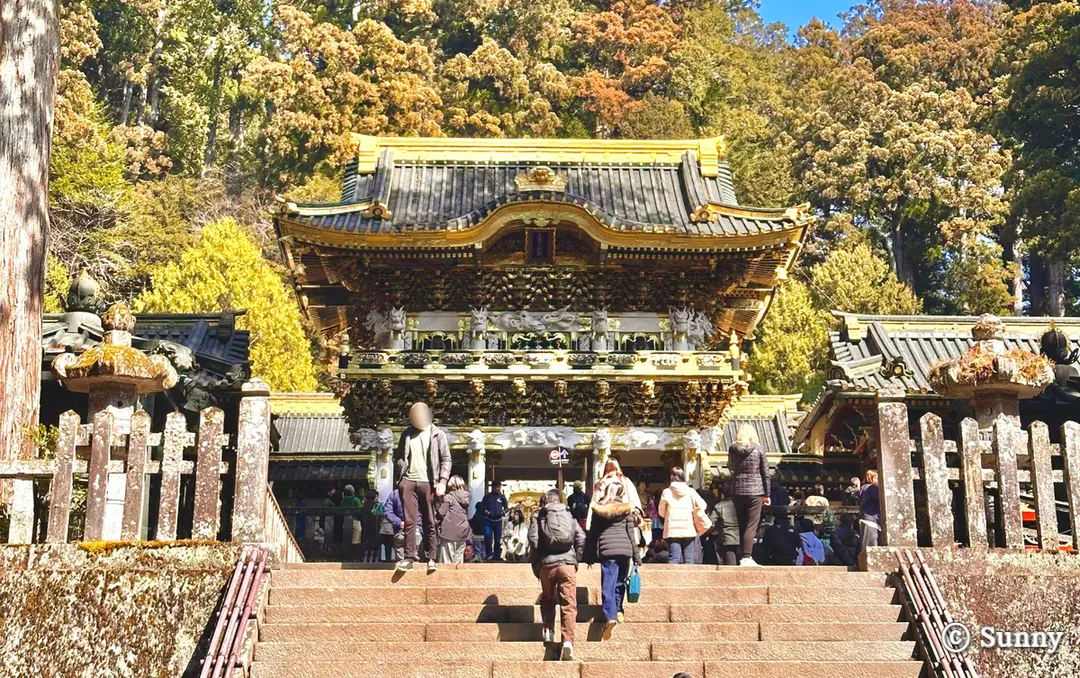
Yomeimon Gate at the main hall's entrance, even more splendid than anything you've seen so far.
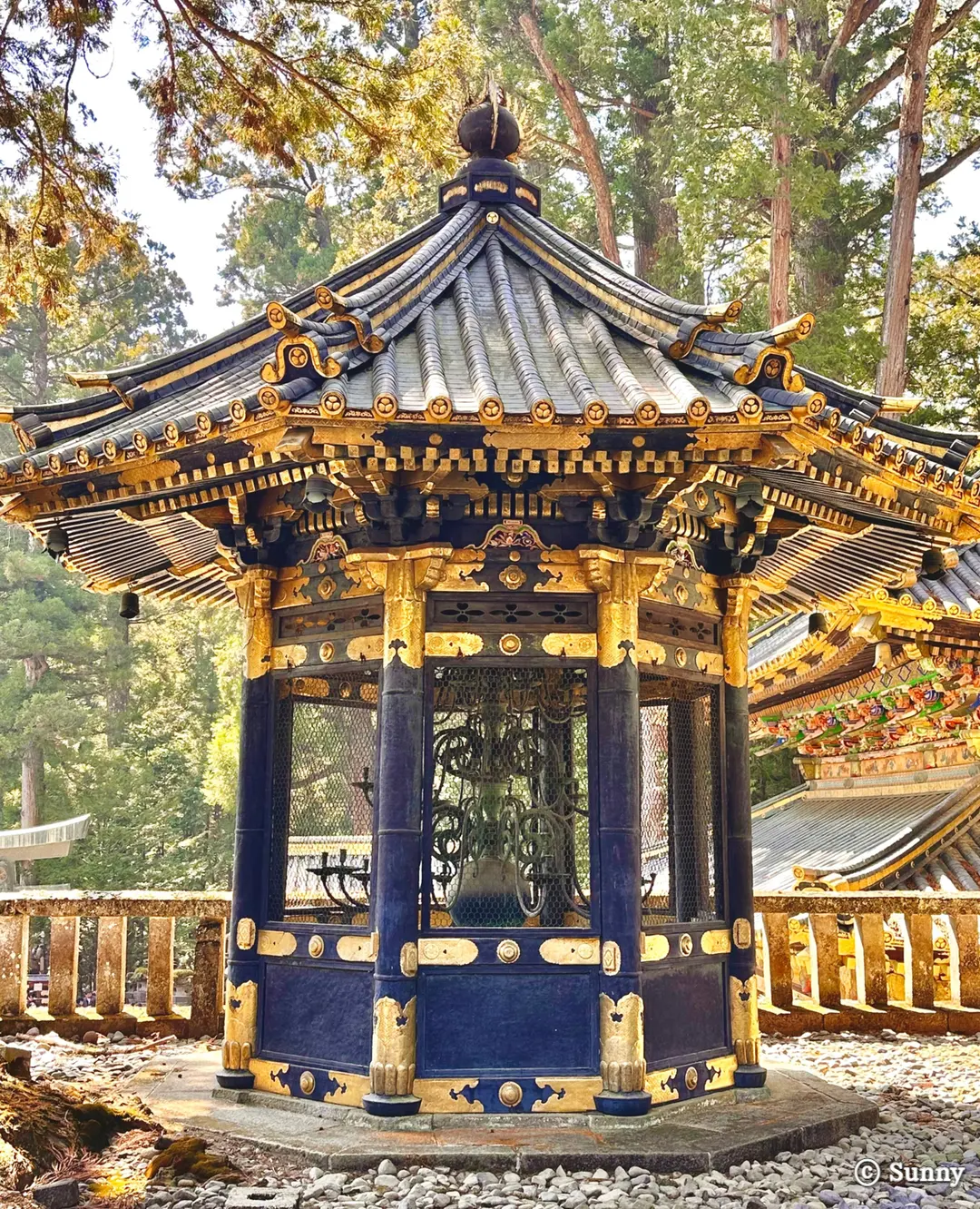
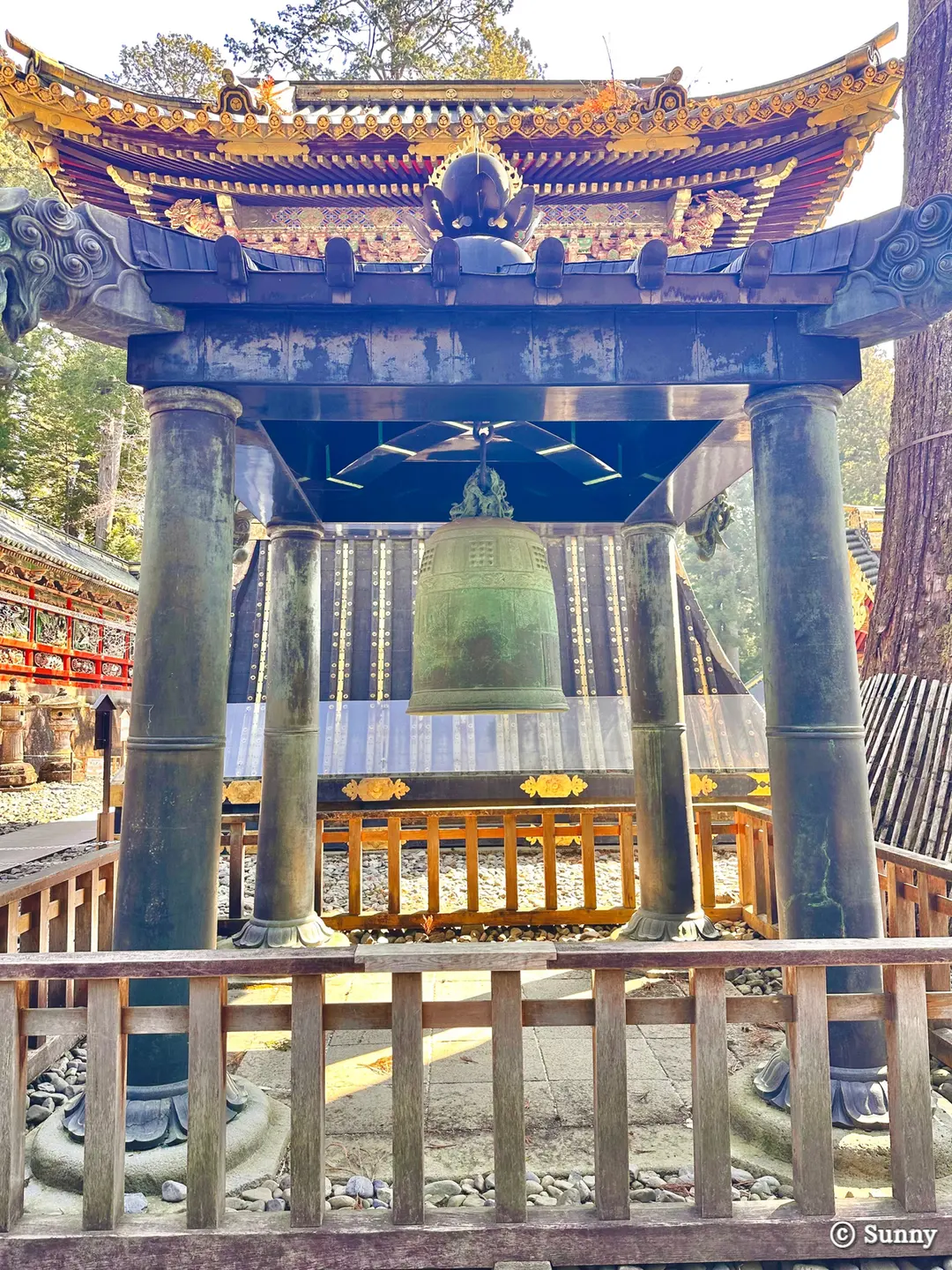
Flanking the Yomeimon Gate, you'll find the Koro (Drum Tower) and the Shoro (Bell Tower)
standing proudly, each housing their namesake instruments.
Especially noteworthy is the bronze bell in the Shoro, crafted in the traditional Korean Buddhist bell style,
which was a gift to the Edo Shogunate from Joseon envoys during the reign of King Injo of Joseon.
Directly opposite, a 'bronze lantern' gifted by the Netherlands creates a fascinating contrast.
This spot is a powerful reminder of the symbolic diplomatic importance the Edo Shogunate placed on Joseon and the Netherlands,
especially considering Japan's strict isolationist policies at the time.
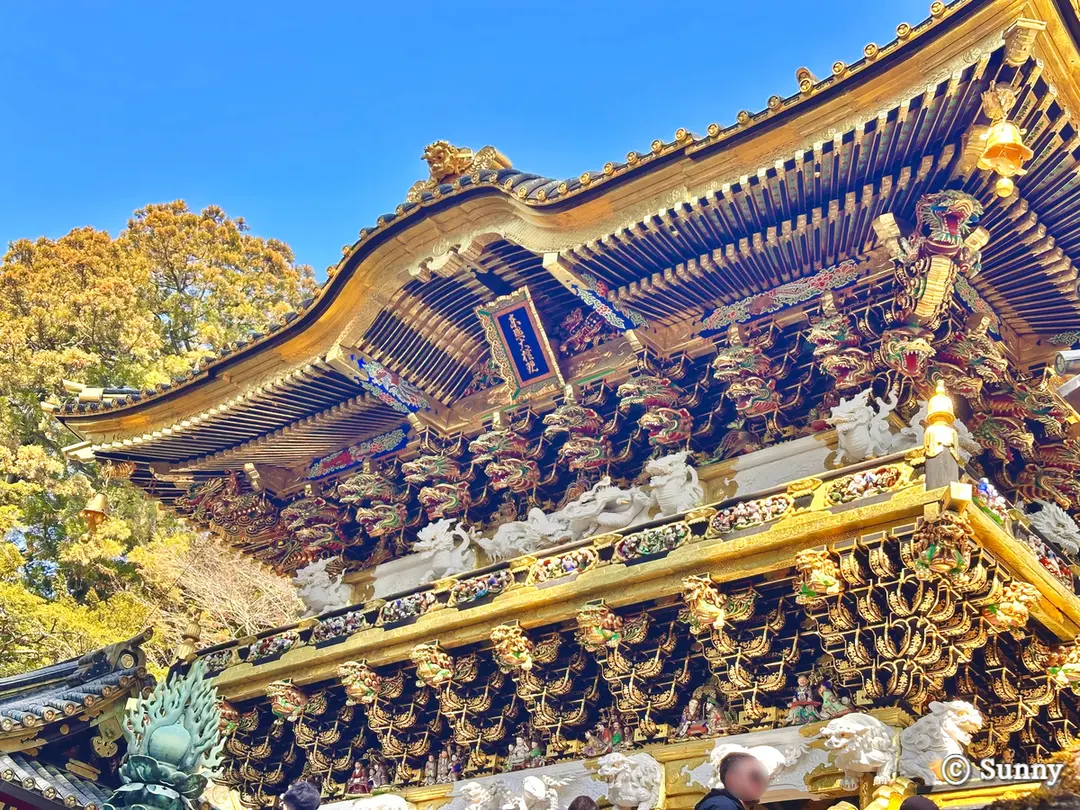
The Yomeimon Gate is so mesmerizing, people say you could gaze at it all day without getting bored!
That's why it's famously nicknamed 'Higurashi-no-mon' — 'The Gate You Look at Until Sunset'.
This single gate is adorned with over 500 intricate carvings and dazzling golden embellishments,
meticulously etched into every available space.
This nickname truly captures the experience: you could spend hours admiring the stories within each carving,
only to look up and realize the sun has already begun to set.
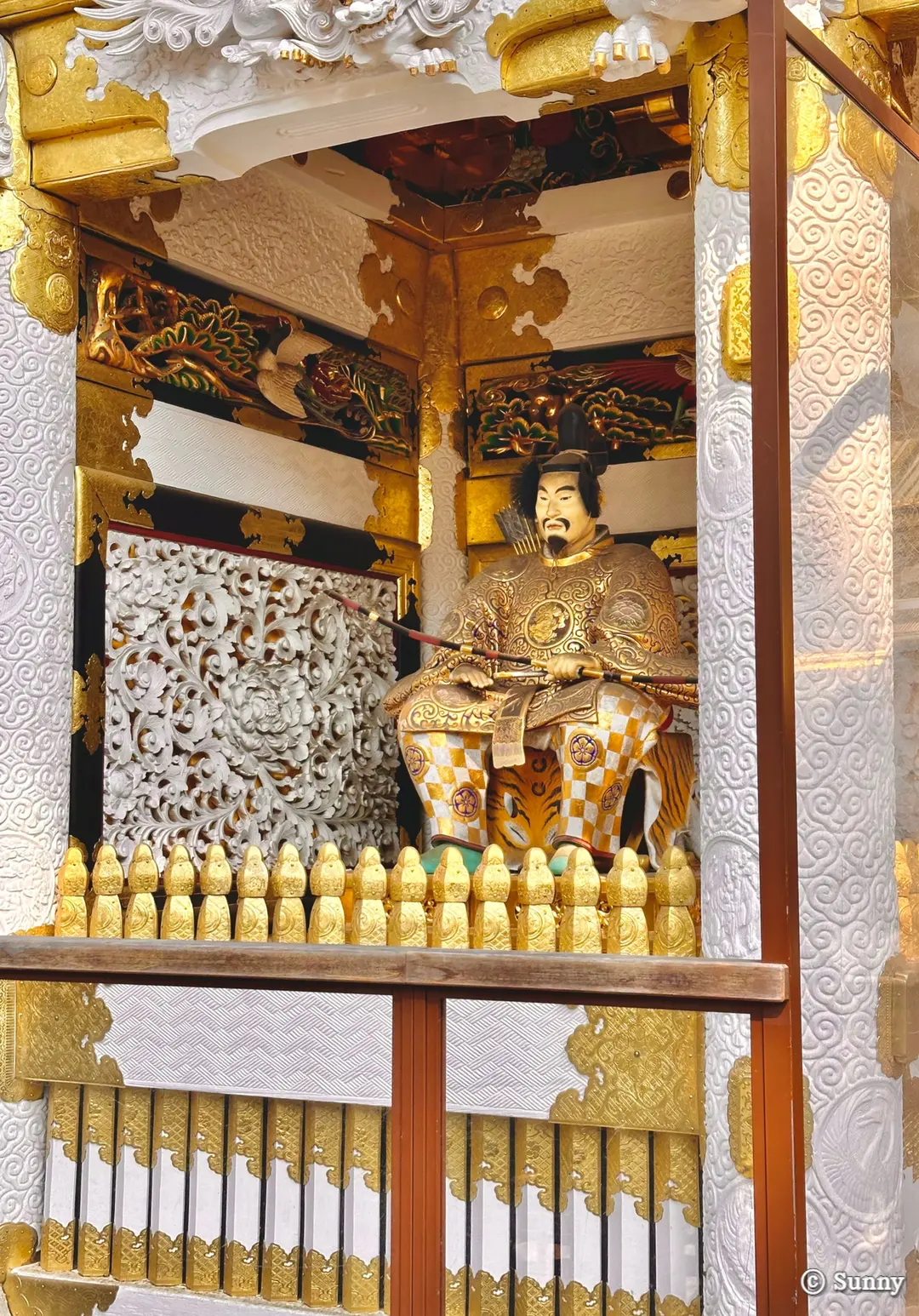
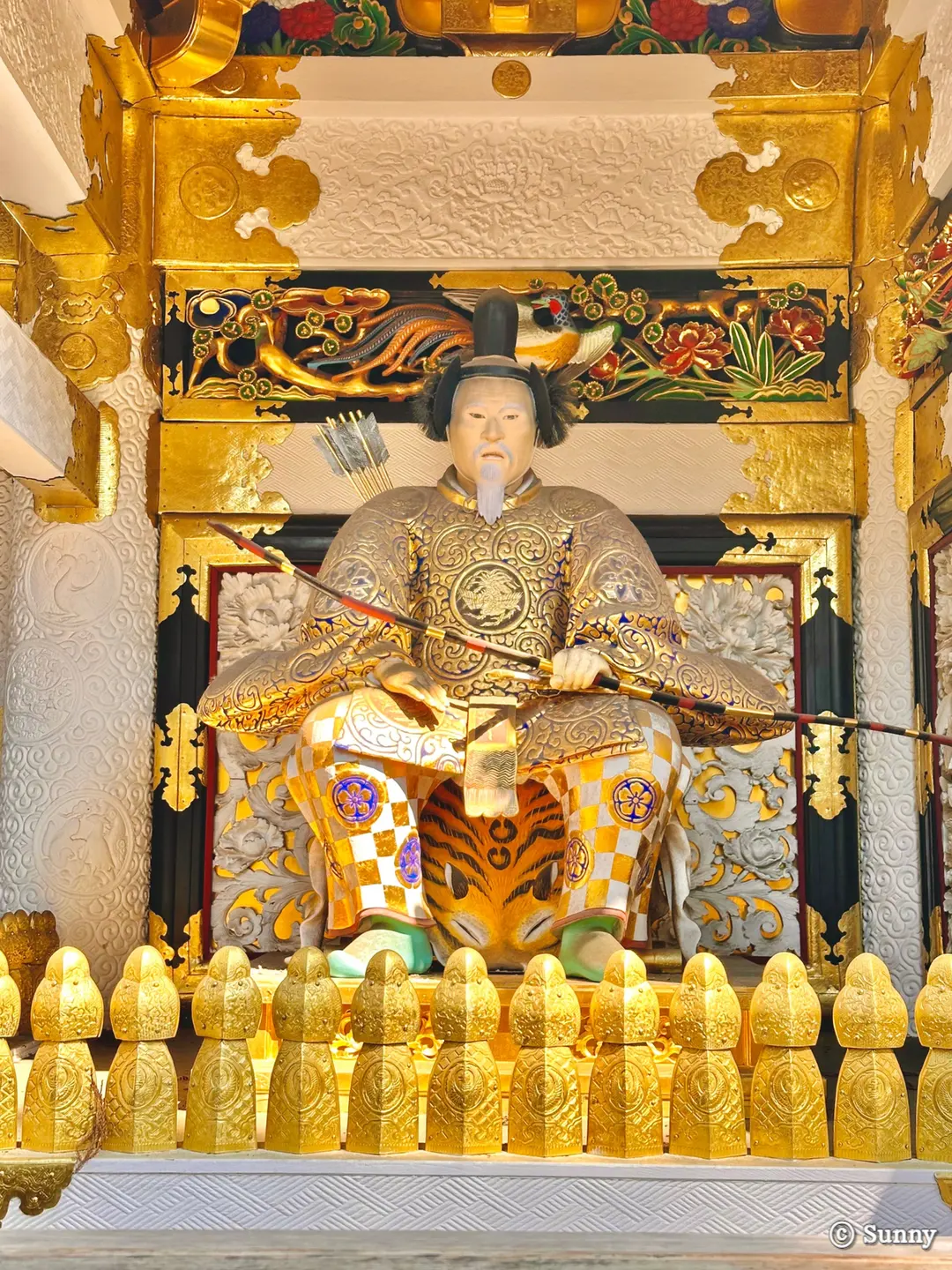
Inside the gate, you'll see figures of military officials, dressed in formal attire and armed with bows and arrows,
seemingly standing guard over Toshogu Shrine.
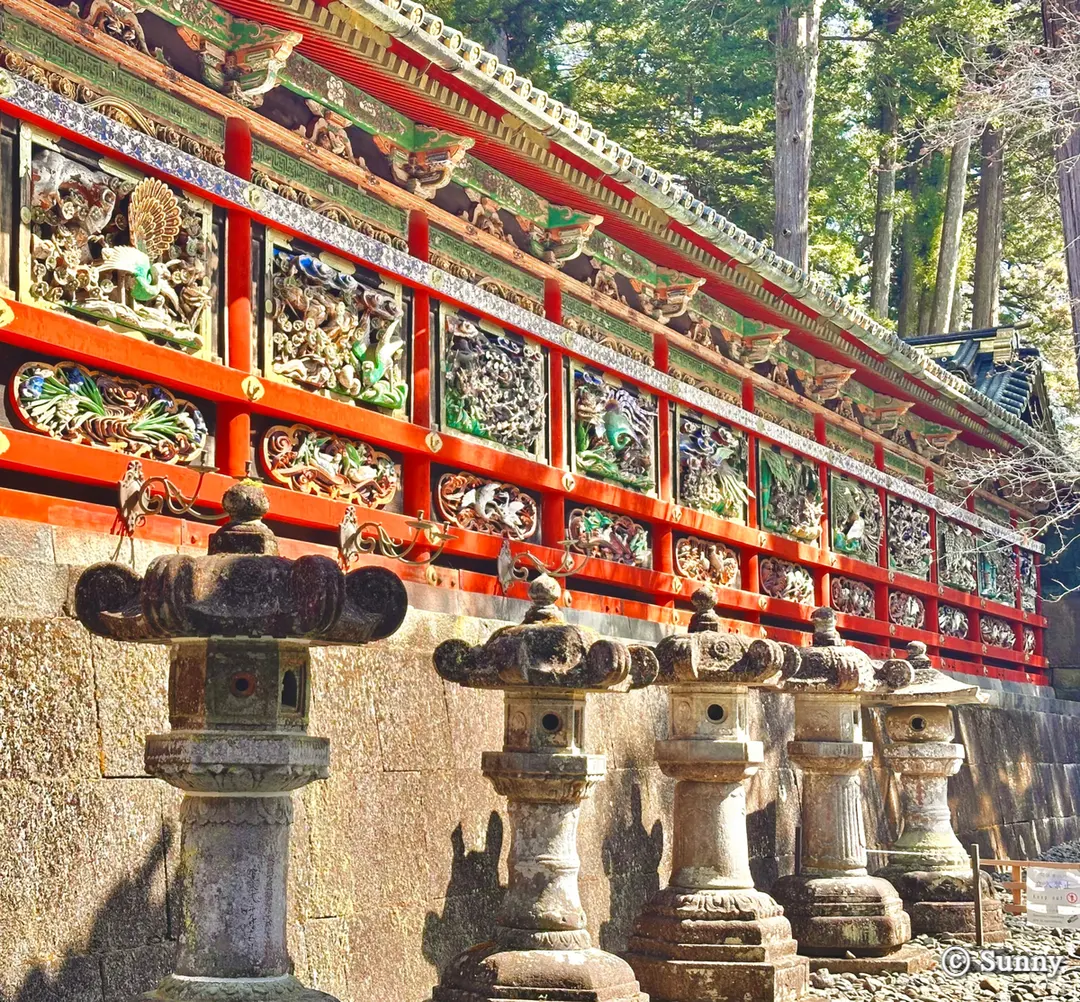
Along the long corridors extending left and right from the Yomeimon Gate,
you'll find Japan's most extensive collection of intricate carvings, featuring various flowers and birds sculpted in stunning three-dimensional detail.
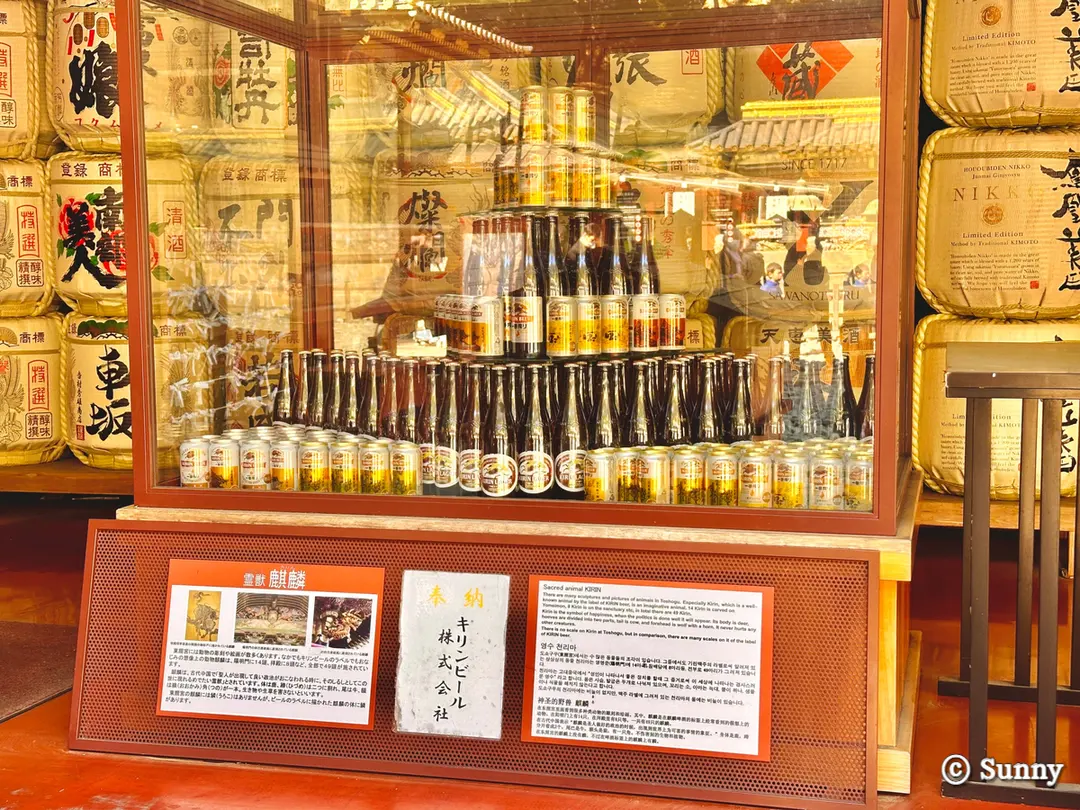
Look up near the corridor ceiling and you'll spot a Kirin, a mythical creature,
symbolizing the eternal peace Tokugawa Ieyasu yearned for after founding the shogunate and ending the tumultuous war era.
Interestingly, this very Kirin carving served as the inspiration for the logo of Kirin Beer,
a ubiquitous brand in Japan! You'll even find Kirin Beer displayed in one section, a fun nod to this connection.
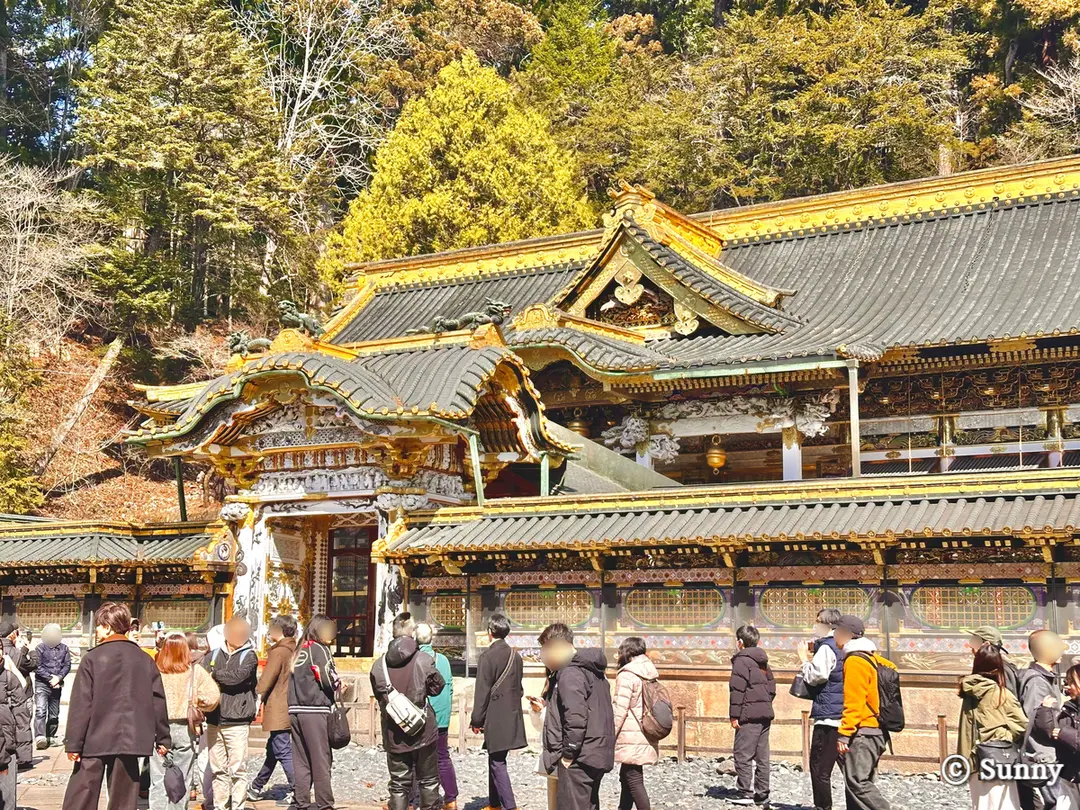
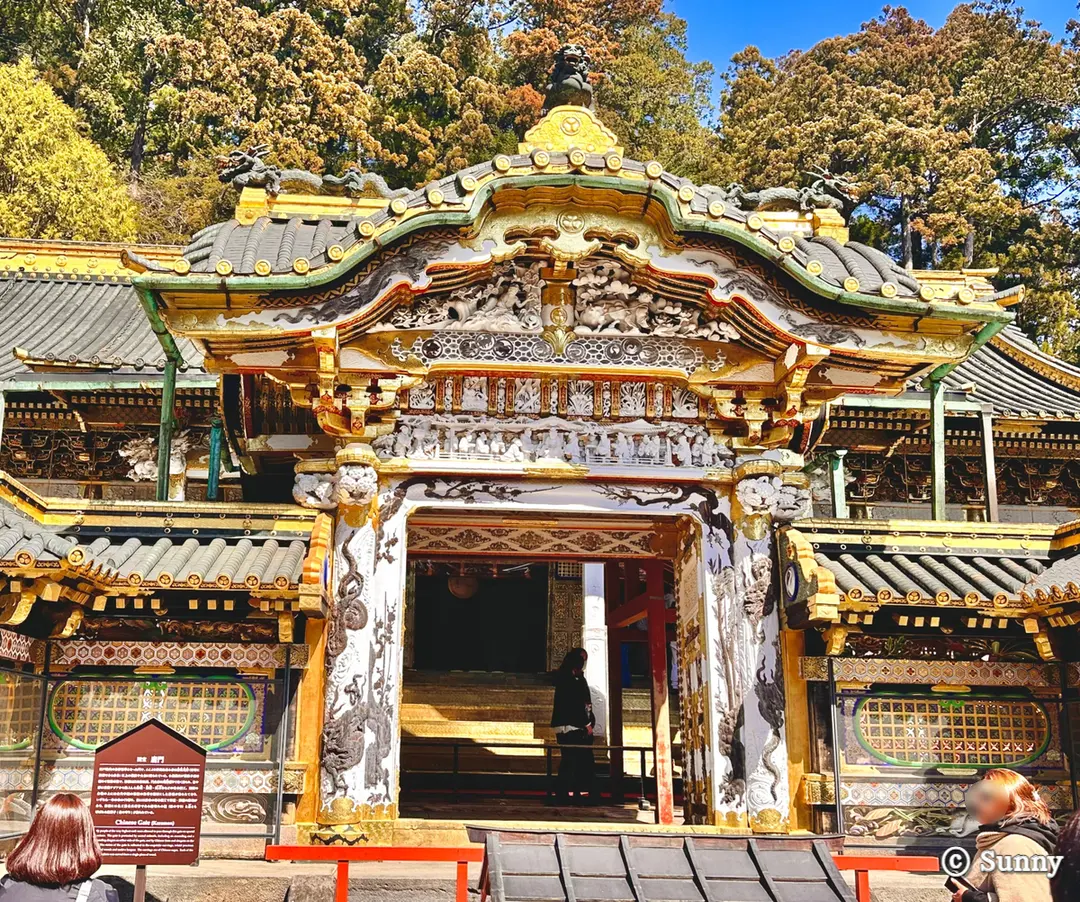
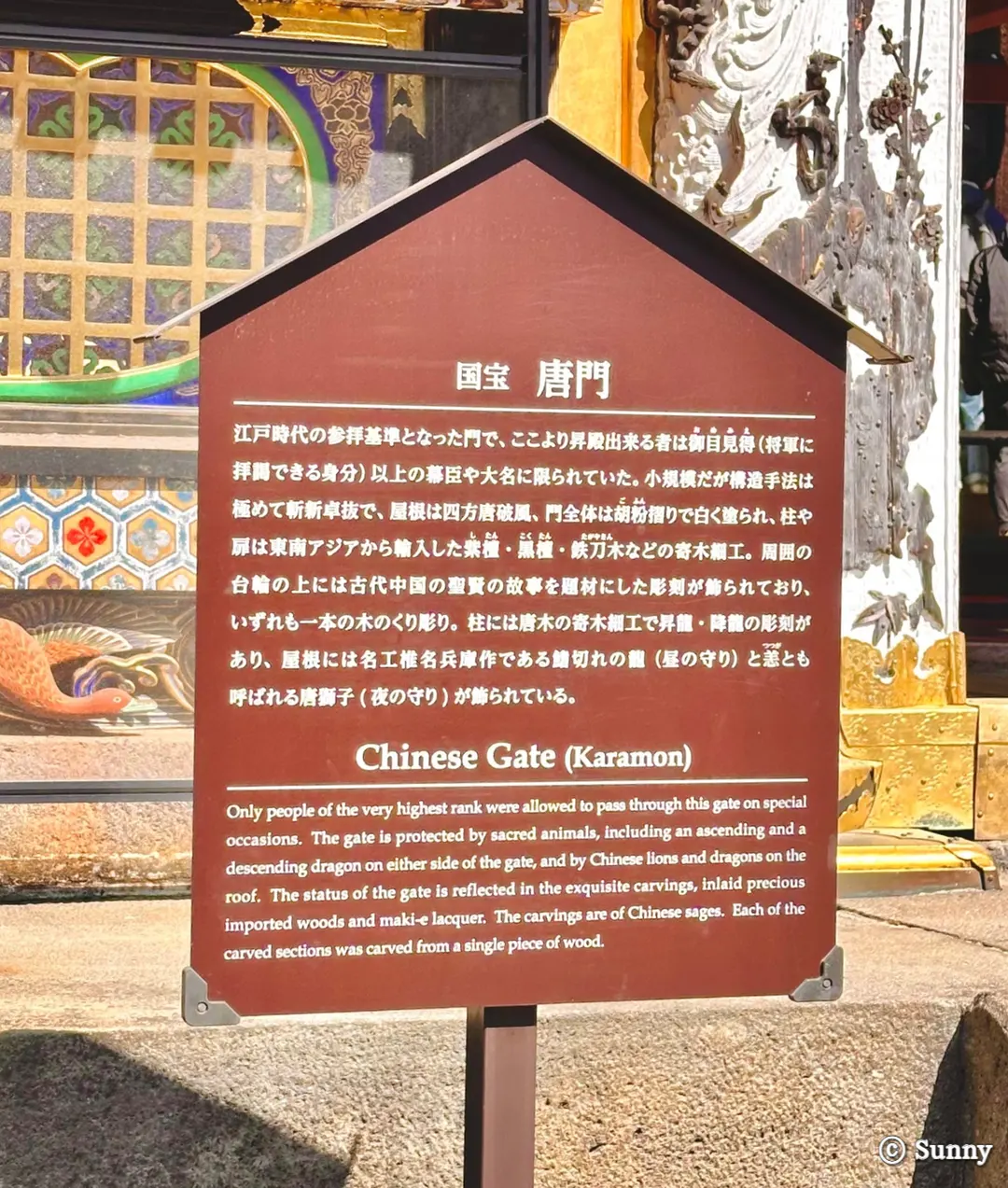
Right inside the spectacular Yomeimon Gate and its ornate corridors, you'll discover the exquisite Karamon Gate.
It's a sight to behold, adorned with pristine white pigments and lavish gold leaf,
creating an atmosphere of pure elegance and nobility.
The inner sanctum serves as a sacred space for worship and prayer,
and out of respect, photography was not permitted inside.
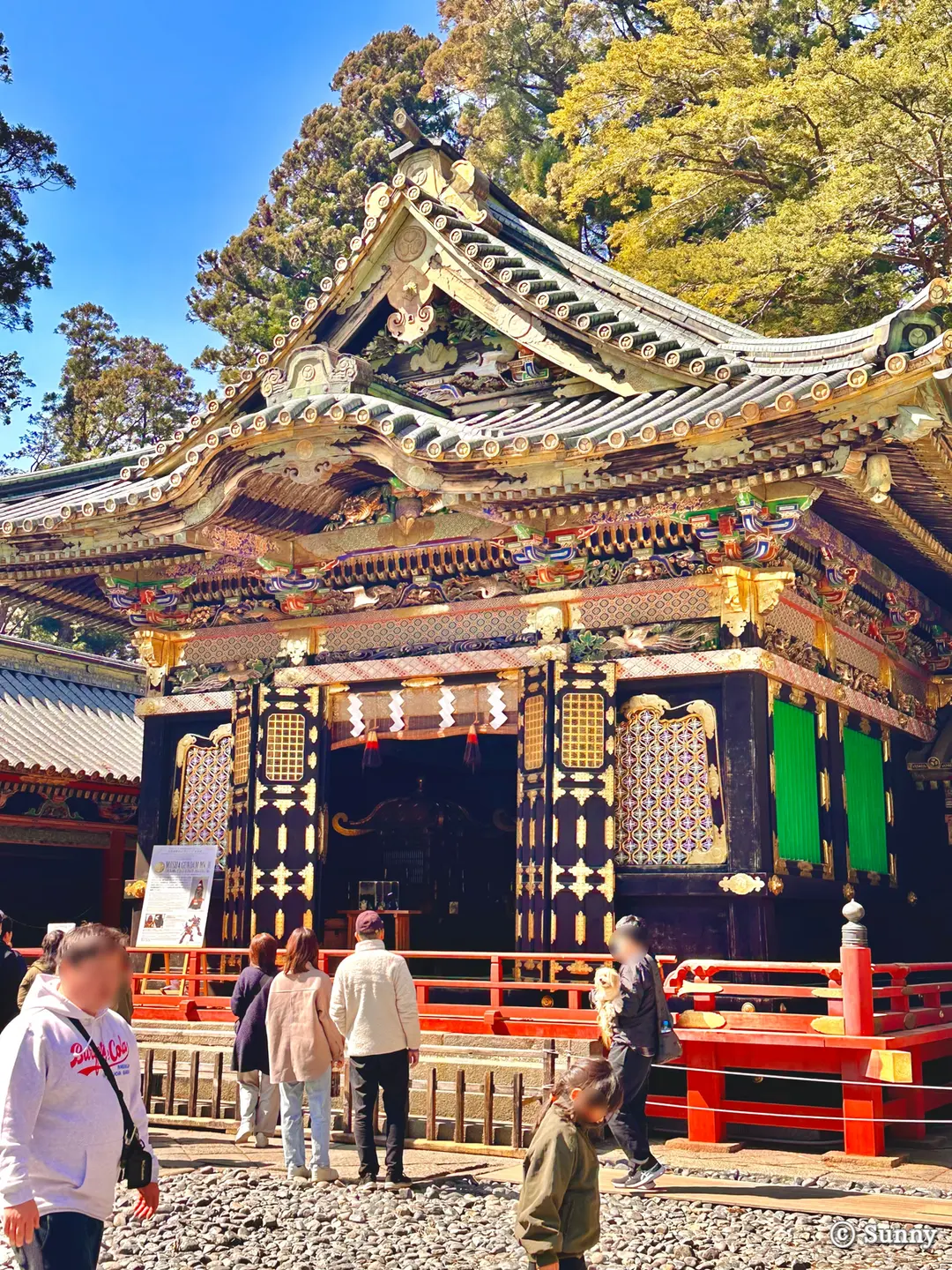
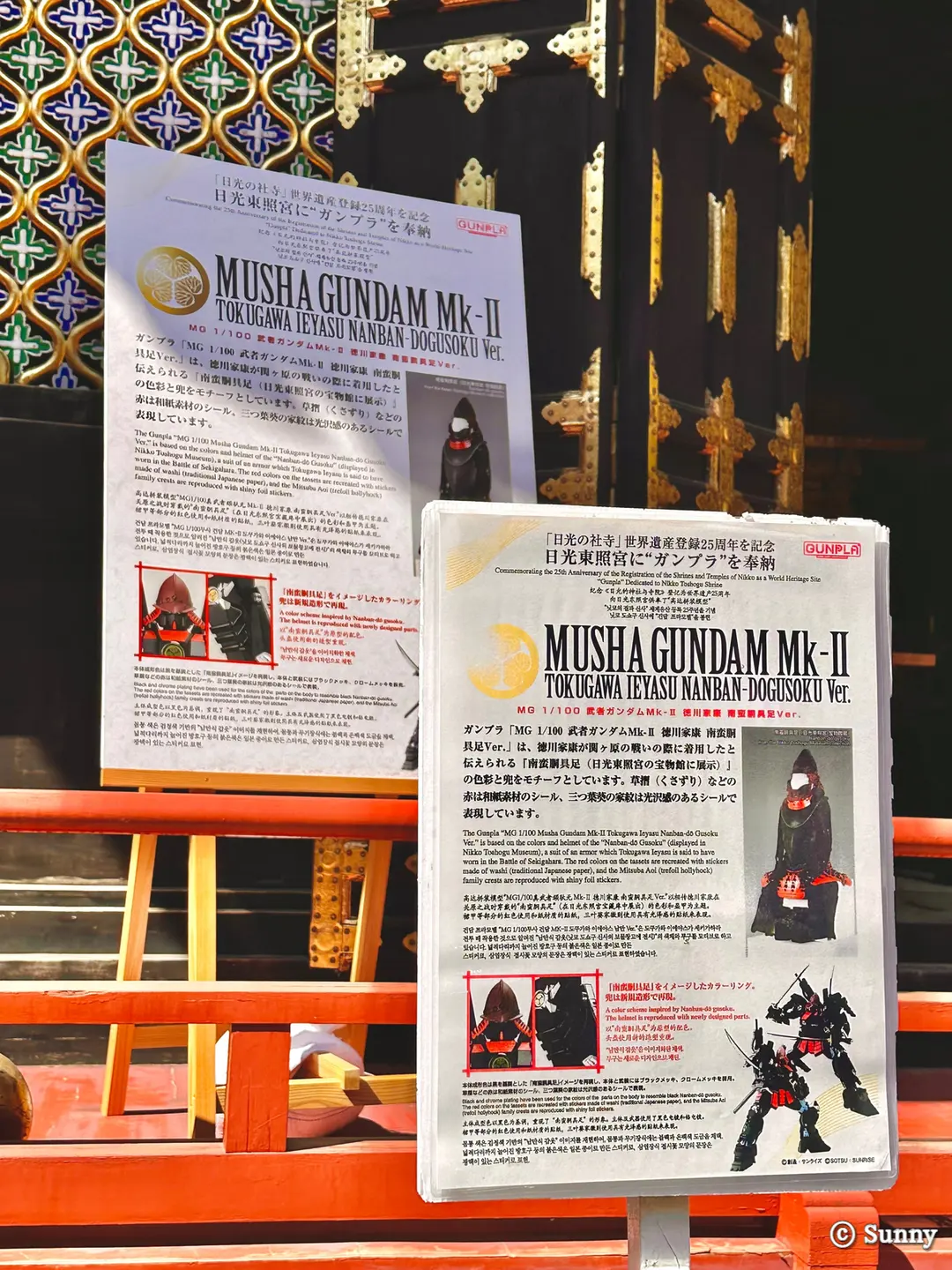
Just beside it, you'll find the Shinjyo-sha, a fascinating building that houses the ornate palanquins used during grand festivals.
Interestingly, it seems to be a must-visit spot for locals, not just for its historical significance, but also because it offers limited edition Gundam series for sale – a truly unexpected blend of tradition and pop culture!
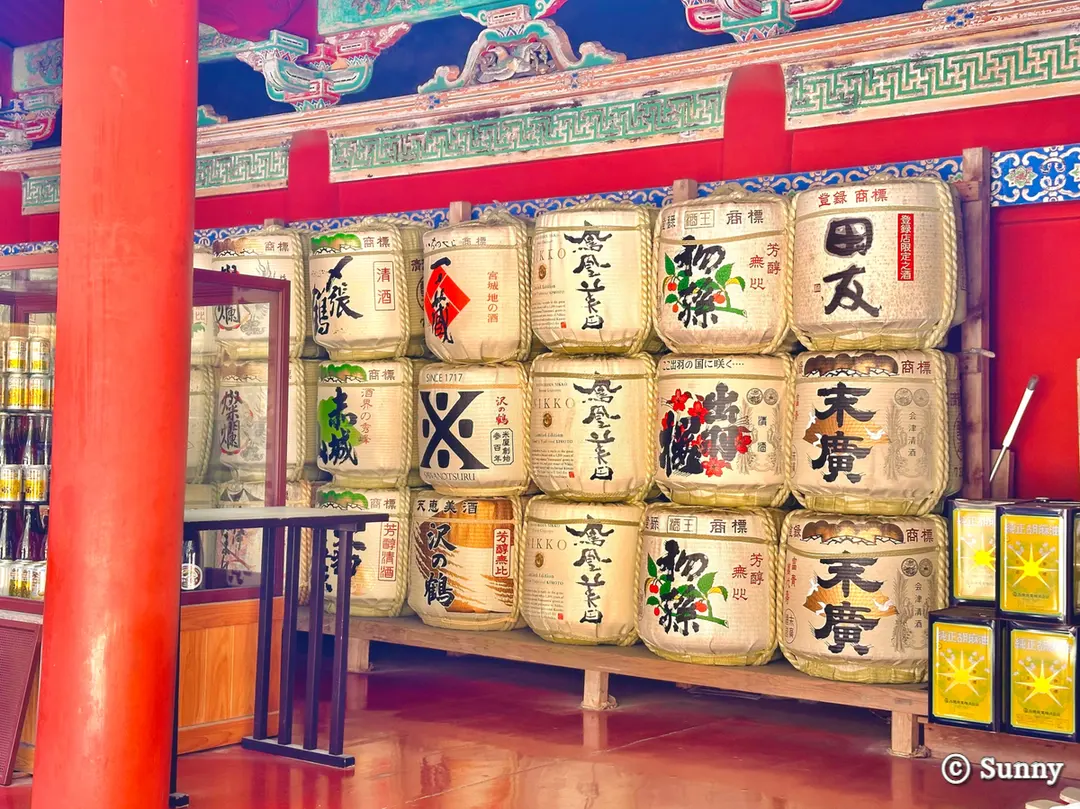
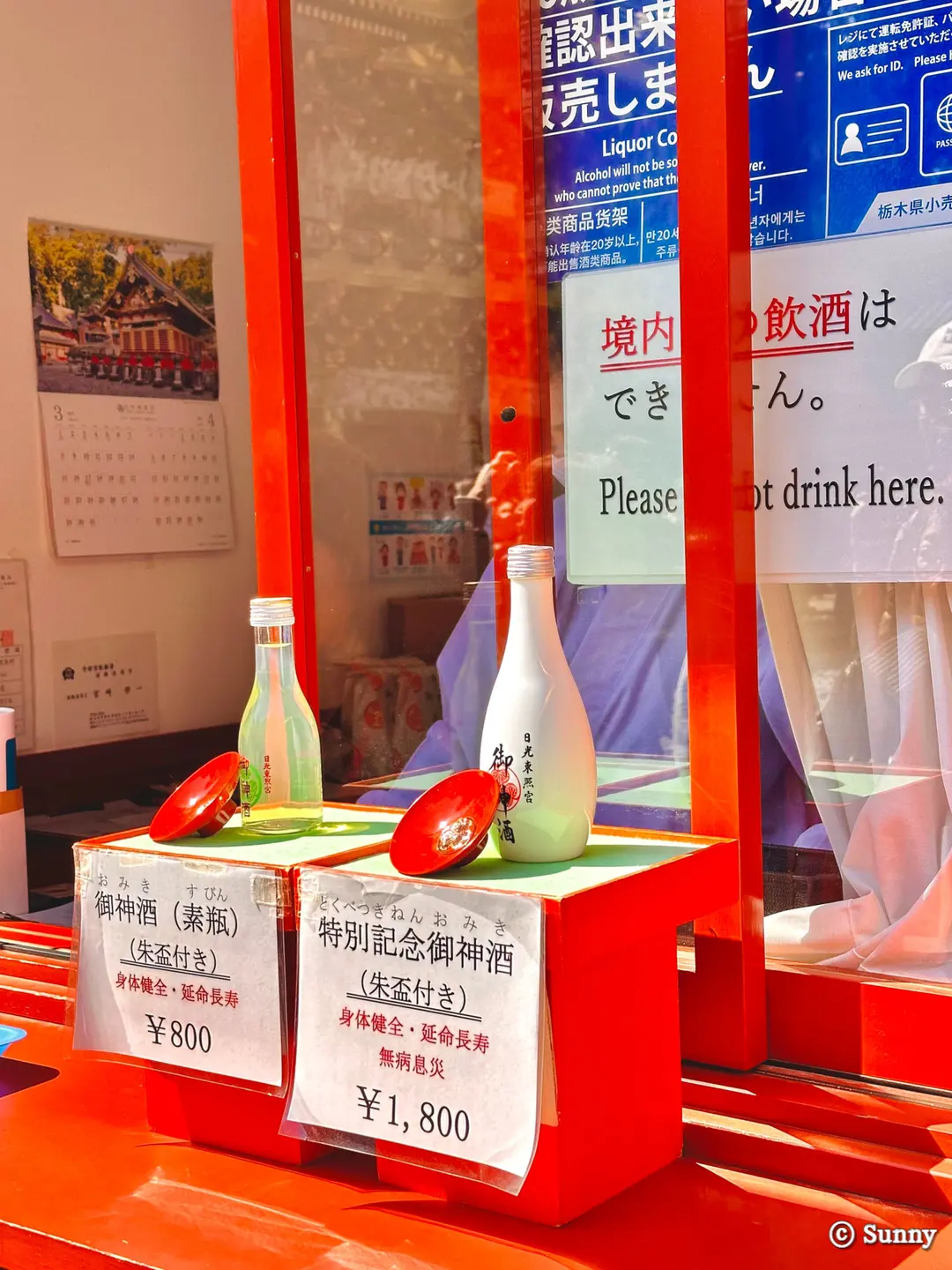
Nearby, a charming little booth sells sacred sake (shinzake),
traditionally offered to the gods to wish for health and longevity.
It looks like a perfect, thoughtful gift to bring home!
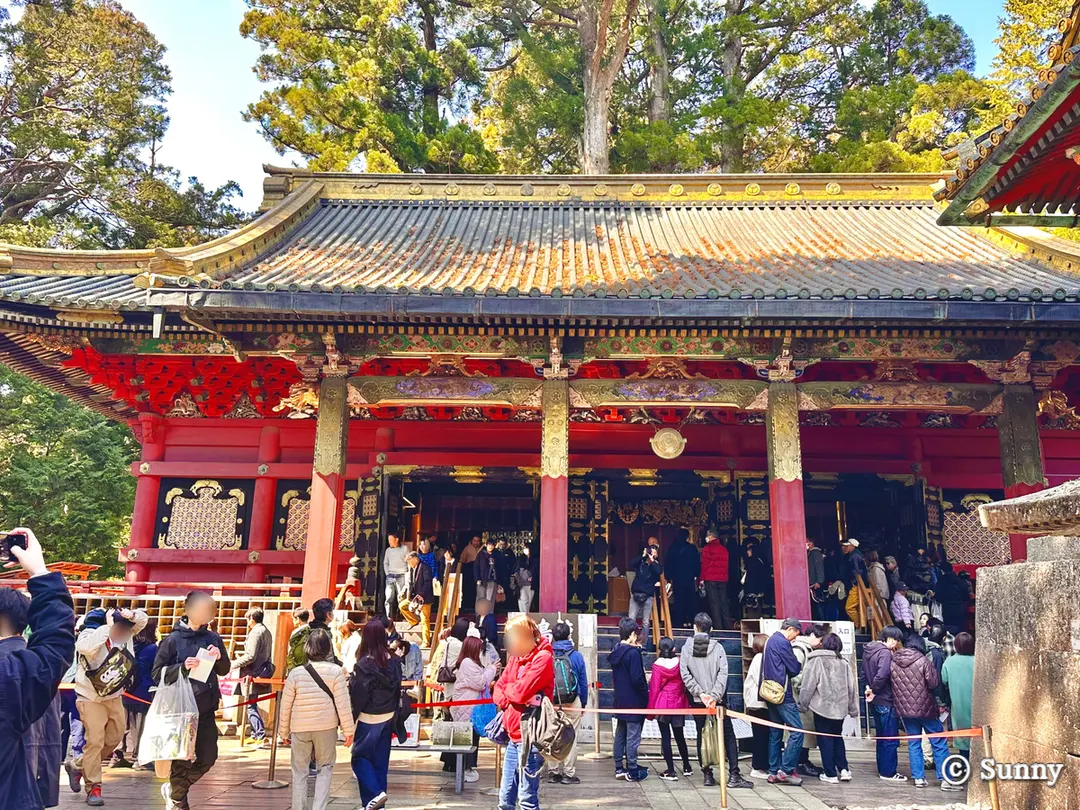
Even though Toshogu is primarily a Shinto shrine, it surprisingly also features a temple-like building enshrining a Buddhist statue within its grounds.
It was quite a unique and captivating sight to see so many people queuing up to offer their prayers!
Toshogu Shrine's Okumiya (Inner Shrine)
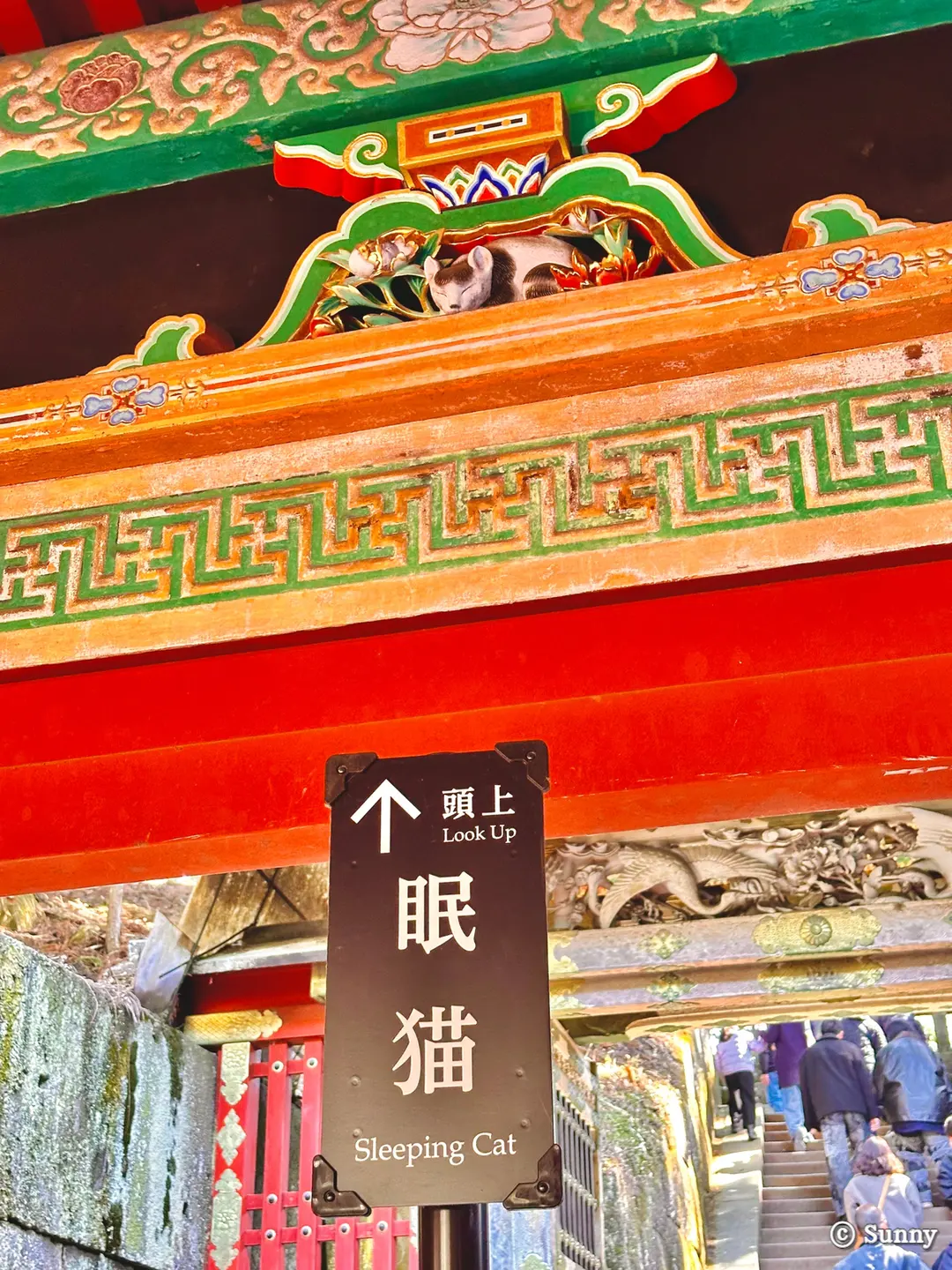
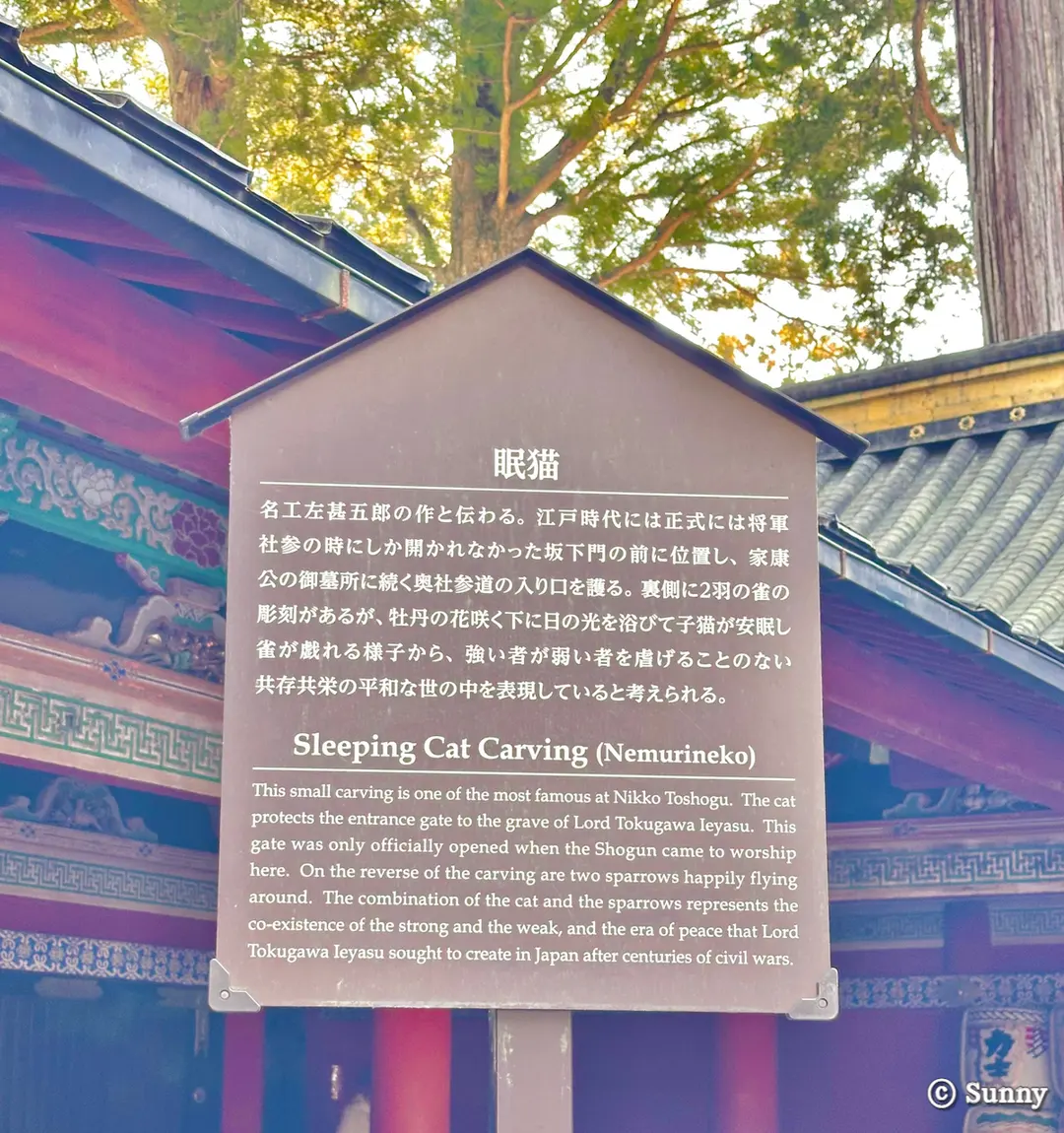
Beside the main hall, guarding the entrance to the Okumiya (Inner Shrine), which ultimately leads to Tokugawa Ieyasu's mausoleum, stands the famous 'Sleeping Cat' sculpture. This iconic artwork beautifully symbolizes a world at peace – a truly poignant message.
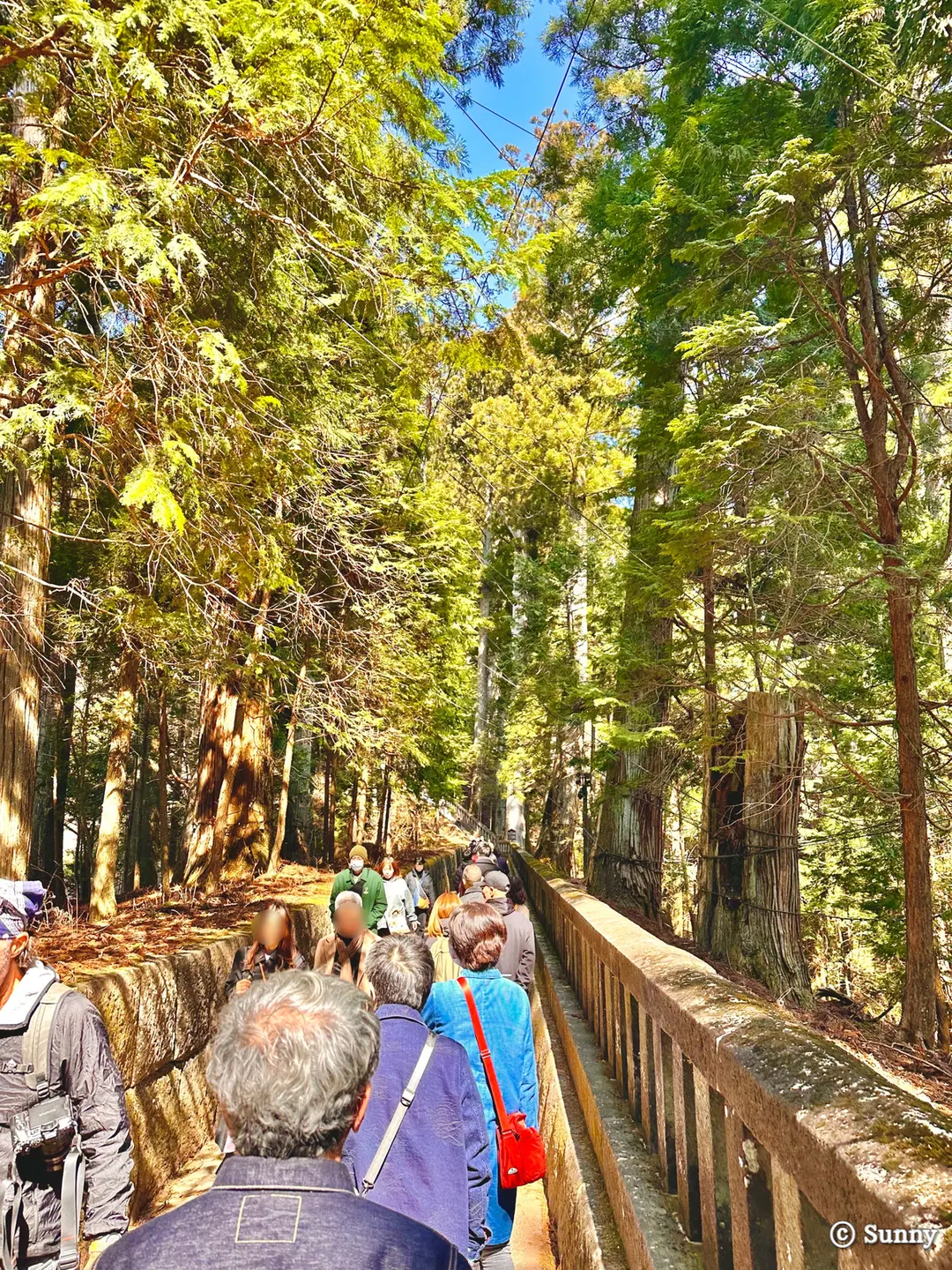
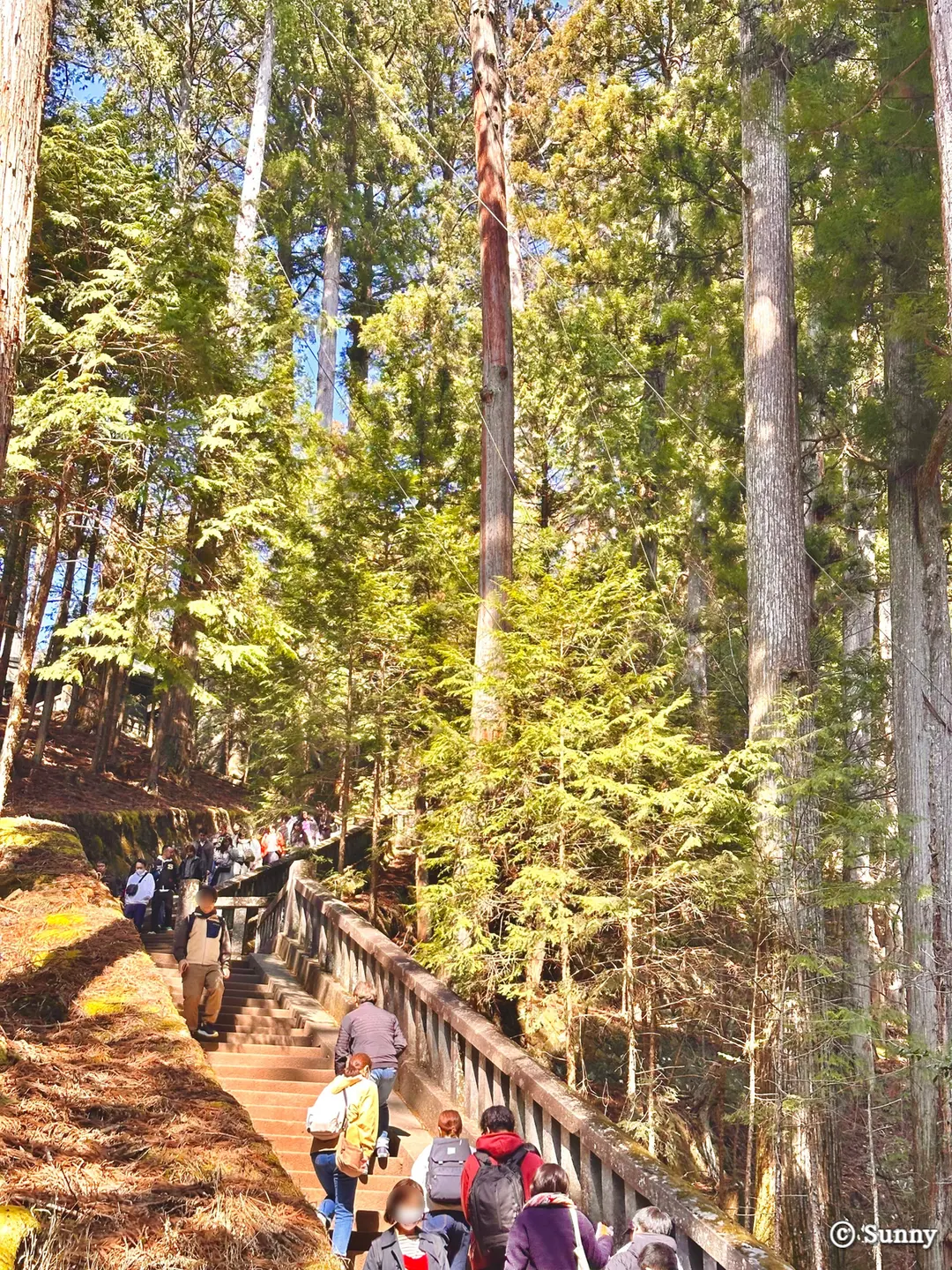
Once you pass through the gate, be prepared for a climb! You'll need to ascend a challenging 207 stone steps.
These stairs are quite steep, so if you're traveling with elderly companions or anyone with mobility issues,
I highly recommend enjoying the beauty up to the 'Sleeping Cat' sculpture and perhaps considering that your destination for this visit.
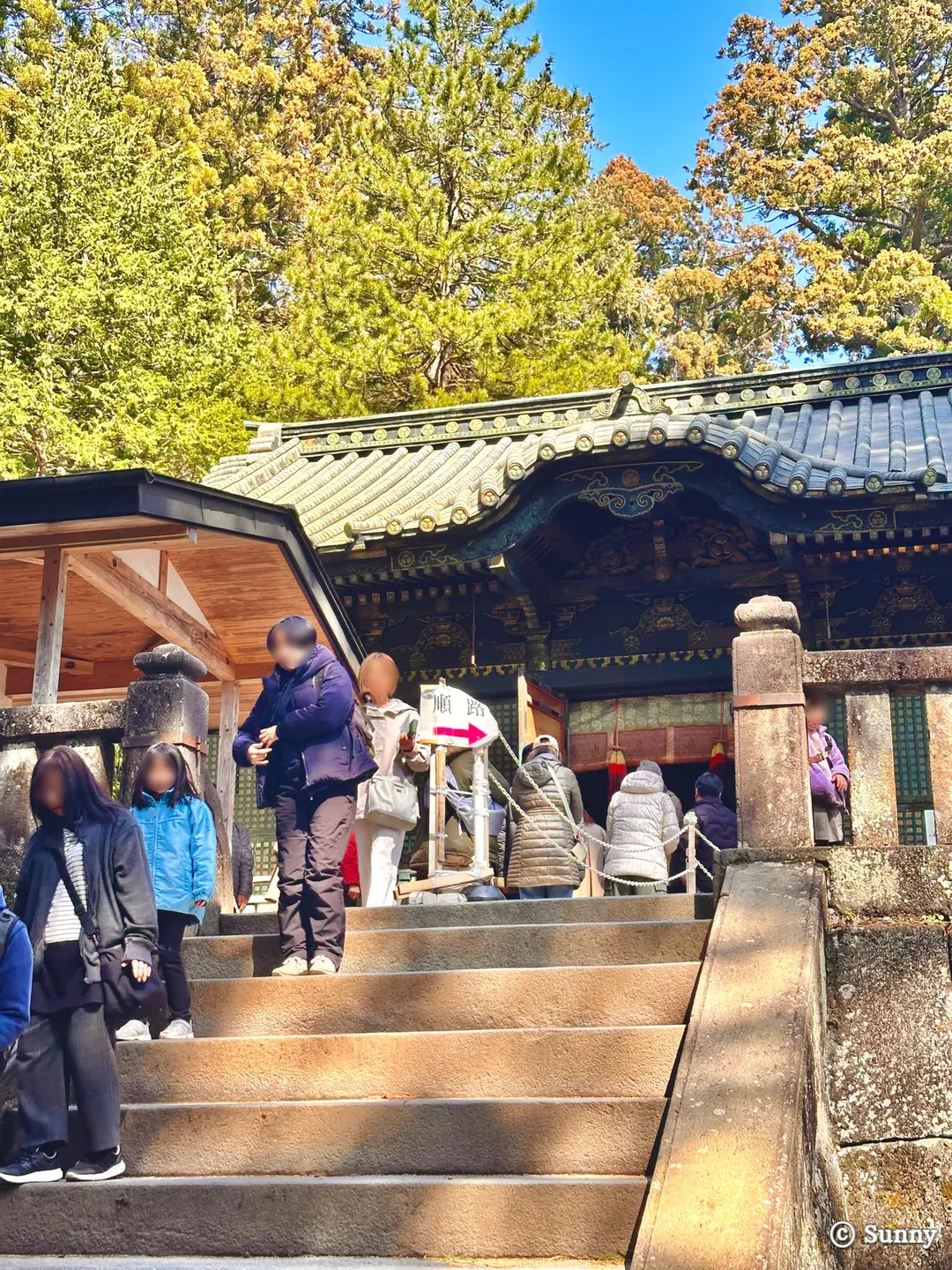
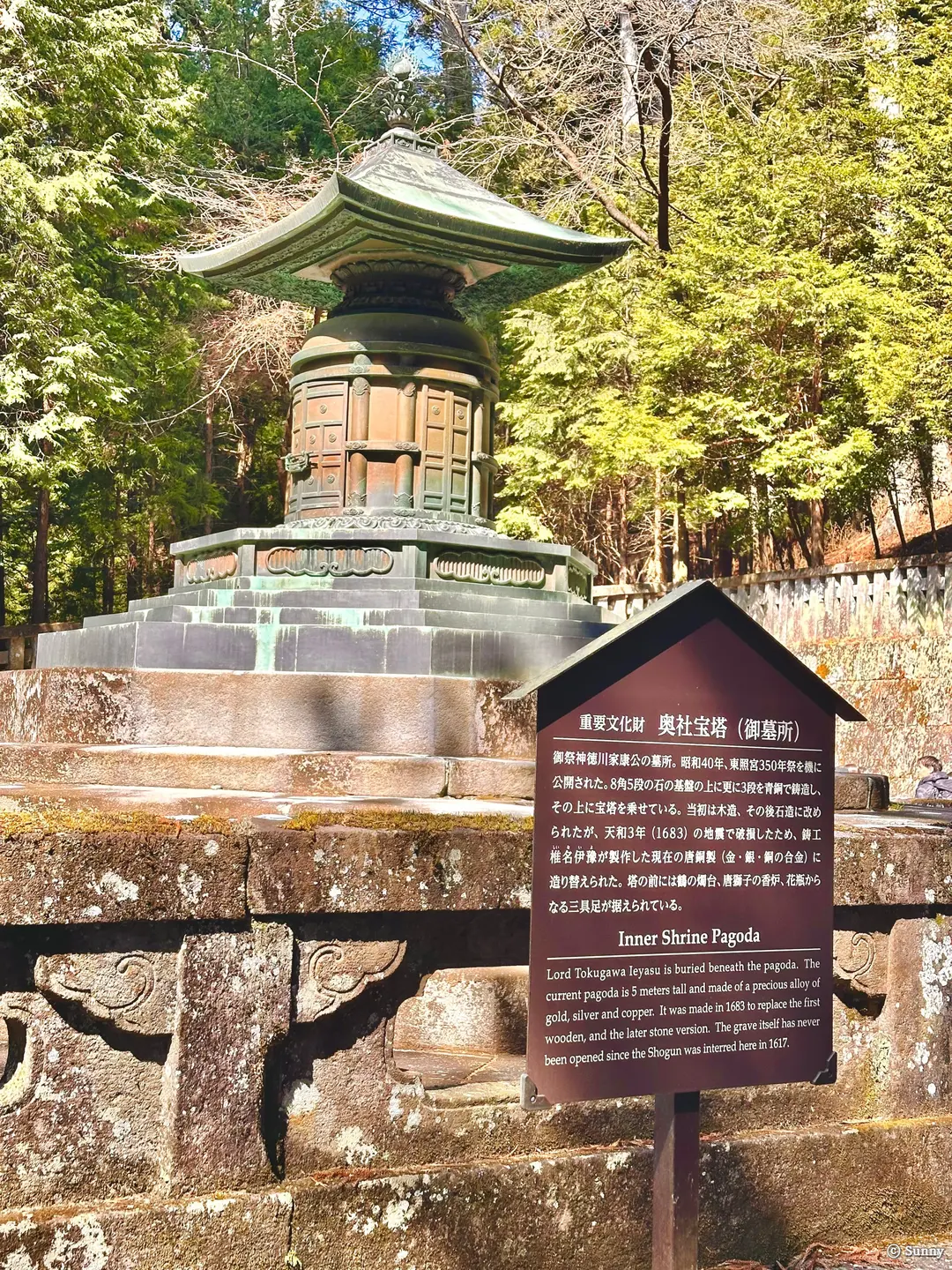
As you ascend the steps, one by one, you'll eventually reach the serene mausoleum nestled deep within the forest.
It's a wonderfully peaceful and contrasting space to the main hall's grandeur,
allowing for quiet contemplation, observation, and prayer as you circle the sacred grounds.
As a UNESCO World Heritage site,
Nikko Toshogu Shrine offers an unparalleled glimpse into the pinnacle of Japanese shrine artistry and splendor.
I wholeheartedly recommend adding it to your travel list!
Ready to explore this incredible site?
Secure your Nikko Toshogu entrance tickets in advance and enjoy seamless, skip-the-line entry!
Frequently Asked Questions
What is the admission fee for Nikko Toshogu Shrine, and what payment methods are available on-site?
The fee is 1,600 yen for adults (high school students and above) and 550 yen for children (elementary and junior high school students). At the on-site ticket counter, you can purchase tickets from a kiosk using cash or a transportation IC card, or use a window that accepts only cash. Credit cards are not accepted for on-site payments, so please prepare cash in advance or ensure your transportation IC card is topped up.
What are the operating hours of Nikko Toshogu Shrine, and are there times when there are fewer visitors?
It operates from 9:00 AM to 5:00 PM from April to October, and from 9:00 AM to 4:00 PM from November to March. The article mentions that the queues were shorter around opening time at 9:00 AM, but the number of visitors increased after 10:30 AM.
Where can I see the famous monkey carvings at Nikko Toshogu Shrine that embody the meaning of 'see no evil, hear no evil, speak no evil'?
These famous three monkey carvings can be seen on the wall of the Shinkyusha (Sacred Stable), located opposite the Sanshingo (Three Sacred Storehouses). These carvings are the most well-known among various monkey sculptures depicting eight stages of human life.
What artifact in Nikko Toshogu Shrine's Bell Tower reveals the diplomatic symbolism between Joseon and the Netherlands?
In the Bell Tower, there hangs a bronze bell in the shape of a traditional Korean Buddhist bell, which was presented to the Edo Shogunate by a Joseon Tongsinsa (Korean diplomatic envoy) during the reign of King Injo of Joseon. Directly opposite it is a 'bronze lantern' gifted by the Netherlands, demonstrating the Edo Shogunate's diplomatic importance placed on both Joseon and the Netherlands at the time.
Are there any precautions when visiting the Okumiya (Inner Shrine) leading to Tokugawa Ieyasu's mausoleum?
At the entrance to Okumiya, there is a carving of a 'Sleeping Cat'. After passing through that gate, you must ascend 207 steep stone steps. If visiting with the elderly or those with mobility issues, it is recommended to only view up to the Sleeping Cat carving.
Share this article
Featured in Collections
Discover more travel stories curated around the same theme.
Related Travel Stories
Haneda Limousine Bus to Shinjuku: 2026 Review
Looking for the easiest way to get from Haneda Airport to Shinjuku? Read our 2026 Haneda Limousine Bus review for booking tips, prices, and boarding guides.
Mt. Fuji Day Tour from Tokyo: Best 2026 Itinerary & Review
Planning a trip to Mount Fuji? This Tokyo day tour review covers the best photo spots, itinerary, and budget tips for an unforgettable 2026 adventure.
Tokyo Metro Pass 2026: Booking & Subway Usage Guide
Maximize your Tokyo adventure in 2026! Learn how to book, exchange, and use the Tokyo Metro Pass to save money and time on unlimited subway rides across the city.

Remm Roppongi Tokyo Review 2026: Affordable Tower Views
Experience the magic of Tokyo with breathtaking Tokyo Tower views from your room at Remm Roppongi. Our honest review reveals why this hotel is a top pick for value.
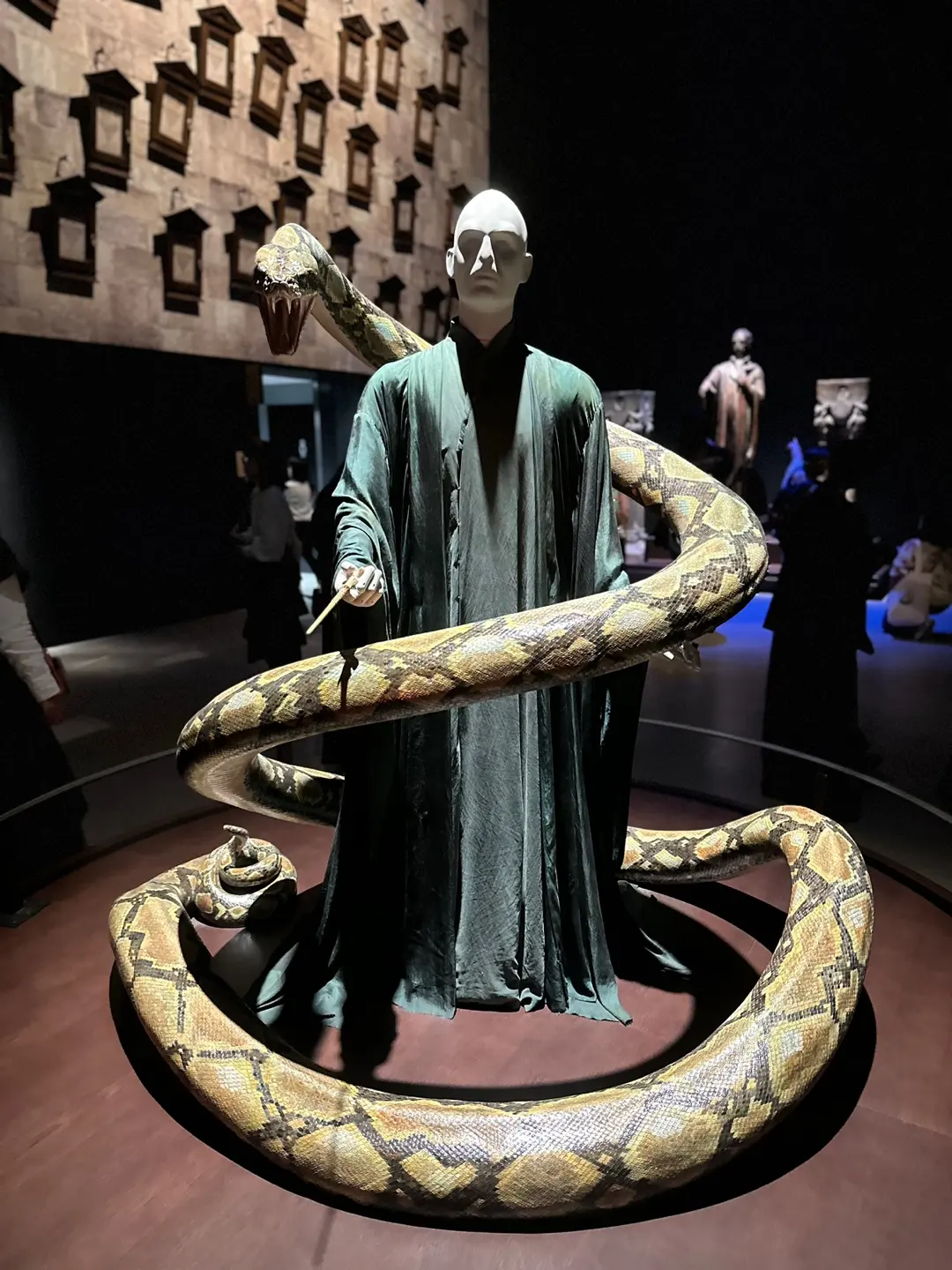
Harry Potter Studio Tokyo Tickets 2026: Best Deals
Step into the Wizarding World! Here is your complete 2026 guide to booking Harry Potter Studio Tokyo tickets, comparing prices, and maximizing your tour.

Harry Potter Tokyo Tickets 2026: Best Discount Hacks
Planning a trip to the Warner Bros. Studio Tour Tokyo? Learn how to book cheap Harry Potter Tokyo tickets, compare deals, and claim exclusive promo codes!