

Myanmar Currency Exchange Guide 2026: Cash & Black Market
Master Myanmar's complex cash economy with our practical guide on currency exchange, why pristine USD bills are mandatory, and how to get the best rates.

Hi there, fellow travelers!
I'm Susukkotdari, and I love documenting my travels.
When planning a trip to Myanmar,
the very first thing that gets you thinking is currency exchange.
Since banks back home don't carry
the Myanmar Kyat (MMK),
you can't exchange your local currency directly into Kyats.
This is because the Myanmar Kyat isn't
widely traded internationally,
and due to the unstable local situation
and highly volatile exchange rate risks,
most international banks simply don't stock it.
So, how do you exchange money in Myanmar
safely and at the best rates possible?
I've put together a complete guide for you.
The Reality in Myanmar

Unlike Japan or other popular Southeast Asian
destinations where you can just grab a multi-currency card
and go, Myanmar is a place where
doing so will leave you in a total panic
the moment you step off the plane.
Due to local security and political issues,
the credit card infrastructure has ground to a near-total halt. This means you must travel 100% with cash (Kyat).
If you rely on half-baked information floating around the internet,
you might end up losing half of your money's value.
To avoid such frustrating mistakes,
it's crucial to understand how
the exchange system in Myanmar actually works before you go.
The Golden Rule of Myanmar Currency Exchange
Why does it HAVE to be a crisp, new $100 bill?

The very first thing you need to prepare
for your trip to Myanmar is
crisp, brand-new US Dollar (USD) bills from the bank.
In Myanmar, the "condition" and "denomination"
of your bills completely dictate their value.
✅️ Bill Condition Standards
At local exchange offices and hotels in Myanmar,
their scrutiny of bills is
beyond anything you can imagine.
Tiny stains, ink marks, microscopic rips,
or sharp creases on the bills—
these will either be flat-out rejected, or accepted only with a hefty 10% to 20% penalty (fee),
applying a much lower exchange rate.
So, when you withdraw USD from the bank,
always double-check that they are brand-new, uncirculated bills.
Even though most banks usually hand over clean bills, it pays to be safe.
If you're bringing dollars you already have at home,
be sure to inspect their condition meticulously.
Since they must not be folded,
store them in a flat envelope rather than a wallet.
Treat them like precious treasures! ~^^
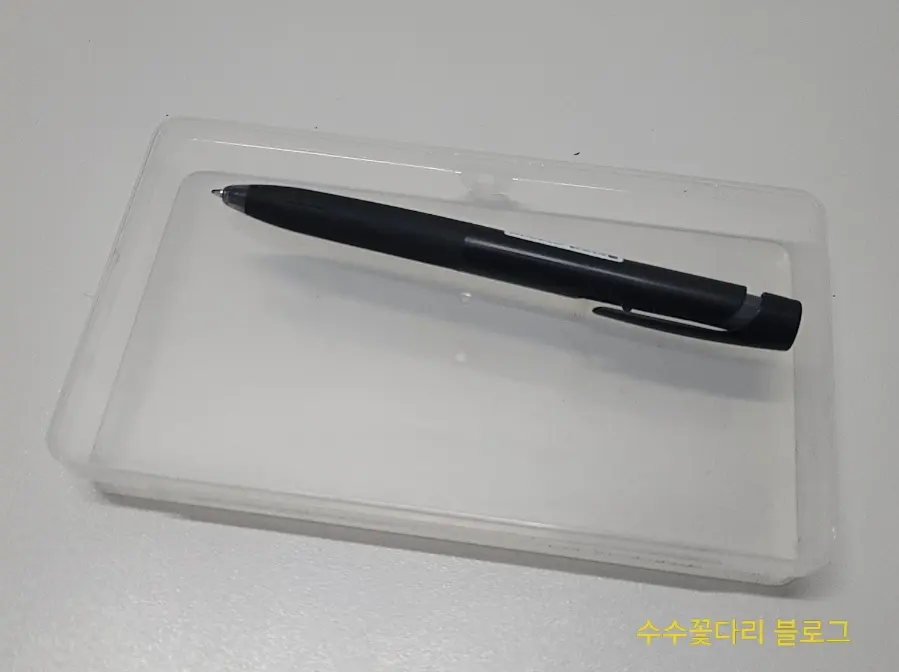
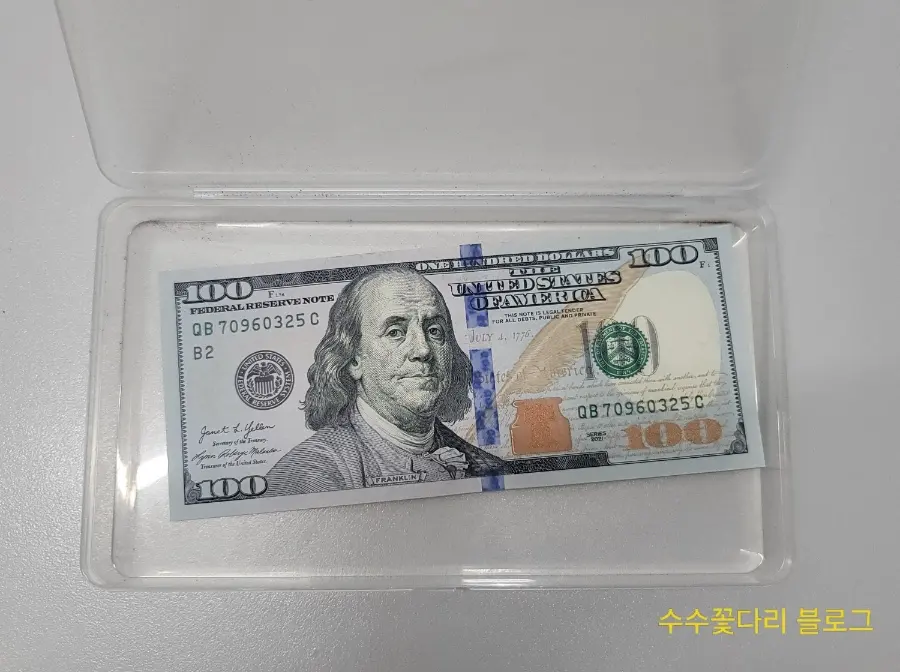
In my case, I stored mine safely
in a hard plastic case like this.
✅️ Exchange Rate Differences by Denomination
In Myanmar, the $100 bill
reigns supreme.
Even though the total amount is the same,
exchanging a single $100 bill gets you a much better rate
than exchanging five $20 bills.
Smaller bills like $50, $20, or $10
receive a significantly lower exchange rate.
So, except for a few small bills to use for emergency tips,
you should definitely make sure at least 90% of your budget
is comprised of crisp, new $100 bills
to get the best value.
6 Money Exchange Options in Myanmar
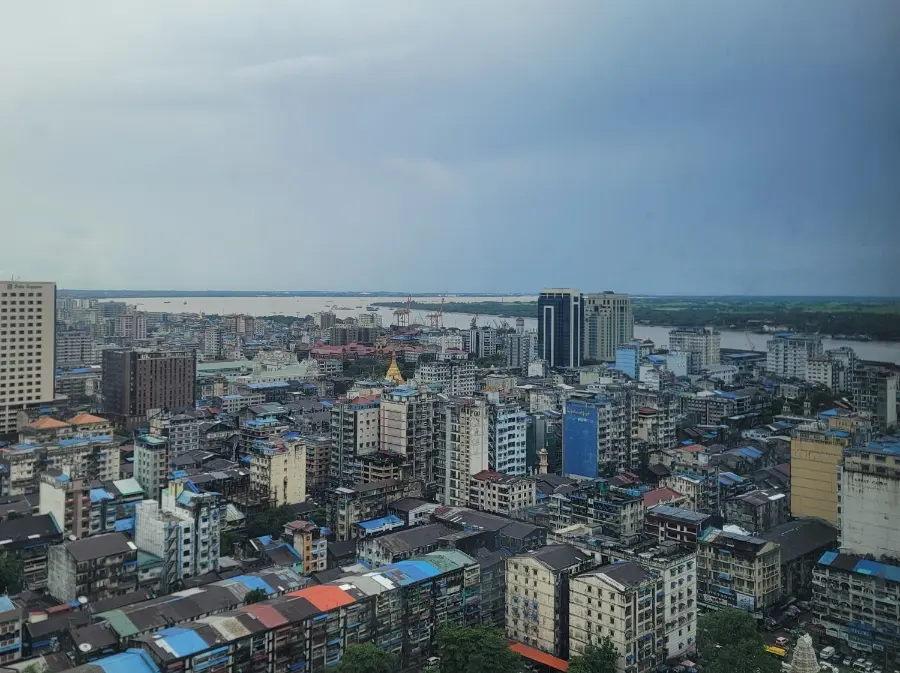
If you search "Myanmar exchange rate" on Google,
the official figures you'll see
(around 2,100 Kyats per 1 USD)
mean absolutely nothing once you're on the streets of Myanmar.
This is because Myanmar operates with
a two-tier system: the government-mandated "official rate"
and the market-driven "black market (real-world) rate."
They are completely separate. As a traveler,
there are 6 main exchange avenues you will encounter.
① Government Official Rate
This is the official rate set
by the Central Bank of Myanmar.
However, this rate only exists on paper;
it doesn't reflect the actual cost of living
or market value at all.
Exchanging money at the official rate
means you are getting only about half of
the true market value for your currency.
If you exchange your money here,
you'll take a massive financial hit.
It's best to completely erase this option from your mind.
② Airport Exchange Booth Rate
These are the bank-operated exchange booths
you see right away in the arrival halls at Yangon or Mandalay Airport.
Years ago, airport booths offered rates
similar to the city center and were highly recommended,
but due to strict government regulations today,
they often enforce unfavorable rates
very close to the official fixed rate.
It is best to exchange only a minimal amount
(around $10 to $20) at the airport—
just enough to cover your taxi fare to your accommodation and immediate expenses.
③ Official Authorized City-Center Changers (Official
Authorized Money Changers)
These are private banks like KBZ or CB located
in the heart of the city, or money changers
sporting official government-approved signs.
The biggest plus is that they are 100% safe,
with absolutely zero risk of counterfeit bills or scams.
However, because they strictly follow
government monitoring guidelines,
they won't give you the real market rate
(the best preferential rate) we all want. I'd only recommend them
to travelers who prioritize absolute safety above all else.
④ Hotel Front Desk Exchange
This is a service offered at the front desks
of mid-to-large-sized hotels.
Due to Myanmar's unique economic situation,
some hotels actually offer fantastic market rates—
comparable to private money changers in town—
just to secure physical U.S. dollars for themselves.
Above all, the massive advantage is being able
to make your transaction comfortably
in a highly secure, safe environment.
I highly recommend asking the front desk
when you check in what their rate is for a $100 bill today,
and comparing it to the going market rate.
⑤ Gold & Jewelry Shop Rates
(Gold & Jewelry Shop Rate)
These are the large gold shops and jewelers
in downtown Yangon or inside the famous
Bogyoke Aung San Market, Yangon's representative traditional market.
Locals in Myanmar often buy gold, gems,
and USD to preserve their wealth
whenever the value of the local currency drops.
Because of this, large jewelry shops always
hold massive amounts of Kyat (MMK) cash
and US dollars, allowing them to offer
the most accurate and highest "real market exchange rates"
in Myanmar. Since they operate out of physical,
established shops, the risk of scams is incredibly low
compared to street-side black market dealers.
This is the absolute favorite channel for veteran travelers
who need to exchange larger sums.
⑥ Street-side Money Changers & Black Market
These are the unauthorized, individual money changers
who will approach you on the street
calling out "Money change!"
On the surface, they'll tempt you
with the absolute highest exchange rates,
but street-level black market transactions are an absolute no-go.
Scams run rampant here—dealers might use
sleight of hand to slip bills out while counting,
or sneakily mix counterfeit notes
or old, unusable bills into the stack.
We definitely don't want to lose
your hard-earned travel funds on the street, right?
<Myanmar Exchange Channels at a Glance>
Exchange Location | Rate Benefit | Safety Level | Recommendation |
Official Gov Rate | Worst (About half the market rate) | Excellent | Never Use |
Airport Booths | Poor ~ Average | Excellent | Only exchange a small amount for first-day transport |
Official Changers (Banks) | Average | Excellent | Safe, but low exchange rate benefit |
Hotel Front Desk | Average ~ Good | Excellent | Recommended. Safe and surprisingly good rates |
Jewelry Shops (Gold Shops) | Best Level | Relatively High | Highly Recommended. Great rates & secure |
Street Black Market | Best Level | Very Low | Highly Discouraged. Risk of scams |
A Practical Guide to Myanmar Currency Exchange
(How to Use Jewelry Shops)
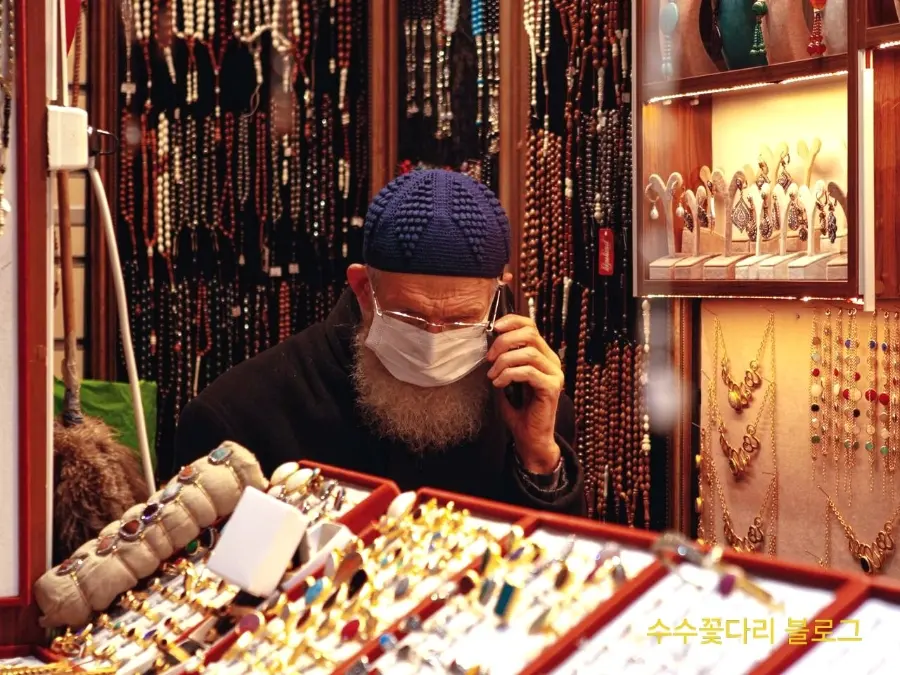
I'll walk you through a step-by-step guide on how to exchange
money at jewelry shops (gold shops), which offer the best rates while keeping things safe.
Just follow this checklist, and even
first-timers can walk away with the best rates in a completely secure way.
[Step 1: Check the Going Rate] ->
[Step 2: Visit a Jewelry Shop] ->
[Step 3: Verify & Inspect Your Bills] ->
[Step 4: Swap Currency &
Double-Check on the Spot]
▶️ Check Real-Time Market Exchange Rates
Before heading out, check local expat forums, trusted
travel blogs, or real-time travel chat rooms
to get a general baseline of today's
'real market rate' (market buying price)
and plan accordingly.
▶️ Visit a Large Gold Shop (e.g., Bogyoke Market)
Walk into a spacious, well-established
shop with indoor CCTV cameras.
Ask them, "What is the rate
for a crisp new $100 bill today?"
▶️ Present and Let Them Inspect Your Dollar Bill
Once the staff agrees, hand over
your $100 bill. They will inspect it
meticulously under a light to check for
any ink marks, folds, or creases.
▶️ Count the Cash on the Spot (The Most Critical Step)
The staff will hand you a stack of Kyat (MMK).
Because of the currency denominations, even exchanging
$100 will yield a surprisingly thick stack of cash.
No matter how secure the shop looks, count every single
bill out loud right there in front of the employee.
If you find torn bills or if the count is short,
demand a replacement immediately.
Before the verification is completely finished,
you must not leave the shop.
Official vs. Market Rate Difference
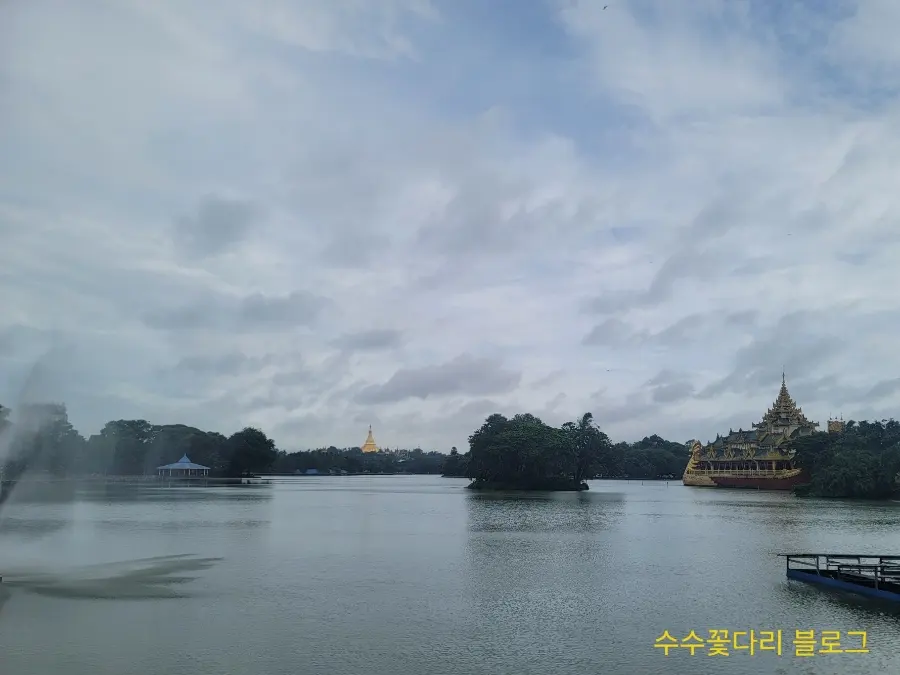
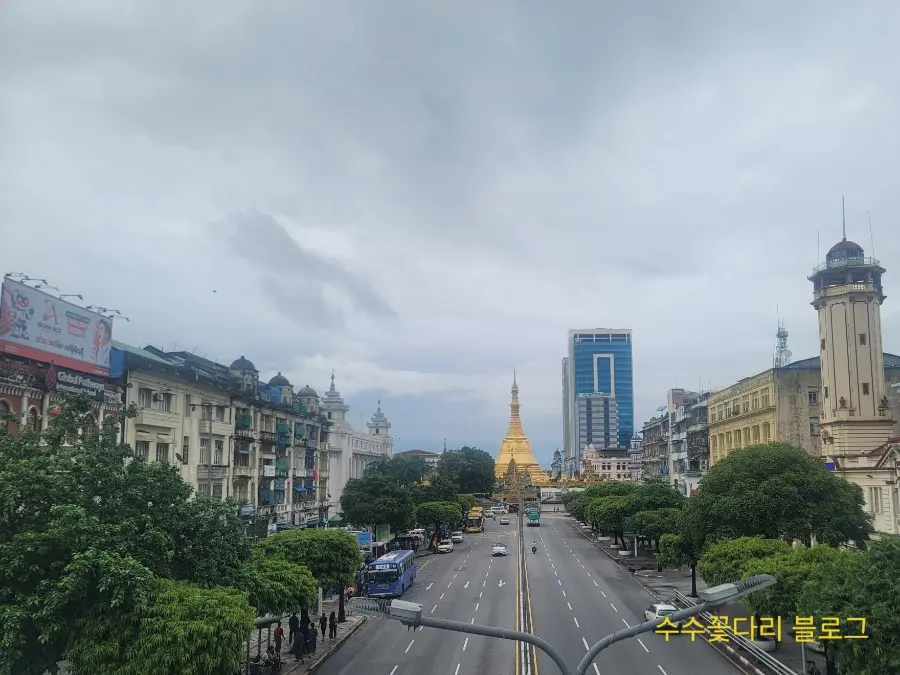
By now, you're probably wondering...
"Just how massive is the difference
between the official rate and the market rate?"
While the official rate sits around 2,100 Kyat
per dollar, the market rate can go
up to 4,000 to 4,500 Kyat per dollar,
making it a massive difference
of more than double the value.
Personally, I managed to get around 4,100 to 4,200 at the jewelry shop...
That's how we got the favorable exchange rate.
So, how much is that in US dollars?
Every time you buy something or eat at a restaurant,
doing the mental math can get a bit overwhelming.
Here's an easy trick: just divide the Kyat amount by 5,000 to get the USD equivalent.
For example, 1,000 Kyats is roughly ~$0.20.
So 5,000 Kyats would be around ~$1, right?
With 100,000 Kyats being about ~$20,
you can easily book a decent mid-range hotel for a night.
So you can see just how budget-friendly this place is!
Oh, and here is a crucial tip you absolutely need to know!
Card payments are subject to the official government exchange rate,
so paying in cash is always the better deal.
You'll probably end up using Grab a lot during your trip.
Keep in mind that Grab rides also use the official government rate.
Make sure to remember this!!!
Wrapping Up
The moment you step outside Myanmar, the local Kyat becomes virtually impossible to exchange back in Thailand, the US, or anywhere else in the world—essentially turning into useless paper.
That's why you should never make the mistake of exchanging your entire budget on day one. Instead, practice "split exchanging" by converting only enough cash for 2 to 3 days at a jewelry shop or hotel. On your final day, the smartest way to manage your remaining cash is to spend it all on meals or souvenirs at the airport.
With prices about a third of what you'd pay in Vietnam, Myanmar is a destination where careful planning and smart decisions will reward you with an incredibly budget-friendly and safe adventure. Don't forget that!
📍 Gold Jewelry Shop
249 Kyaik Ka San Rd, Yangon 11211, Myanmar (Burma)
Share this article
Featured in Collections
Discover more travel stories curated around the same theme.

Related Travel Stories

Myanmar eVisa Guide 2026: Requirements & SIM Card Tips
Ready for Myanmar? Here is your step-by-step guide to applying for a Myanmar eVisa in 2026, including document checklists, fees, and local SIM card tips.

Shwedagon Pagoda Yangon Tour 2026: A Half-Day Spiritual Journey
Ever felt like you're just skimming the surface of a new culture? Dive deep into Yangon's spiritual heart with a unique Shwedagon Pagoda half-day walking tour.

Yangon Travel Cost 2026: Budgeting Under $50 a Day
Is Myanmar expensive? Discover the real Yangon travel cost in 2026. From $2 Shan noodles to $6 massages, here is how we spent under $50 a day for two.

Myanmar Dry Season Travel 2026: Hidden Gems & Perfect Weather
Planning a unique escape? Discover Myanmar's dry season (November-February) for perfect weather, ancient wonders, and tranquil experiences. Get essential tips and must-visit spots for 2026.
Qingdao Trip Planning 2026: Flights, Hotels & Essential Tips
Just booked your Qingdao trip? Learn how to optimize your flight and hotel reservations, arrange smooth airport transfers, and secure discounted attraction tickets for 2026!

Haneda Airport Departure 2026: My 12:15 PM Flight Experience
Planning your 2026 Haneda Airport departure? Get insider tips on immigration, duty-free shopping, and all smoking area locations for a seamless HND Terminal 3 experience.