

Musée d'Orsay Paris Guide 2026: Tickets, Pass & Masterpieces
Experience the magic of Musée d'Orsay, home to iconic Impressionist art. Learn how to book tickets, navigate with a Paris Museum Pass, and explore essential masterpieces on your 2026 trip.

Musée d'Orsay Paris: Booking & Admission
Essential Works, Recommended Route & Museum Pass Info
Planning a trip to Paris? Alongside the Louvre, the Musée d'Orsay is an absolute must-visit!
It's often less crowded than the Louvre, and personally, I find the collection here even more captivating, making my visit incredibly satisfying.
Today, I'll guide you through how to book your tickets, use the Paris Museum Pass, and discover the essential masterpieces and a recommended route for your visit.
Admission Fees

Ticket Type | Price | Booking Link |
Paris Museum Pass *Reservation Required | 4-day pass from ~$115 | |
Standard Admission *No Reservation Needed | ~$17 |
Admission is free for Paris Museum Pass holders, but as of March 10, 2026, a timed entry reservation is now mandatory. For general admission, tickets are typically 16 Euros (approximately ~$18) on the official website.
Prices can vary across different travel platforms, but I've found that applying a discount coupon on WAG often makes it the most affordable option at around ~$17. This ticket usually doesn't require a specific time slot reservation!
Reservations

BILLETS D'ENTREE AU MUSEE D'ORSAY : Billet, place, pass & programmation | Expo
You can make your Musée d'Orsay reservations directly on the official website. Previously, Paris Museum Pass holders could enter via the fast track without a reservation, but this has changed.
Due to extensive renovation work that began on March 10, 2026, a reservation is now mandatory for Paris Museum Pass holders.
The construction is currently scheduled to continue until Summer 2028, but as with many European projects, extensions are always a possibility, so it's wise to check for updates!
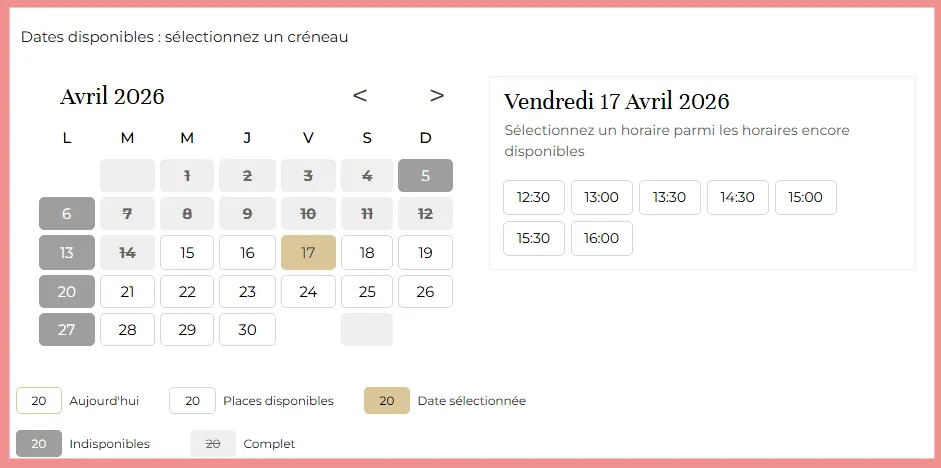
On the official booking site, you'll select whether you're purchasing a standard ticket or already hold a Paris Museum Pass. Then, simply choose your preferred date and time slot.
This is a popular attraction, so tickets sell out quickly. I recommend booking as early as possible to secure your spot!
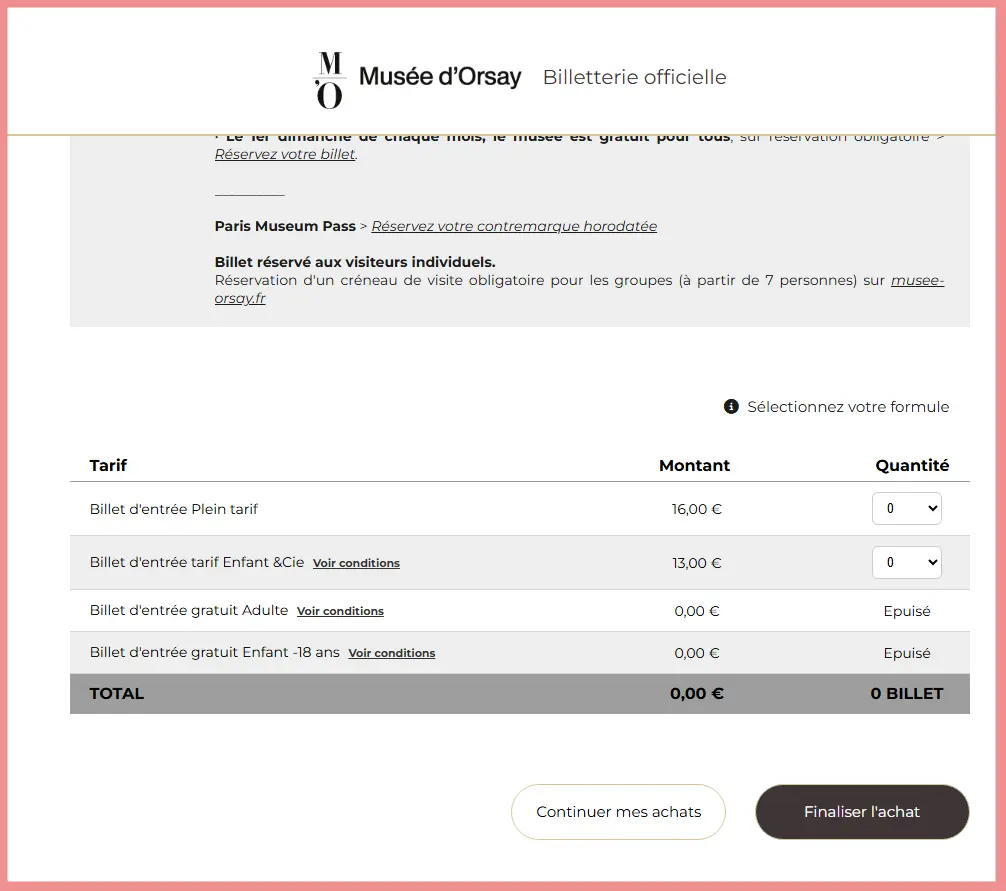
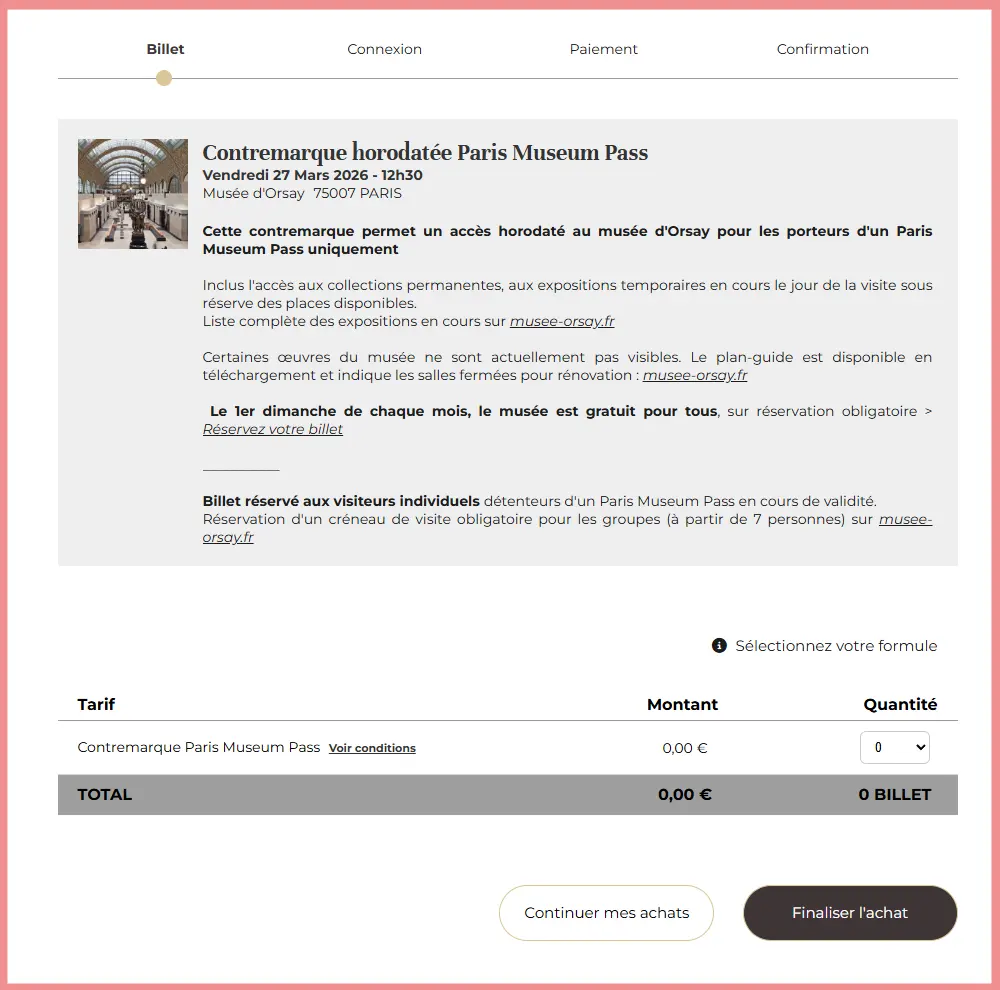
If you're a Paris Museum Pass holder, your reservation will show as 0 Euros, as seen in the image on the right.
Entry
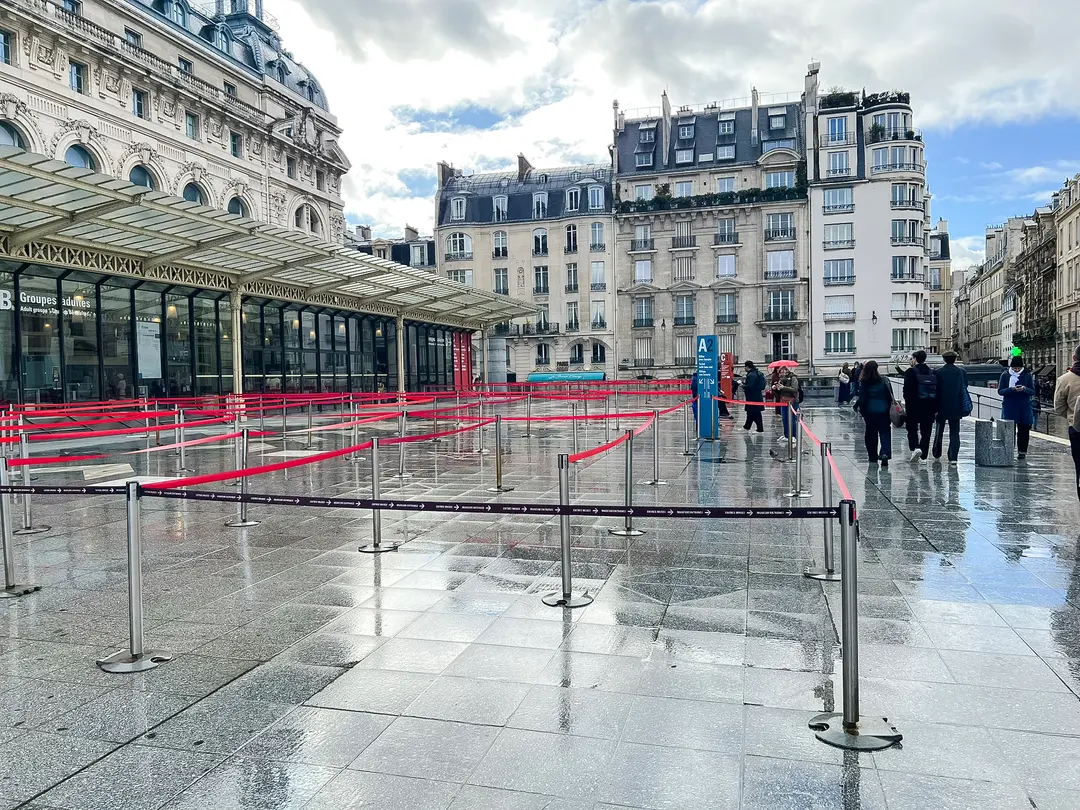
While previously you might have used the C line for fast-track entry with a Museum Pass, the waiting lines have changed due to the ongoing construction.
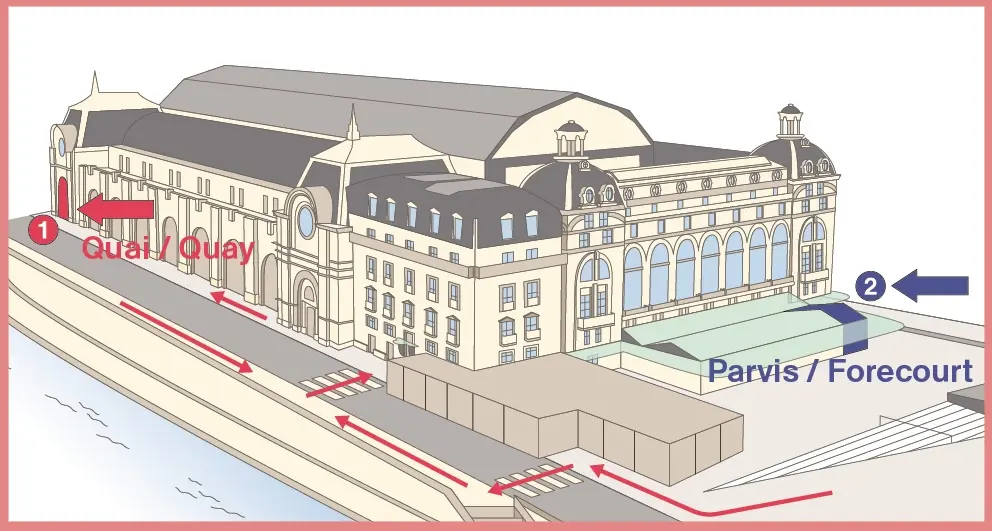
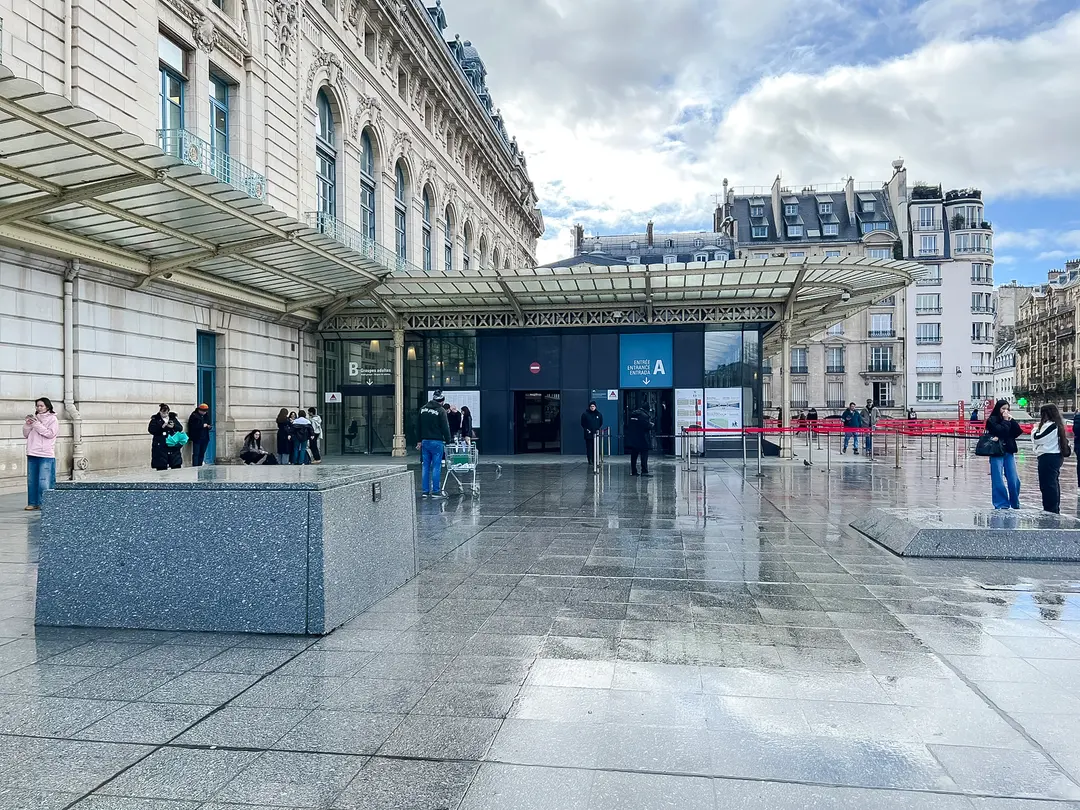
Reserved Entry Line: Entrance 1 - Quay
(Visitors with a Paris Museum Pass with a timed ticket or general timed tickets)
On-site Purchase/No Reservation Line: Parvis du musée – 2
(Visitor with ticket without timeslot)
If you have a reservation, whether with a Museum Pass or a standard timed ticket, head straight to Entrance 1.
Major Works & Recommended Route
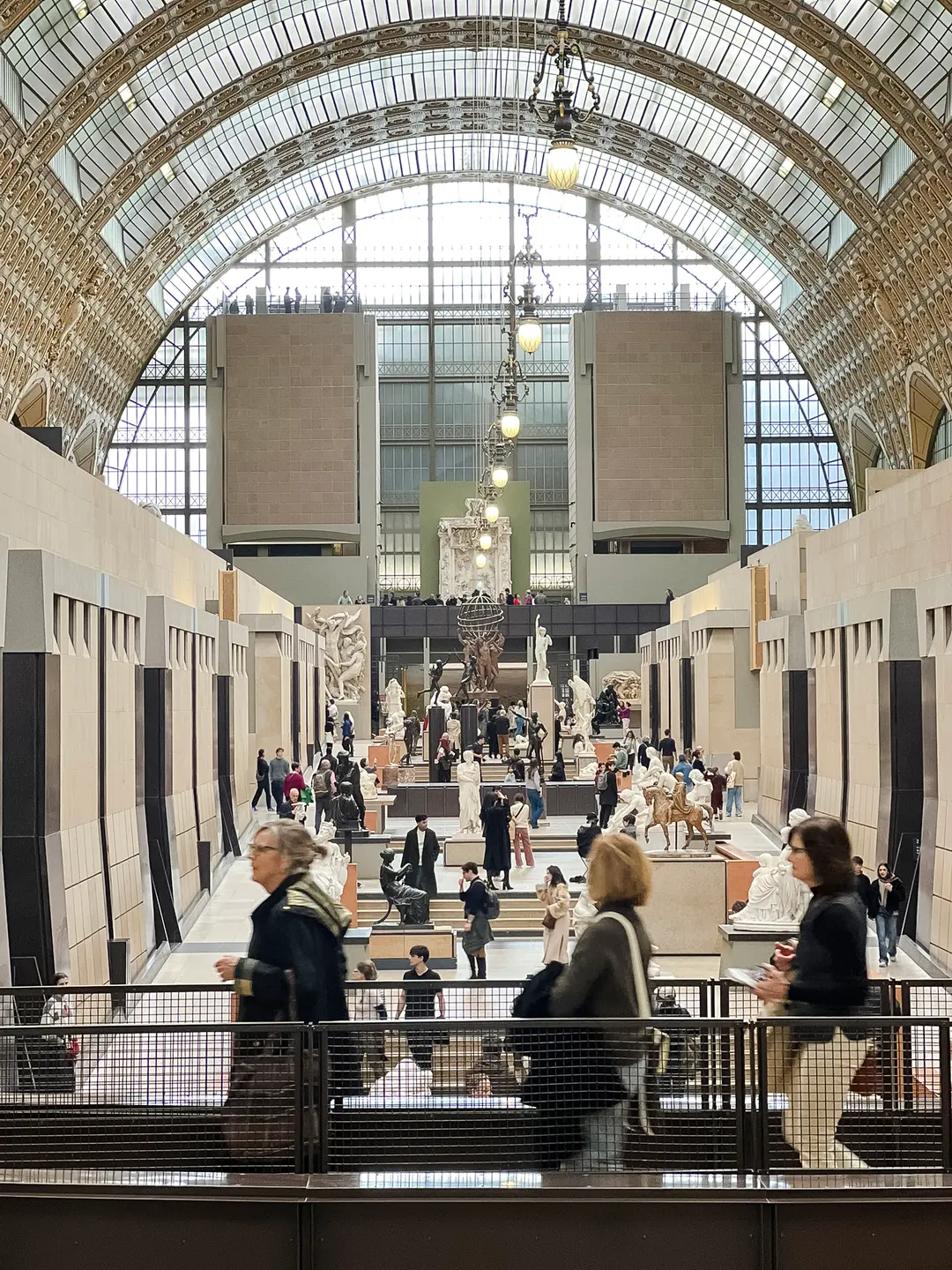
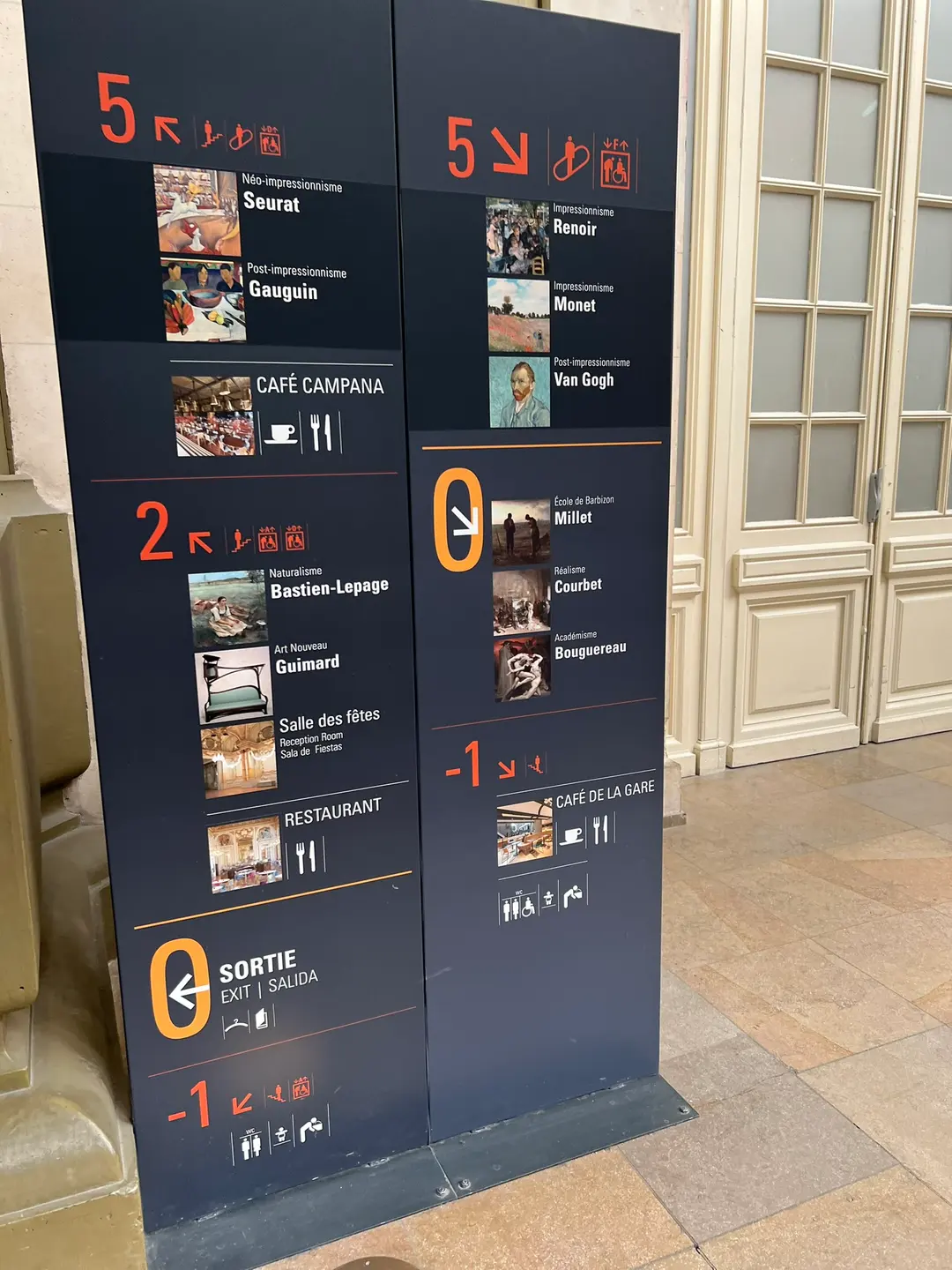
💡 For all those iconic works by Van Gogh and Monet that you've come to see, you'll find them on the 5th floor. I highly recommend heading straight to the 5th floor first to enjoy these masterpieces, then working your way down.
Floor | Key Masterpieces |
5th Floor | ▶️Claude Monet - Woman with a Parasol, Blue Water Lilies, Rouen Cathedral series, Luncheon on the Grass ▶️Van Gogh - Self-Portrait, Starry Night Over the Rhône, Bedroom in Arles ▶️Renoir - Bal du moulin de la Galette ▶️Gauguin - Tahitian Women ▶️Manet - Luncheon on the Grass ▶️Edgar Degas - The Ballet Class |
2nd Floor | ▶️Rodin - The Gates of Hell |
Ground Floor | ▶️Millet - The Gleaners, The Angelus ▶️Manet - The Fifer, Olympia |
Each floor is clearly marked with room numbers, so you won't get lost or confused about where to find specific artworks.
With so many incredible pieces, you'll need at least 3 hours to explore. If you want a deeper dive into the key works, I highly recommend joining a guided tour!
View Musée d'Orsay Guided Tours
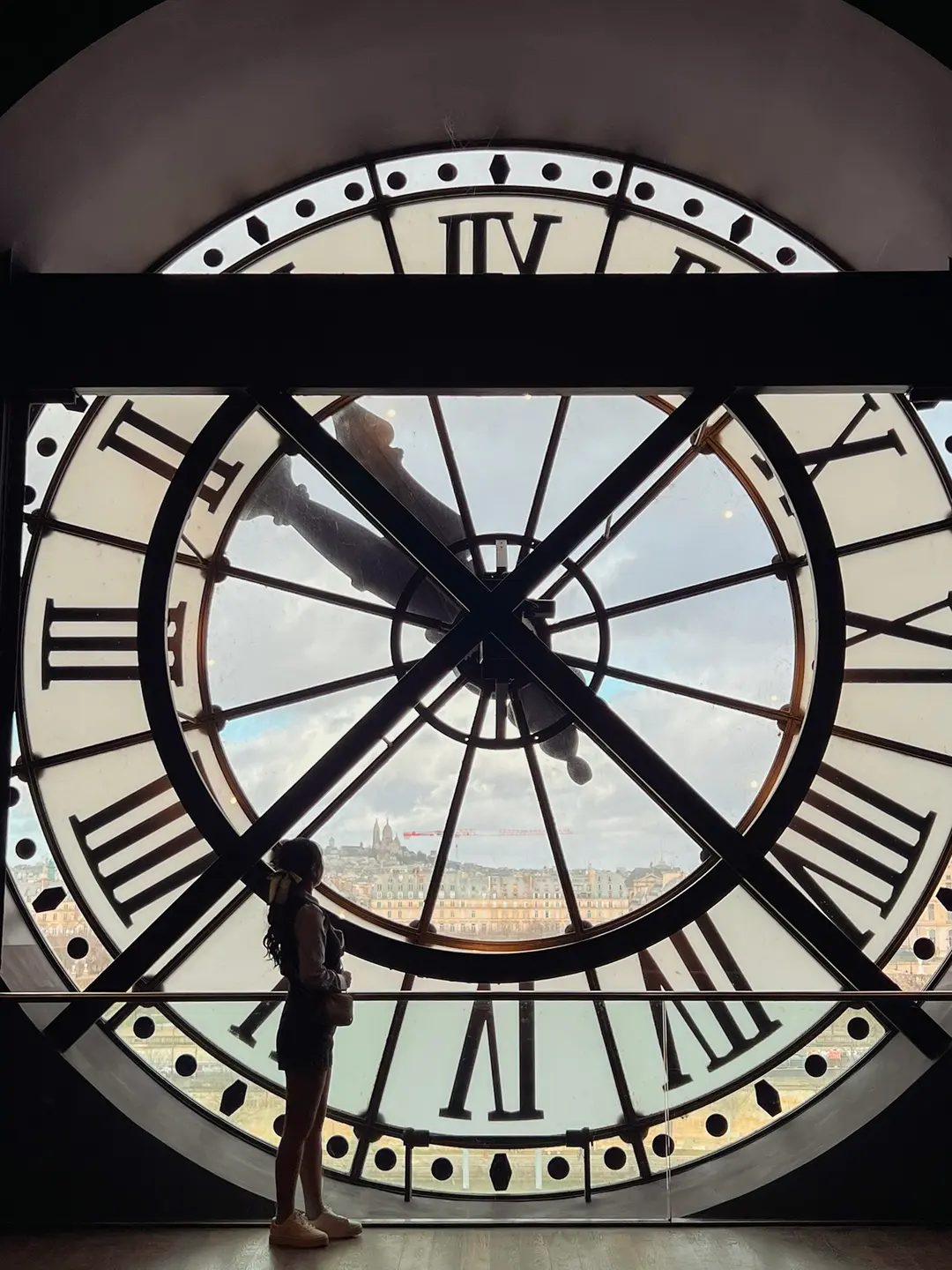
Before you dive into the art on the 5th floor, make sure to stop at the iconic clock tower photo zone for a memorable shot! The line might look long, but it moves surprisingly fast.
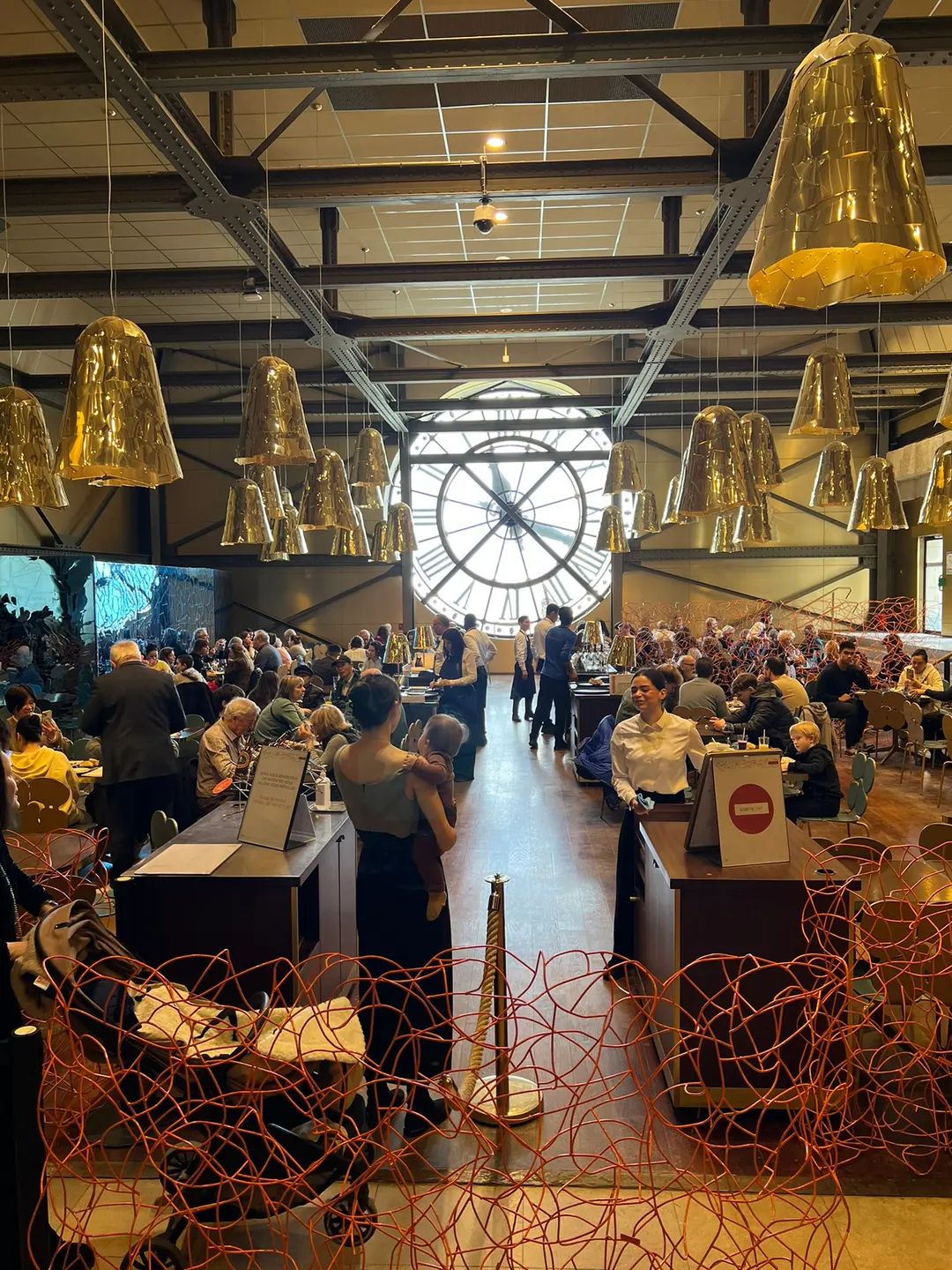
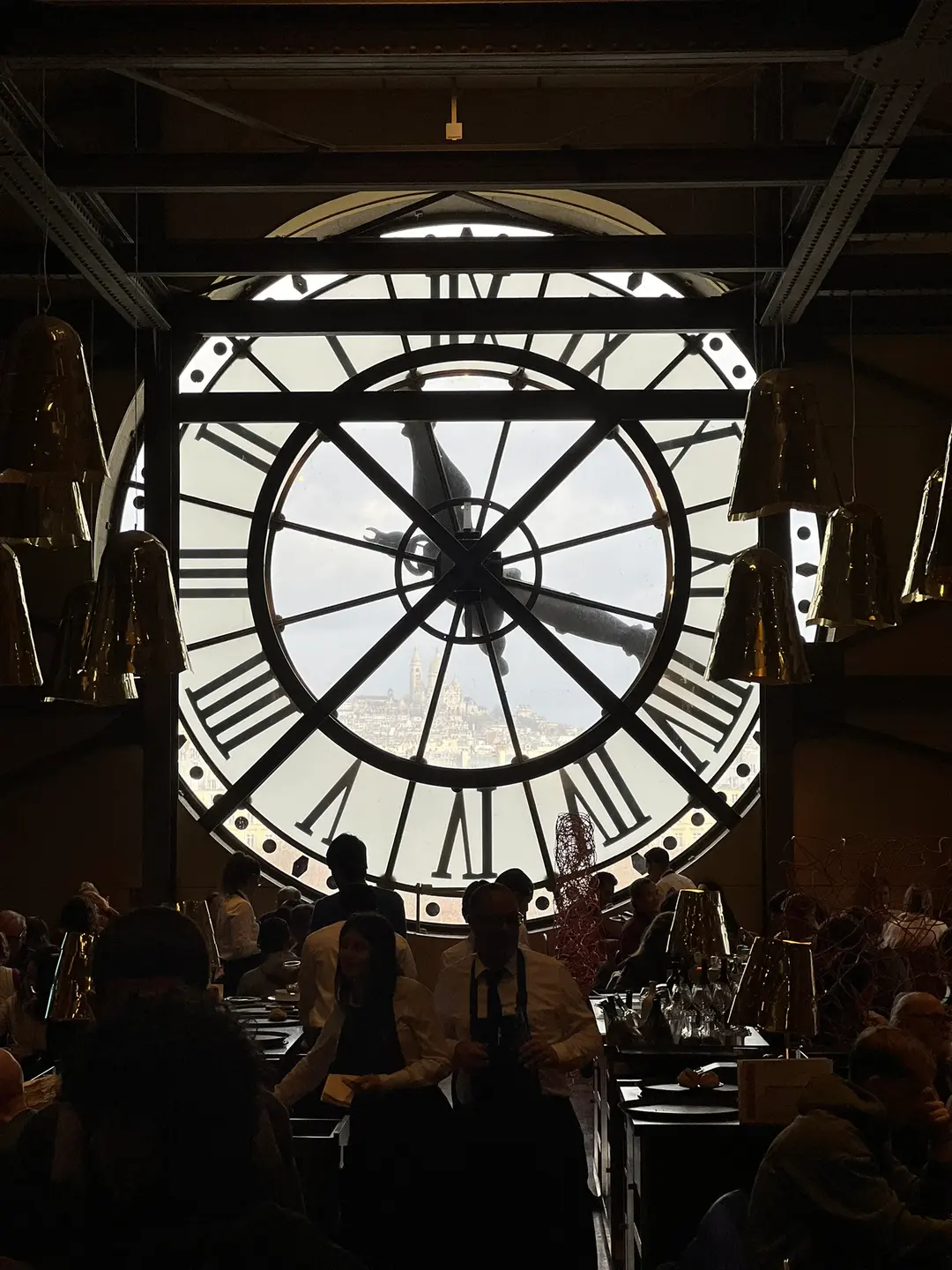
While there's also a clock tower in the restaurant area, the main photo zone queue moves so efficiently that you likely won't need to seek out the other one.
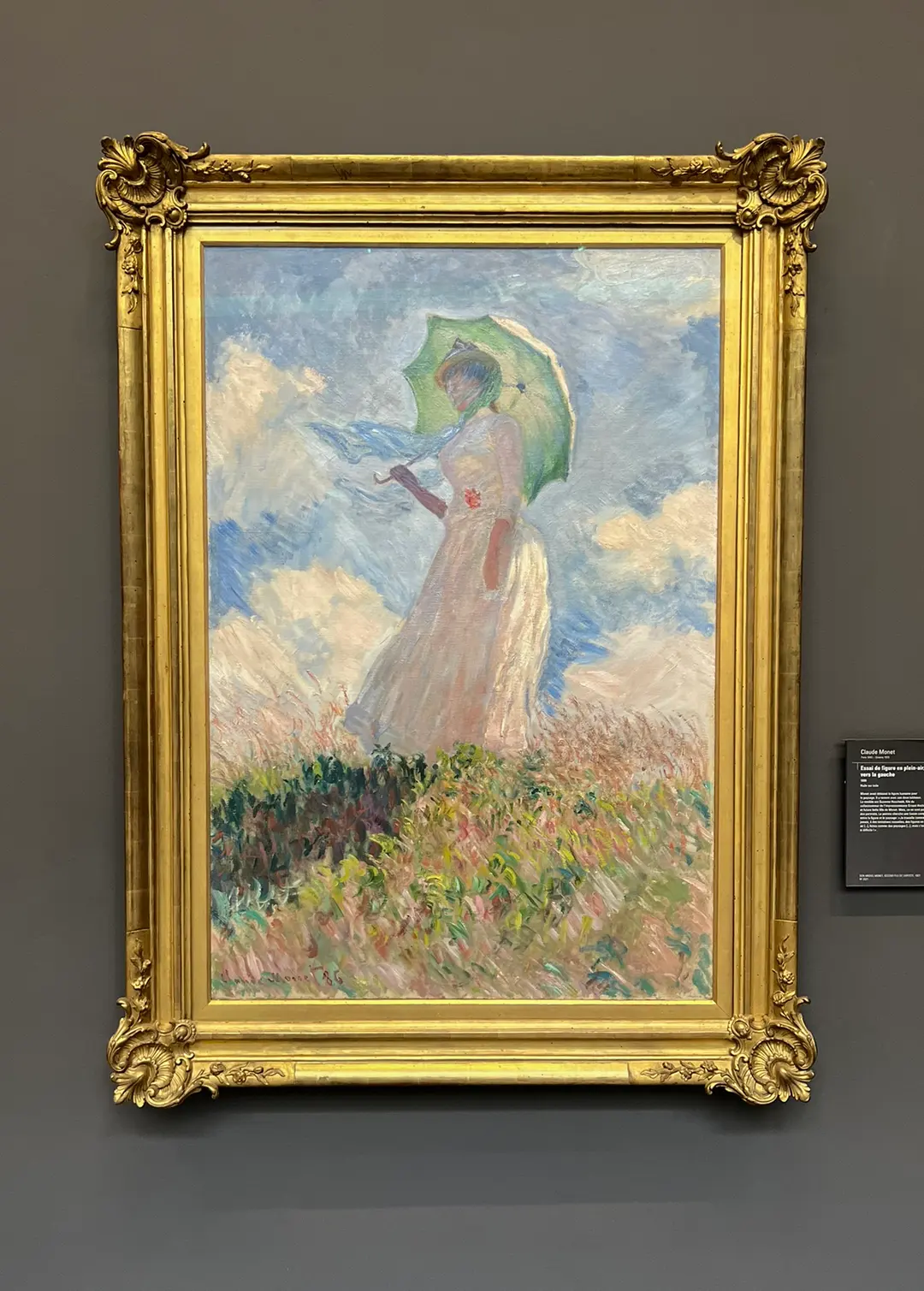
<Claude Monet - Woman with a Parasol>
This piece beautifully captures Monet's distinctive brushwork and style. It radiates warmth and vitality, with pastel tones that are simply exquisite. It's truly one of my favorite Monet paintings.
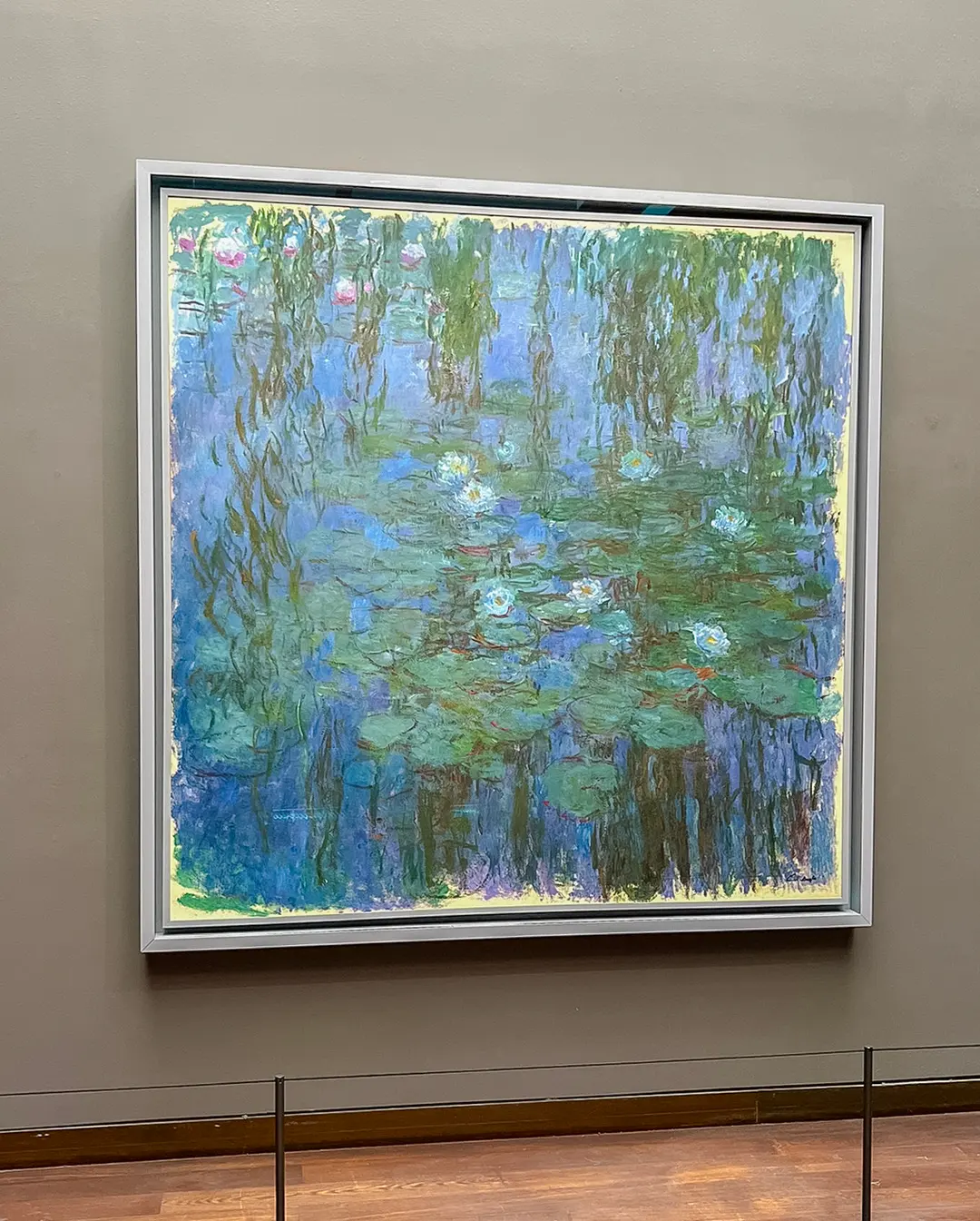
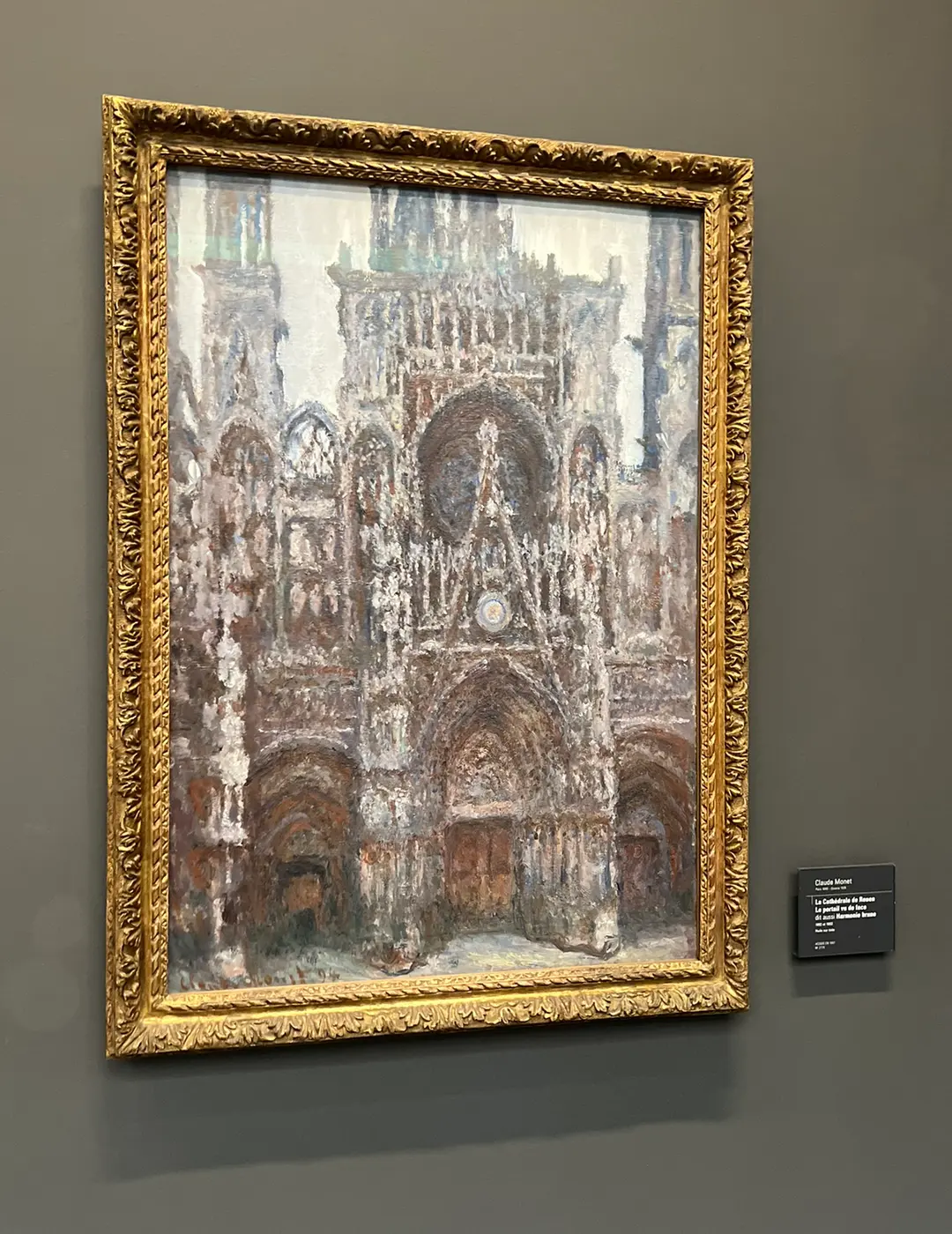
<Claude Monet - Blue Water Lilies / Rouen Cathedral Series>
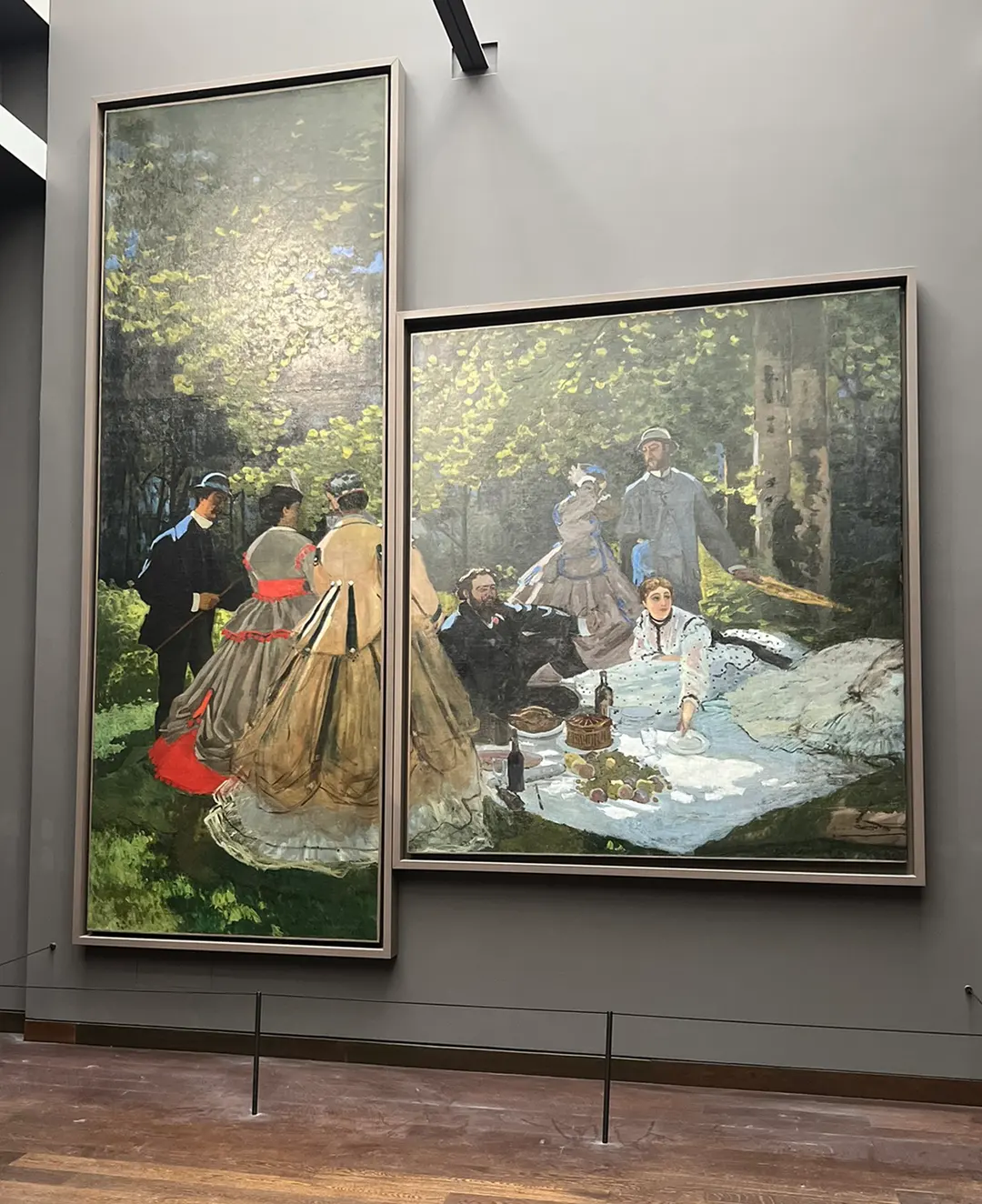
<Claude Monet - Luncheon on the Grass>
This monumental work, painted by Monet in his twenties, was famously inspired by Manet's painting of the same name.
Originally over 20 feet wide, the canvas was entrusted to his landlord as payment for back rent. Unfortunately, due to poor storage, the painting suffered significant damage and began to rot.
Eventually, the undamaged sections were cut out, and today, two fragments of this grand work are on display.
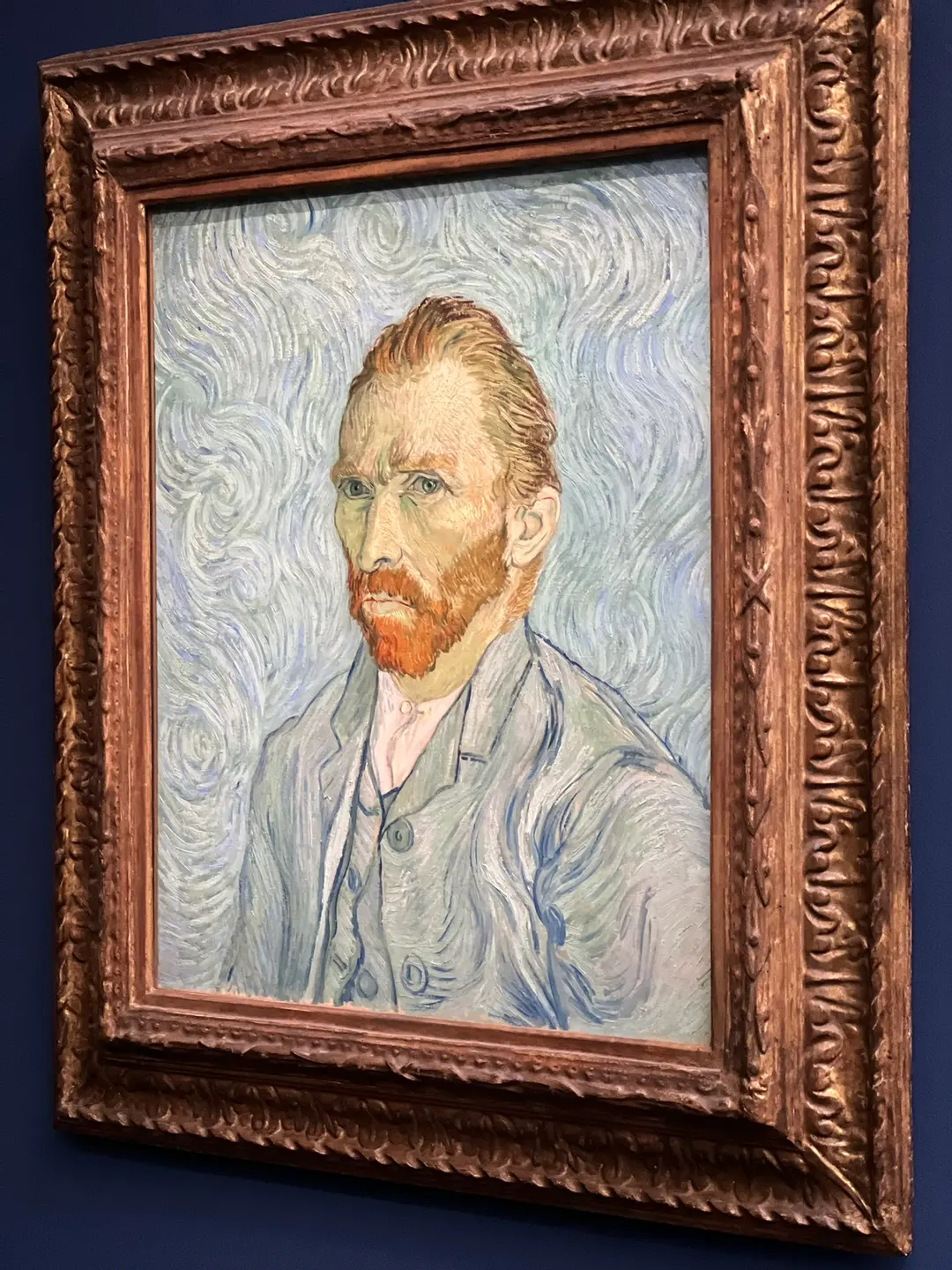
<Vincent van Gogh - Self-Portrait>
This self-portrait was painted during Van Gogh's time in a psychiatric hospital, after he had experienced severe seizures and was beginning to find a sense of calm.
He created numerous self-portraits, but each time I see this one, it evokes the poignant story of his life, leaving me with a complex mix of emotions.
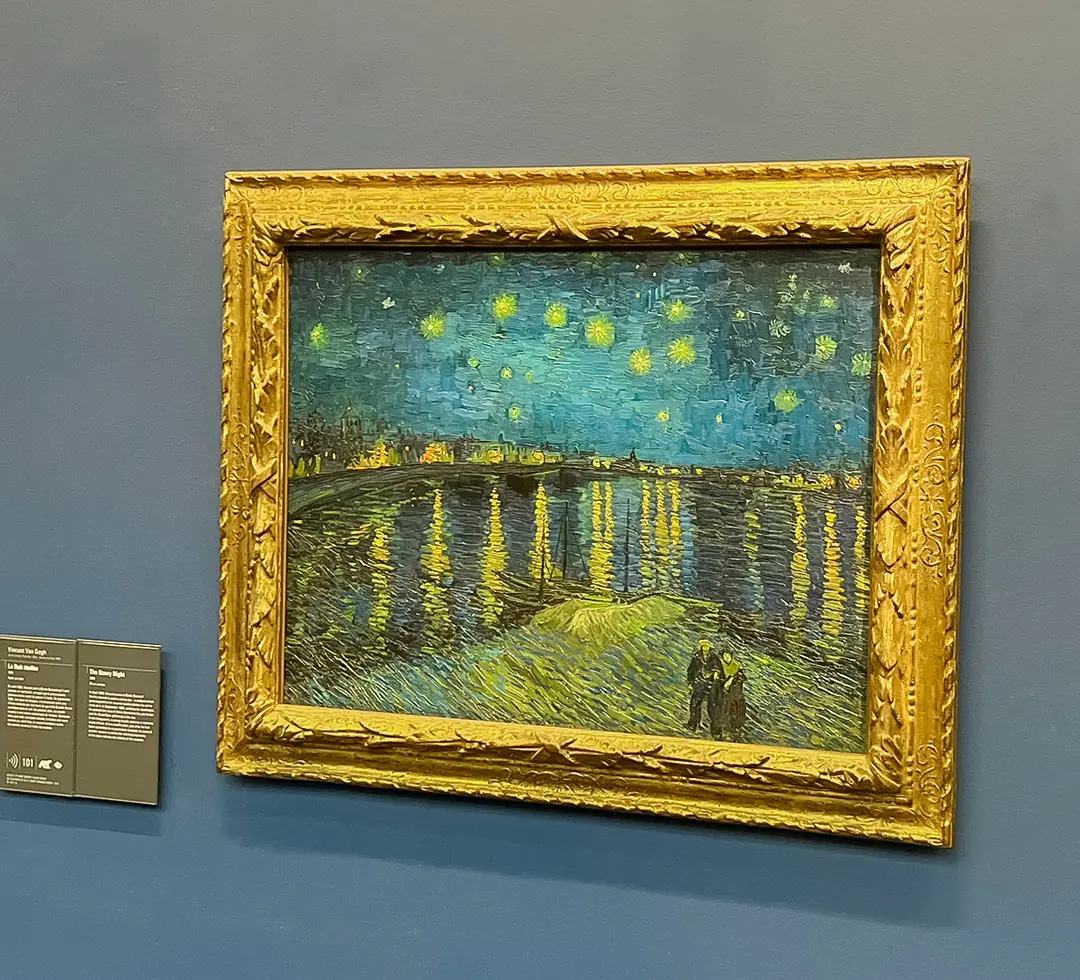
<Vincent van Gogh - Starry Night Over the Rhône>
This painting captures the enchanting night sky over Arles in the South of France. The shimmering yellow lights reflecting on the water are absolutely stunning.
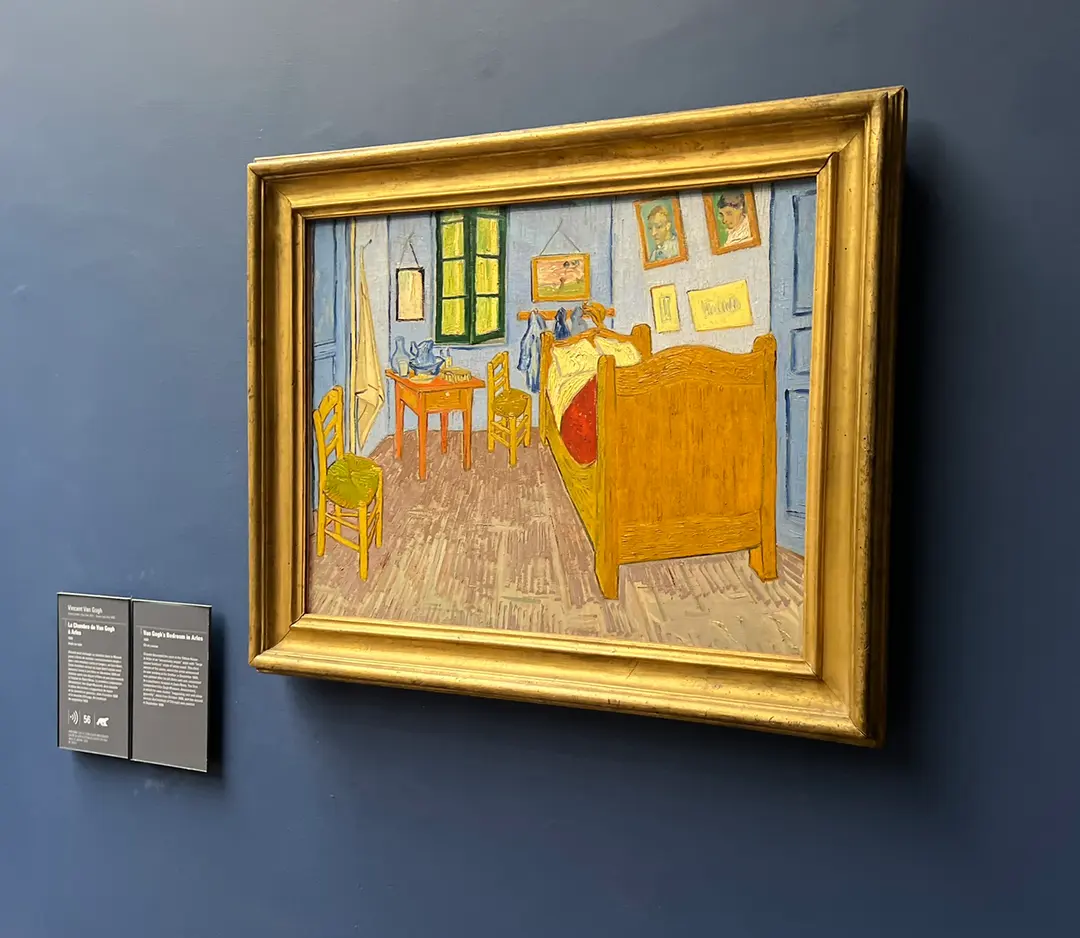
<Vincent van Gogh - Bedroom in Arles>
This painting depicts Van Gogh's bedroom during his stay in Arles.
What makes this work famous is Van Gogh's deliberate distortion of perspective, which creates a slightly unsettling and unstable sense of space.
Notice how the bed and chairs aren't perfectly aligned, and the walls and floor appear subtly tilted.
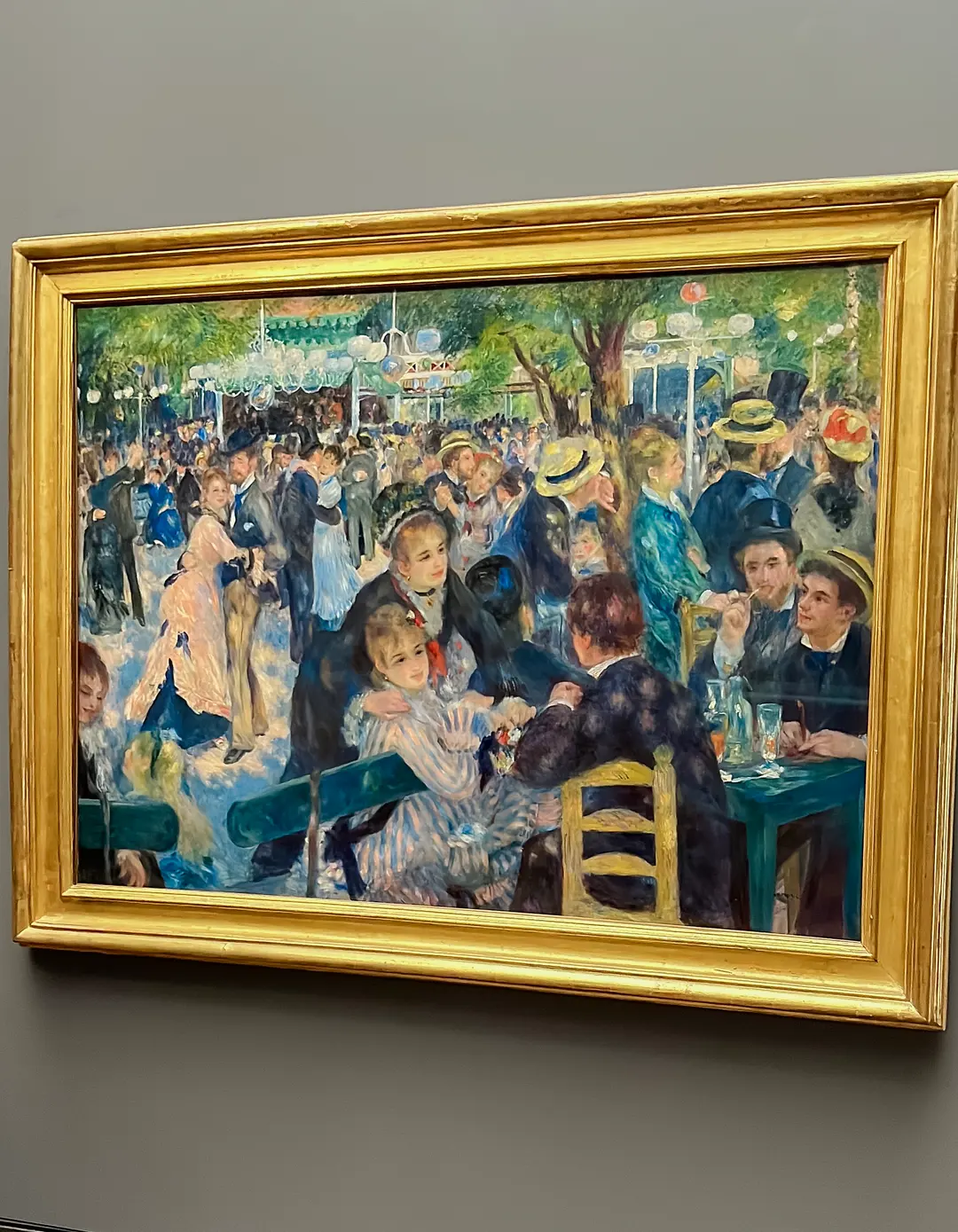
<Pierre-Auguste Renoir - Bal du moulin de la Galette>
This painting captures an outdoor dance at the Moulin de la Galette in Montmartre. Despite the large number of figures, the scene never feels cluttered or chaotic, which is a testament to Renoir's mastery.
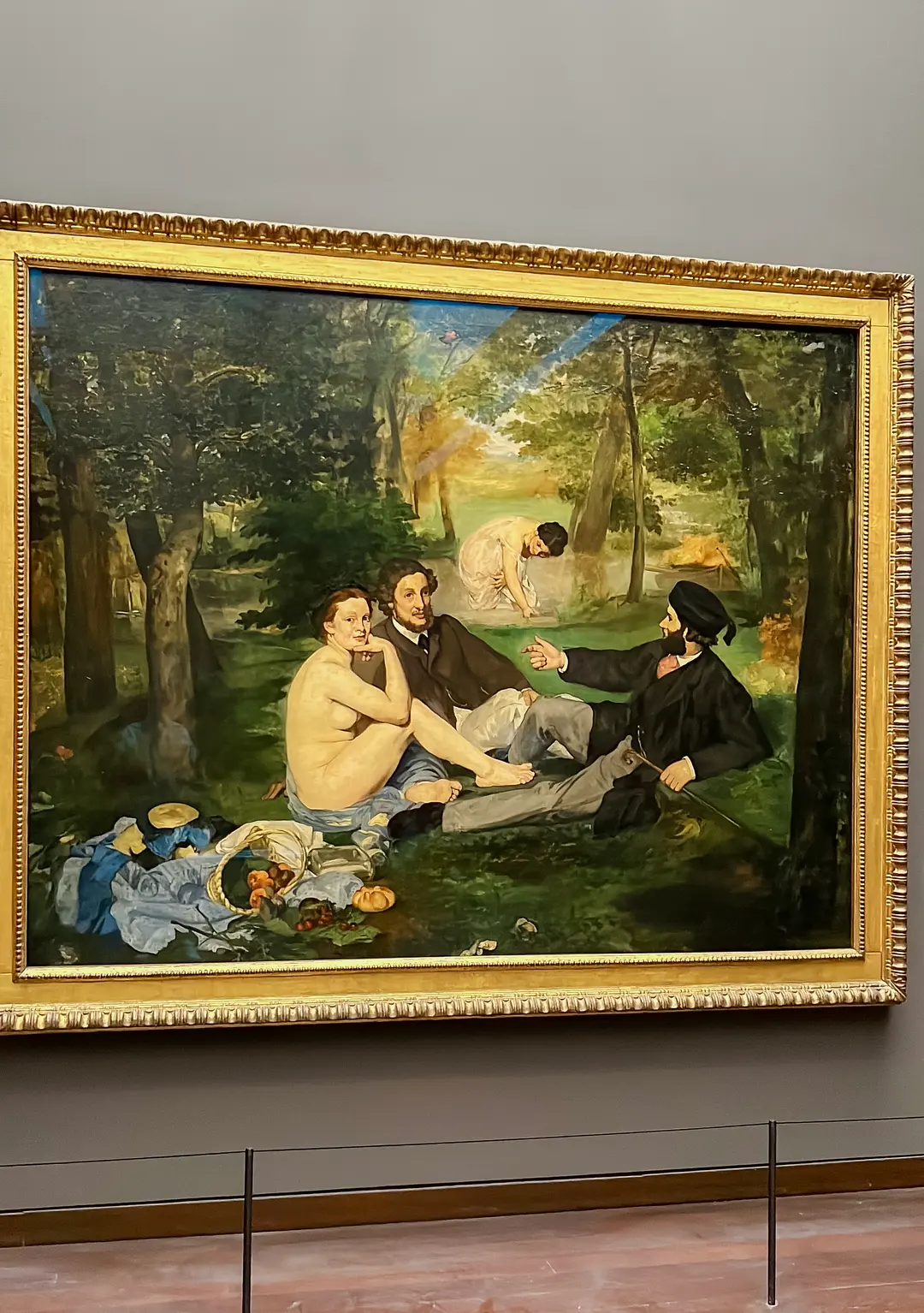
<Édouard Manet - Luncheon on the Grass>
One of the most scandalous works in art history!
By depicting a nude contemporary woman alongside fully dressed gentlemen, rather than idealized mythological goddesses, Manet sent shockwaves through Parisian society at the time.
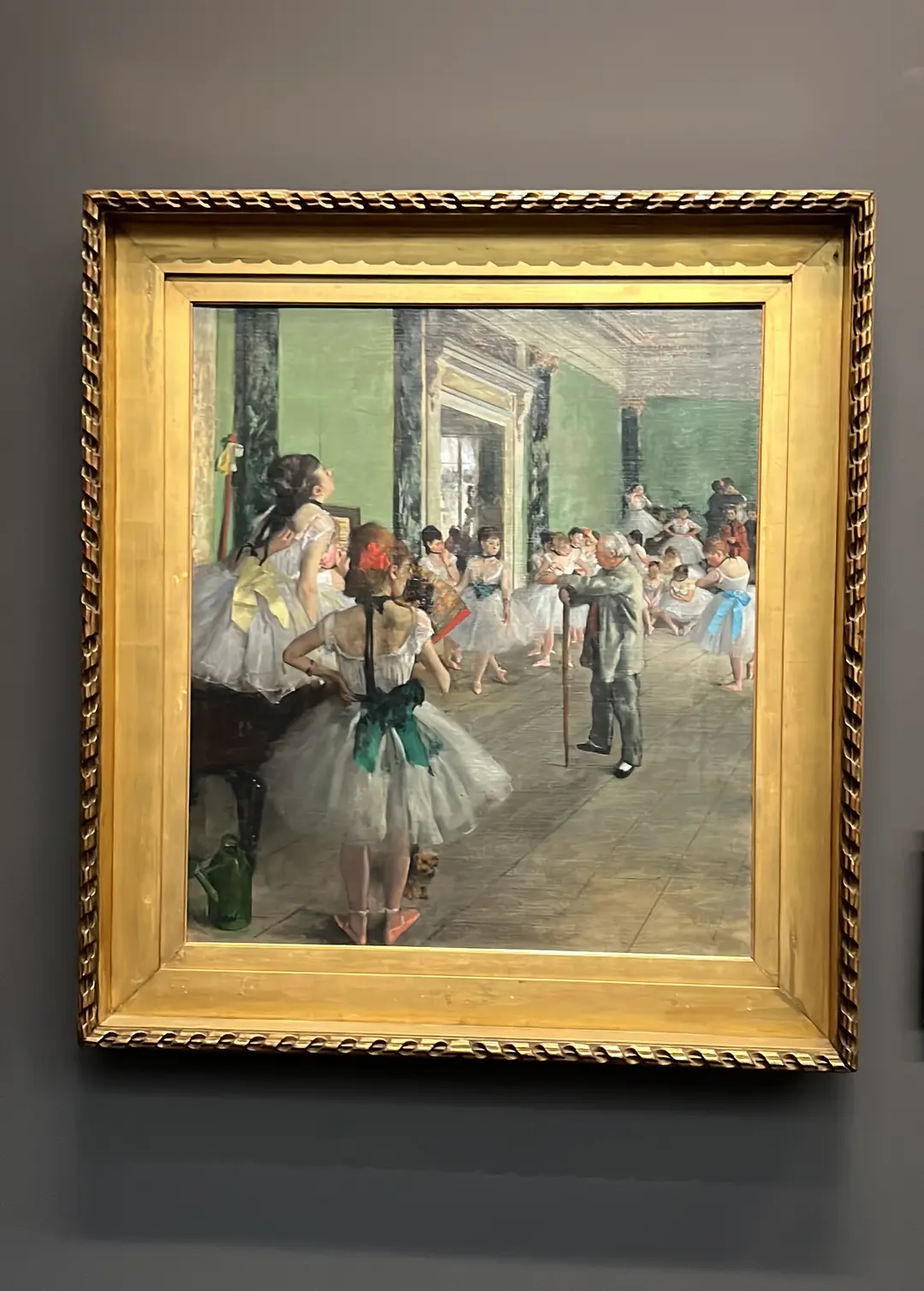
<Edgar Degas - The Ballet Class>
Degas was fascinated not just by the ballet performance itself, but by the practice and preparation in the studio, which he depicted extensively.
Follow the gaze of the central teacher (the figure with the cane) and the young dancers, and the painting will reveal itself with even greater depth.
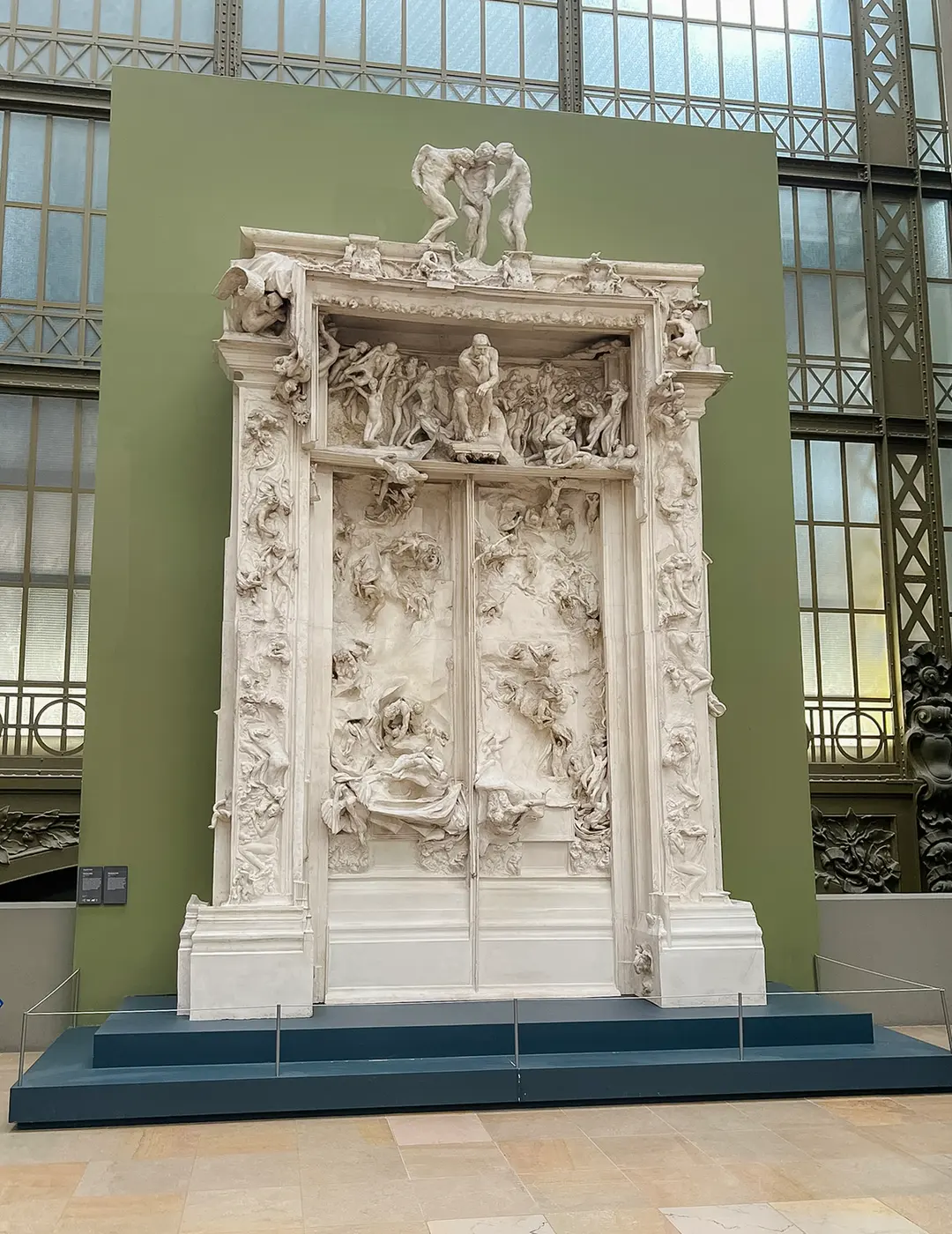
<Auguste Rodin - The Gates of Hell>
This sculpture is so monumental that you'll spot it immediately upon arriving on the 2nd floor.
A key highlight is finding the iconic


