

Park Tae-joon Memorial Hall Gijang: Busan's Indoor Family Fun
Uncover the hidden gem of Park Tae-joon Memorial Hall in Gijang, Busan! Its stunning courtyard and engaging exhibits make it an ideal indoor spot for families to explore Korean history.
Park Tae-joon Memorial Hall
Busan Gijang: An Indoor Must-Visit Spot for Families
Featuring an Impressive Courtyard and Special Exhibition
Text & Photos © Mini May
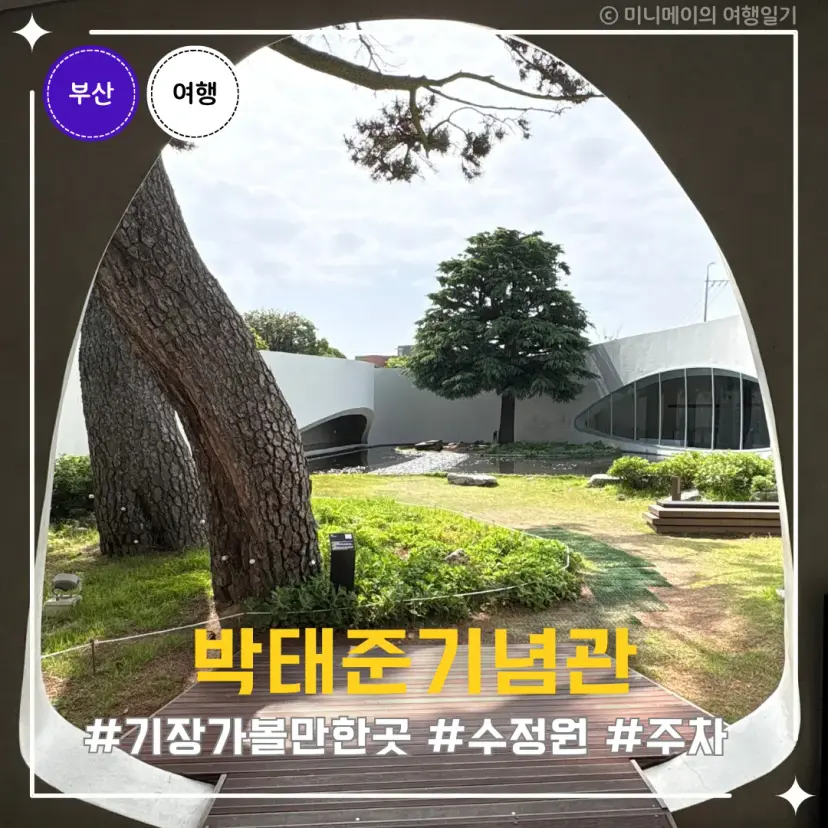
I recently visited the Park Tae-joon Memorial Hall located in Gijang, Busan.
We didn't plan our visit in advance; we stumbled upon it by chance on our way to Imnang Beach. But what a find! The stylish space and exhibitions were so impressive, and it's perfect for capturing some amazing photos. That's why I highly recommend it as an indoor spot to visit with kids.
Today, I'll share everything about the Cheongam Park Tae-joon Memorial Hall, from its neat and well-organized exhibition spaces and serene Sujeongwon (Crystal Garden) to the fascinating modern and contemporary Korean history content that's so educational for kids.
 Imnang Beach Car Camping Parking: My Firsthand Review on Cooking Regulations
1. Park Tae-joon Memorial Hall: Essential Info & Parking
📍 Park Tae-joon Memorial Hall
1 Imnanghaeangil, Jangan-eup, Gijang-gun, Busan
Category | Details |
Venue | Park Tae-joon Memorial Hall |
Address | 1 Imnanghaeangil, Jangan-eup, Gijang-gun, Busan |
Admission | Free |
Operating Hours | 09:00 - 18:00 (Last entry 17:30) |
Closed | Every Monday, January 1st, Lunar New Year's Day, Chuseok (Korean Thanksgiving Day) (If Monday is a public holiday, it closes the following day) |
Inquiries | 051-709-3975 |
Free parking is available in the dedicated parking lot next to the exhibition hall.
There's space for about 10 cars.
2. The Exhibition Hall's Exterior Harmonizes with the Surroundings
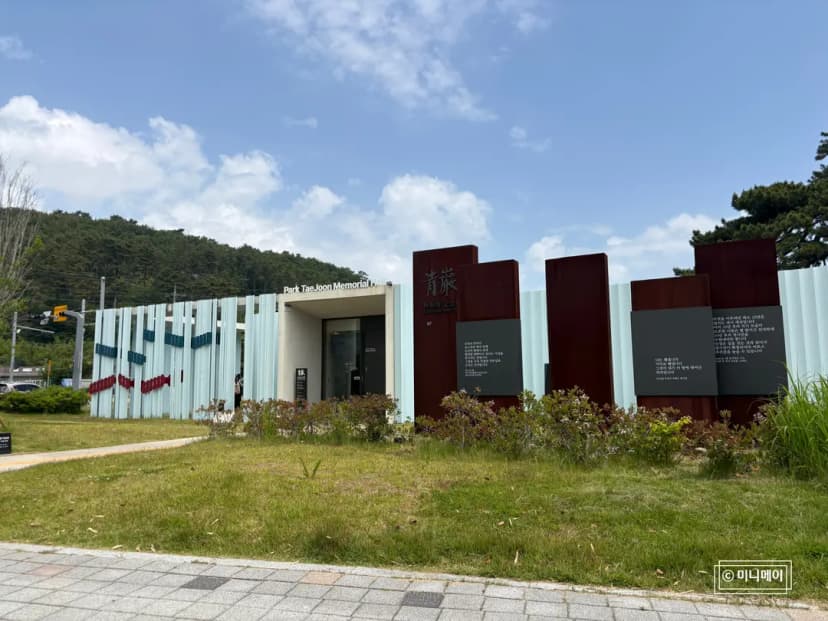
Whenever I travel and spot an exhibition hall, I usually like to check it out.
Lately, I've noticed some newly built exhibition halls that are massive structures, seemingly oblivious to their surroundings, and often feature rather sparse exhibits inside.
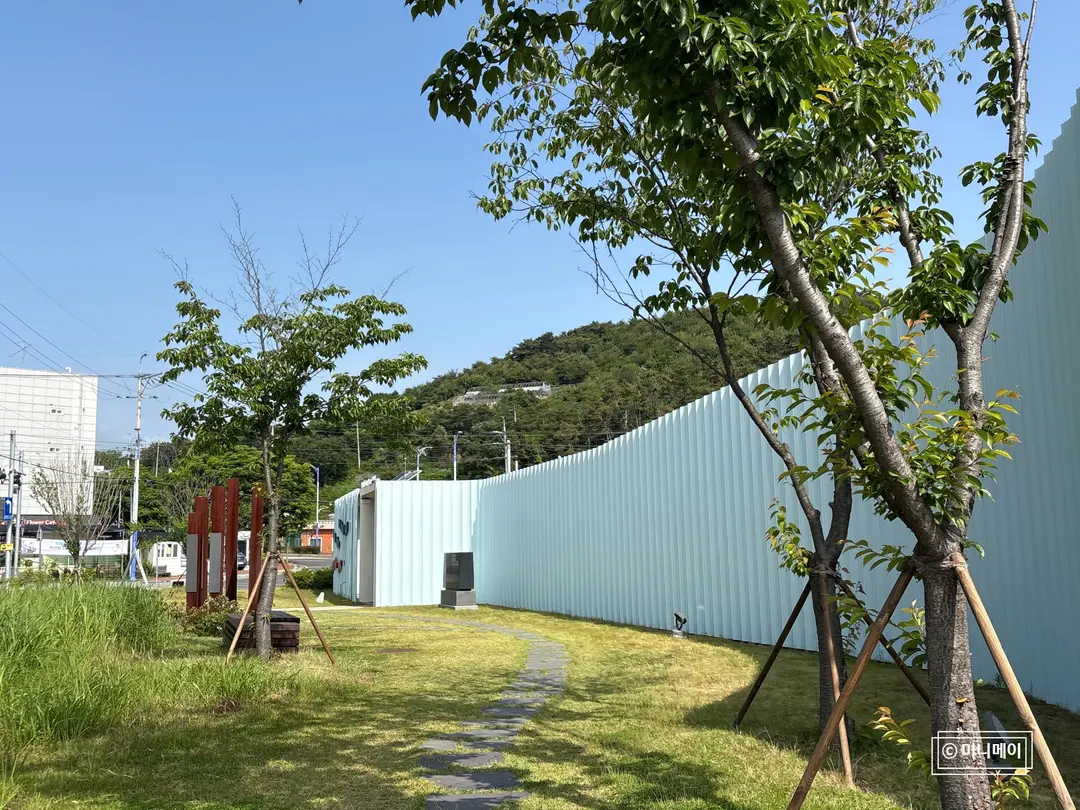
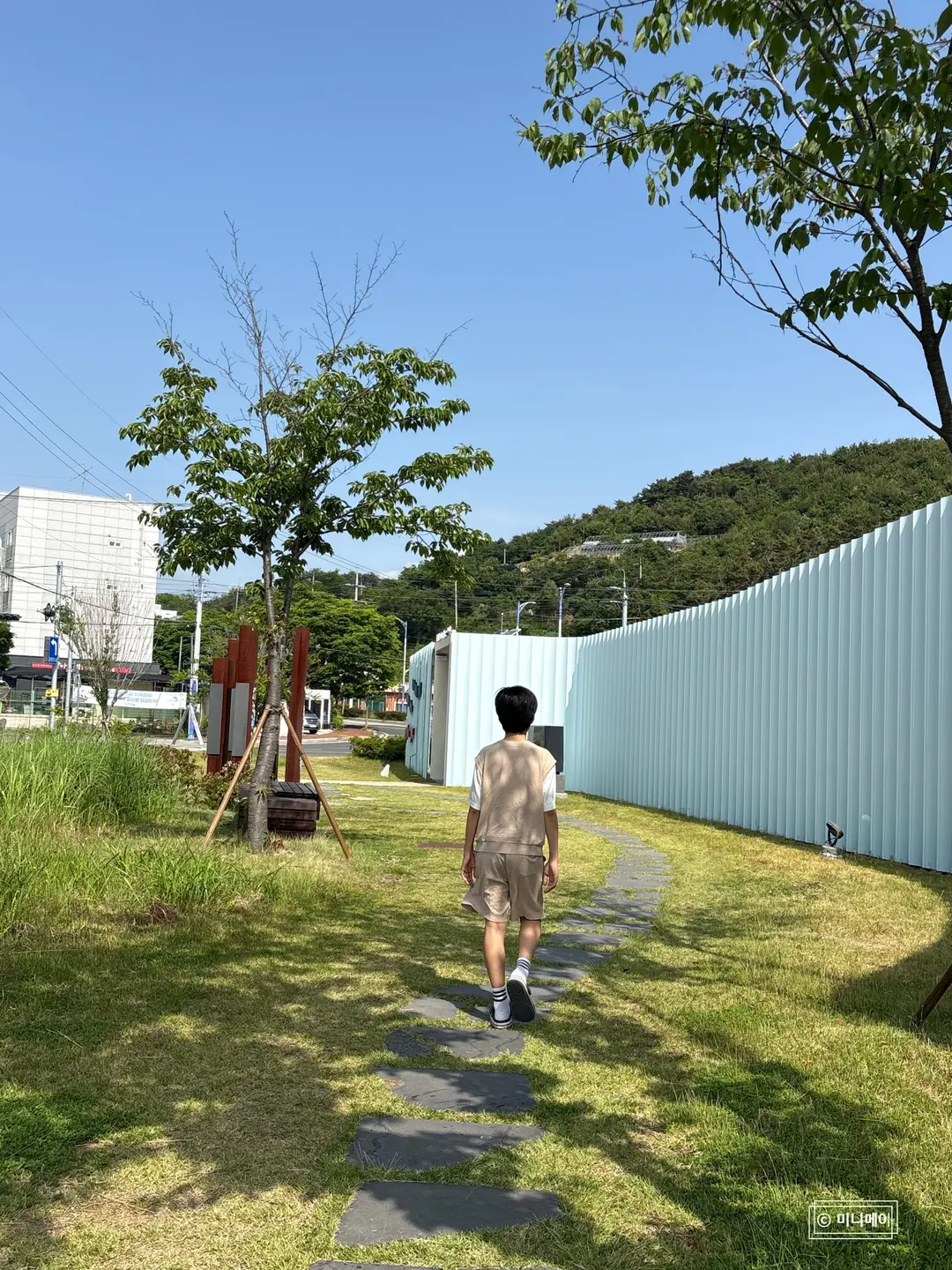
However, the Park Tae-joon Memorial Hall in Gijang, Busan, completely avoids that sense of disconnect. It's a beautiful, single-story exhibition hall that blends seamlessly with the scenery of Imnang Village.
The exterior walls, made of aluminum, reportedly incorporate the sky-blue color of 'Imnang' Village, which means 'sparkling silver-blue.'
The area around the exhibition hall features neatly maintained lawns and benches crafted from recycled POSCO steel slabs, making it a wonderful place to stroll and relax.
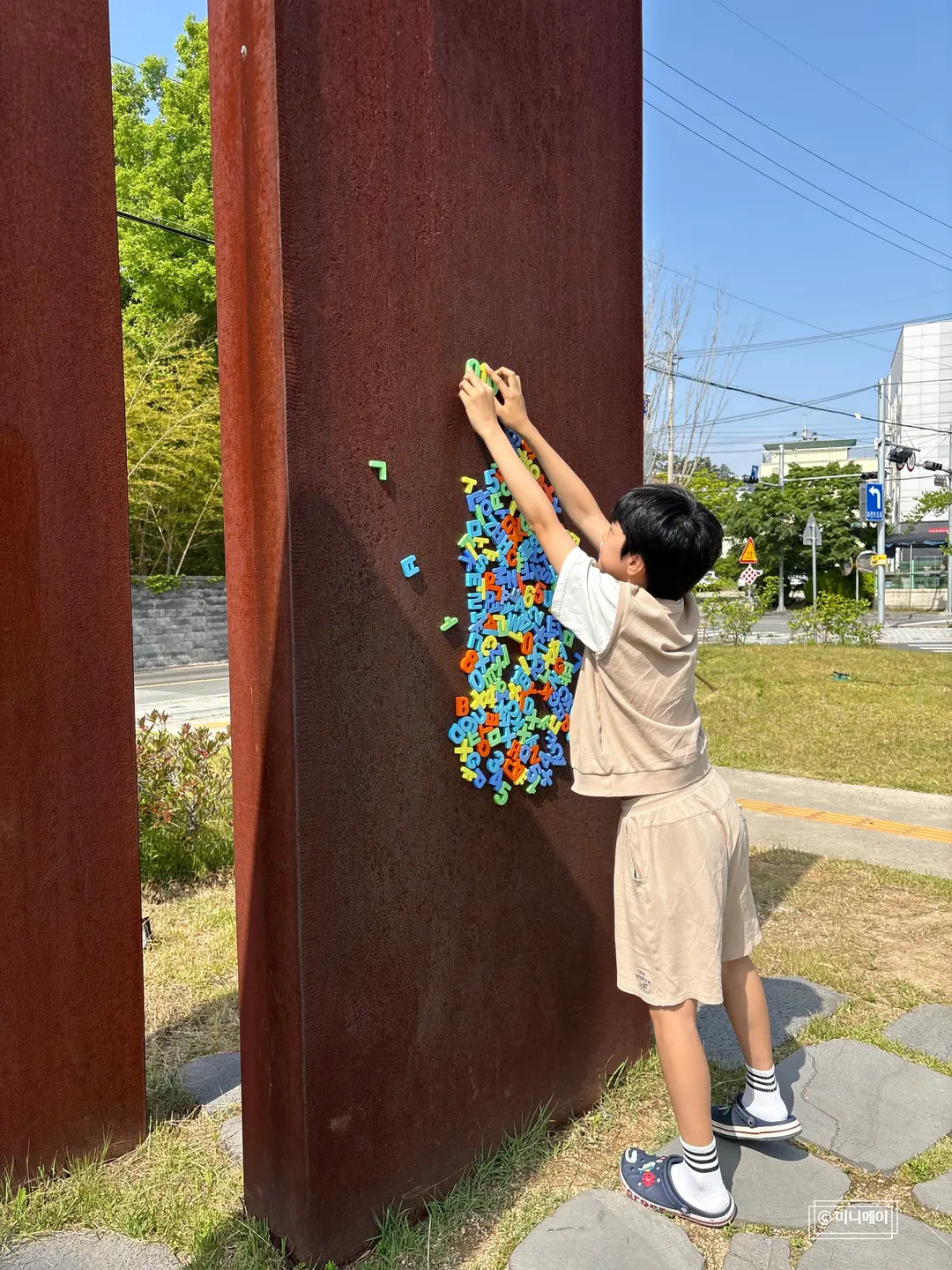
As this is a memorial hall dedicated to Cheongam, known as Korea's 'King of Steel,' you'll find a large steel sculpture made from POSCO steel slabs outside.
It features magnets with Hangeul, English letters, and numbers, so we spent some time playfully arranging words.
3. Inside the Park Tae-joon Memorial Hall: Exhibition Spaces and the Beautiful Sujeongwon Courtyard
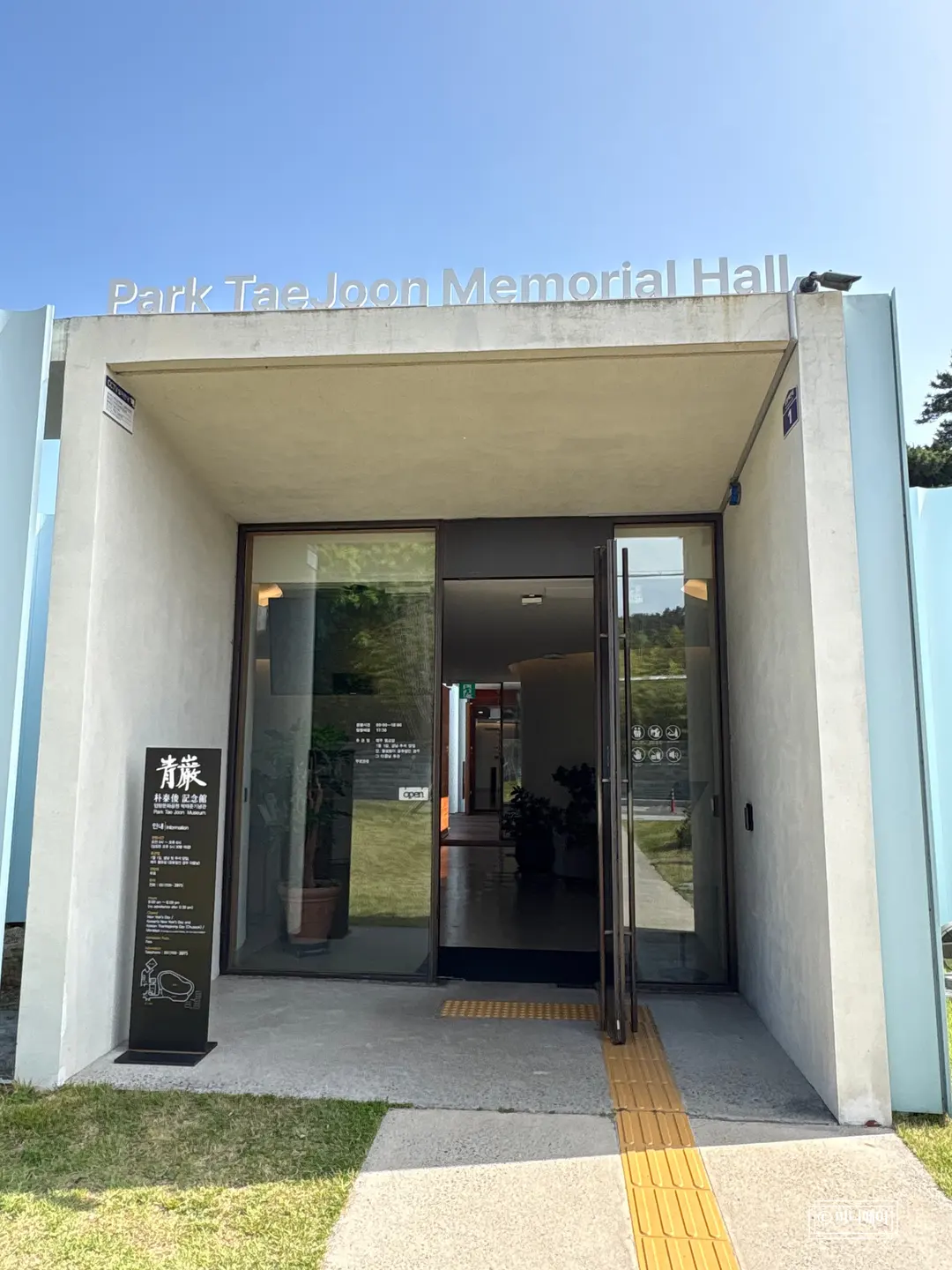
As I stood at the entrance, a cool breeze and a pleasant, subtle scent enveloped me, creating a feeling of being disconnected from the outside world.
Upon entering, if you go left, you'll find a small library and seminar rooms. Head right, and you'll reach the exhibition spaces and the central courtyard.

In front of the information desk, you'll find leaflets for the memorial hall and special exhibitions, as well as tourist information leaflets for Gijang, Busan.
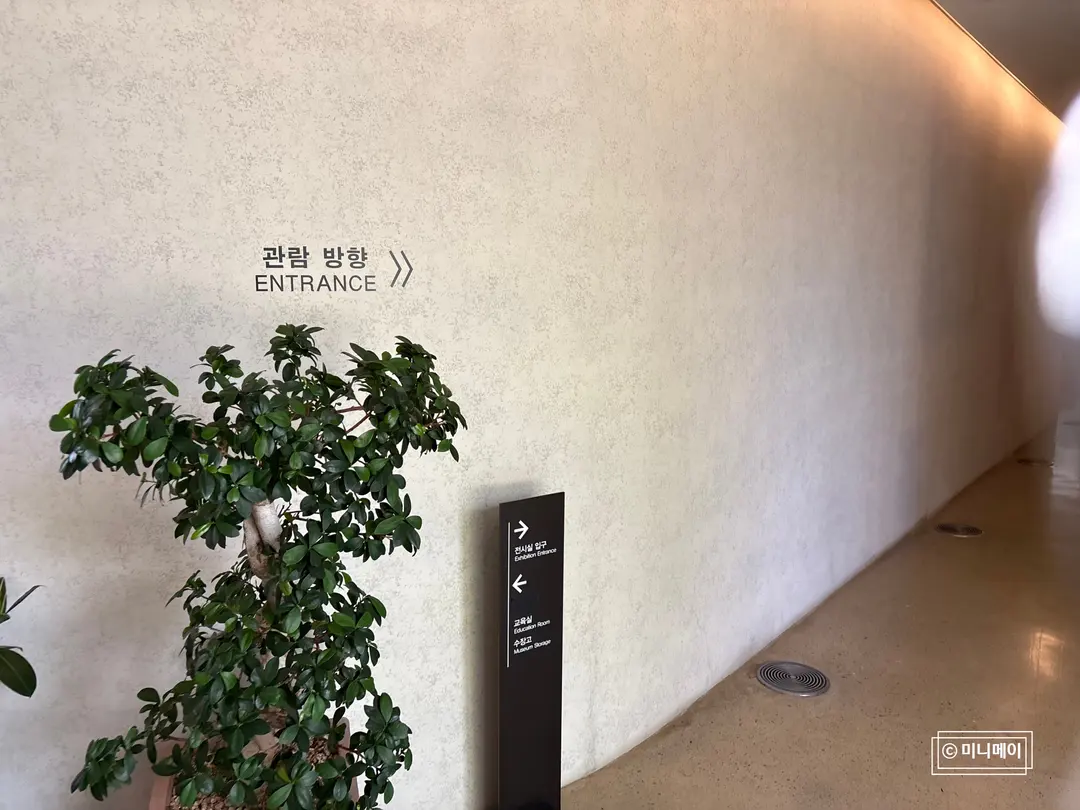
To explore the exhibition hall first, I turned right, with my back to the entrance.
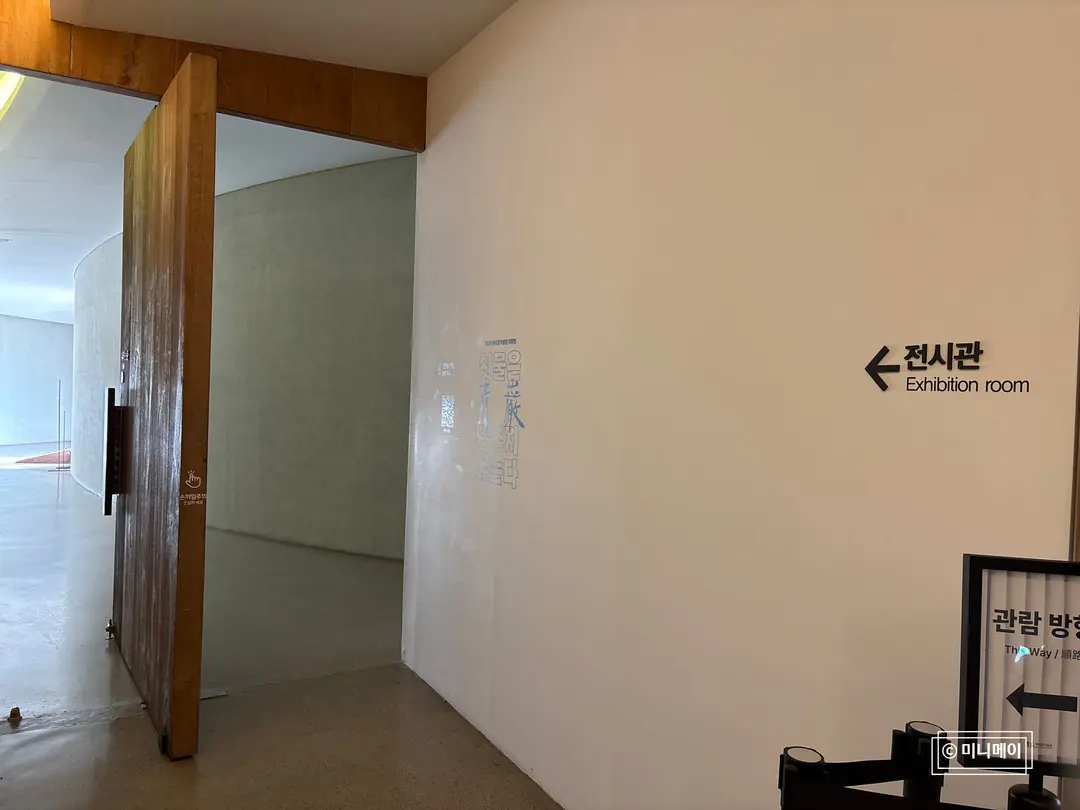

This is the suggested route: first, visit Sujeongwon, then proceed to the exhibition hall.
We've previously visited the POSCO Promotion Center and Memorial Hall in Pohang, which are entirely focused on POSCO and the steel industry, with many exhibits crafted from steel.
The Park Tae-joon Memorial Hall, located next to Cheongam Park Tae-joon's birthplace in Imnang Village, Gijang, Busan, felt comfortable to stay in, with warmer and more sophisticated colors and materials.
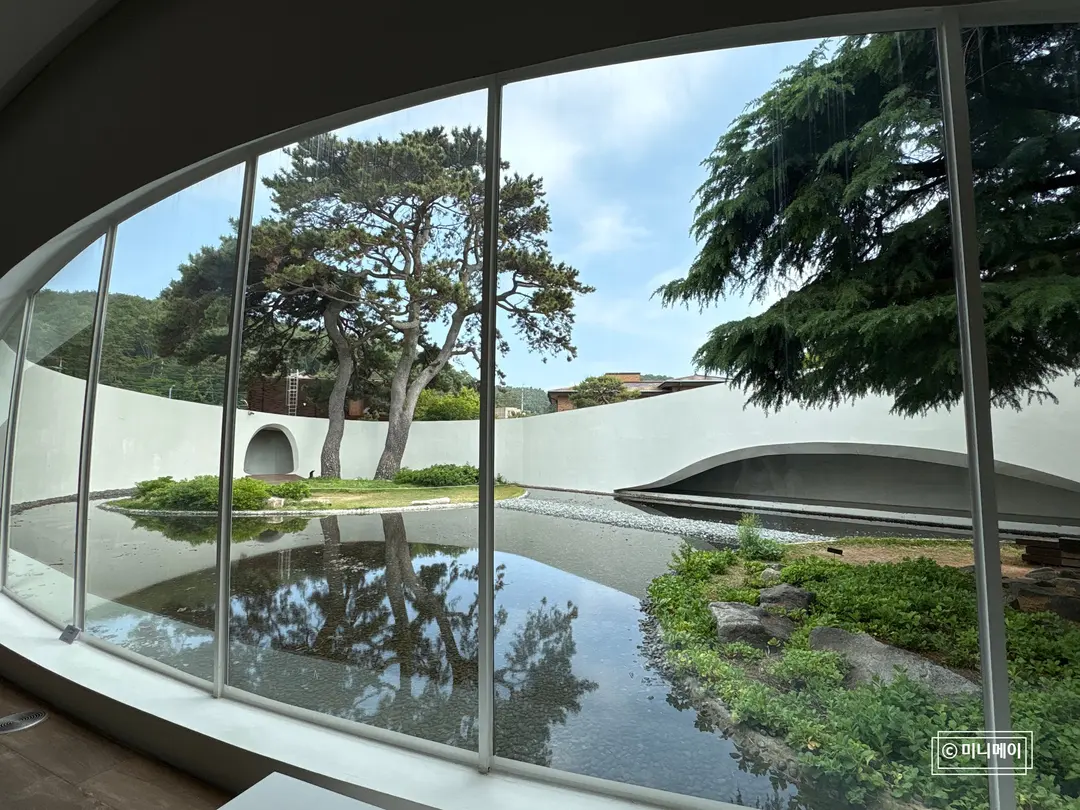
A courtyard Sujeongwon Garden completed with respect and coexistence with Imnang Village
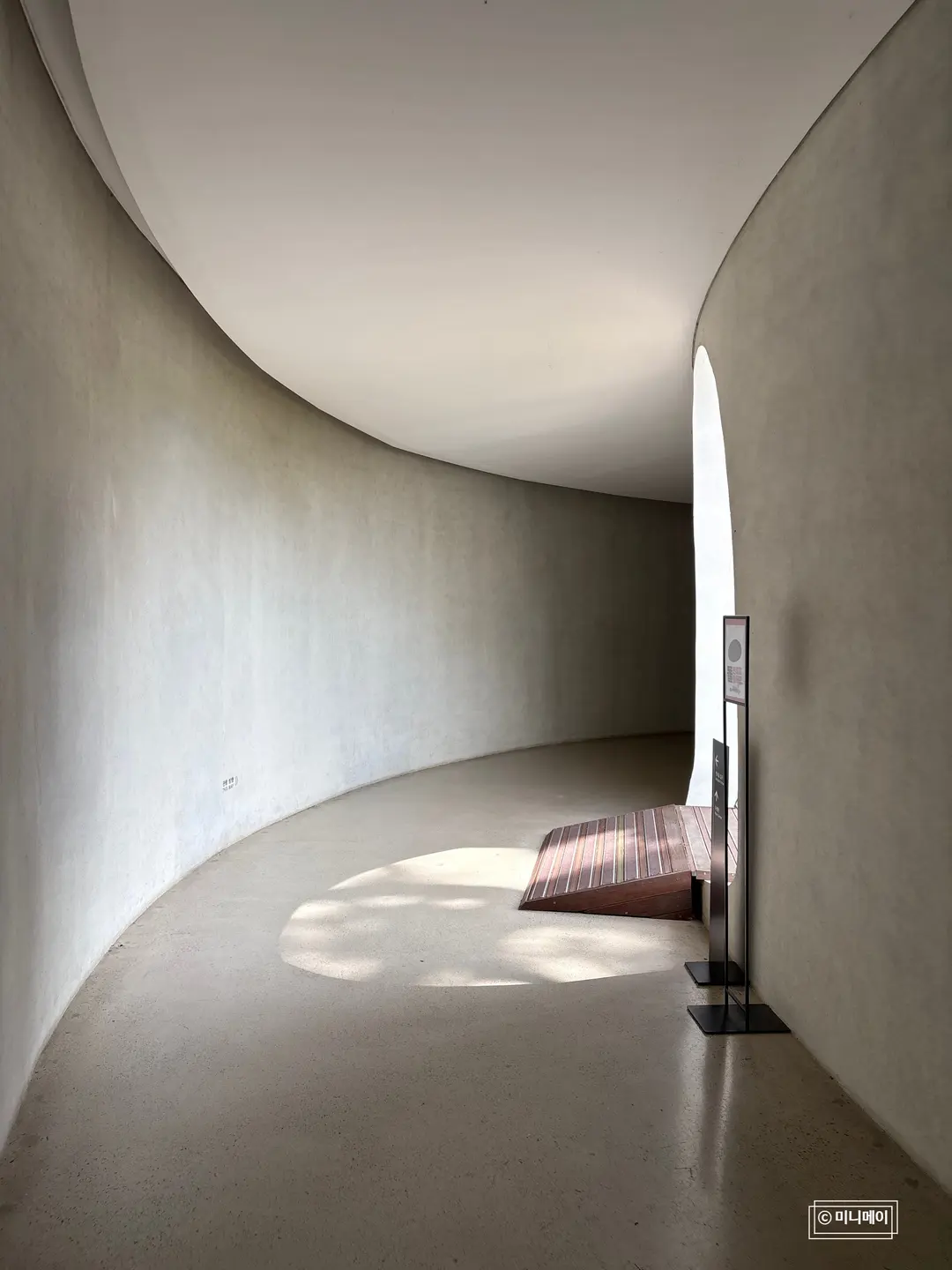
As you walk along the corridor, you'll see the entrance to the Sujeongwon Garden on the right, where tree shadows sway in the breeze.
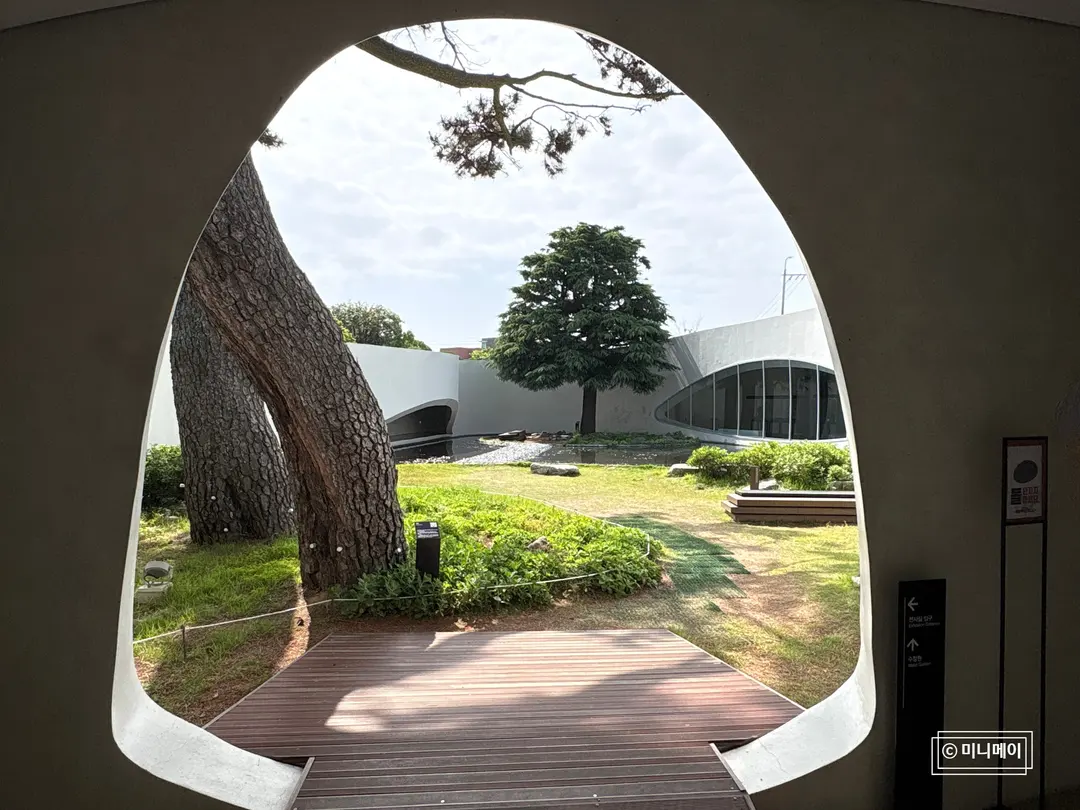
The view from the entrance of Sujeongwon Garden was so picturesque that I gazed at it for a long time.
Since we visited in the morning, there was only one other group of visitors besides us, so we enjoyed the tranquil scenery.
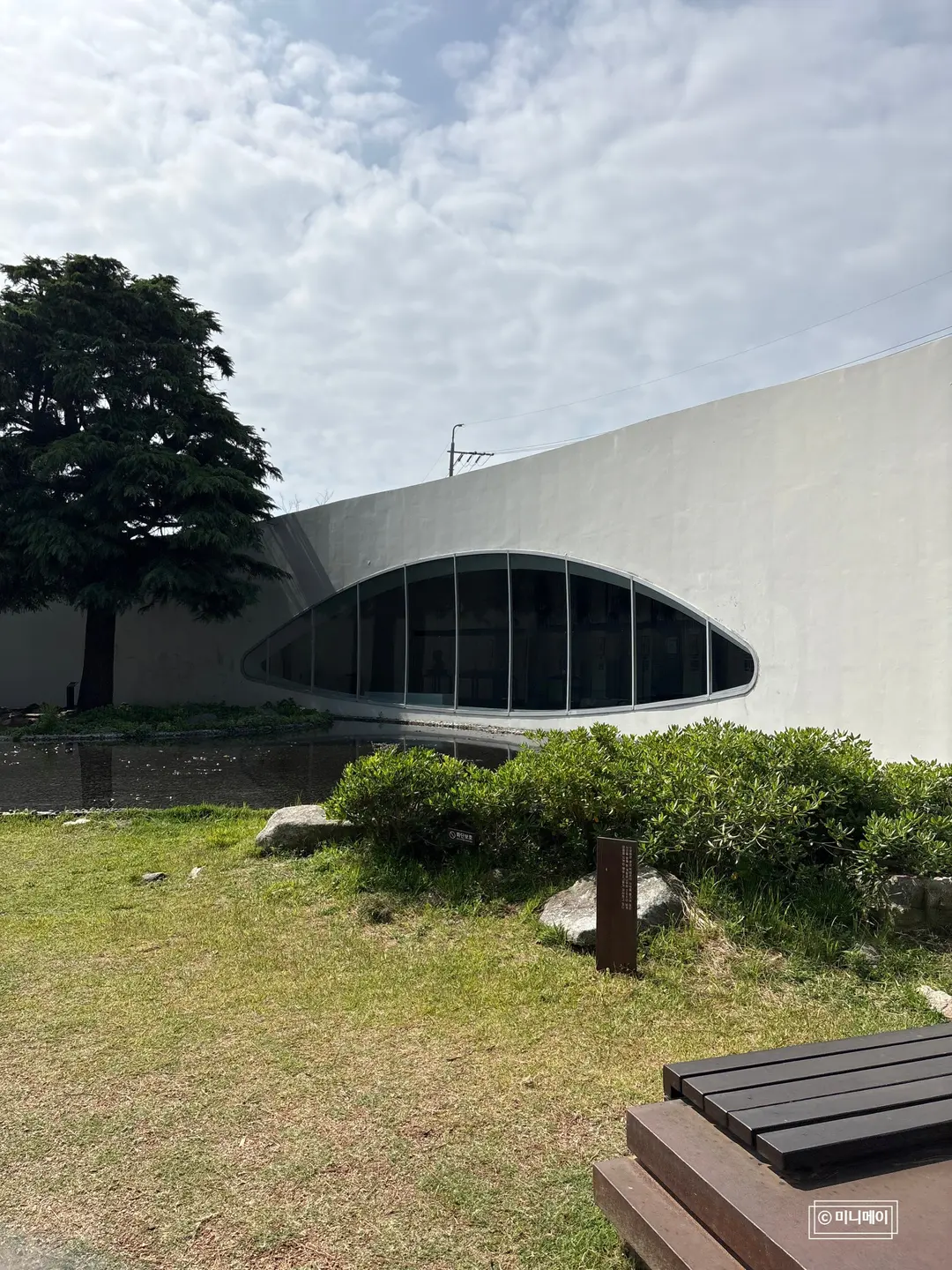
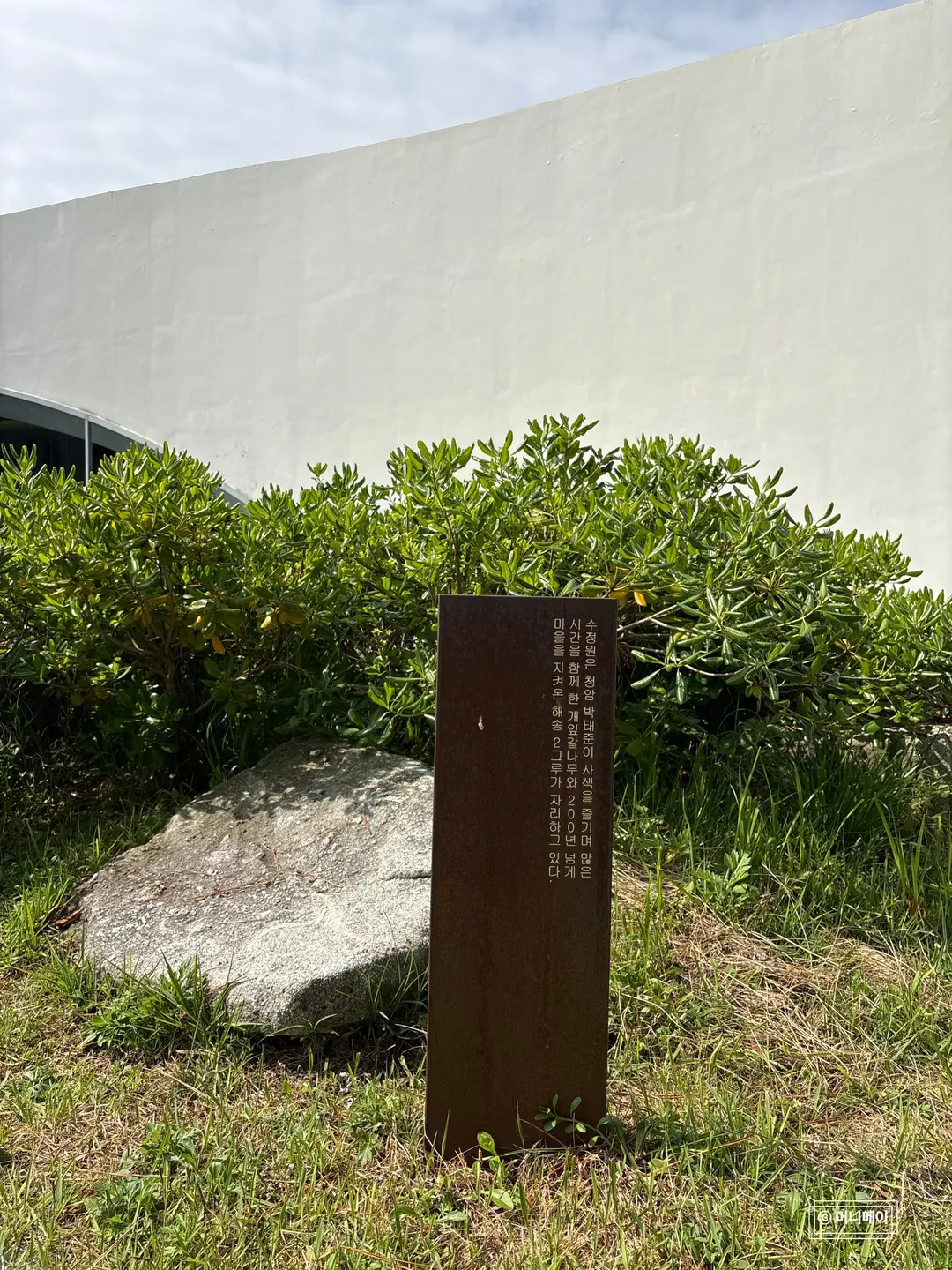
Sujeongwon Garden is where Cheongam Park Tae-joon enjoyed contemplation,
and is home to the Korean larch he spent much time with,
along with two black pines that have watched over the village
for over 200 years.
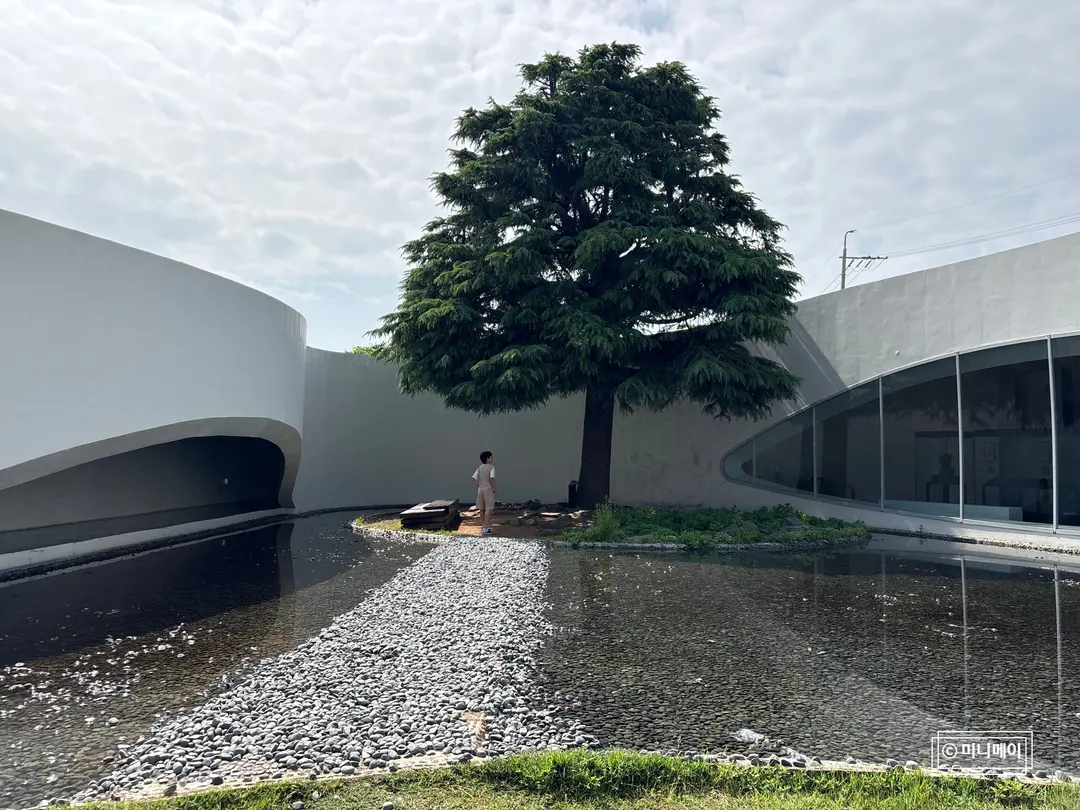
The tree you see on the small island across the pond is the Korean larch (gaeipgallamu),
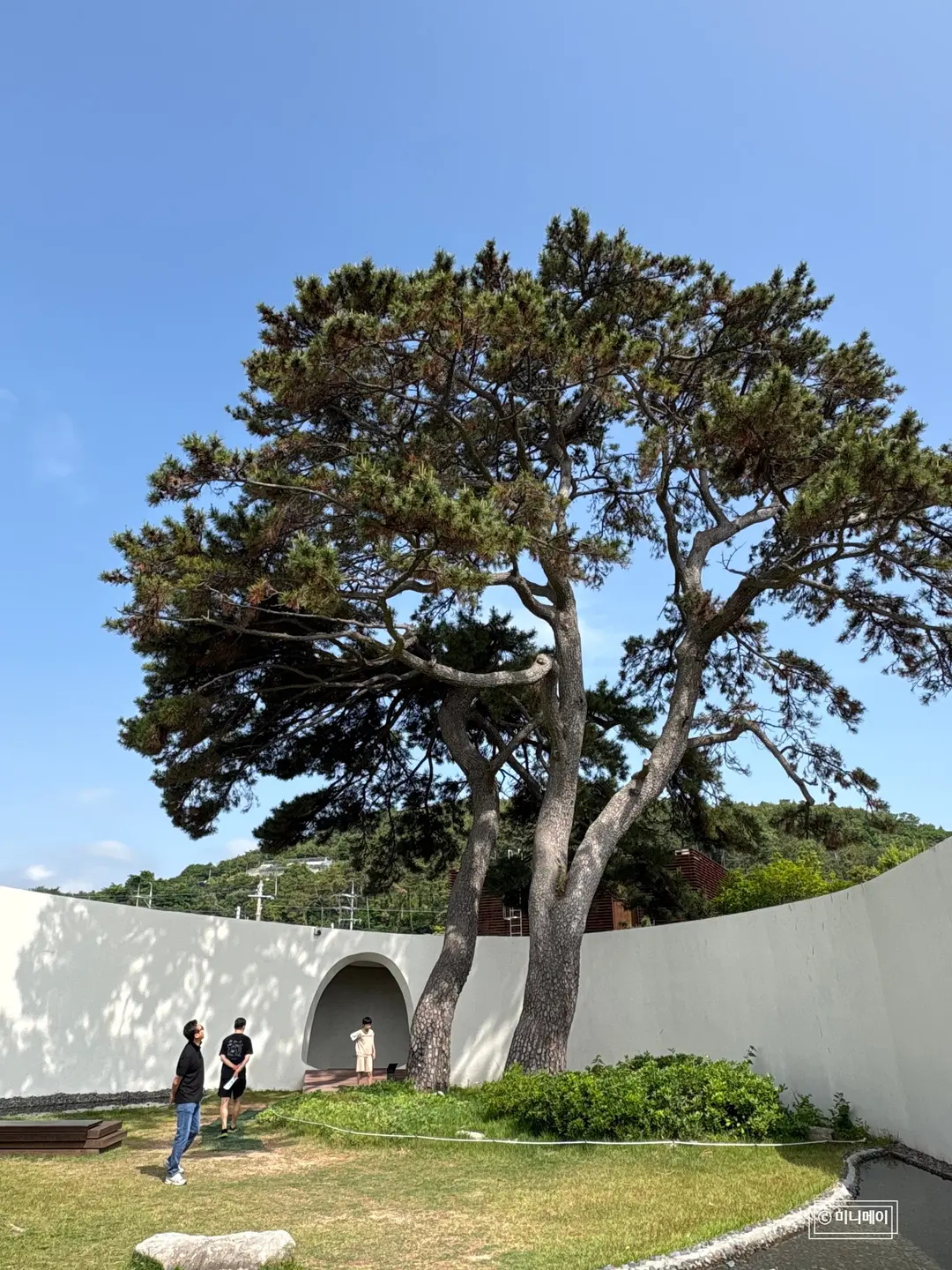
and the two towering trees at the exhibition hall entrance are black pines (gomsol).
It felt as if the streamlined memorial hall building embraced these trees.
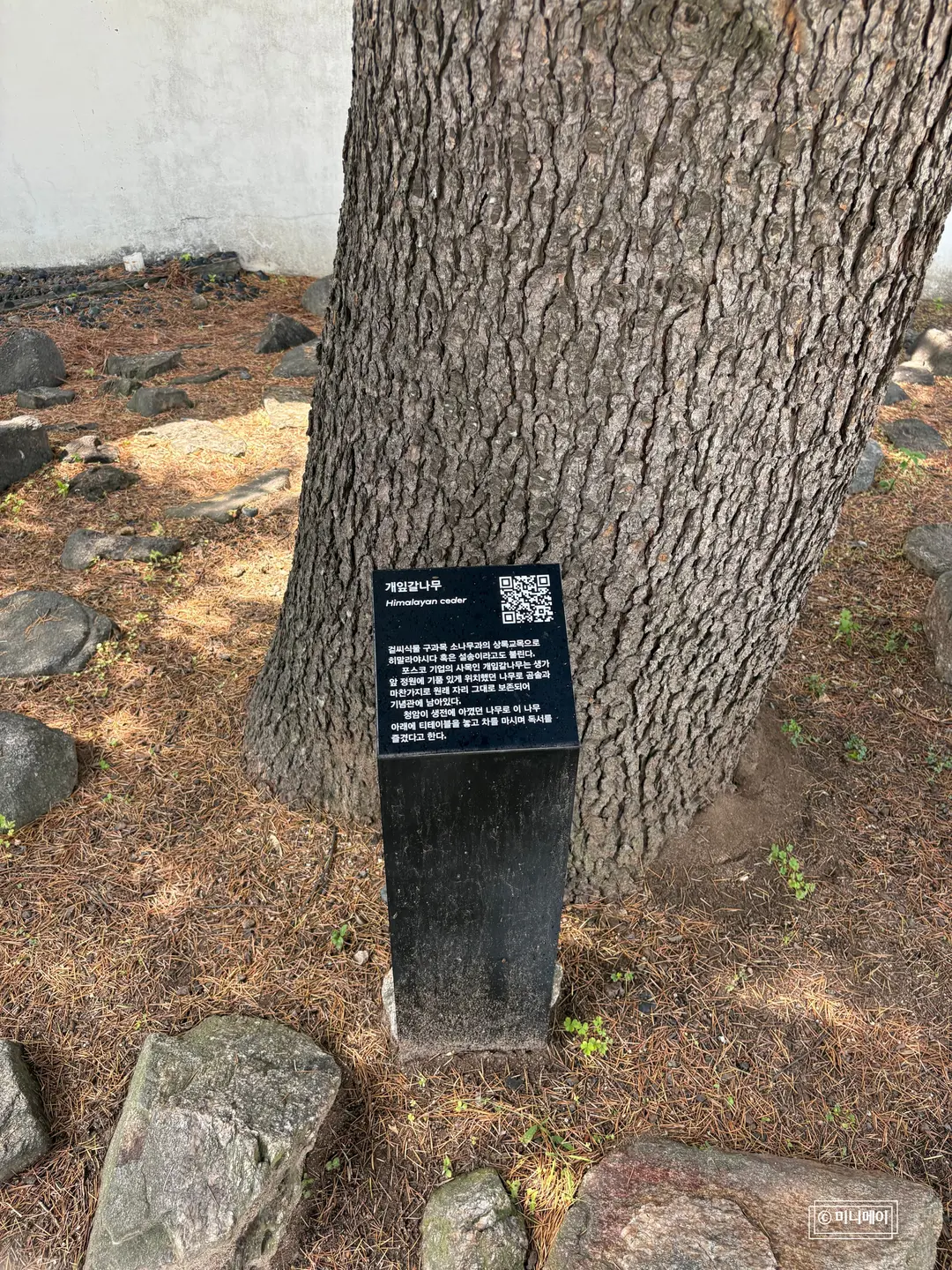
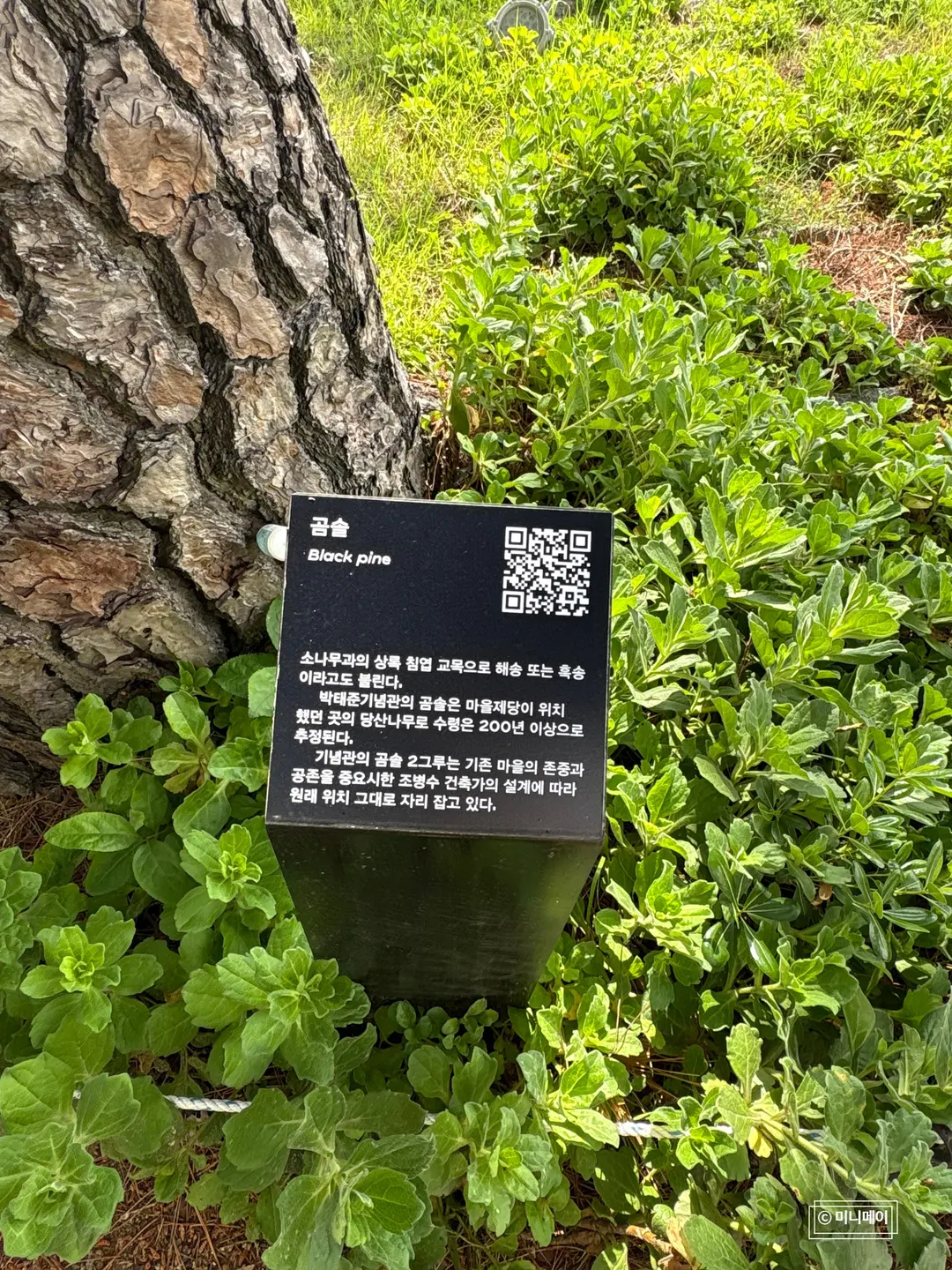
The Korean larch (gaeipgallamu) was a tree in the courtyard of Cheongam Park Tae-joon's birthplace and is the corporate tree of POSCO, while the black pines (gomsol) are sacred village guardian trees that stood where the village shrine once was, estimated to be over 200 years old.
What was particularly impressive was that these two black pines (gomsol) remain in their original positions, following the design of architect Cho Byoung-soo, who emphasized respect and coexistence with the existing village.
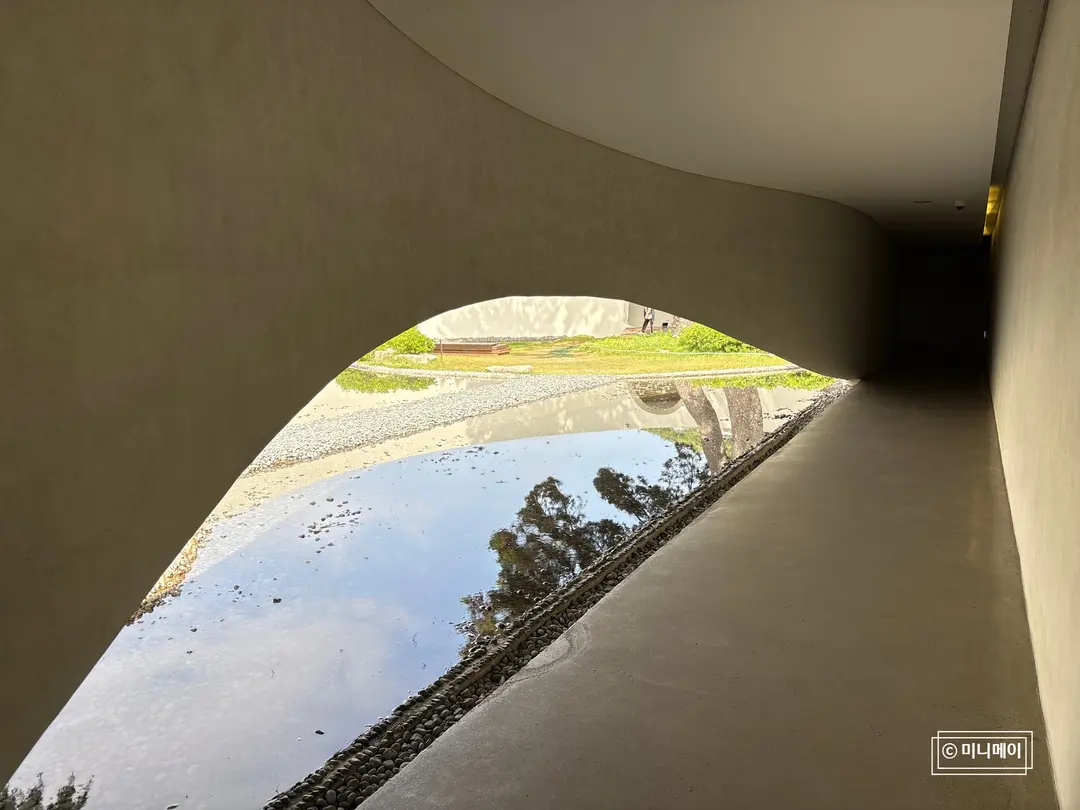
While admiring the beautiful scenery, an unwelcome friend joined me... mosquitoes!
Since it was early summer and there was standing water, there were quite a few mosquitoes. I recommend keeping moving while exploring the Sujeongwon Garden and the open-sided corridor.
Cheongam's Footprints in the Modern and Contemporary History of Korea
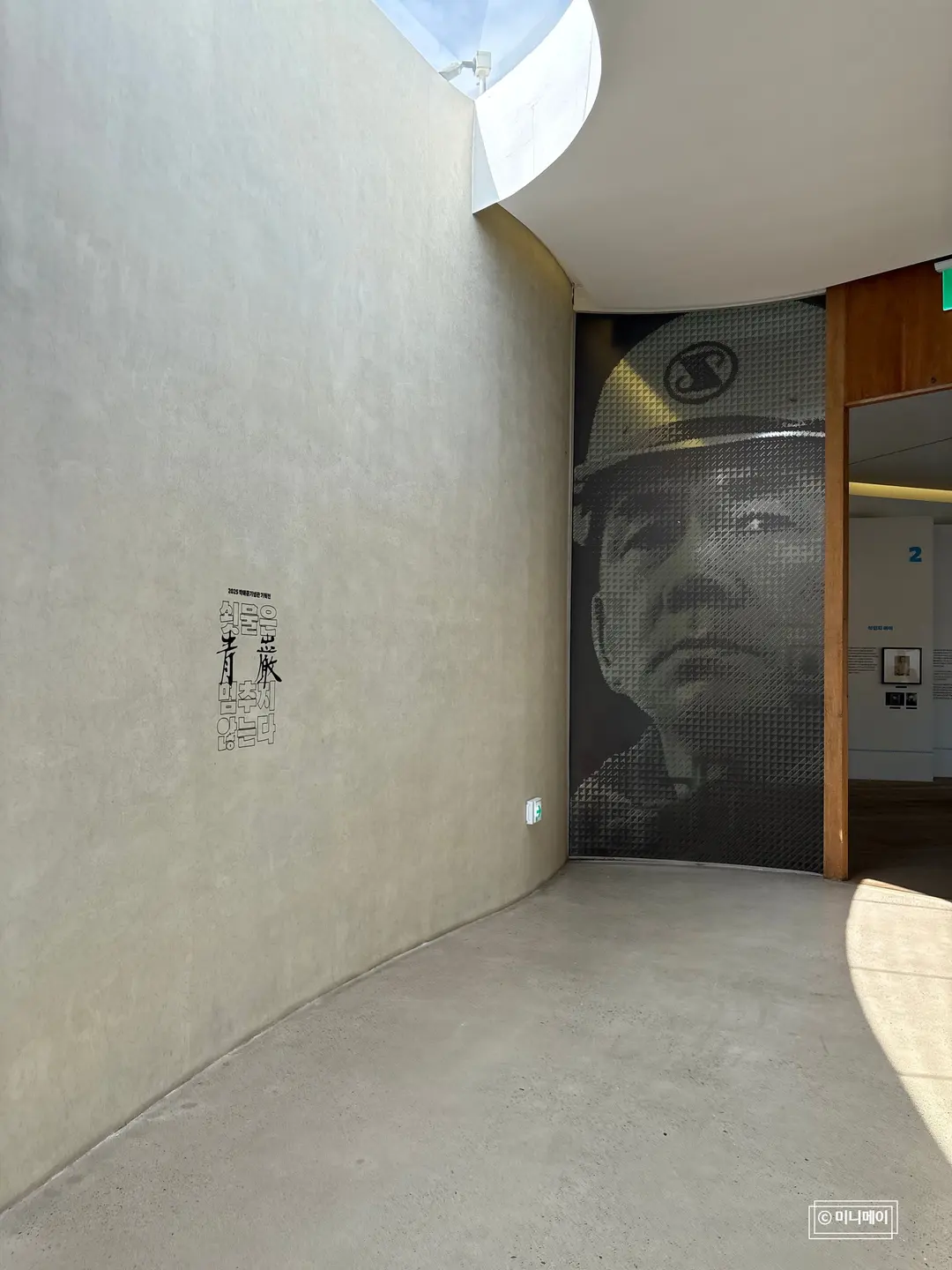
As you move along the corridor, you'll see the entrance to the exhibition hall.
When I visited, the special exhibition: "The Molten Iron Never Stops" was underway.
Park Tae-joon Memorial Hall Special Exhibition
/
The Molten Iron Never Stops
2025-04-01 ~ 2026-07-30
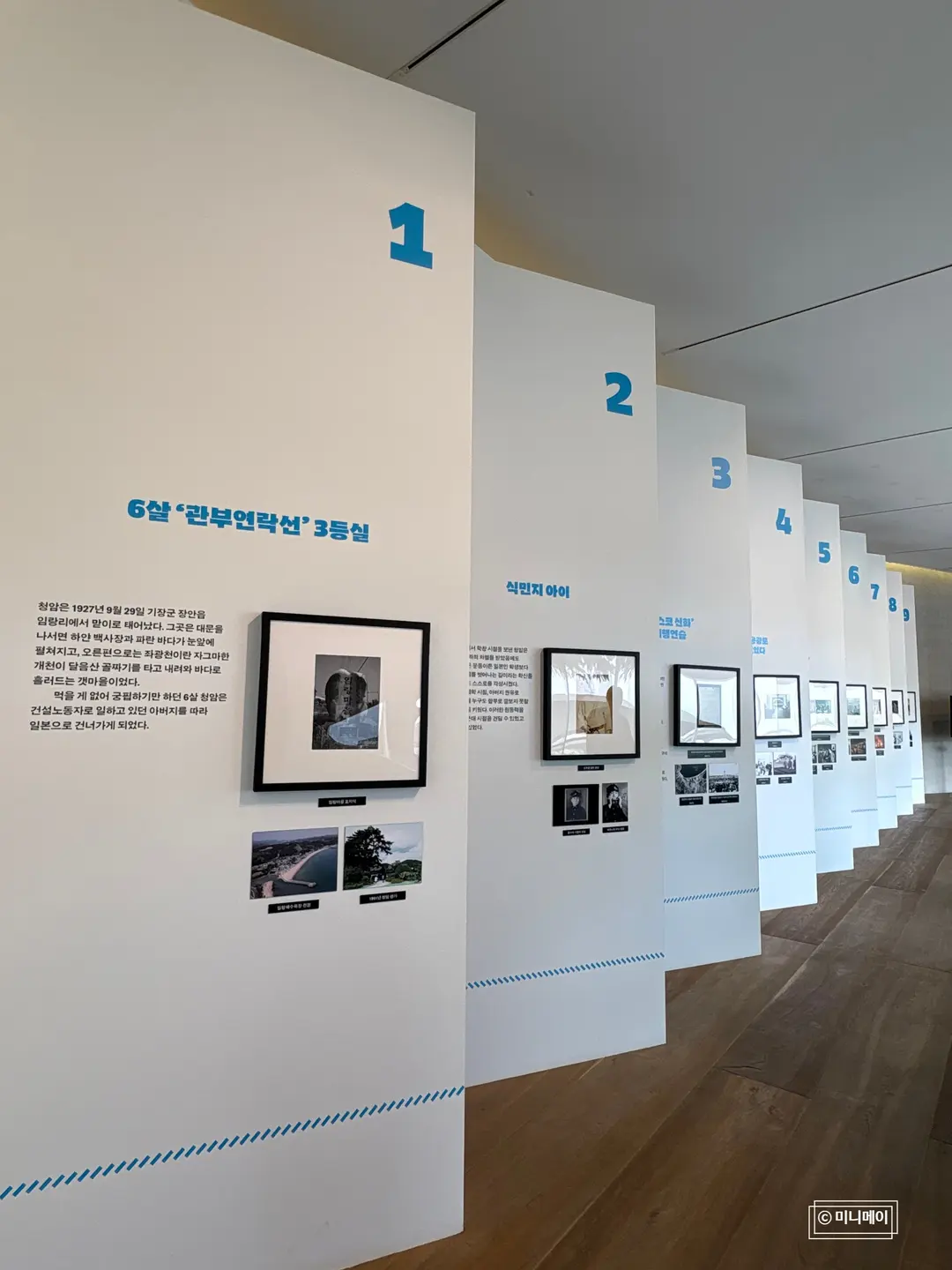
The exhibition space is comfortable and open, with the left wall introducing key excerpts from Cheongam Park Tae-joon's memoirs and autobiography.
Reflecting on his life story, from experiencing discrimination in Japan during the Japanese colonial period, to his sacrificial life driven by the spirit of Jecheolboguk (製鐵報國: dedicating steel production to serve the nation), sparked many thoughts.
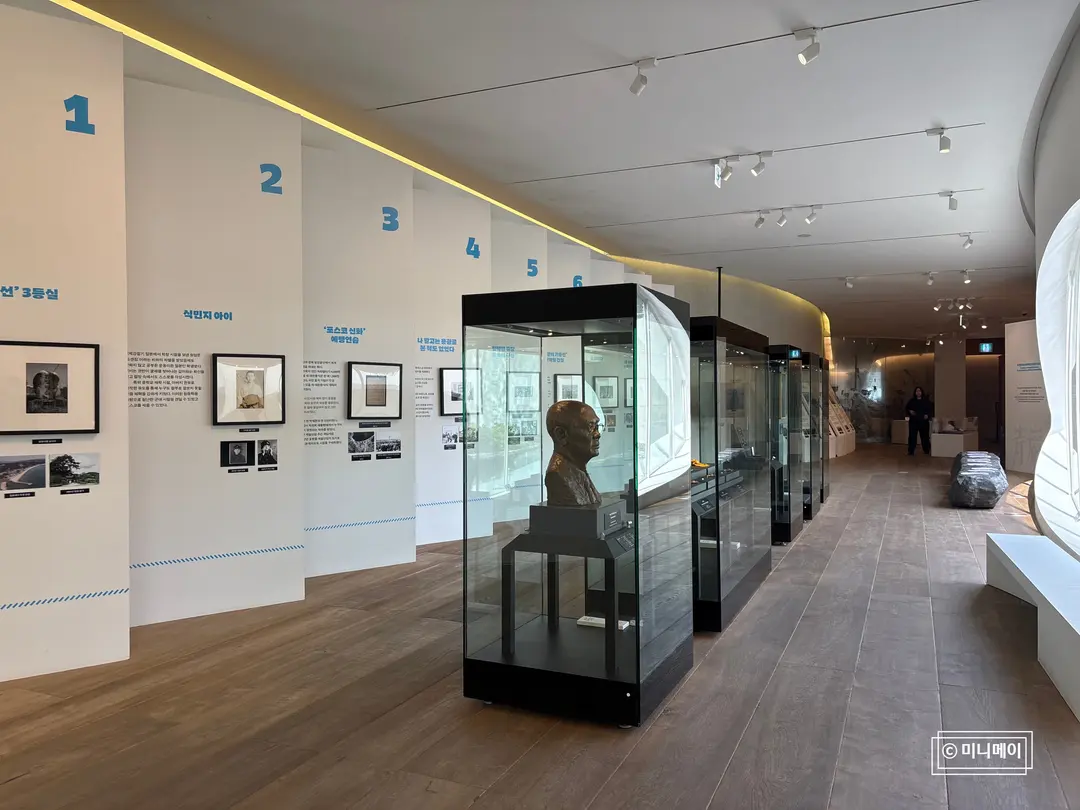
In the center of the exhibition hall, there's a bust of Cheongam Park Tae-joon, medals he received during his lifetime, and exhibits made from copper plates featuring newspaper articles.
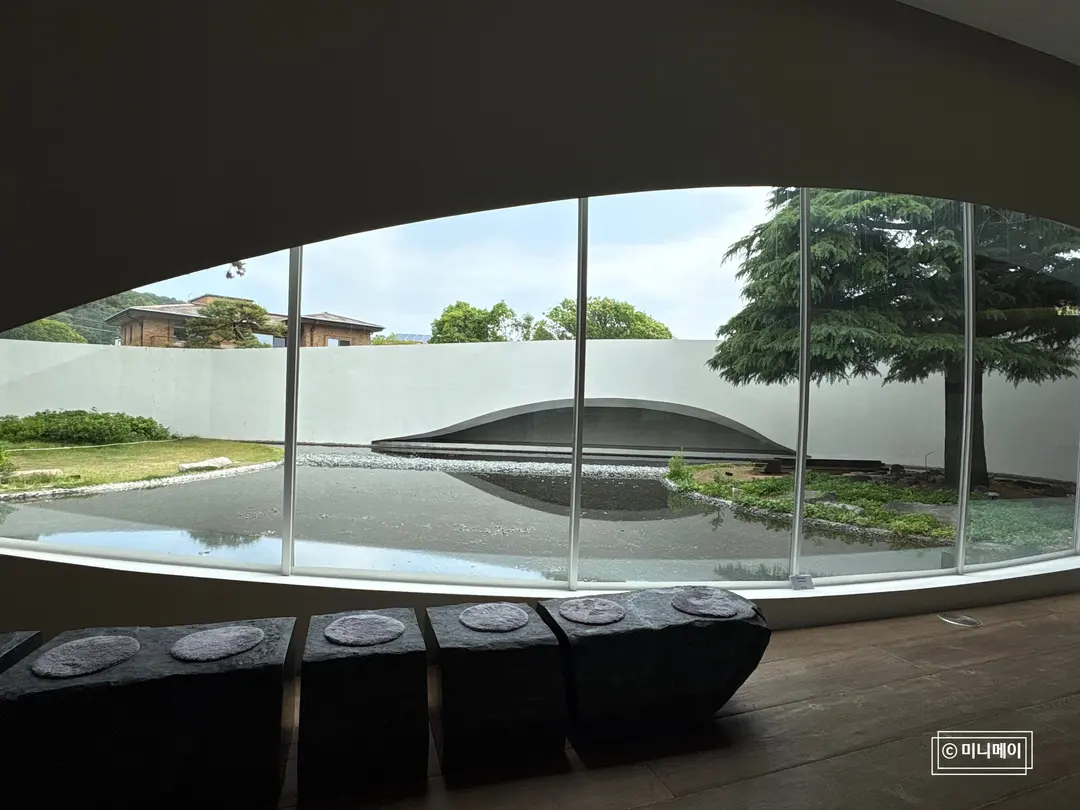
Through the large window on the right, you can see the entire Sujeongwon Garden, and with granite chairs available, it would be perfect for quiet contemplation while admiring the Korean larch (gaeipgallamu) without worrying about mosquitoes or insects, wouldn't it?
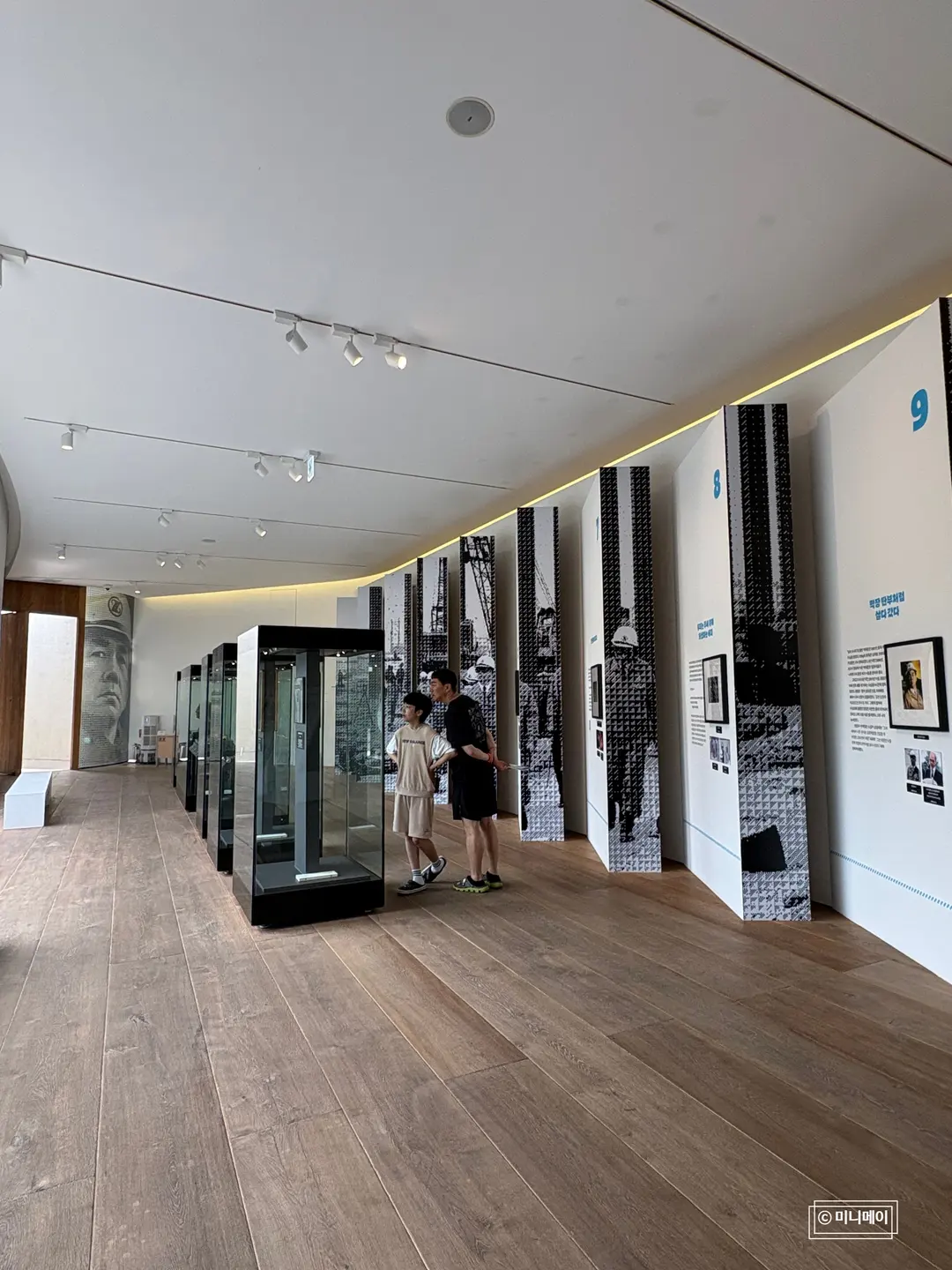
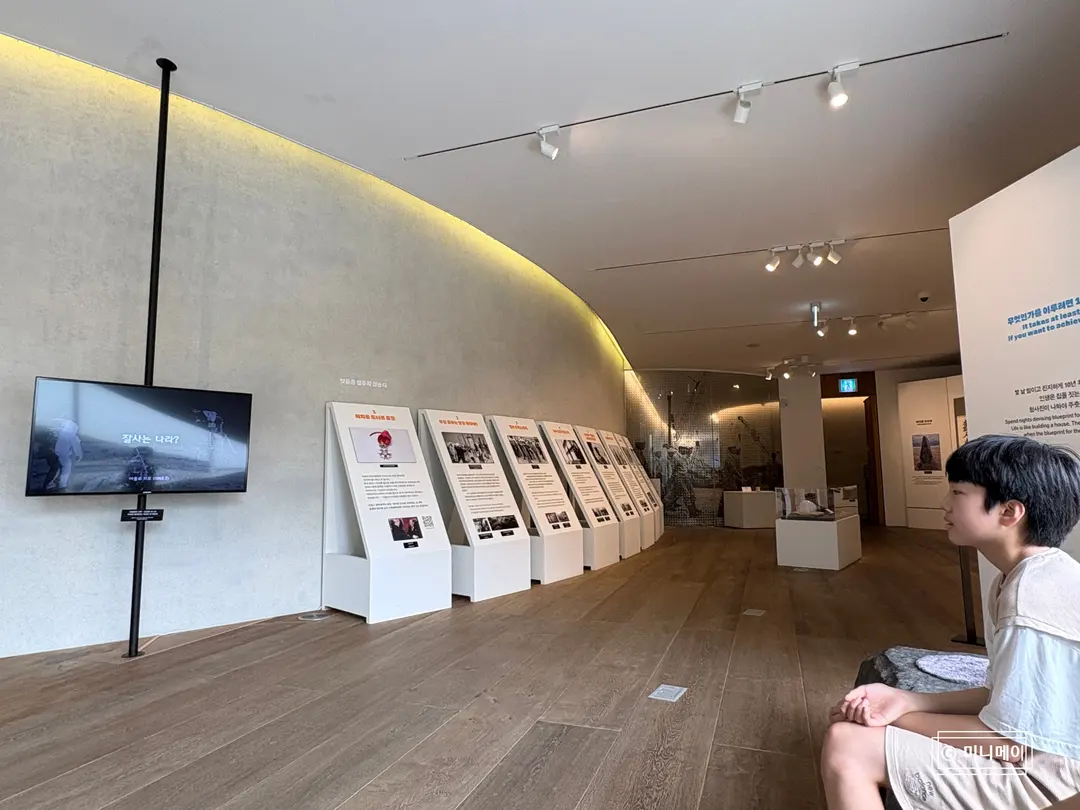
My child is learning about modern and contemporary Korean history in school, and this was a chance to explore it more deeply,
Seeing them seriously observe the exhibits and video materials, even more so than I expected, made me feel it's an excellent indoor place to visit with children.

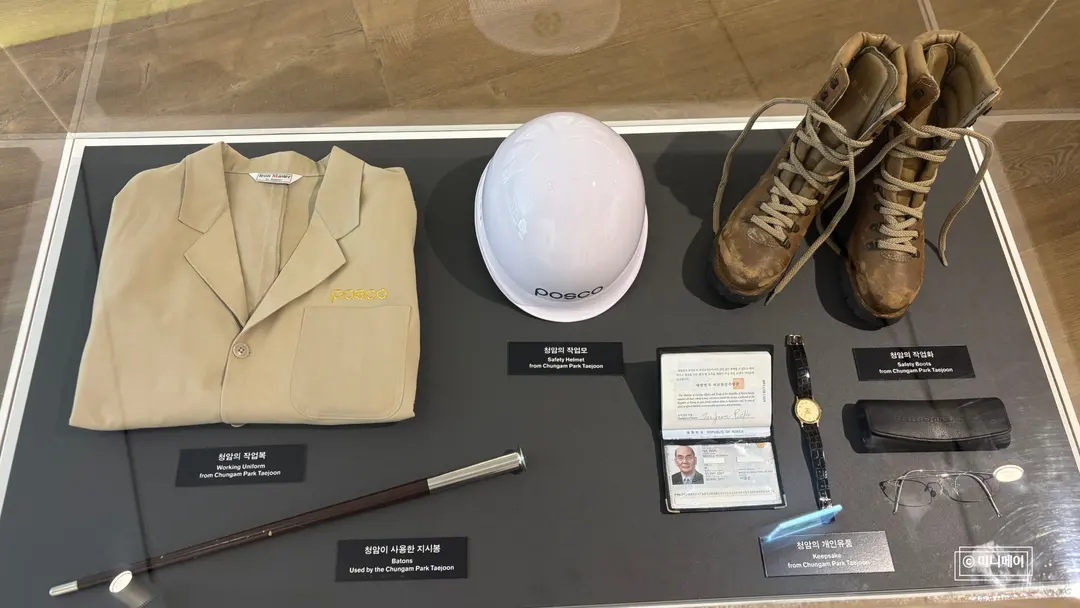
As I viewed the artifacts and various anecdotes of Cheongam Park Tae-joon, I gained valuable life lessons and even left my name and thoughts in the guestbook located near the exit.
4. Overall Review of the Park Tae-joon Memorial Hall
The Park Tae-joon Memorial Hall, established to commemorate the achievements of Cheongam Park Tae-joon, the Honorary Chairman and 'King of Steel' of Korea, and to research his philosophy and ideas, is a place worth visiting if you're planning a trip to the Gijang area of Busan.
While the time required for the exhibition varies by individual, it usually takes 30 minutes to 1 hour, and since both admission and parking are free, it was a great place to visit without any burden.
With its beautiful interior and exterior spaces, special exhibitions and educational programs held according to the season, and an impressive architectural story of coexistence and respect, the picturesque scenery of Sujeongwon (Crystal Garden) alone makes it worth visiting at least once to capture some amazing life photos.
Our family found the time spent here quite memorable, so we'd love to visit again if we're ever in Gijang in the future.
It's a great place to cool off in the hot summer, and I'm curious to see what the Sujeongwon scenery looks like when it rains or snows.
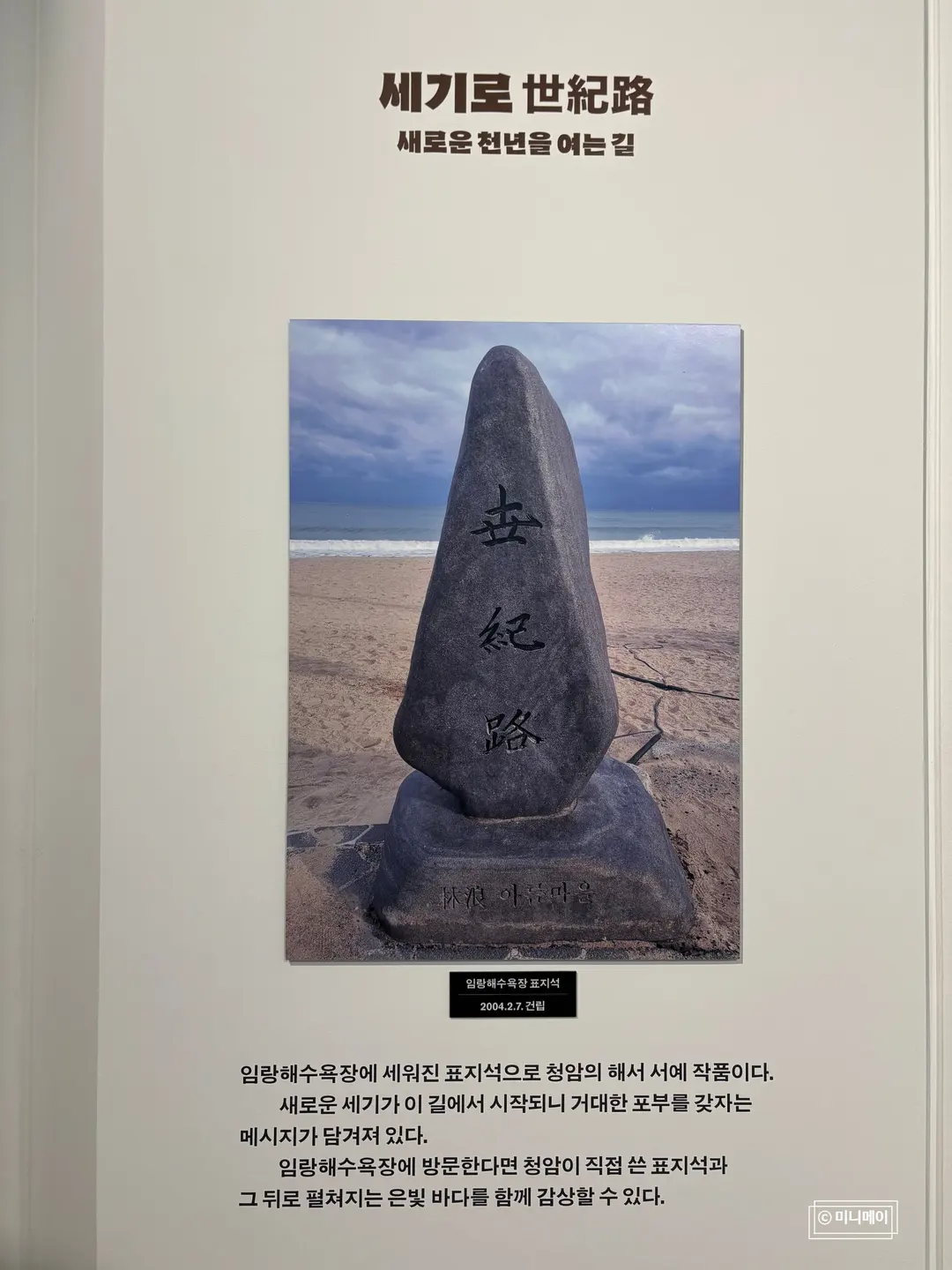
Just a 5-10 minute walk away, Imrang Beach features a monument stone personally inscribed by Honorary Chairman Cheongam Park Tae-joon. For those visiting as part of a travel itinerary, seeking out this monument could add a unique enjoyment to your trip.
If you're curious about other places to visit around the Park Tae-joon Memorial Hall in Gijang, Busan, and reviews of Imrang Beach, please refer to the article below.
 Imrang Beach Car Camping Parking: Personal Review on Cooking Feasibility
📍 Starbucks Gijang Imrangwon Branch
10 Imranghaeangil, Jangan-eup, Gijang-gun, Busan
📍 Imrang Beach
Imrang-ri, Jangan-eup, Gijang-gun, Busan
📍 Imrang Port Breakwater Lighthouse
1-53 Imrang-ri, Jangan-eup, Gijang-gun, Busan
📍 Imrang Beach Breakwater
Imrang-ri, Jangan-eup, Gijang-gun, Busan
Frequently Asked Questions
What are the operating hours and regular closing days of the Park Tae-joon Memorial Hall?
The Park Tae-joon Memorial Hall operates from 9 AM to 6 PM, with the last admission at 5:30 PM. It is regularly closed every Monday, January 1st, Seollal (Lunar New Year's Day), and Chuseok (Korean Thanksgiving Day). If a Monday falls on a public holiday, the memorial hall will be closed the following day.
What special trees are there in Sujeongwon, the courtyard of the Park Tae-joon Memorial Hall?
Sujeongwon preserves two special trees in their original locations: a Korean larch, which was POSCO's corporate tree from the courtyard of Cheongam Park Tae-joon's birthplace, and two black pines, which are village guardian trees over 200 years old. These trees are embraced by the memorial hall building, designed by architect Cho Byung-soo.
What is the name and duration of the current special exhibition at the Park Tae-joon Memorial Hall?
The Park Tae-joon Memorial Hall is currently hosting a special exhibition titled 'Molten Iron Never Stops'. This exhibition can be viewed from April 1, 2025, to July 30, 2026.
What are the admission and parking fees for visiting the Park Tae-joon Memorial Hall in Gijang, Busan, and approximately how long does a visit take?
Admission to the Park Tae-joon Memorial Hall and the use of its dedicated parking lot are both free. While it varies by individual, a visit to the exhibition typically takes about 30 minutes to 1 hour.
Share this article
Related Travel Stories

Onyeogicaravan Pohang Review: Oceanfront Family Stay 2026
Searching for the ultimate family getaway in Pohang? Onyeogicaravan offers oceanfront caravans with heated pools, sandpits, and private BBQs, ensuring fun for kids and relaxation.

On Pool Villa Pohang Review 2026: Ocean View & Private Pools
Discover On Pool Villa Pohang, a stunning ocean view private pool villa offering luxury and affordability. Enjoy private BBQs, thoughtful amenities, and breathtaking coastal scenery, perfect for your 2026 South Korea getaway.
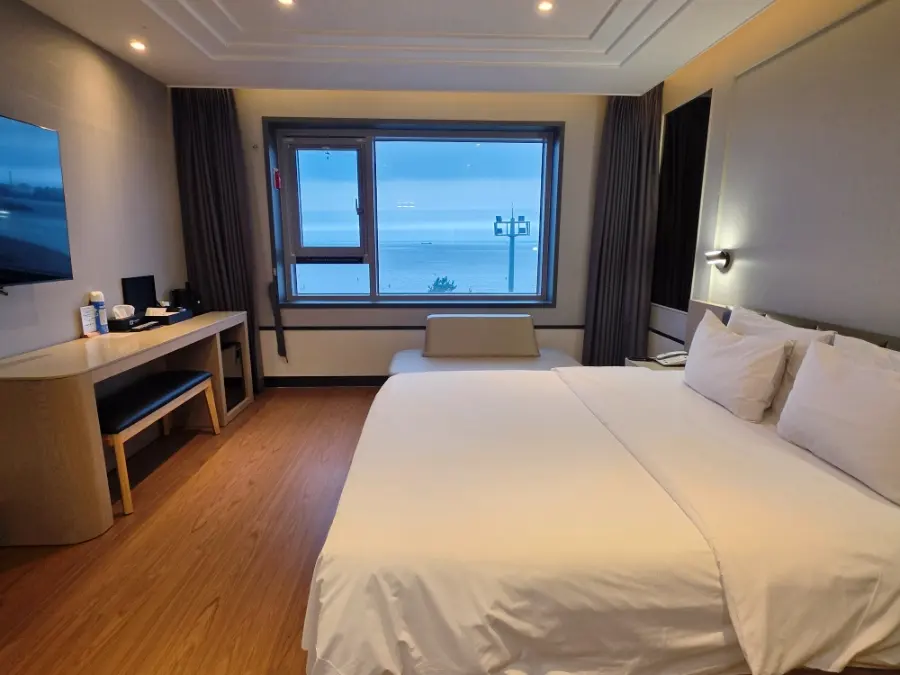
H.Avenue Hotel Pohang Yeongildae Review 2026: Ocean View & Rooftop Pool
Searching for the perfect Pohang accommodation for your walking tour? H.Avenue Hotel Yeongildae offers an unbeatable location, ocean views, and a rooftop pool. Read our honest review!

Pohang Travel Guide 2026: Top 4 Must-Visit Attractions
Planning a trip to Pohang? This 2026 guide reveals the best spots, from bustling markets to breathtaking views and historic streets, ensuring an unforgettable journey.

Pohang Bihaksan Forest Lodge Review 2026: Family Retreat
Escape to nature at Pohang's Bihaksan Natural Recreation Forest! Our 2026 review covers the spacious Forest Lodge, family-friendly amenities, and essential tips for a perfect, refreshing getaway in South Korea.

Samcheonpo Gizzard Shad Festival 2026: Dates, Parking & Lineup
Discover the Samcheonpo Gizzard Shad Festival in Sacheon, Gyeongnam this August 2026! Indulge in fresh gizzard shad, enjoy live music, and participate in unique activities from 08/20-08/23. Plan your visit!