読み込み中...

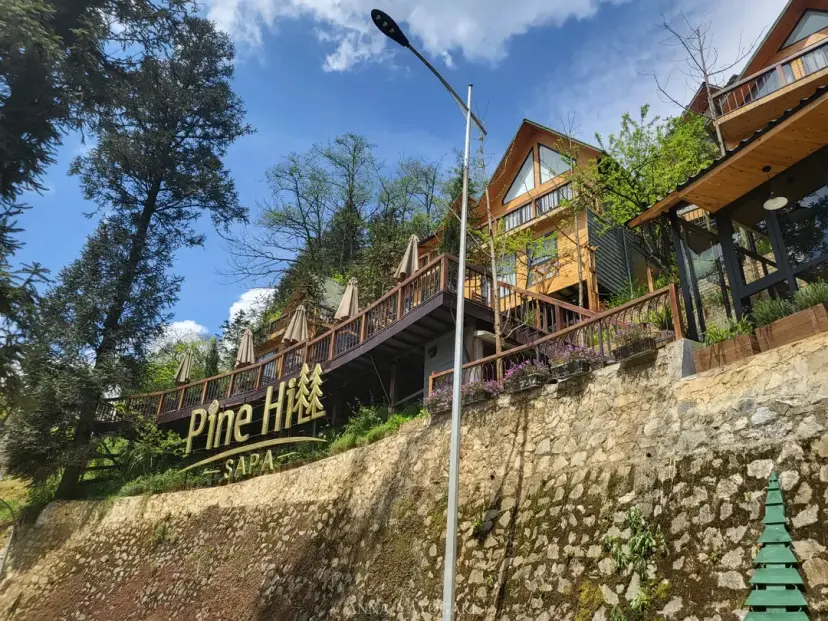
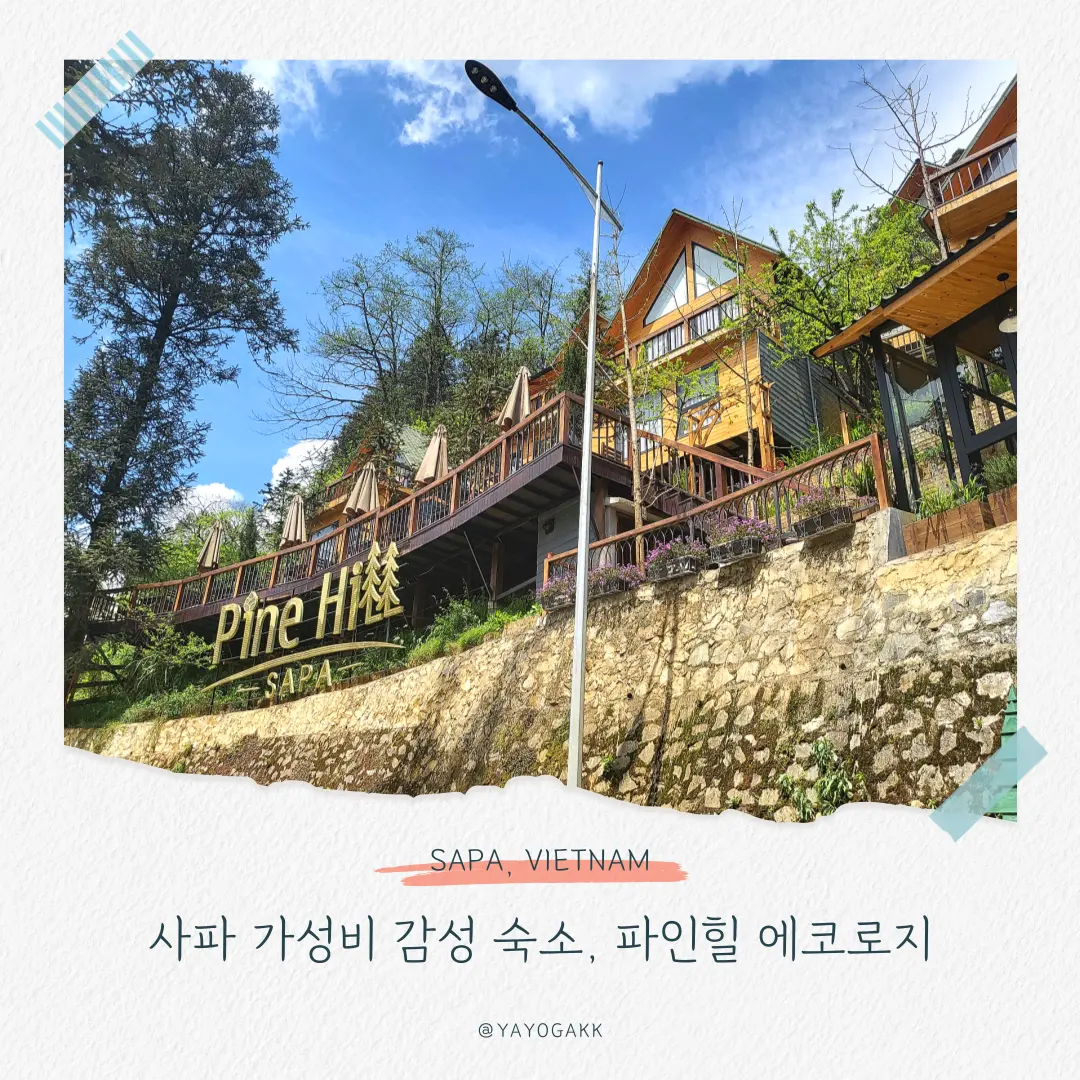
サパ パインヒル エコロッジ(Sapa Pine Hill Ecolodge)は、
ベトナム・サパの市内中心部にあるサパスケアから
徒歩約5分の丘の上に位置する宿泊施設です。
中心街に近いため移動が非常に便利で、
周辺にはローカルレストランやカフェも多く、
サパ個人旅行の滞在先として非常におすすめの場所です。
サパ パインヒル エコロッジは、スタンダードルームが1泊約5,200円台から、
一般的なデラックスルームやバンガローも1泊約10,500円程度で予約可能な
コストパフォーマンスに優れた宿です。
広場の近くなお、イベントが開催される際は少し騒がしく感じることもありますが、
朝にテラスから望む美しい景色や朝食、そしてスタッフの親切なサービスが素晴らしく、
サパの大自然に囲まれたおしゃれな雰囲気を満喫しながらも
市内へのアクセスが良好なため、全体的に非常に満足度の高い滞在となりました。
サパ パインヒル エコロッジの宿泊記と、知っておくと便利な滞在のコツ
を以下で詳しくご紹介します。 🌿
サパ パインヒル エコロッジ(Sapa Pine Hill Ecolodge)の基本情報および施設概要
📍 Sapa Pine Hill Eco Lodge (Khu nghỉ dưỡng sạn Sapa Pine Hill Eco Lodge)
05 Hoàng Diệu, TT. Sa Pa, Sa Pa, Lào Cai 330000 ベトナム
📍住所 | 05 Hoang Dieu, Sa Pa, Lao Cai, ベトナム, 330000 |
🚗空港からの距離 | ハノイ・ノイバイ国際空港から車で約4時間30分 |
⏰チェック인 / チェックアウト | チェックイン 14:00 / チェックアウト 12:00 |
💵1泊あたりの平均料金 | |
🍽️朝食 | ビュッフェスタイル |
🛋️主な設備・施設 | レストラン、カフェ |
⭕メリット | ケーブルカー乗り場や広場に近い / 親切なサービス / ロッジ(Lodge)ならではのおしゃれで温かみのある雰囲気 |
❌デメリット | 客室にテレビがない / お湯が長く出続けない / 広場に近いためイベント時は音が響くことがある |
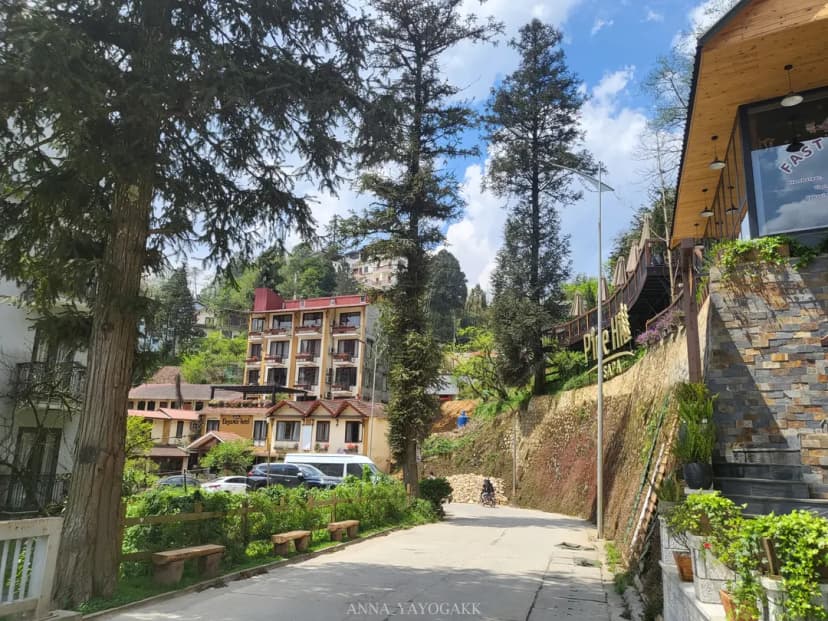
サパ パインヒル エコロッジ(Sapa Pine Hill Ecolodge)は、
サパのメイン広場であるサパスケアから徒歩で約5分、
小高い丘の上に佇む雰囲気抜群のホテルです。
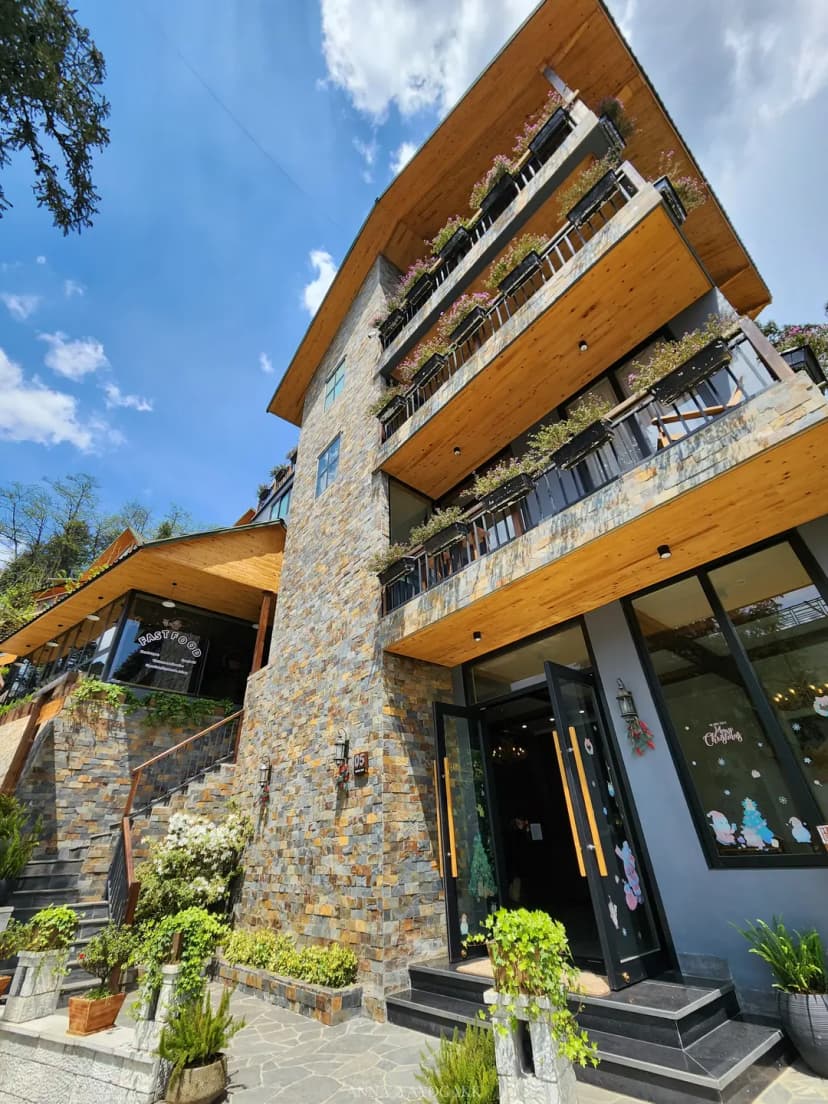
レンガと木材が美しく調和した建物デザインとなっており、
全体的に温もりがあり、居心地の良いアットホームな空間が広がる
エコロッジ型のホテルです。
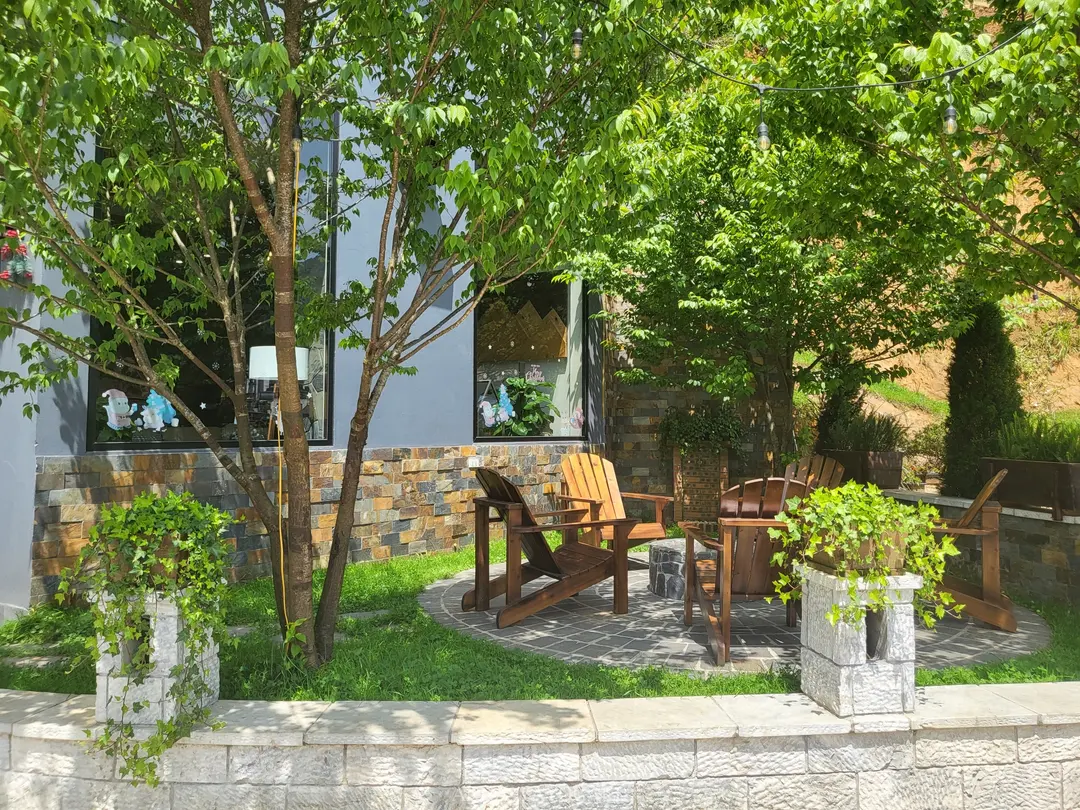
建物の片隅にひっそりと置かれた
椅子さえも、絵になるようでおしゃれな雰囲気を醸し出しています。
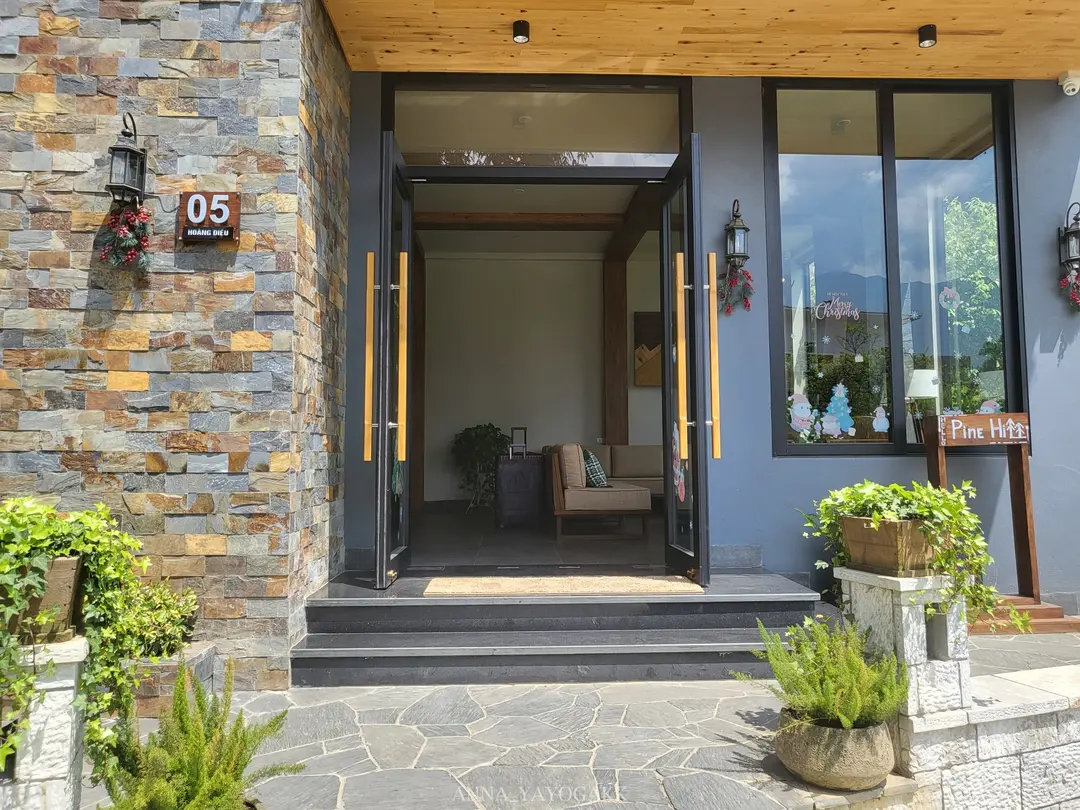
エントランス前まで車の乗り入れが可能で、
到着するとすぐにスタッフの方が笑顔で出迎えてくれます。
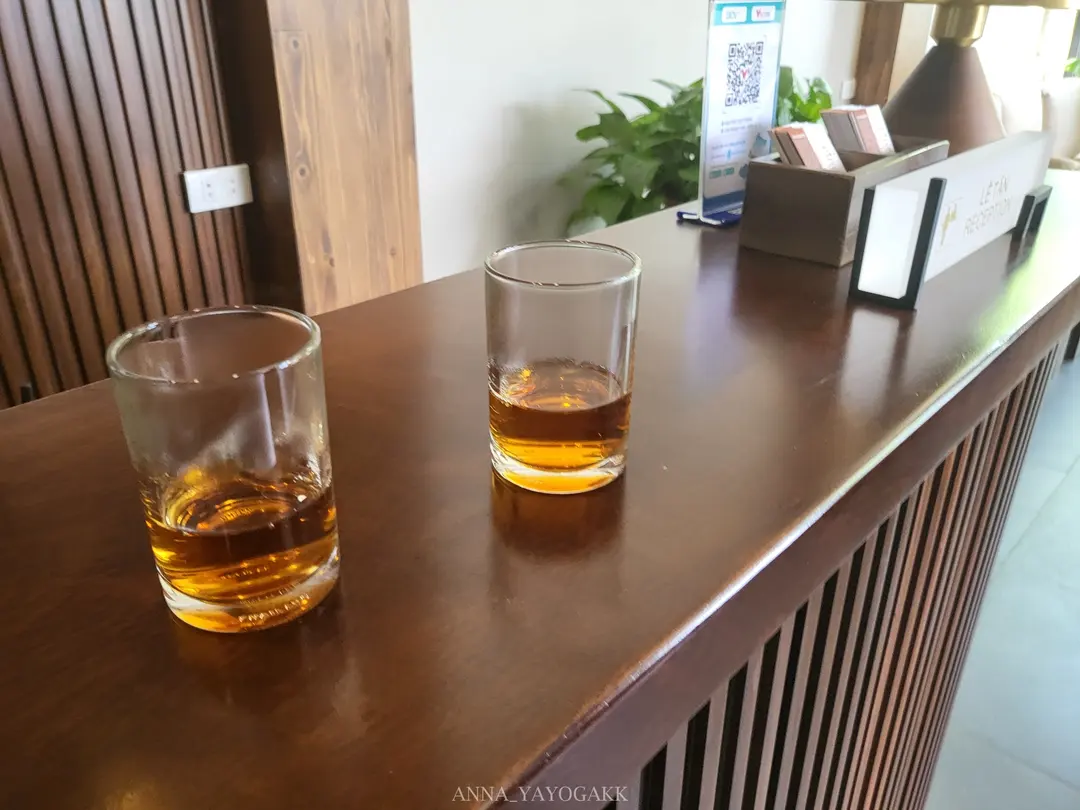
ウェルカムドリンクをいただきながらの
チェックイン手続きも非常にスムーズかつ親切でした。
チェックインを行っていると、スタッフの方が「ちょっとしたプレゼントがあります」とおっしゃいました。
「サパの記念品か何かかな?」と思いましたが、なんとプレゼントは客室のアップグレードでした!
当初は「デラックス ダブルルーム」を予約していたのですが、
丘の景色が見渡せる「デザイン バンガロー」へとアップグレードしていただけました。
訪れて早々、非常に幸先の良い、素晴らしい滞在のスタートとなりました。
デザイン バンガロー(ヒルビュー / 1ベッドルーム ヴィラ)実際の宿泊レビュー
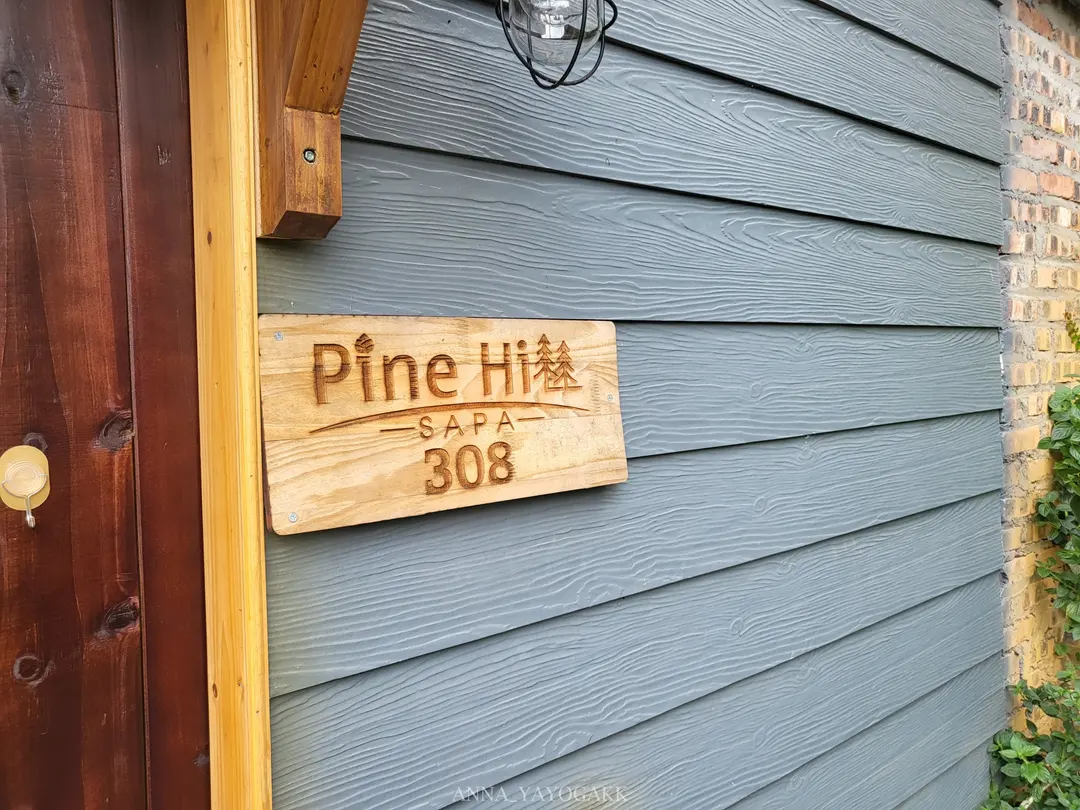
チェックインの手続きを終えた後、スタッフの方が
お部屋まで重いスーツケースを直接運んでくださいました。
荷物がかなり重かったため、自分で持ちますと伝えたのですが、
最後まで快く運んでくださり、本当に感謝の気持ちでいっぱいになりました。
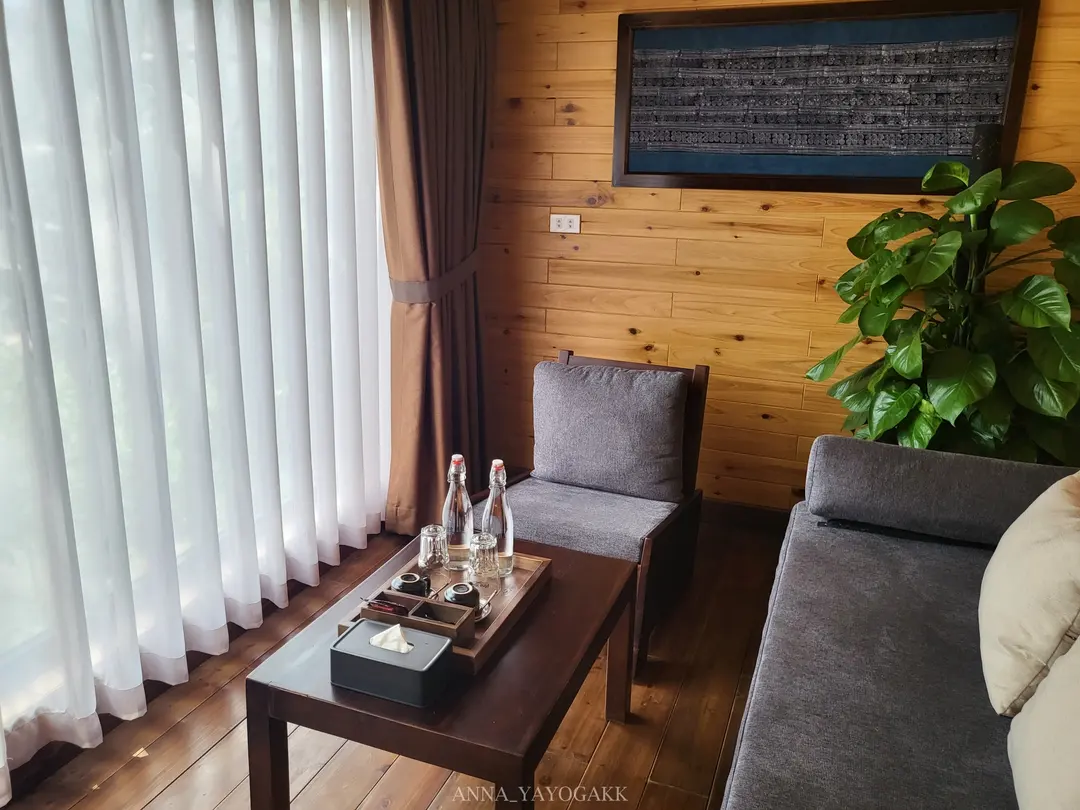
扉を開けると、目の前に広がるリビングスペースです。
バンガロー客室は、1階にリビング、2階にベッドルームとバスルーム、そしてテラスがあります。
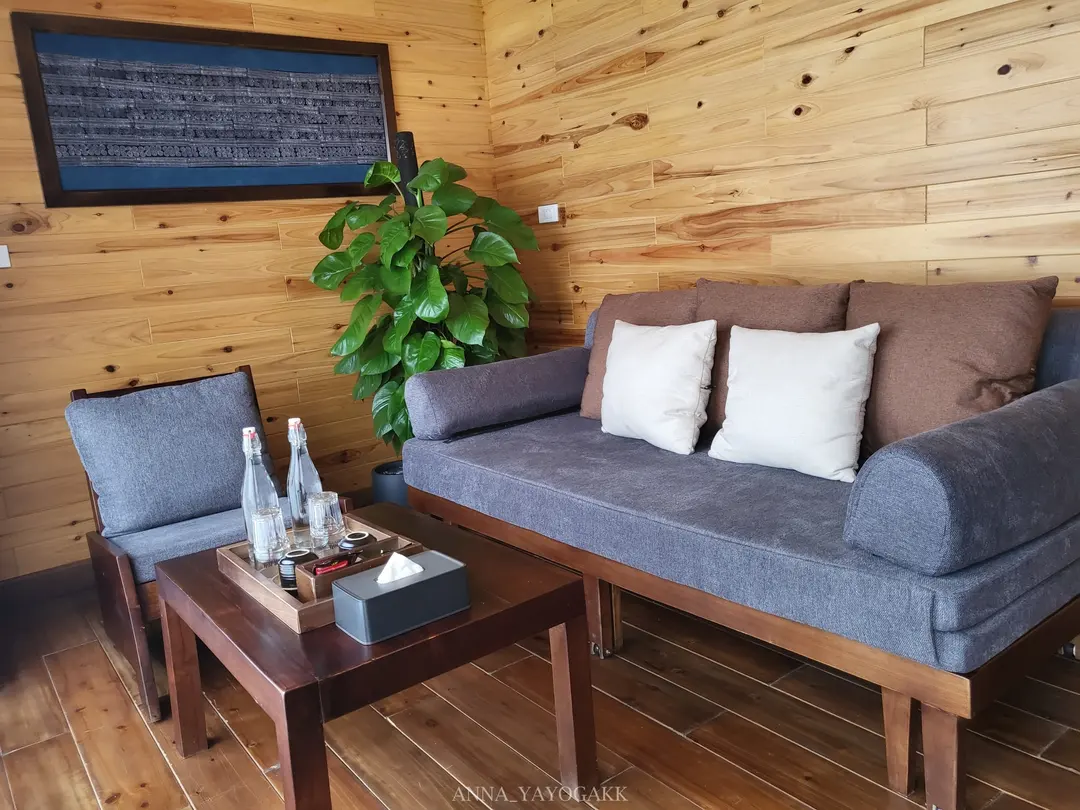
高台にあるためか、
日当たりも非常に良く、とても気持ちの良い光が差し込んでいました。
全体的に明るく清潔感がありました。
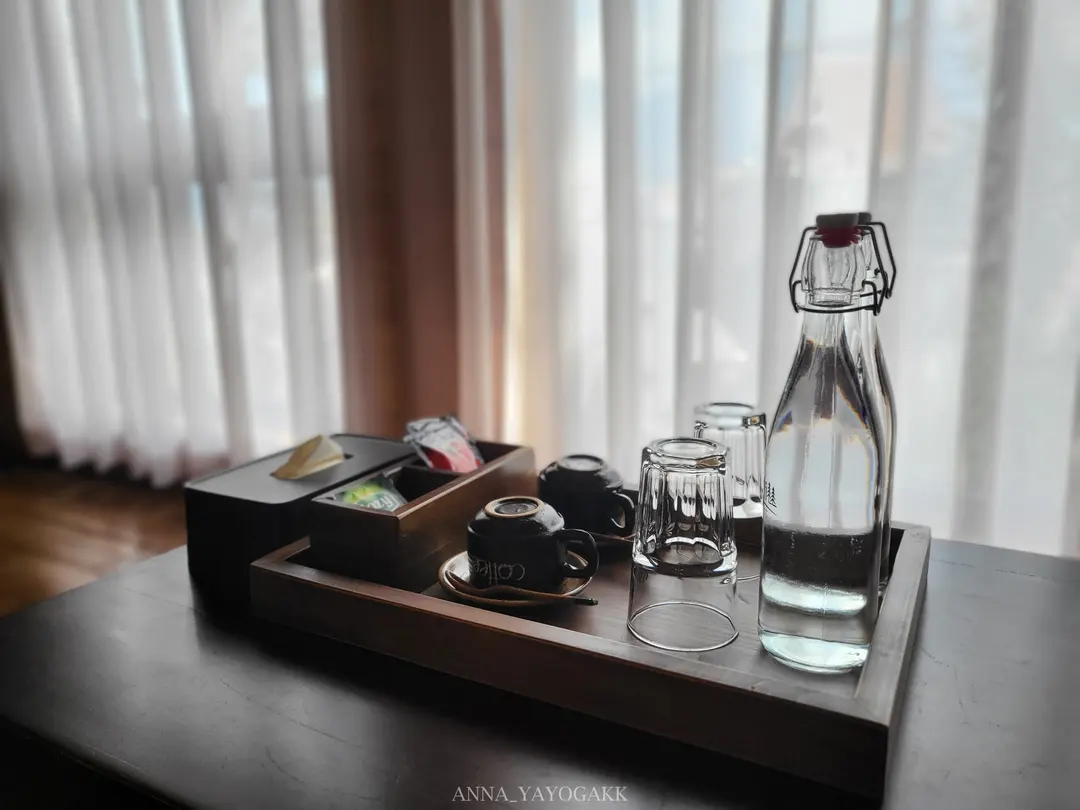
ミネラルウォーターとコーヒー、ティーバッグが用意されています。
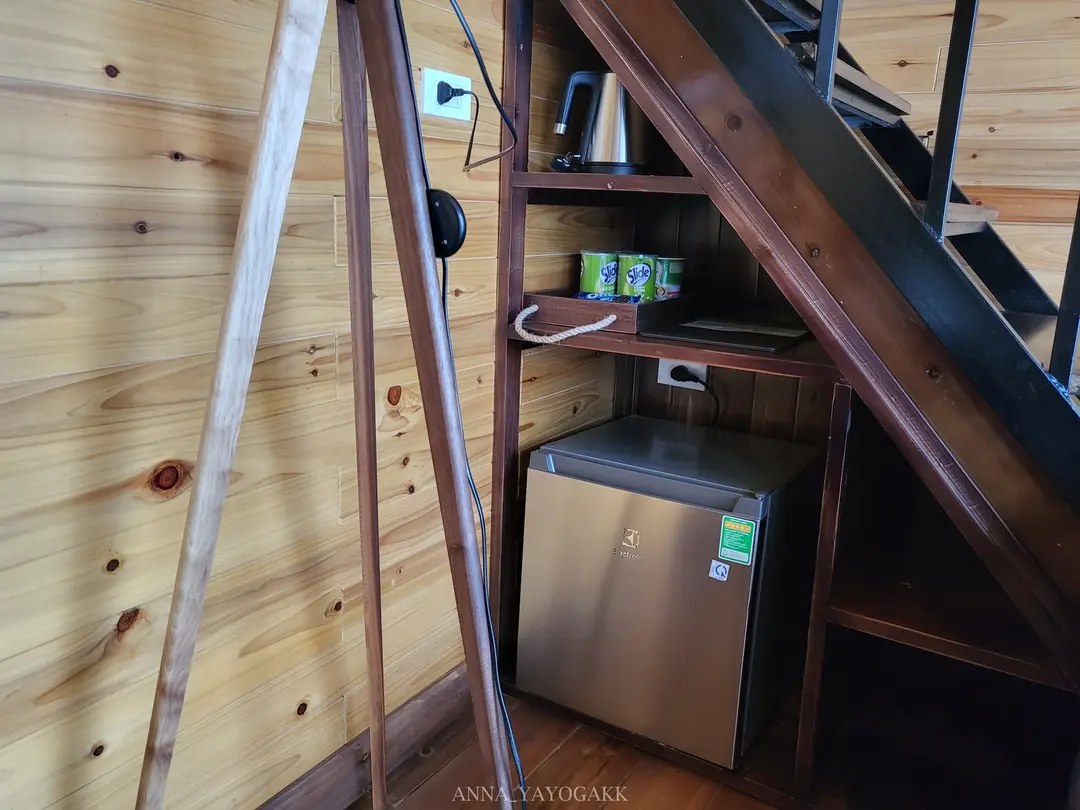
2階へ上がる階段の下に
冷蔵庫と電気ケトルがあります。
寝室が2階にあるため、
冷蔵庫が1階にあるのは動線的に少し不便に感じられました。
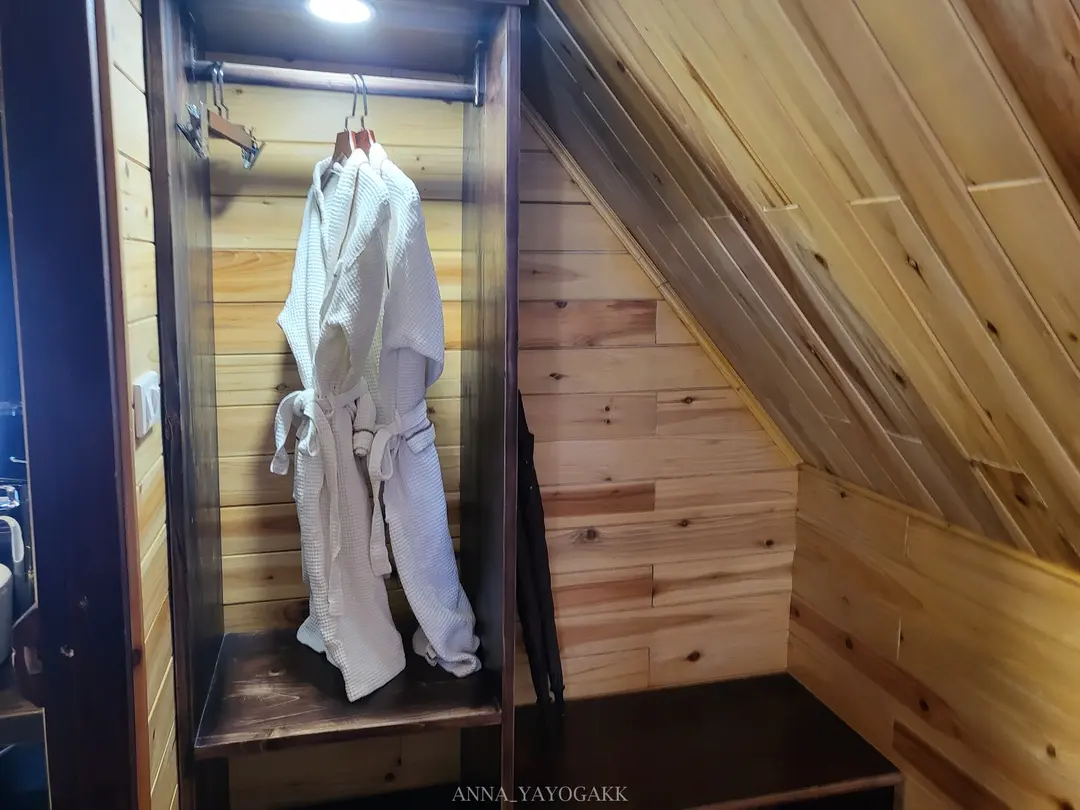
2階に上がると
正面にオープンタイプのクローゼットがすぐに見えます。
ガウンと傘が2セットずつ用意されています。
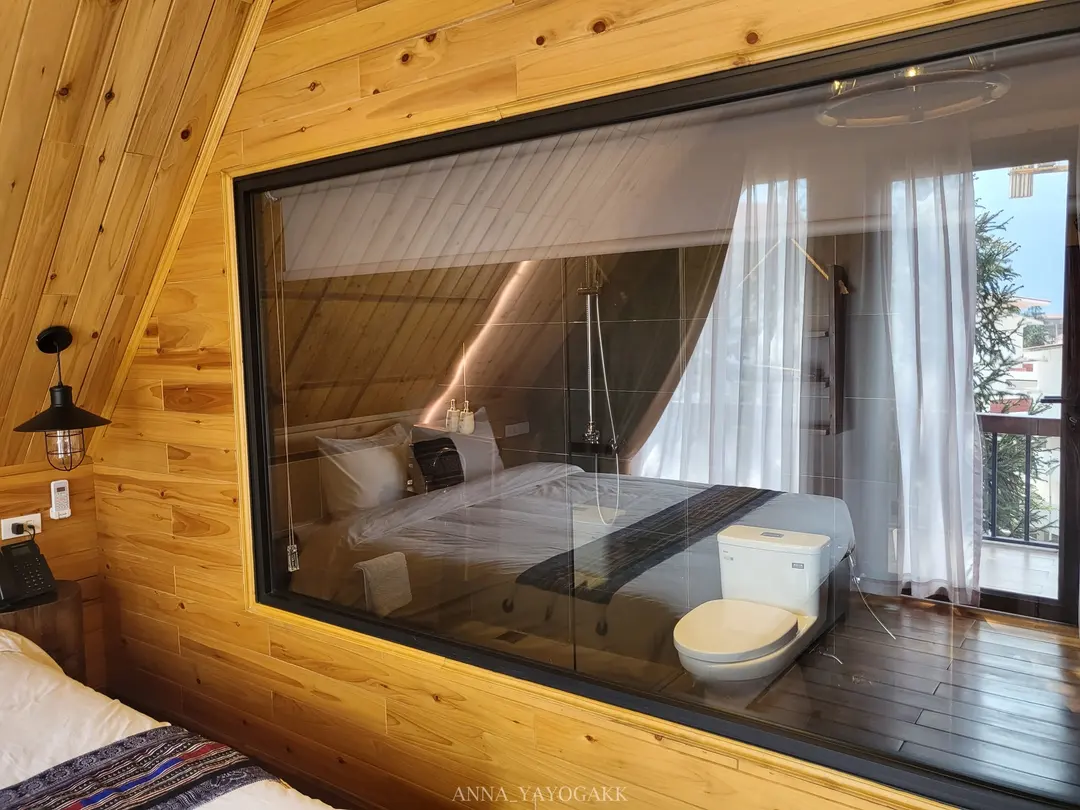
2階にはベッドルームとバスルームがあります。
バスルームは全面ガラス張りになっていますが、
ロールスクリーン式のブラインドがあるので、プライバシー面も心配ありません。
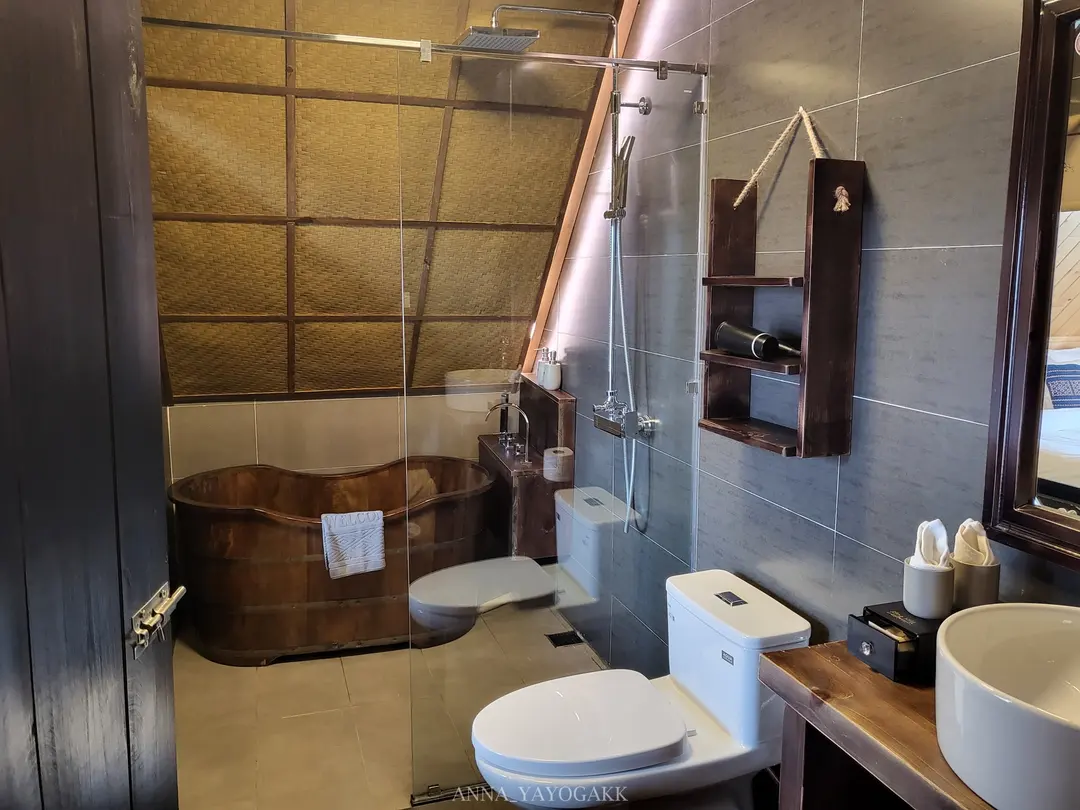
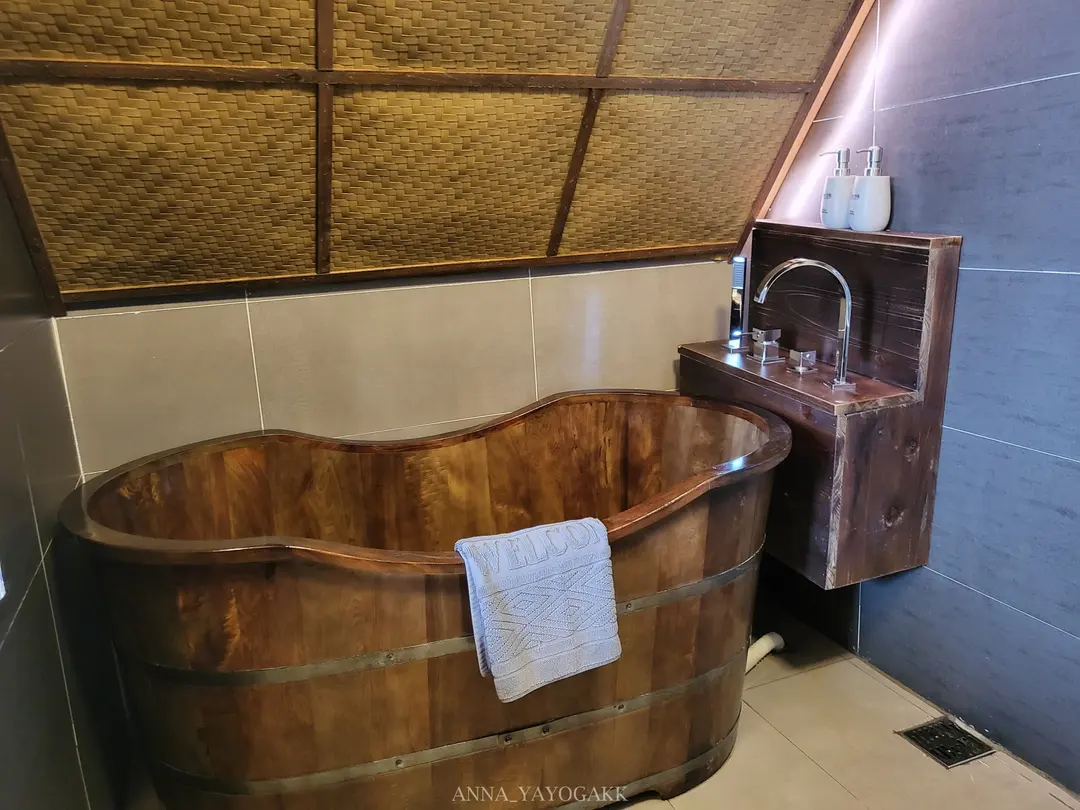
バスルームは狭すぎず、ちょうど良い広さです。
ロッジの温もりを感じられる木製の浴槽(ウッドバスタブ)も設置されています。
ただ、温水タンクの容量に上限があるのか、
最初は熱いお湯がしっかり出たのですが、途中から
水に近いぬるま湯しか出なくなってしまいました(翌日には再び熱いお湯が出ました)。
客室にせっかく素敵な浴槽があるので、この給湯制限については改善されると嬉しいですね。
アメニティは、備え付け(多回用ボトル)のシャンプーとボディウォッシュがあり、
歯ブラシと歯磨き粉は使い捨てのものが用意されていました。
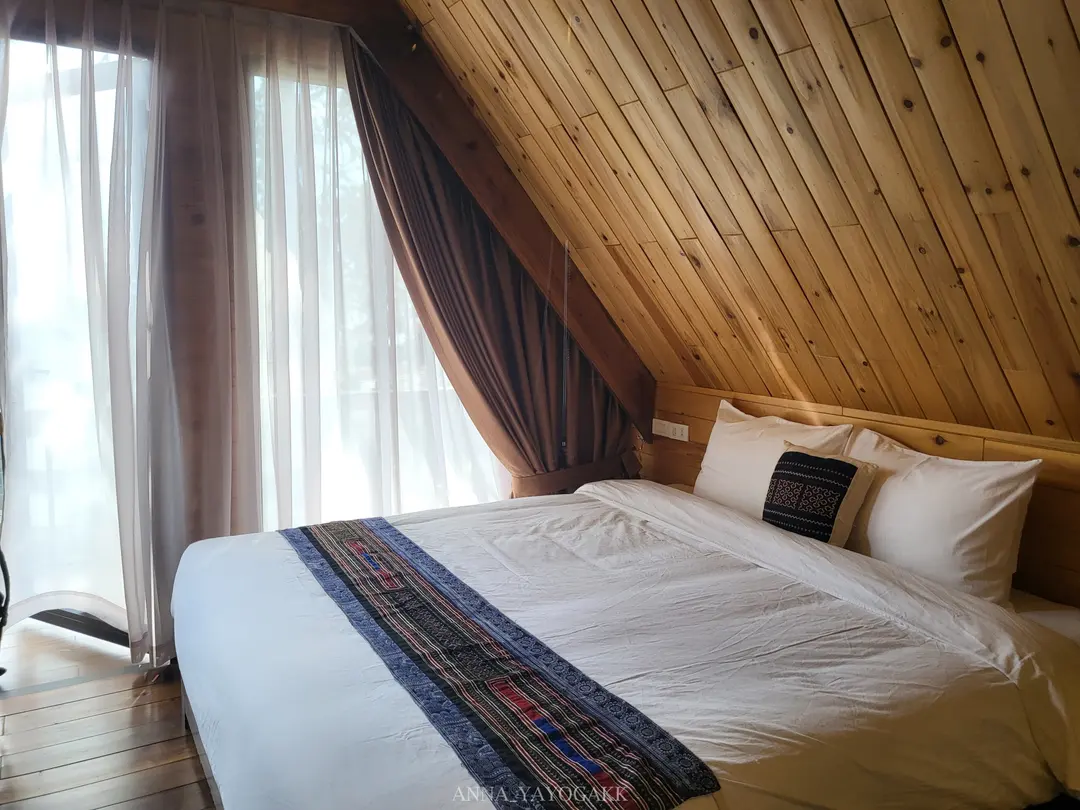
屋根裏部屋のような、どこか秘密基地のような雰囲気のベッドルームです。
寝具もふかふかで清潔感がありました。
冒頭の要約でも触れましたが、
この客室にはテレビがありません。
(おそらく、他の客室も同様の仕様だと思われます。)
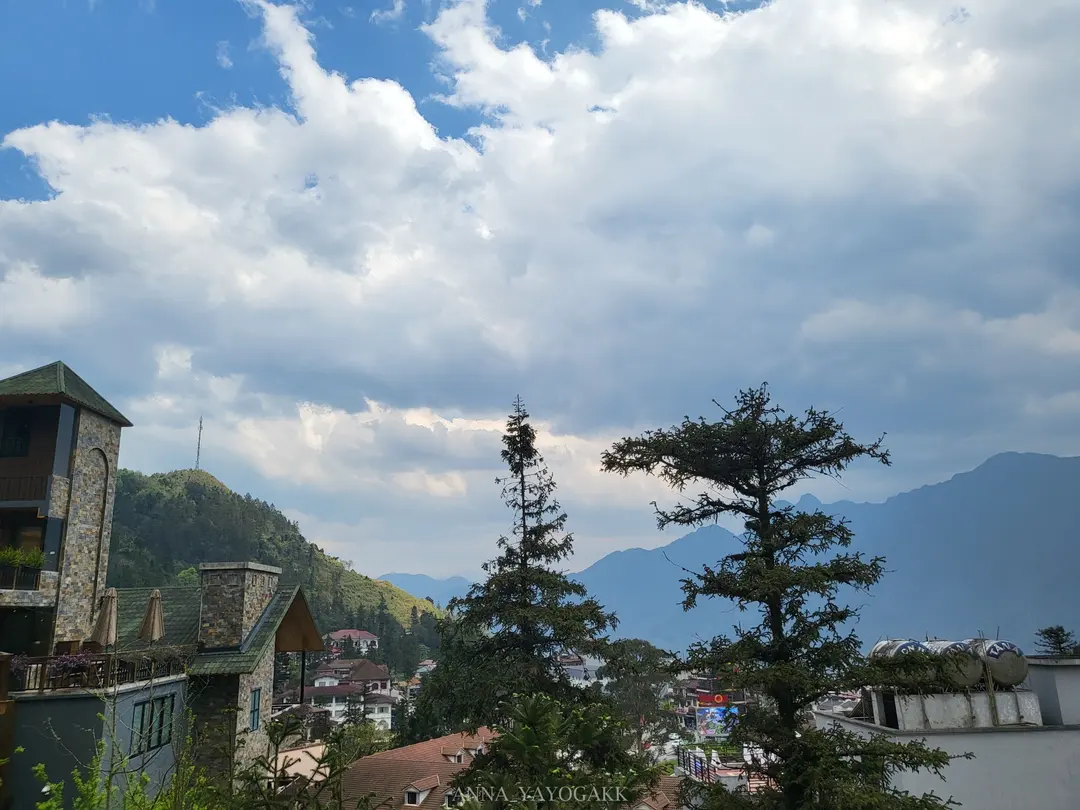
最初は少し戸惑いましたが、テレビがないからこそ、
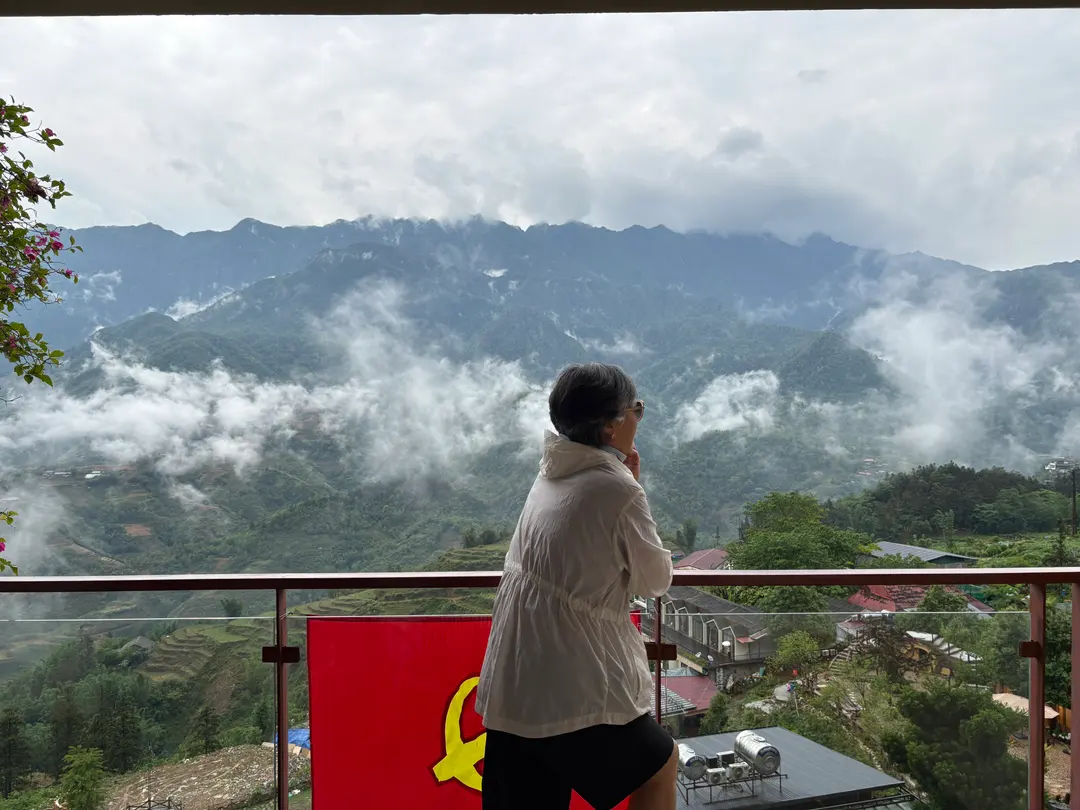
静かなテラスに座って心地よい風に吹かれながら、
サパの街並みをゆったりと眺める贅沢な時間を過ごすことができ、むしろ好印象でした。
ただし、このお部屋は屋根がそのまま天井になっている構造のため、
風が強く吹く日には屋根が風で揺れる音が少し響き、
明け方には近くのサパ教会の鐘の音がかなり大きく聞こえました。
ただ、鐘の音に関しては、周辺のどのホテルに泊まっても同じ状況かと思います。
サパ パインヒル エコ ロッジ 朝食レビュー
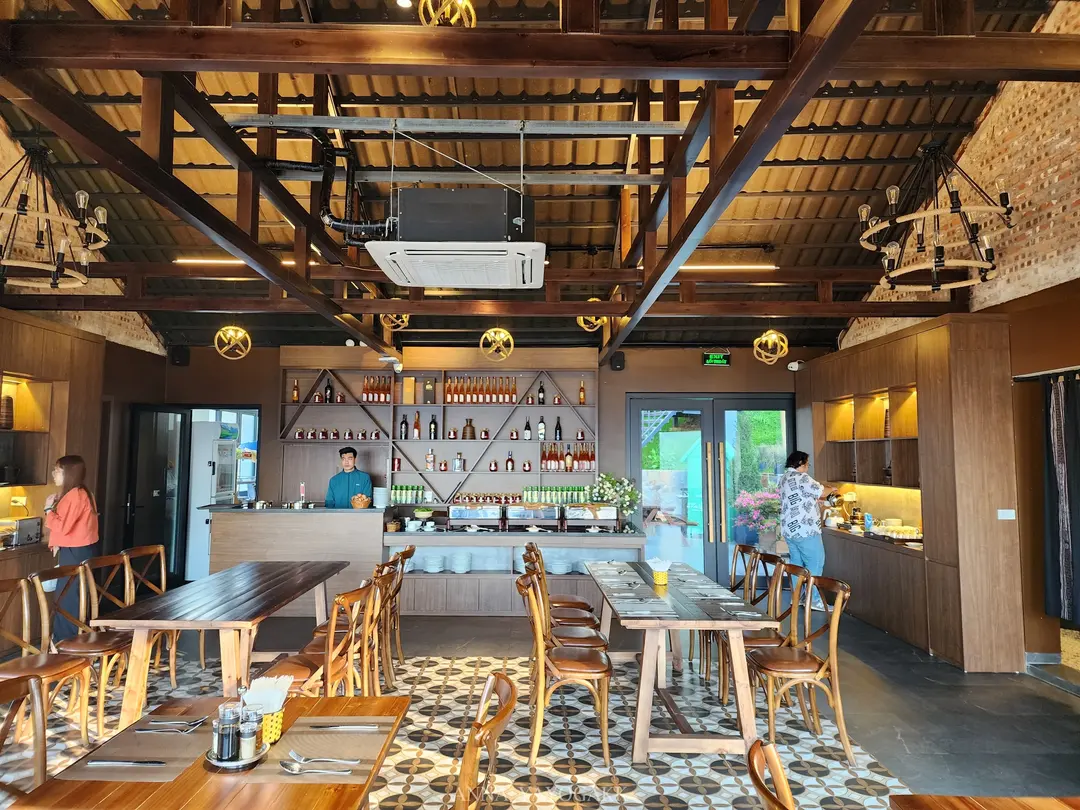
サパ パインヒル エコ ロッジの朝食会場は、
ロッジらしい温もりのあるインテリアでまとめられています。
木製のテーブルとクラシカルな床タイル、そして暖色の照明が相まって、
まるで小さな山小屋(山荘)のような居心地の良い雰囲気です。
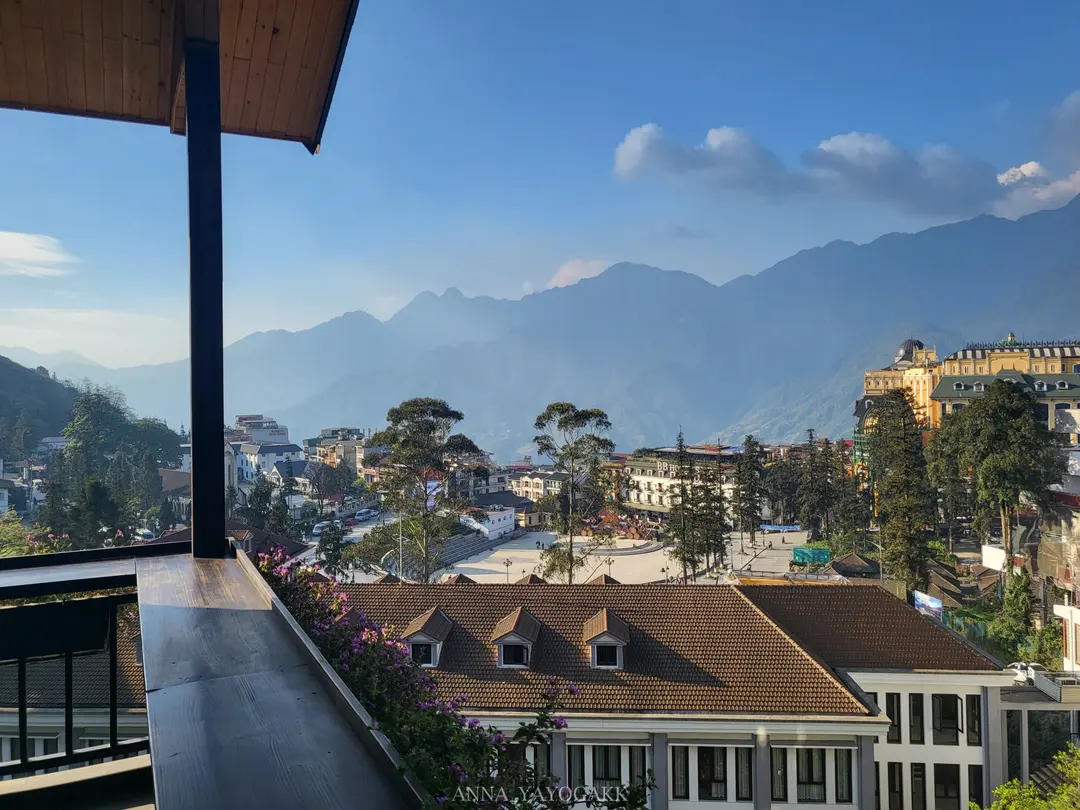
朝食会場にはテラス席も用意されており、
食事をしながらサパのメイン広場を一望することができます。
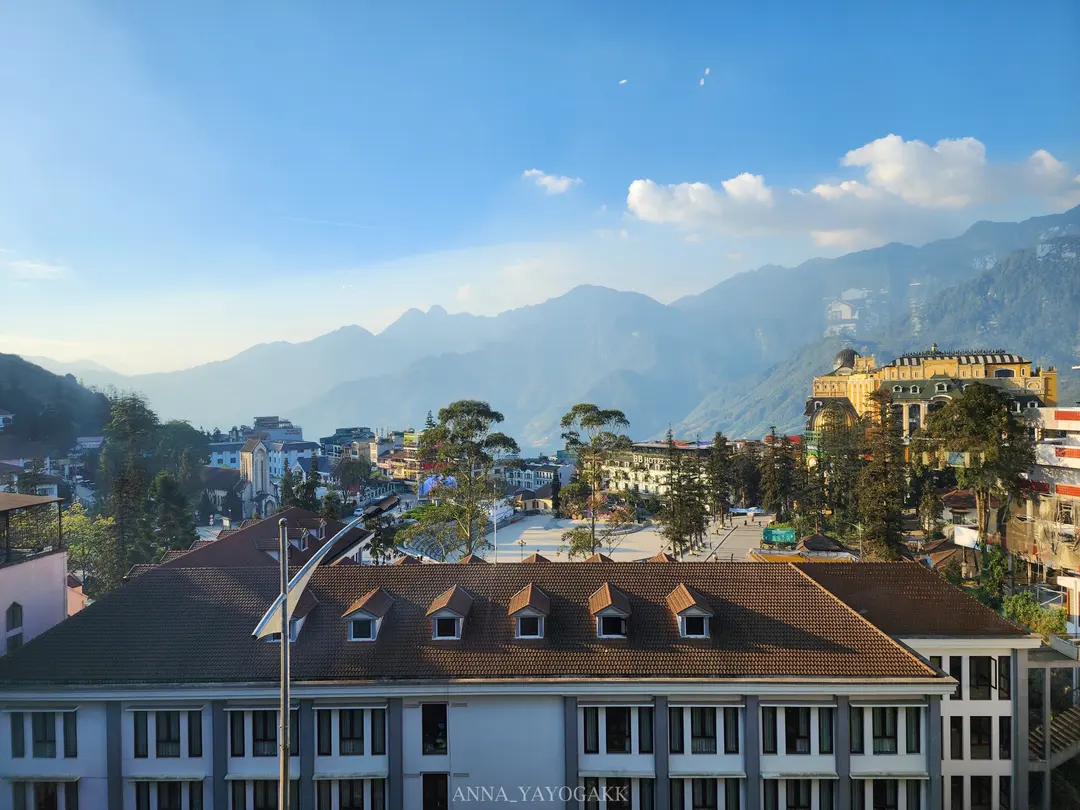
天気が良い日には遠くの山並みまでくっきりと見渡せるため、
まさに「絶景レストラン」と呼ぶにふさわしい贅沢なロケーションでした。
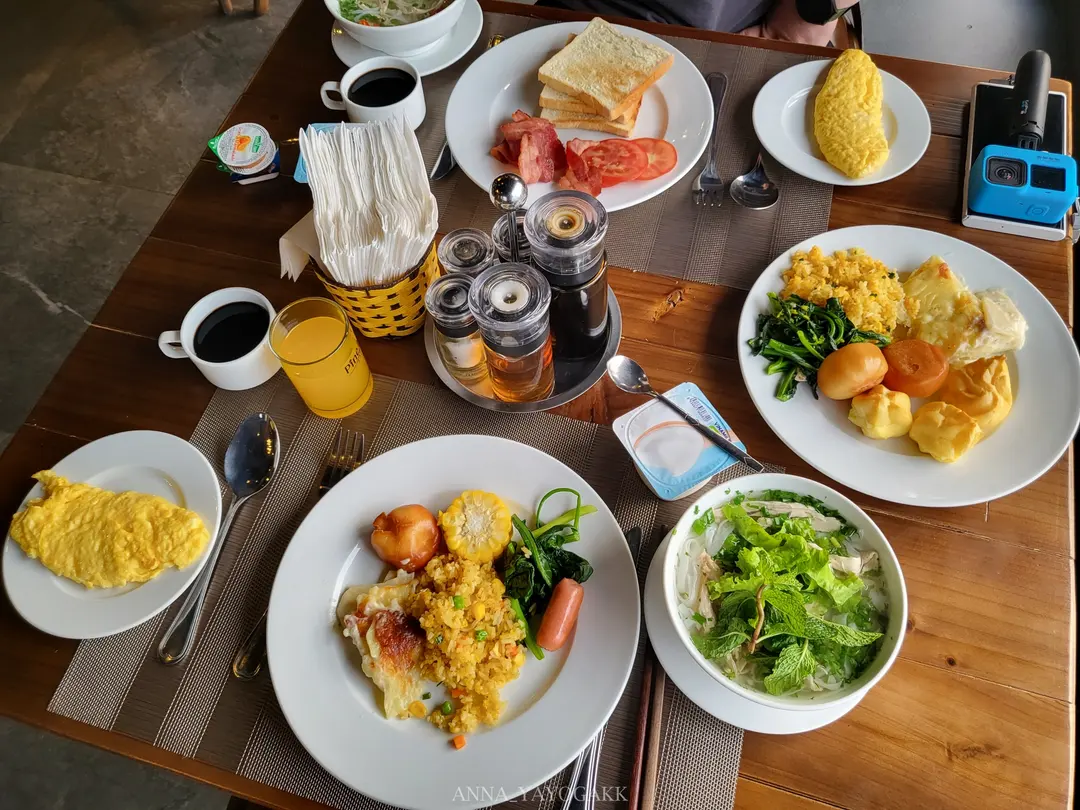
朝食はビュッフェスタイルで提供されており、
品数自体はそれほど多くありませんが、全体的に盛り付けも丁寧で、美味しくいただけました。
フルーツやパン、サラダのほかに、洋食や定番のベトナム料理メニューも並んでいます。
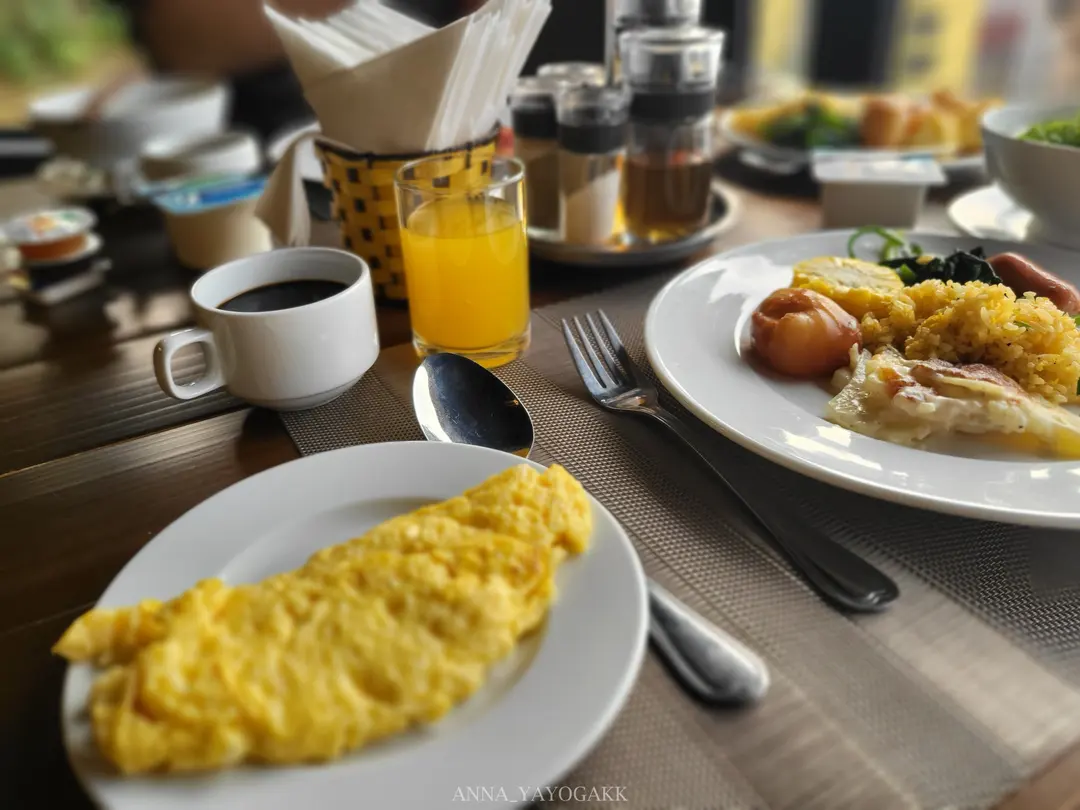
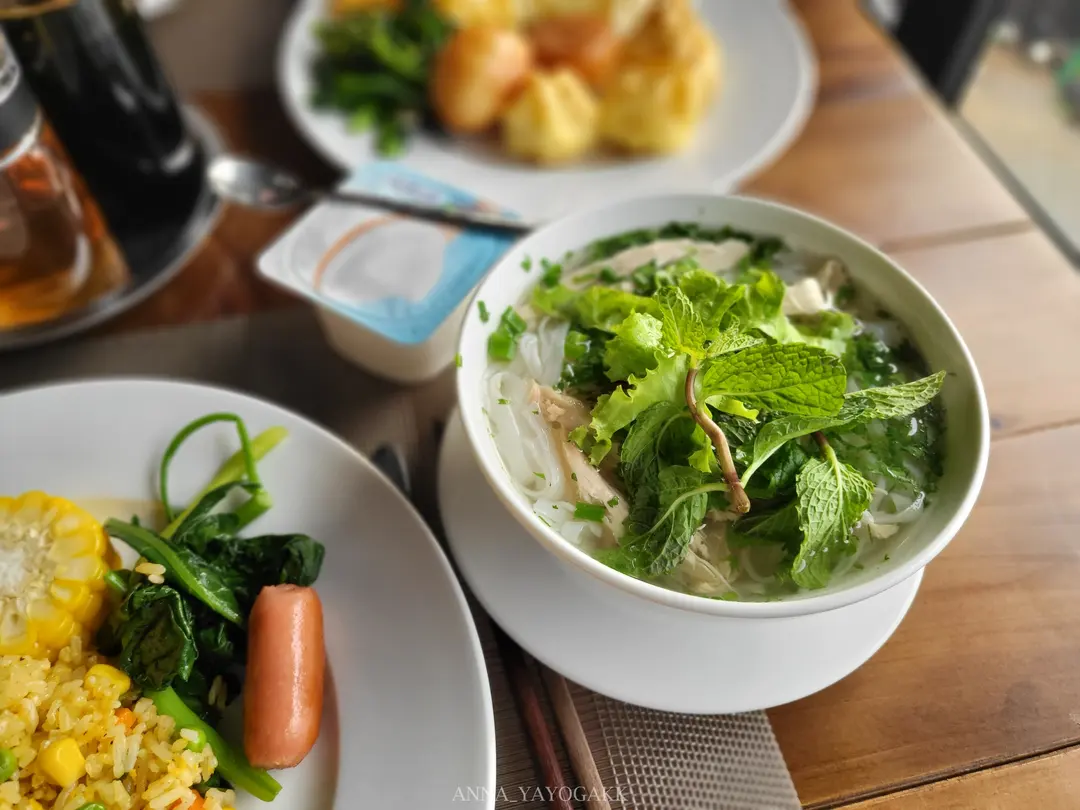
卵料理とフォーはスタッフに直接注文すると、
その場ですぐに作ってくれるシステムです。
フォーは日替わりでメニューが変わるため、
2日間の滞在中も飽きずに楽しめました。
サパ パインヒル エコロジー(Sapa Pine Hill Ecolodge)は、
全体的にコストパフォーマンスが高く、満足度の高いサパの宿泊施設でした。
清潔な施設とスタッフの方々の親切なサービス、
そしてテラスで心地よい風に吹かれながら眺めるサパ市内の景色が、特に印象に残っています。
朝食も美味しかったです。
広場に近いので、立地やアクセスも抜群でした。
サパでコスパが良く、おしゃれで雰囲気のある宿をお探しの方にぜひおすすめします。
スタンダードルームは約5,200円からで、バンガロールームは1泊約10,500円です。全体の1泊の平均料金は約5,200円から約12,600円の間です。
この宿泊施設の客室にはテレビが設置されていません。代わりに、テラスに座ってサパ市内の全景を眺めながら、静かな時間を過ごすことができます。
サパのメイン広場であるサパスクエアから宿泊施設までは徒歩約5分の距離にあります。市内中心部の丘に位置しているため、周辺のレストランやカフェへの移動に便利です。
デザインバンガロー客室は2階建ての構造になっています。1階にはリビングルームと冷蔵庫があり、2階にはベッドルーム、木製のバスタブがあるバスルーム、そしてテラスがあります。

ベトナム・ニャチャンのカムラン国際空港から車で10分の5つ星「アルマリゾート」は、12のプールや本格ウォーターパークを備えた、まさに子供たちの水遊び天国!家族旅行にイチオシのプライベートプールヴィラとホテル棟の選び方、豪華な朝食ビュッフェの様子まで、2026年の最新情報をお届けします。

In </b> # <b> </b> An The In The <b> </b> , This The general objective of this study to understand structural alignment of elements in complete streets policy (CSP) across transportation plans and health guidelines. The search for policy documents was conducted on city, county, region, and state government websites in the state of California, as well as via Google. A total of 30 policies were collected, spanning the years 2005 to 2013, with 2008 being the year of the largest number of policies (n = 10). A systematic content analysis was conducted to analyze the level of alignment across four structural areas: design, policy, evaluation, and community. Results showed complete streets policies and health guidelines have high levels of alignment in the design and policy areas, but limited alignment in evaluation and community engagement. Over time, policy and design alignment remained high. Local agencies should focus on improving community engagement and evaluation, while state agencies can incentivize these areas. Further research is needed to determine the implementation and impact of these policies. This study provides valuable insights for urban planners, public health professionals, and policymakers seeking to promote active living and health equity through policy change. </h2><h2>2. Introduction</h2> <p>Built environments play an important role in promoting physical activity (PA) and preventing chronic diseases, such as obesity and cardiovascular diseases, by providing opportunities for active transportation and recreation <cite><sup>[1]</sup><sup>[2]</sup></p>. Built environment features such as sidewalks, bike lanes, streetlights, and crosswalks can promote active transportation, such as walking and bicycling <cite><sup>[3]</sup><sup>[4]</sup></p>. Conversely, the lack of such infrastructure can deter people from engaging in physical activity, leading to sedentary lifestyles and a higher risk of chronic diseases <cite><sup>[5]</sup><sup>[6]</sup></p>. To address this, many local governments have adopted policies and guidelines that promote active living, such as Complete Streets Policies (CSPs) and health guidelines. Currently, more than 1,600 CSPs have been passed in the United States, including at least 35 state-level policies, 150 metropolitan planning organizations, and more than 1,000 municipal policies <cite><sup>[7]</sup></p>. Additionally, health departments across the United States have developed health guidelines and health-in-all-policies (HiAP) initiatives to promote active living and health equity <cite><sup>[8]</sup><sup>[9]</sup></p>. However, the alignment between CSPs and health guidelines is often unclear, which can limit their effectiveness in promoting active living and health equity.</p> <p>CSPs aim to design and operate streets that are safe, comfortable, and convenient for all users, regardless of age, ability, or mode of transportation <cite><sup>[10]</sup></p>. These policies have been shown to increase physical activity, reduce traffic-related injuries and fatalities, and improve air quality <cite><sup>[11]</sup><sup>[12]</sup><sup>[13]</sup></p>. In contrast, health guidelines and HiAP initiatives aim to integrate health considerations into decision-making processes across various sectors, including transportation and urban planning <cite><sup>[14]</sup><sup>[15]</sup></p>. These guidelines often emphasize the importance of active living, access to healthy foods, and environmental justice. While both CSPs and health guidelines share the goal of promoting active living and health equity, they are often developed and implemented by different agencies with different priorities, funding sources, and professional languages <cite><sup>[16]</sup><sup>[17]</sup></p>. This can lead to a lack of alignment and coordination, resulting in missed opportunities to create healthier and more equitable communities.</p> <p>This study aims to assess the structural alignment of elements in CSPs across different levels of government in California, including cities, counties, regions, and the state, and to compare them to health guidelines. Specifically, we will analyze the level of alignment across four structural areas: design, policy, evaluation, and community. We will also examine how this alignment has changed over time, as well as the differences in alignment between different levels of government. The results of this study will provide valuable insights into the gaps and opportunities for alignment between CSPs and health guidelines, which can inform the development and implementation of future policies and guidelines to promote active living and health equity.</p> <p>To achieve this objective, we conducted a systematic content analysis of 30 policy documents from California, spanning the years 2005 to 2013, with 2008 being the year of the largest number of policies (n = 10). The documents were collected from city, county, region, and state government websites, as well as via Google. We developed a coding scheme to assess the presence and strength of elements in the four structural areas: design, policy, evaluation, and community. We then analyzed the data using descriptive statistics and bivariate analyses to compare the alignment across different levels of government and over time.</p> <p>The findings of this study will be of interest to urban planners, public health professionals, and policymakers who are working to create healthier and more equitable communities. By identifying areas of strength and weakness in the alignment between CSPs and health guidelines, this study can help to guide future efforts to integrate health into transportation and land use decision-making.</p> <p>The rest of this paper is organized as follows. First, we provide a brief overview of the literature on CSPs, health guidelines, and policy alignment. Next, we describe our methodology, including our data collection, coding scheme, and analysis plan. We then present our results, which are organized around the four structural areas, and discuss their implications for policy and practice. Finally, we conclude with a summary of our key findings and recommendations for future research.</p> <p>Our study contributes to the growing body of literature on the intersection of transportation, urban planning, and public health. While previous studies have examined the implementation and impact of CSPs <cite><sup>[18]</sup><sup>[19]</sup><sup>[20]</sup></p>, few have systematically analyzed their alignment with health guidelines across multiple levels of government. By filling this gap, we hope to provide a more comprehensive understanding of how policy alignment can support the creation of healthier and more equitable communities. Furthermore, our focus on California, a leader in both CSP adoption and health-in-all-policies initiatives <cite><sup>[21]</sup><sup>[22]</sup></p>, provides a valuable case study for other states and localities seeking to align their transportation and health goals. Overall, our study highlights the importance of cross-sectoral collaboration and policy alignment in promoting active living and health equity. By working together to align CSPs and health guidelines, planners and public health professionals can create streets that are not only safer and more accessible, but also healthier and more equitable for all. Do you want me to write a specific section, or continue with the next part of the paper? Let me know! **User:** Yes, please write the

ホーチミン1区にあるM City Hotel Saigonのデラックスルームに宿泊。ベンタイン市場へ徒歩約5分、主要観光地へのアクセスも良好。清潔な客室と親切なサービスに大満足でした。

ホーチミン1区に位置する5つ星「ホテルニッコーサイゴン」のクラブデラックスキングルームと朝食を徹底レビュー。清潔な客室、きめ細やかなターンダウンサービス、無料シャトル、そしてサプライズの誕生日サービスまで、詳細重視の旅行者におすすめのポイントをご紹介します。

ハノイのミーディン地区に近く、洗練されたサービスと快適な客室が魅力の「シェラトン・ハノイ・ウエスト・ホテル」。人気のプレミアキングルーム(シティビュー)の客室コンディションや広々としたロビー、スムーズなチェックインの様子を詳細にブログで徹底レビューします!ホカンスや出張にもおすすめです。

ダナンでの家族旅行、リゾートでゆっくり過ごす時間が醍醐味ですよね。フュージョンリゾートダナンは、全室スイートで広々快適。朝食とスパ込みで、非常に満足度の高い滞在が叶います。お得な予約方法もご紹介。