

Nara, Japan Walking Tour: Todai-ji Temple & Deer Park Guide 2026
Discover the magic of Nara, Japan, on a pedestrian-friendly journey. Explore the majestic Todai-ji Temple and encounter friendly deer in Nara Park. Your ultimate guide to this charming city.

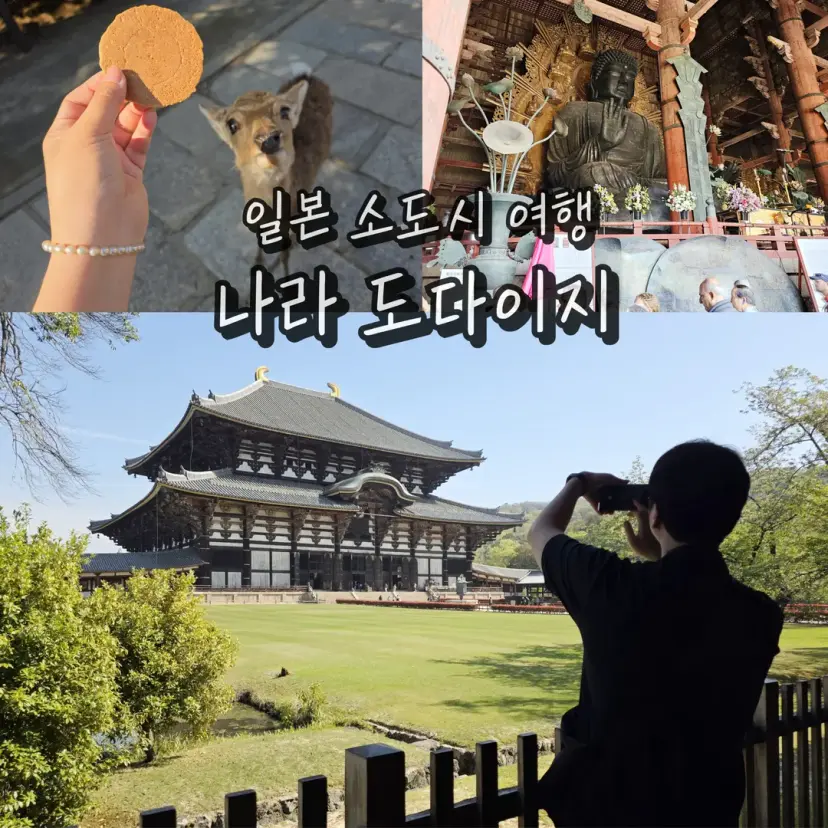
Hello, fellow explorers!
I'm Nabongsun, your travel influencer.
#JapanNara
#NaraDeerPark
#JapanSmallCityTravel
#JapanTravel
#WalkingTravel
#Todaiji
#JapaneseShrine
1. Embarking on a Trip to Nara, Japan
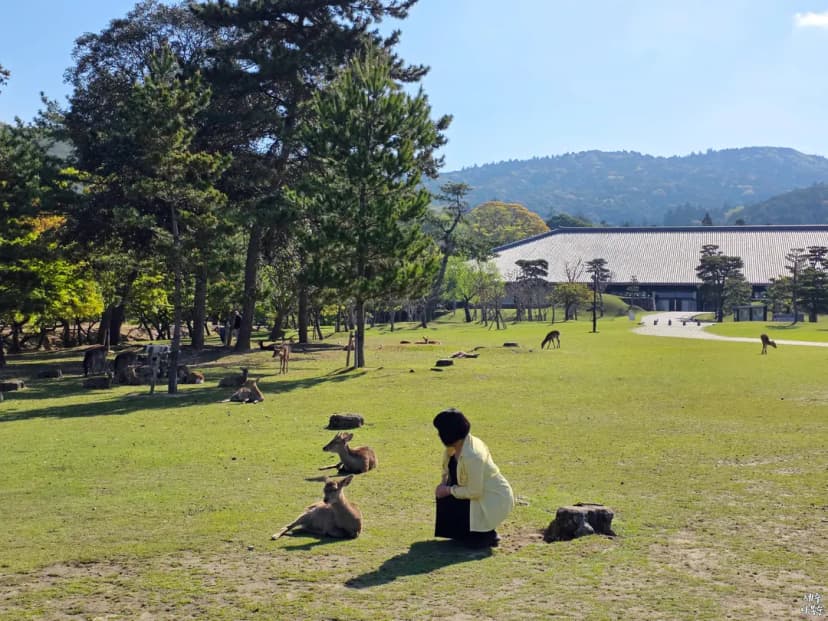
Somehow, over the past year,
I've visited Nara, Japan — known as a serene small city destination —
three times!
After my first visit with my brother,
I fell in love with the tranquility of Nara Deer Park.
So, I came back with my parents and child,
and recently, I revisited it with my animal-loving husband.
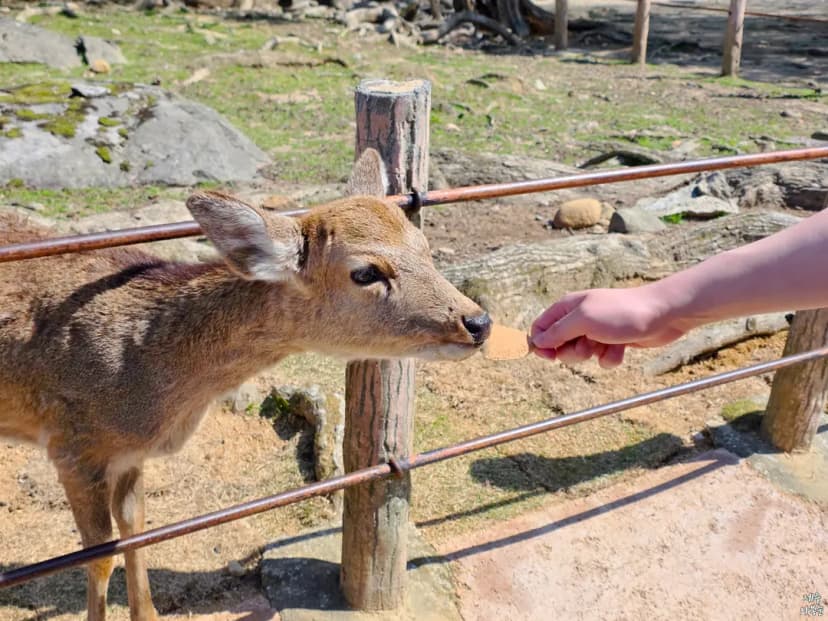
I truly believe this Japanese destination has so many hidden charms
beyond just saying hello to the diverse, big and small deer and feeding them senbei crackers.
Especially if you're a walking traveler, I highly recommend visiting
the magnificent wooden structure, the historically significant
Todai-ji Temple, which is within walking distance of the station.
There are also various Japanese shrines nearby,
offering plenty of sights to explore consecutively.
The overwhelming scale of Todai-ji has impressed me with different landscapes
each season I've visited. I want to convey its grandeur and tranquil charm,
so this time, I'll be introducing Todai-ji's location, history, and various attractions
in detail.
2. Todai-ji Location and History
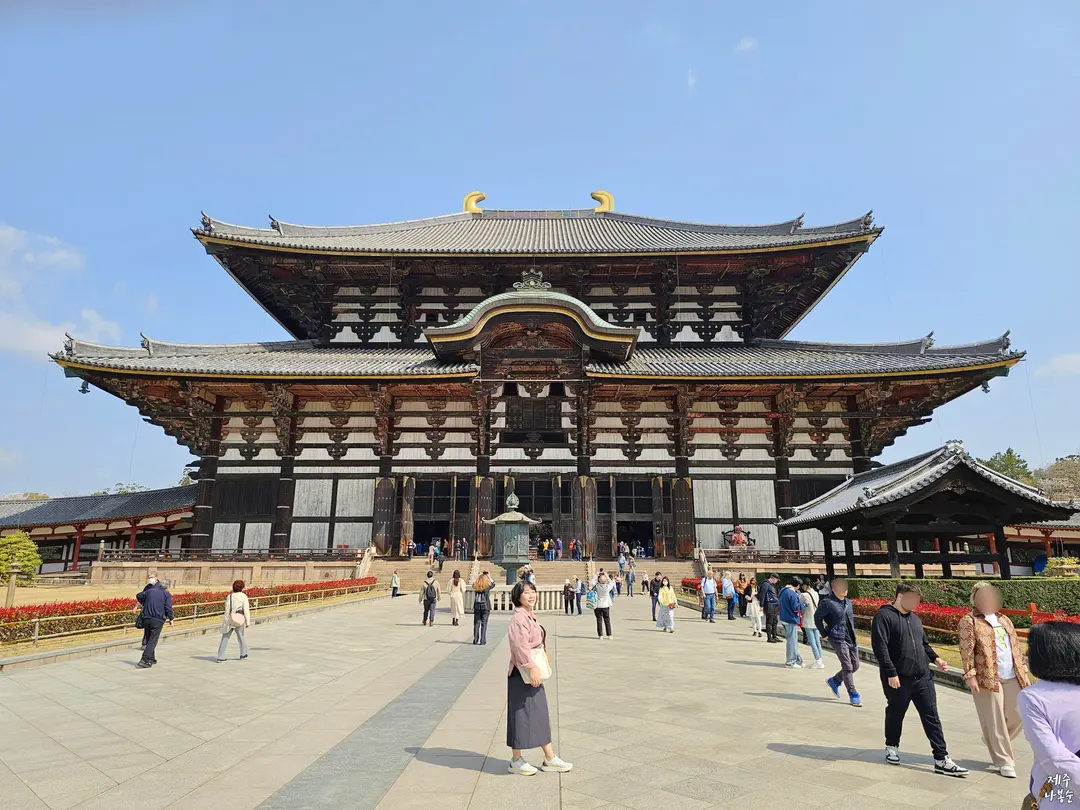
Todai-ji is a Buddhist temple housing Japan's largest
bronze Buddha statue, located on the northeast side of Nara Park.
Nestled at the foot of the lush Mount Wakakusa-yama,
the temple buildings blend harmoniously with the beautiful natural scenery,
offering a truly picturesque viewing experience.
📍 Todai-ji Temple
406-1 Zōshichō, Nara, 630-8587 Japan
📍 Nara Park
Nara, Nara Prefecture, Japan
📍 Kintetsu-Nara Station
29 Higashimukinaka-machi, Nishimikadochō, Nara, 〒630-8215 Japan
📍 Nara City
Nara, Nara Prefecture, Japan
🦌⛩️
Todai-ji Temple
東大寺
📍
Address
406-1 Zoshicho, Nara, 630-8587 Japan
🕒
Opening Hours
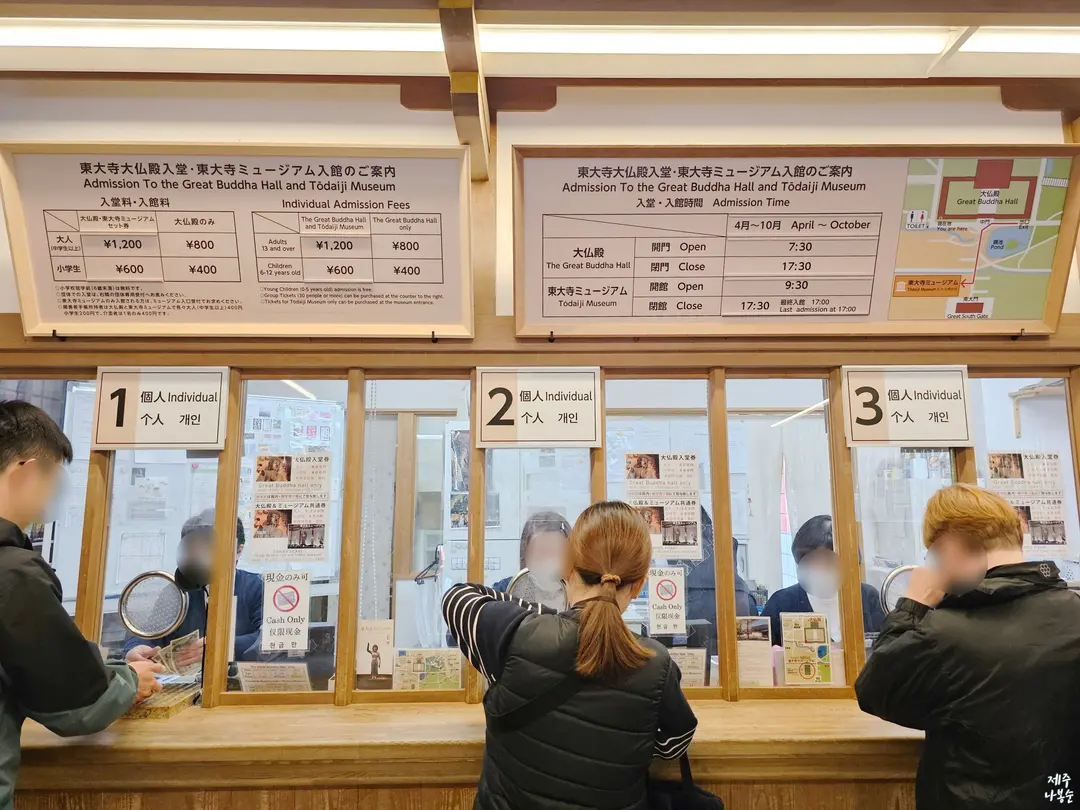
07:30 - 17:30
🎫
Admission Fee for Daibutsu-den (Great Buddha Hall) - General Individual Rates
Adults (junior high school age and older) ~$5
Children (elementary school age and older) ~$2
(Cash only)
While many people visit Nara briefly as part of a day trip bus tour from Kyoto,
I always prefer to visit Nara at a leisurely pace, so I travel on foot.
Nara mainly has two stations, Kintetsu Nara Station and JR Nara Station.
It's more convenient to arrive at Kintetsu Nara Station for better access to attractions.
I'd recommend visiting in the early morning to enjoy the sights
in a more peaceful atmosphere.
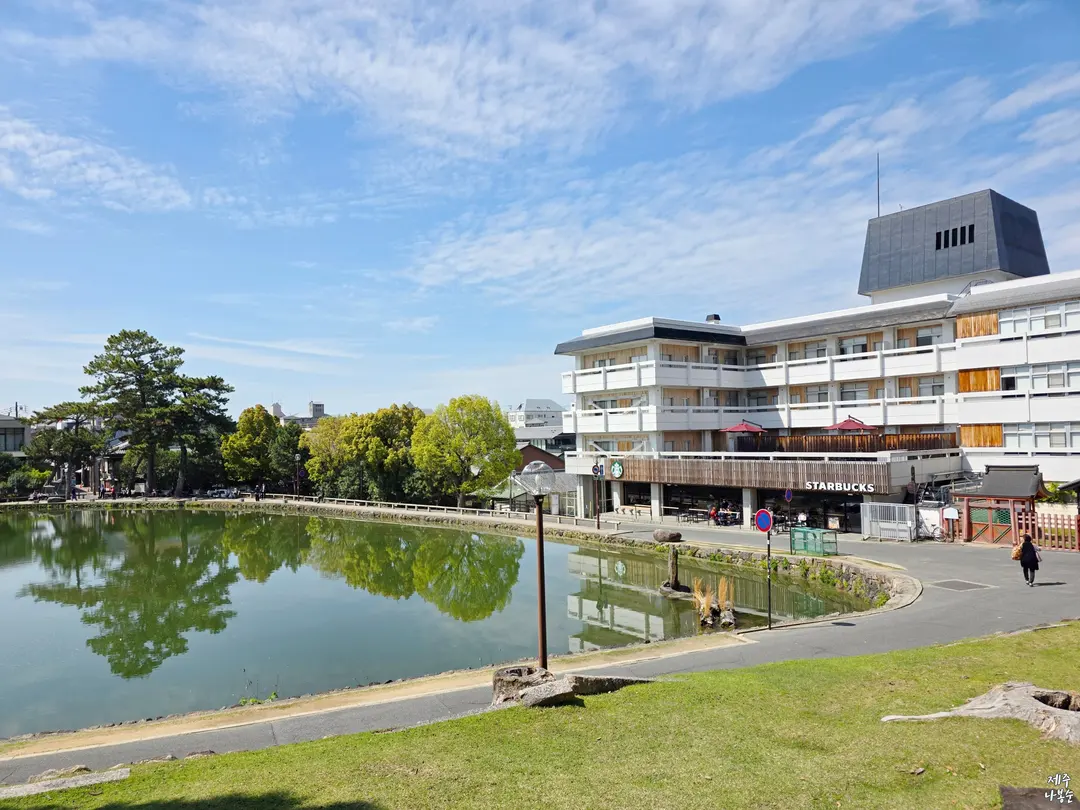
Here's my recommended walking itinerary for this small Japanese city,
based on my multiple visits to Nara:
Arrive at Kintetsu Nara Station ▶ Todai-ji Temple ▶
Leisurely explore Nara Deer Park and visit nearby cafes ▶
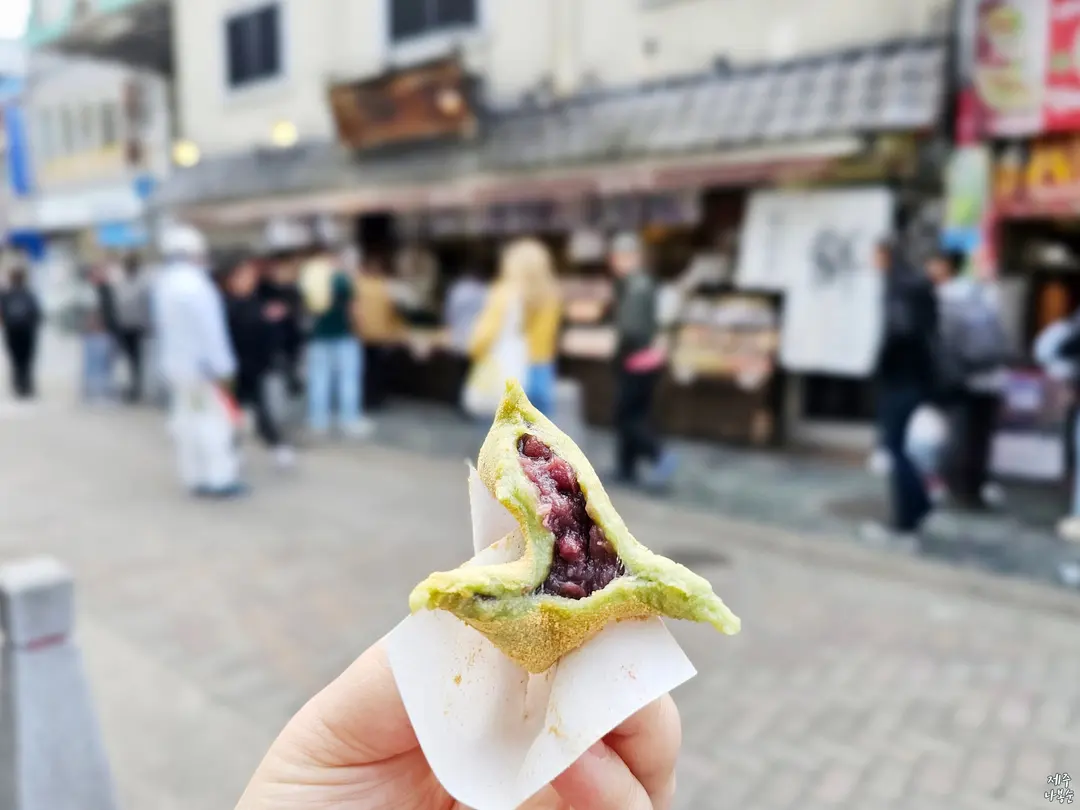
Sarusawa-ike Pond (where Starbucks Nara Sarusawa-ike is located) ▶ Nakatani-do, a popular traditional handmade mochi shop ▶
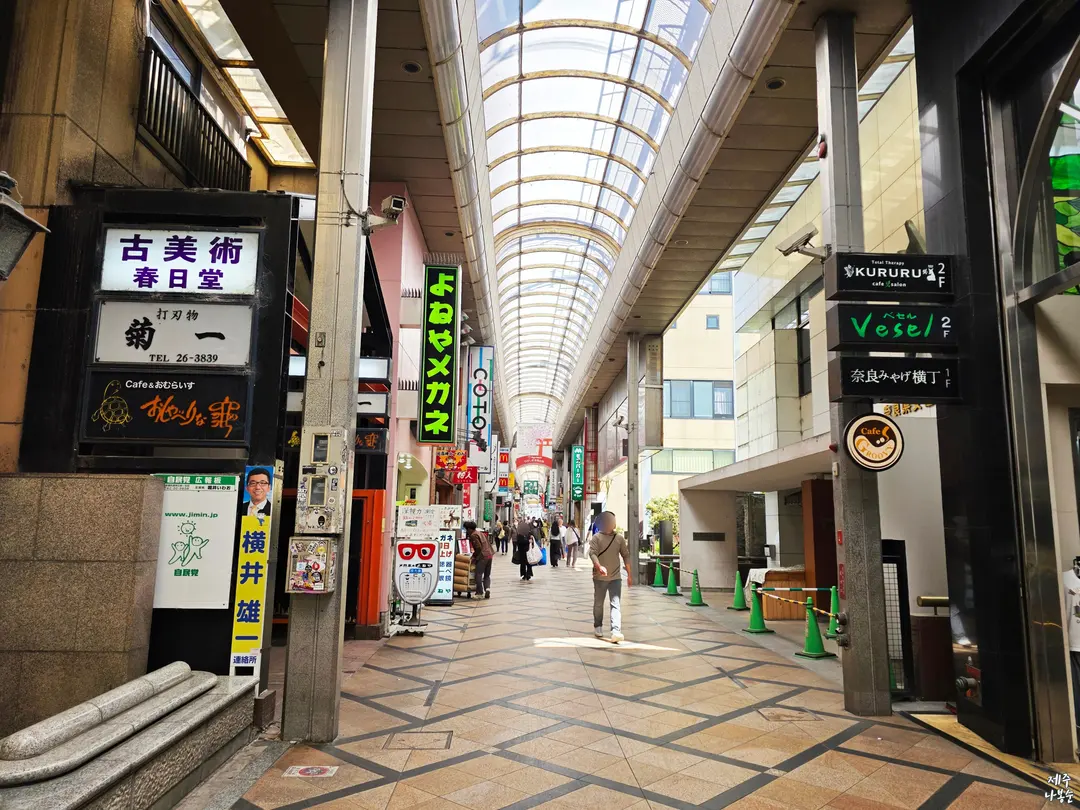
Higashimuki Shopping Street (an arcade, great for exploring and dining regardless of weather) ▶
Kintetsu Nara Station
I hope you'll follow this itinerary for a relaxed half-day exploration.
There are also charming small Japanese shrines scattered along the way,
which really enhance the travel experience.
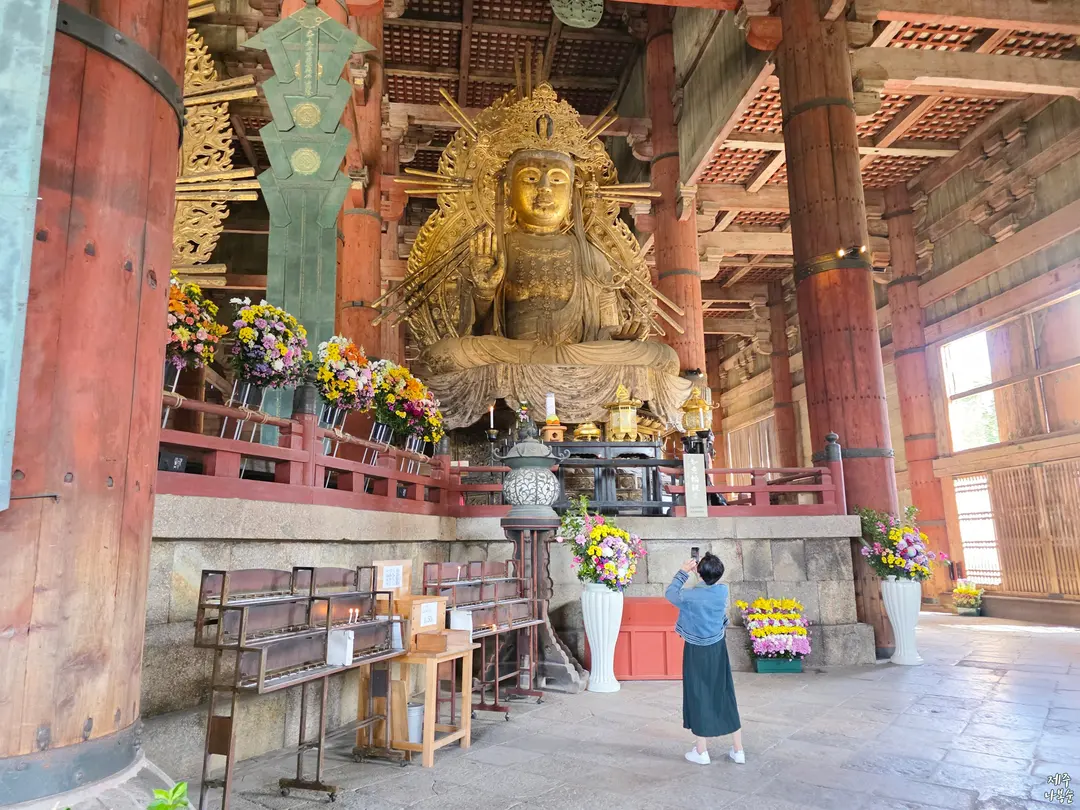
Todai-ji can be described as a monumental historical legacy from 8th-century Japan,
imbued with the hopes and fervent wishes of the ancient nation and its people.
In the mid-8th century, the Nara region was known as 'Heijō-kyō'...
It was a name, and a place that was the capital of Japan,
a time when Buddhist culture flourished brilliantly,
but due to a national disaster, a deadly epidemic,
royalty, nobles, and countless common people lost their lives,
and severe droughts, great famines, earthquakes, and rebellions
reportedly followed one after another.
It is said that Todai-ji Temple was built by Emperor Shomu, the ruler at the time, who felt deep despair in the face of these successive disasters, in order to unite the troubled hearts of the people.
However, the Great Buddha Hall was burned down in major fires in 1180 and 1567, so the current architecture was rebuilt during the Edo period.
Todai-ji Temple is included in the 'Historic Monuments of Ancient Nara,' a UNESCO World Heritage site.
3. What to See in the Great Buddha Hall
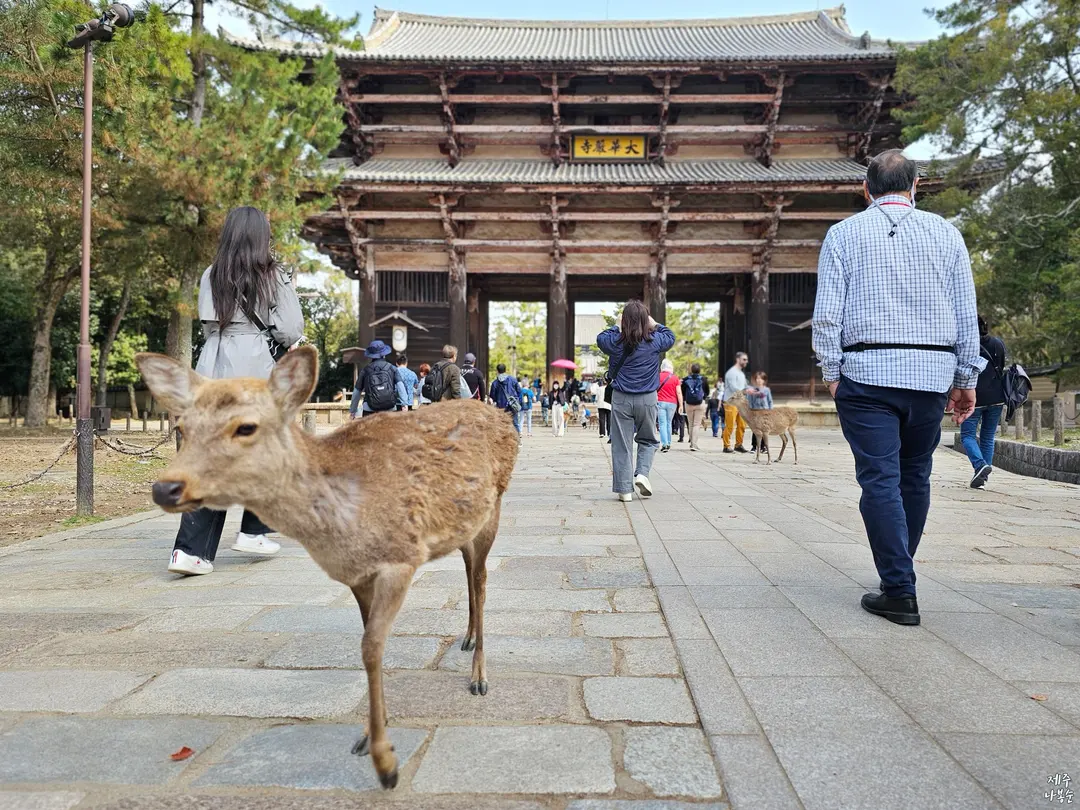
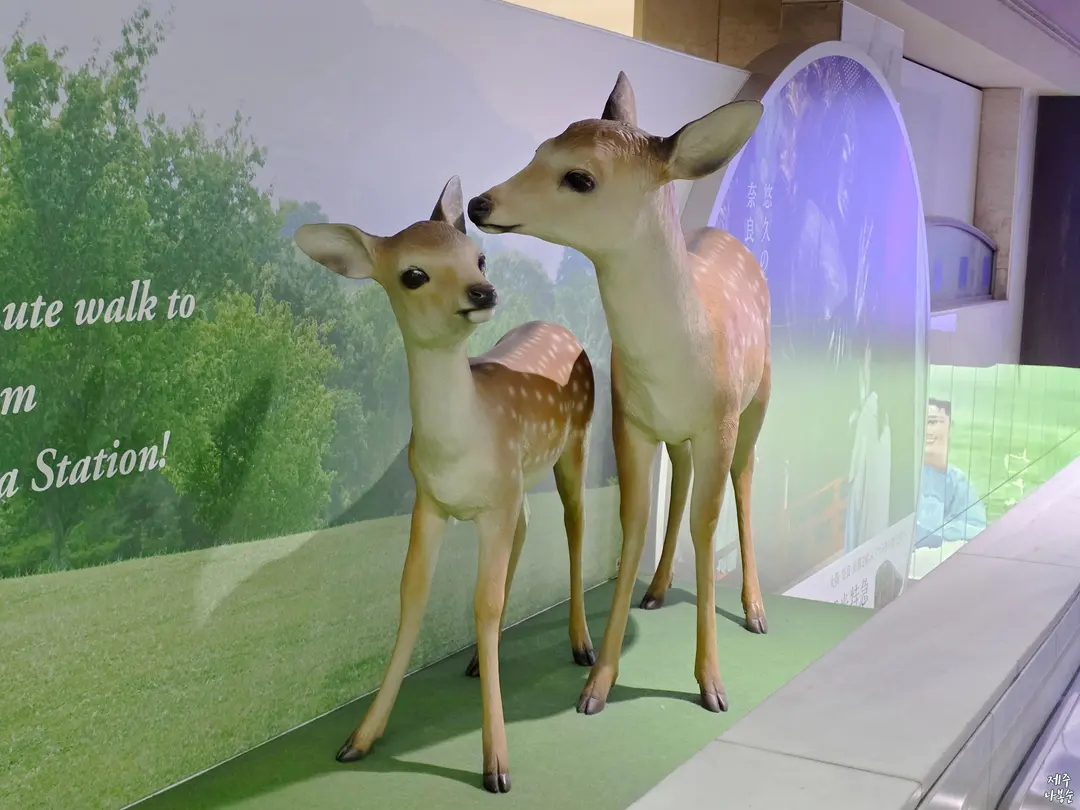
First, the cute deer wandering around are a highlight of Nara, a Japanese travel destination. We gave them deer-specific senbei (10 pieces for 200 JPY), exchanged greetings with nods, and headed towards Todai-ji Temple's Nandaimon (Great South Gate).
This wooden structure, serving as the temple's main gate, is designated as a National Treasure.
Standing at approximately 25 meters tall, the sight of deer resting in the shade created by this overwhelmingly massive wooden structure is quite charming.
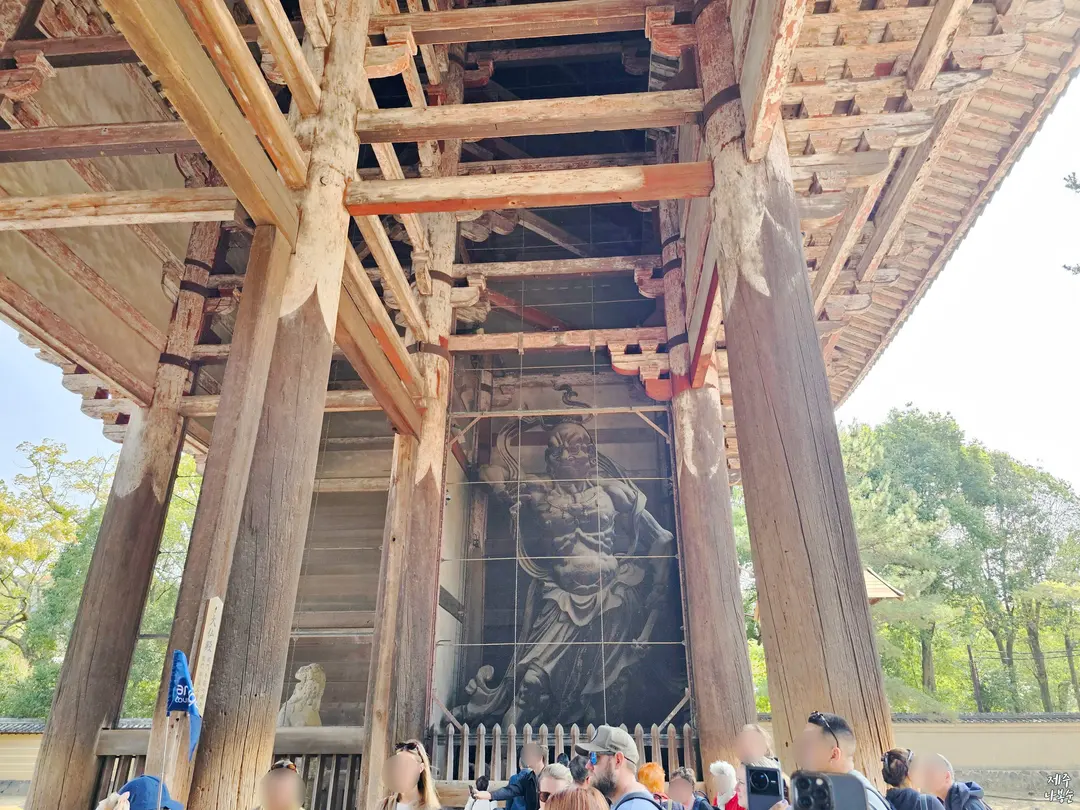
On both sides of the gate, towering 8-meter-tall wooden Kongo Rikishi (guardian statues) stand guard, and their furious expressions can sometimes scare children.
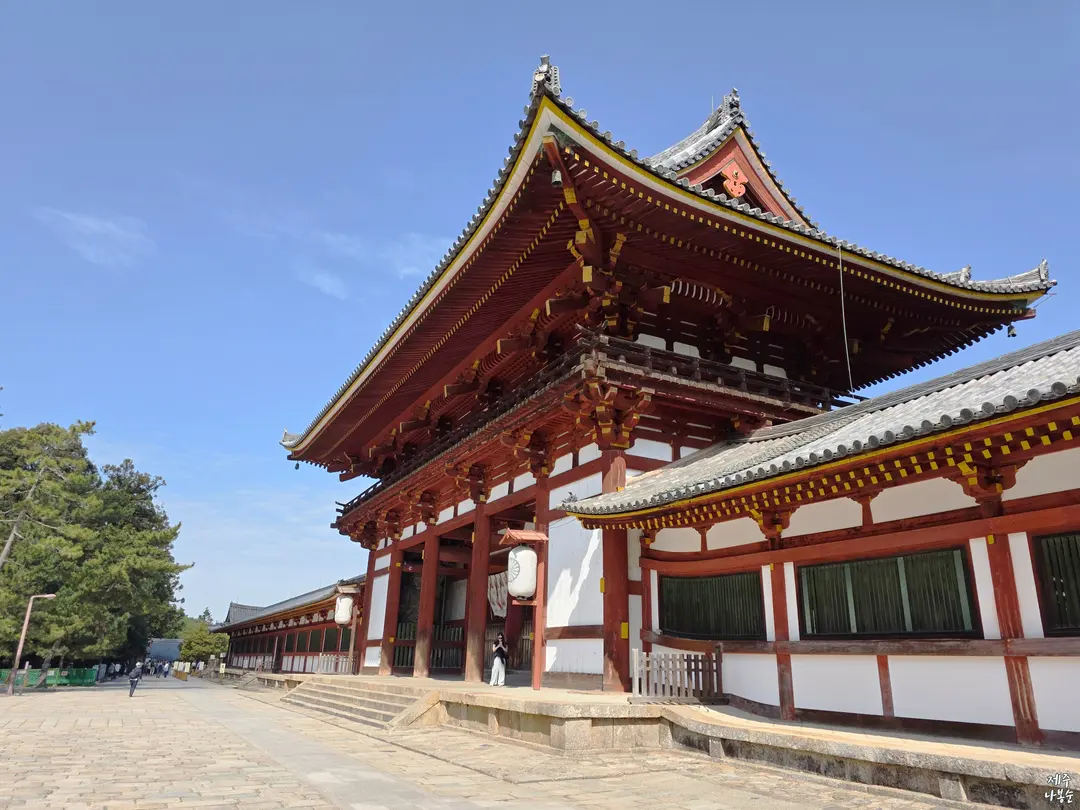
After passing through the Nandaimon, you can proceed to the Great Buddha Hall, which is a paid attraction, so we purchased tickets on-site with cash.
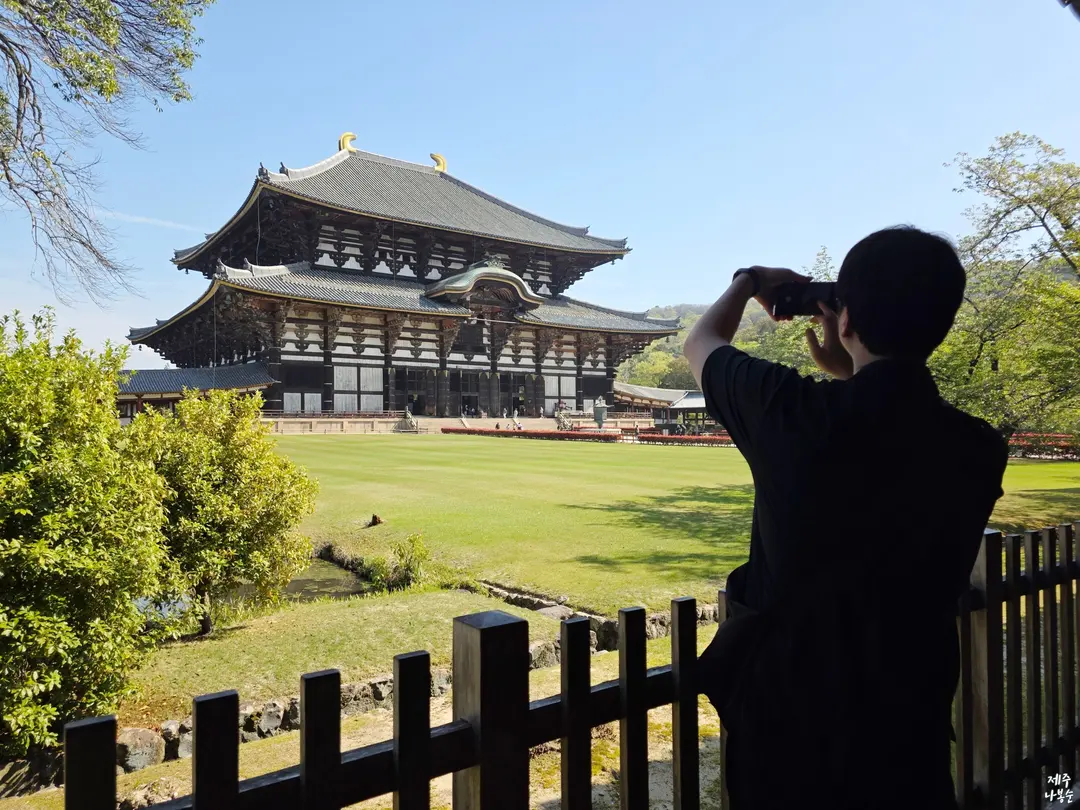
Every time we buy tickets and head towards the Great Buddha Hall, and every time we bring someone here, they are simply astonished by its scale the moment it comes into view.
With a frontal width of 57 meters and a height of 48 meters, the Great Buddha Hall stands as tall as a typical 15-story apartment building. If you pass through the corridor entrance and take a wide-angle photo from the center of the cedar path, capturing the entire structure of the Great Buddha Hall, you can get a beautiful, once-in-a-lifetime shot.
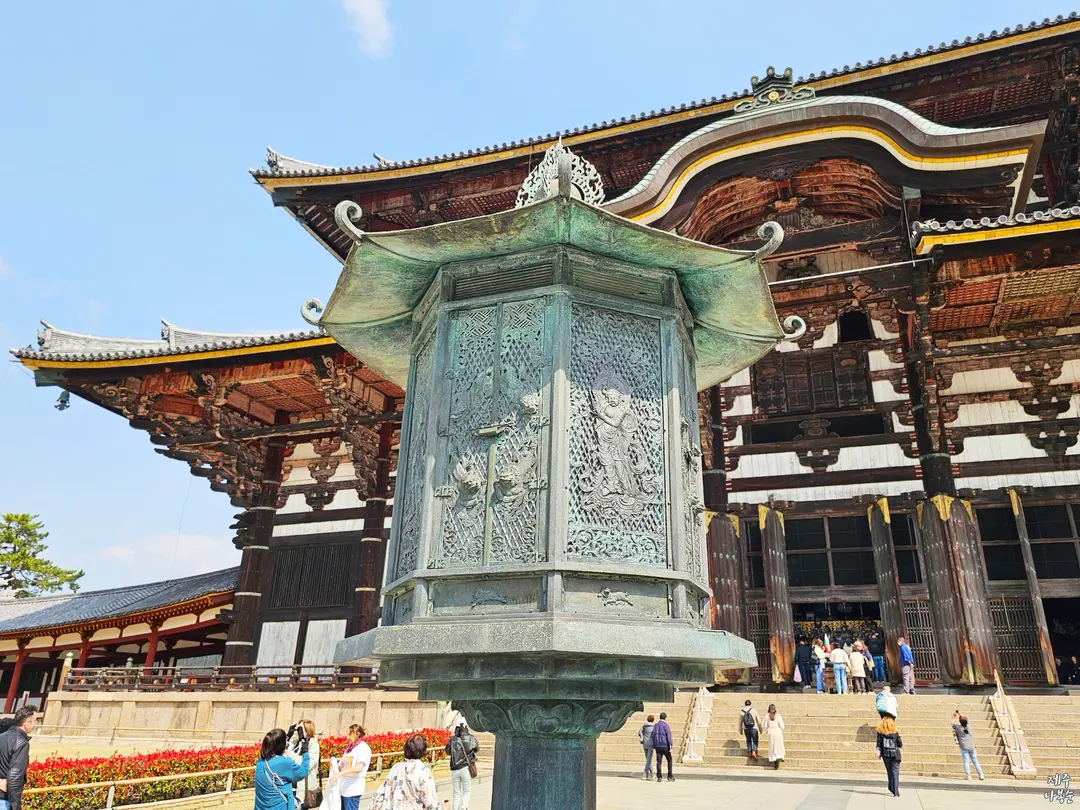
The National Treasure Octagonal Lantern visible in the center is a precious original artifact that has been handed down since the temple's founding in the 8th-century Nara period, so please observe it carefully.
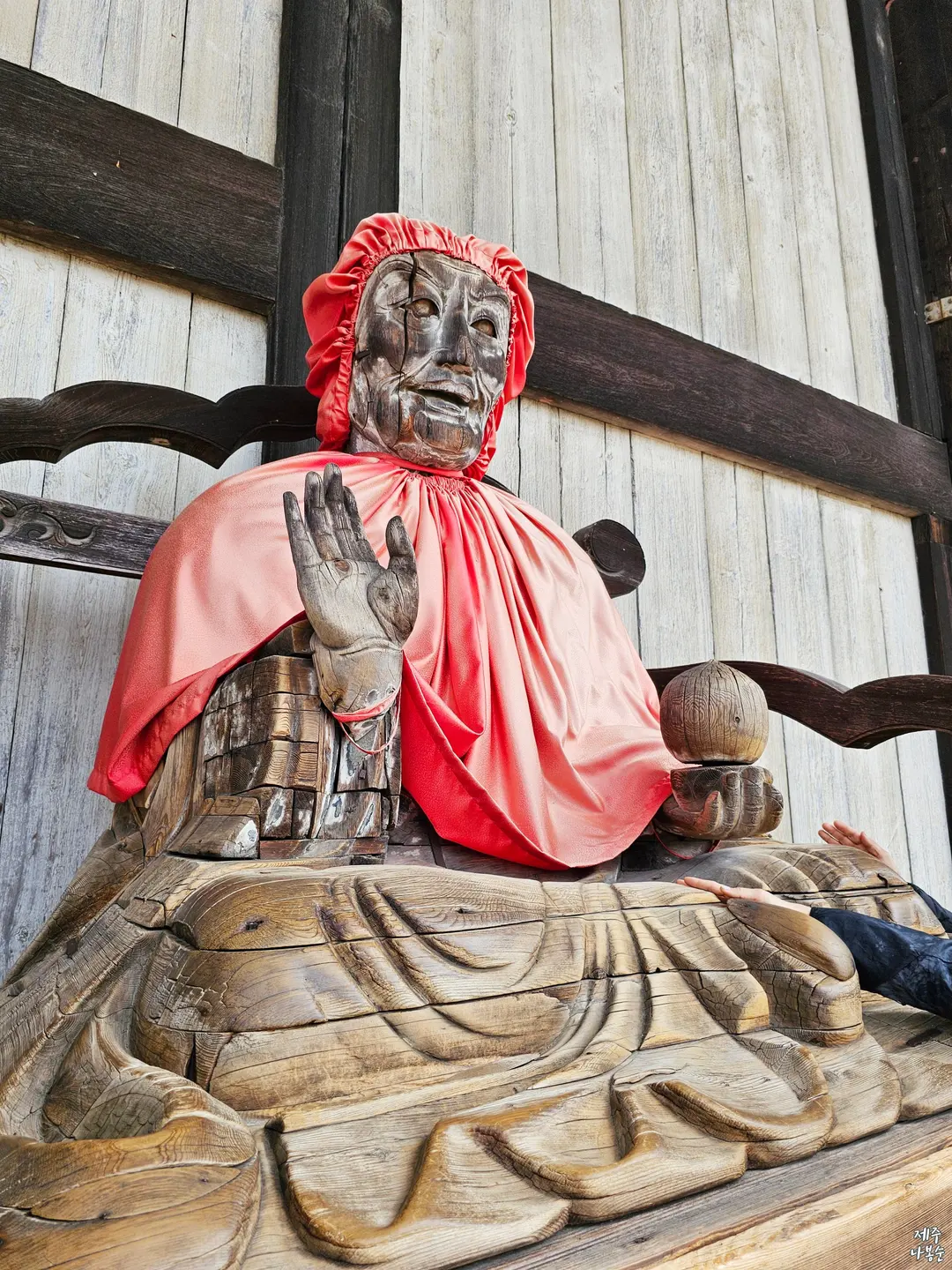
The wooden Buddha statue enshrined under the eaves outside the Great Buddha Hall, known as 'Binzuru Sonja' (or 'Binzuru-sama' by locals), is known as the Buddha of healing. There's a belief that if you respectfully caress this statue's body, your illnesses will be cured, and you'll become healthier, as he is considered a saint with exceptional spiritual powers who heals diseases.
My legs were aching from all the walking, so I diligently rubbed its legs!
I was curious why he was alone outside the main hall, and I learned that during his lifetime, he carelessly showed off his spiritual powers. As a result, he was reprimanded by Shakyamuni Buddha and punished to save all sentient beings, thus receiving pilgrims outside the Great Buddha Hall, exposed to the elements.
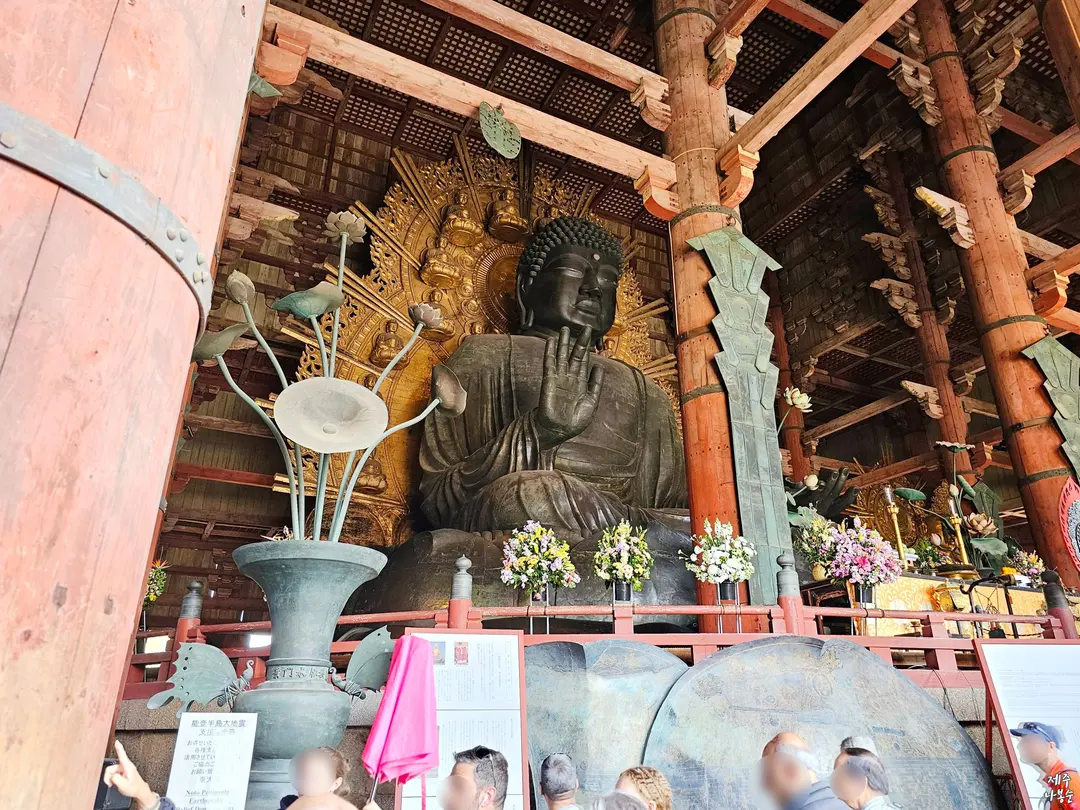
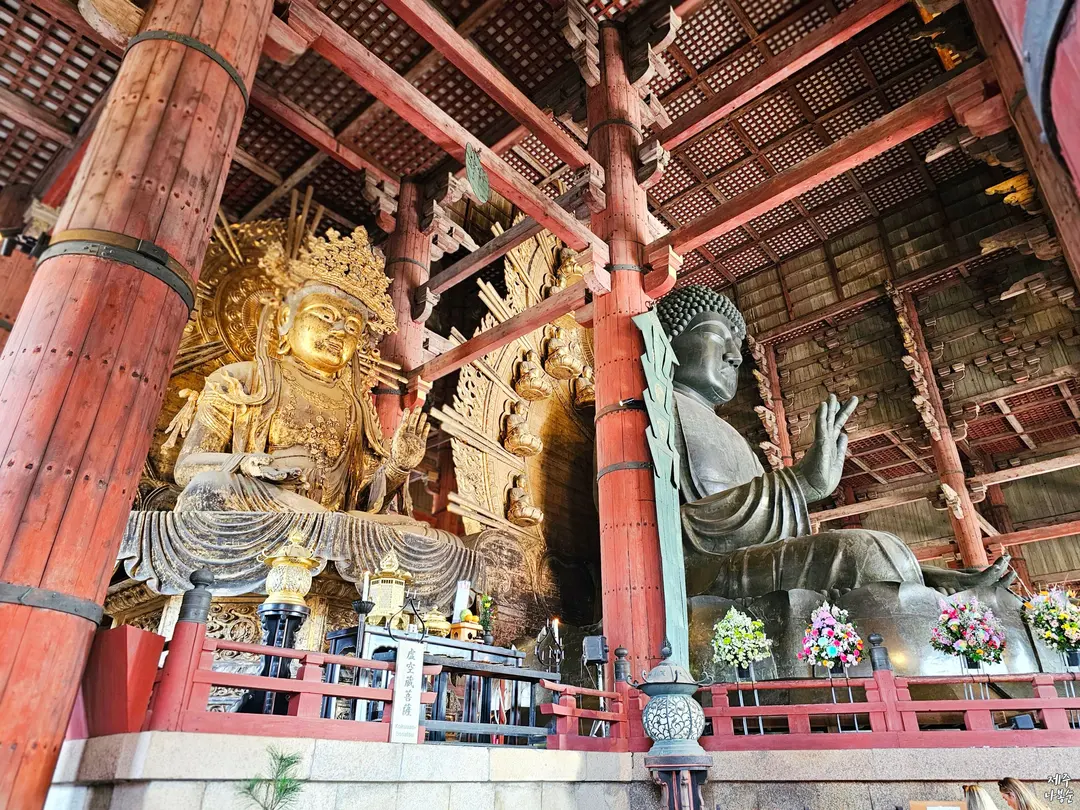
Stepping inside, you'll first be greeted by the gentle and profound gaze of the seated statue of Rocana Buddha, known as the Buddha symbolizing the endless truth and compassion of the universe.
This Buddha statue is an impressive 15 meters tall and weighs a staggering 250 tons!

There's an interesting point behind the pillar: a popular belief says that if you pass through a hole the size of the Great Buddha's nostril, you'll live a long life free from illness and ward off bad luck! My husband and I, being on the larger side, didn't even dare to try, but elementary school children and smaller women were enthusiastically squeezing through and seemed absolutely delighted.
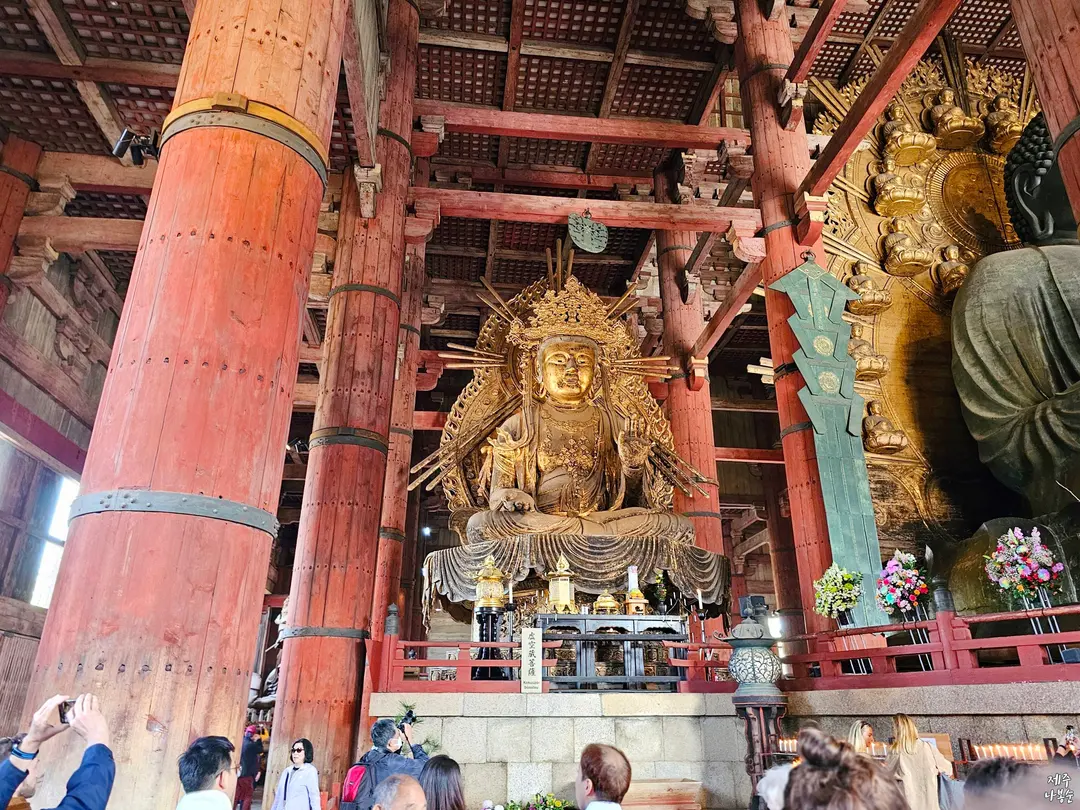
Additionally, on both sides of the Great Buddha, you'll find bodhisattvas boasting splendid golden hues,
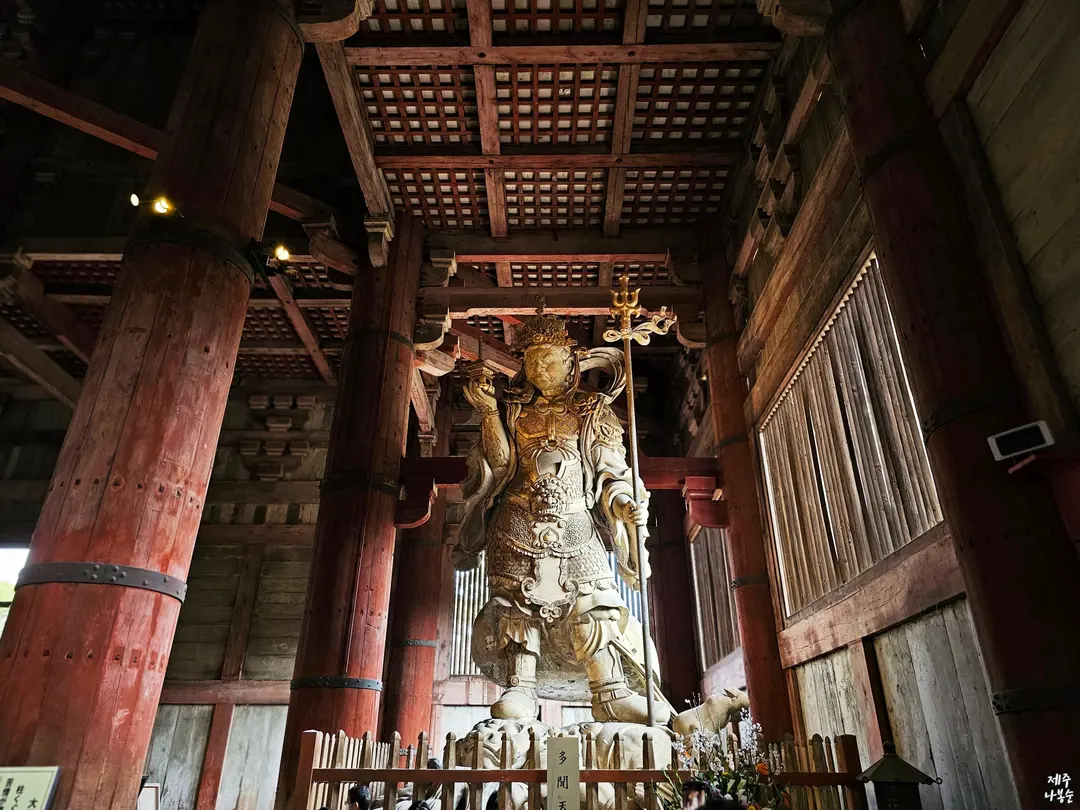
To the left and right at the back, colossal statues of the Four Heavenly Kings, standing atop evil spirits,
further amplify the grandeur of the hall.
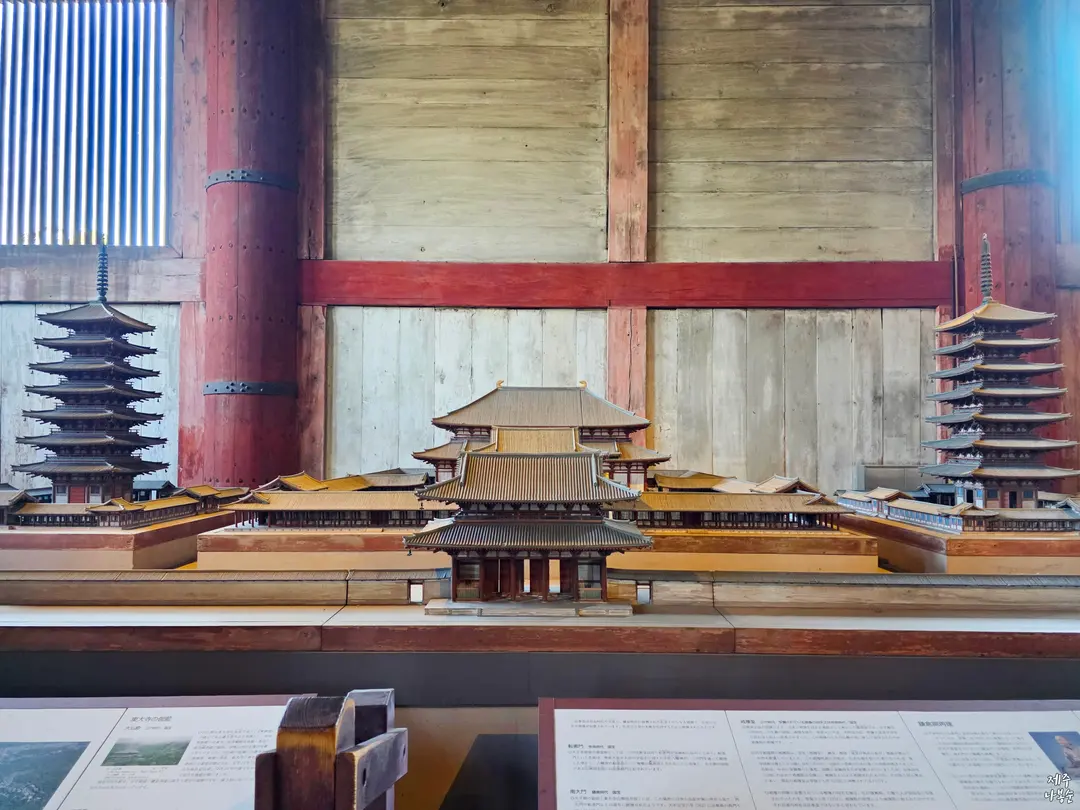
There was also a recreated model showcasing the temple's full appearance from its founding, something you can't see today,
which offered a diverse range of fascinating sights.
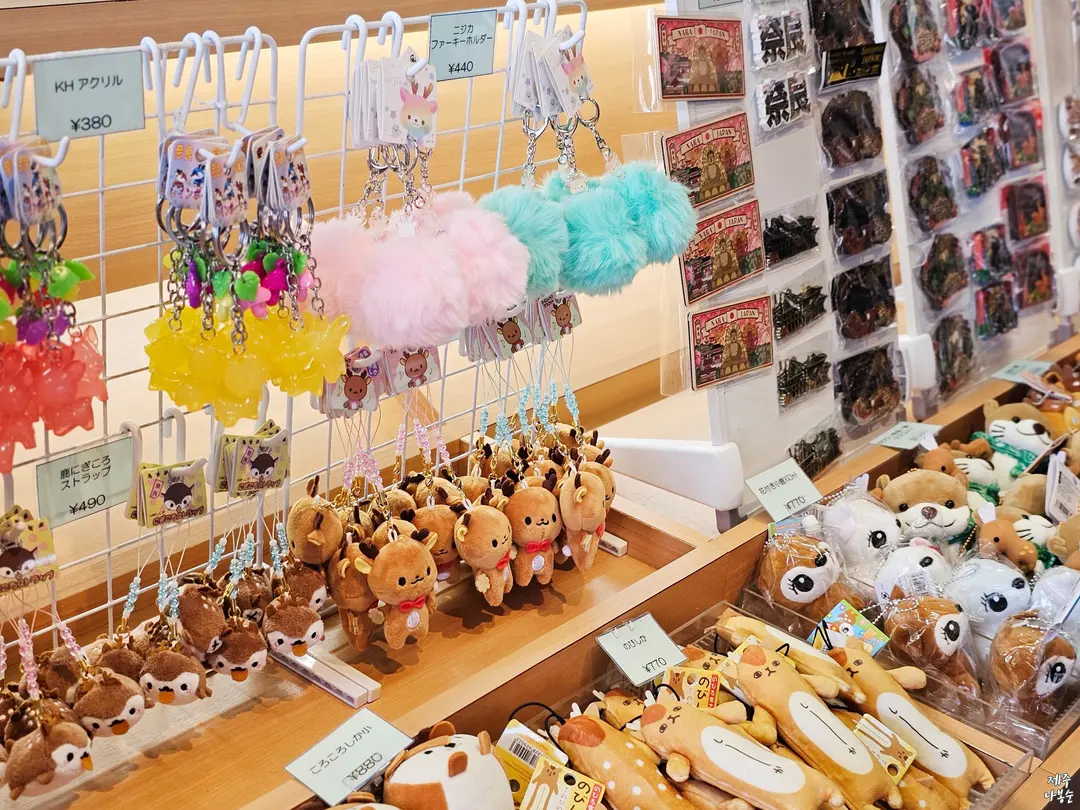
On the way out from the Great Buddha Hall, you'll find various goods like dolls and t-shirts.
Just a heads-up, prices here tend to be higher than in the market next to Nara Station.
Also, photography isn't allowed inside.
4. Concluding Our Visit to Todai-ji Temple in Nara, Japan
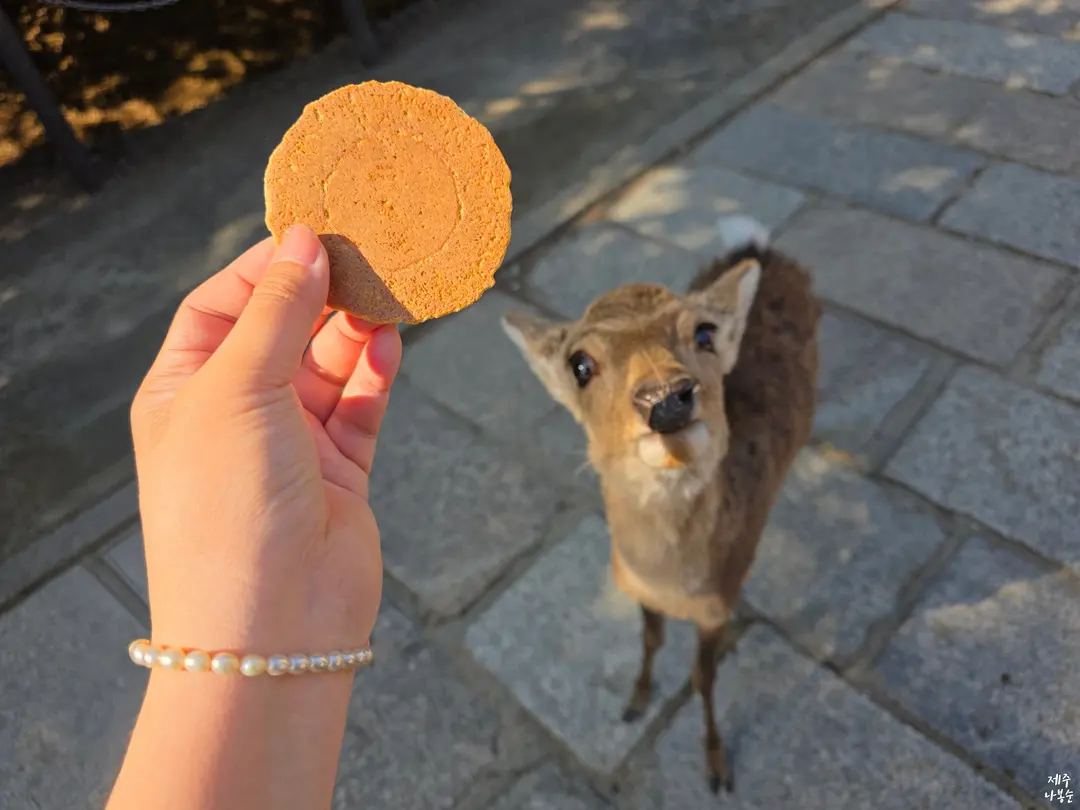
While interacting with the deer at Nara Deer Park is undoubtedly delightful,
encountering the magnificent grandeur of Todai-ji Temple,
which embraces a staggering 1,300 years of history,
will truly deepen the enjoyment of your Nara itinerary
among Japan's charming small cities.
If you're looking to escape the hustle and bustle of Osaka's main tourist spots
and savor the true charm of a relaxed walking tour,
I highly recommend spending a rejuvenating half-day in Nara.
Here, vibrant nature breathes alongside monumental Japanese shrine cultural heritage.
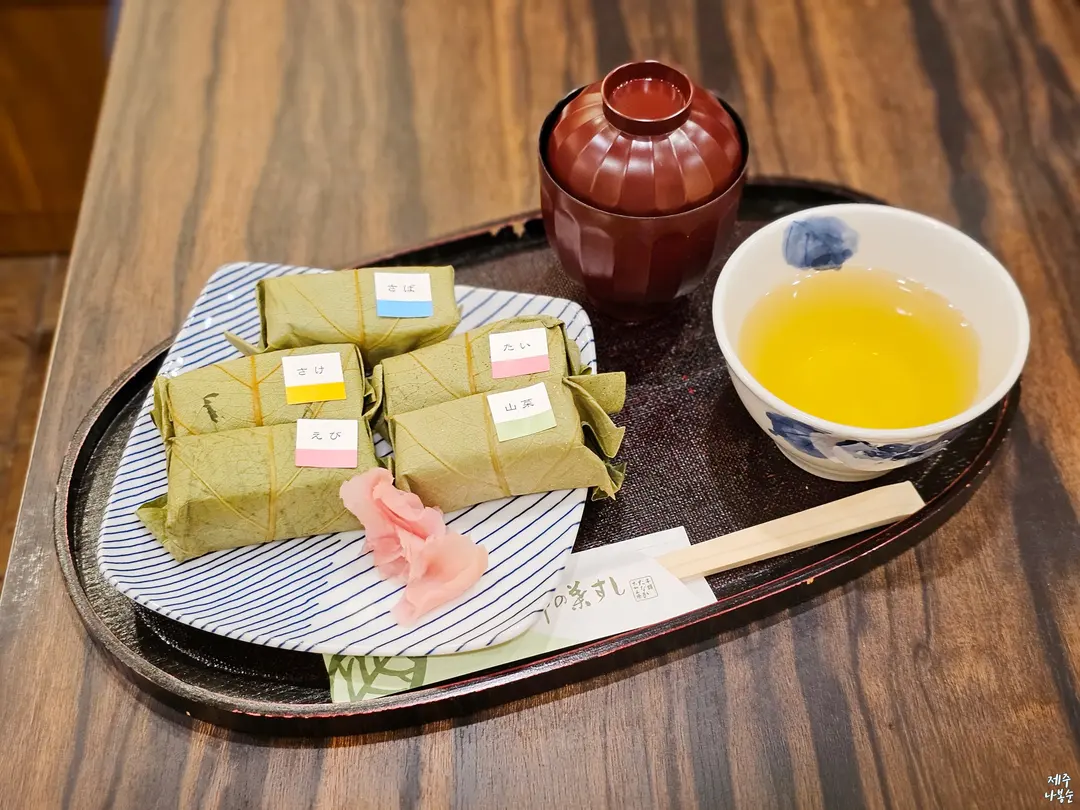
You can visit shrines and temples, indulge in delicious local cuisine, and explore the bustling markets—
it's a perfect way to spend a few hours healing your soul.
Share this article
Related Travel Stories

Nara Deer Park: Your Guide to Visiting from Osaka in 2026
Planning a day trip from Osaka? Nara Deer Park offers a unique experience with over 1,200 wild deer roaming freely. Find out how to get there, feed the deer, and more!

Kamaiki Udon Nara: A Michelin-Recognized Udon Gem
Craving delicious udon after exploring Nara's deer park? Discover Kamaiki Udon, a Michelin-recognized eatery conveniently located near Nara Station.

Okinawa Zoo Guide 2026: Neo Park vs Okinawa Zoo
Deciding between Neo Park and Okinawa Zoo & Museum for your toddler? Here is a complete comparison of Okinawa's top family-friendly wildlife parks.

Kyoto & Nara Bus Tour from Osaka: Family Fun Day 2 (2026)
Embark on an unforgettable family bus tour from Osaka to the historic wonders of Nara and Kyoto. Discover ancient temples, playful deer, and stunning landscapes on Day 2 of your Japan adventure.

Osaka Day Tour Review 2026: Nara, Arima & Kobe
Discover the perfect Osaka day trip! Join us as we explore Nara's famous deer, soak in Arima Onsen's historic charm, and enjoy sunset shopping in Kobe.
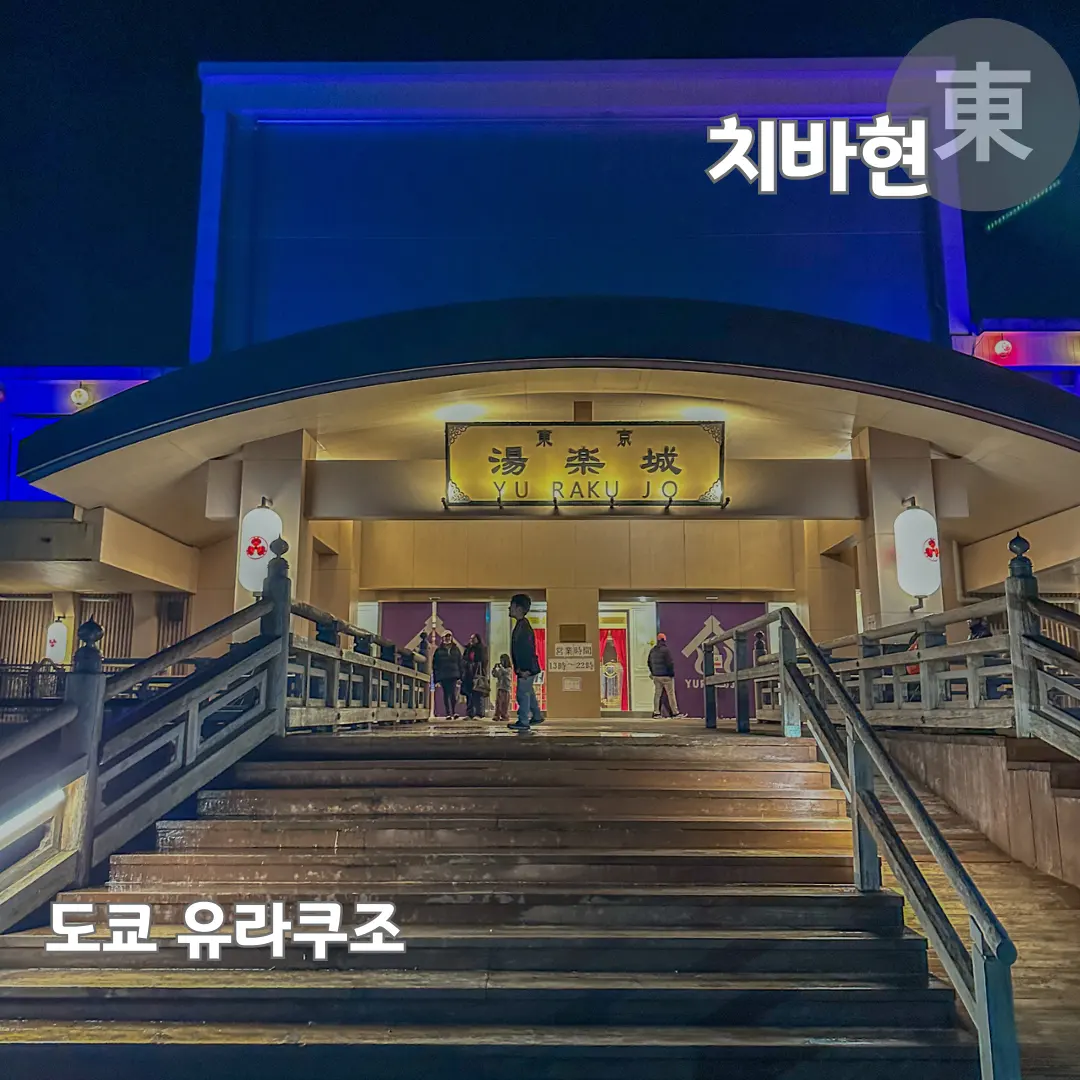
Tokyo Yurakujo Onsen: Narita Airport Day Spa & 2026 Discounts
Discover Tokyo Yurakujo, a rejuvenating day onsen near Narita Airport. Unwind in hot springs, enjoy cultural experiences, and snag the best discount tips for your 2026 visit.