

Hofburg Palace Vienna: Imperial Grandeur of the Habsburgs
Visit Vienna's Hofburg Palace, the Habsburgs' historic winter home. Explore Michael's Gate, Sisi Museum, and the Treasury. Get essential visitor tips for your 2026 trip.

Hey there, fellow travelers!
After sharing our adventures at Schönbrunn Palace, it's time to dive into the heart of Vienna with the magnificent Hofburg Palace. While Schönbrunn served as the Habsburg imperial family's summer retreat, the Hofburg was their primary winter residence, a grand complex right in the city center.
If you're planning your Vienna itinerary, knowing the distinction between these two iconic palaces will certainly enhance your experience.
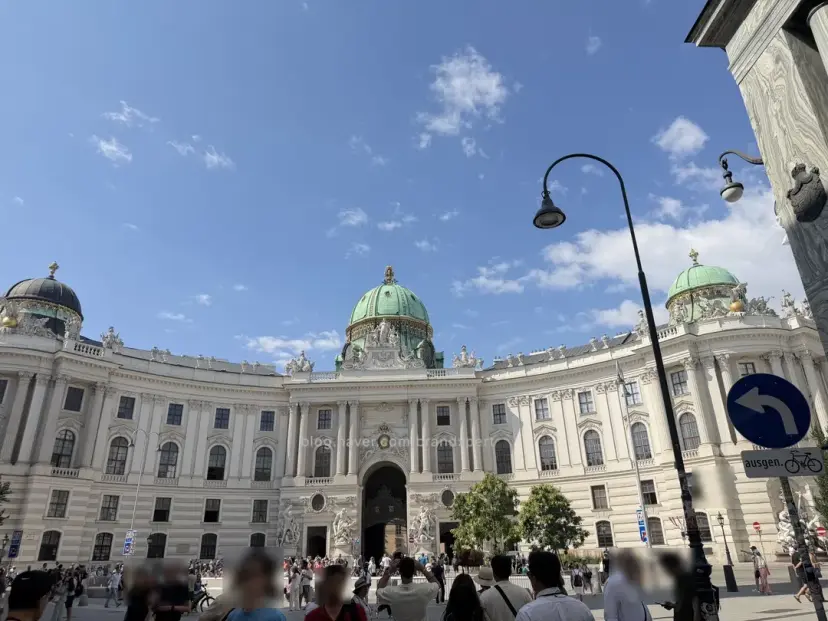
1. Michael's Gate: The Grand Entrance to the Palace
📍 Hofburg Palace
1010 Vienna, Austria
The most impressive way to enter the Hofburg Palace is through Michael's Gate (Michaelerplatz) in Vienna's 1st district. If you take the U3 subway line and get off at Herrengasse station, it's just a short walk to the magnificent semi-circular main entrance. I remember being quite surprised when I first approached from Kohlmarkt Street, seeing the striking turquoise dome suddenly emerge between the buildings.
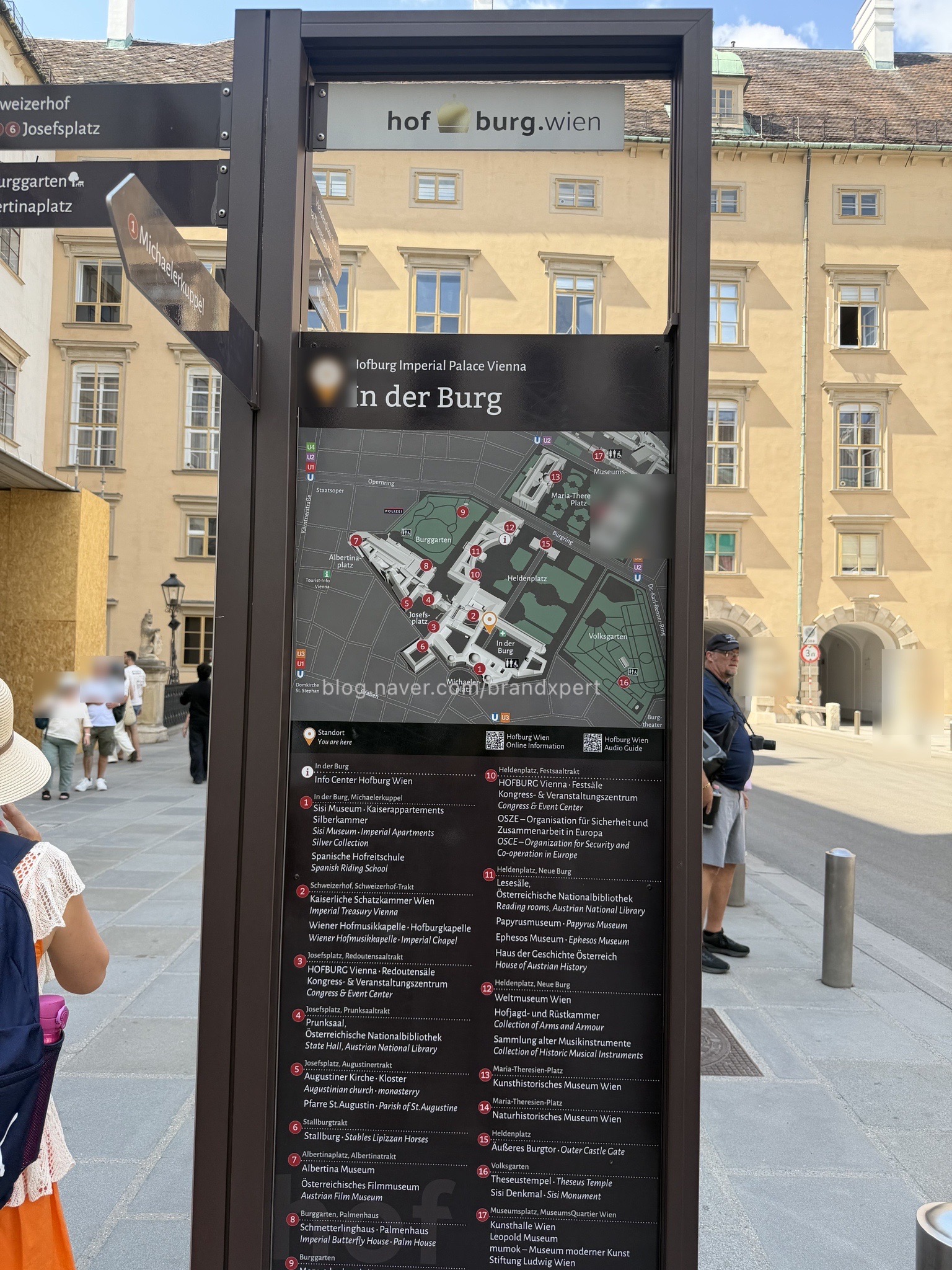
Once you pass through Michael's Gate, you're immediately led into the inner courtyard. The sheer scale of the palace complex is much larger than you might expect, and I probably would have been lost without a map to guide me!
2. A Palace of 2,600 Rooms? Exploring 600 Years of Imperial Scale
According to our local guide, the entire Hofburg complex is comprised of 18 wings, 54 staircases, 19 courtyards, and boasts over 2,600 rooms! At first, I thought it might be an exaggeration, but a quick fact-check later confirmed it was true. This immense scale is the result of nearly 600 years of continuous expansion and renovation by successive monarchs, spanning from the 13th to the early 20th century.
Consequently, the Hofburg showcases a fascinating blend of architectural styles, with Gothic, Renaissance, and Baroque elements all coexisting within a single complex. As you walk around, you'll notice how the window designs vary from one section of the building to another. Initially, I just thought it was a design choice, but learning that each section was built in a different era made perfect sense.
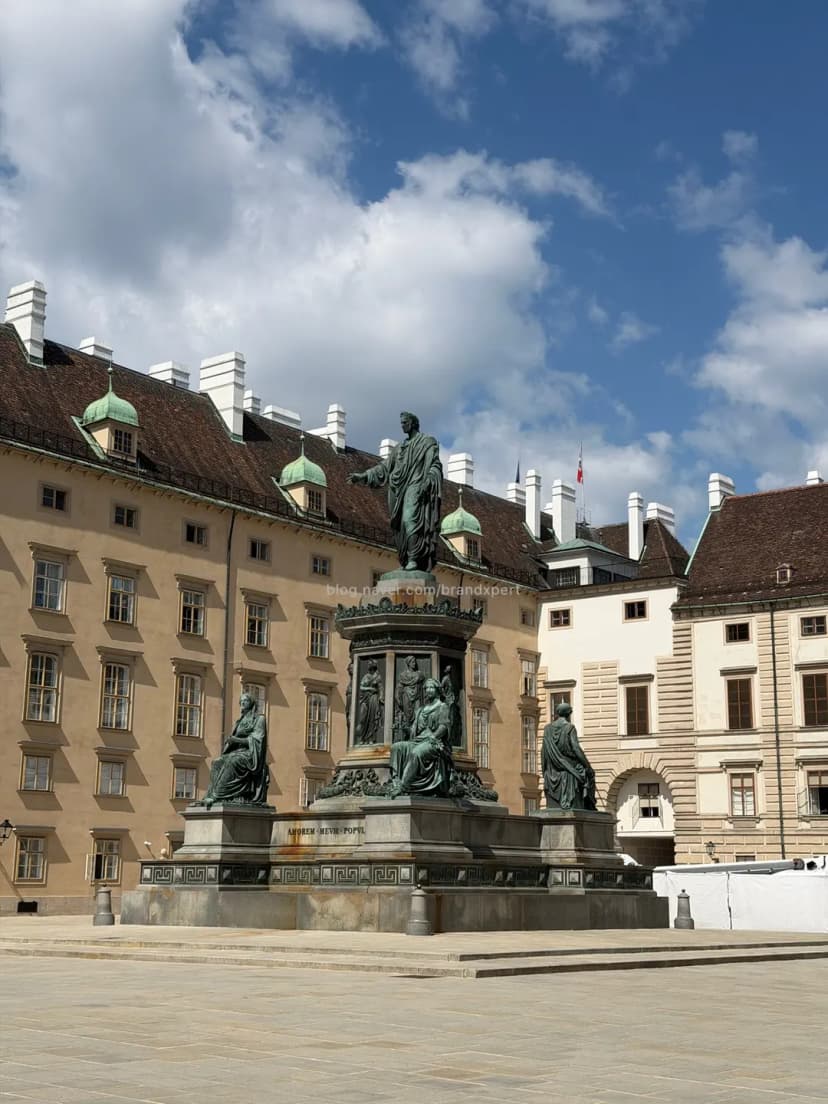
3. The Hidden Twist Behind Emperor Franz's Monument
As you stroll through the courtyards, you'll spot a striking bronze statue of Emperor Franz II (also known as Francis I of Austria, the first Emperor of Austria), clad in a Roman-style toga and crowned with a laurel wreath. This monument was crafted in 1846 by Italian sculptor Pompeo Marchesi, cast in bronze in Milan, and then transported to Vienna.
The pedestal bears a Latin inscription: "My Love to My People." Initially, I found it to be a rather noble sentiment, a grand final message. However, the backstory reveals a humorous twist: Emperor Franz was famously known for his parsimony during his lifetime. Legend has it that the Viennese citizens of the time would mock the inscription behind his back, quipping that he "left nothing but love, not a single coin!" It's quite amusing how even a magnificent statue can hide such a witty, ironic tale.
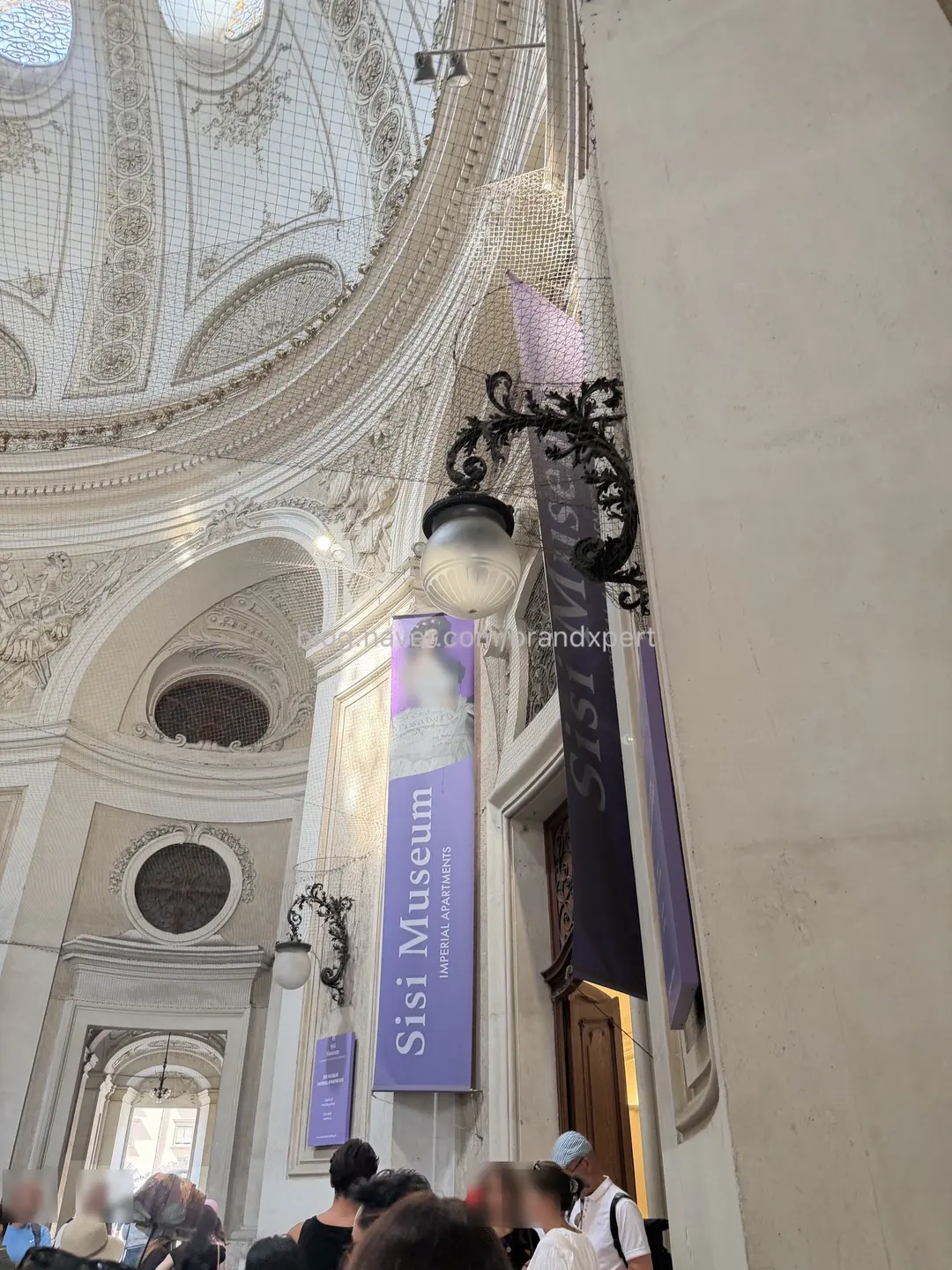
4. Sisi Museum Entrance and the Imperial Treasury: My Tuesday Regret
Following the Hofburg's corridors, you'll find banners indicating the entrance to the Sisi Museum and the Imperial Apartments. This area showcases Empress Elisabeth's personal belongings and delves into her fascinating life. Due to time constraints, I only managed to snap a photo of the entrance before moving on.
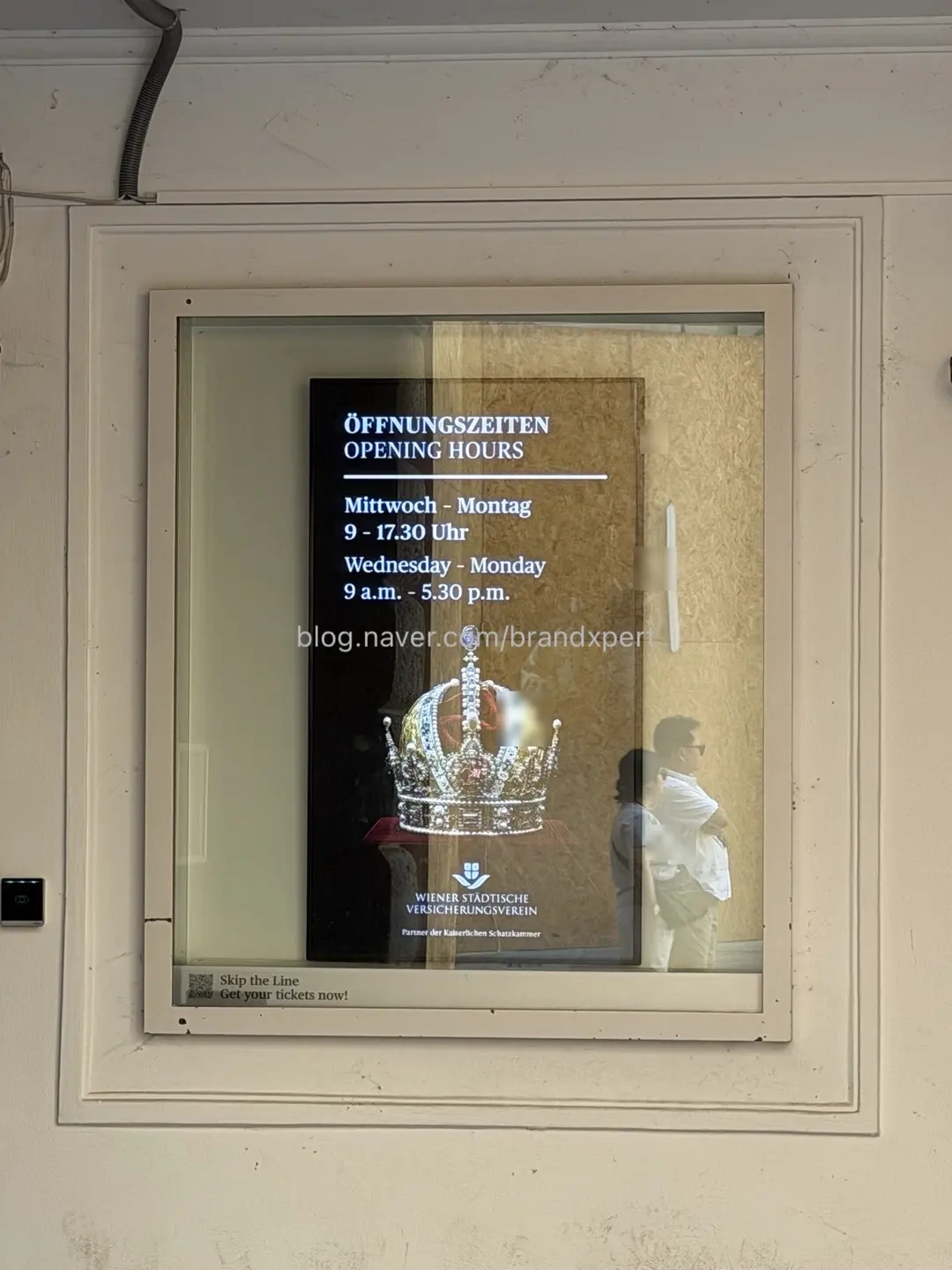
Instead, I headed towards the Imperial Treasury, located in the Schweizerhof courtyard. Unfortunately, my visit fell on a Tuesday, which happened to be its regular closing day. The ticket office sign clearly stated that it's open from Wednesday to Monday, 9:00 AM to 5:30 PM, and closed on Tuesdays. So, if you're planning to see the crown jewels and other regalia, like the Austrian Imperial Crown, I highly recommend checking the operating days before your visit!
5. Neue Burg and Heldenplatz: An Imperial Past, a Modern Presence
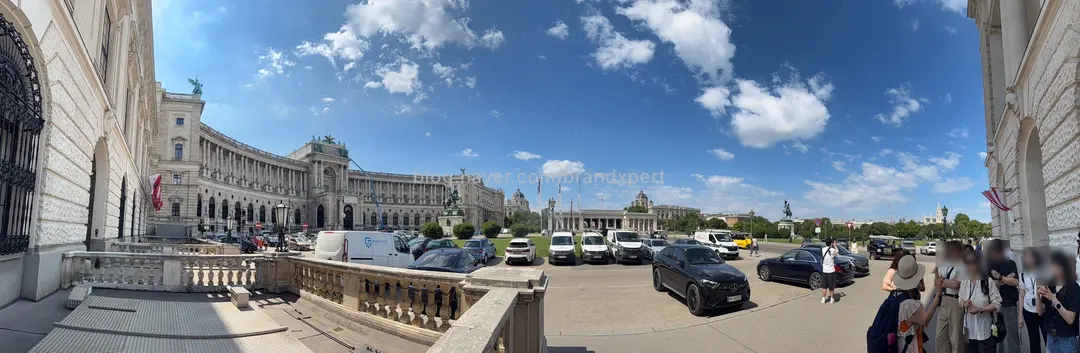
At the edge of the Hofburg complex stands the Neue Burg, a newer wing commissioned by Emperor Franz Joseph. Below the golden eagle crest on its facade, a Latin inscription is visible, and in front of it stretches the vast Heldenplatz (Heroes' Square), adorned with impressive equestrian statues – perfect for capturing a panoramic shot.
Interestingly, the Neue Burg building now houses the offices of the Organization for Security and Co-operation in Europe (OSCE). The palace's visitor map even marked it as OSZE, but it truly hit home when I saw the flags flying outside the building. It's incredible to think that an old imperial palace now serves as an international organization's headquarters. Moreover, the Leopold Wing on another side of the palace has been the official residence and office of the Austrian President since 1946. This truly makes the Hofburg a living piece of history.
Travel Tips for Your Hofburg Palace Visit
Unlike Schönbrunn Palace, the Hofburg is situated right in the heart of Vienna, making it incredibly easy to explore on foot and combine with other nearby attractions. However, given its immense size, if you plan to visit the Imperial Treasury and the Sisi Museum, allocate at least half a day for your exploration. And a word to the wise: avoid my mistake! Make sure to check the operating days before your visit, so you don't end up turning away from the Treasury on a Tuesday, like I did.
Frequently Asked Questions
Can the Imperial Treasury at the Hofburg Palace be visited on Tuesdays?
The Imperial Treasury at the Hofburg Palace is regularly closed on Tuesdays. It operates from Wednesday to Monday, from 9:00 AM to 5:30 PM, so it's advisable to check the visiting days in advance.
Which entrance to the Hofburg Palace in Vienna is the most impressive, and what is its scale?
Entering the Hofburg Palace from Michaelerplatz in Vienna's 1st district is the most impressive. The entire palace boasts a colossal scale, comprising 18 wings, 54 staircases, 19 courtyards, and over 2,600 rooms.
What is the current use of the Neue Burg building at the Hofburg Palace?
The Neue Burg building, located at the far end of the Hofburg Palace, currently houses the offices of the Organization for Security and Co-operation in Europe (OSCE). Additionally, the Leopold Wing of the Hofburg has been used as the official residence and office of the Austrian President since 1946.
Share this article
Related Travel Stories
St. Stephen's Cathedral Vienna Review 2026: South Tower & Roof Mosaic
Discover St. Stephen's Cathedral in Vienna! Climb the 343 steps of the South Tower for stunning views, marvel at the roof mosaic, and find tips for the nearby SKY Bar.
Vienna & Salzburg Itinerary 2026: Austria's Must-See Spots & Day Trips
Explore the magic of Austria! This guide to Vienna and Salzburg covers must-see attractions, recommended itineraries, and incredible day trip ideas for your 2026 adventure.
Vienna to Salzburg Train 2026: OBB Booking Guide
Planning a trip from Vienna to Salzburg? Discover why traveling by train is your best bet and get expert tips on booking your OBB tickets for a smooth, scenic journey.

Austria September 2026: Vienna, Salzburg, Hallstatt Packing
September 2026 Austria trip? Get practical packing tips for Vienna, Salzburg, and Hallstatt. Stay comfortable and stylish for autumn's beautiful, changing weather.
Schönbrunn Palace Vienna Review 2026: Tickets, Tours & Tips
Discover Schönbrunn Palace in Vienna! Get the latest on ticket prices, how to get there, what to see inside, and essential tips for exploring the gardens and Gloriette.
Plaza Inn Amadea Vienna Review 2026: A Budget Stay in Austria
Discover the Plaza Inn Amadea Vienna, a perfect budget-friendly hotel for your Austrian adventure. Enjoy comfortable stays with easy access to Vienna's top attractions.