読み込み中...

ダナンへお子様連れで行かれるなら、
一日は観光をお休みして、
リゾート内でゆっくり過ごされることをおすすめします。
ウォーターパーク、温泉、インフィニティプール、朝食まで、
丸一日遊んでも時間が足りないほど施設が充実していたのが、
まさに ダナン三日月リゾート(Da Nang Mikazuki)です。
ダナン三日月リゾート
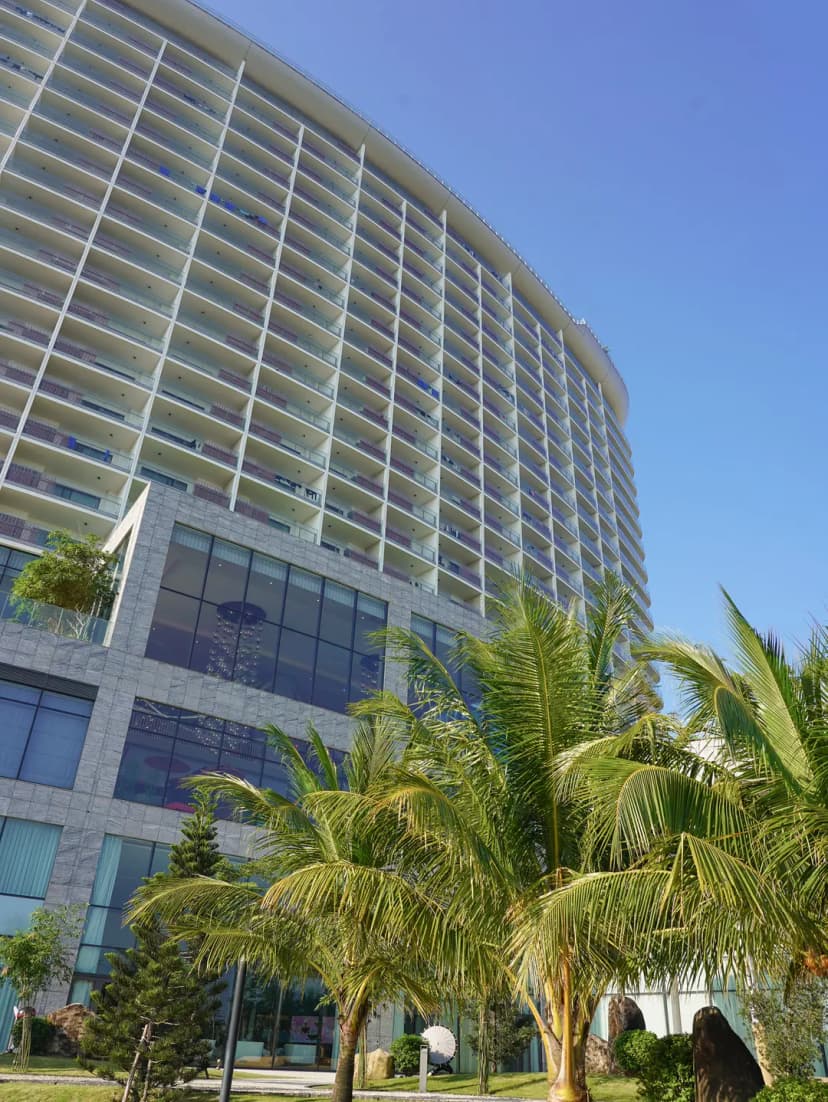
📍 Da Nang Mikazuki Japanese Resorts & Spa
Nguyễn Tất Thành, Hải Vân, Đà Nẵng 55000 ベトナム
📍 場所:グエンタッタン通り (Xuan Thieu Beach)
📍 アクセス:空港から車で約10分 / ダナン市内から車で約20〜30分
📍 チェックイン / チェックアウト:14:00 / 12:00
📍 おすすめの対象:家族旅行、マタニティ旅行、お子様連れ旅行
📍 特徴:ウォーターパーク・温泉・インフィニティプール・キッズクラブ完備
ダナンのリゾートで「三日月」を選んだ理由
ダナンには素晴らしい5つ星リゾートがたくさんありますが、
私たちが三日月を選んだ最大の理由は、
「温水プール」と「充実したアクティビティ」でした。
私は2026年3月にダナンを訪れました。
ダナンは東南アジアではありますが、
冬の時期は肌寒く感じる日もあるため、
温水プールがあることが第一条件でした。
(もちろん、今の季節はとても暑いと思いますが…笑)
また、通常他のリゾートでは、プールで
1〜2時間ほど遊んで終わりになることが多いですが、
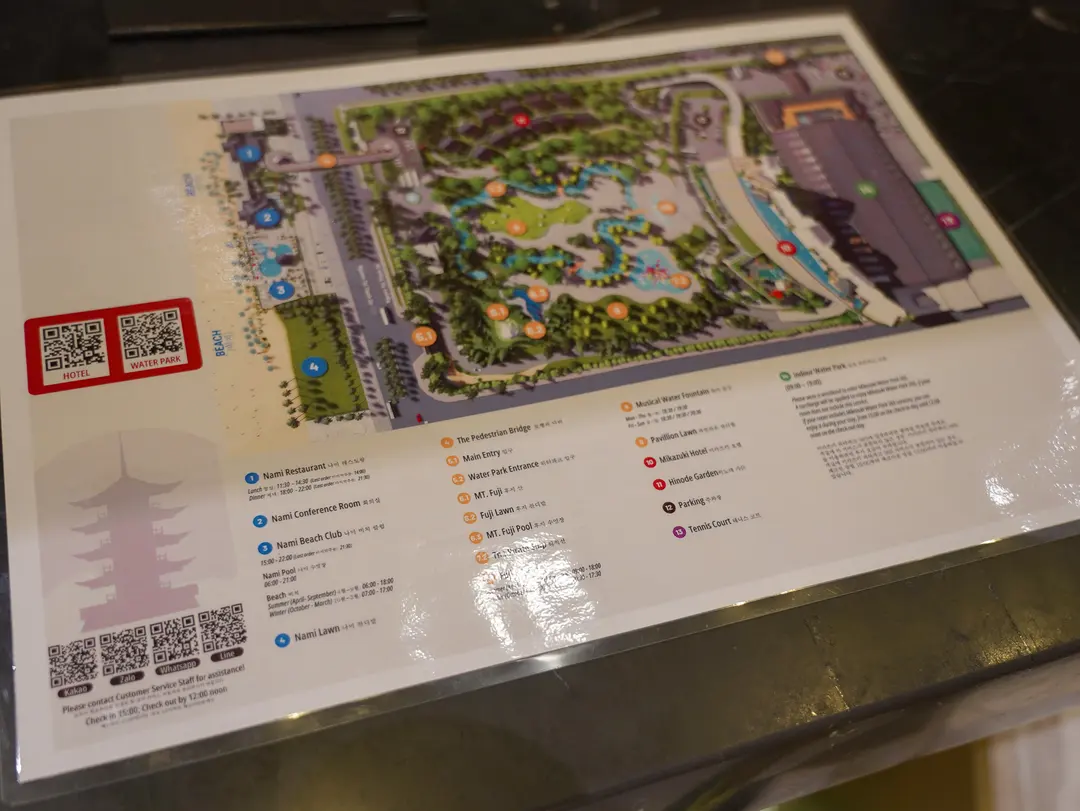
三日月は丸一日をリゾート内だけで
満喫できるほど、施設が非常に多様で充実していました。
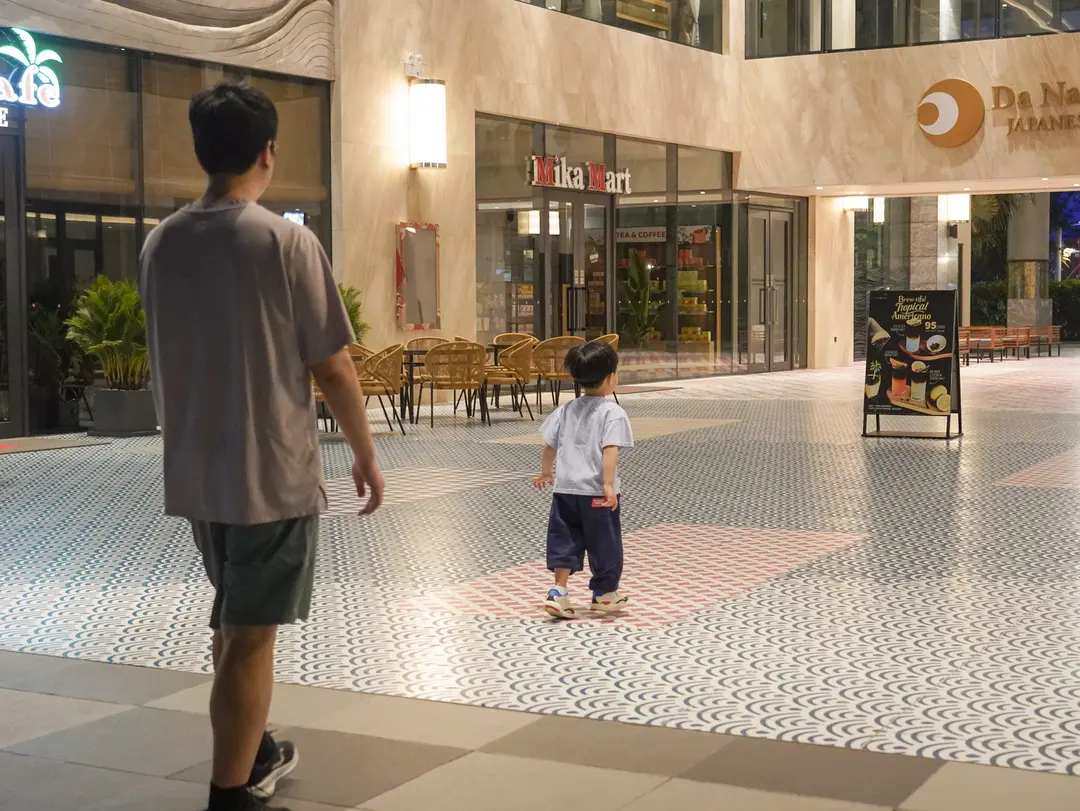
午前中に美味しい朝食を食べ、
ビーチを散歩したりキッズパークで遊んだりして、
ランチはリゾート内で済ませます。そして、
午後にはウォーターパークで思いきり水遊びを楽しみ、
夕方はインフィニティプールでリラックス。
夜はリゾート内でディナーを堪能して一日を締めくくる、というコースが本当に理想的でした。
わざわざ混雑する市街地まで往復しなくても
一日のスケジュールが充実していましたし、
子供も飽きずに遊び続けられたので、
親としても非常に楽で助かりました。
三日月 デラックス・オーシャンビュー
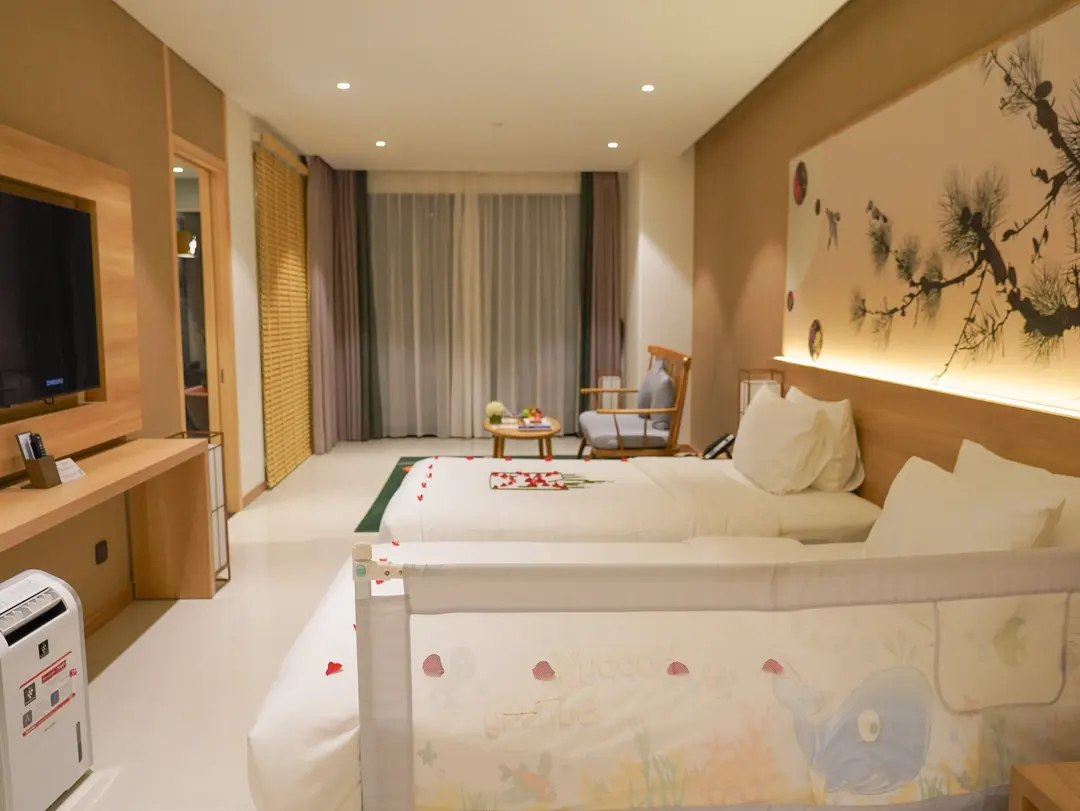
私たちが宿泊したお部屋は、15階のデラックス・オーシャンビュー。
ドアを開けて、まず最初に思ったのは
「とにかく広い…!」ということでした。
大きなスーツケースを2個全開にして広げても十分な通路スペースがあり、
子供が客室の中を元気に走り回っても、全く窮屈さを感じませんでした。
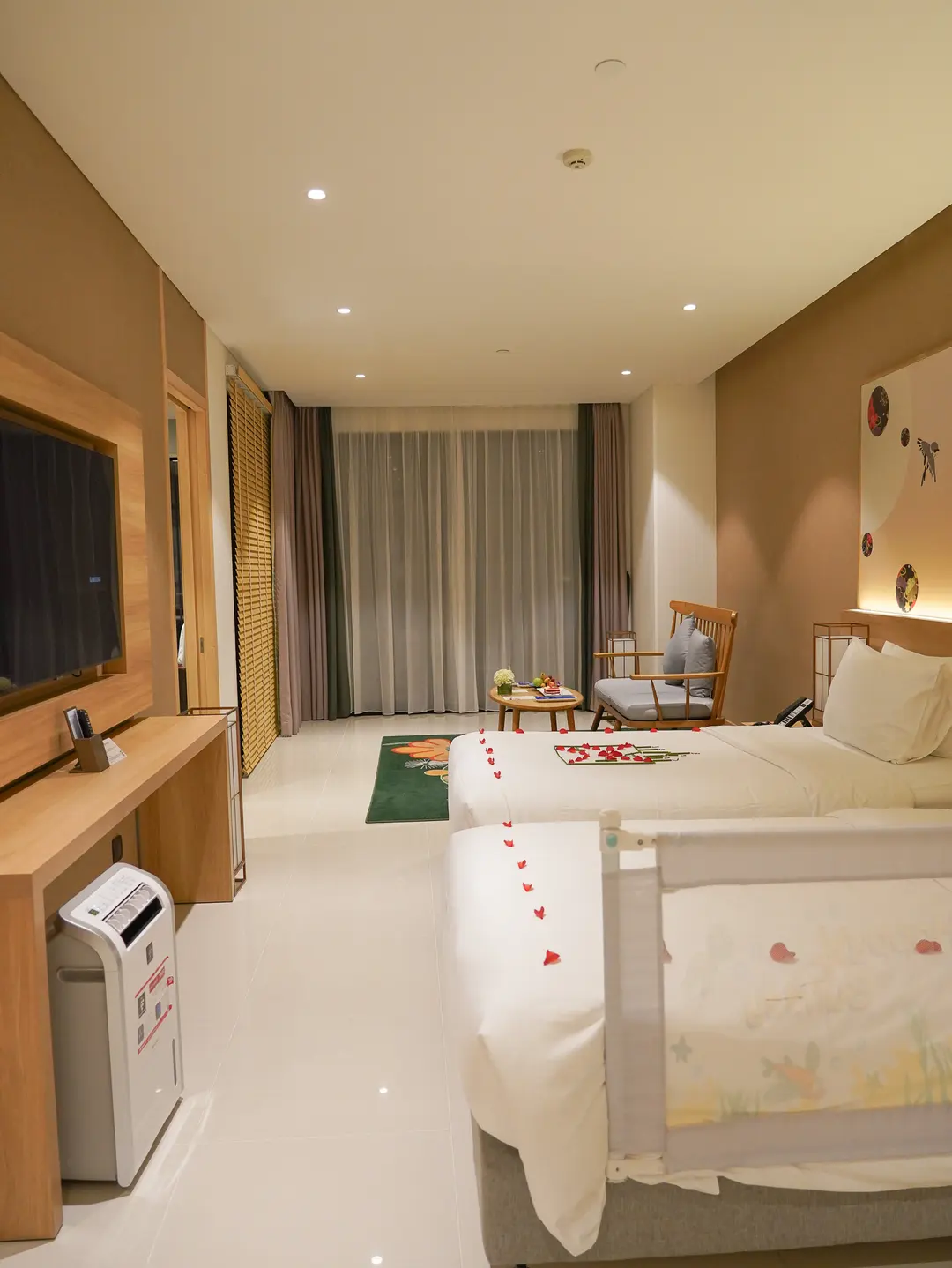
床はカーペットではなくタイル仕様なので、衛生的で清潔な印象でした。
ただ、水遊び帰りに濡れた足で走ると
少し滑りやすくなるため、小さなお子様がいらっしゃる場合は
この点だけ注意して見てあげると安心です。
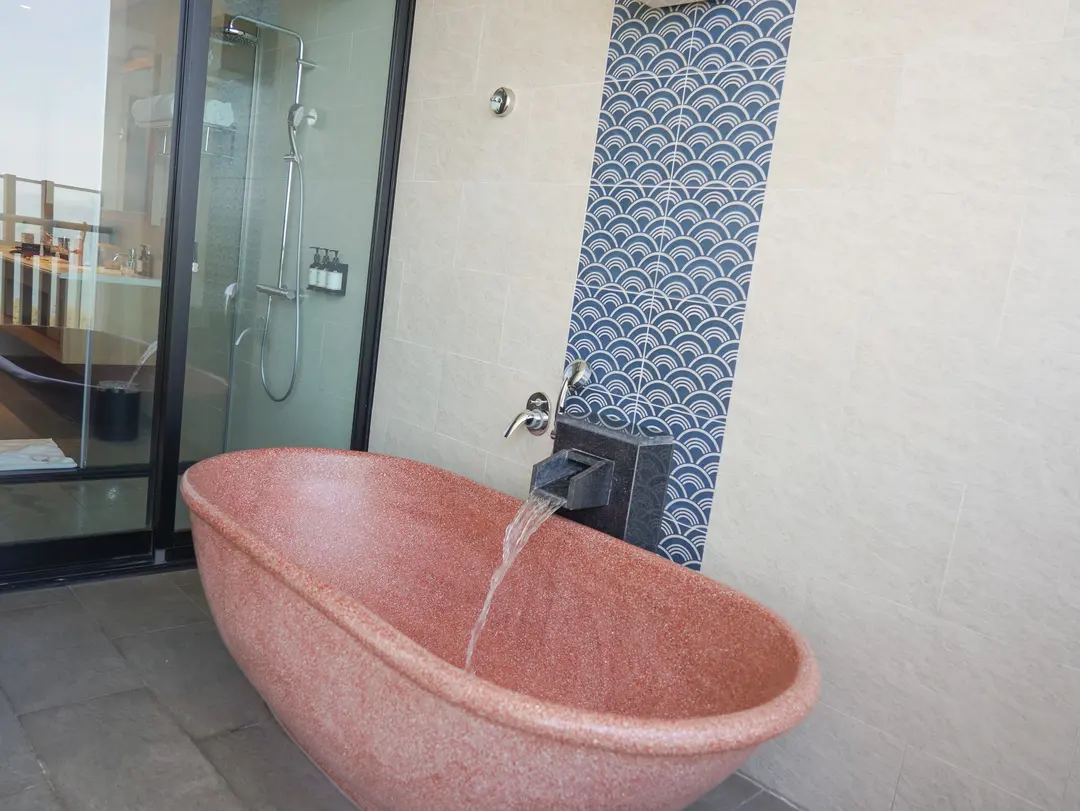
バルコニーにはサンベッドとジャグジーが用意されていました。
目の前に高い建物がないため視界が開けており、
夕方に温かいお湯を張って半身浴をすると、
一日中水遊びをして疲れた体がじんわりとほぐれていくようでした。
今回の旅行は、主人の誕生日と重なっていました。
そこで、予約の際に事前リクエストを送っておいたところ、
お部屋にケーキとお花のデコレーションが用意されていました。
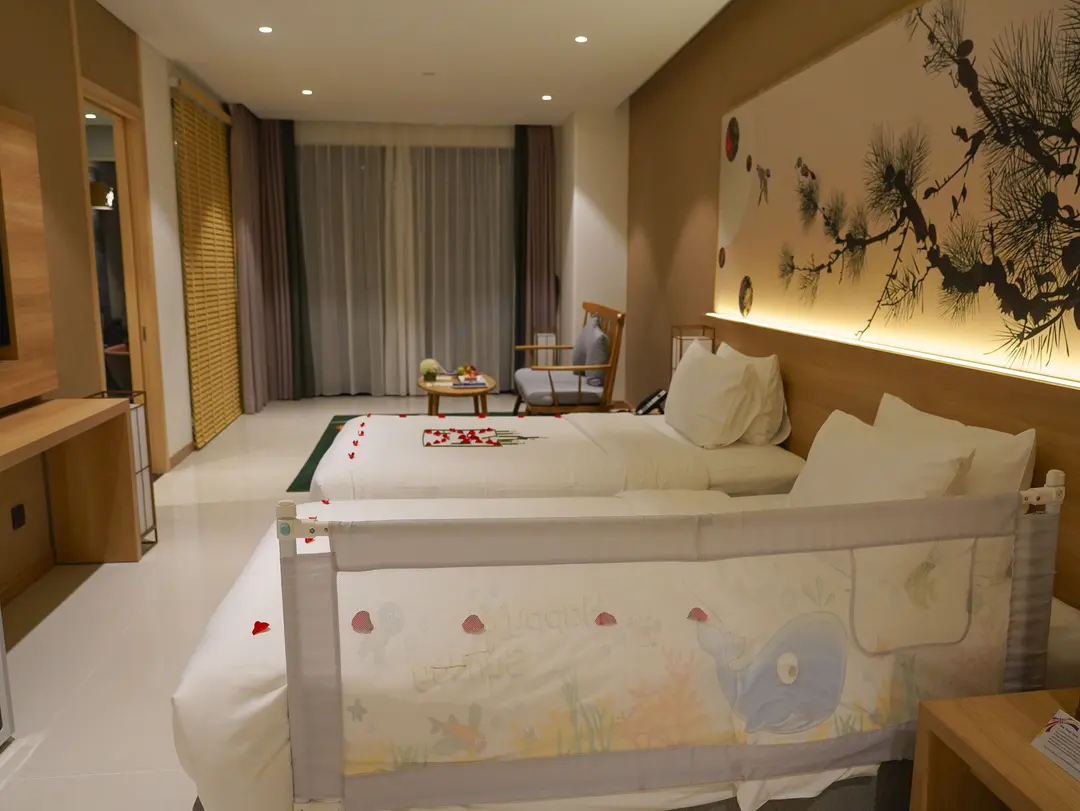
ベッドはツインでしたが、思っていたよりも簡単に動かすことができたので、
ベッド2台をぴったりくっつけて、子供を真ん中にして寝かせました。
おかげで、家族みんなでとても快適に眠ることができました。
ベッドガードのレンタルも可能ですが、
私たちはこのようにベッドを寄せて寝かせる方が合っていました。
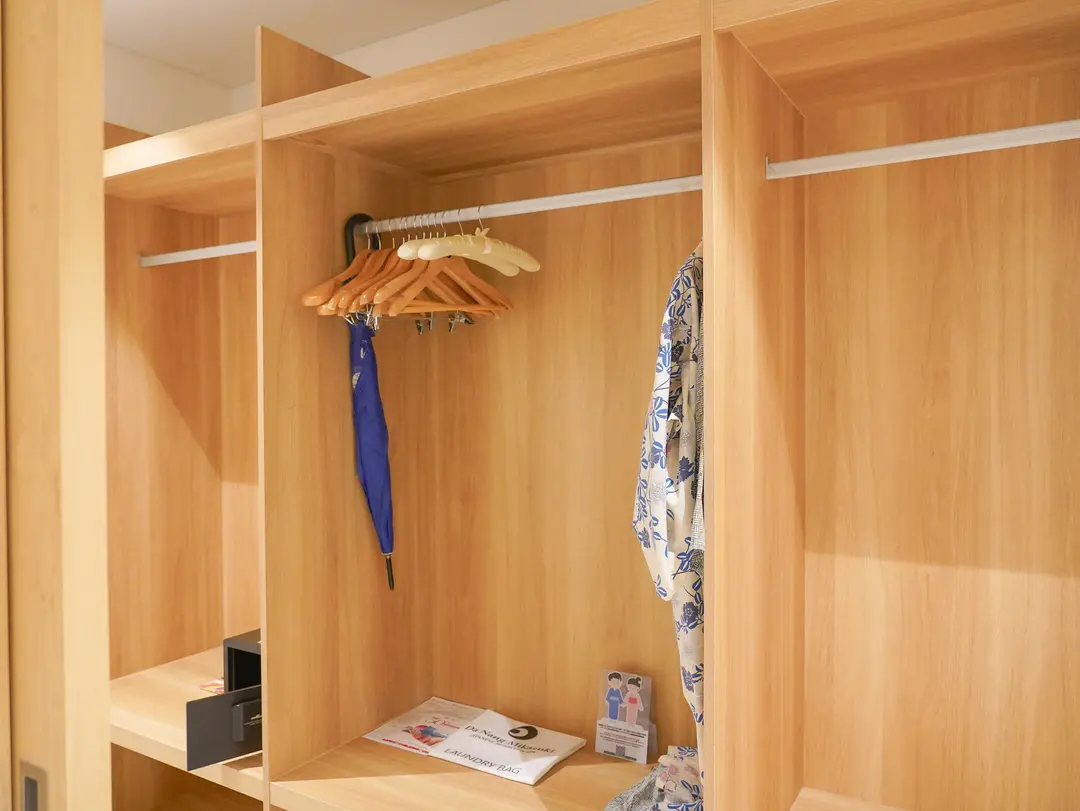
クローゼットには、浴衣やスリッパ、セーフティボックスが標準装備されており、
水着やラッシュガードを掛けて干しておくのにも十分な広さがありました。
ダナンは湿気が高めなので、
除湿機をリクエストすることをおすすめします。
私たちはダナンに到着する前にメールで除湿機をお願いしておいたので、
お部屋にあらかじめ用意されていました。
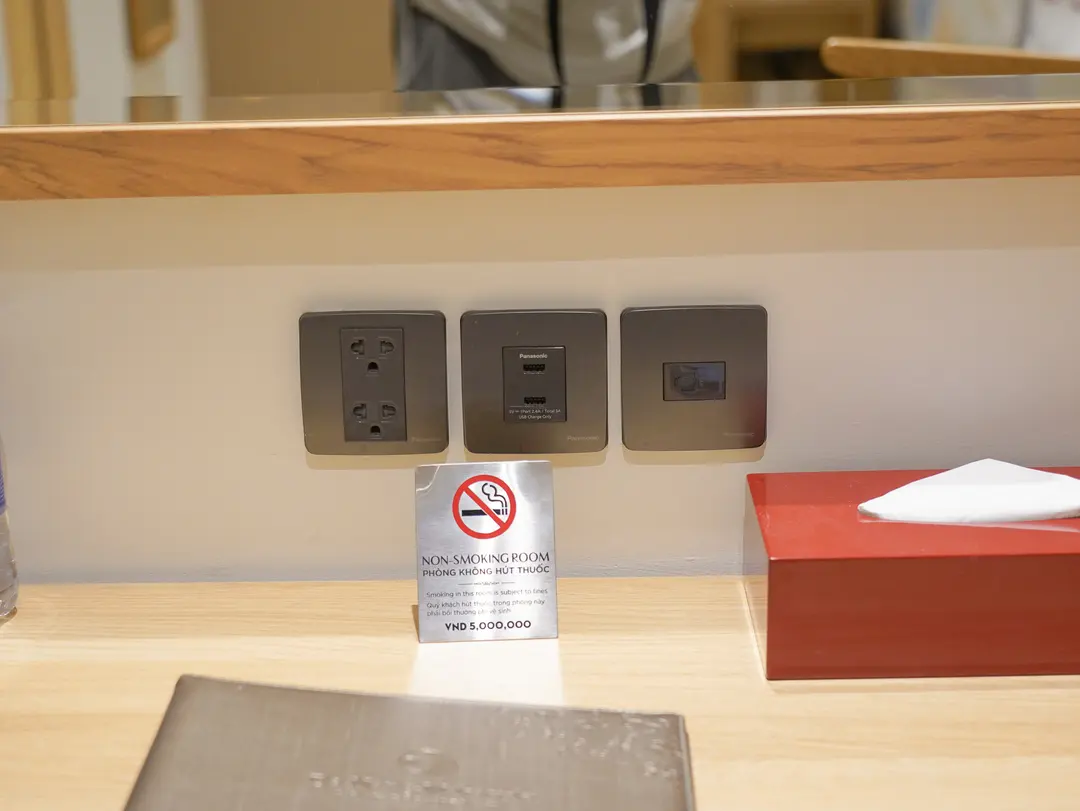
コンセントはベッドの横やテーブルなど、室内各所に配置されていました。
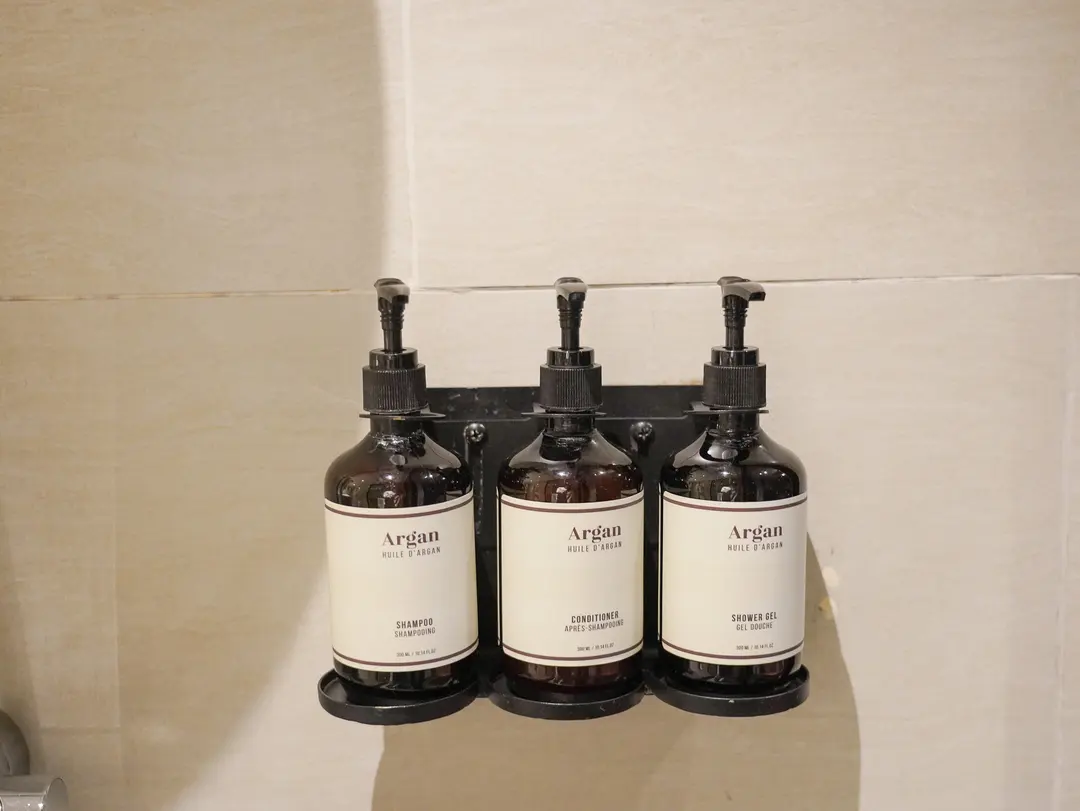

バスルームは洗面台が2つあるので、
順番待ちをすることなくスムーズに身支度ができ、
シャワー室とトイレもそれぞれ独立しているため、
子どもを洗う際にも動線が非常に良かったです。
歯ブラシや歯磨き粉などの基本的なアメニティも用意されているので、
お子様用の用品だけ持参すれば大丈夫です。
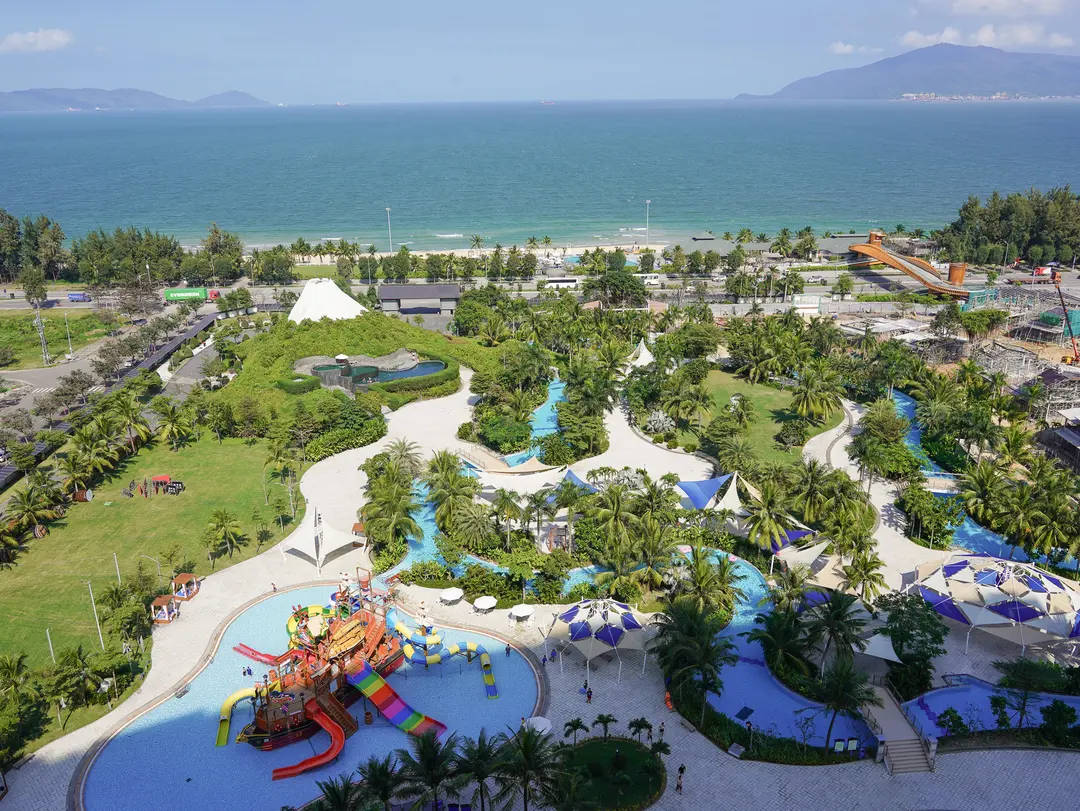
客室自体はとても満足でしたが、
ビーチまではバギーを頻繁に利用することになり、
混雑する時間帯には10〜15分ほど
待つこともあったので、その点は少し残念に感じました。
ビーチへ行く予定がある場合は、
事前にバギーを呼んでおき、待ち時間を短縮することをおすすめします。
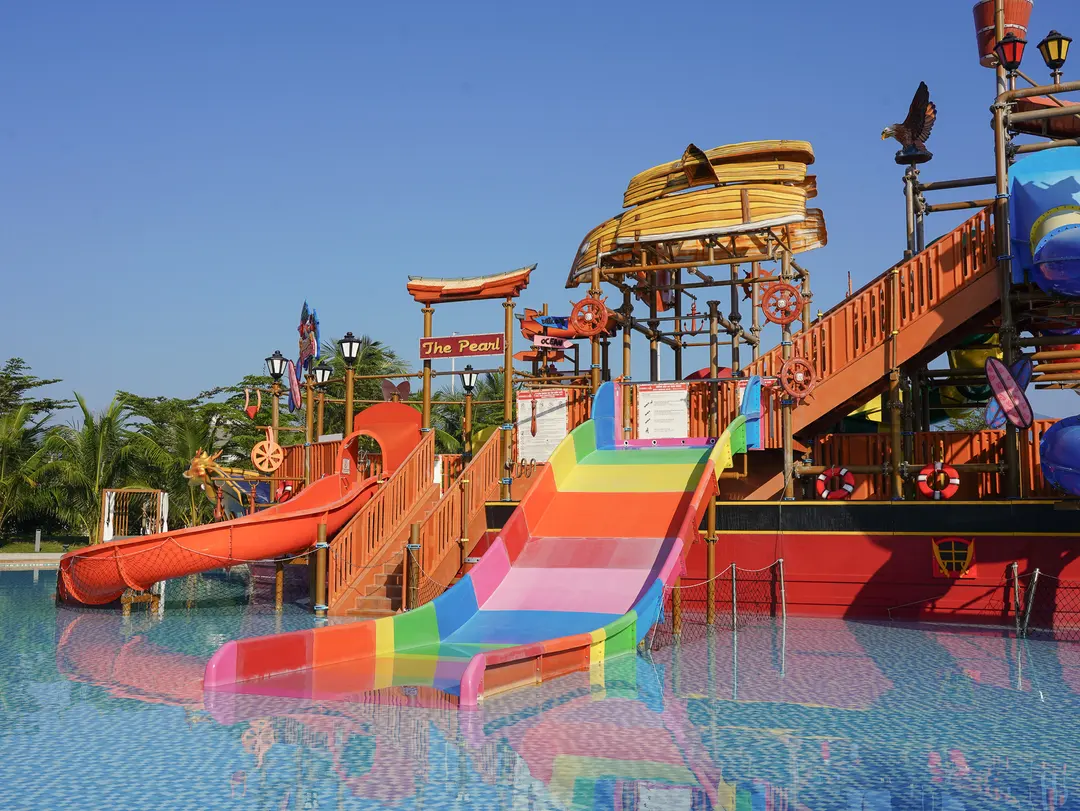
ウォーターパーク
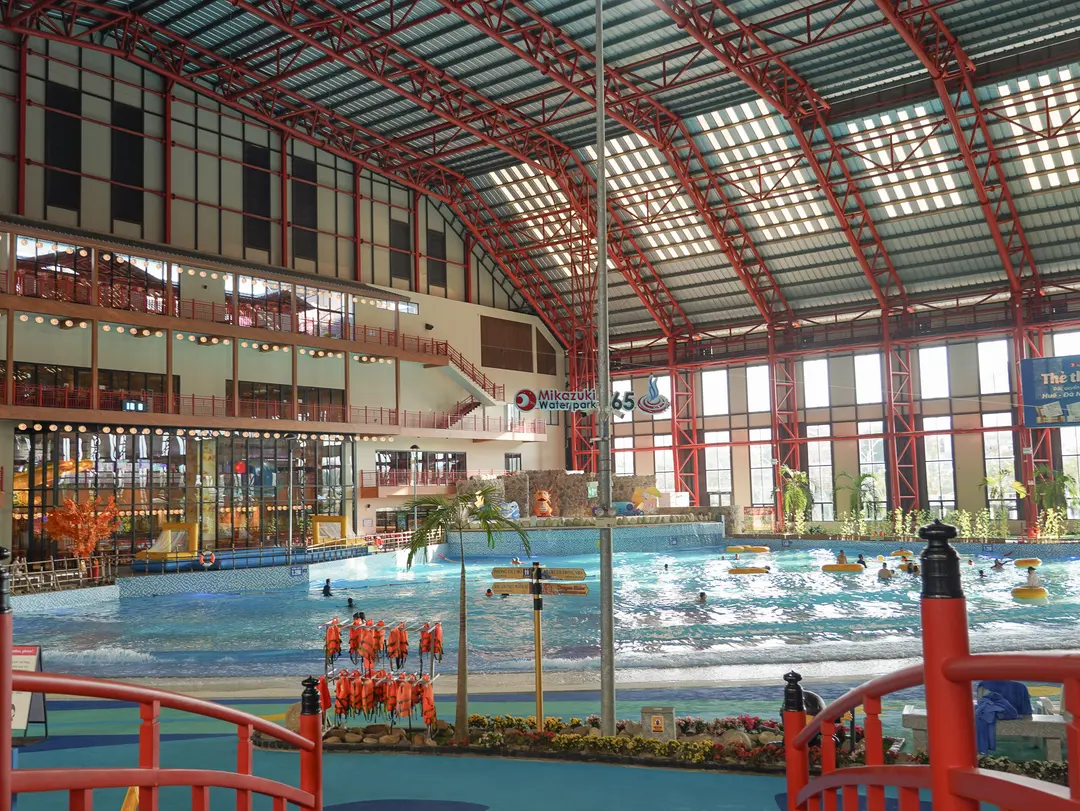
三日月を予約した
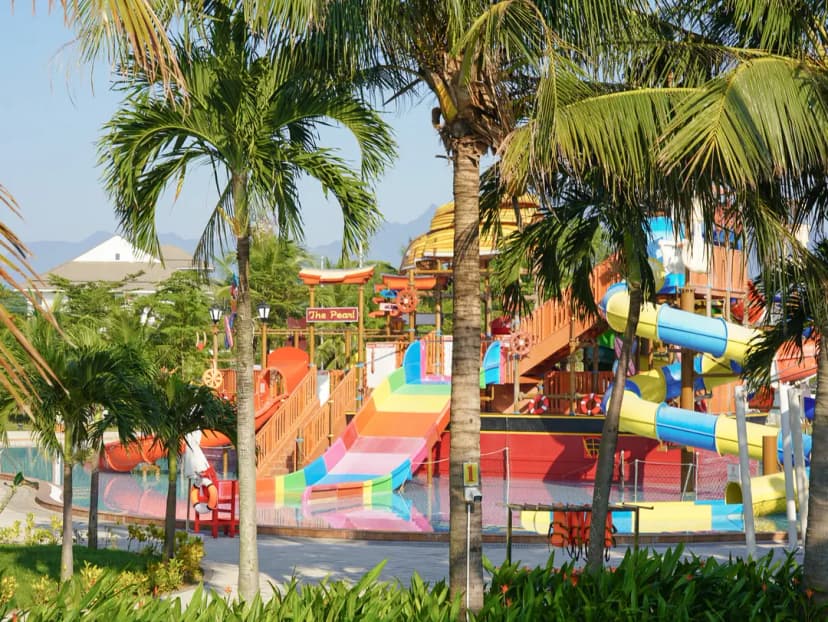
最も大きな理由の一つが、このウォーターパークです!
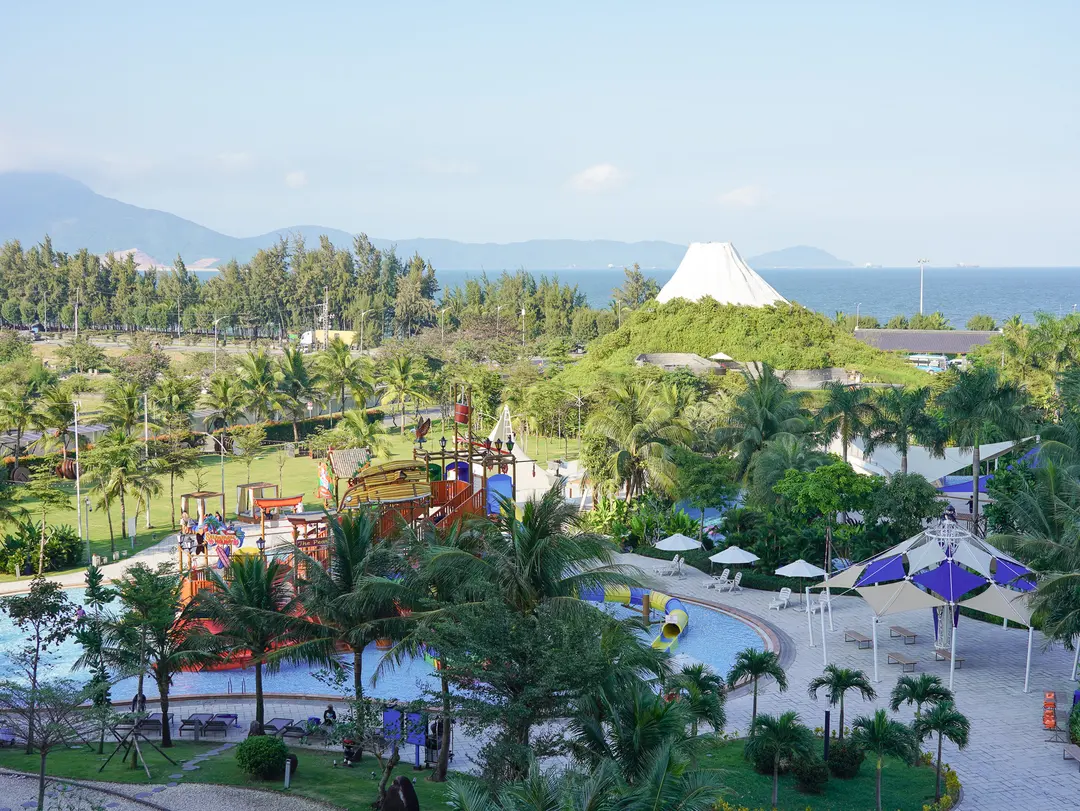
屋内と屋外がすべて繋がっているため、
雨が降っても遊べますし、日差しが強すぎる時には
すぐに屋内へ移動できるのが大きなメリットです。
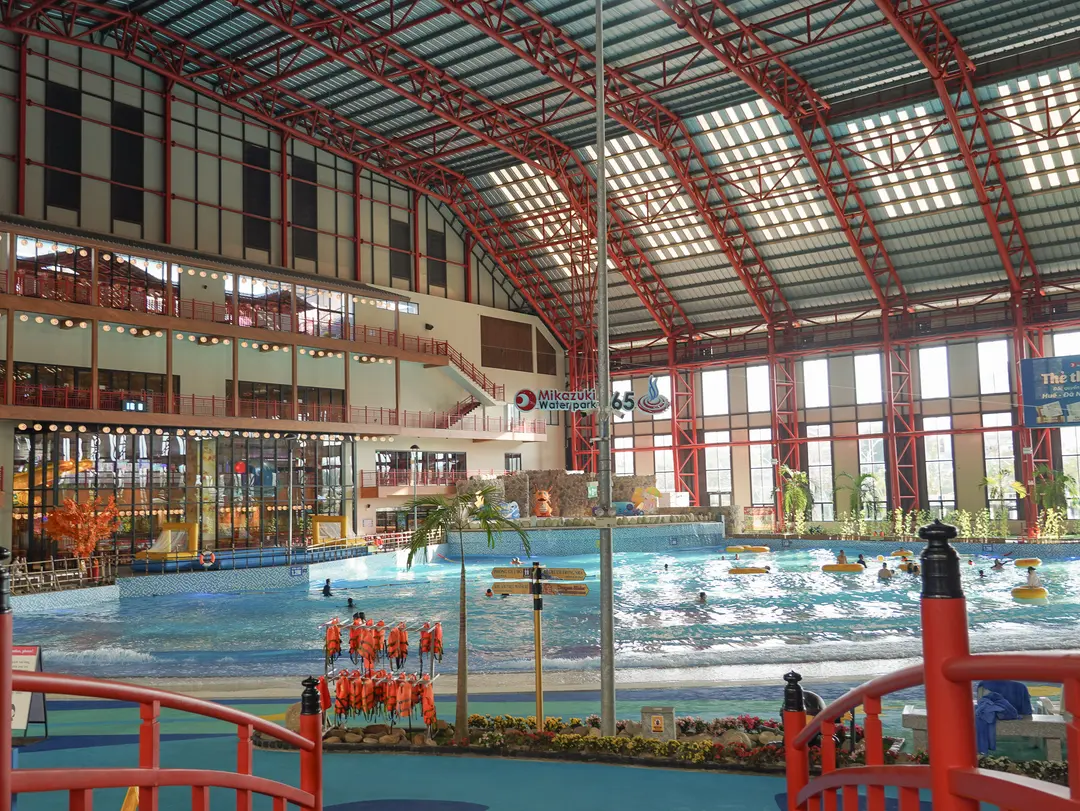
流れるプールは水温が温かく、
浮き輪に乗ってぷかぷかと流れながら、
長い時間楽しく遊ぶことができました。


屋内には波のプールやスライダー、
キッズゾーンまで完備されているので、
一日中過ごしても飽きないのも嬉しいポイントです!
とても楽しそうなスライダーがあったのですが、
妊婦は利用制限があるため、
遠くから眺めるだけで本当に残念でした…(涙)

夜は22階のインフィニティ温水プールへ移動しました。
日が沈む頃に行ってみたのですが、
風は涼しく水は温かいので、長い時間遊ぶのにぴったりでした。
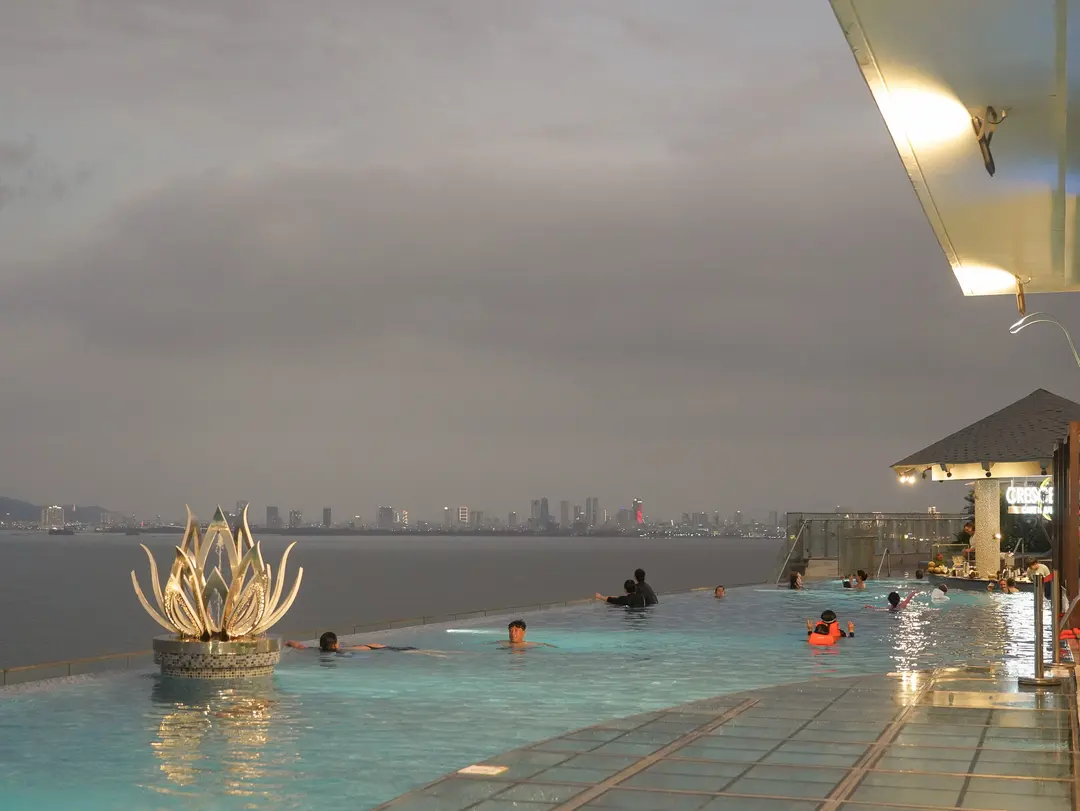
子どもと一緒に泳いでいて少し寒くなってきたら、
ジャグジーに入って体を温め、
再びインフィニティプールで遊ぶ、というのを繰り返しているうちに、
あっという間に時間が過ぎてしまいました。
他のレビューを見て混雑しているのかなと思っていましたが、
スペースが非常に広いので、
他の人とぶつかることなく快適に利用できました!
朝食
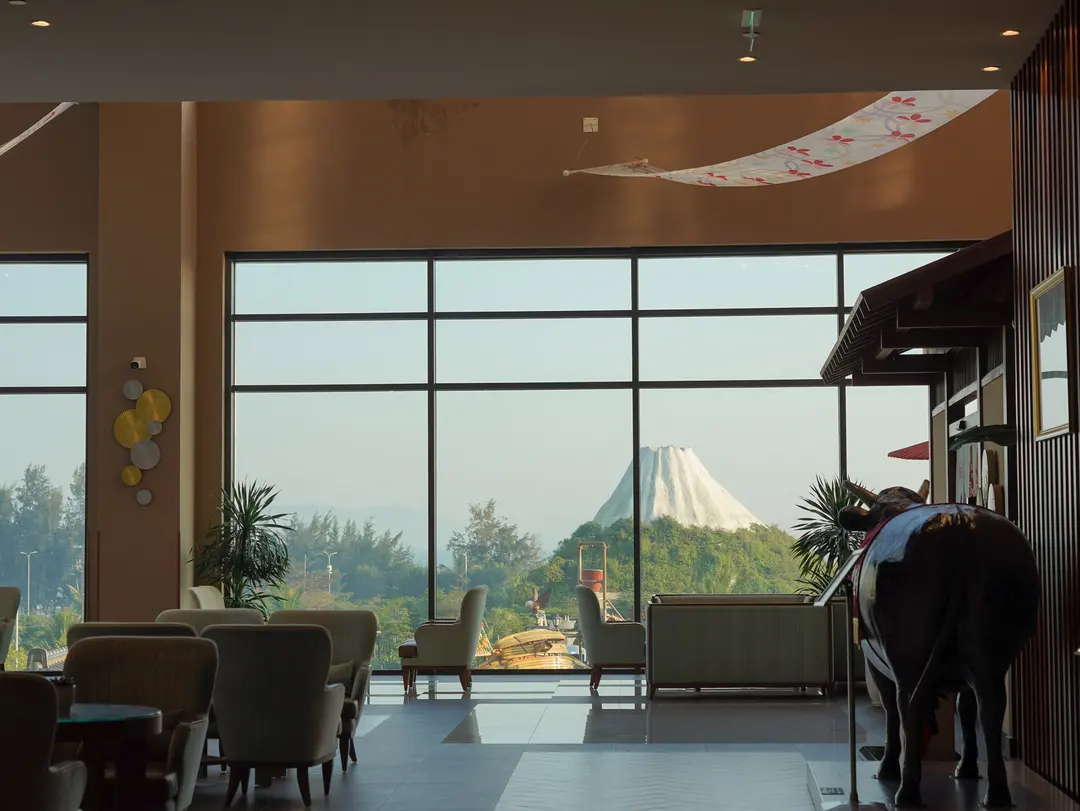
朝食はリゾートの3階にあるレストランでいただけます。
ルームキーのブレスレットをタッチして入場するシステムですが、
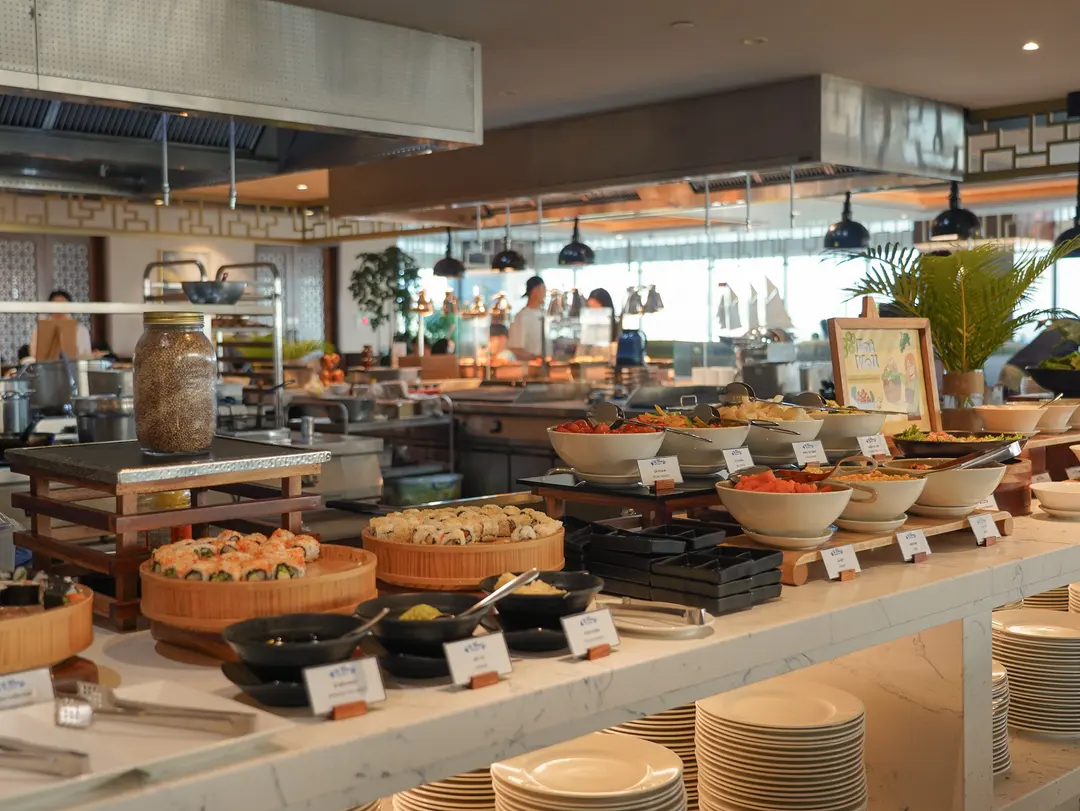
韓国料理、ベトナム料理、洋食まで種類が豊富で、
子ども連れであっても、何を食べさせるか
別途悩む必要がないほどでした。

フォーやバインミーはもちろん、キムチ、スープ、トッポギといった
韓国料理メニューも用意されているので、
親御さんとの家族旅行でも満足度が高そうです。
フルーツやパンの種類も多様で、
料理を取る動線も上手く分かれており、
人が多くても混雑している感じはそれほどありませんでした。
価格およびお得な情報
アゴダ |
約21,500円 |
- |
* 9月の土〜日 / 大人2名 + 子ども1名 / デラックスオーシャンビューツイン / 朝食付き 基準
ダナン三日月リゾートは
客室のクオリティが高いだけでなく、
一日中リゾート内だけでも十分に楽しめる充実したホテルでした。
屋内ウォーターパークや
温水インフィニティプールのおかげで、天候を気にせず遊べるため、
お子様連れのご家族旅行には
間違いなく満足度の高いおすすめの宿泊先です。
ダナンでプールやウォーターアクティビティを本格的に満喫できるリゾートを
お探しなら、ぜひ一度チェックしてみてはいかがでしょうか。
ダナン空港からは車で約10分、市内からは約20~30分かかります。リゾート内には様々な施設が充実しているため、わざわざ市内へ出向かなくても1日中楽しく過ごせます。
ダナンに到着する前にメールで事前にお願いしておけば、客室に除湿機を用意してくれます。ダナンは湿度が高めなので、快適に滞在するためにも事前のリクエストをおすすめします。
混雑する時間帯は、バギーに乗るまで10~15分ほど待つことがあります。待ち時間を減らすために、ビーチへ出かける前にあらかじめ呼んでおくことをおすすめします。
はい、キムチやスープ、トッポッキなど様々な韓国料理のメニューが提供されており、ご両親連れの旅行にも適しています。ルームキーのリストバンドをタッチして入店し、韓国料理の他にもフォーやバインミーなどのベトナム料理、そして洋食も楽しめます。

ナトランスからの深夜便利用に最適な0.5泊ホテルをお探しですか?サタホテルは、格安ながら快適な滞在を提供。最終日の観光後もリフレッシュしてフライトに臨める、賢い選択肢をご紹介します。

ベトナム・ニャチャンのカムラン国際空港から車で10分の5つ星「アルマリゾート」は、12のプールや本格ウォーターパークを備えた、まさに子供たちの水遊び天国!家族旅行にイチオシのプライベートプールヴィラとホテル棟の選び方、豪華な朝食ビュッフェの様子まで、2026年の最新情報をお届けします。

In </b> # <b> </b> An The In The <b> </b> , This The general objective of this study to understand structural alignment of elements in complete streets policy (CSP) across transportation plans and health guidelines. The search for policy documents was conducted on city, county, region, and state government websites in the state of California, as well as via Google. A total of 30 policies were collected, spanning the years 2005 to 2013, with 2008 being the year of the largest number of policies (n = 10). A systematic content analysis was conducted to analyze the level of alignment across four structural areas: design, policy, evaluation, and community. Results showed complete streets policies and health guidelines have high levels of alignment in the design and policy areas, but limited alignment in evaluation and community engagement. Over time, policy and design alignment remained high. Local agencies should focus on improving community engagement and evaluation, while state agencies can incentivize these areas. Further research is needed to determine the implementation and impact of these policies. This study provides valuable insights for urban planners, public health professionals, and policymakers seeking to promote active living and health equity through policy change. </h2><h2>2. Introduction</h2> <p>Built environments play an important role in promoting physical activity (PA) and preventing chronic diseases, such as obesity and cardiovascular diseases, by providing opportunities for active transportation and recreation <cite><sup>[1]</sup><sup>[2]</sup></p>. Built environment features such as sidewalks, bike lanes, streetlights, and crosswalks can promote active transportation, such as walking and bicycling <cite><sup>[3]</sup><sup>[4]</sup></p>. Conversely, the lack of such infrastructure can deter people from engaging in physical activity, leading to sedentary lifestyles and a higher risk of chronic diseases <cite><sup>[5]</sup><sup>[6]</sup></p>. To address this, many local governments have adopted policies and guidelines that promote active living, such as Complete Streets Policies (CSPs) and health guidelines. Currently, more than 1,600 CSPs have been passed in the United States, including at least 35 state-level policies, 150 metropolitan planning organizations, and more than 1,000 municipal policies <cite><sup>[7]</sup></p>. Additionally, health departments across the United States have developed health guidelines and health-in-all-policies (HiAP) initiatives to promote active living and health equity <cite><sup>[8]</sup><sup>[9]</sup></p>. However, the alignment between CSPs and health guidelines is often unclear, which can limit their effectiveness in promoting active living and health equity.</p> <p>CSPs aim to design and operate streets that are safe, comfortable, and convenient for all users, regardless of age, ability, or mode of transportation <cite><sup>[10]</sup></p>. These policies have been shown to increase physical activity, reduce traffic-related injuries and fatalities, and improve air quality <cite><sup>[11]</sup><sup>[12]</sup><sup>[13]</sup></p>. In contrast, health guidelines and HiAP initiatives aim to integrate health considerations into decision-making processes across various sectors, including transportation and urban planning <cite><sup>[14]</sup><sup>[15]</sup></p>. These guidelines often emphasize the importance of active living, access to healthy foods, and environmental justice. While both CSPs and health guidelines share the goal of promoting active living and health equity, they are often developed and implemented by different agencies with different priorities, funding sources, and professional languages <cite><sup>[16]</sup><sup>[17]</sup></p>. This can lead to a lack of alignment and coordination, resulting in missed opportunities to create healthier and more equitable communities.</p> <p>This study aims to assess the structural alignment of elements in CSPs across different levels of government in California, including cities, counties, regions, and the state, and to compare them to health guidelines. Specifically, we will analyze the level of alignment across four structural areas: design, policy, evaluation, and community. We will also examine how this alignment has changed over time, as well as the differences in alignment between different levels of government. The results of this study will provide valuable insights into the gaps and opportunities for alignment between CSPs and health guidelines, which can inform the development and implementation of future policies and guidelines to promote active living and health equity.</p> <p>To achieve this objective, we conducted a systematic content analysis of 30 policy documents from California, spanning the years 2005 to 2013, with 2008 being the year of the largest number of policies (n = 10). The documents were collected from city, county, region, and state government websites, as well as via Google. We developed a coding scheme to assess the presence and strength of elements in the four structural areas: design, policy, evaluation, and community. We then analyzed the data using descriptive statistics and bivariate analyses to compare the alignment across different levels of government and over time.</p> <p>The findings of this study will be of interest to urban planners, public health professionals, and policymakers who are working to create healthier and more equitable communities. By identifying areas of strength and weakness in the alignment between CSPs and health guidelines, this study can help to guide future efforts to integrate health into transportation and land use decision-making.</p> <p>The rest of this paper is organized as follows. First, we provide a brief overview of the literature on CSPs, health guidelines, and policy alignment. Next, we describe our methodology, including our data collection, coding scheme, and analysis plan. We then present our results, which are organized around the four structural areas, and discuss their implications for policy and practice. Finally, we conclude with a summary of our key findings and recommendations for future research.</p> <p>Our study contributes to the growing body of literature on the intersection of transportation, urban planning, and public health. While previous studies have examined the implementation and impact of CSPs <cite><sup>[18]</sup><sup>[19]</sup><sup>[20]</sup></p>, few have systematically analyzed their alignment with health guidelines across multiple levels of government. By filling this gap, we hope to provide a more comprehensive understanding of how policy alignment can support the creation of healthier and more equitable communities. Furthermore, our focus on California, a leader in both CSP adoption and health-in-all-policies initiatives <cite><sup>[21]</sup><sup>[22]</sup></p>, provides a valuable case study for other states and localities seeking to align their transportation and health goals. Overall, our study highlights the importance of cross-sectoral collaboration and policy alignment in promoting active living and health equity. By working together to align CSPs and health guidelines, planners and public health professionals can create streets that are not only safer and more accessible, but also healthier and more equitable for all. Do you want me to write a specific section, or continue with the next part of the paper? Let me know! **User:** Yes, please write the

ホーチミン1区にあるM City Hotel Saigonのデラックスルームに宿泊。ベンタイン市場へ徒歩約5分、主要観光地へのアクセスも良好。清潔な客室と親切なサービスに大満足でした。

ホーチミン1区に位置する5つ星「ホテルニッコーサイゴン」のクラブデラックスキングルームと朝食を徹底レビュー。清潔な客室、きめ細やかなターンダウンサービス、無料シャトル、そしてサプライズの誕生日サービスまで、詳細重視の旅行者におすすめのポイントをご紹介します。

ベトナムのサパ広場から徒歩約5分の好立地にある「サパ パインヒル エコロジー(Sapa Pine Hill Ecolodge)」の宿泊記。テラスからの素晴らしい絶景、美味しい朝食、フレンドリーなサービスが魅力で、1泊約5,200円から泊まれるコスパ抜群のおしゃれロッジ。リアルな感想と宿泊のコツをお届けします。