

La Lonja Valencia Review: Gothic Silk Exchange Guide
Step inside La Lonja de la Seda, Valencia's breathtaking 15th-century Silk Exchange. Discover why this Gothic UNESCO site is a must-visit on your next trip.

Valencia Travel Recommendations
The Silk Exchange
ⓒ Written & Photographed by Nomad Ssalmi
As you wander through Valencia's historic Old Town,
you'll come across an exceptionally striking,
grand, fortress-like building that immediately catches your eye.
This is none other than
the symbol of Valencia's golden age,
when it brilliantly shone as the center of Mediterranean trade:
The Silk Exchange (La Lonja de la Seda).
With historical and artistic value grand enough
to be designated a UNESCO World Heritage Site,
this place is an absolute must-visit
on any trip to Valencia.
Table of Contents |
1. Silk Exchange Basic Info |
2. The Trading Hall |
3. Pavilion of the Consulate |
4. The Orange Garden |
5. The Prison |
6. Wrap-up |
1. Silk Exchange Basic Info
Basic Info | |
Address | C/ de la Llotja, 2, Ciutat Vella, 46001 València, Valencia |
Location | Right opposite the Central Market of Valencia |
Hours | Mon-Sat 10:00 - 19:00 Sun & Public Holidays 10:00 - 14:00 |
Closed | Open daily |
Admission | 2 EUR (Free on Sundays & Public Holidays) |
Tax Refund | N/A |
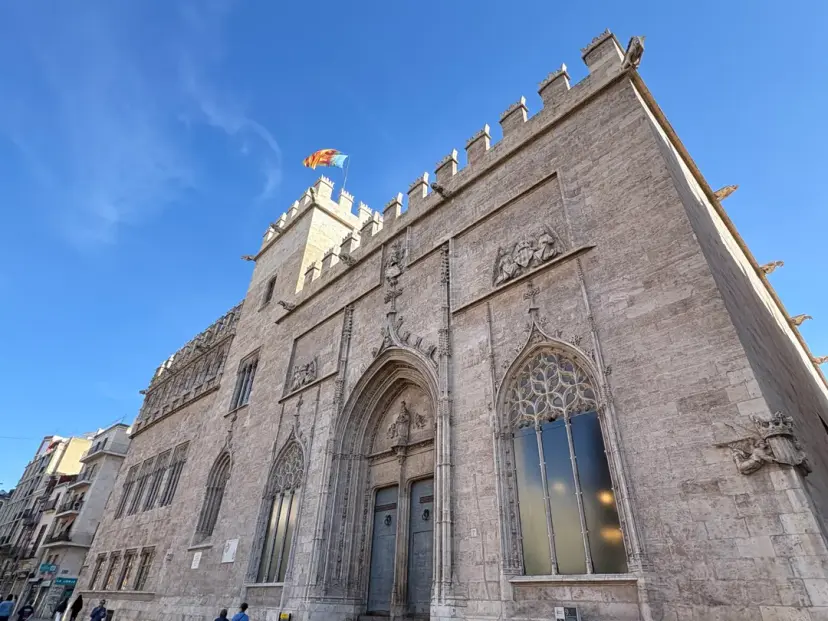
Located right across from the Central Market, the Silk Exchange
is a historic building constructed
between the late 15th and early 16th centuries.
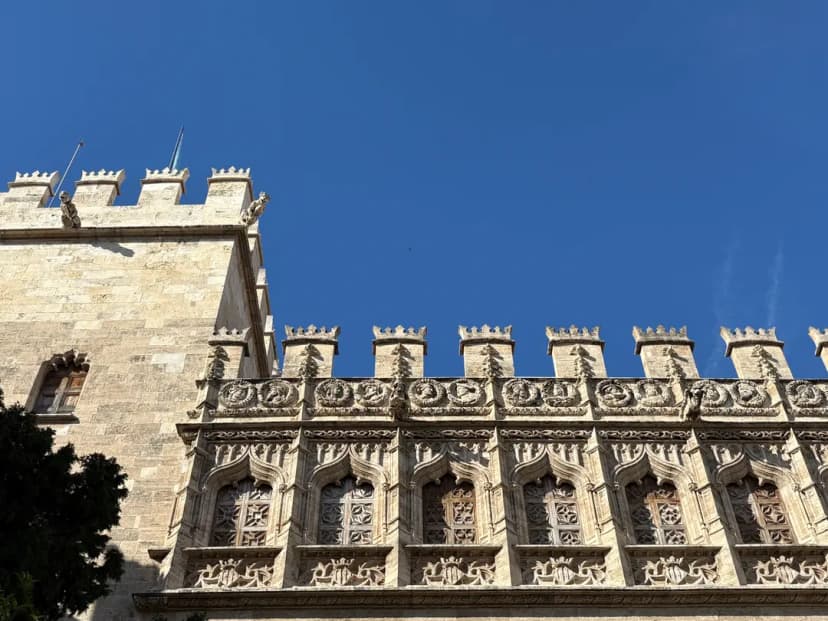
At the time, Valencia was one of the wealthiest cities in Europe
thanks to its thriving silk industry,
and as if to show off this massive economic prosperity,
this building was constructed with incredible luxury and detail.
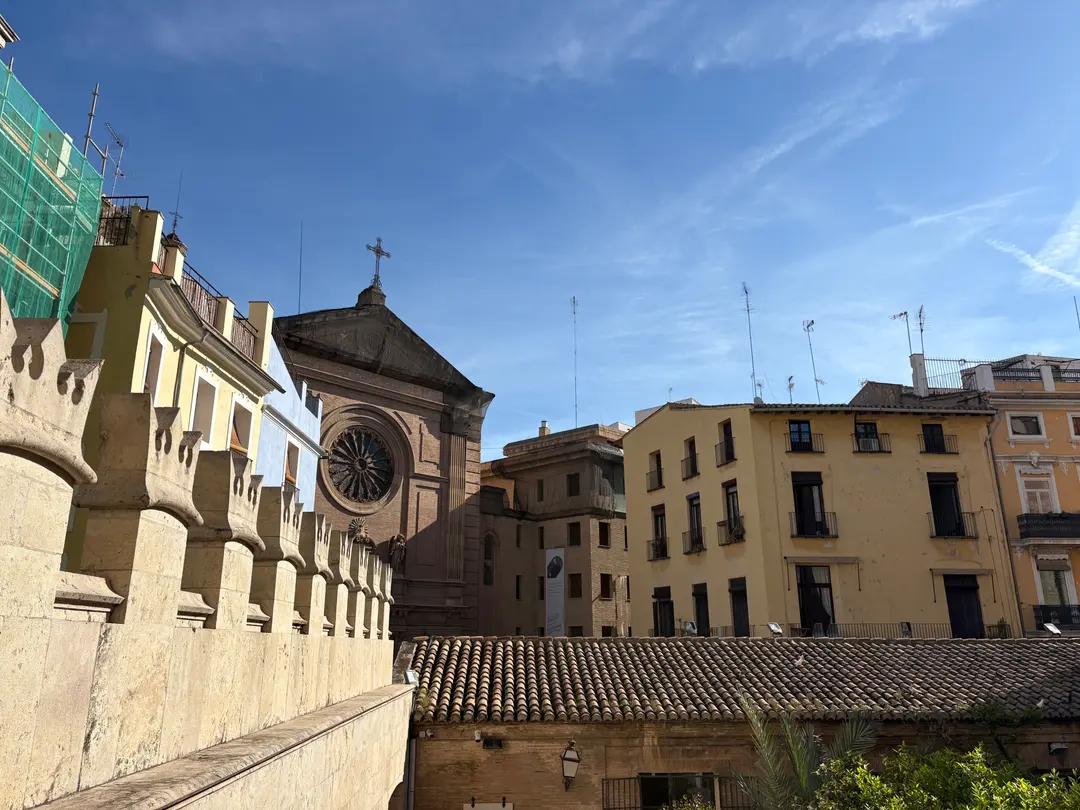
It looks like a solid, formidable fortress from the outside,
but the moment you step inside,
the stunning contrast of its interior will leave you absolutely spellbound.
🔗 Buy the Valencia Tourist Card
2. The Trading Hall
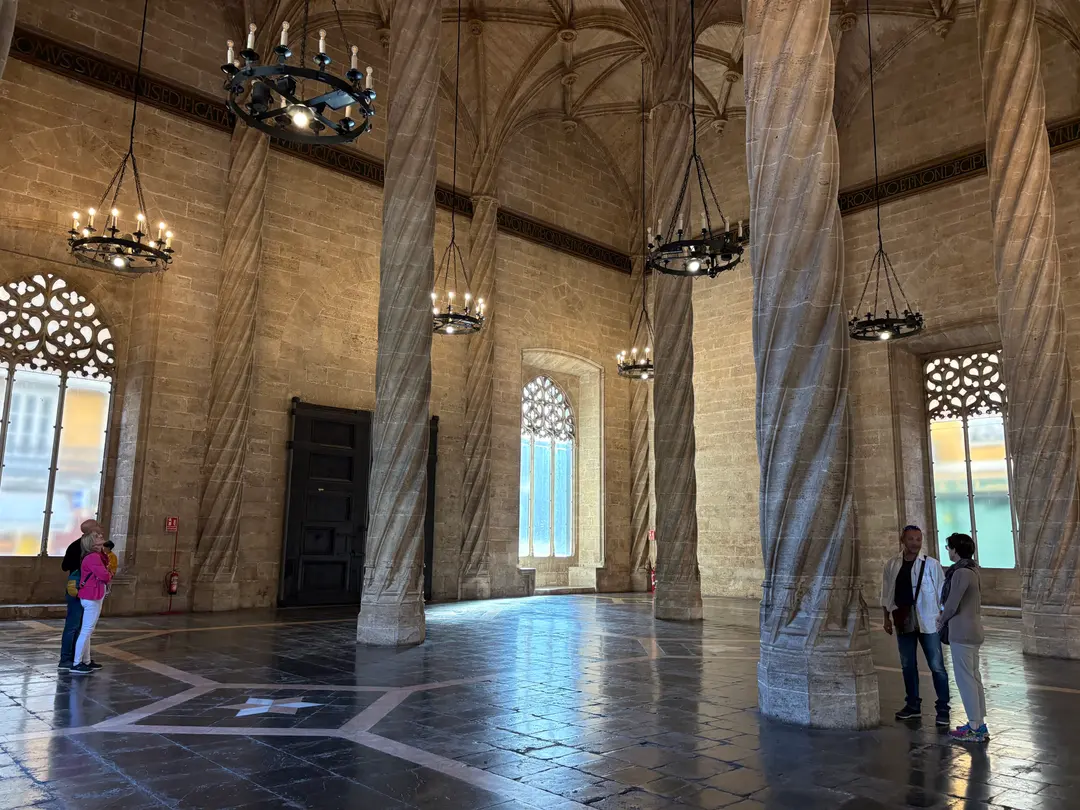
The most iconic space within the Silk Exchange
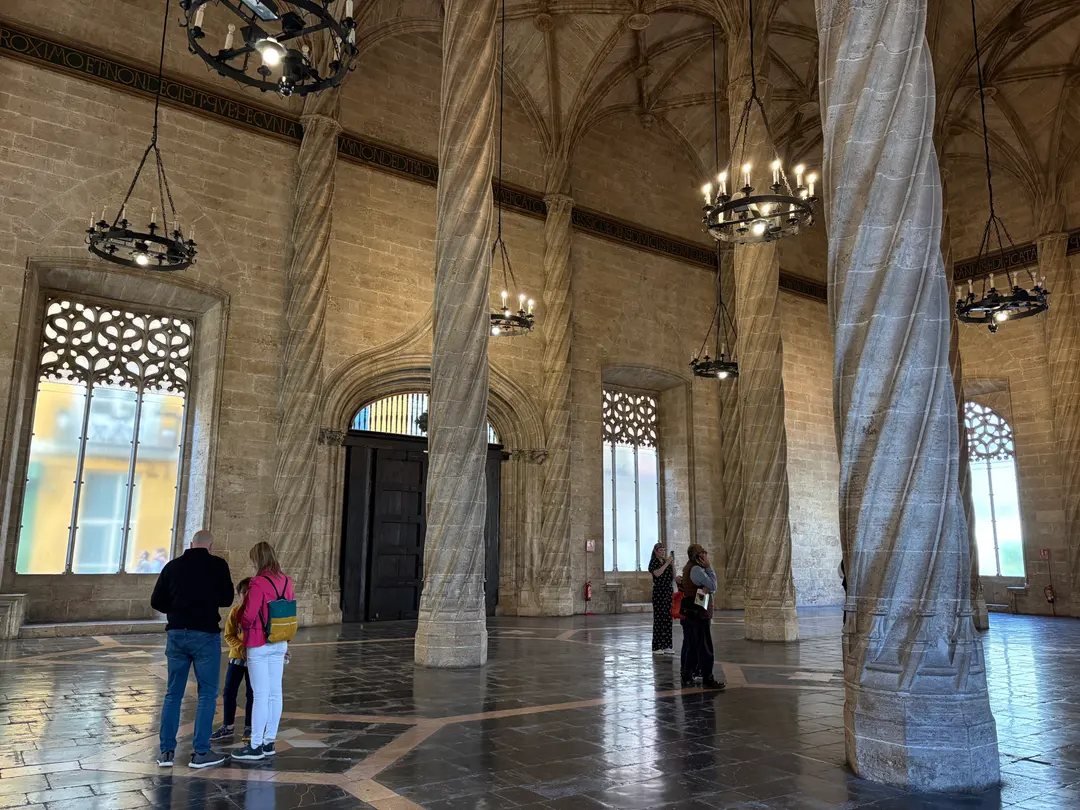
is the grand hall known as the Trading Hall (Sala de Contratación).
When I was looking up things to do in Valencia before my trip,
this was the image that popped up the most.
Seeing it with my own eyes,
it felt incredibly grand and utterly awe-inspiring.
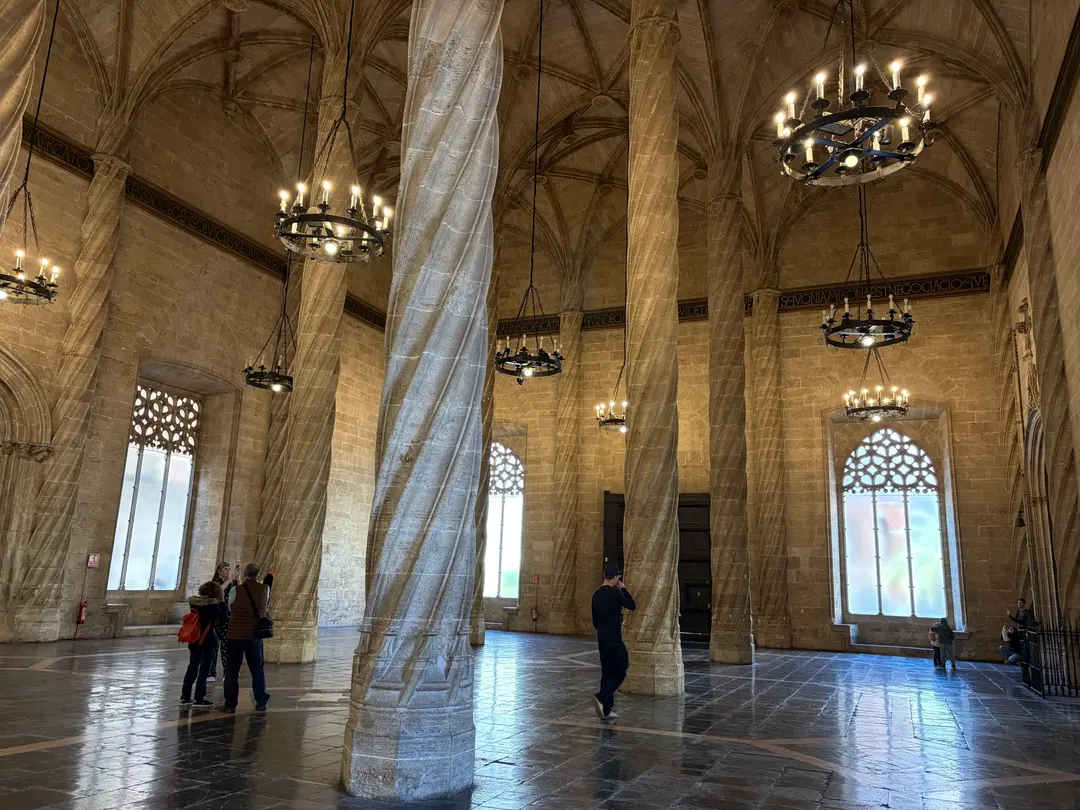
✅ Spiral Columns
Eight massive columns standing about 17 meters tall
support the vaulted ceiling,
and each one is beautifully twisted
into a spiral shape resembling thick ropes.
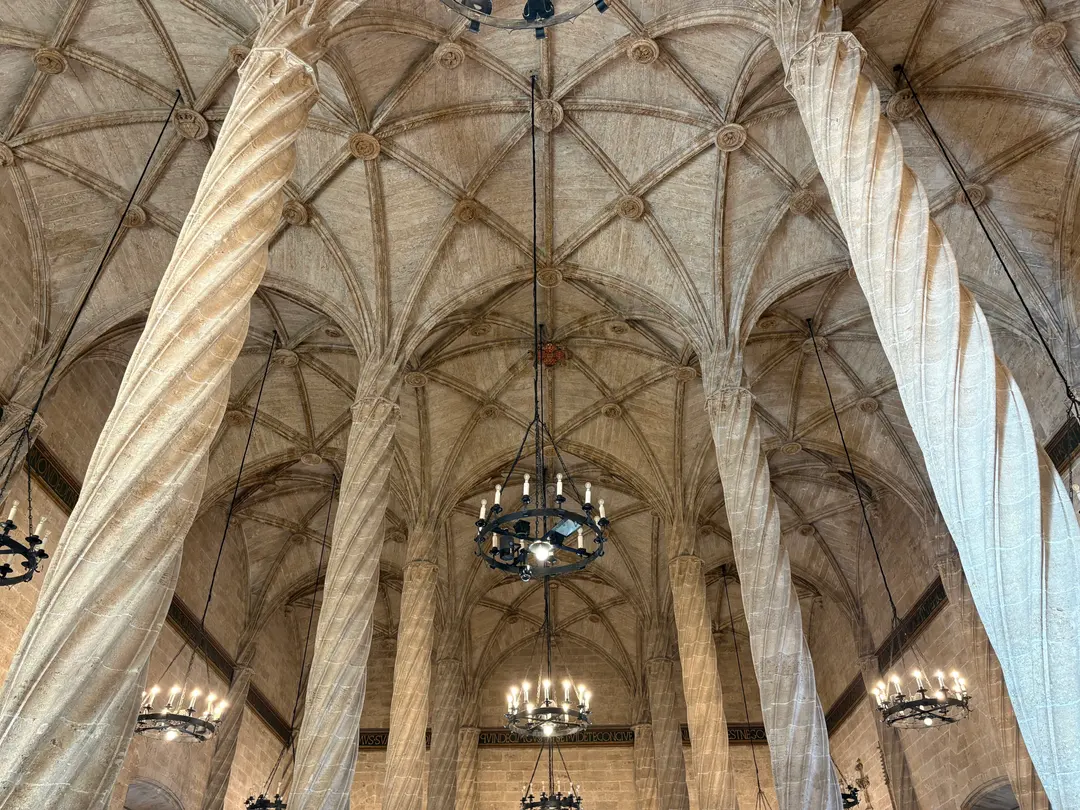
As these columns stretch upwards,
they seamlessly branch out into the ceiling,
which is said to represent majestic palm trees.
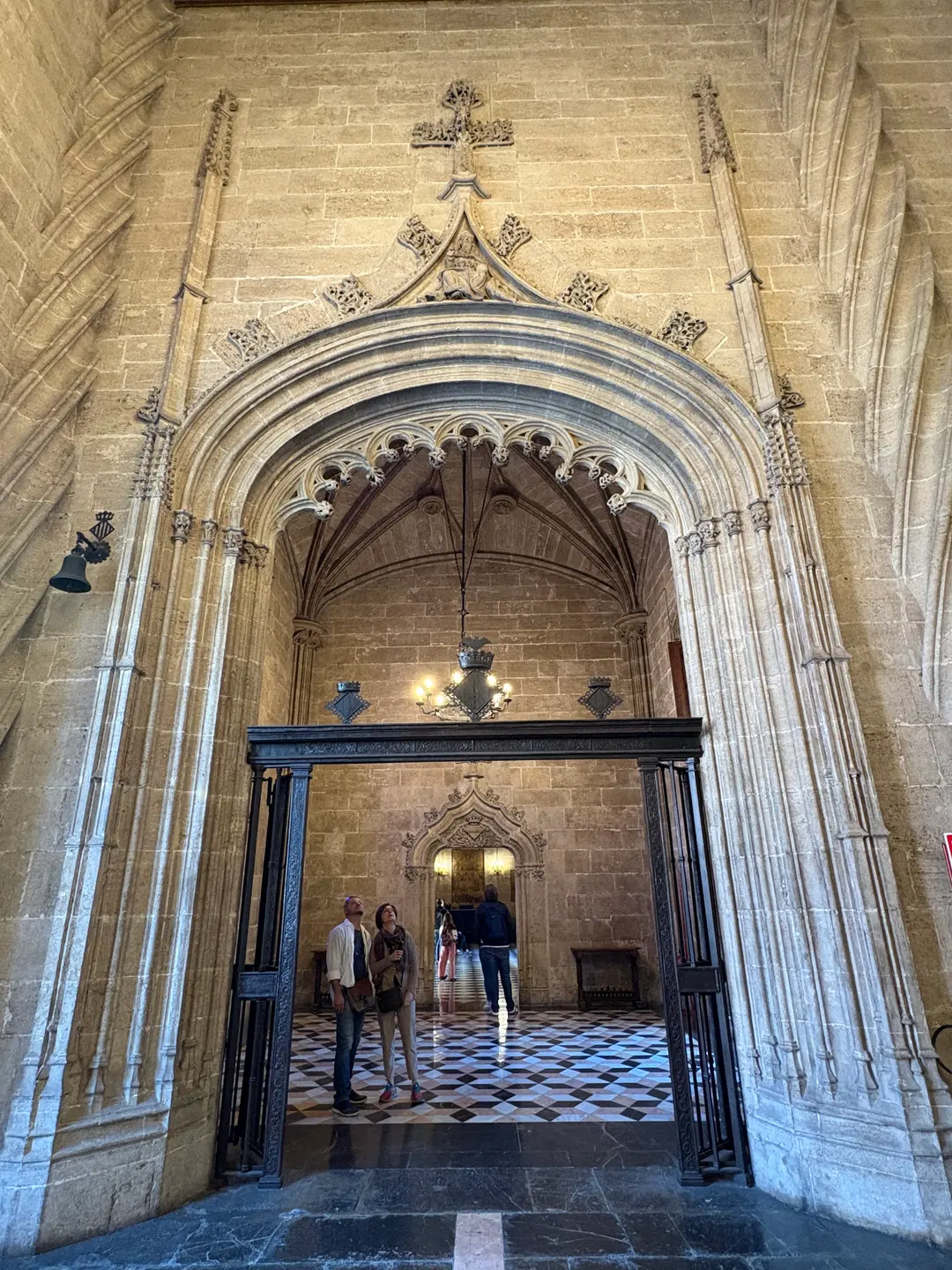
✅ Symbol of Wealth
The colorful marble patterns on the floor
and the gold lettering adorning the walls
symbolize the massive capital that flowed through here
and the immense pride of the local merchants.
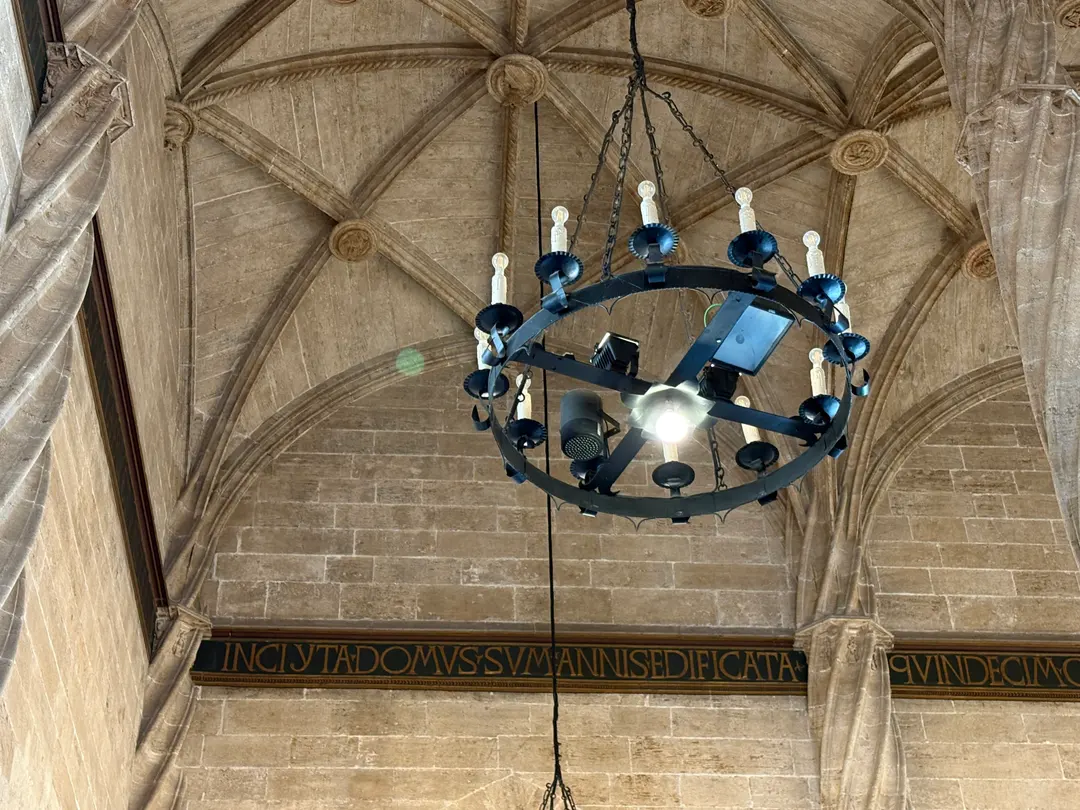
The inscriptions, written in Latin,
convey a strict moral code for the traders:
"Trade with honesty."
This shows that it wasn't just a place for business, but also...
that it was the very center of
maintaining social order back then.
3. The Consulate of the Sea
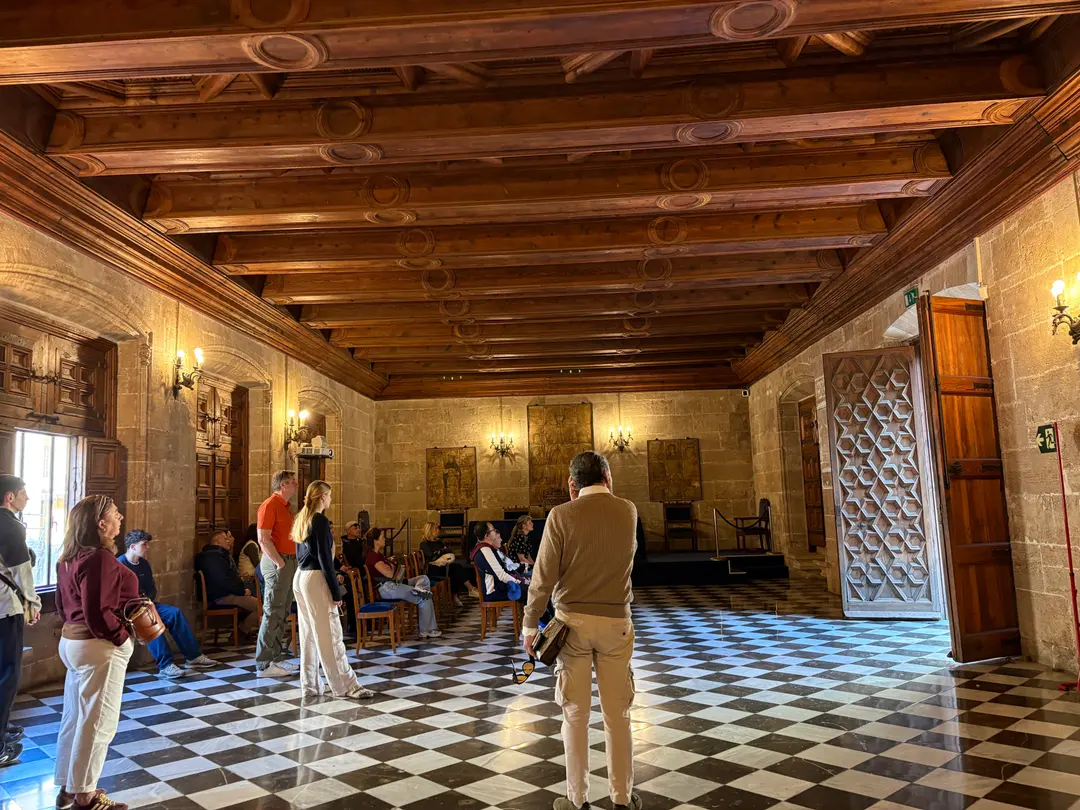
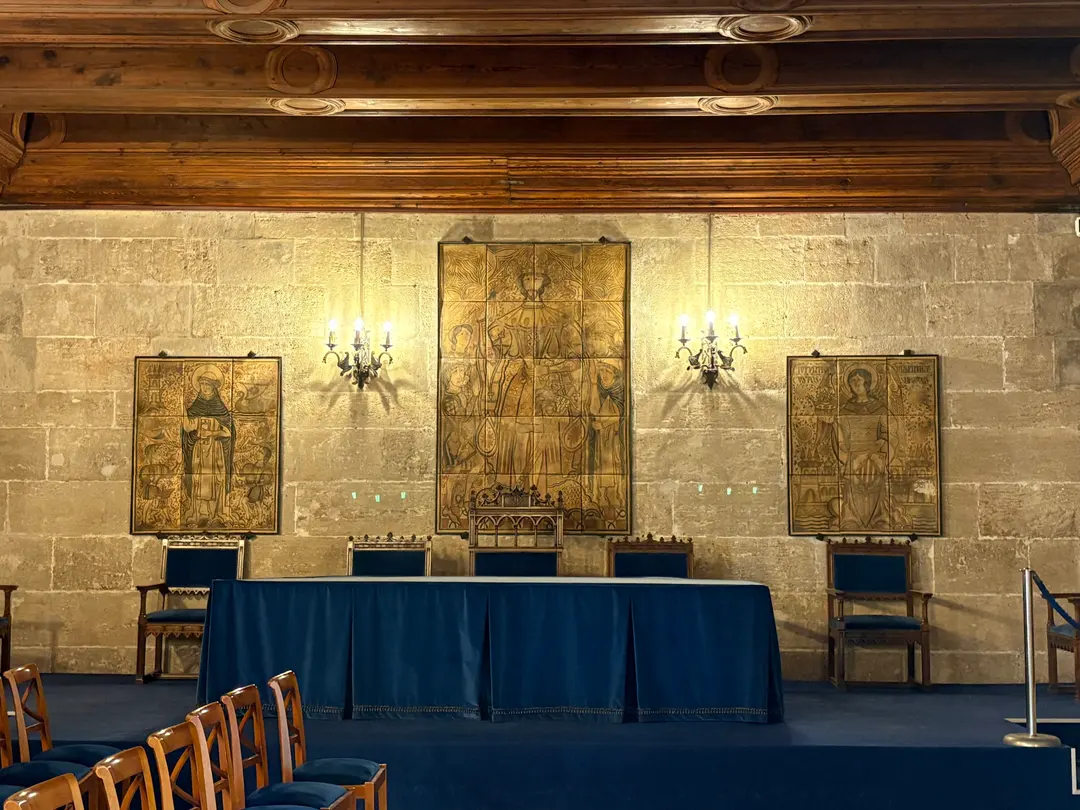
The building adjacent to the exchange hall
was a tribunal where they resolved disputes
arising from maritime trade.
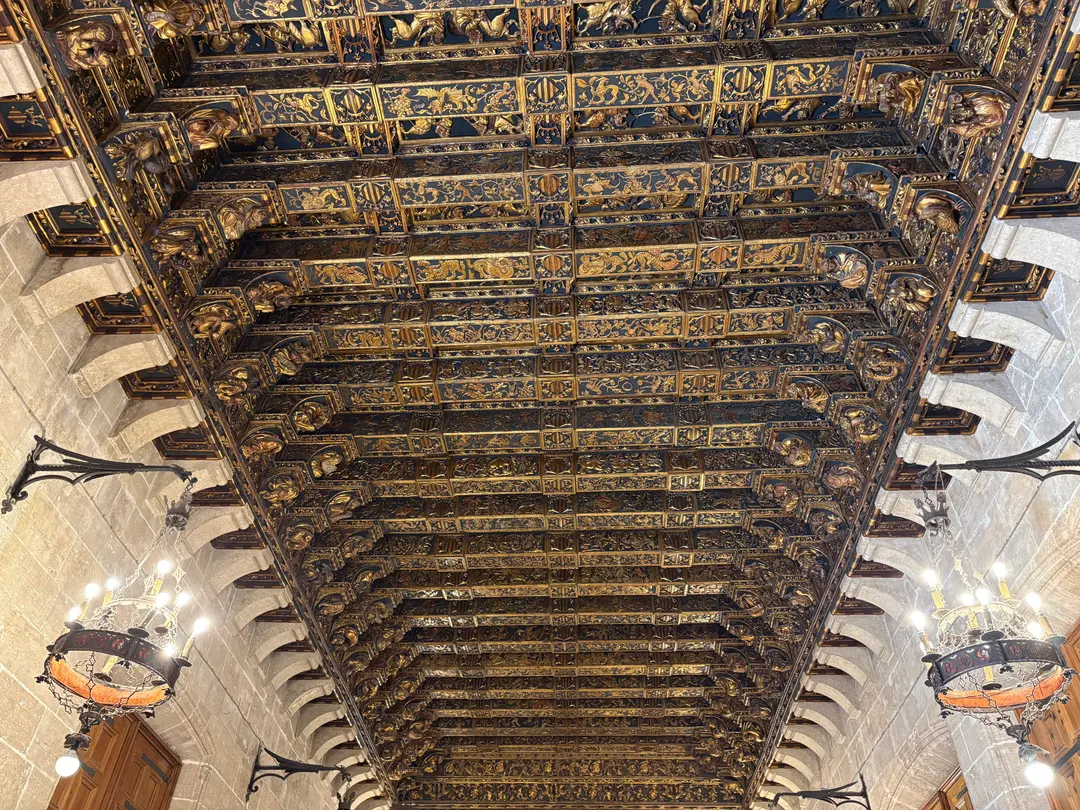
The second-floor ceiling of this chamber
is covered in breathtaking, gilded wooden carvings,
representing the absolute peak of Valencian art back then,
making it an incredibly precious sight to behold.
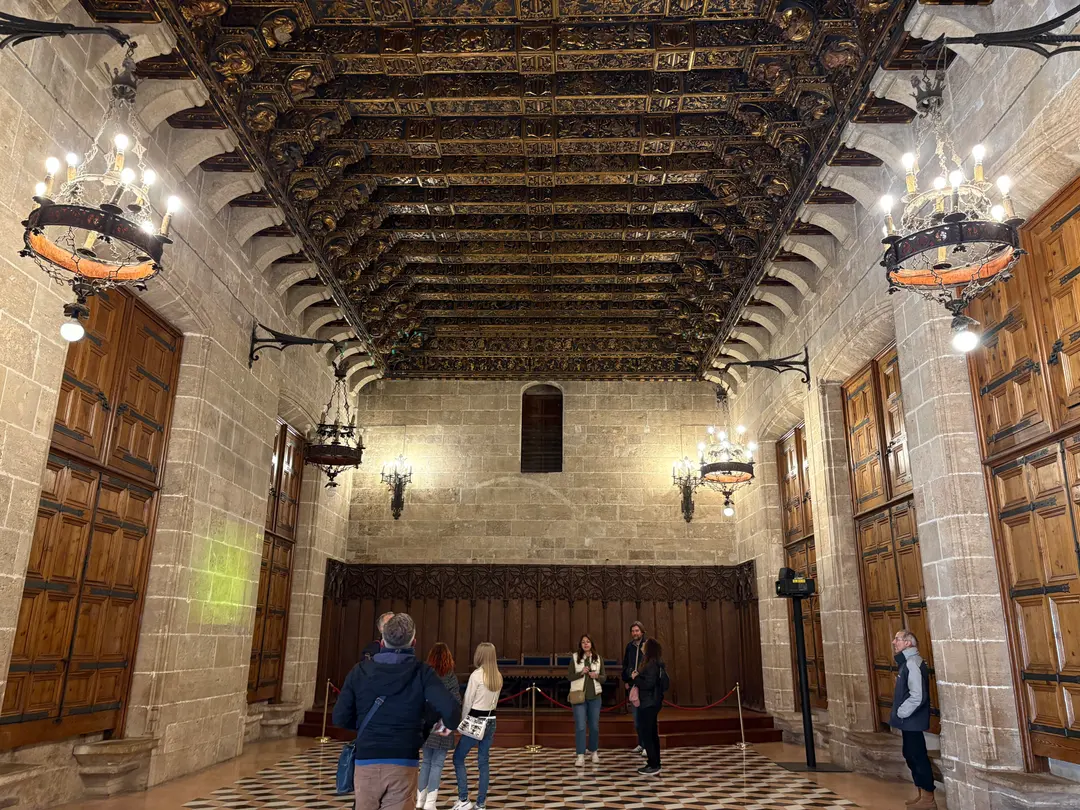
The unique floor tiles are also highly charming,
so be sure not to miss them!
There's also a short, 10-minute video
sharing the history of the Silk Exchange,
so why not sit back, take a short rest, and enjoy it?
4. The Orange Garden
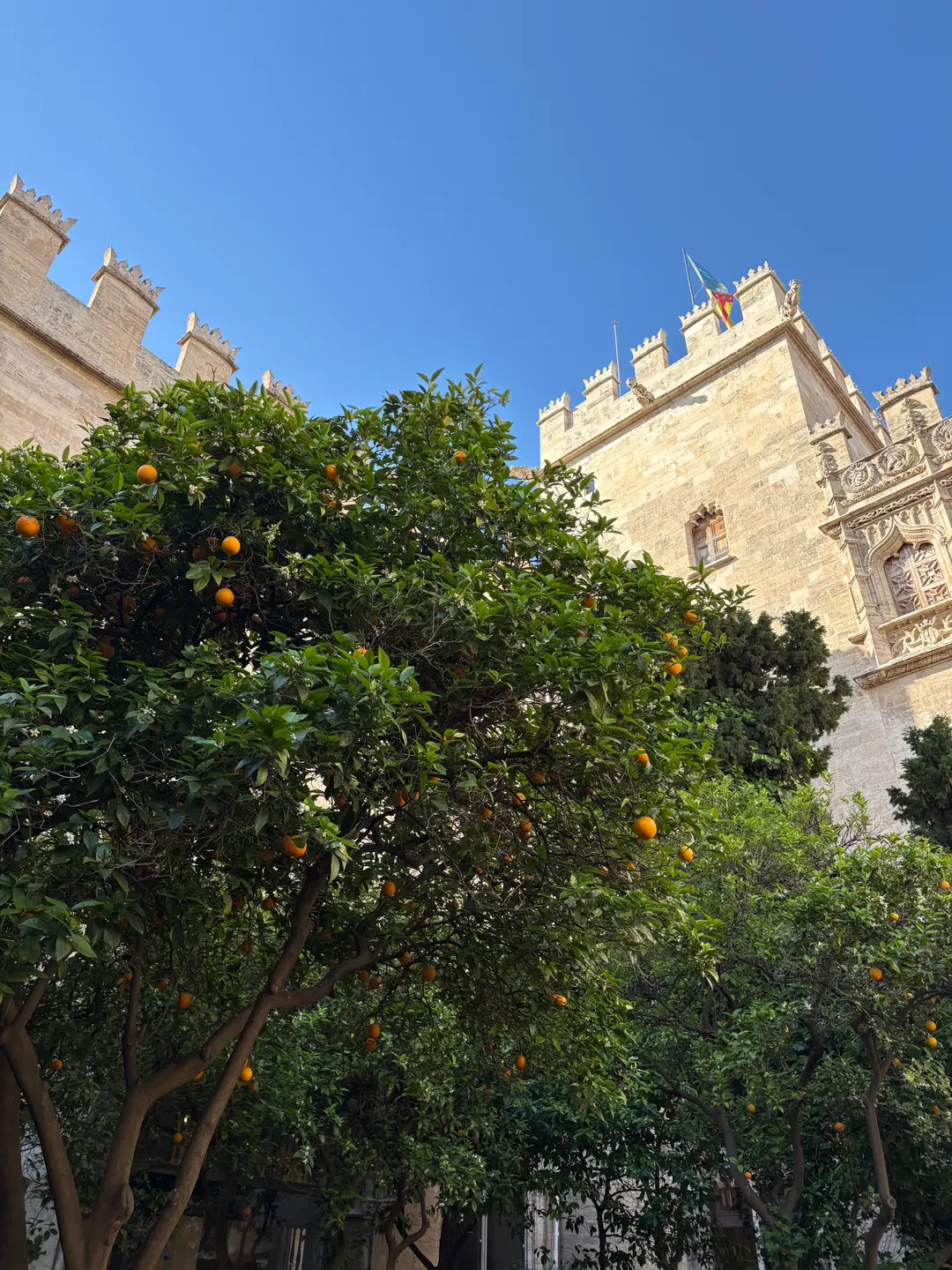
After stepping out of the grand hall,
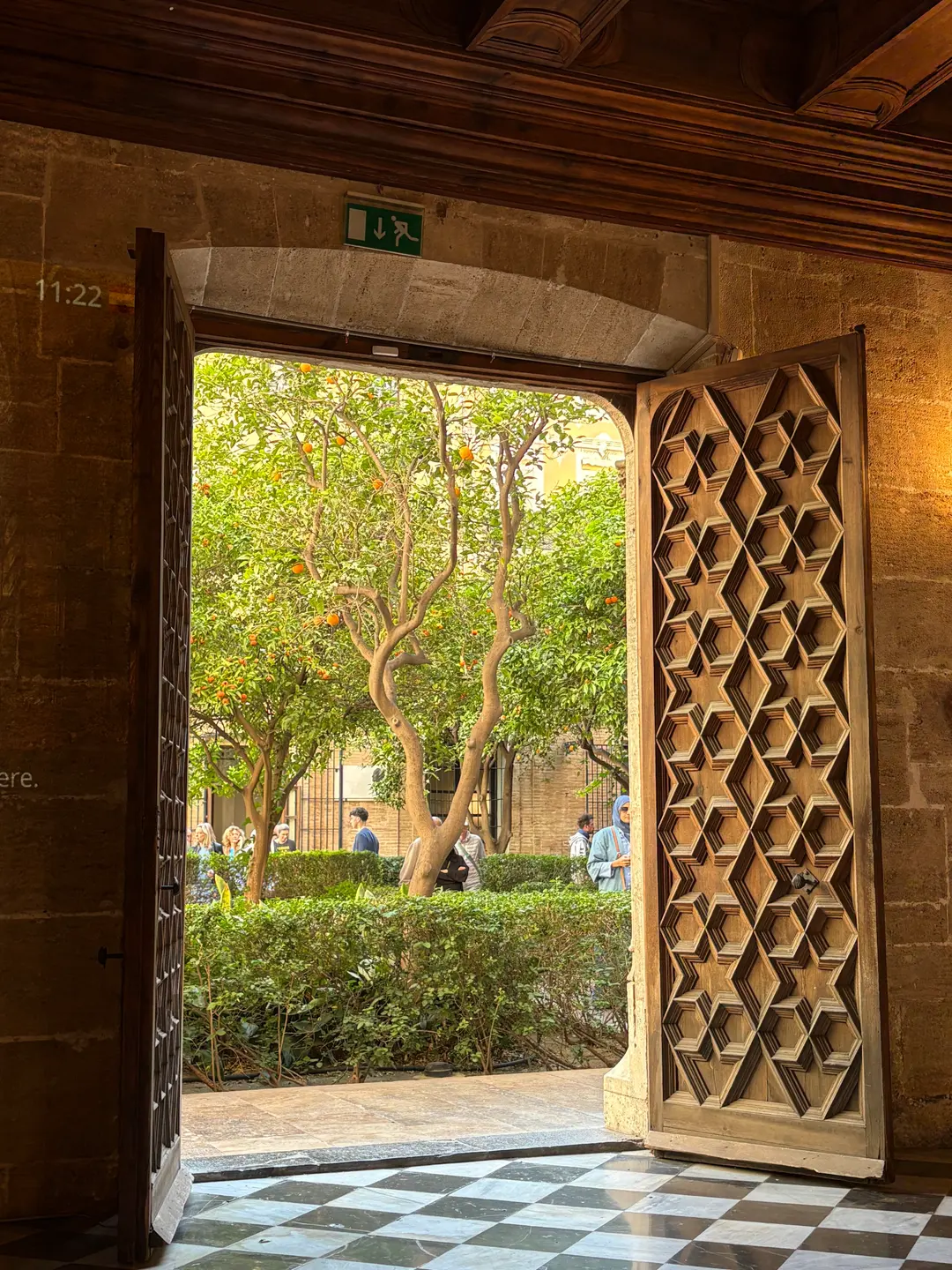
you'll discover the cozy and tranquil Orange Garden.
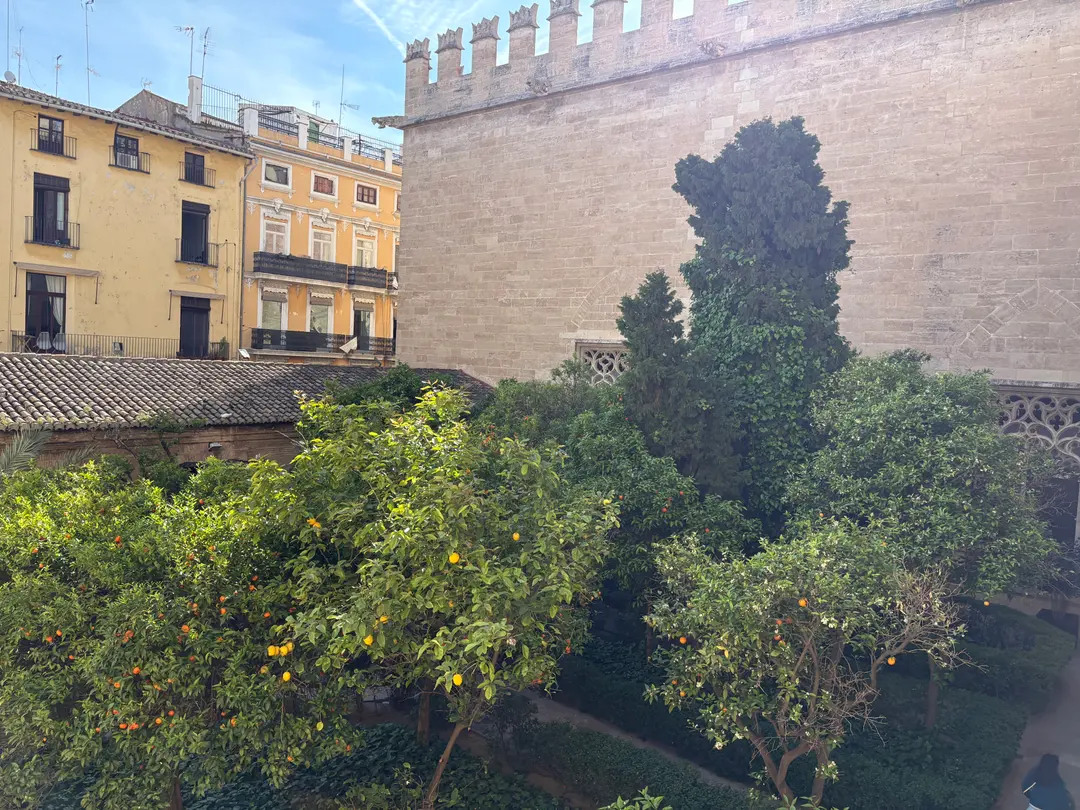
It's filled with orange trees—the iconic symbol
of Valencia. Since I'm visiting in April,
the orange blossoms are in full bloom,
surrounding me with
their sweet, beautiful scent.
5. The Dungeon
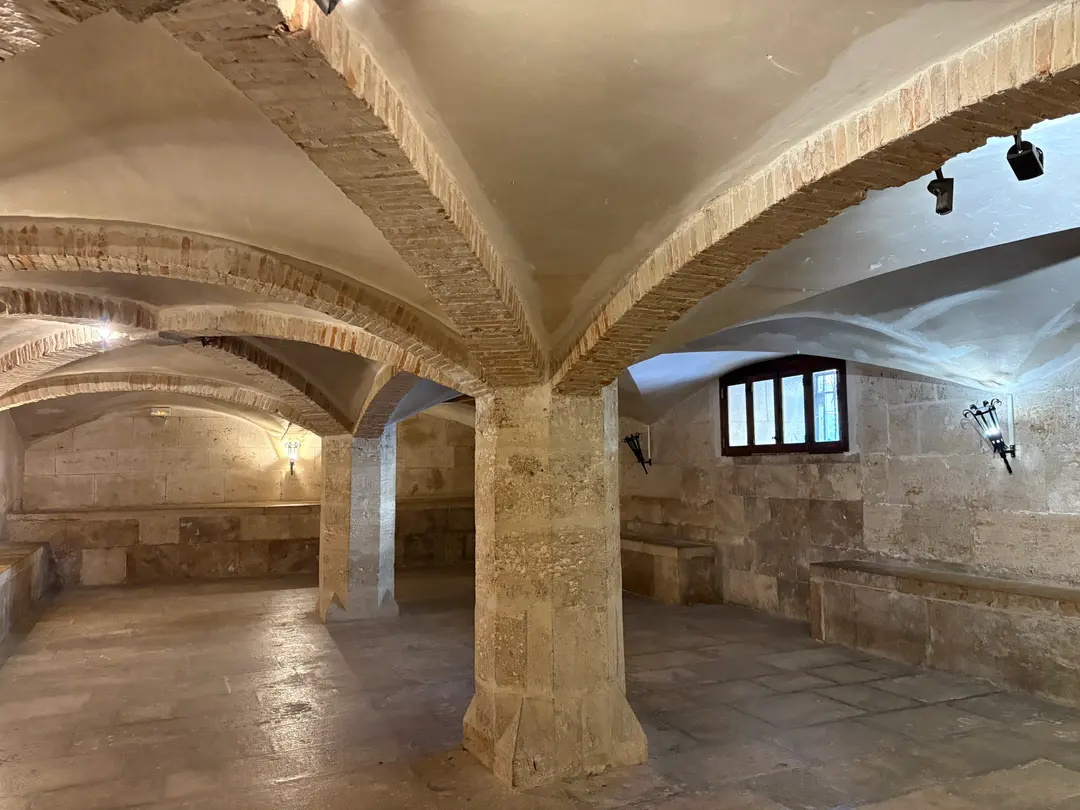
While the Hall of Contracts
symbolizes successful deals and immense wealth,
the underground space below was
the most feared location for merchants at the time.
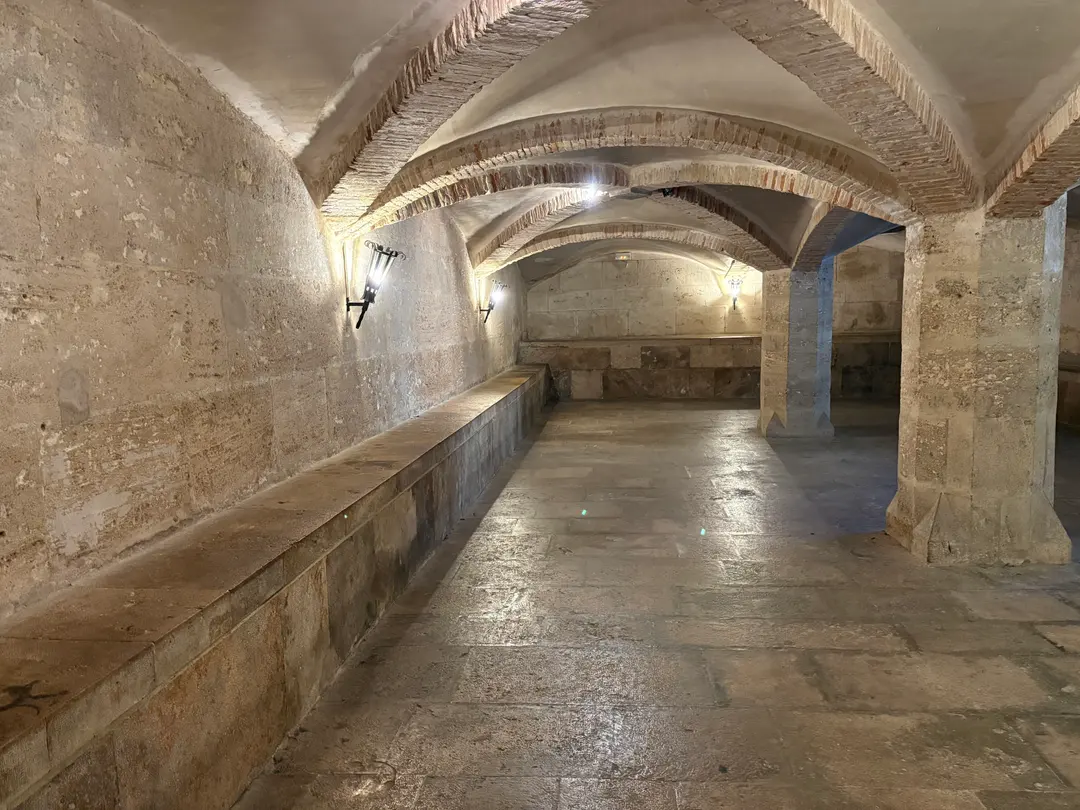
Back in the 15th century, this basement housed
a prison where merchants who committed fraud,
failed to pay their debts,
or went completely bankrupt
were thrown in.
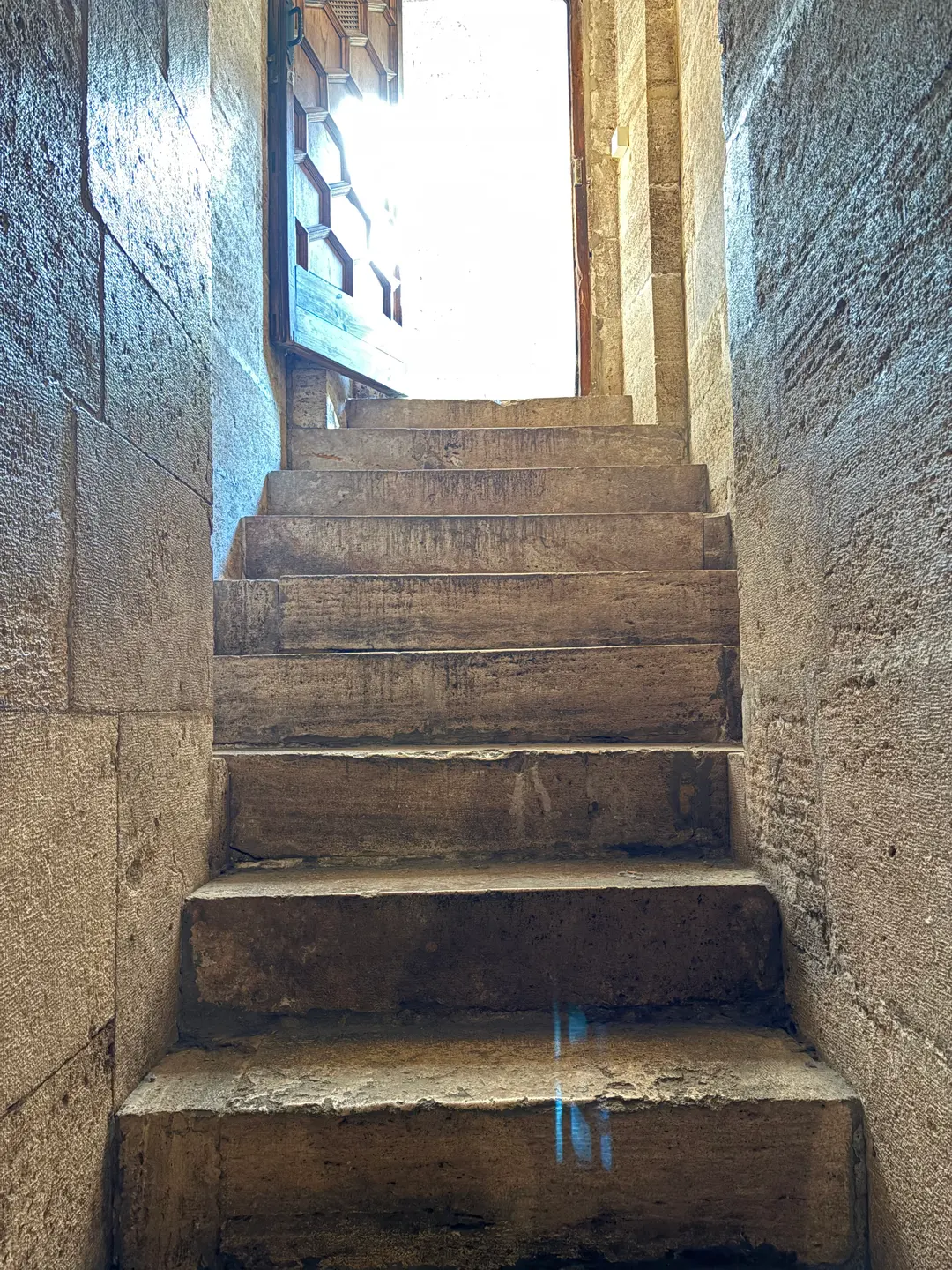
Remember the inscription on the wall of the first-floor hall
warning everyone to "trade honestly"?
Yes, those were the rules.
And the price for breaking that promise was
a one-way ticket to this cold, dark dungeon.
The reason Valencia was able to grow
into a major hub of Mediterranean trade
was largely due to this strict system of trust
and financial accountability.
6. Wrapping Up
The Silk Exchange (La Lonja) is
a place where you can dive into the wealthy golden age of Valencia
while appreciating jaw-dropping, majestic architecture.
Tour groups tend to flock here in the afternoon,
so heading over right when it opens
is my top tip for a peaceful visit.
After exploring the exchange,
why not cross the street to the Central Market
and grab some delicious local bites
to fuel the rest of your day?
I hope this post helps you plan
an absolutely amazing adventure!
🔗 Buy the Valencia Tourist Card Here
📍 La Lonja de la Seda (The Silk Exchange)
C/ de la Llotja, 2, Ciutat Vella, 46001 València, Valencia, Spain
Frequently Asked Questions
What is the admission fee for the Silk Exchange in Valencia, and on which days is entry free?
The standard admission fee for the Silk Exchange is 2 euros. However, admission is free on Sundays and public holidays.
What are the features of the spiral columns in the 'Contract Hall' of the Silk Exchange?
In the 'Contract Hall', there are eight massive columns, each about 17 meters high, supporting the ceiling. These columns are shaped like twisted ropes in a spiral design, created to resemble palm trees.
What role did the Consulate of the Sea, located next to the Silk Exchange, play in the past?
In the past, the Consulate of the Sea was a place where disputes arising from maritime trade were resolved. Today, visitors can admire its second-floor ceiling covered in ornate gold wooden carvings and watch a roughly 10-minute video about the Silk Exchange.
Why was there a prison in the basement of the Silk Exchange building in the past?
In the 15th century, a basement prison was operated to lock up merchants who committed fraud during transactions, failed to pay their debts, or went bankrupt. This shows that Valencia conducted trade based on a strict credit-based social system at the time.
Share this article
Featured in Collections
Discover more travel stories curated around the same theme.

Related Travel Stories
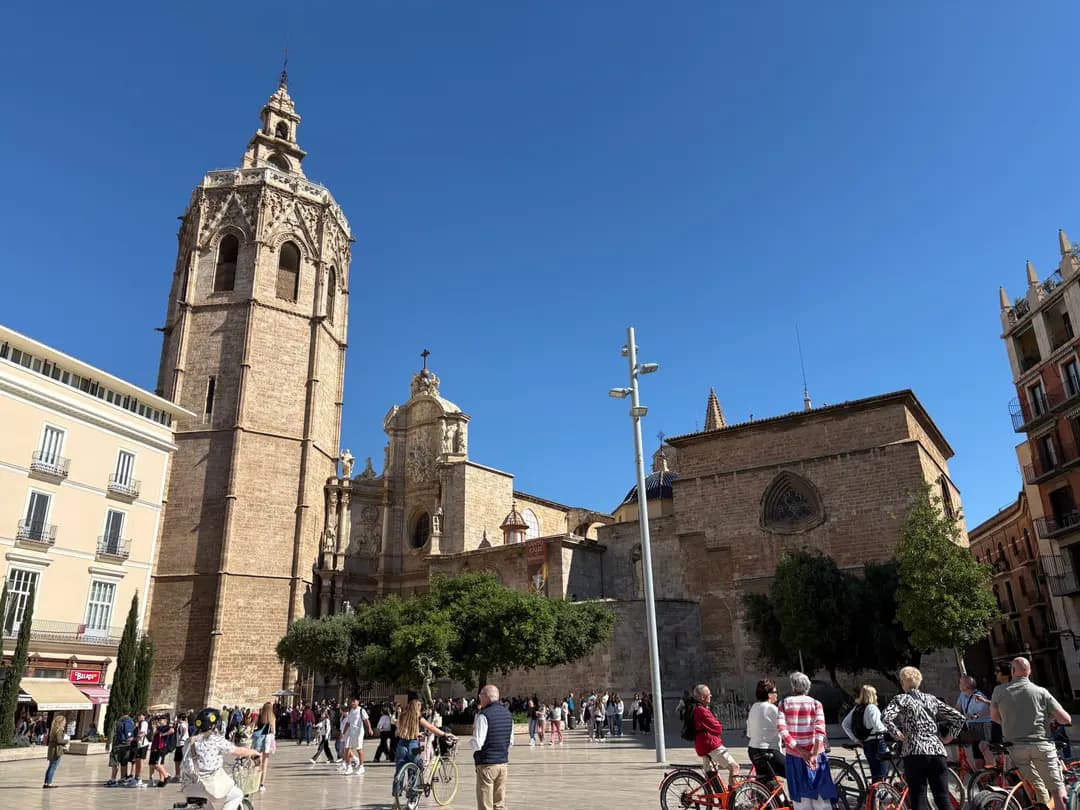
Valencia Half-Day Tour 2026: Discover Spain's Historic Heart
Uncover Valencia's hidden history and stunning architecture on a guided half-day tour. Experience the city's rich past, from the Silk Exchange to the Holy Grail, with an expert guide.
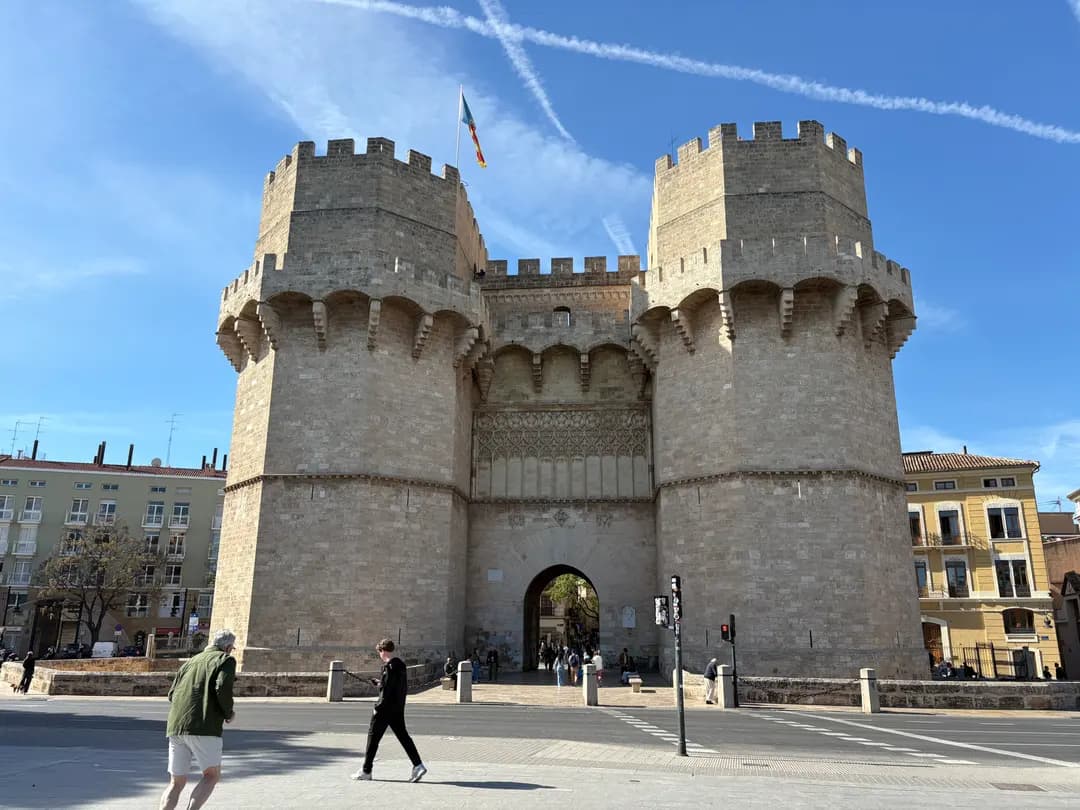
Torres de Serranos Valencia 2026 Guide: Panoramic City Views
Climb the historic Torres de Serranos for unparalleled views of Valencia's Old Town and Turia Gardens. A must-visit landmark for history buffs and photographers.
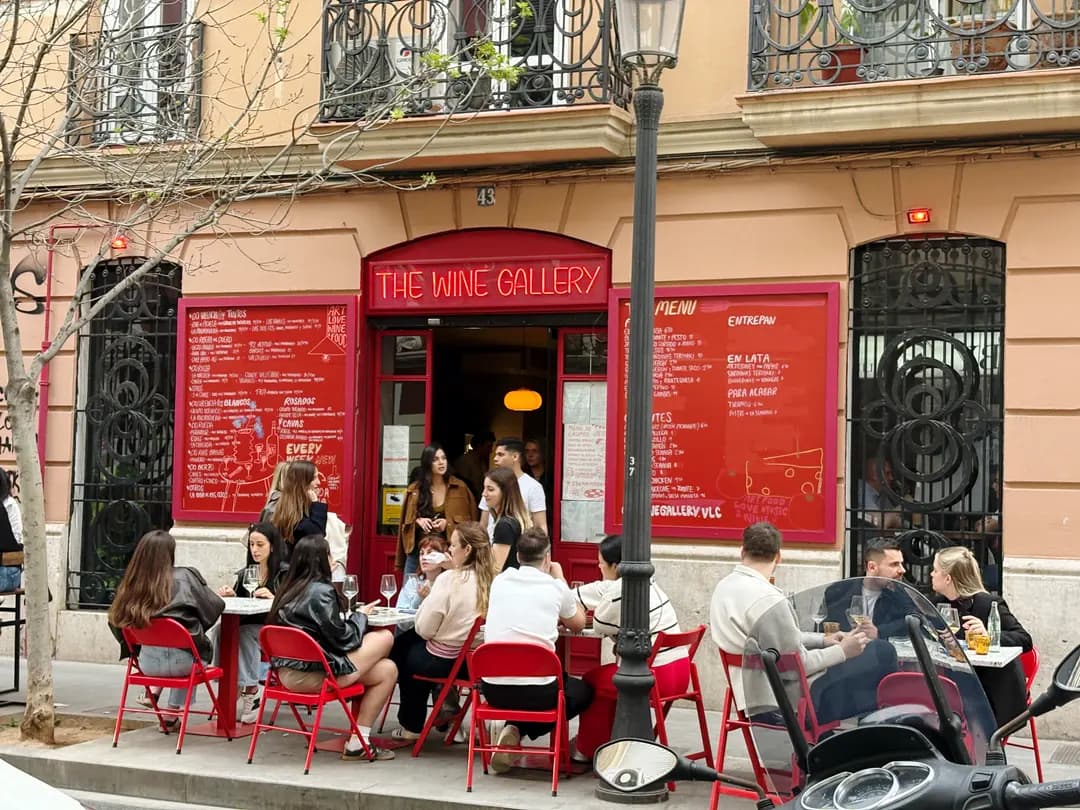
Valencia's Ruzafa District: A Hip & Vibrant Guide for 2026
Dive into Ruzafa, Valencia's most vibrant district! Explore colorful markets, discover hidden vintage gems, and savor authentic Spanish flavors in this artistic hub. Plan your 2026 trip!
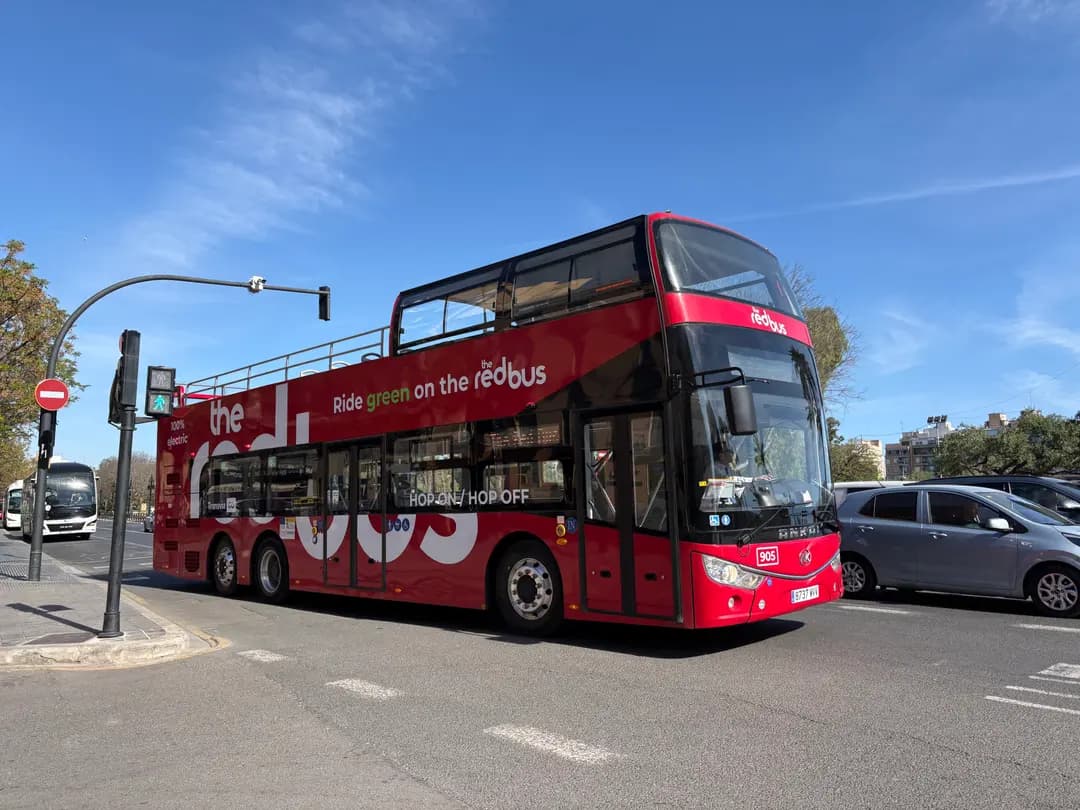
Valencia City Tour Bus 2026: Red vs. Green Hop-On Hop-Off
Discover Valencia's diverse attractions, from historic streets to modern marvels and beautiful beaches, with a convenient Hop-On Hop-Off bus tour. Find out if the Red Bus or Green Bus is right for you!

Valencia's National Ceramics Museum: Your 2026 Free Entry Guide
Uncover Valencia's most picturesque cultural gem, the National Ceramics Museum. Dive into centuries of Spanish artistry and learn how to visit for free!

Valencia SUMA Card Guide 2026: Buy & Use for Metro, Bus, Tram
Make your Valencia trip smooth and affordable with the SUMA card! Discover how to purchase and use this essential transport pass for metro, bus, and tram rides.